Pectin Matrix Plasticization and Secondary Cell Wall Microfibril Mechanics
Pectin plasticization relaxes bast middle lamellae, enabling microfibril realignment to drive fine count spinning yields and cut fabric meter costs.

Polymer
The structural stiffness of flax bast tissue relies on crystalline cellulose microfibrils embedded within an amorphous, hydrophilic pectic polysaccharide gel. In the secondary cell wall, these microfibrils wind in a z-twist spiral at a mean microfibril angle of 6 to 10 degrees relative to the fiber axis. Under standard laboratory conditions of 20 degrees Celsius and 65 percent relative humidity, elementary fibers show an average dry tensile modulus of 50 to 80 gigapascals and an ultimate tensile strength of 800 to 1500 megapascals.
Once moisture penetrates the middle lamella and cell wall layers, these mechanical properties shift; water molecules disrupt the non-covalent hydrogen bonds binding galactan, rhamnogalacturonan-I, and homogalacturonan chains. This swelling plasticizes the pectin network and mobilizes the matrix, allowing microfibrils to reorient under axial load.
This uncoupling within the polysaccharide network directly controls drafting resistance during spinning. A high degree of methyl-esterification keeps cohesive bonds stiff across fiber bundles, while enzymatic or chemical de-esterification exposes carboxyl groups to calcium cross-linking. When divalent calcium ions bridge adjacent homogalacturonan chains, the matrix forms rigid, shear-resistant egg-box junction zones.
Should industrial warm-water retting or hot wet-spinning baths strip these divalent bridges through acidic chelation, the matrix shear modulus drops below 0.2 gigapascals, causing microfibrils to slide past one another under drafting tension rather than transferring load across the bundle.
Under ambient conditioning of 65 percent relative humidity, secondary cell wall cellulose maintains an axial modulus near 72 gigapascals while the inter-fibrillar pectin matrix exhibits shear stiffness between 0.8 and 1.1 gigapascals.
Spinning technicians monitor this behavior closely as wet-spun long-line sliver enters the roving frame. Over-retted fiber bundles slip prematurely during drafting because a degraded middle lamella allows lateral shearing long before reaching single-fiber rupture stress. Under-retted bast presents the opposite problem: pectin fractions dry into brittle, glassy coatings that freeze microfibril angles, preventing fibers from flattening and creating hairy yarn.
Commercial spinning requires a tight operational window where plasticization permits microfibril realignment without dropping bundle cohesion below drafting thresholds.
| Pectin Fraction | Dominant Linkage | Esterification Level | Dry Modulus (GPa) | Saturated Shear Modulus (GPa) |
|---|---|---|---|---|
| Homogalacturonan (HG) | alpha-(1,4)-D-Galacturonic acid | 55 to 70 percent | 1.8 to 2.4 | 0.08 to 0.15 |
| Rhamnogalacturonan-I (RG-I) | alpha-(1,2)-L-Rhamnose-alpha-(1,4)-GalA | 20 to 35 percent | 0.9 to 1.3 | 0.04 to 0.09 |
| Galactan Sidechains | beta-(1,4)-D-Galactose | Unesterified | 0.5 to 0.8 | 0.02 to 0.05 |
| Arabinan Sidechains | alpha-(1,5)-L-Arabinose | Unesterified | 0.4 to 0.7 | 0.02 to 0.04 |
Detecting these transitions before scutching is essential for fiber bundle processing. As plasticizer content increases, the mode of tensile failure shifts from cell-wall rupture to inter-cellular decohesion. Buyers evaluating raw scutched flax monitor these viscoelastic changes to estimate hackling loss and potential frame breakages.
The precise role that neutral arabinogalactan side chains play in sliding resistance during dry drawing remains unclear.
Bath
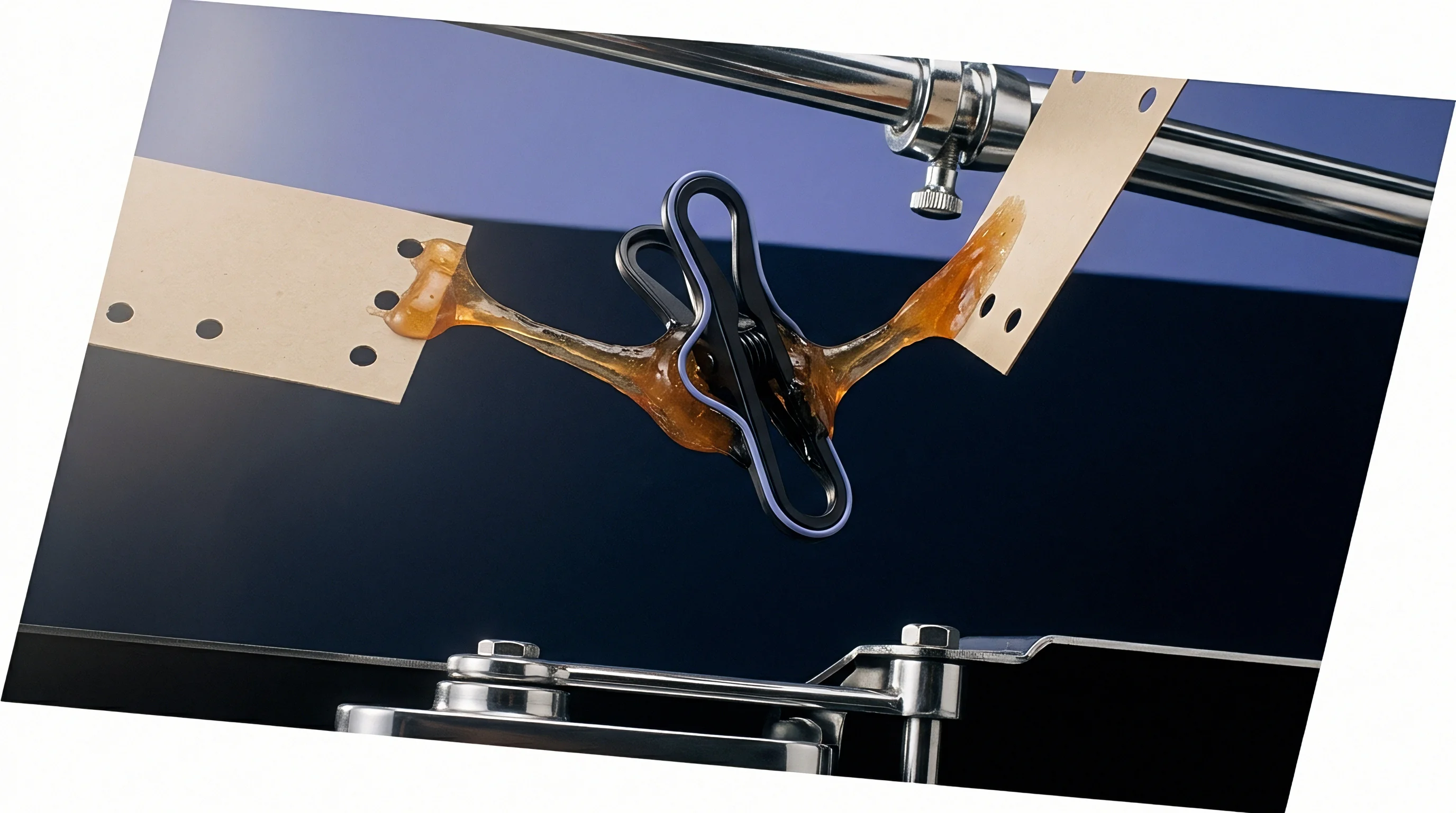
Industrial wet spinning uses heated water to relax the encrusting pectin and hemicellulose that hold elementary fibers together. Roving bobbins on perforated stainless steel tubes pass through hot water troughs held between 60 and 70 degrees Celsius just before entering the drafting rollers. Heat and moisture pull the glass transition temperature of the amorphous composite below operating levels, breaking internal hydrogen bonds within the matrix to reduce shear resistance and ease fiber movement through the nip.
Water chemistry directly affects this softening phase. Dissolved calcium and magnesium cations reinforce cross-linked bridges in homogalacturonan regions, so modern mills route process water through ion-exchange resins to keep total hardness under 20 milligrams of calcium carbonate equivalent per liter. When calcium concentrations rise above 80 parts per million, drafting rollers struggle against stiff roving bundles that fail to draw down into fine metric counts.
Process water hardness exceeding 50 milligrams calcium carbonate per liter elevates roving drawing force by 35 percent and causes severe roller wrap defects.
Temperature control inside the trough directly dictates drafting consistency:
- Immersion Temperature Fluctuation causes localized variation in matrix softening, leading to thick-and-thin sliver profiles.
- Chemical Acidification Additions reduce bath pH to 4.5, dissolving divalent salt junctions without depolymerizing cellulose chains.
- Roller Squeeze Pressure expels unbound water from the drafted strand prior to twist insertion, compacting the outer microfibrils.
- Rotational Roller Drag snags unsoftened bundle tails whenever trough dwell time drops under twelve seconds.
Spinning trials show that fiber bundles treated in 65 degrees Celsius water draw reliably into yarns finer than Nm 39, whereas dry spinning the same flax parcel yields coarser yarns under Nm 18. The hot bath lets elementary fibers slide smoothly and align parallel to the yarn axis, while microfibrils within secondary cell walls reorient to close micro-voids and raise packing density.
Inadequate water demineralization leads directly to persistent roller wraps, uneven yarn counts, and repeated frame downtime.

Alignment
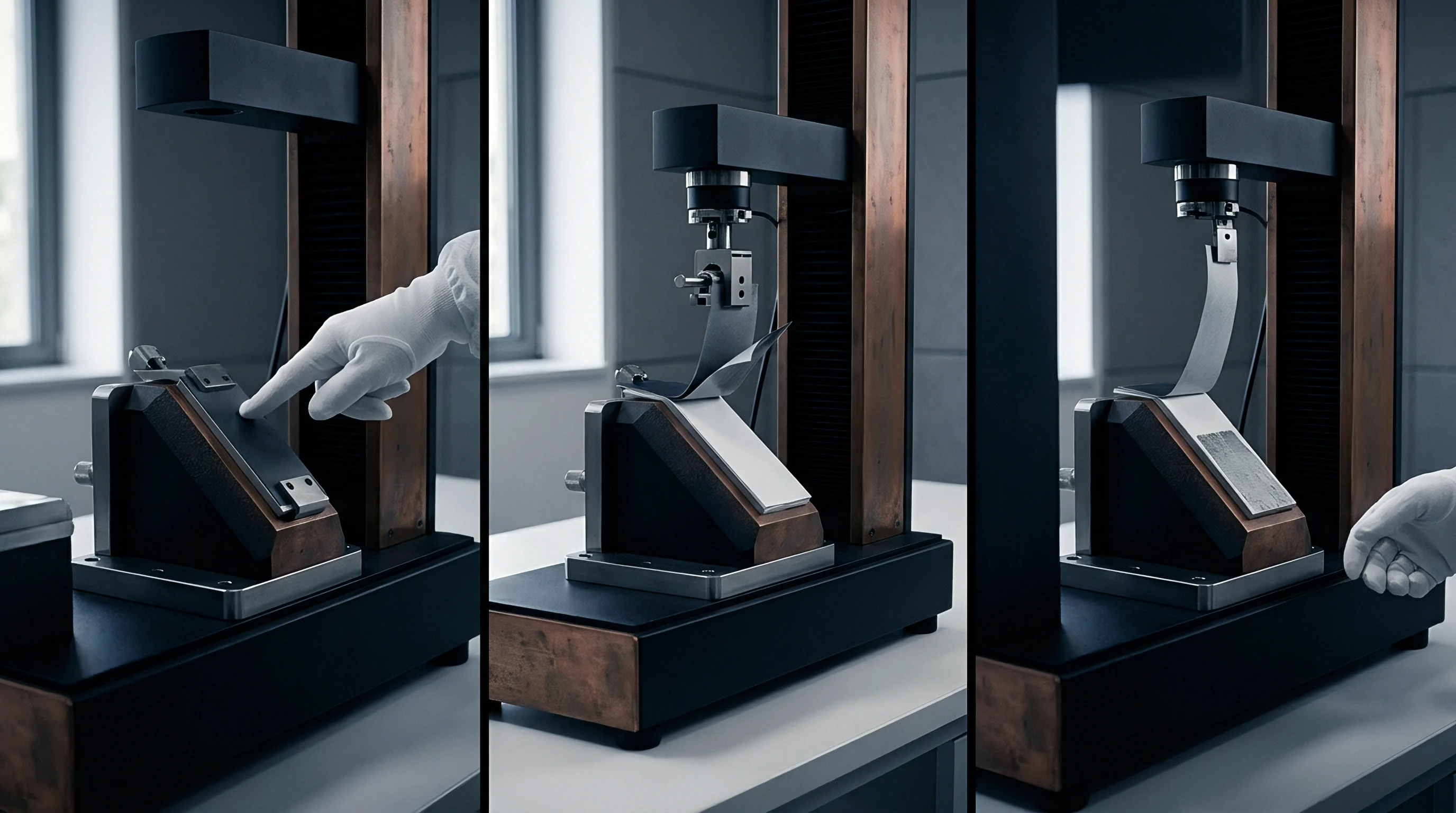
Microfibrils in the secondary cell wall respond to tensile stress by rotating toward the fiber axis. Unstrained flax fibers show an average spiral angle between 8 and 11 degrees, but as drawing and spinning forces stretch the fiber, matrix shearing allows microfibrils to align down to 4 or 6 degrees at peak elongation. This structural shift raises overall tenacity at the expense of break elongation.
Where Does Matrix Shearing Shift Microfibril Alignment?
Shear deformation takes place in the pectin-rich outer boundary of the S2 secondary wall layer and across the compound middle lamella. Viscous flow in the hydrated galactan network distributes shear stresses across neighboring cellulose microfibrils. In dry fibers, however, the stiff matrix prevents angular deflection, causing microfibrils to break cleanly along pre-existing dislocation sites known as kink bands or slip planes.
These kink bands develop during harvesting, scutching, and hackling, leaving localized areas where crystalline cellulose chains deviate up to 30 degrees from the fiber axis. When the matrix is hydrated, plasticization spreads applied loads over these damaged zones, blunting stress concentrations that would otherwise trigger early, low-tenacity fractures.
A standard mill rule dictates that long-line flax slivers holding lower microfibril angles deliver higher yarn tenacity at the cost of reduced break elongation.
Tensile parameters follow direct structural metrics across differing processing environments:
| Moisture Regain (%) | Mean Spiral Angle (Deg) | Elementary Tenacity (cN/tex) | Elongation at Break (%) | Elastic Recovery (%) |
|---|---|---|---|---|
| 4.5 | 10.2 | 48.5 | 1.8 | 42 |
| 8.5 | 8.7 | 56.2 | 2.3 | 51 |
| 12.0 | 7.4 | 63.8 | 2.9 | 64 |
| 18.0 (Saturated) | 5.2 | 71.4 | 3.6 | 73 |
Axial microfibril rotation packs the yarn core densely, giving wet-spun linen its characteristic smooth surface and high luster. This crystalline realignment gives finished woven fabrics their cool hand and firm drape.
Quality claims on spun yarn lots frequently reference Clause 8 of the standard trading rules, which penalizes price whenever raw fiber tenacity falls below 45 centinewtons per tex.

Defect
Uneven matrix breakdown during retting causes serious faults during spinning. When fiber bundles are over-retted, bacterial action degrades the middle lamella too heavily, causing cell walls to split apart during hackling. This increases waste tow at the expense of long-line flax, cutting into profitability before sliver even arrives at the draw frames.
What Happens When Pectin Hydrolyzes in Roving?
Over-soaking or aggressive chemical treatment dissolves the pectin matrix that binds elementary fibers together. While technical bundles span 600 to 900 millimeters, elementary fibers measure only 20 to 40 millimeters long and 12 to 25 micrometers in diameter. If these short fibers release prematurely during drafting, they escape control at the roller nip and roll into slubs and neps throughout the sliver.
Processing defects stem from specific structural failure points:
- Middle Lamella Cleavage creates short fiber debris that elevates hackling waste beyond acceptable commercial allowances.
- Kink Band Buckling generates transverse micro-cracks that snap abruptly under low spinning tension.
- Residual Cuticle Encrustation seals moisture out of internal cell wall channels, inhibiting plasticizer uptake.
- Non-Uniform De-Esterification yields variable draw resistance across identical bobbin positions on the spinning frame.
Under-retting creates the opposite issue. Unhydrolyzed rhamnogalacturonan blocks keep fiber bundles coarse and stubbornly joined. These thick strands resist splitting during processing, driving up variation in linear density and compromising the look of the final yarn.
Residual pectin levels above three percent by mass restrict microfibril rotation and leave the yarn feeling rough and brittle.
Spinning mills mitigate these flaws by thoroughly grading incoming scutched flax. Color, fineness, cohesion length, and retting consistency determine raw material pricing and frame allocations.
Unseasonable dew-retting rains caused the elevated tow yield across the northern harvest lots.

Tension
Valuing a fiber bundle comes down to hackling yield and spinnable count. Coarse lots with poorly plasticized matrices can only be dry-spun into heavy yarns for rope or upholstery. Conversely, well-retted line flax that retains matrix elasticity spins down into fine counts for high-end apparel and table linens ~ a commercial outcome governed directly by cell wall mechanics.
Take a 40-metric-ton lot of Belgian dew-retted flax imported at a landed price of 5.80 euros per kilogram. During hackling, the material separates into dressed line sliver, tow waste, and shive dust. A high-grade lot with uniform pectin breakdown yields 58 percent line flax, 38 percent tow, and 4 percent processing loss.
An unevenly retted lot yields only 44 percent line flax, pushing tow to 50 percent and waste to 6 percent.
| Grading Metric | High-Grade Line Lot | Degraded Pectin Lot |
|---|---|---|
| Line Flax Yield | 23,200 kg | 17,600 kg |
| Hackled Tow Yield | 15,200 kg | 20,000 kg |
| Processing Loss | 1,600 kg | 2,400 kg |
| Line Spinnable Count | Nm 39 wet-spun | Nm 26 dry-spun |
| Tow Yarn Value | 2.10 EUR/kg | 1.85 EUR/kg |
| Line Yarn Cost Basis | 8.72 EUR/kg | 11.45 EUR/kg |
| Fabric Metres (140 cm, 180 gsm) | 73,650 m | 55,870 m |
| Assumes yarn spinning efficiency of 88 percent and weaving preparation waste of 3.5 percent. | ||
This yield difference inflates processing costs significantly. Poorer fiber cohesion and lower recovery raise the line yarn cost basis by 2.73 euros per kilogram. For a standard 180 gsm fabric woven at a 140-centimeter width, the prime lot yields 73,650 linear meters, whereas the compromised lot produces just 55,870 meters.
That yield loss adds 0.62 euros per meter to the cost of finished fabric.
Securing flax contracts requires thorough testing of fiber fineness, residual pectin, and bundle tenacity. Because moisture regain dictates cell wall elasticity and drawing stability, mills hold storage warehouses at 70 percent relative humidity to keep the pectin matrix properly hydrated.
Maintaining precise plasticization conditions protects cell wall integrity from hackling all the way through weaving.