
Reconciling Retting Degumming Chemical Residues against International Customs Fiber Classification Standards
Customs classification of degummed bast fiber depends on residual sodium levels and Klason lignin ratios exceeding raw retting standards.

Customs classification of degummed bast fiber depends on residual sodium levels and Klason lignin ratios exceeding raw retting standards.

Variable reed density in natural cellulosic warps requires dynamic tension damping to prevent high-speed shedding breaks and loom efficiency losses.

Gravimetric non-uniformity in wet flax roving causes draft force spikes that trigger end breaks, yarn Lea variance, and woven fabric defect bands.

Bast fiber customs disputes demand dual optical Herzog microfibrillar twist testing and pyrolytic monomer analysis backed by mill mass balance audits.

Controlled weave shed humidity stabilizes yarn regain, preventing rapier clamp slipping, weft snap breaks, and efficiency losses during high-speed insertion.

Spectrophotometric acetyl bromide analysis quantifies lignin mass fractions at 280 nm to verify bast fiber blend ratios for customs origin declarations.

Intercellular pectin degradation controls bast bundle division, lowering transverse shear resistance to yield finer line flax while preserving cellulose tenacity.
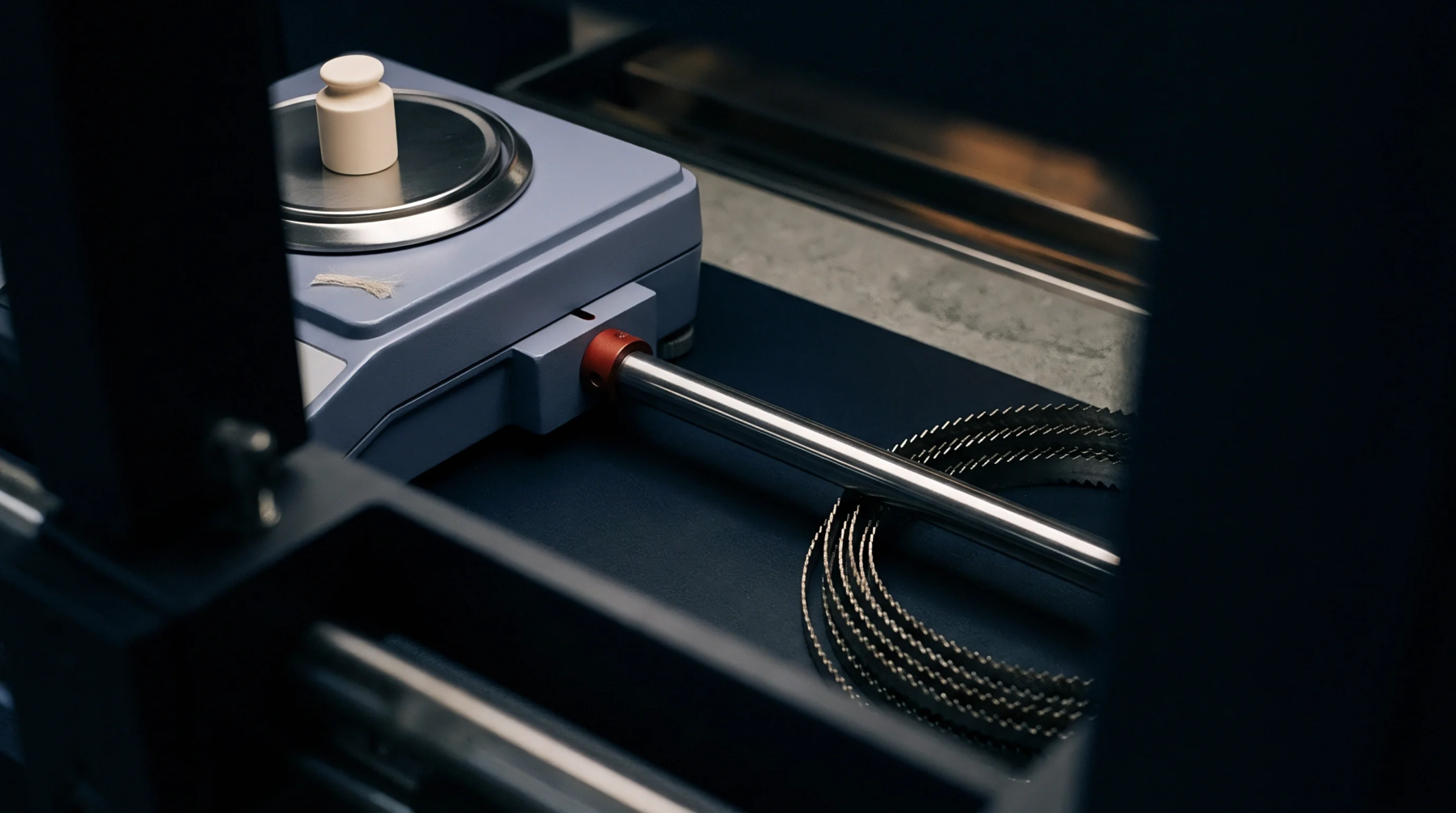
ISO 2370 gravimetric testing determines flax bundle linear density in millitex by weighing fifty-millimetre cut bundles under strict atmospheric conditioning.

Verify yarn moisture regain against standard commercial allowances to prevent count distortion, incorrect fabric weights, and overpayment on invoice scale mass.

Ultra-high count wet spinning yield requires precise trough temperature and water hardness control to plasticize middle lamella pectin without causing bundle mass leaching.

Controlled calcium pectate cleavage during enzymatic retting optimizes elementary flax fibre fineness, maximizing hackling yield and preventing wet-spinning end breaks at high yarn counts.

Optimal line hackling requires 11.5% to 13.0% regain to minimize pin penetration resistance, limit transverse fibre breakage, and maximize long-line sliver yield.

Calculated greige linen mass exceeds finished bleached weight because chemical scouring removes eight to fourteen percent of noncellulosic fiber mass.

Aligning chemical fiber dissolution data with customs non-preferential origin thresholds requires adjusting dry lab ratios for moisture regain and mass loss.

Commercial moisture regain calculations convert moist scale mass to statutory taxable weight, preventing overpayment of customs duty on absorbed transit water.

Determining warp cover factor and crimp allowance in linen weaving requires adjusting yarn packing metrics for flax fiber flattening under loom tension.

Balancing trough calcium ion diffusion rates with mechanical drafting speed prevents roving core failure and minimizes end breaks during wet flax spinning.

Linen yarn count conversions and theoretical maximum sett calculations require adjustments for fiber packing fraction, weave structure, and loom beat-up limits.

Dynamic tension peaks during linen shedding exceed static tension by 240 percent, demanding asymmetrical dwell timing to prevent costly single end breaks.

Optimizing wet spinning trough bath temperature and pH shifts middle lamella pectin into a controlled viscoelastic slip state to increase spinnable yarn count.

Commercial cloth settlement requires correcting raw lot weight to standard regain and adjusting reed width for structural crimp take-up.

Harmonized System mixture rules classify blended textiles by single predominant fiber weight calculated after adjusting oven-dry mass for commercial moisture regain.

Converting linen lea to direct tex requires dividing 1653.52 by the lea count to yield accurate greige mass calculations under standard moisture regain.

Resolving bast fabric solvent extraction discrepancies demands batch-specific d-factor calibrations and moisture regain controls near tariff border limits.

Dynamic strain mapping shows wet spun flax warp failures originate from cell wall dislocations exacerbated by high peak tension during open shed dwell.

Laboratory verification of pure linen composition requires ISO 1833 chemical dissolution paired with optical node analysis and standard moisture regain corrections.

Controlled enzymatic retting degrades middle-lamella pectin while preserving core microfibrils, increasing hackled line yields and yarn fineness limits.

Multi-variance yield formulae protect bast fiber contracts by adjusting landed mass for moisture, shive content, tow waste, and bundle tenacity degradation.

Evaluating hackling yield allowances requires linking retting degree, pin comb density, and trough temperature directly to landed yarn cost per finished meter.

Calculating standard moisture adjustments in scutched flax converts net scale weight to bone-dry mass before applying the twelve percent trade regain rate.
Expertise is a utility, not a secret. sentiention™ publishes its working knowledge as open reference: intelligence layer covering the materials it sources, the markets it enters, and the reference that serves both.