Basic High Density Linen Warp Tension Adjustment Framework
Maintaining precise electronic let off tension and backrest dampening on high density linen warps prevents yarn breakage and eliminates reed marks.


Behavior
Under tension, wet-spun linen yarn has an ultimate strain capacity of under three percent. High-sett warp configurations amplify mechanical stress because tight reed packing leaves little clearance for adjacent ends to move. Built from highly crystalline cellulose bundles bound by naturally stiff pectins, flax fibers offer negligible give; static force applied during beaming degrades yarn tenacity whenever shedding angles exceed twenty-two degrees, making control over high-sett warps critical.
During shedding, every warp end undergoes cyclic extension and relaxation. In high-density plain weaves with setts above 32 ends per centimetre, tension spikes sharply at full shed opening, where geometric lift requires more elongation than wet-spun flax can elastically recover. Lacking the elasticity of synthetic fibers, rigid ends snap under peak tension, while slack ends drop and leave reed marks ~ a balance static weights cannot maintain on fine linen.
Tension variation across the shedding cycle follows a non-linear curve, with mechanical strain peaking at maximum harness lift and reed beat-up. When the reed drives the inserted pick into the cloth fell, warp tension must hold the fell steady. Too much tension during beat-up breaks ends; too little allows the fell to bounce, leaving uneven pick spacing and reed marks.
| Yarn Count (NeL) | Warp Sett (ends/cm) | Elongation at Break (%) | Base Tension per End (cN) | Peak Shedding Tension (cN) | Warp Cover Factor |
|---|---|---|---|---|---|
| 26 | 28 | 2.2 | 38 | 62 | 0.72 |
| 36 | 32 | 1.9 | 28 | 48 | 0.76 |
| 40 | 36 | 1.7 | 22 | 41 | 0.81 |
| 60 | 42 | 1.4 | 14 | 28 | 0.86 |
High-density linen constructions rely on balanced geometric packing. When warp ends sit too close in the reed, friction between neighboring strands rises during harness motion, made worse by fiber hairiness that causes ends to cling together rather than separate cleanly.
- Yarn Modulus Gradient defines the structural resistance of wet-spun flax fibers to tensile deformation during harness displacement.
- Shed Opening Geometry governs the total linear stretch imposed on warp ends at peak harness separation.
- Beat Up Force Resistance prevents fell displacement when the reed compresses the newly inserted pick into the fell.
- Inter End Friction Factor measures the mechanical drag between adjacent hairy flax strands passing through dense reed dents.
A warp sheet maintained above three percent strain during harness lift will suffer continuous end breakage across every shaft movement.
Balancing base tension against dynamic shed extension lets high-density linen warps run without structural fiber damage. In practice, reducing shed height by three millimetres cuts peak tension spikes by up to fifteen percent, whereas operating flax warps near their breaking elongation threshold causes rapid deterioration under cyclic load.
Beam
Flanged spools carrying high-density flax require uniform radial packing density to prevent yarn embedding during unwinding, while the flanges maintain side support. Variations in winding density create tension differentials across the warp width. If outer ends sink into soft underlying layers on the beam, their effective unwinding radius shifts relative to the center, producing loose side ends or tight selvages during weaving.
Electronic let-off systems modulate beam rotation to match cloth take-up speeds continuously, providing precision that mechanical let-offs using counterweights and friction bands cannot deliver on non-extensible bast fibers. As beam diameter decreases, rotational speed must increase to maintain a constant yarn delivery rate; any sensor calibration error in tracking diameter leads to steady tension drift over time.
- Mount the beam on the loom let-off stands and verify axial alignment with the warp stop motion assembly.
- Set the base mechanical braking force to match the initial full-beam diameter and targeted end tension.
- Calibrate the proximity sensor to detect outer flange boundary depth without surface obstruction.
- Zero the load cell signals while the warp sheet remains completely un-tensioned.
- Apply manual tension until the line pressure matches thirty centinewtons per warp end across the reed.
- Execute ten slow-speed loom revolutions while observing real-time load cell outputs for lateral variance.
Full-beam winding densities for fine linen must stay between 0.55 and 0.62 grams per cubic centimetre under standard humidity.
Improper beam preparation creates structural faults that no adjustment at the backrest can fix. Soft spots on the beam collapse under unwinding tension, triggering sudden drops followed by sharp spikes that leave horizontal lines and band defects in the greige fabric.
Uneven winding density also causes permanent warp line shading and irregular pick densities that render finished cloth non-compliant with commercial specifications.

Whip
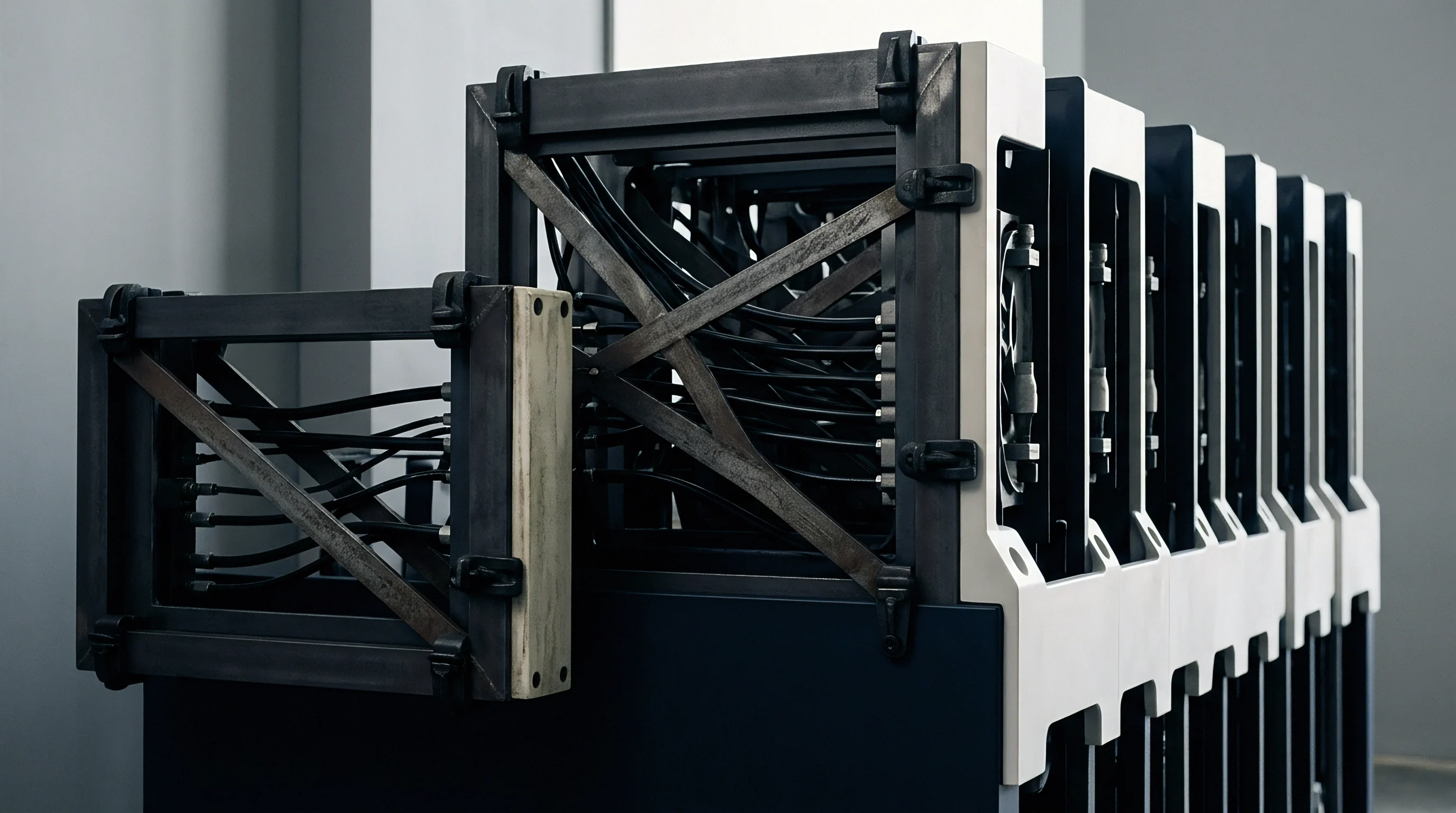
Backrest roller assemblies absorb dynamic tension spikes as the shed reaches maximum displacement, dampening peak forces that would otherwise shock brittle flax yarns. In high-density linen weaving, a stationary backrest roller exposes warp ends to unmitigated mechanical strain, whereas oscillating systems move forward toward the harnesses during shed opening and spring back as the shed closes.
Spring constants in the whip roll assembly dictate the speed and dampening capacity of the backrest response. If the spring rate is too stiff, the roller fails to yield during peak shedding and drives tension past the yarn breaking point. Conversely, an overly soft spring permits excessive roll movement, destabilizing the fell and disrupting pick spacing.
| Fabric Weight (gsm) | Weave Structure | Backrest Angle (degrees) | Spring Rate (N/mm) | Roll Stroke (mm) | Easer Motion Synchronization |
|---|---|---|---|---|---|
| 140 | 1/1 Plain | 180 | 14.5 | 6.5 | In Phase with Shed |
| 190 | 1/1 Plain | 175 | 18.0 | 8.0 | 20 deg Advanced |
| 240 | 2/2 Twill | 172 | 22.5 | 9.5 | 15 deg Advanced |
| 310 | 3/1 Satin | 168 | 26.0 | 11.0 | 30 deg Advanced |
Asymmetrical shed openings reduce overall tension strain on high-density flax warps. Setting the top shed line tighter than the bottom line alters geometry at the reed entrance, separating warp ends into two distinct planes during beat-up to prevent clashing and lower breakage rates.
Under standard ISO 7211 testing, warp tension drift exceeding ten percent produces measurable width variations across finished rolls.
The positioning of the whip roll relative to the breast beam establishes warp line geometry. Elevating the whip roll above the level plane increases tension on the lower warp sheet during shedding, forcing lower ends to clear the shuttle or rapier path cleanly while shielding upper ends from excessive friction.
High break rates are often attributed to inherent fiber irregularities when incorrect backrest dampening geometry is the true driver of mechanical failure.

Measurement
Electronic tensiometers positioned across the warp sheet feed real-time force data from continuous load-cell readings to the loom control unit, preventing warp streaks by signaling the digital let-off motor driver to adjust beam torque within milliseconds. This continuous monitoring detects systemic tension drift caused by ambient humidity changes or mechanical wear.
Multi-point tension measurement is essential across wide loom widths. A single center-mounted load cell cannot detect edge-to-center tension gradients caused by uneven take-up roll pressure or bowed whip rollers, whereas edge tensiometers identify selvage tight spots before structural yarn failure occurs.
- Load Cell Sensitivity Rating determines the smallest increment of force variation detectable by the electronic let-off controller.
- Signal Filtering Threshold removes high-frequency electronic noise caused by machine vibration without delaying let-off adjustment response.
- Proximity Sensor Accuracy measures beam diameter reduction to adjust basic let-off motor revolution scaling.
- Stop Motion Sensitivity triggers immediate loom shutdown when sudden tension drops indicate multiple end breaks.
Calibrating tension sensors requires physical verification with hand-held mechanical tensiometers to ensure digital sensor readings match manual gauges across the complete working range. Calibration tends to drift over extended production runs as lint accumulates and machine vibration takes a toll.
Continuous tension measurement across three points on the warp sheet reduces greige fabric defect points under ASTM D5430 grading.
Standard quality contracts specify maximum allowable tension variances across production batches. Keeping dynamic tension within plus or minus five percent of baseline prevents warp line distortion, and exceeding this tolerance window triggers automatic loom stops to prevent out-of-spec cloth.
Contracts governed by ISO 13934 tensile performance criteria demand strict adherence to these warp tension limits to guarantee uniform breaking strength in finished textiles.
Yield
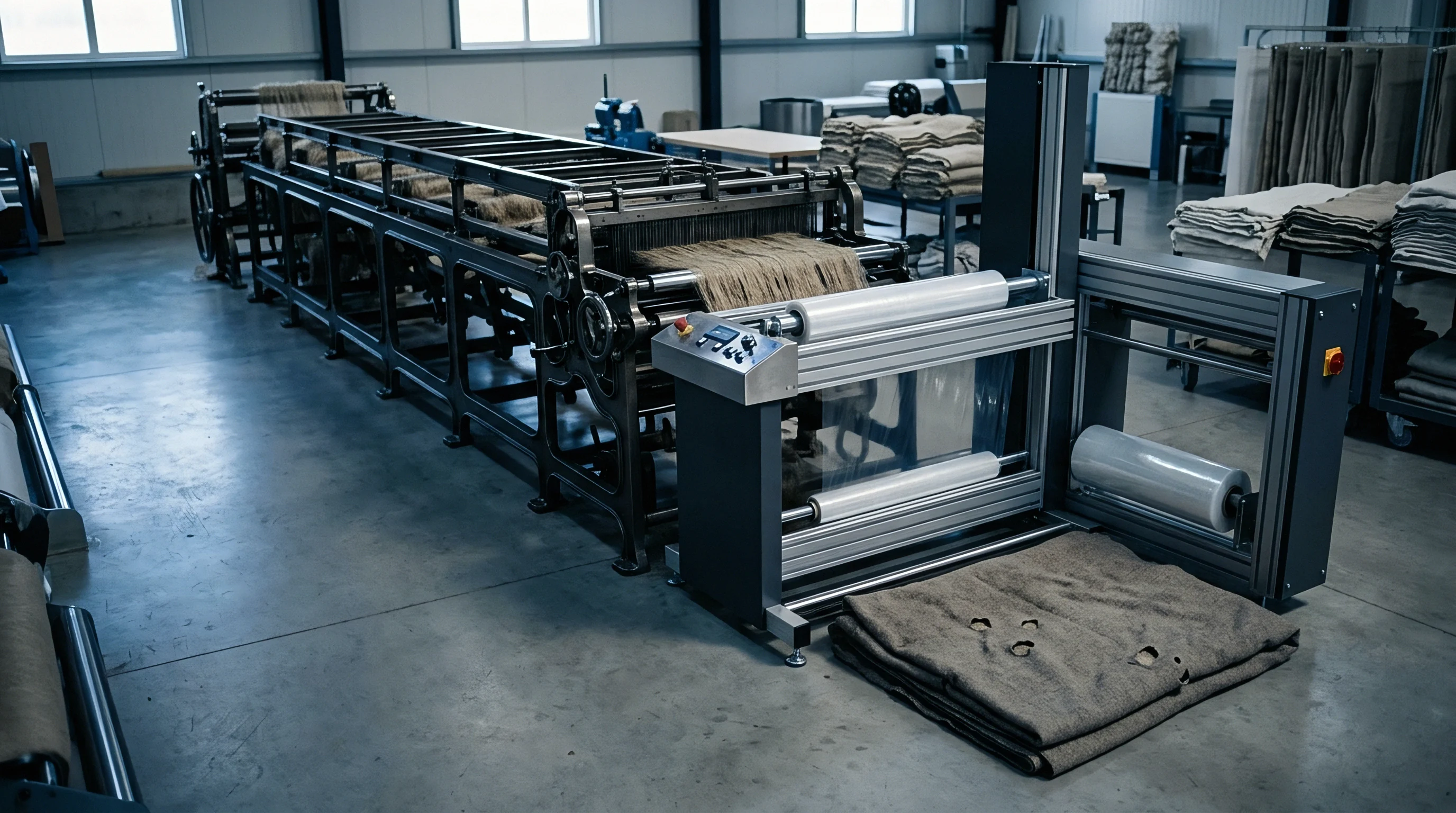
Loom efficiency directly governs the unit financial return of high-density flax production runs. High warp tension causes frequent end breaks, increasing operator downtime and creating starting marks that reduce greige cloth value ~ a factor compounded when wet finishing alters greige width and improper draft fails to balance harness lift. Maintaining uniform tension protects yarn tenacity and keeps the loom running.
Consider a production run of 100% wet-spun linen fabric operating at 350 picks per minute on a 220 centimetre wide rapier loom. Standard operating costs for this equipment land at 28.50 USD per loom hour. When warp tension settings are incorrectly tuned, end break frequency rises from 1.2 stops per 100,000 picks to 4.8 stops per 100,000 picks, with each stop requiring an average of three minutes for operator repair, clearing, and restarts.
| Operating Parameter | Un-Optimized Tension | Optimized Tension | Variance Impact |
|---|---|---|---|
| Loom Speed (PPM) | 320 | 360 | +12.5% Speed |
| Stops per 100k Picks | 4.8 | 1.1 | -77.0% Downtime |
| Loom Efficiency (%) | 76.4% | 89.2% | +12.8% Yield |
| Output per Shift (m) | 146.7 | 192.6 | +45.9 m/shift |
| Cost per Metre (USD) | 3.88 | 2.96 | -0.92 USD/m |
Operating a high-density linen warp at optimized tension levels increases net loom efficiency while reducing yarn waste. Minimizing starting marks and reed lines improves first-quality yield from 91 percent to over 98 percent, preventing losses from secondary market downgrades.
Calculating landed cost requires incorporating warp break penalties, loom hour rates, and waste allowances. When high-density linen warps face uncontrolled tension fluctuations, cumulative financial losses on a 5,000-metre order can exceed 4,600 USD in downtime and degraded material value.
Whether dynamic electronic dampening systems can completely eliminate micro-crimp variations across ultra-high-density linen warps without sacrificing maximum operating loom speeds remains an open question.