Calibrating Shed Humidity Control Parameters for High Speed Flax Weaving
Maintain localized shed humidity at 72-78% RH at 21°C dry bulb with 5-10 micron fogging to achieve 12% regain and prevent warp breaks in high-speed flax weaving.


Dew
Maintaining ambient relative humidity between 72% and 78% at a dry bulb temperature of 20°C to 22°C creates the precise physical threshold where flax yarn achieves structural stability during high-speed shedding. Primary cell walls in flax fibers are bonded by hydrophilic pectins, hemicellulose, and lignin. Unlike cotton, flax lacks a uniform spiral lumen, so its crystalline cellulose fibrils rely on bound water to lubricate intermolecular chains under tensile stress.
When a high-speed rapier loom runs at 600 picks per minute, shedding cycles subject warp yarns to tensile pulses exceeding 1.2 grams per dtex at frequencies above 10 Hertz. Below 65% relative humidity, dry flax yarn loses viscoelastic flexural yield; this causes localized stress concentrations at heald eyelet contacts, breaking individual ultimate fibers and shedding heavy lint.
Operating above 80% relative humidity introduces severe mechanical friction in the shed. Excess atmospheric water condenses on the yarn surface, swelling outer pectin layers into a tacky, viscous film that increases warp-to-warp clinging during shed division and forces the rapier head to collide with un-cleared warp ends. Calibrating moisture equilibrium requires balancing yarn tenacity against fiber friction: flax tenacity increases by 15% to 20% as moisture regain climbs from 7% to 12%, but regain above 13% degrades sizing film cohesion, stripping native starch coats from the yarn body and clogging reed dents.
Relative humidity maintained at 75% at 21°C dry bulb yields an optimal flax moisture regain of 11.8% on wet-spun Nm 39 warp beams.
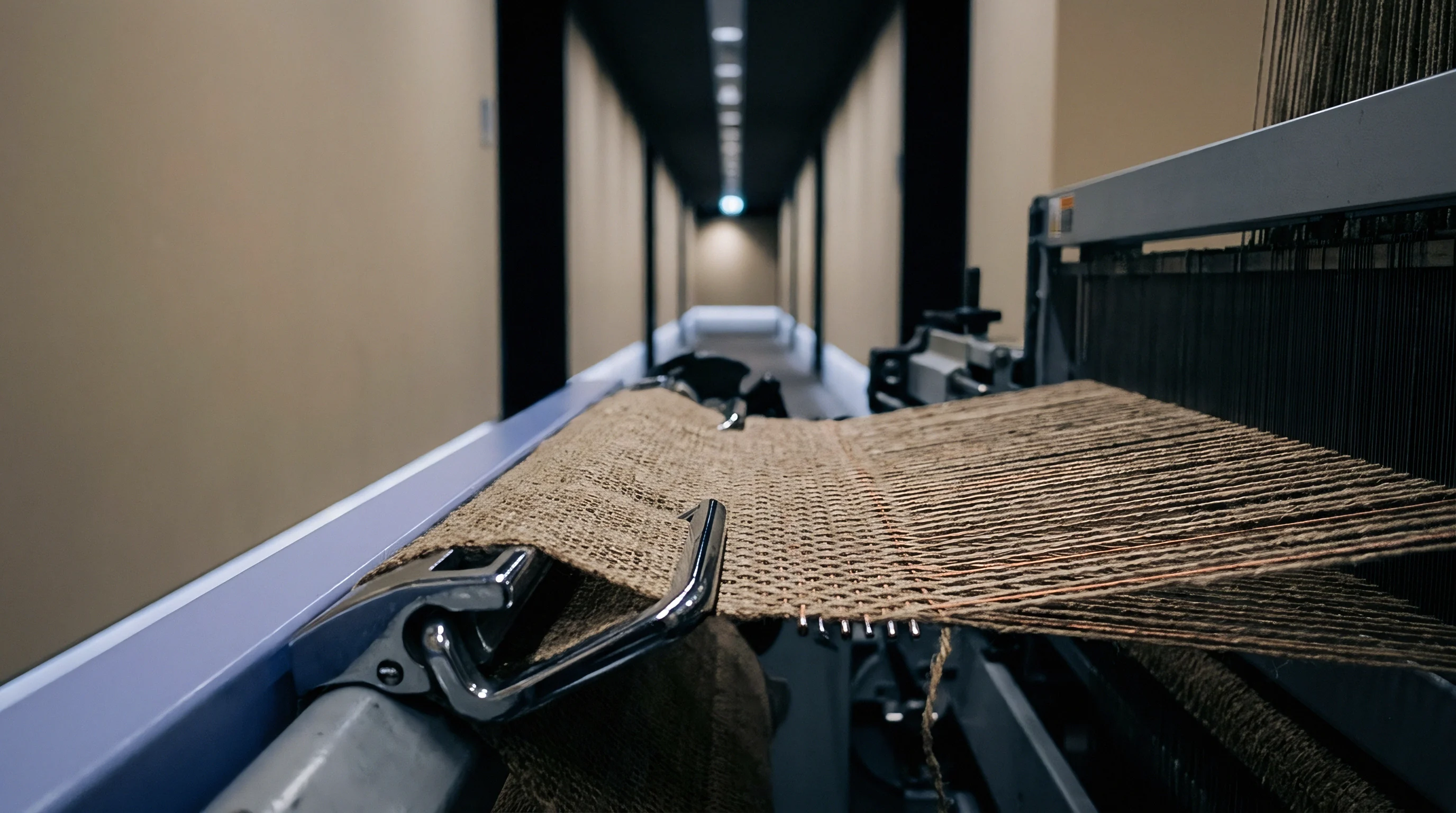
Target Regain Benchmarks
Water content inside the fiber dictates tensile work-to-break values. Wet-spun flax yarns carry higher crystalline alignment than dry-spun variants, making them especially sensitive to humidity drops during shed opening. A target regain of 11% to 12.5% provides maximum tensile retention without swelling fibers enough to alter yarn diameter.
When ambient moisture falls below 10% regain, fiber flexural rigidity increases by 35%, triggering brittle fractures directly behind the drop wires. Conversely, regain exceeding 13.5% expands yarn cross-sections by up to 8% in width, narrowing clearance between adjacent warp ends in a high-density reed and raising insertion resistance during pick arrival.

Thermal Setpoints
Dry bulb temperature dictates the saturation vapour pressure of weaving room air, governing moisture mass transfer into the yarn core. Operating the shed at 21°C maintains moisture transport kinetics without evaporating surface water before shed transition finishes. Higher room temperatures, such as 26°C, reduce flax equilibrium moisture content by 0.8% at identical relative humidity levels.
Air velocity around the loom shed must remain below 0.3 metres per second to prevent localized evaporation currents from stripping moisture from the top warp sheet. Enclosing the shed zone with upper acrylic baffles stabilizes ambient air mass and shields the open warp from hall circulation.
Shed temperature adjustments precede relative humidity modifications when fine yarns begin to drop fibers under high friction.

Equilibrium
Moisture absorption in flax yarn follows a distinct structural hysteresis curve where desorption and absorption paths diverge by up to 1.5% moisture content at identical relative humidity. A warp beam prepared in a conditioning room at 65% relative humidity and transferred to a 75% relative humidity weaving shed requires a specific moisture uptake period to reach equilibrium. Flax bundles absorb water through capillary filling of micro-voids, followed by chemical binding to hydroxyl groups on cellulose chains.
Dynamic equilibrium takes hours rather than minutes because dense beam winding delays water vapor diffusion into inner warp layers.
Unconditioned warp beams unrolling directly into high-speed rapier sheds undergo differential moisture absorption across their width. Outer warp ends absorb moisture instantly from shed air, expanding and softening, while inner ends remain dry and brittle. This moisture gradient creates uneven tension bands across the beam width, generating loose ends, irregular reed marks, and selvage tight spots during the initial 5,000 picks.
Storing warps inside the weaving hall micro-climate for at least 24 hours prior to mounting on the loom stand equilibrates package moisture content from flange to barrel.

Cellulose Hysteresis
Absorption curves for dry-spun Nm 26 flax demonstrate lower moisture uptake capacity compared to wet-spun Nm 60 flax due to residual surface waxes and coarse fibril bundling. Wet-spun yarns, stripped of non-cellulosic impurities during hot-water spinning, expose maximum hydroxyl binding sites to atmospheric vapor. The moisture equilibrium table below details performance boundaries across yarn counts under varying shed relative humidity settings at a constant 21°C dry bulb temperature.
| Flax Yarn Count (Nm) | Shed Relative Humidity (%) | Equilibrium Regain (%) | Yarn Tenacity (cN/tex) | Elongation at Break (%) | Warp Break Frequency (stops/10^5 picks) |
|---|---|---|---|---|---|
| Nm 26 Dry-Spun | 65 | 8.8 | 21.4 | 1.8 | 4.2 |
| Nm 26 Dry-Spun | 75 | 11.2 | 25.1 | 2.4 | 1.1 |
| Nm 26 Dry-Spun | 83 | 13.6 | 24.8 | 2.9 | 2.8 |
| Nm 39 Wet-Spun | 65 | 9.4 | 28.2 | 2.1 | 3.8 |
| Nm 39 Wet-Spun | 75 | 12.1 | 33.5 | 2.8 | 0.6 |
| Nm 39 Wet-Spun | 83 | 14.1 | 32.8 | 3.2 | 2.1 |
| Nm 60 Wet-Spun | 65 | 9.8 | 31.0 | 2.2 | 5.1 |
| Nm 60 Wet-Spun | 75 | 12.5 | 37.2 | 3.1 | 0.8 |
| Nm 60 Wet-Spun | 83 | 14.5 | 36.1 | 3.5 | 3.4 |
| Data measured at 21°C dry bulb over 100,000 pick test sequences on 190 cm rapier looms operating at 620 picks per minute. | |||||

Conditioning Dwell Times
Beam core penetration rates determine the mandatory queue duration for incoming warp beams. Dense warps wound at high tension (exceeding 30 cN per end) exhibit low vapor permeability, requiring up to 48 hours to reach moisture equilibrium throughout the package. Inserting beam core perforation ducts connected to forced-air conditioning units reduces conditioning dwell time to 6 hours by driving humidified air radially outward from the beam barrel to the outer layer.
Standard purchasing specifications under ISO 139 demand that yarn moisture verification occur after 24 hours of exposure to standard atmosphere at 20°C and 65% relative humidity before physical testing.
Weaving unconditioned beams creates continuous selvage distortion, uneven pick spacing, and irrecoverable width loss across the finished cloth length.

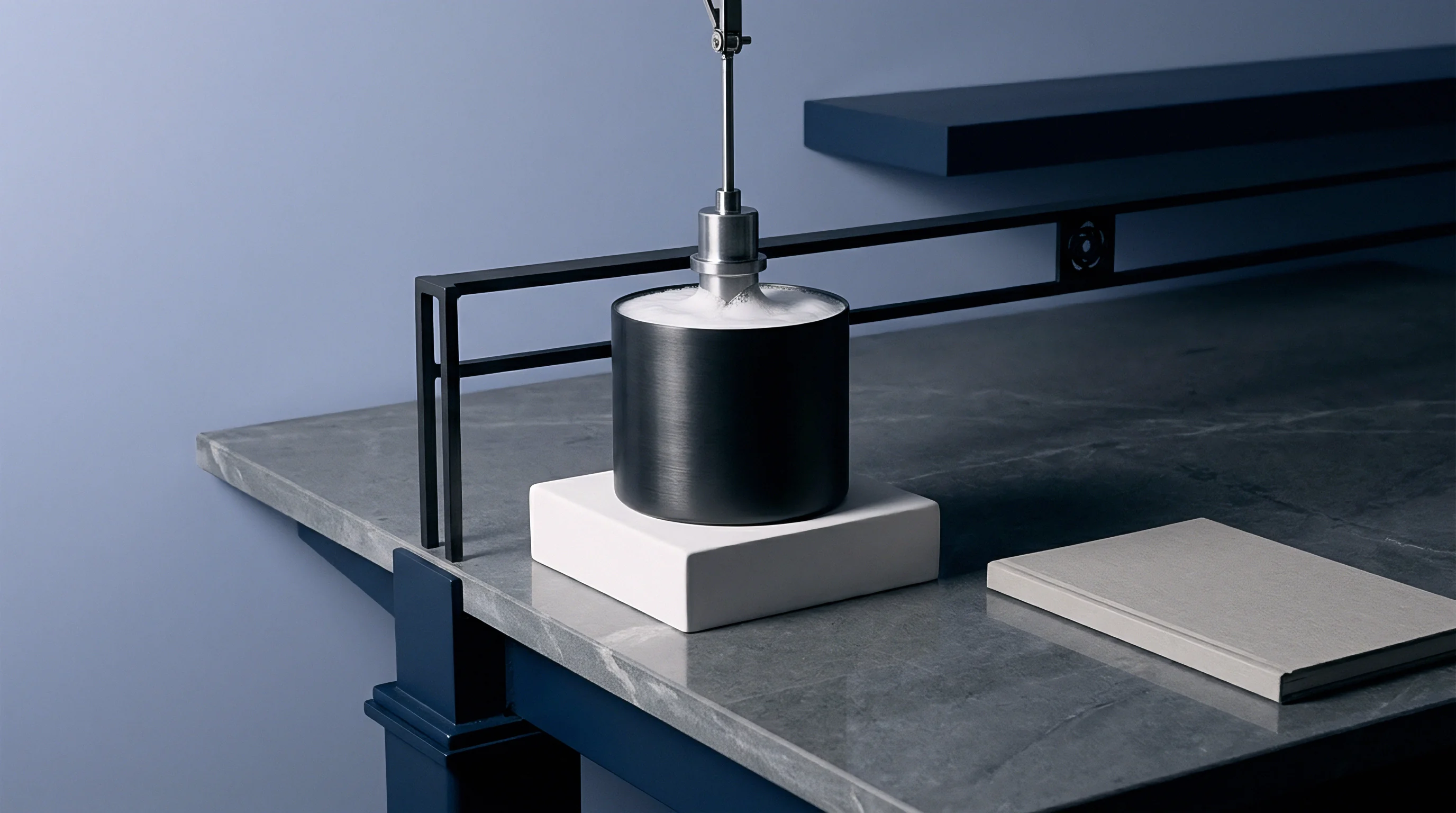
Atomization
Direct localized fogging over the weaving shed zone delivers moisture directly to active warp ends without drenching structural machine components or electrical enclosures. High-pressure water atomization operating at 70 to 100 bar pumps purified water through stainless steel nozzles with orifices between 0.1 and 0.2 millimetres, generating droplet diameters of 5 to 10 microns. Droplets in this range evaporate fully into ambient air within 400 millimetres of discharge, raising local relative humidity without forming water droplets that fall onto running warp sheets.
Compressed-air atomizing nozzles mix low-pressure water with compressed air at 2 to 3 bar, producing droplets down to 3 microns that must not wet the warp. Ultrasonic atomizers use piezoelectric transducers vibrating at 1.7 Megahertz to generate a fine, cold fog that integrates instantly into air currents. Choosing between system configurations depends on shedding zone geography, compressed air consumption costs, and local water quality parameters.
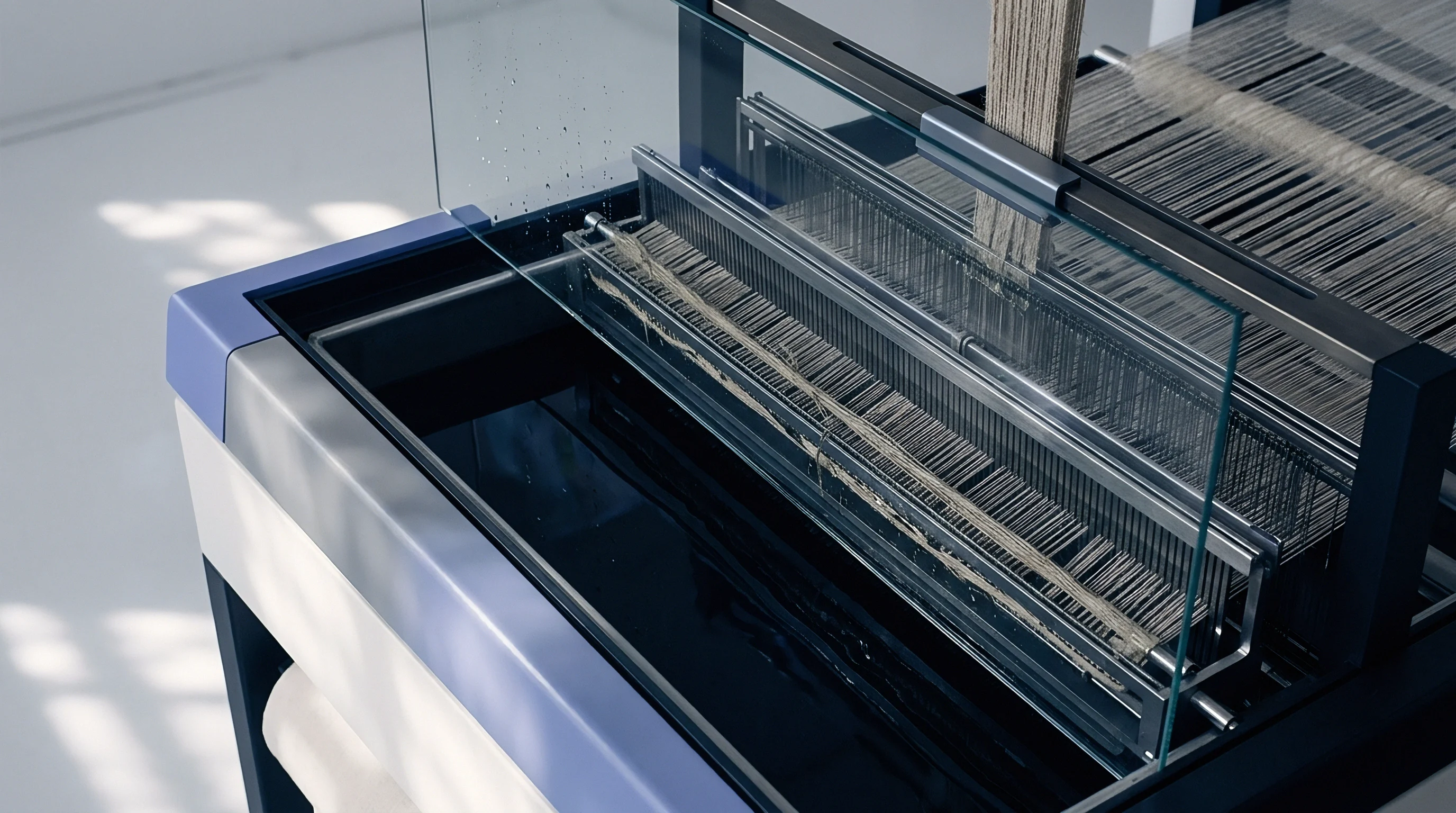
Droplet Diameter Distribution
Droplet size control prevents water spotting on greige cloth. Droplets exceeding 20 microns fail to evaporate before contacting warp yarns, producing localized liquid water deposits that cause instant, uncontrolled swelling of size films and turning starch binders into gelatinous spots that stick adjacent warp threads together. Droplets smaller than 3 microns drift out of the active shed zone via convection currents created by heat from loom motor drives, lowering system efficiency.

At What Point Does High Humidity Trigger Warp Cling?
Clinging occurs when relative humidity at the shed line exceeds 82% or when droplet condensation wets the surface of flax yarns. Surface tension forces between wet, hairy flax fibers create microscopic water bridges across adjacent warp ends. During shed opening, heald frames move in opposite directions, but water bridges prevent clean warp sheet separation.
The rapier tape hits reluctant ends, triggering false warp stop indications or creating floats across the weave pattern. Maintaining fogging droplet spectra strictly between 5 and 10 microns eliminates liquid surface deposition while holding localized atmospheric moisture at target level.
- Nozzle Orifice Fouling Mineral precipitation reduces fluid discharge rates, distorting spray geometry and dropping local moisture levels by up to 15% across specific loom sections.
- Over-Saturated Micro-Climates Excessive localized misting causes water condensation on heald wires, rusting metal surfaces and creating black abrasive drag marks on light-colored warp yarns.
- Localized Thermal Drafts Unshielded loom motor heat plumes push mist plumes upward, away from the active warp line, starving the shed zone of required humidity.
- Compressed Air Contamination Trace lubricating oil in atomizer air supply lines deposits onto warp yarns, causing permanent dye resist defects in finished linen fabric.
Localized moisture deficits frequently reflect inadequate mill ducting layouts rather than poor droplet evaporation dynamics within the spray zone.

Dynamics
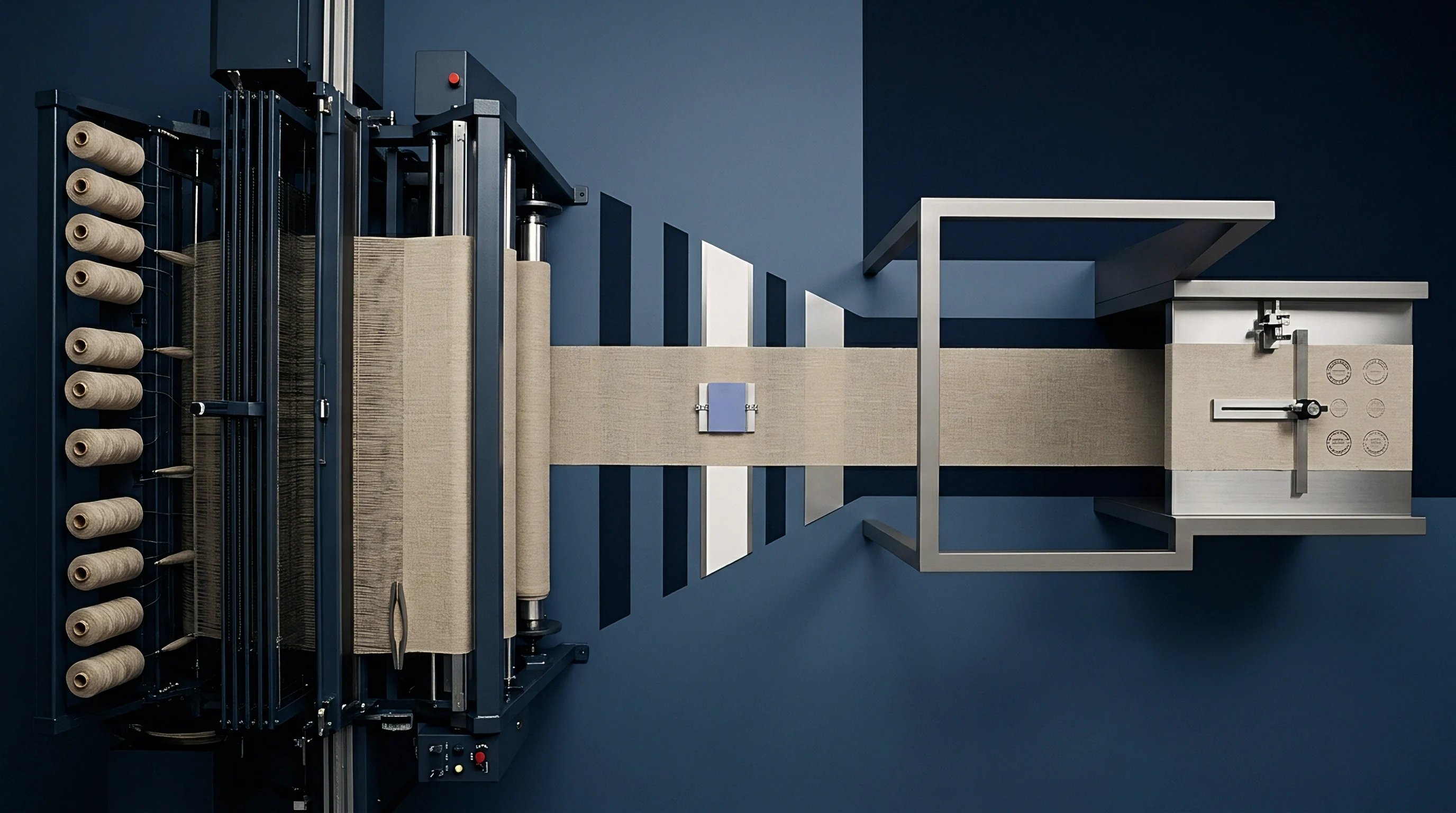
High-speed insertion dynamics impose complex friction and bending forces on flax yarns at the fell of the cloth. At 650 picks per minute, shedding motion opens and closes the warp sheet 10.8 times per second, while linear speeds of heald frames reaching 1.2 metres per second subject warp ends to abrasive rubbing inside heald eyes and reed dents. Flax fibers possess a high modulus of elasticity ~ ranging from 60 to 80 Gigapascals when dry ~ which drops to 40 Gigapascals at optimum moisture regain.
Lower modulus increases fiber pliability, allowing warp threads to flex smoothly around drop wires and heald eyes without internal structural shear.
Dynamic friction testing reveals that the friction coefficient between flax yarn and polished steel heald wires reaches a minimum of 0.22 at 75% relative humidity, where static charge drops to zero. Dropping humidity to 60% raises the friction coefficient to 0.38 due to surface roughness and electrostatic charge accumulation. Higher friction generates heat through mechanical rubbing, accelerating water loss from the yarn core and accelerating degradation during continuous loom operation.
Shed Peak Stress Arithmetic
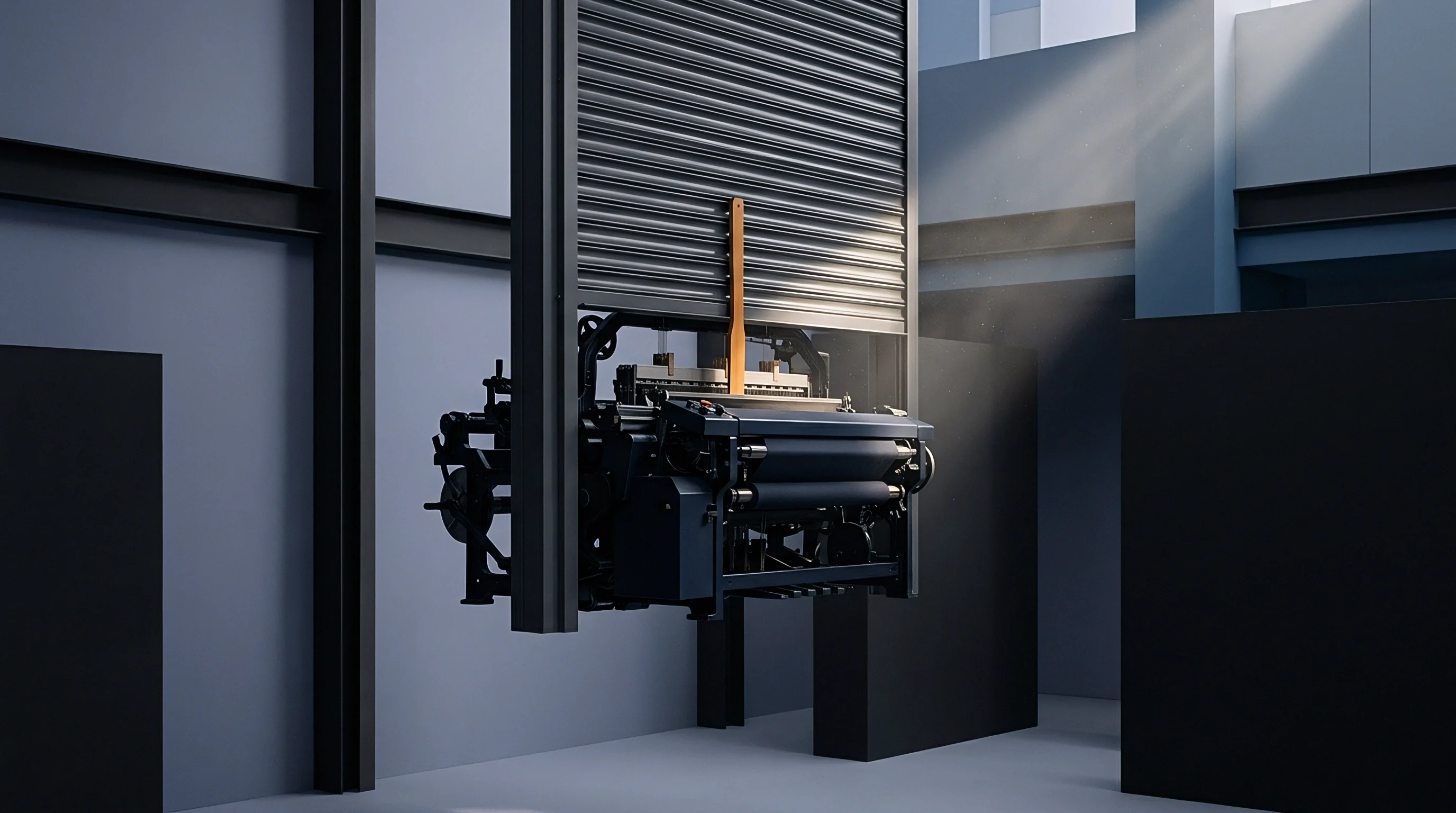
Peak dynamic tension calculation demonstrates the protective effect of controlled moisture. Consider an Nm 39 wet-spun flax warp running at 650 picks per minute with a basic static warp tension of 35 grams per end. During shed opening, geometric extension adds dynamic strain, increasing end tension according to yarn modulus:
Static Tension: T_s = 35 grams = 0.343 Newtons
Dynamic Strain: E = 1.8%
Dry Elastic Modulus (60% RH): E_dry = 70 Gigapascals = 7,000 cN/tex
Wet Elastic Modulus (75% RH): E_wet = 42 Gigapascals = 4,200 cN/tex
Yarn Linear Density: Nm 39 = 25.6 tex
Peak dynamic stress calculated under dry conditions yields:
T_peak_dry = T_s + (E E_dry Tex) = 0.343 N + (0.018 700 N/tex 25.6 tex) = 0.343 N + 322.5 N = Extreme Overload (Yarn Failure)
In practice, strain relaxation and fiber yield attenuate this theoretical dry peak, but dynamic force spikes exceed yarn break tenacity (typically 33 cN/tex, equal to 8.4 Newtons). When moisture regain lowers the effective modulus to 4200 cN/tex, peak stress drops below yarn fracture thresholds, allowing continuous high-speed shedding without end breaks.

Size Film Cohesion
Sizing materials applied to flax warps must maintain plastic properties under continuous dynamic shear. Polyvinyl alcohol and modified potato starch blends require moisture to maintain film flexibility; dry sizing coats turn brittle and flake off as size dust. This loss exposes bare flax fibrils to reed abrasion, forming fuzz balls that obstruct rapier path entry.
The performance matrix below compares size film retention across variable humidity environments.
| Sizing Formulation Base | Shed RH (%) | Abrasion Resistance (cycles to breach) | Dynamic Friction Coeff (µ) | Shedding Fluff Rate (g/kg yarn) |
|---|---|---|---|---|
| Native Potato Starch | 65 | 420 | 0.36 | 12.4 |
| Native Potato Starch | 75 | 890 | 0.25 | 3.1 |
| Native Potato Starch | 82 | 610 | 0.31 | 7.8 |
| Modified Starch + PVA (80/20) | 65 | 680 | 0.31 | 6.2 |
| Modified Starch + PVA (80/20) | 75 | 1450 | 0.21 | 1.2 |
| Modified Starch + PVA (80/20) | 82 | 1120 | 0.28 | 2.9 |
| PVA + Carboxymethyl Cellulose | 65 | 810 | 0.28 | 4.5 |
| PVA + Carboxymethyl Cellulose | 75 | 1820 | 0.19 | 0.8 |
| PVA + Carboxymethyl Cellulose | 82 | 1390 | 0.26 | 1.9 |
- Film Elasticity Alignment Sizing agents select elongation capacity matching the natural elastic recovery of flax fibers under dynamic tension.
- Desorption Resistance Modified starches resist rapid water loss when passing through high-temperature friction points in the shed.
- Friction Reduction High lubricant retention inside the size film drops yarn-to-metal rubbing forces during reed beat-up.
- Viscosity Retention Polyvinyl alcohol formulations resist liquefaction under high atmospheric relative humidity levels.
Sizing films formulation parameters require recalculation whenever shed target relative humidity moves outside a 5% baseline band.
The precise threshold where microscopic fiber pectin softening transitions from friction reduction to sticky surface drag under high sliding velocity remains unmeasured across varying wet-spun yarn counts.


Verification
Continuous monitoring of shed humidity requires calibrated sensors positioned within the active weaving zone rather than along room perimeter walls. Wall-mounted capacitive sensors miss localized micro-climate drops caused by high-volume loom extraction systems or overhead lighting heat. Sensors placed 300 millimetres directly above the warp line, centered between the back rest roller and the heald frames, yield real-time relative humidity measurements reflecting true yarn environment conditions.
While moisture meters demand weekly calibration, optical chilled-mirror hygrometers provide baseline reference accuracy, leaving capacitive thin-polymer sensors to handle daily operational shed monitoring. Capacitive sensors drift when exposed to size dust, airborne lint, and micro-droplet oil contamination. Fitting sensor heads with sintered stainless steel porous filters prevents dust deposition while allowing water vapor passage, extending sensor calibration stability intervals.

Sensor Positioning Geometry
Air movement inside a high-speed weaving room creates micro-climatic zones around individual looms. Drives, main motors, and shedding motions generate heat, dropping local relative humidity by 4% to 7% compared to main hall supply air channels. Positioning sensors within the thermal plume over the main drive motor leads to false humidity control responses that over-saturate the warp sheet.
Mount sensors on vibration-isolated brackets anchored directly to the loom frame above the middle warp sheet zone.
Calibration Cycles
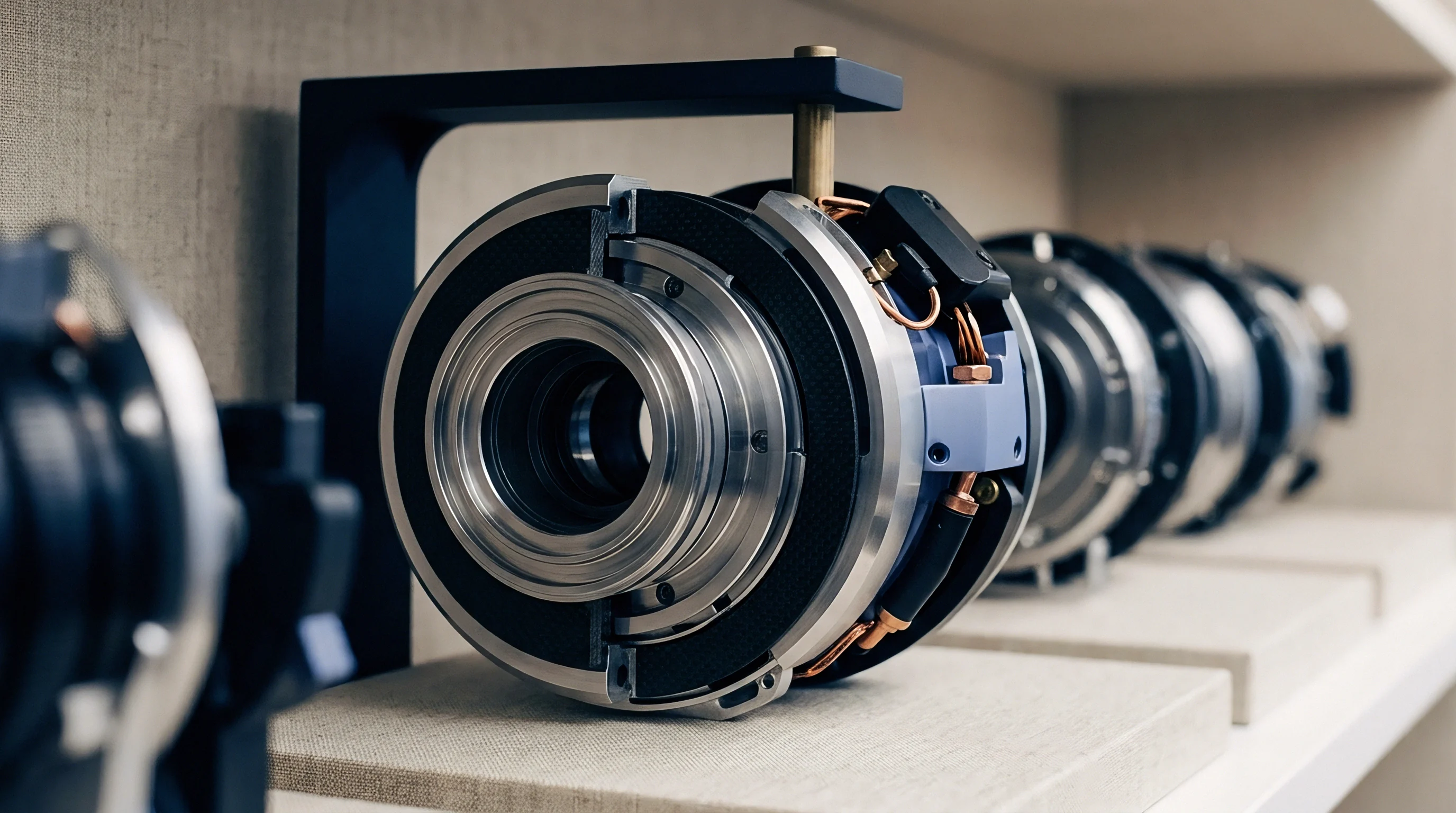
Maintaining measurement precision across multi-loom sheds demands systematic sensor verification against certified humidity standards. Standard reference salt solutions, such as sodium chloride at 75.3% relative humidity and magnesium chloride at 32.8% relative humidity, provide repeatable bench verification points. Field calibration protocols enforce sensor replacement or recalibration when variance exceeds 2.0% relative humidity against reference standard values.
- Isolate the sensor casing from active power supplies and unclip the protective sintered filter shield.
- Apply the reference salt solution chamber directly over the capacitive element, ensuring complete atmospheric seal.
- Adjust the potentiometer output line to match reference equilibrium values after a 30-minute thermal stabilization period.
- Record the baseline reading across a three-point humidity range covering 60%, 75%, and 85% relative humidity steps.
- Re-seal the housing gaskets and verify transmitter communication with the central building management system.
Inserting standard moisture verification tolerances per ISO 139 into supply agreements transfers the financial risk of humidity-induced yarn degradation directly back to the yarn spinner.


Yield
Loom stop counts govern mill margins. Uncontrolled shed humidity triggers warp breaks, lint accumulation, reedy cloth faults, and poor loom efficiency. Modern rapier looms running flax warps target total stop frequencies below 1.5 stops per loom hour.
Dropping humidity to 62% raises warp break rates to 8.5 stops per loom hour, dropping overall shed efficiency from 88% to 64%. Lost production time cannot be recovered, directly inflating loom hour conversion costs.
Loom hours are fixed capital expenses. When loom efficiency drops, fixed overheads including building depreciation, power base fees, climate control energy, and direct loom operator labor spread across fewer produced fabric metres. Because greige weight increases with regain, moisture control directly affects fabric linear mass, width retention, and finished cloth yield per yarn ton consumed.
Loom Hours and Defect Arithmetic
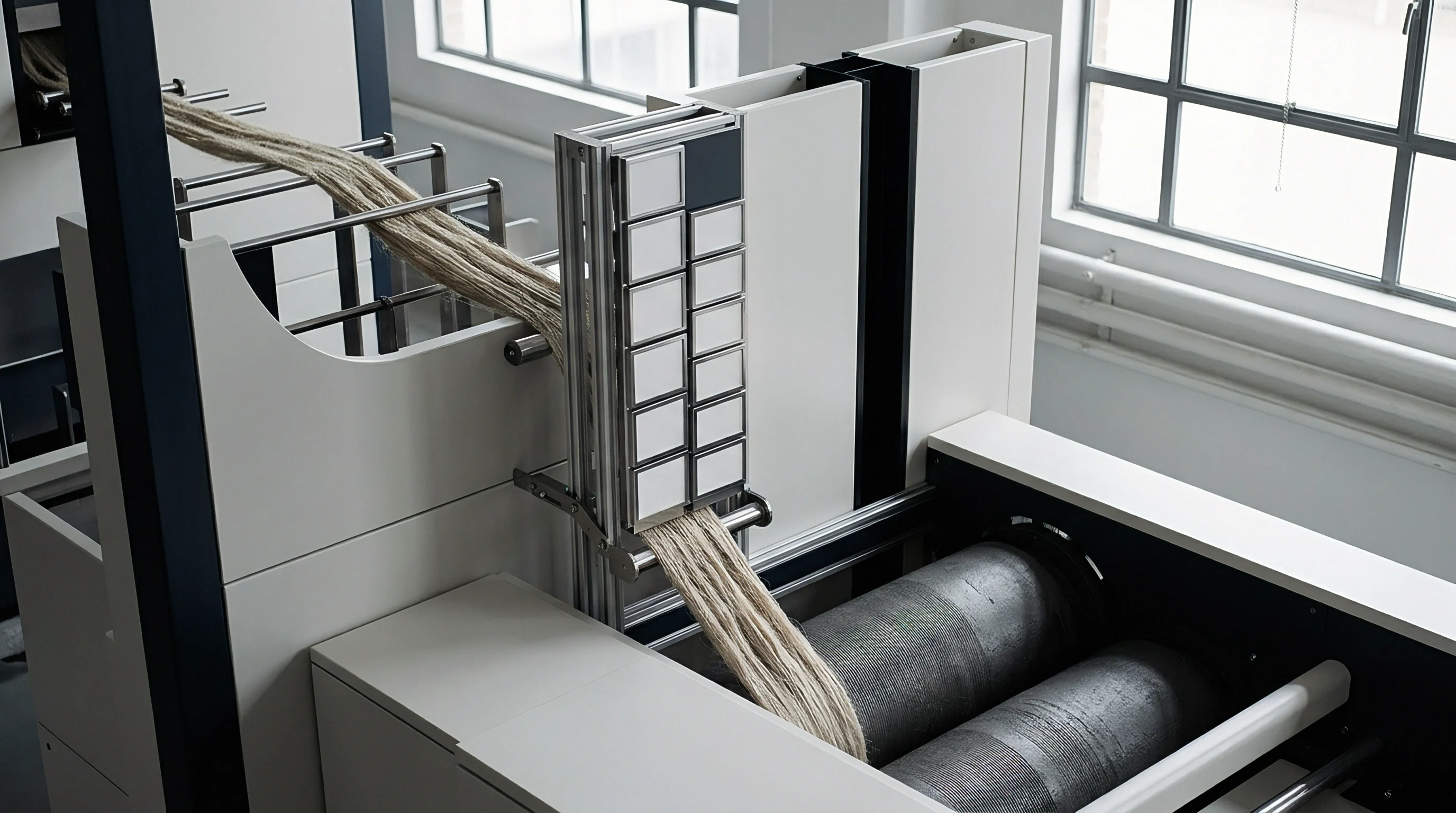
Quantifying financial impacts requires calculating total conversion cost per metre under controlled versus uncontrolled humidity regimes. Consider a weaving shed operating 50 rapier looms on Nm 39 plain weave flax cloth (190 cm reed width, 24 picks/cm) at 620 picks per minute. Total shed operating cost equals 45.00 EUR per loom hour.
Baseline Production at 88% Efficiency (75% RH Controlled):
Theoretical Speed: (620 picks/min 60 min) / 24 picks/cm / 100 cm/m = 15.5 metres/hour
Actual Output: 15.5 m/h 0.88 = 13.64 metres/loom hour
Loom Conversion Cost: 45.00 EUR / 13.64 m = 3.30 EUR per metre
Uncontrolled Production at 65% Efficiency (62% RH Uncontrolled):
Actual Output: 15.5 m/h 0.65 = 10.07 metres/loom hour
Loom Conversion Cost: 45.00 EUR / 10.07 m = 4.47 EUR per metre
Cost Penalty: 1.17 EUR per metre produced
On a 50,000-metre contract order, maintaining incorrect shed humidity parameters increases direct production costs by 58,500 EUR in wasted loom hours alone, excluding costs associated with second-quality fabric downgrades from frequent loom stop marks.
Shed Operating Budgets
Although operating high-pressure fogging systems incurs water purification and pumping electrical loads, these energy expenses represent a fraction of lost conversion margins caused by defects like reed marks. The financial analysis below illustrates the economic returns achieved through precise shed micro-climate management.
| Environmental Control Regime | Average Efficiency (%) | Warp Stops (per loom hour) | Reed Mark Defects (%) | Metre Yield (per 1,000 loom h) | Conversion Cost (EUR/m) |
|---|---|---|---|---|---|
| Uncontrolled Shed Air (55-65% RH) | 62.4 | 7.8 | 4.2 | 9,672 | 4.65 |
| Central Hall Air Humidification (70% RH) | 79.1 | 2.9 | 1.5 | 12,260 | 3.67 |
| Direct Shed Local Fogging (76% RH) | 89.3 | 0.8 | 0.2 | 13,841 | 3.25 |
| Over-Saturated Micro-Misting (85% RH) | 71.2 | 4.1 | 3.8 | 11,036 | 4.08 |
Installing localized ultrasonic or high-pressure nozzle systems directly above the shedding line pays back capital outlay within 120 operating days when running medium to fine flax yarns at speeds above 500 picks per minute. The reduction in broken ends and stop marks secures first-quality fabric yields above 98% on standard four-point inspection frames.