Establishing Sizing Adhesion Standards for Fine Linen Warps
Establishing sizing adhesion standards for fine linen warps requires matching binder shear strength to yarn surface wax energy and size penetration depth.

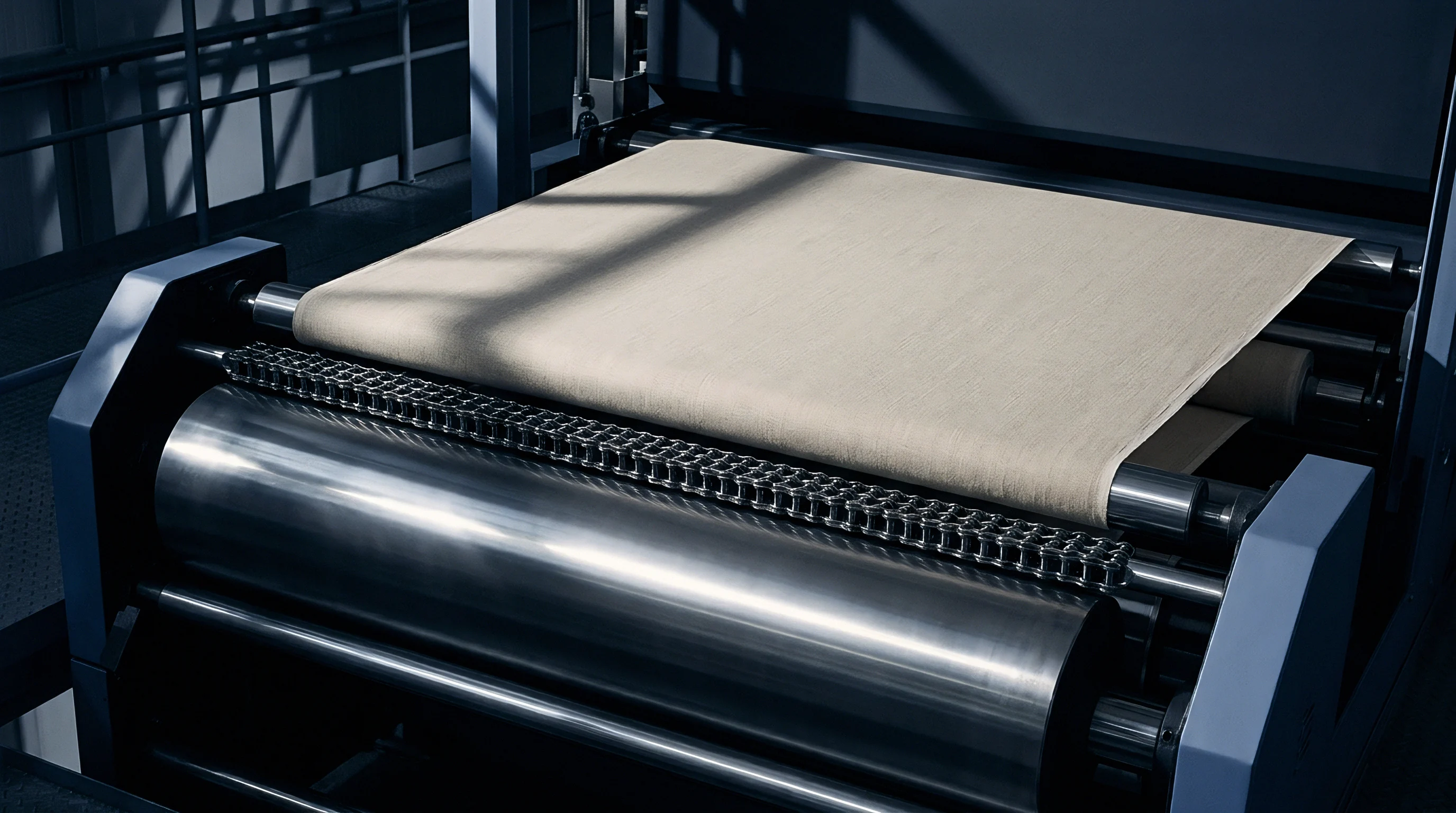
Strand
Fine wet-spun linen yarns in counts from Ne 40/1 down to Ne 80/1 (15 tex to 7.4 tex) have physical properties that complicate warp preparation. Flax fibers exist as technical bundles ~ individual ultimates held together by middle lamellae. Unlike uniform synthetics or more elastic cotton, flax has low ultimate strain, typically breaking between 1.5% and 2.5% elongation.

Morphological Structure and Flax Fiber Cohesion
Single flax ultimates measure fifteen to twenty-five micrometers in diameter, bound into bundles by middle lamellae rich in pectin and hemicellulose. Wet spinning draws and twists these bundles into fine yarn, but protruding fiber ends still stick out along the axis. Surface hairiness on fine linen warps leads to inter-yarn entanglement when the shed opens on high-speed looms, while pectin residues alter size wetting.
Without a protective size sheath, high tension during shedding pulls technical bundles past each other, creating thin spots and strand breakage.
The internal cohesion of wet-spun flax yarn depends entirely on inserted twist and natural pectin bonding. Twist multipliers for fine linen warps typically run between 3.8 and 4.5 tex-base twist factors. Too much twist makes the yarn lively and prone to snarling, while too little drops bare yarn tensile strength below shedding thresholds.
Sizing has to bridge fiber gaps, lay down surface hairiness, and penetrate the outer annulus of the yarn without making it brittle.
A fine flax yarn with unremoved surface wax demands surfactant modification of the bath to achieve deep binder penetration.

Interfacial Wetting Energy of Raw Linen
Hydrophobic surface constituents like flax waxes and fatty acids create high contact angles against aqueous size formulations. Raw grey flax contains between 1.5% and 3.2% extractable non-cellulosic matter by dry weight, whereas scoured or semi-bleached yarns carry fewer surface lipids, dropping to 0.4% by weight. Sizing liquor surface tension must fall below the surface energy of the flax fiber bundle to ensure thorough wetting within the brief immersion time inside the size box.
| Yarn Count (Ne / tex) | Single Strand Tenacity (cN/tex) | Elongation at Break (%) | Surface Wax Content (%) | Target Size Pick-Up (%) |
|---|---|---|---|---|
| Ne 40/1 (14.8 tex) | 18.5 – 21.0 | 2.1 – 2.4 | 1.8 – 2.5 | 10.0 – 12.0 |
| Ne 50/1 (11.8 tex) | 19.0 – 22.5 | 1.9 – 2.2 | 1.6 – 2.2 | 11.0 – 13.0 |
| Ne 60/1 (9.8 tex) | 20.0 – 24.0 | 1.7 – 2.0 | 1.4 – 2.0 | 12.0 – 14.0 |
| Ne 80/1 (7.4 tex) | 21.5 – 25.5 | 1.5 – 1.8 | 1.2 – 1.7 | 13.0 – 15.0 |
Structural integrity in fine linen warps requires a balance between surface film encapsulation and bundle core penetration. Running at immersion speeds of sixty meters per minute leaves less than 0.5 seconds of bath contact time. Sizing surfactants ~ typically non-ionic ethoxylated fatty alcohols added at 0.2% to 0.5% dry solids weight ~ lower bath surface tension from 72 mN/m down to 32 mN/m, enabling quick wetting so sizing polymers can move into inter-fiber capillaries before squeegee roll compression.
Thoroughly scoured yarns need lower surfactant loadings than unbleached grey yarns.
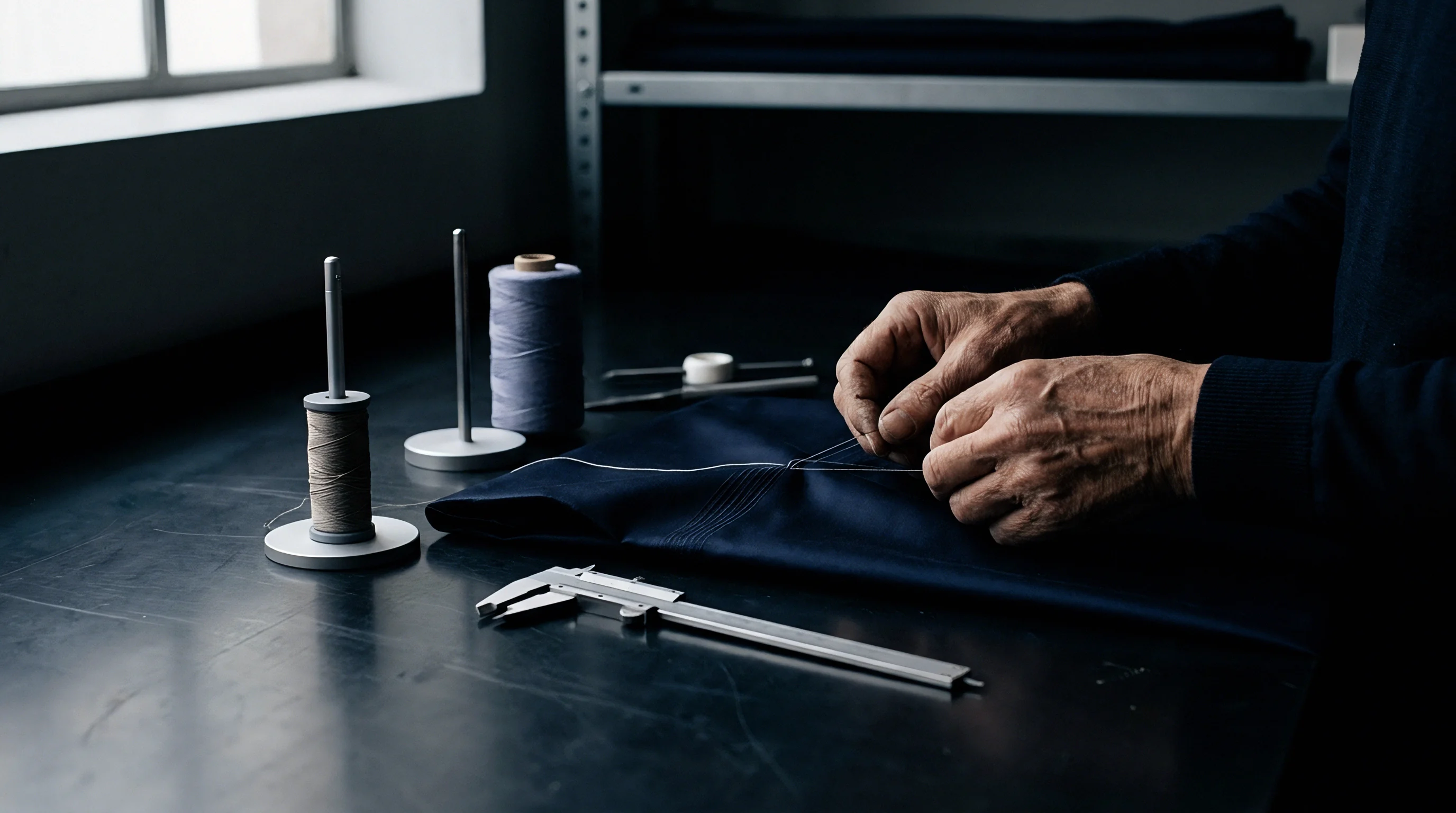
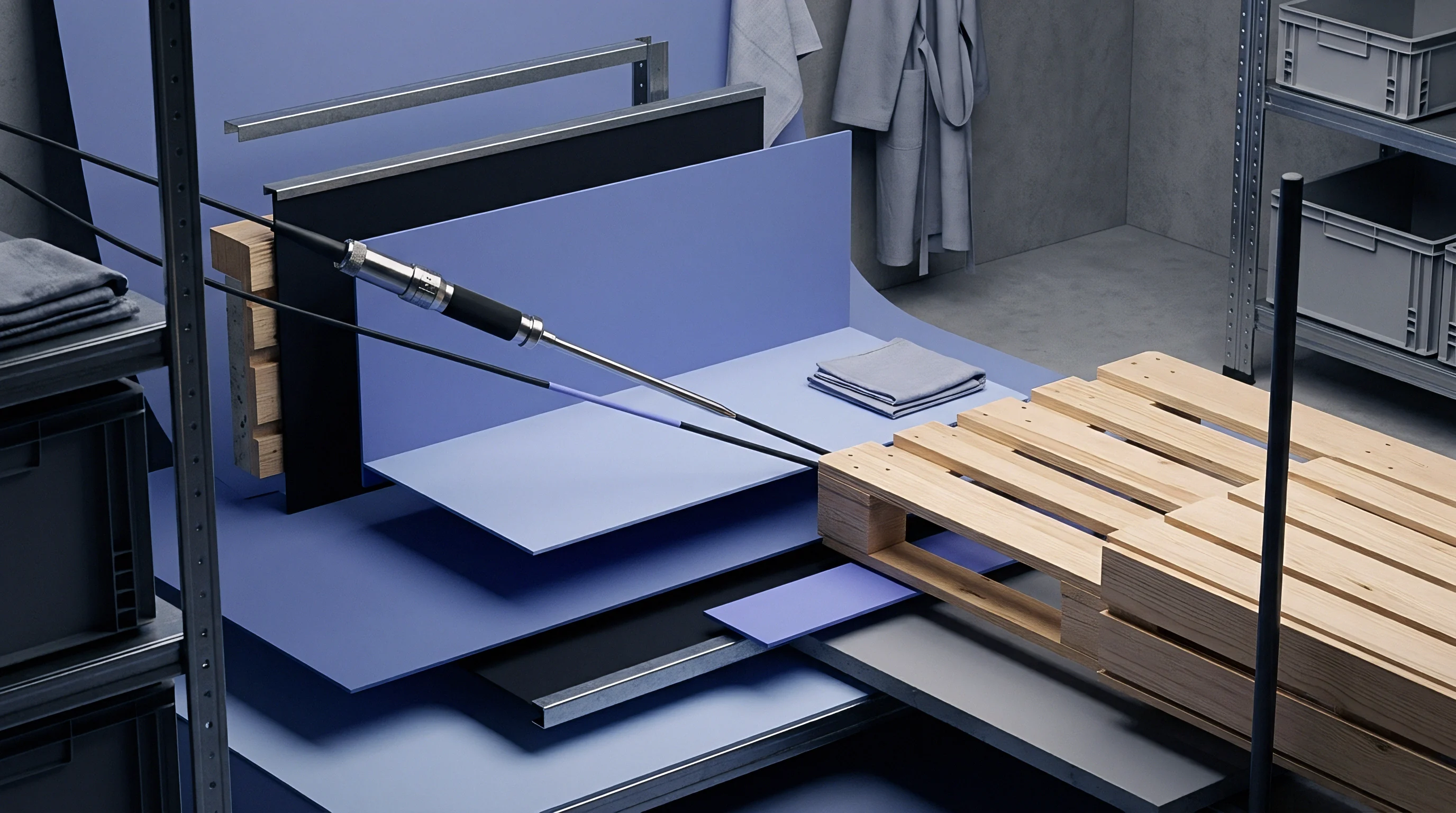
Binder
Film-forming chemical agents selected for fine linen must bond strongly to cellulosic surfaces while retaining sufficient elasticity. Starch derivatives, polyvinyl alcohol (PVA), and acrylic copolymers form the core of modern sizing recipes for flax. Raw native starches are unsuitable here because they retrograde quickly and form brittle films, whereas modified options like hydroxyethylated or carboxymethylated starches maintain stable solution viscosity and better film elongation.
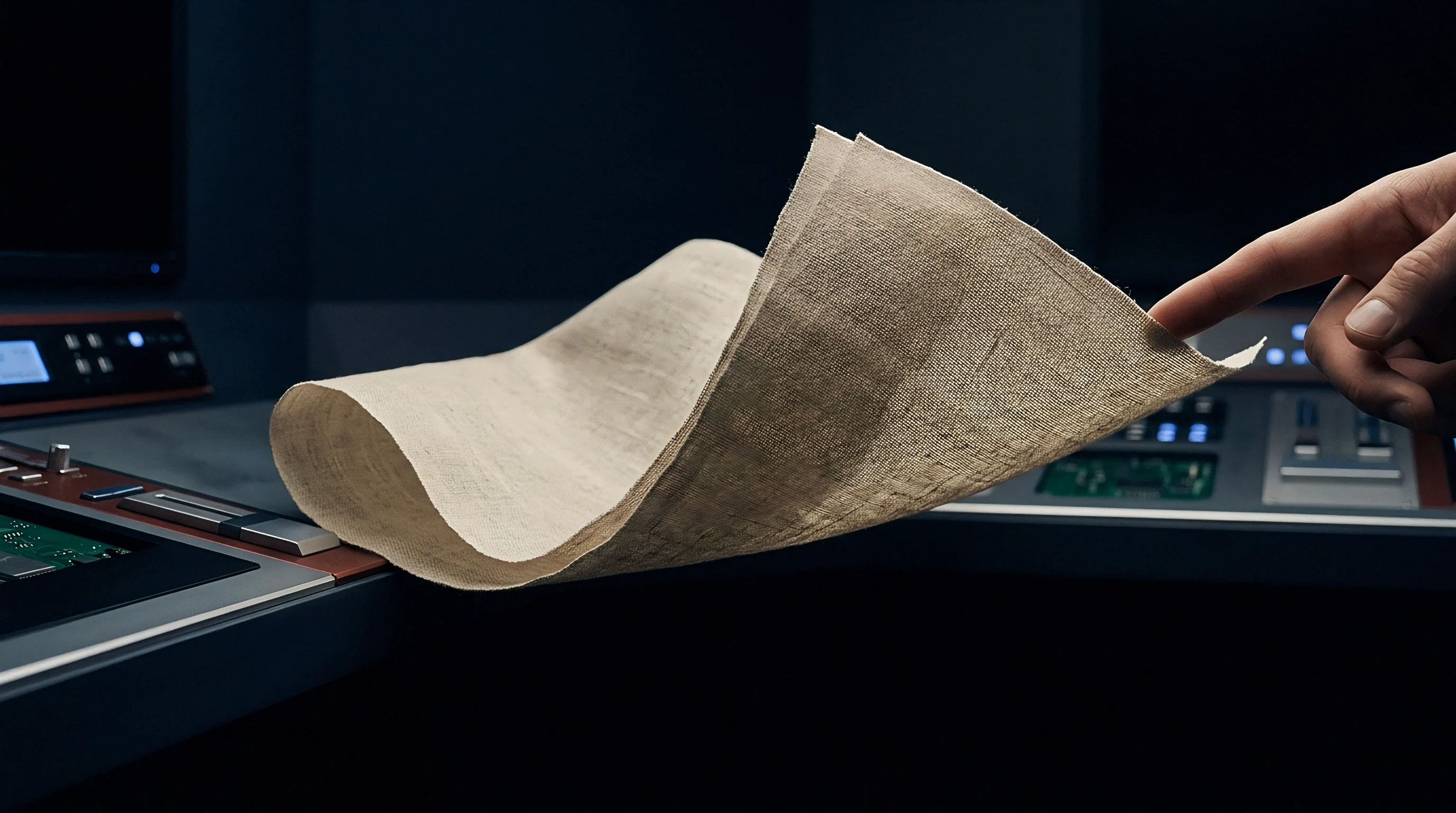
Polymer Chemistry for High Cellulosic Affinity
Blending fully hydrolysed polyvinyl alcohol with cold-water-soluble hydroxyethylated starch polymers establishes strong hydrogen bonding across hydroxyl groups on the flax surface. Fully hydrolysed PVA (98% to 99% hydrolysis) delivers film tensile strength up to 65 MPa with elongation up to 15%, unlike pure starch films that tend to crack under tension. A blend of 60 parts modified starch to 40 parts PVA creates a tough size envelope around fine linen strands, while acrylic copolymer additives at 5% to 10% binder weight improve adhesion to residual waxes without hurting desizing efficiency.
The glass transition temperature of the dried film dictates how the warp behaves under loom shed humidity. In sheds operating at 65% to 70% relative humidity, sizing films need plasticization to prevent micro-cracking during rapid reed impacts. Adding glycerol or ethoxylated tallow softeners at 1.5% to 3.0% total dry chemical solids lowers the binder glass transition temperature below 20 degrees Celsius, keeping the size sheath flexible through multi-axial bending as the shed opens.

Viscosity Tuning and Size Ring Penetration
Concentrated sizing liquors running above eighty-five degrees Celsius maintain dynamic viscosity between forty and sixty millipascal-seconds. High dynamic viscosity restricts penetration to the outermost fiber layer, causing the size to shell off under abrasion. Conversely, low dynamic viscosity lets liquor migrate deep into the core, oversaturating internal fibers to yield a harsh yarn that snaps under bending loads, while excessive binder tack causes yarn sticking.
Controlling penetration depth preserves yarn mechanical properties. Size penetration measures the radial thickness of the sized outer coat against total yarn radius. Fine linen warps run best when the size penetration ratio stays between 20% and 30% of yarn radius, locking surface fibers into the yarn body while leaving an unsized flexible core to absorb shedding fatigue.
- Brittle film flaking occurs when pure starch formulas dry under low relative humidity, shedding fine starch dust into the reed and wire heddles.
- Adhesion debonding happens if PVA molecular weight is too high to penetrate inter-fiber spaces before surface gelation takes place.
- Yarn skinning emerges when high friction against loom droppers peels the size envelope off unsized core fibers during shedding cycles.
- Warp end sticking develops during cylinder drying if binder tackiness remains active past forty degrees Celsius.
Warp end breakage is frequently attributed to uneven yarn spinning variations rather than inadequate binder adhesion.

Bench
Laboratory assessment of sizing performance relies on mechanical property measurements under standard conditions of twenty degrees Celsius and sixty-five percent relative humidity. Evaluating adhesion requires separating pure binder film properties from overall composite yarn strength. Cast sizing films measuring 0.1 millimeter thick undergo tensile testing to determine ultimate tensile stress, yield point, and work to break.

Standardized Methods for Interfacial Shear Strength
Quantifying binder adhesion to individual yarn bundles relies on a modified pull-out setup where single strands are pulled axially from a cured film matrix. ASTM D903 peel testing principles, adapted for textile yarns, measure the force needed to peel a continuous sizing film off a parallel sheet of flax fibers. Interfacial shear strength (ISS) calculated from these pull-out forces shows how effectively the binder grips the raw cellulosic substrate.
Abrasion testing simulates mechanical stress in the loom shed. Sized yarn samples mounted on multi-strand web testers, such as Zweigle G551 or Reutlingen warp abrasion simulators, undergo cyclic abrasion under constant tension against rotating steel pins. Unsized Ne 60/1 fine linen yarn fails after an average of 85 abrasion cycles, whereas effective sizing elevates abrasion resistance beyond 1,200 cycles before strand rupture occurs, and iodine staining can be used to expose any unsized core.
A specification clause mandating ISO 13934 tenacity testing with under twelve percent dry size add-on prevents post-desize fabric harshness.
What Shear Velocity Pinpoints Sizing Peel Failures?
Dynamic testing across displacement rates from five to five hundred millimeters per minute separates adhesive debonding from cohesive film fracture. Low shear velocities show chemical peel adhesion at the fiber-binder interface, while high shear velocities test brittle shock resistance during rapid shed openings. Formulations with interfacial shear strength above 4.5 MPa prevent film peeling during high-speed rapier insertion.
| Test Parameter | Standard Method | Target Performance Threshold | Failure Mode Indication | |||
|---|---|---|---|---|---|---|
| Single Strand Tenacity | ISO 2062 / ASTM D2256 | Minimum 24.0 cN/tex (sized) | Insufficient fiber bundle locking | Calculated Ratio | 15% to 25% over grey yarn | Low binder cohesion or film brittleness |
| Yarn Abrasion Cycles | Zweigle G551 (150g tension) | Greater than 1,200 cycles to break | Premature film peeling and fuzzing | |||
| Film Tensile Strength | ASTM D882 (Cast Film) | 35.0 to 50.0 MPa | Soft film gelation or excess plasticizer | |||
| Interfacial Shear Strength | Modified Micro-Bond Test | Greater than 4.5 MPa | Adhesive failure at fiber surface |
A laboratory evaluation illustrates size adhesive calculations. An unsized Ne 60/1 grey linen yarn shows a baseline single-strand breaking force of 1.85 Newtons and elongation at break of 1.8%. Applying a 12% dry solids add-on of a modified starch-PVA binder raises single-strand breaking force to 2.45 Newtons and shifts elongation to 2.2%.
Total tensile work to break increases from 1.66 millijoules in raw yarn to 2.70 millijoules when sized. The sizing efficiency index (SEI), defined as the percentage increase in work to break normalized by size add-on percentage, yields:
SEI = ((2.70 – 1.66) / 1.66) (100 / 12) = 5.21
Sizing formulations with an SEI above 4.5 yield stable performance on high-speed weaving looms, whereas values below 3.0 indicate poor interfacial adhesion or excessive core embrittlement. It remains undetermined whether microscopic film micro-cracks formed during drying act as initiation sites for fatigue failure over prolonged shedding cycles.

Audit
Operational consistency across sizing box runs depends on continuous monitoring of chemical concentration, bath temperature, and squeegee roll dynamics. Sizing box temperature must hold within 85 to 88 degrees Celsius. Drops in temperature increase liquor viscosity, driving excessive size pick-up and uneven film distribution, while proper nip pressure and clean lease splits preserve yarn surface quality and moisture balance.

Sizing Box Operation and Squeegee Pressure Calibration
Dual-dip and dual-nip sizing box configurations process fine flax yarn sheets by immersing ends at controlled roller depth. Pneumatic squeegee rolls apply pressure across the wet warp sheet to regulate wet pick-up. For Ne 60/1 linen running at 50 meters per minute, a squeegee pressure of 4.2 kilonewtons per linear meter achieves target wet pick-up of 90% to 100%, yielding a final dry size add-on of 12% after moisture evaporates.
A squeegee roll nip force of four kilonewtons per meter at eighty-five degrees Celsius yields an optimum twelve percent dry add-on for Ne 60/1 yarn.
Drying cylinder arrangements control film stress development. Fine linen warps pass over Teflon-coated drying cylinders heated by graduated steam pressures. Initial cylinders operate at 110 degrees Celsius to start drying without pulling binder to the outer yarn crown; middle cylinders run at 130 degrees Celsius to finish removing core moisture, and final cylinders taper down to 90 degrees Celsius to protect starch polymers from thermal degradation.
Warps exit the drying section at a target moisture regain of 7.5% to 8.5%.

Gravimetric Verification of Dry Size Solids
Desizing sample swatches through hot aqueous extraction determines net chemical add-on mass. Warp samples taken right after dry-leasing undergo gravimetric analysis, requiring controlled drying and extraction steps to separate added size solids from natural flax moisture and non-cellulosic impurities.
- Cut a ten-gram warp sample from the beam immediately following the headstock winder, sealing it in an airtight glass container to prevent moisture exchange.
- Weigh the sealed sample on an analytical balance accurate to zero point one milligram to record the initial wet sample mass.
- Dry the specimen in a forced-air laboratory oven at one hundred five degrees Celsius for two hours until reaching constant mass to calculate initial moisture content.
- Extract the dry sample in an enzymatic desizing bath containing alpha-amylase at seventy degrees Celsius for forty-five minutes to digest modified starch binders.
- Rinse the extracted fiber sample in boiling distilled water followed by cold water washing to remove residual PVA and acrylic binder components.
- Re-dry the extracted linen sample at one hundred five degrees Celsius to constant mass, subtracting dry extracted fiber weight from original dry sized yarn weight to establish net size add-on percentage.
A purchase contract clause specifying maximum size extractable mass variance of zero point five percent across beams forces sizing mills to calibrate squeegee pneumatic controls before every production set.

Economics
Financial evaluations of sizing quality weigh chemical expenditure against shed productivity and high-speed rapier loom stop frequency. Low-grade formulas using unmodified corn starch cost roughly $0.85 per kilogram of dry chemical blend. Advanced recipes built on modified hydroxyethyl starches, fully hydrolysed PVA, and synthetic acrylic binders cost between $2.40 and $3.10 per kilogram, though higher spend on size chemistry often reduces net manufacturing costs by preventing loom stoppages.

Warp Stop Frequency and Rapier Loom Efficiency
Unplanned loom stoppages from warp end breaks create direct labor costs and drag down overall shed utilization. Modern rapier looms running a 190-centimeter reed width fine linen construction (Ne 60/1 warp, 32 ends per centimeter, 28 picks per centimeter) operate at 480 picks per minute. At 85% planned efficiency, a single loom produces 14.7 meters of grey fabric per hour.
Calculating the financial impact of warp stops requires tracking weaver intervention time and lost loom picks. Each warp break stops the loom for an average of 2.5 minutes ~ a loss of 1,200 potential picks per incident. A machine experiencing 4.5 warp stops per 100,000 picks loses 4.8% of theoretical capacity to repair downtime alone.
Upgrading to a high-adhesion binder lowers warp stop frequency down to 0.8 stops per 100,000 picks, recapturing 3.9% of lost shed efficiency.
Lowering warp stops from four down to under one per hundred thousand picks increases loom shed output by six percent.
Landed Cost Arithmetic per Finished Meter
A financial comparison shows how upgrading sizing chemistry impacts unit fabric costs across production runs. Consider a 50,000-meter contract for fine linen shirting fabric woven on modern rapier machines, where loom capacity costs run at a fixed operating rate of $28.50 per loom hour.
| Cost Component / Metric | Basic Starch Blend | Modified PVA-Starch Blend | High-Adhesion PVA-Acrylic Blend |
|---|---|---|---|
| Chemical Cost ($/kg dry size) | $0.85 | $2.45 | $3.10 |
| Size Add-On Percentage (%) | 14.0% | 12.0% | 11.5% |
| Sizing Chemical Cost per Meter ($) | $0.042 | $0.103 | $0.125 |
| Warp Stops per 100,000 Picks | 4.8 | 1.4 | 0.7 |
| Loom Weaving Efficiency (%) | 76.5% | 86.2% | 89.4% |
| Fabric Production Rate (m/loom-hr) | 13.2 m/hr | 14.9 m/hr | 15.4 m/hr |
| Loom Hour Cost per Meter ($) | $2.16 | $1.91 | $1.85 |
| Net Weaving Cost per Meter ($) | $2.202 | $2.013 | $1.975 |
Spending an additional $0.083 per meter on high-adhesion binder chemistry reduces loom-hour allocation costs by $0.31 per meter due to higher running speeds and fewer warp breaks. Across a 50,000-meter order, the high-adhesion binder saves $11,350 in total landed manufacturing costs while delivering fabric free from warp streaks and shed fuzzing. Under-sizing fine linen warps leads to fuzzing, mass end breaks, unrecoverable downtime, and severe unit margin loss.