Optimizing Wet Pick up Values in Flax Warp Slashing
Optimizing flax wet pick-up between 80 and 95 percent balances film encapsulation with core penetration, minimizing loom warp breaks and sizing liquor cost.
Squeeze
Flax warp yarns possess physical characteristics that separate bast fiber preparation from synthetic or staple cotton sizing. Unlike cylindrical cotton fibers, flax bundle structures feature central lumen cavities, irregular transverse dimensions, and variable surface energy. Pectins resist uniform chemical penetration, altering liquid retention dynamics during immersion in the slasher box.
Wet pick-up percentage measures liquid weight absorbed by dry yarn relative to initial yarn mass. Achieving precise wet pick-up control on linen warps balances chemical solids deposition against thermal drying energy requirements.
Bast Fiber Capillary Absorption
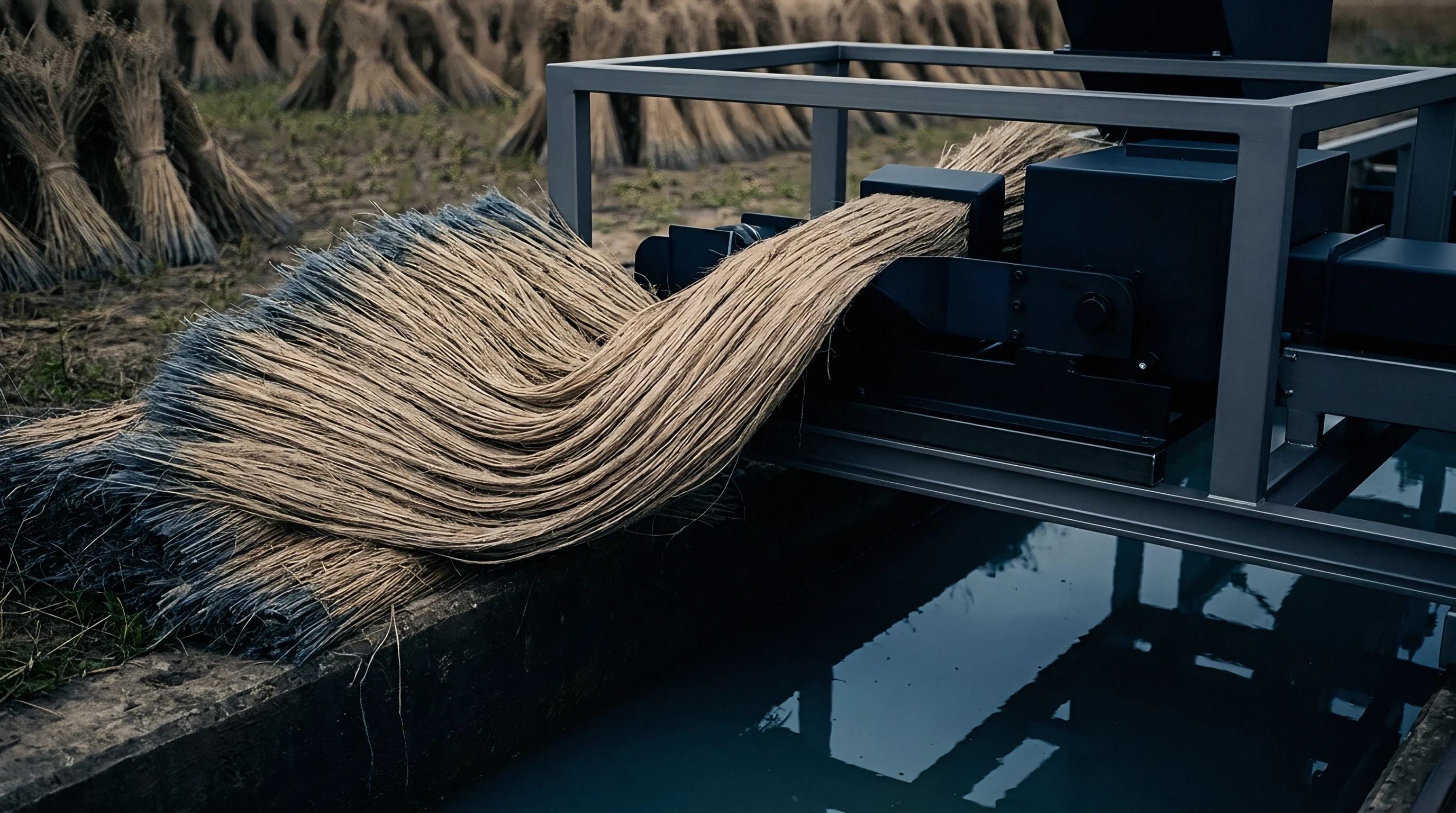
Linen yarns absorb size rapidly, with immersion time in slasher troughs typically running between half a second and one second at operational speeds. During this window, liquid size enters yarn structures through capillary wicking along longitudinal fiber boundaries and inward movement through open lumens. Wet-spun flax yarns present dense, compact fiber assemblies held together by residual natural pectins, whereas dry-spun yarns exhibit open bundle architectures with abundant air voids.
These structural differences dictate liquid volume retention before the yarn sheet enters the squeezing roller nip.
- Lumen wall capillary suction draws low-viscosity liquid into the center of wet-spun bundles within milliseconds of immersion.
- Surface pectin concentrations impede chemical liquor absorption when sizing temperature drops below seventy-five degrees Celsius.
- Fiber hairiness distribution requires sufficient outer liquid mass to bind loose surface fibrils back onto the main stem.
- Non-uniform yarn diameter produces irregular nip pressure distribution across the width of the slasher warp sheet.
A wet pick-up rate of 85 percent at 85 degrees Celsius delivers optimum sizing liquor penetration for Nm 26 wet-spun flax warps.
When liquid absorption exceeds target boundaries, wet yarn sheets carry excess water into the drying cylinder section, where energy consumption scales directly with wet pick-up volume. Oversaturated flax warps require elevated cylinder surface temperatures that can cause localized thermal degradation of natural bast fibers. Excessive drying heat renders flax brittle, leading to longitudinal split faults during subsequent loom shedding.
Speed shifts alter contact time, so balancing wet pick-up against size box chemical concentration allows operators to maintain required dry size add-on targets without over-wetting the yarn. Whether high-pressure squeezing can achieve uniform core penetration in high-count dry-spun flax warps without breaking fine bundle linkages remains an open technical inquiry among slasher operators.
Formulation
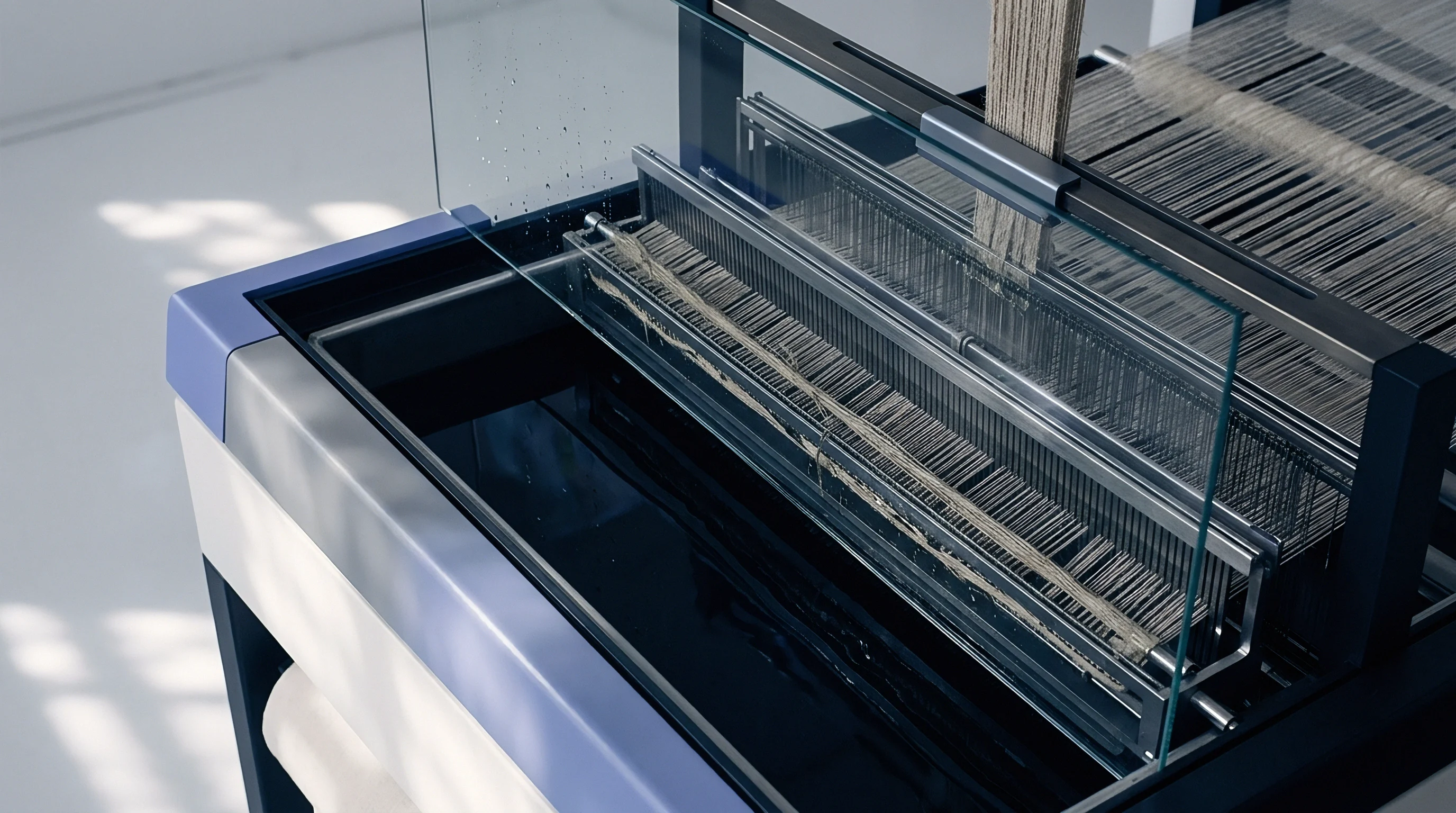
Chemical selection in the slasher box determines film elasticity, surface adhesion, and moisture retention during high-speed weaving.
Polymer Selection and Viscosity Behavior
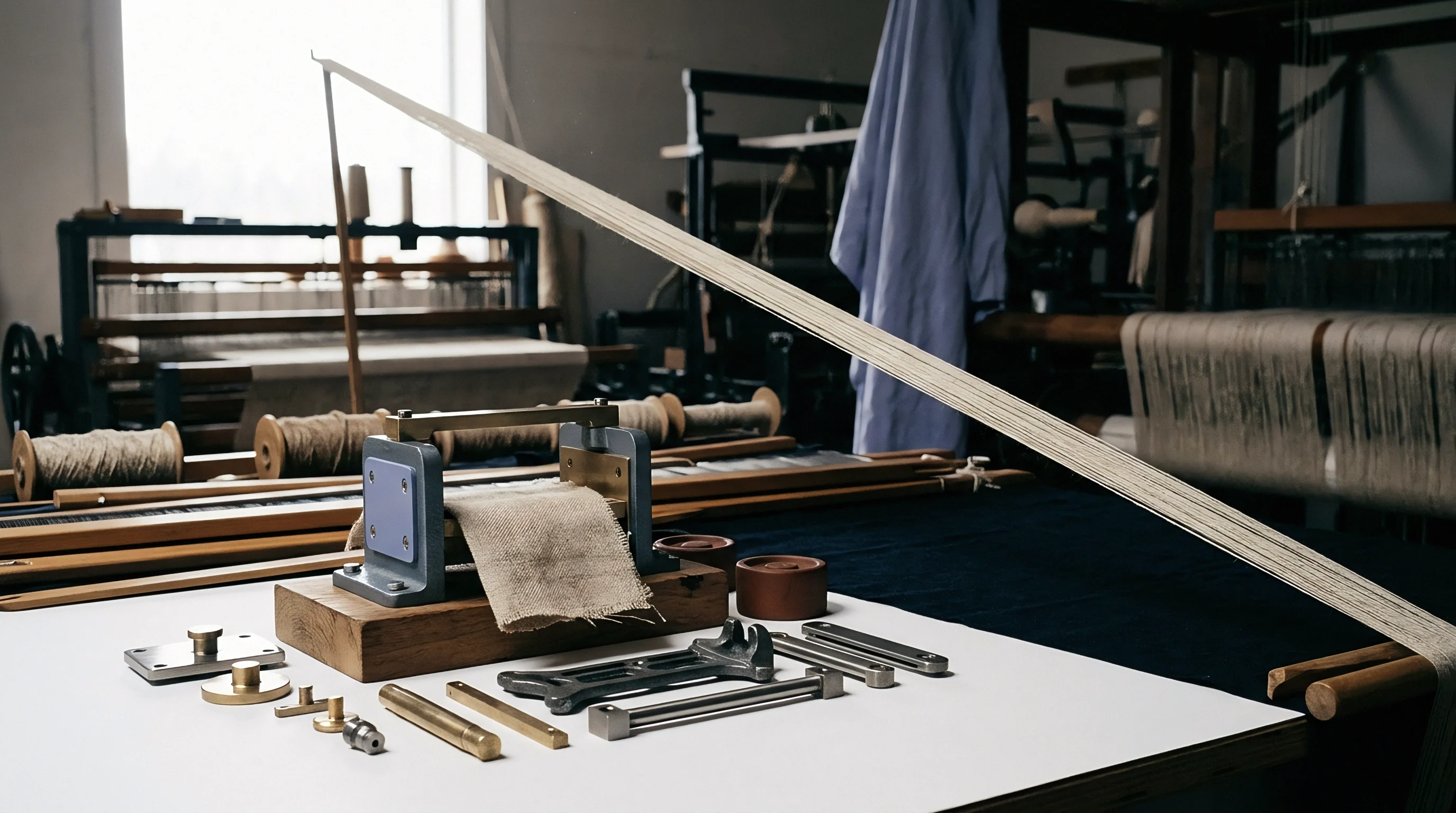
Sizing recipes for flax rely on balanced combinations of modified starches, carboxymethyl cellulose, polyvinyl alcohol, and protective lubricants. High-viscosity formulations form thick surface sheaths while restricting internal core penetration, though viscosity drops as temperature climbs. Low-viscosity solutions flow deep into bundle cores but leave surface fibrils exposed to abrasive loom friction.
Modified potato starches offer superior film elasticity and film strength on natural bast fibers compared to native corn starches, while hydroxyethylated starch derivatives lower gelatinization temperatures to aid uniform dissolution in hot box liquor.
| Yarn Count (Nm) | Spun Type | Liquor Solids (%) | Viscosity (mPa·s at 85°C) | Target WPU (%) | Dry Add-On (%) |
|---|---|---|---|---|---|
| Nm 10 | Dry-Spun | 12.0 | 45 | 95 | 11.4 |
| Nm 18 | Dry-Spun | 10.5 | 38 | 90 | 9.5 |
| Nm 26 | Wet-Spun | 9.0 | 28 | 85 | 7.7 |
| Nm 36 | Wet-Spun | 8.0 | 22 | 80 | 6.4 |
| Nm 50 | Wet-Spun | 7.5 | 18 | 75 | 5.6 |
| Viscosity measured using a Brookfield rotational viscometer at 60 rpm and 85 degrees Celsius. | |||||
Sizing Liquor Rheology across Flax Yarn Types
Polyvinyl alcohol additions enhance abrasion resistance on dry-spun yarns containing coarse bundles and frequent slubs. Carboxymethyl cellulose acts as a protective colloid, preventing starch retrogradation during long machine stops. Lubricating additives, including tallow and emulsified synthetic waxes, reduce friction coefficients against loom drop wires, heddle eyes, and reed dents, though excess wax additions reduce film adhesion to raw bast fiber walls.
Refractometer readings guide tank additions.
ISO 10321 desizing extraction values below seven percent trigger re-sizing mandates prior to loom beam mounting.
Maintaining liquor temperature at eighty-five degrees Celsius prevents premature gelling and keeps solution viscosity within target specifications. Automatic refractometer monitoring units track solids concentration in real time, compensating for steam condensate dilution inside the size box. Adjusting size box solids concentration offsets accommodates changes in yarn count or fiber blend composition without requiring alterations to slasher drive speeds.
Increasing synthetic binder ratio enhances film elongation on rigid flax yarns, while higher natural starch fractions preserve thermal stability during steam drying.
Geometry
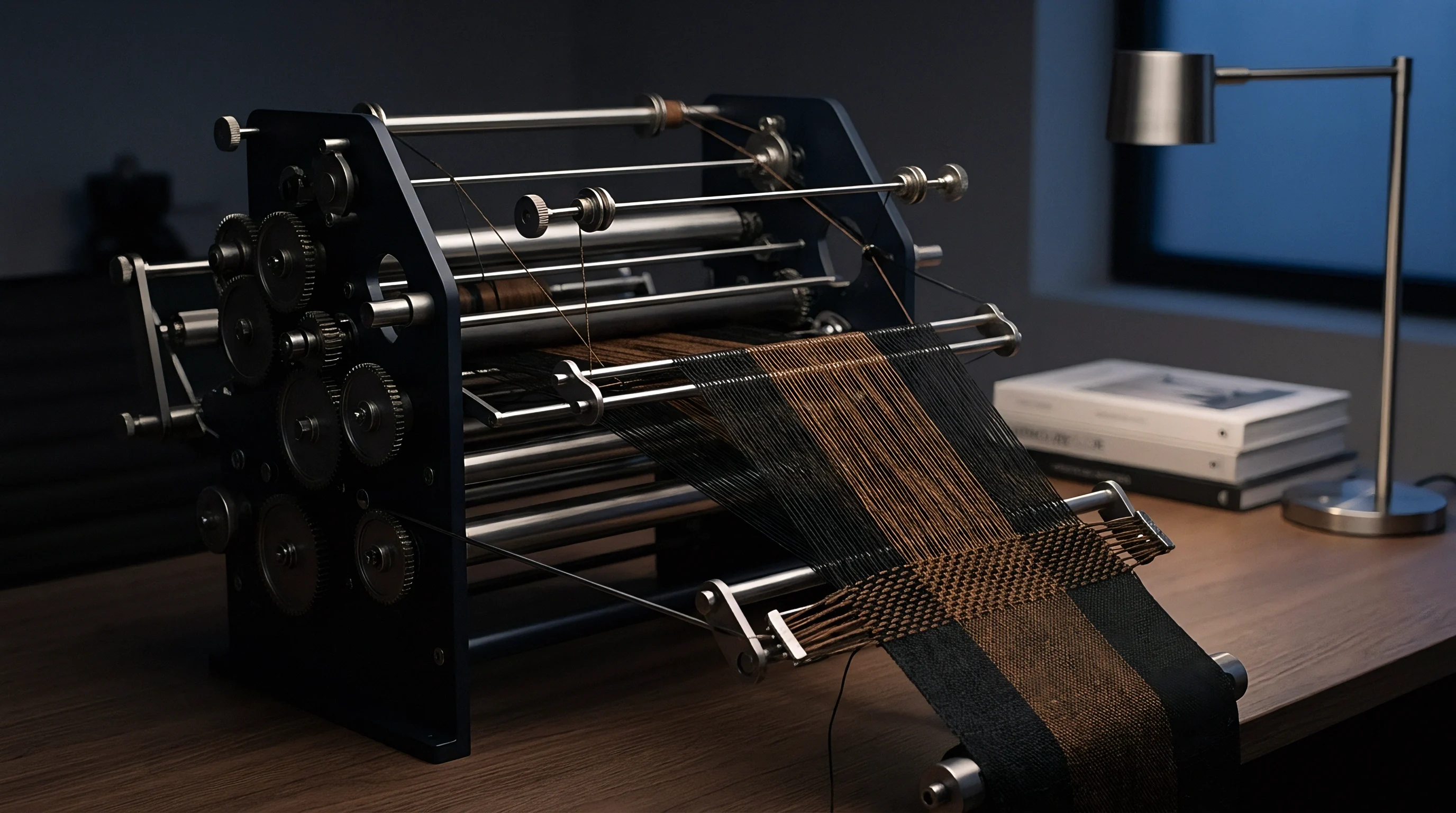
Mechanical alignment in the size box nip zone governs the physical transfer of liquid onto the moving warp sheet.
Squeeze Roller Pressure and Shore Hardness
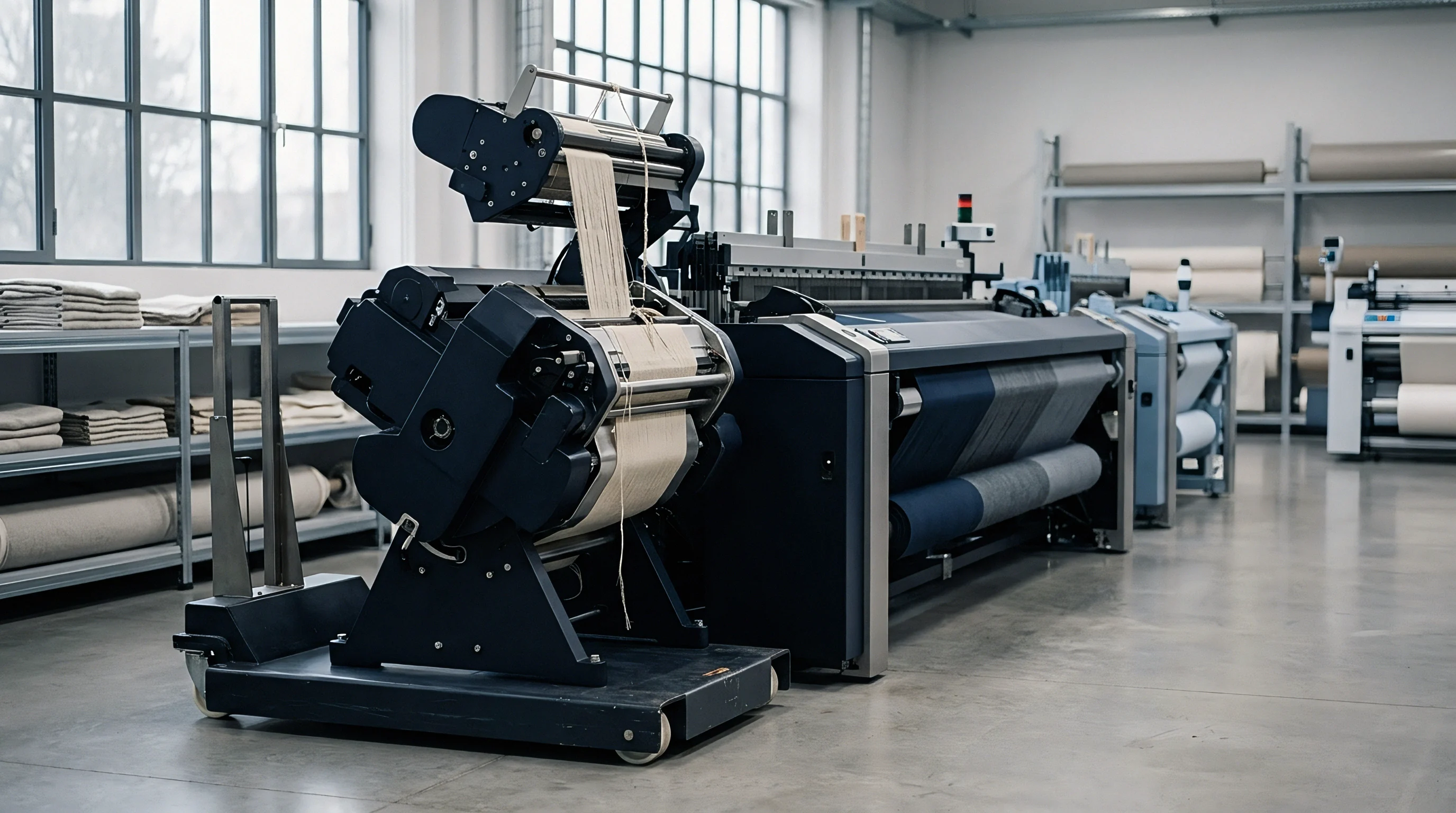
The squeezing section consists of synthetic rubber-covered rolls pressing against stainless steel immersion cylinders. Squeeze pressure forces liquid size into the yarn core while removing excess surface liquor. Over time, squeeze rolls degrade.
Roll hardness ranges between 55 and 75 Shore A durometer degrees, where harder roll covers yield lower pick-up and softer rubber covers expand the contact area under load, lowering peak nip pressure and increasing wet pick-up rates.

Where Does Squeeze Hardness Modify Penetration?
Increasing linear pressure across the squeezing nip compresses the wet yarn bundle, driving liquid into internal fiber capillary spaces. Excess pressure strips the outer protective film, leaving surface hairs exposed to loom friction. Conversely, decreasing nip load creates thick surface coatings with minimal core adhesion, allowing the surface film to shear off during weaving shedding motion.
Slasher nip load control relies on pneumatic loading cylinders governed by precision proportional regulator valves.
- Verify pneumatic pressure gauges across left, center, and right squeezing cylinders using a calibrated master transducer.
- Measure rubber roller surface hardness with a Shore A durometer at ten equidistant points across the working face.
- Feed a dead-weight calibration strip through the dry nip to map mechanical pressure uniformity across the roller width.
- Adjust side cylinder mechanical stops until nip contact width varies less than half a millimeter end to end.
- Set operating pressure to target linear load prior to introducing hot sizing liquor into the box.
| Roller Hardness (Shore A) | Nip Load (kN/m) | Speed (m/min) | WPU (%) | Film Depth (µm) |
|---|---|---|---|---|
| 55 | 12 | 40 | 102 | 14.2 |
| 60 | 15 | 45 | 92 | 11.8 |
| 65 | 18 | 45 | 85 | 9.5 |
| 70 | 22 | 50 | 78 | 7.1 |
| 75 | 25 | 50 | 71 | 5.2 |
Harder squeeze rolls reduce surface film buildup while driving chemical solids deep into the yarn core.
Nip roll alignment across the warp sheet width determines lateral wet pick-up uniformity. Misaligned rollers cause pick-up variations between left, center, and right warp zones, and unequal size distribution produces variable warp crimp during drying, creating tension bands across the loom beam during weaving. Excessive nip pressure strips wet size from outer fiber walls, leading to severe shedding dust on loom drop wires and costly warp stop increases during weaving.

Extraction
Accurate laboratory measurement translates wet slasher readings into verified dry coat weights.

Slasher Material Balance and Add-On Calculation
Calculating dry size add-on percentage requires precise integration of size box concentration, wet pick-up percentage, and total warp mass. Consider a production beam set running 4,200 ends of Nm 26 wet-spun 100 percent flax yarn across a 165 cm reed width. Dry yarn linear density equals 38.46 tex, yielding a dry warp mass of 161.53 grams per meter.
Operating slasher throughput speed equals 45 meters per minute, resulting in a dry yarn throughput rate of 436.13 kilograms per hour. Slasher operators target a dry size add-on level of 8.0 percent on dry fiber weight using a size liquor maintained at 10.0 percent solids concentration by weight.
Target wet pick-up calculation determines the required liquid mass absorption rate. Target wet pick-up percentage equals target dry add-on divided by size box solids concentration multiplied by one hundred. Dividing 8.0 percent dry add-on by 10.0 percent liquor solids concentration yields a target wet pick-up rate of 80.0 percent.
At 80.0 percent wet pick-up, the warp sheet absorbs 348.90 kilograms of wet size liquor per hour, which equals 34.89 kilograms of dry size solids added per hour.
Process variations alter these liquid absorption balances during mill operation. If size box temperature drops five degrees Celsius, increasing liquor viscosity and raising wet pick-up from 80.0 percent to 98.0 percent while squeeze pressure remains unadjusted, total size liquor absorption jumps to 427.41 kilograms per hour. Actual dry size add-on rises to 9.8 percent on dry yarn weight, representing an excess dry size addition of 7.85 kilograms per hour over target requirements.
This wet pick-up shift impacts energy consumption and sizing chemical costs. Evaporation load at the drying cylinder section increases from 314.01 kilograms of water per hour up to 384.67 kilograms per hour. Water removal demand rises by 22.5 percent, forcing a speed reduction to prevent under-drying, while chemical costs rise proportionally with the extra dry solids deposited on the yarn.
Over-drying causes yarn brittleness.
- Refractometer concentration drift signals water inlet valve leakage or excessive steam condensation inside the size tank.
- Squeeze roller temperature profile reveals uneven rubber expansion when side bearings run hot during long shifts.
- Yarn sheet tension variations indicate creel brake wear or improperly adjusted nip roll speed ratios.
- Desizing yield discrepancies point to incomplete fat extraction during Soxhlet laboratory testing procedures.
Uncontrolled sizing liquor viscosity increases fiber shedding at the loom shedding motion.
Laboratory verification confirms dry size add-on through desizing extraction procedures according to ISO 10321 or ISO 2060 methods. Yarn samples taken before and after the slasher undergo hot water washing, enzymatic desizing, and solvent extraction to measure non-fibrous materials. Desizing extraction values confirm whether actual dry size deposition matches slasher computer calculations.
Inconsistent size desizing test results stem from natural pectin variance in raw flax or uncalibrated box concentration control.
Margin
Weaving performance directly converts slasher precision into loom-hour productivity and landed fabric cost.
Loom Efficiency and Warp Break Economics
Loom stop frequency directly dictates weaver allocation and shed output efficiency. Insufficient wet pick-up yields low dry size add-on, leaving individual flax fibers susceptible to severe mechanical abrasion in the weaving shed, which causes fiber accumulation behind loom drop wires, stop marks, and warp breaks. Excessive wet pick-up creates stiff, heavily coated yarns with reduced elasticity.
Over-sized flax warps break under high shedding tension on high-speed rapier and air-jet looms. Film encapsulation maintains structural integrity across the reed width.
| WPU Range (%) | Dry Add-On (%) | Warp Stops / 10⁵ Picks | Loom Efficiency (%) | Shedding Dust (g/m²) | Loom Cost ($/m) |
|---|---|---|---|---|---|
| 60 – 70 | 4.8 – 5.6 | 4.2 | 78.5 | 1.85 | 1.42 |
| 75 – 85 | 6.0 – 6.8 | 0.8 | 92.4 | 0.32 | 1.18 |
| 85 – 95 | 6.8 – 7.6 | 1.1 | 90.1 | 0.45 | 1.22 |
| 100 – 110 | 8.0 – 8.8 | 2.9 | 83.2 | 1.12 | 1.34 |
Slasher Energy Consumption and Fabric Landed Cost
Optimal wet pick-up ranges between 75 and 85 percent balance loom stop reduction against chemical sizing costs and thermal drying energy expenses. Running warps within this optimal window minimizes shedding dust generation to less than 0.50 grams per square meter of woven fabric, protecting sensitive electronic optical yarn inspectors from lint interference. Weaver labor costs drop as warp break rates decline below 1.0 stop per 100,000 picks.
Standard international supply contracts for greige linen specify ISO 13934 tensile strength loss after desizing below five percent, compelling weavers to maintain tight wet pick-up control to prevent warp degradation.