Dynamic Warp Strain Mechanics in Fine Linen Weaving
Controlling peak dynamic warp strain in fine linen weaving requires balancing backrest roller damping, shed geometry, and moisture to prevent yarn fatigue.

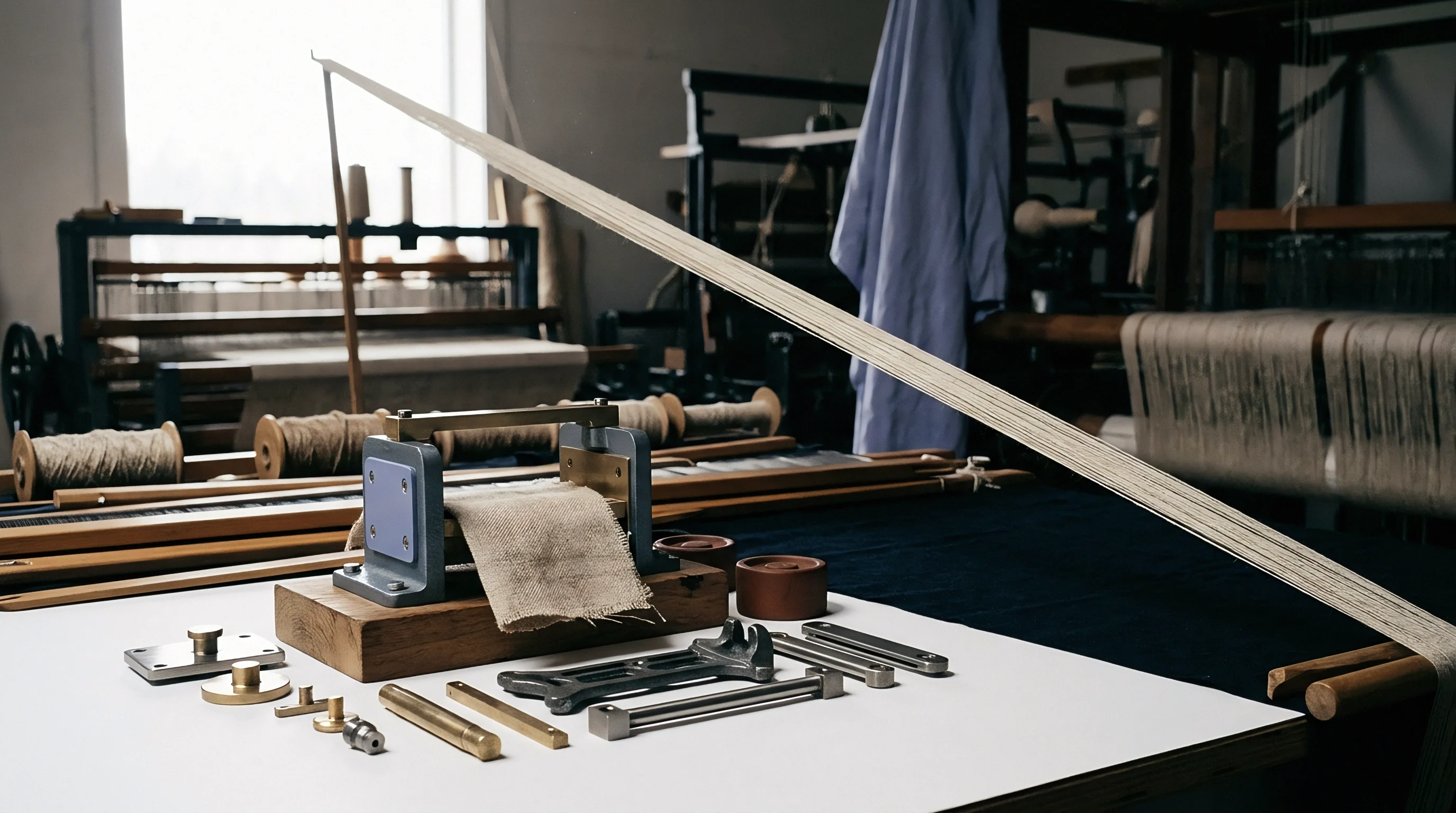
Hysteresis
Applying tensile stress to fine flax yarn causes both immediate deformation and delayed elastic recovery. Because the high-crystallinity cellulose microfibrils in flax align so closely with the fiber axis, wet-spun linen gains high tensile modulus at the expense of elongation at break. Standard wet-spun fine yarns reach their strain limit between 1.5 percent and 2.5 percent before failing catastrophically.
In high-speed weaving, warp yarns face continuous stress cycles from shedding, beat-up, and let-off mechanisms ~ fluctuating dynamic loads that drive the yarn through repeated tension peaks and relaxation troughs. Setting shed parameters and controlling end breaks ultimately depends on how flax yarn recovers work under viscoelastic strain.
As the weaving cycle places flax fibers under tension, part of the mechanical energy dissipates through internal molecular friction while the remainder is stored elastically to pull the yarn back when the shed closes. Wet-spun linen displays distinct structural hysteresis: under rapid tension within the shed, it cannot recover its original length inside the millisecond window of a single loom revolution. Given flax’s low elasticity, tensile strain accumulates across successive picks as creep and plastic elongation.
This unrecovered strain lowers yarn tenacity, leaving the fiber vulnerable to brittle fracture under secondary impacts like reed beat-up.
Relative humidity in the weaving shed directly modifies flax stress-strain behavior. As a hygroscopic bast fiber, flax absorbs up to 12 percent moisture under standard room conditions before feeling damp, with that moisture acting as a plasticizer within the cell wall’s amorphous regions. Raising shed relative humidity to 75 percent or 85 percent improves fiber flexibility, boosts single-yarn elongation by up to 0.5 percentage points, and lowers work hardening under cyclic strain.
Conversely, if humidity falls too low, the yarn becomes brittle and develops micro-cracks across outer fiber bundles under peak tension.
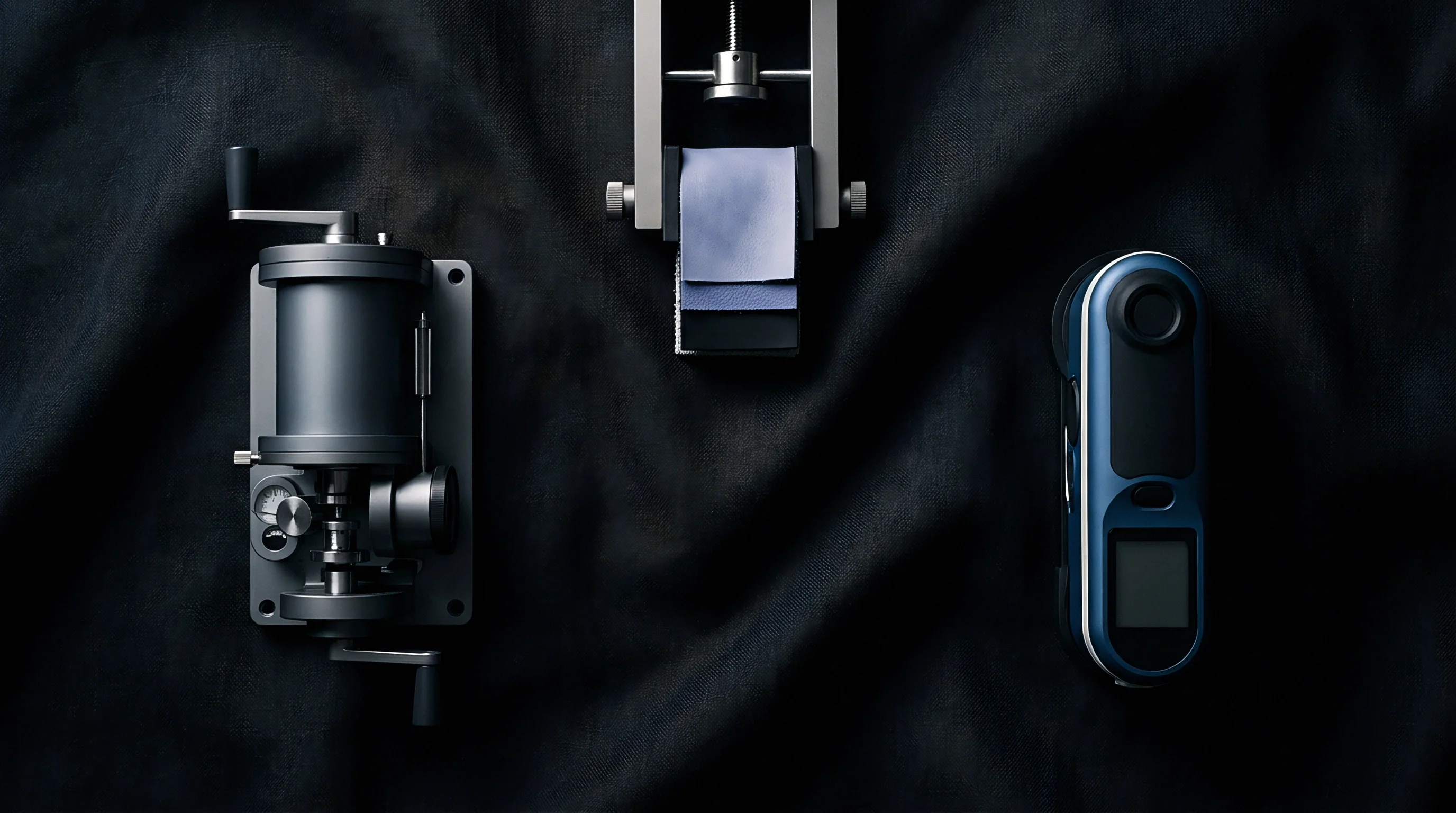
Viscoelastic Response in Fine Linear Densities
Fine linen constructions rely on yarn counts from Nm 40 (25 tex) down to Nm 100 (10 tex). As linear density decreases, the fiber count in the yarn cross-section drops sharply: an Nm 60 (16.6 tex) wet-spun yarn contains roughly 80 to 100 individual flax fibers per cross-section, while Nm 100 carries only 35 to 45. Localized variations in fiber count along the axis create structural thin spots.
Under dynamic warp tension, strain concentrates at these thin zones, triggering micro-yield events before the load can distribute across the warp sheet.
Static tensile testing in the laboratory fails to capture how yarn behaves during high-speed weaving. Standard ISO 2062 single-yarn strength tests pull yarn at slow, constant extension rates, whereas rapier and air-jet looms operate at 350 to 600 picks per minute. At 450 picks per minute, a single shed cycle finishes in 133 milliseconds, subjecting warp yarns to tension rise rates exceeding 150 cN per millisecond during harness movement.
At these high strain rates, the viscoelastic response stiffens, suppressing plastic flow and pushing the yarn into a brittle deformation regime.
Evaluating fine linen warp beams involves measuring yarn tenacity under dynamic cyclic loading using high-frequency strain gauges attached to single ends. Testing reveals that wet-spun flax yarns subjected to cyclic loads equal to 60 percent of their static breaking strength experience progressive modulus failure after 5,000 to 12,000 strain cycles. Sizing formulations must therefore penetrate the yarn core while establishing a resilient surface film to distribute dynamic strain across the fiber bundle cross-section.
| Yarn Count (Nm) | Linear Density (tex) | Static Tenacity (cN/tex) | Elongation at Break (%) | Work Recovery at 1.0% Strain (%) | Critical Dynamic Load Threshold (cN/tex) |
|---|---|---|---|---|---|
| Nm 40 | 25.0 | 28.5 | 2.40 | 58.2 | 14.2 |
| Nm 60 | 16.6 | 31.2 | 2.10 | 52.4 | 15.8 |
| Nm 80 | 12.5 | 33.8 | 1.85 | 46.1 | 16.5 |
| Nm 100 | 10.0 | 35.5 | 1.60 | 41.0 | 17.1 |
| Data measured at 20 degrees Celsius and 75 percent Relative Humidity; dynamic cycling executed at 7.5 Hz frequency for 10,000 cycles. | |||||

Crimp Interchange Dynamics and Stress Transfer
Interlacing warp and weft yarns during fabric formation produces crimp as threads bend around one another at cross-over points. In fine linen plain weave (tabby) constructions, warp yarn crimp typically ranges between 5 percent and 9 percent depending on warp and weft setts (ends and picks per centimetre). Dynamic warp strain disrupts this crimp equilibrium during beat-up: as the reed forces the new weft pick into the fabric fell, warp tension spikes, temporarily reducing warp crimp while increasing weft crimp.
The rate of crimp transfer depends on yarn surface friction and size film hardness. Unsized flax fibers carry a high coefficient of friction, resisting rapid crimp rearrangement. Stiff sizing coatings similarly prevent smooth sliding at thread intersections, concentrating beat-up force across the static length of the warp sheet.
Tailoring sizing chemistry to balance film toughness with boundary lubrication helps lower localized peak strain during fell formation.
Dynamic tension spikes propagate backward from the fell line toward the drop wires and harness frames. The velocity of dynamic strain wave propagation through flax yarn equals the square root of yarn modulus divided by yarn density. Because flax possesses a high elastic modulus, strain waves travel down the warp sheet at speeds exceeding 1,800 metres per second.
Reflections of these waves from the backrest roller can superimpose on incoming shed-opening tension spikes, generating destructive resonance points that exceed the yarn’s ultimate tensile strength.
Fine linen yarn woven at peak shed tension loses elastic recovery before structural break occurs.
Geometry
Shed height adjustment governs the physical displacement of warp ends during harness lift. On high-speed looms, harness frames move vertically to separate warp threads into top and bottom shed sheets, forming an open triangular tunnel for weft insertion. The magnitude of warp extension generated during shedding depends directly on shed geometry, including harness lift height, shed depth from fell line to backrest, and the backrest’s vertical position relative to the cloth fell plane.
Top and bottom warp sheets undergo unequal path length extensions when running asymmetrical shed geometry. Setting the backrest roller above the horizontal fell plane increases tension on the bottom warp sheet while slackening the top sheet during shedding. This tension differential helps clear the shed opening by pulling hairy linen warp threads apart to prevent weft insertion collisions.
However, the increased tension on the bottom sheet elevates dynamic peak strain, accelerating yarn fatigue on frames moving to the lower shed position.
Calculations of warp strain derived from shed geometry must account for mechanical linkage kinematics. Harness frames driven by eccentric cams produce smooth, simple harmonic motion, minimizing peak acceleration forces on warp ends at shed reversal points. In contrast, harness frames driven by dobby mechanisms introduce sudden acceleration shifts during shed dwell phases, generating transient dynamic strain spikes.
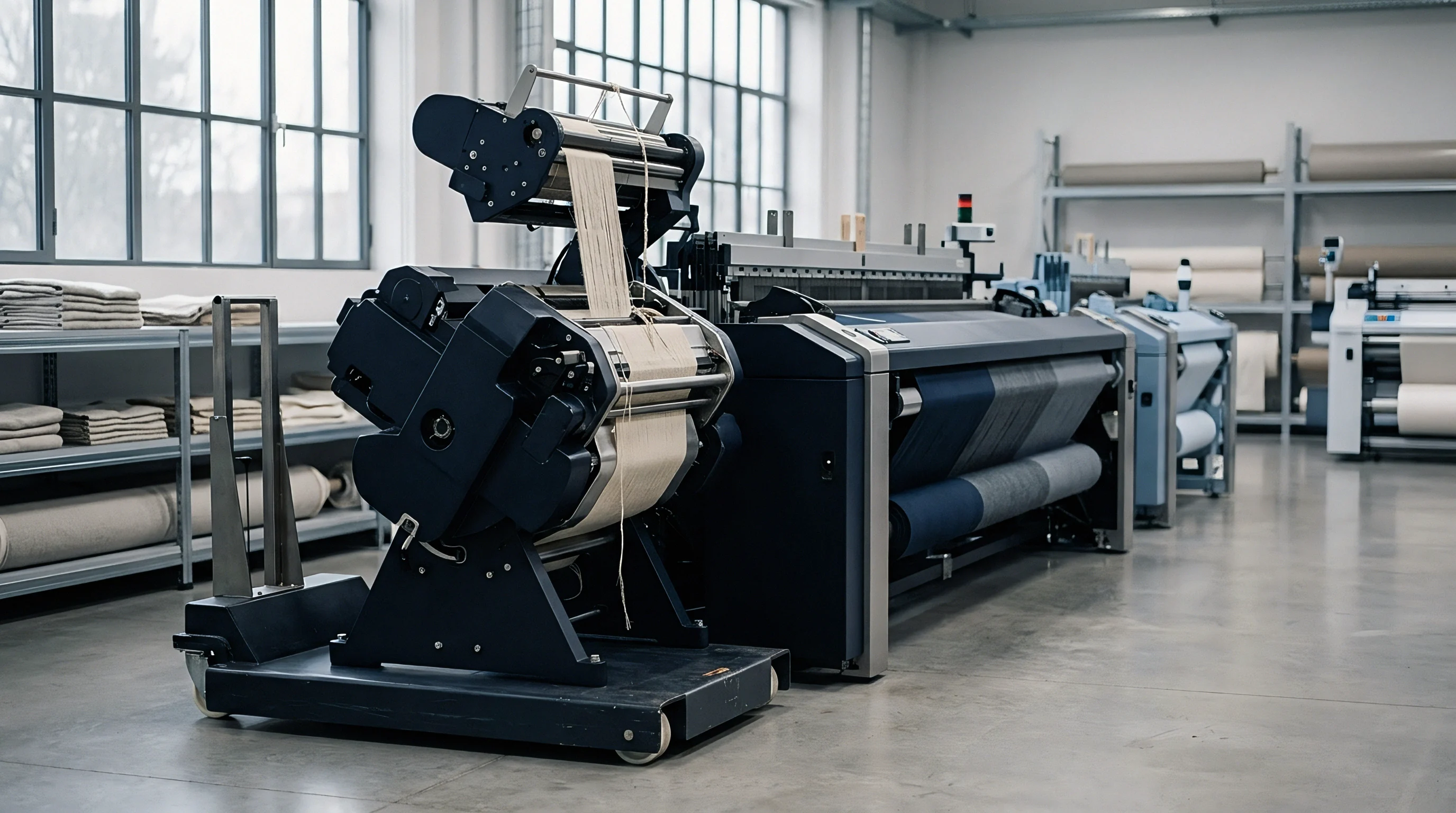
How Does Shed Depth Alter Peak Warp Tensile Load?
Kinematic movement of the heddle frame pulls warp yarns from the fabric fell line to maximum aperture height. Reducing shed depth from the harness frames to the backrest roller increases the angle of warp deflection, escalating the strain percentage imposed on individual yarns. For a fixed shed height of 55 millimetres, shortening the distance between the fell line and backrest from 850 millimetres to 720 millimetres increases maximum geometric warp extension by approximately 18 percent.
Beat-up geometry acts concurrently with shedding motion to define the total dynamic strain envelope. As the reed advances to drive the weft yarn into the fabric fell, physical displacement of the fell line pushes warp threads backward against the tension system. On heavy fine linen constructions, fell displacement can reach 4 to 8 millimetres per pick.
This mechanical movement injects a sharp strain pulse into the warp sheet precisely as the shed begins to close, compounding stress on the yarn.
Tensile loss per shift can be tracked on high-density looms. Modern weaving machinery provides adjustable shed angles and variable backrest stroke positions to mitigate geometric strain spikes. Fine linen plain weaves running at 30 ends per centimetre using Nm 60 flax yarns require precise alignment between harness frame stroke and let-off motion to keep strain within safe operating windows.
Excessive shed height increases warp end break rates exponentially by forcing brittle flax fibers beyond their structural strain recovery limit during shedding.
Improper geometrical adjustments introduce severe mechanical stress, leading to widespread weaving defects and loom stoppages. Systematic analysis of loom shed geometry identifies several key operational failure modes associated with over-tensioned fine linen warps:
- Heddle eye abrasion occurs when steep shed angles cause continuous high-friction sawing between fine linen yarns and metallic heddle eyes, stripping protective sizing films.
- Fell line destabilization arises when unequal top and bottom shed tension forces the woven cloth fell to oscillate vertically, creating irregular pick spacing and band marks.
- Shed line mispicks happen when excessive warp strain causes micro-slippage in let-off gears, resulting in incomplete shed separation and weft insertion aborts.
- Micro-tethering yarn splits occur when un-cleared fiber fibrils interlock between adjacent high-tension warp ends, snapping individual filaments during reed advance.
Asymmetric Shedding and Cover Factor Optimization
Fine linen fabrics specified for high-density applications demand high cover factors. The warp cover factor measures the proportion of fabric surface area occupied by warp yarns. Achieving high warp cover factors without causing weave tightness failure requires raising the backrest roller 15 to 35 millimetres above the center line.
This height offset slackens the top warp sheet during shed crossover, enabling warp yarns to slide sideways and distribute spacing evenly around weft loops.
Slackening the top warp sheet comes at the expense of higher strain on the bottom sheet. Harness frames controlling the bottom shed must withstand tension increases reaching 40 percent above static baseline levels. Flax yarns assigned to bottom shed positions undergo severe work hardening, meaning sizing recipes for asymmetric shedding must incorporate flexible polymer binders to absorb localized stretch without cracking.
Reed denting arrangements also influence localized geometric strain. Packing multiple fine linen warp ends into a single reed dent increases lateral yarn-to-yarn friction during shed opening. Using a high-count reed with fewer ends per dent ~ such as two ends per dent instead of four ~ opens up clearance, reducing lateral abrasive strain and evening out dynamic tension distribution across the full width of the warp sheet.
Miscalculating harness lift stroke causes premature end break waves that disrupt mill efficiency targets and multiply loom downtime costs.
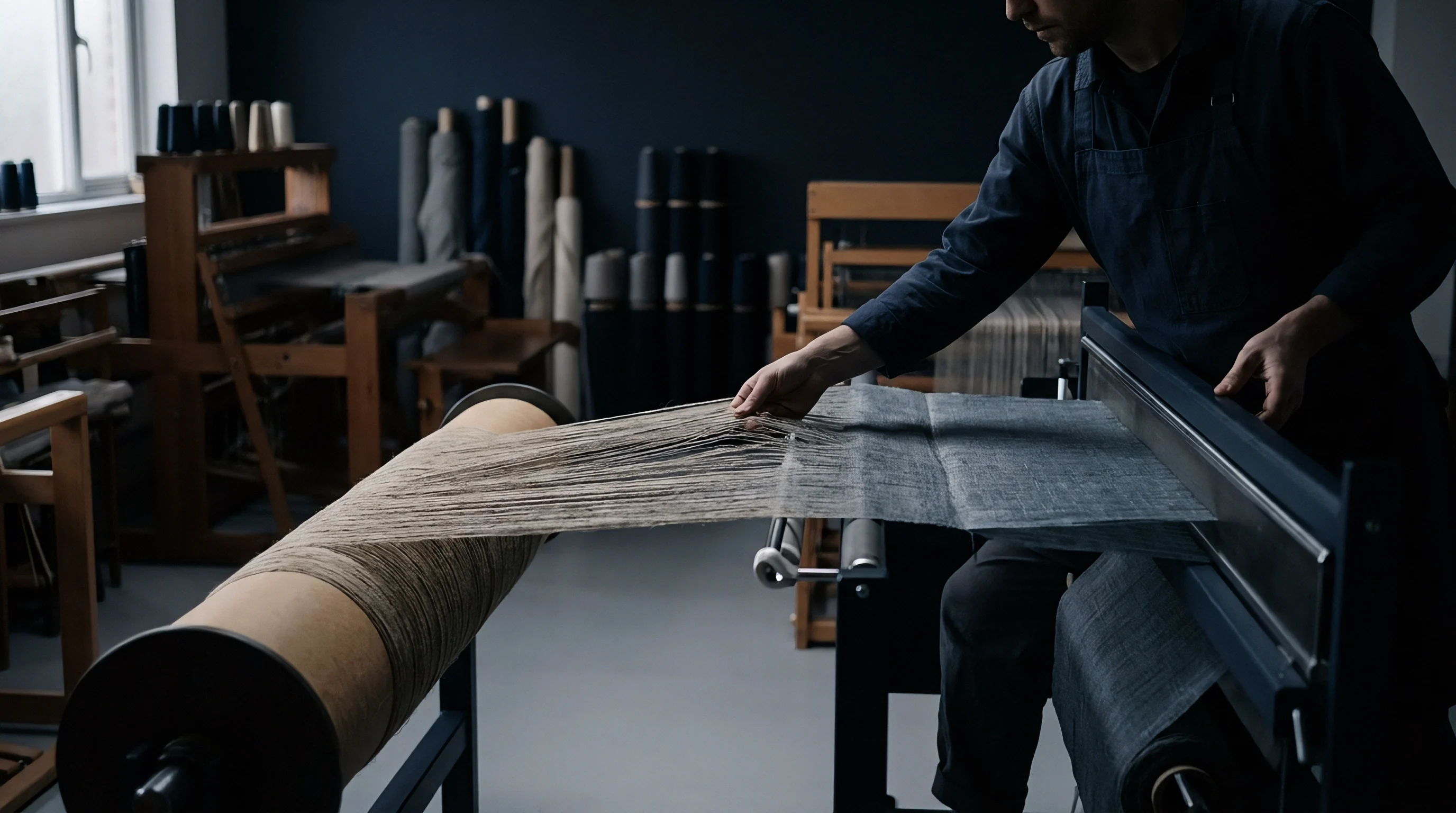
Rest
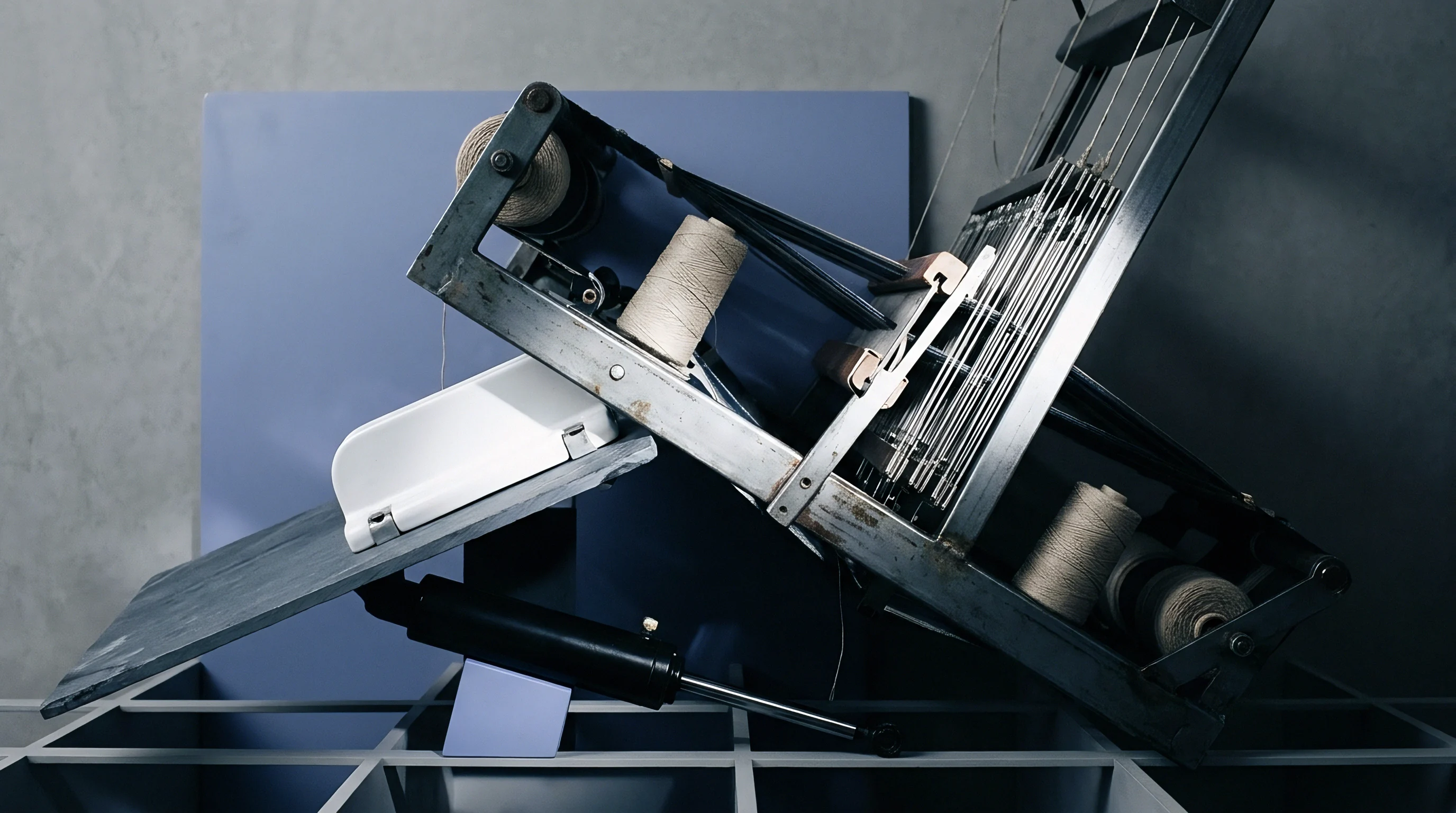
Mechanical dampening components mounted on the loom back frame absorb tension peaks during shed movement. The backrest roller assembly serves as the primary dynamic buffer between the rigid warp beam and oscillating harness frames. As harness frames open the shed, the path length of the warp sheet increases, pulling yarn forward against the backrest.
A stationary, rigid backrest would force warp yarns to absorb this path-length change through pure elastic elongation, quickly exceeding the low strain limit of fine flax.
Dynamic backrest systems utilize spring-loaded or torsion-bar assemblies that yield inward during shed opening, supplying extra length to the warp sheet and dampening dynamic tension spikes. The spring rate and rotational inertia of the backrest system must calibrate precisely to the loom’s running speed. If the backrest mechanism is too heavy or the dampening springs are set too stiff, mechanical inertia prevents the roller from responding rapidly to high-frequency shed cycles, transmitting raw impact forces directly into the yarn.
Electronic let-off systems work in tandem with dynamic backrest motion. Tension sensors mounted beneath the backrest roller continuously feed real-time force data to the loom control unit. When average warp tension rises due to fabric take-up or environmental shrinkage, the electronic let-off motor accelerates warp beam rotation, releasing yarn to maintain setpoint tension.
The response frequency of the let-off motor handles baseline tension drift, while the mechanical backrest assembly absorbs cycle-by-cycle dynamic fluctuations.

Dynamic Backrest Motion Kinematics
Active backrest systems, driven mechanically by linkages connected to the main loom crankshaft, move in synchronized phase with harness frame execution. By moving forward precisely when the shed reaches maximum aperture, an active backrest releases warp length proactively, eliminating peak dynamic strain entirely. These active systems reduce peak dynamic warp strain on fine linen warps by up to 35 percent compared to passive spring-loaded mechanisms.
Synchronizing active backrest movement demands extreme precision. Setting backrest movement out of phase with harness frames creates destructive strain spikes, pulling against the warp sheet when the shed is fully open. For fine linen weaving, backrest peak displacement must lead maximum harness lift by 5 to 10 degrees of crankshaft rotation to account for mechanical transmission delays and yarn elastic lag.
Analysis of shed motion reveals peak tension spikes during harness crossover when lease rod positioning is miscalculated. Lease rods divide the warp sheet into end-by-end cross structures behind the harness frames. Positioning lease rods too close to the harness frames restricts warp end movement, increasing friction angles and concentrating dynamic strain within a short section of yarn between the lease rods and heddle eyes.
Maintaining dynamic warp tension within a 1.5 cN per tex window requires active backrest stroke synchronization tuned to within five degrees of main shaft rotation.
Friction over drop wires, lease rods, and heddle eyes degrades dynamic strain distribution. Drop wires, which ride on individual warp yarns to signal breakage to the electronic stop motion system, apply localized gravitational or spring loading. On a fine linen warp with 5,000 ends, cumulative friction across 5,000 drop wires adds baseline drag, reducing the let-off system’s sensitivity to fell line strain events.
Standard purchasing contracts for technical linen weaving specify that dynamic tension logging data must be archived for every warp beam run.
The choice of backrest surface coating impacts fine flax yarn longevity. Highly polished chrome backrest rollers reduce static friction but can allow uncontrolled yarn slippage during sudden tension drops. Ceramic or micro-textured matte chrome surfaces provide predictable friction coefficients, preventing localized warp alignment collapse across the beam face.
Fine linen warp breakages are frequently attributed to bad yarn spinning batches rather than improper backrest spring tension adjustments.

Monitoring
Continuous strain measurement devices track transient tensile forces acting on individual warp ends throughout loom operation. Modern weaving research relies on piezoelectric sensors and micro-tensiometer arrays temporarily installed along the warp line. These sensors record force vectors at sample rates exceeding 1,000 Hz, capturing instantaneous force spikes during shedding, weft insertion, and beat-up.
Data collected from in-line monitoring allows engineers to construct real-time dynamic strain profiles for specific yarn counts and weave structures.
Analyzing dynamic tension traces reveals distinct force peaks within each loom revolution. The first peak occurs during shed opening, driven by harness frame lift. The second peak, often higher in magnitude when weaving high-density plain weaves, occurs at top dead center of the reed beat-up stroke.
Baseline tension sits between these peaks, representing the static tension maintained by the let-off system. For fine wet-spun linen (Nm 60), peak tension during beat-up should not exceed 2.2 times baseline static tension.
Mass variation along flax yarns directly induces tension spikes. Flax yarns exhibit a higher coefficient of variation of mass (CVm%) than combed cotton or synthetic filament yarns due to irregular fiber bundle extraction during retting and scutching. Thick places (slubs) in fine linen yarn encounter increased resistance when passing through heddle eyes and reed dents.
In-line tensiometers record instantaneous force surges as slubs pass through shedding elements, frequently triggering localized breaks.
Tension Trace Analysis and Signal Processing
Quantitative analysis of dynamic strain signals uses fast Fourier transform algorithms to decompose raw force readings into spectral frequencies. Primary frequency components match loom operational speed (the rotational frequency of the main shaft), while secondary high-frequency spikes correlate with reed impact and let-off mechanical vibrations. Identifying high-frequency noise bands highlights mechanical misalignments, such as worn backrest bearings or loose harness linkages, which introduce uncalibrated micro-strains into fine linen warps.
Variance in dynamic peak tension across the width of the warp sheet indicates non-uniform beam winding or distorted backrest alignment. Edge warp ends typically experience higher dynamic strain than center ends due to fabric width contraction (draw-in) at the fell line. Temple motion devices grip fabric edges to hold width, but their angled pull subjects selvedge warp ends to complex multiaxial stress.
Monitoring tensiometers placed on selvedge ends detect edge over-tensioning before continuous thread breakage halts production.
| Yarn Count (Nm) | Static Set-Point Tension (cN/end) | Maximum Shedding Tension Peak (cN/end) | Maximum Beat-Up Tension Peak (cN/end) | Allowable Peak-to-Static Ratio | Critical Break Threshold (cN/end) |
|---|---|---|---|---|---|
| Nm 40 | 35.0 | 58.0 | 72.0 | 2.05 | 110.0 |
| Nm 60 | 22.0 | 38.0 | 46.0 | 2.09 | 75.0 |
| Nm 80 | 15.0 | 26.0 | 33.0 | 2.20 | 52.0 |
| Nm 100 | 11.0 | 19.0 | 24.5 | 2.22 | 38.0 |
Calibrating tension thresholds requires systematic field measurements across multiple warp beams. The following calibration protocol establishes operational tension parameters for fine linen weaving runs:
- Mount portable piezoelectric single-end load cells on five randomly selected warp ends across the middle sheet and two selvedge ends.
- Calibrate load cell voltage outputs against absolute static weights ranging from 0 to 100 grams using dedicated signal conditioning hardware.
- Engage the loom at creep speed (slow inching motion) to record pure geometric displacement tension profiles through one complete shed cycle.
- Accelerate the loom to target production speed (e.g. 420 picks per minute) and log continuous tension waveforms for 1,000 consecutive picks.
- Extract peak beat-up tension values and compute the coefficient of variation across all sampled channels to verify uniform strain distribution.
- Adjust mechanical backrest spring preload and let-off set-points until peak tension profiles fall within specified cN per end safety margins.
Continuous warp tension logs provide an early warning of sizing batch degradation. If sizing bath temperature fluctuates or chemical concentration drops during sizing operations, yarn abrasion resistance degrades. During weaving, unsized or undersized sections suffer progressive hairiness buildup behind the reed, increasing sliding friction.
In-line tension monitoring registers this trend as a steady upward drift in baseline tension, allowing operators to stop the loom for cleaning and chemical reapplication before massive end break cascades occur.
Debate continues over whether micro-tensional sensors mounted on individual drop wires can predict yarn fatigue points before visible fiber fraying occurs.
Yield
Production throughput calculations balance loom rotational velocity against warp end breakage rates to determine net finished fabric output. Weaving fine linen yarn involves a complex economic trade-off: increasing loom speed elevates picks per minute, raising theoretical output capacity per loom hour, but higher running speeds increase warp yarn strain rates ~ accelerating fatigue and pushing peak dynamic loads past yarn breaking strength.
Loom stoppages severely impair economic performance. Every warp break requires automated stop motion triggering, operator intervention, end searching, threading through the drop wire, heddle eye, and reed dent, knotting or splicing, and resetting the fell line. A single warp repair on a fine linen loom takes between 1.5 and 3.0 minutes.
If running a loom at 480 picks per minute causes end breaks to rise from 1.0 to 4.5 breaks per 100,000 picks, overall loom efficiency drops, net fabric output falls, and defect rates escalate due to restart marks.
Net loom output is calculated by factoring stop frequencies against nominal machine speeds. Sizing optimization serves as the primary technical lever to increase yarn dynamic strain tolerance without altering basic fabric specifications. Formulating sizing recipes with high-solids film formers like film-forming PVA combined with flexible modified starches encapsulates loose surface fibers and elevates single-yarn work energy to break by up to 40 percent.
However, oversizing must be avoided, as excessively stiff coatings embrittle fine flax and accelerate breakage under cyclic bending at the heddle eyes.
Loom Capacity Economics and Speed Optimization
Determining optimum weaving speed requires precise financial analysis of loom-hour costs. Operating a modern 220-centimetre-wide rapier loom carries fixed capital depreciation, energy, labor, and overhead costs averaging between 18.00 and 24.00 USD per operating hour. Maximum financial yield occurs not at peak theoretical machine speed, but at the speed where total landed cost per finished metre is minimized.
A comparison of performance metrics across three operational speed settings (360 PPM, 420 PPM, and 480 PPM) illustrates these trade-offs. Baseline assumptions include fixed loom operating costs of 21.00 USD per hour, beam change downtime of 4 hours per 1,000 metres, repair labor cost of 25.00 USD per hour, and raw material yarn cost of 18.50 USD per kilogram.
At a 360 PPM theoretical insertion rate, theoretical production equals 13.84 metres per hour. With an observed breakage rate of 0.8 breaks per 100,000 picks (or 0.58 breaks per loom hour), loom stop downtime totals 1.45 minutes per hour. Adding scheduled maintenance loss yields an actual loom efficiency of 92.5 percent, bringing net production to 12.80 finished metres per hour at a direct loom conversion cost of 1.64 USD per metre.
Increasing the insertion rate to 420 PPM raises theoretical production to 16.15 metres per hour. Higher dynamic strain acceleration causes warp breakage rates to rise to 1.8 breaks per 100,000 picks (1.56 breaks per loom hour). Loom stop downtime increases to 3.9 minutes per hour, pushing loom efficiency down to 87.0 percent.
Nevertheless, net production reaches 14.05 finished metres per hour and direct loom conversion cost drops to 1.49 USD per metre, establishing an optimal cost point despite higher breakage.
At 480 PPM, theoretical production reaches 18.46 metres per hour. However, sharp dynamic strain spikes exceed the yield threshold of weaker yarn segments, pushing warp breakage to 5.2 breaks per 100,000 picks (5.35 breaks per loom hour). Stop downtime consumes 13.3 minutes per hour, plunging loom efficiency to 71.2 percent.
Net production collapses to 13.14 finished metres per hour ~ lower than the output achieved at 420 PPM ~ while direct loom conversion cost surges to 1.60 USD per metre, accompanied by severe fabric quality degradation from frequent starting marks.
A lot of 2,400 metres of fine linen greige was rejected after tensiometer logs showed uncompensated peak loads exceeding 4.2 cN/tex.
Selecting appropriate loom insertion technology plays a critical role in managing warp strain mechanics. Projectile looms provide gentle warp handling but are limited in insertion speed for fine yarns. Air-jet looms offer high speeds but produce strong air turbulence that can unravel hairy fine linen yarn bundles.
Modern flexible double-rapier looms provide precise control over yarn tip transfer, minimizing peak shock loads during insertion.
Executing a formal mill qualification process ensures weaving facilities maintain dynamic strain control capabilities before committing high-value fine linen warp beams. Sourcing teams use structured evaluation criteria to assess shed capabilities:
- Sizing pick-up percentage validation confirms that warp beams carry precise binder solids without excess surface shell formation.
- Backrest spring calibration verification ensures mechanical dampening assemblies match specified loom insertion speeds and fabric weights.
- Humidity shed control auditing verifies that weave room microclimate stays continuously within 75 to 80 percent relative humidity limits.
- Stop motion sensitivity testing checks individual drop wire response rates to prevent broken ends from weaving into adjacent dents.
Sizing formulation adjustments must balance yarn strength enhancement against desizing cleanability in finishing operations. Applying high molecular weight synthetic polymers increases dry film tenacity but requires high desizing bath temperatures, which can yellow natural flax fibers. Starch-ester formulations modified with synthetic wax lubricants provide an optimal balance between dynamic strain protection and low-temperature aqueous removal during fabric scouring.
Inserting a clause specifying maximum allowable loom stop frequencies per hundred thousand picks shifts economic liability for warp yarn breakage directly to the weaving facility.

Compliance
Formal purchasing agreements define maximum allowable fabric defects alongside required physical performance metrics for finished linen runs. Buying fine linen fabric specified under strict performance standards requires translating dynamic warp strain limits into legally binding technical clauses. Standard commercial specifications rely on international testing protocols to audit physical parameters, ensuring greige and finished goods conform to negotiated thresholds.
Standard ISO 2062 governs single-yarn tenacity and elongation testing, providing baseline metrics for incoming yarn acceptance. However, single-yarn testing must be supplemented with fatigue resistance metrics under dynamic loading. Fabrics specified for high-performance applications must meet ISO 13934 tensile strength requirements and ISO 13937 tear resistance standards, both of which correlate directly with how evenly dynamic warp strain was distributed during weaving.
Fabric visual inspection relies on standardized grading protocols, primarily the ASTM D5430 four-point system. Uncontrolled dynamic warp strain manifests visually as recurring fabric defects, including warp end breaks, starting marks, heavy or light picks, and reed marks. Under the four-point system, defect points are penalized per linear metre based on length; exceeding 28 penalty points per 100 square metres typically triggers automatic lot rejection or substantial financial debit notes.
Audit Protocols and Specification Frameworks
Quality assurance contracts for fine linen weaving require comprehensive documentation across every phase of production. Mill verification dossier submissions must record warp beam parameters, sizing chemical analysis, weave shed environmental logs, and real-time tensiometer traces. Establishing this baseline transparency prevents counterparty disputes when fabric performance fails during downstream bleaching, dyeing, or garment manufacturing.
Fabric shrinkage and crimp interchange also require precise contractual definition. High dynamic warp tension applied during weaving locks structural strain into greige fabric. When wet processing (desizing, scouring, and bleaching) releases this strain, fine linen fabrics experience significant warp-directional shrinkage, often reaching 8 to 12 percent under standard ISO 5077 test methods.
Contracts must therefore specify pre-shrunk finished dimensions and state maximum allowable residual shrinkage tolerances.
Technical sourcing agreements must require specific mill documentation to substantiate dynamic strain control compliance during contract execution:
- Sizing formulation logs detail chemical recipe compositions, refractometer solids percentages, and size box application temperatures per beam.
- Tensiometer trace records capture dynamic warp peak load measurements recorded during loom operation at full production speed.
- Yarn tenacity certs document single-yarn breaking strength and elongation parameters according to ISO 2062 specifications.
- Loom stop reports log automated machine stoppage frequencies categorized by warp break, weft break, and mechanical fault causes.
Dispute resolution frameworks rely on forensic fabric analysis to assign financial responsibility for quality failures. When fine linen cloth exhibits wide strength variation or stripe marks, laboratory dissection according to ISO 7211 measures thread density, yarn linear density, and crimp variations across the fabric width. Irregular crimp distributions confirm non-uniform dynamic warp tension during weaving, pointing to mill-side mechanical misadjustment rather than raw material defects from spinning.
Settling warp quality disputes requires verified let-off tension logs alongside third-party single-yarn tenacity test reports.