
Bale Tags and Spinning Lot Numbers Reconciled against Declared Volume
Operational provenance verification reconciles raw scutcher bale tags against spinning batch yields to prevent volume inflation across linen supply chains.
Operational provenance verification reconciles raw scutcher bale tags against spinning batch yields to prevent volume inflation across linen supply chains.

Certified fibre surcharges protect legal compliance and landed margin stability, whereas unprovable claim discounts expose importers to severe customs liabilities.

Scope certificates approve mill processing capability while transaction certificates validate specific physical shipment mass; buyers must hold final payment until verified transaction paperwork arrives.

Unmatched mass balance batch ledgers invalidate non-preferential EU linen origin claims; physical lot segregation from fiber to loom is legally required.

Linen origin rests on Western European raw flax scutching records linked through batch transaction certificates and mill mass-balance audits to finished bolts.

Resolving multi-site credit discrepancies requires separating voluntary mass balance ledgers from statutory physical batch origin declarations.

Mass balance credit allocations fulfill voluntary sustainability metrics but fail statutory non-preferential customs origin rules requiring physical transformation proof.

Intake weighbridge data cross-checked against scutcher manifests and corrected for moisture regain prevents origin fraud and raw flax short-weight invoicing.

Long staple flax tenacity and scutcher loss dictate yarn spinning limits and processing economics, requiring standardized ISO gauge length testing and mill-level mass balance verification.

Audit Jiangsu linen mills by reconciling dry-conditioned raw fibre intake against desized fabric output and verified scrap ledgers.

Auditing Chinese linen mills requires reconciling port customs weighbridge tickets against wet-spinning yield equations to expose false mass balance credits.

Masters of Linen mandates 100% European transformation, making Chinese processing invalid; European Flax allows overseas processing with verified chain of custody.

Verify wet spinning mass ledgers by adjusting raw inputs to standard moisture regain, deducting verified chemical bath extraction losses and weighed mechanical scrap.

Verify scutching yield metrics and fiber alignment parameters to defend Chapter 53 customs entry declarations and eliminate origin liability.
Non-preferential origin for woven linen textiles is conferred by the country of weaving rather than the country of agricultural flax fibre cultivation.

Verify Chinese-spun European Flax by validating batch-specific Transaction Certificates against mill mass balances and scutcher intake tags before payment.

Harmonized System bast fiber classification relies on physical shive percentage, pectin degradation depth, and mechanical hackling status.

Linen non preferential origin follows exact HS tariff shifts where spinning yarn confers 5306 origin and weaving cloth confers 5309 origin under customs law.
European Flax certificates verify raw fibre origin, but US Customs non-preferential classification derives strictly from the country where yarn spinning or fabric weaving occurs.
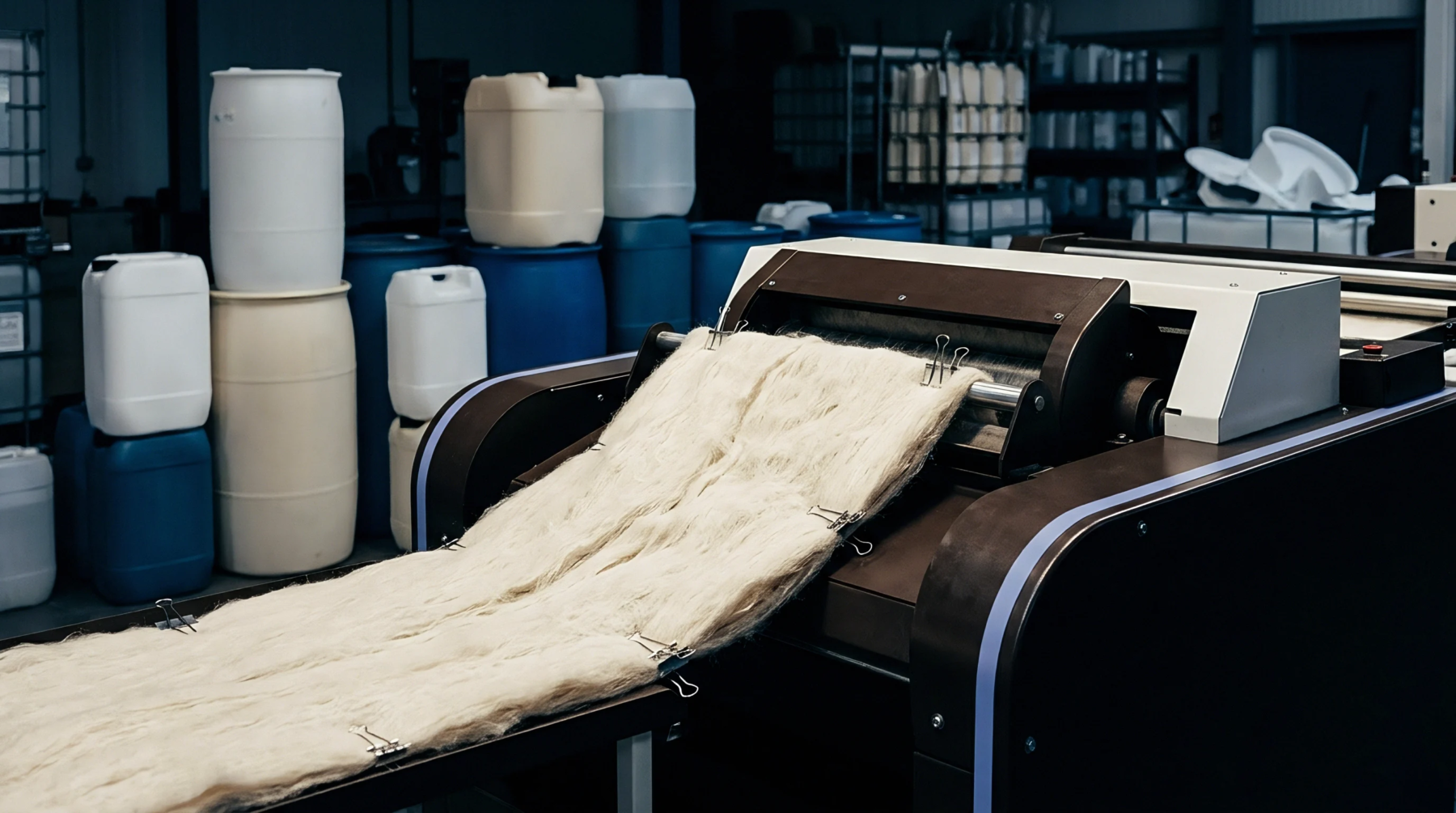
Verifying European Flax certificates in Chinese mills requires matching TC batch weights against raw bale intake logs and wet-spinning combed sliver yields.

Cross-border linen contracts allocate chain of custody discrepancy risks through lot specific warranties, mandatory mass balance audits, and immediate seller indemnity.

Verify European Flax Transaction Certificates by validating certifier portal codes, cross-checking bill-of-lading weights, and auditing mill mass balance loss.

European Flax verification for Asian spinning mills demands matching annual facility scope certificates with lot transaction certificates and dry mass balance ledgers.

Calibrating wet spinning trough temperature and water turnover reconciles organic flax pectin dissolution losses against certified mass balance yields.

Dew-retted European flax exhibits low surface sludge deposits below 3.5 mg/g, providing physical verification to validate origin claims against fraud.

Reconciling third-country linen origin mass balances requires normalizing moisture regain to dry matter mass and accounting for specific hackling and scouring waste factors.

Auditing European Flax scutched fiber receiving records reconciles dry fiber mass, certificate codes, and scutching lot numbers to defend chain of custody.
Raw flax field dockets match scutching intake when weighbridge tares, moisture regain corrections, and lot dockets reconcile under standard ISO dry mass limits.

Mass balance certificates balance inventory on paper but offer zero proof of physical European flax containment in individual fabric bolts.
Scope certificates validate facility processing capacity, while transaction certificates prove specific consignment volume provenance across linen orders.
Expertise is a utility, not a secret. sentiention™ publishes its working knowledge as open reference: intelligence layer covering the materials it sources, the markets it enters, and the reference that serves both.