Verifying Scutching Yields and Fiber Alignment in Customs Entry Declarations
Verify scutching yield metrics and fiber alignment parameters to defend Chapter 53 customs entry declarations and eliminate origin liability.


Blade
Mechanical scutching strips the outer woody stem from field-retted flax straw through high-velocity impact, separating spinning-grade long fibers from woody shive and short tow fragments. Processing mills receive baled retted straw at 10 percent to 14 percent moisture by weight, running the stalks through corrugated breaker rollers to fracture the inner woody core. The cracked straw feeds into turbine scutching drums where dull metal beaters rotating at 180 to 240 revolutions per minute strike the suspended stems against fixed steel plates.
This impact knocks out the woody core material as shive while keeping the continuous fiber bundles intact along the length of the stem.
Mass balance calculations across the scutching turbine establish the baseline yield figures that customs declarations and origin certificates must reconcile. Dry straw fed into a scutching line splits into four distinct fractions: long fiber line flax, short tow fiber, woody shive, and fine organic dust. Technical standards governing scutching establish expected conversion ratios based on dry matter weight.
Yield variances outside established parameters indicate altered processing conditions, blending with unretted straw, or fraudulent origin claims during entry declaration.
Mechanical Yield Ratios in Primary Processing
Retted flax straw yields a tightly bounded percentage of long fiber under standard mechanical settings. Field retting weakens the pectin bonds holding bast fiber bundles to the inner xylem, allowing clean detachment under turbine impact. Over-retted straw disintegrates under the scutching beaters, throwing off excessive tow and dust at the expense of long fiber.
Under-retted straw clings to xylem fragments, requiring aggressive beating that breaks bundle length and leaves shive stuck to the output stricks.
Line flax output ranges between 11 percent and 16 percent of initial dry straw weight when processing Western European long-stem flax varieties. Tow recovery accounts for an additional 10 percent to 15 percent of dry matter, comprising short, tangled fibers pulled free during the scutching strike. Woody shive accounts for 50 percent to 60 percent of total dry mass, while moisture loss and fine dust make up the remaining balance.
Technical auditors recalculate dry matter yields using standardized moisture allowances to prevent artificial mass inflation caused by water conditioning prior to weighing.
| Output Stream | Dry Weight Yield (%) | Standard Moisture Content (%) | Customs Yield Variance Ceiling (%) | Primary Physical Characteristic |
|---|---|---|---|---|
| Scutched Long Flax (Line) | 12.0 – 15.5 | 12.0 | ± 1.2 | Continuous parallel strands exceeding 500 mm |
| Scutched Short Tow | 10.5 – 14.0 | 12.0 | ± 1.5 | Disoriented strands under 250 mm length |
| Woody Shive (Core) | 52.0 – 58.0 | 10.0 | ± 3.0 | Broken xylem fragments under 15 mm |
| Organic Dust and Waste | 8.0 – 12.0 | 8.0 | ± 2.0 | Micro-particulate cellulose and air waste |
| Yield figures normalized to ISO 139 standard atmosphere testing conditions at 20 degrees Celsius and 65 percent relative humidity. | ||||
Turbine rotor parameters govern fiber survival rates during mechanical beating. Setting breaker roller pressure above 4.5 bar fractures long bast bundles, shifting up to 4 percent of total dry weight from long fiber into short tow. Rotor blade clearance relative to the scutching grid determines how aggressively shive is removed.
Clearance tighter than 2.0 millimeters cleans the long fiber thoroughly but increases breakage, whereas clearance above 3.5 millimeters leaves unacceptable woody contamination that alters the tariff classification of the fiber bundle.
Long fiber yield from retted straw averages 12 to 16 percent by dry weight when scutching turbine speed remains at 220 revolutions per minute.
Customs entries declaring imported scutched flax line require yield reconciliation against original straw intake weights. Unscutched flax straw imported under tariff provisions must match declared output quantities after domestic processing. Discrepancies between declared straw weights and resulting long fiber volumes reveal illegal blending with uncertified imported tow or undeclared foreign straw sources.
The ratio between long fiber line output and tow production serves as the primary diagnostic metric during origin and tariff verification audits.
Physical Contamination and Shive Content Limits
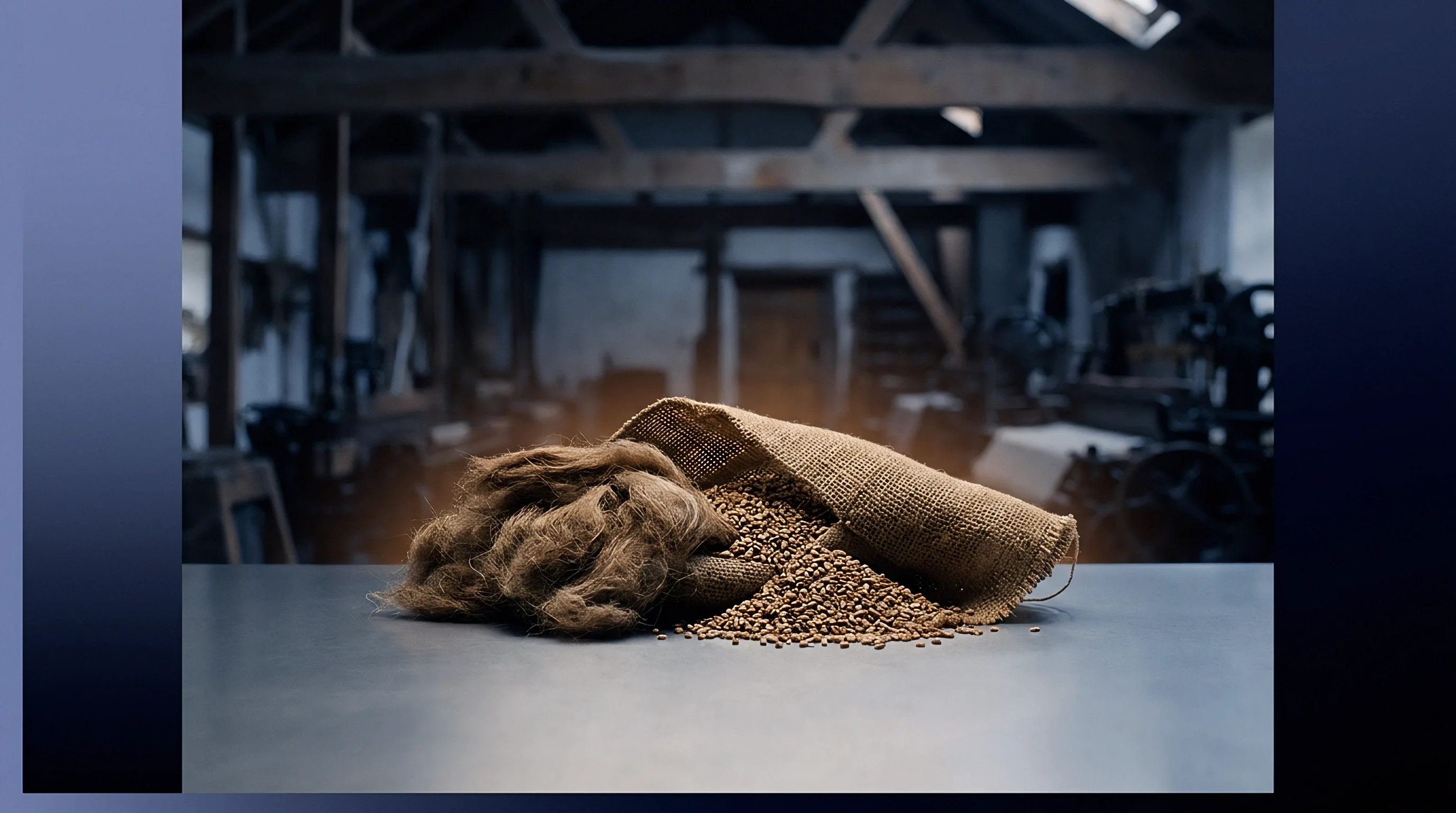
Residual shive content remaining in scutched long fiber directly affects customs valuation and sub-heading determination under international trade nomenclature. High-grade scutched flax contains under 1.5 percent residual shive by weight after turbine processing. Intermediate grades contain between 1.5 percent and 3.5 percent shive, requiring secondary cleaning or hackling before wet spinning operations.
Fiber containing over 5.0 percent woody core fragments indicates incomplete scutching or defective field retting, failing the physical criteria for fully processed scutched flax.
Laboratory assessment of shive content relies on gravimetric separation following mechanical shaking and hand-sorting per standardized test protocols. Samples drawn from imported bales undergo conditioning to standard moisture equilibrium before testing. Separated woody particles are weighed on precision balances to calculate shive percentage relative to dry fiber mass.
High residual shive content indicates unretted wood fragments held by sticky pectin layers, pointing toward rapid mechanical processing designed to bypass natural field-retting cycles.
Processors in low-cost jurisdictions frequently attempt to declare crude tow or partially broken straw as fully scutched long flax to benefit from preferential tariff rates or origin quotas. Physical inspection reveals clear structural markers distinguishing true scutched line flax from mechanically shredded straw. Scutched line flax exhibits aligned, parallel fiber bundles where individual technical fibers remain bound in continuous ribbons along the original stem length.
Mechanically shredded straw contains broken nodes, crushed epidermis fragments, and random fiber orientation that fails alignment tests.
Low long-fiber yield is frequently attributed to damp field retting conditions during August harvests.


Parallels
Fiber bundle alignment marks the structural boundary between long line flax and short tow fractions in commercial trade declarations. In the plant, bast fibers grow as concentric rings of bundles embedded within the outer cortex of the Linum usitatissimum stem. Scutching has to preserve this longitudinal arrangement while stripping away non-cellulosic tissues.
Parallelism metrics quantify how well individual fiber strands maintain a shared longitudinal axis inside the scutched strick.
Alignment verification relies on optical analysis and mechanical bundle testing to establish structural uniformity across imported shipments. Random orientation characterizes short tow fibers, which entangle during scutching impact and lack longitudinal coherence. Long line flax displays high directional symmetry, with over 85 percent of measured fiber strands lying within a 15-degree envelope relative to the strick length.
Customs entry documentation claiming line flax status must align with physical measurement of these geometric parameters.

Optical and Mechanical Alignment Assessment
Image analysis of fiber webs provides quantitative data regarding angular distribution and bundle straightness. Standardized optical testing places representative fiber samples on polarized light stages, where digital imaging software calculates the orientation vector for every visible filament. The resulting orientation distribution curve yields an angular variance statistic.
Fully scutched line flax yields a narrow Gaussian distribution centered at zero degrees alignment offset, confirming precise longitudinal orientation.
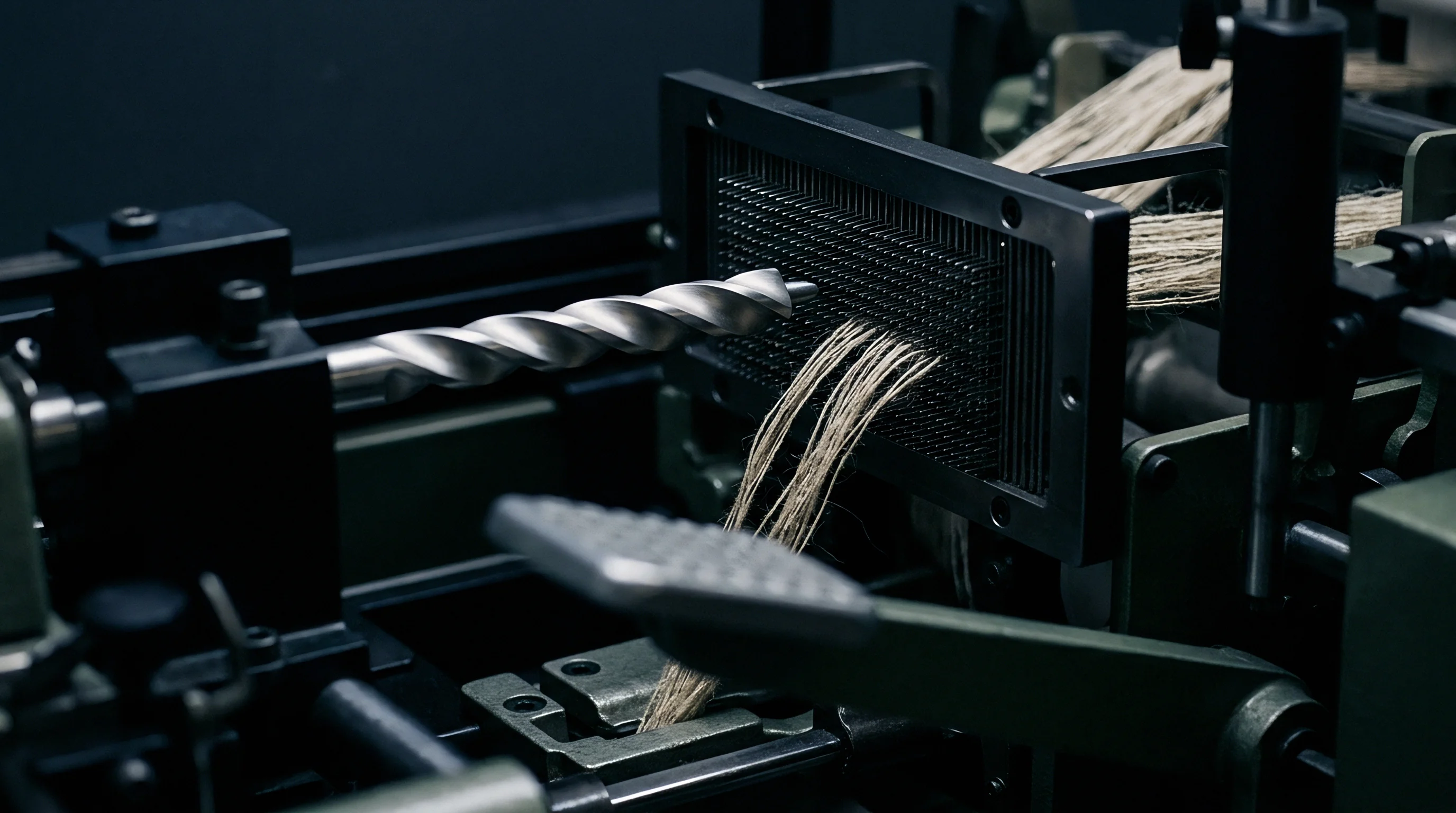
Mechanical comb sorters measure fiber length distribution and bundle alignment simultaneously by drawing stricks through pinned beds. The resulting fibrogram maps the length of aligned fibers against cumulative weight percentages. True scutched flax produces a sharp fibrogram profile where long aligned fibers constitute over 80 percent of total sample mass.
Bales containing blended tow or broken line fibers produce flat, irregular fibrogram curves that reflect structural disorganization and mixed length distributions.
Span length metrics derived from comb sorting establish threshold values for entry classification. The 2.5 percent span length parameter identifies the length exceeded by the longest 2.5 percent of fibers in the tested strick. Scutched long flax exhibits 2.5 percent span lengths exceeding 600 millimeters under standard testing conditions.
Samples showing 2.5 percent span lengths below 300 millimeters indicate severe mechanical degradation during scutching or deliberate mixing with low-grade scutching tow.
Strick cohesion force measures the friction between adjacent aligned fibers during axial tension testing. High bundle alignment increases contact surface area between parallel filaments, generating elevated cohesion force values during low-speed tensile loading. Unaligned or crimped fibers reduce contact surface area, resulting in low cohesion values and early slip failure under tension.
Tensile cohesion testing serves as a rapid physical cross-check for customs officers verifying physical fiber grading at entry terminals.
Distinguishing Line Flax from Scutched Tow
Structural differences between long line flax and tow determine processing routing in spinning mills. Line flax undergoes hackling to produce fine yarn counts ranging from 30 to 100 lea, whereas tow fiber passes through carding engines to produce coarse yarns under 20 lea. Misdeclaring cardable tow as scutched line flax distorts customs revenue and evades trade monitoring systems established for high-value textile raw materials.
Hackling yields provide secondary confirmation of initial scutching alignment quality. Well-aligned scutched line flax loses less than 30 percent of its weight as comb waste during commercial hackling operations. Disorganized or poorly scutched flax loses up to 55 percent of its mass during hackling, converting expensive line flax into low-value hackling tow.
Commercial buyers apply strict financial penalties when imported scutched line fails standardized hackling yield thresholds.
The table below details physical measurement differences between long line flax and short scutched tow across primary quality indicators.
| Parameter | Scutched Long Line Flax | Scutched Short Tow | Test Method Standard |
|---|---|---|---|
| Mean Fiber Length (mm) | 500 – 800 | 50 – 180 | ISO 6989 / ASTM D1440 |
| Angular Alignment Variance (degrees) | < 12.5 | > 42.0 | Optical Image Analysis |
| Residual Shive Content (%) | 0.8 – 2.2 | 3.5 – 8.5 | Gravimetric Separation |
| Strick Cohesion Force (N/g) | 4.5 – 7.2 | 0.8 – 1.6 | Axial Tensile Load Test |
| Hackling Waste Yield (%) | 18.0 – 28.0 | Not Applicable | Comb Loss Measurement |
Bale sampling protocols require core extractions from multiple depth layers to detect internal non-conformity. Unscrupulous shippers place high-quality parallel stricks on the outer layers of a bale while packing the core with disorganized tow or wet straw waste. Core sampling probes extract cylindrical sections reaching the center of the bale, enabling laboratory technicians to compare orientation metrics between outer stricks and core samples.
Customs laboratories continue to debate whether automated image processing of dry-laid fiber webs can replace manual hand-sorting when measuring alignment angles in damaged or compacted bales.


Tariff
Harmonized System nomenclature governs the classification and origin determination of raw, scutched, and processed flax under Chapter 53. Correct tariff assignment relies entirely on the precise physical state and degree of mechanical processing applied to the fiber. Subheading 5301.10 covers raw or retted flax straw prior to scutching operations.
Subheading 5301.21 covers broken or scutched flax fiber, while subheading 5301.29 encompasses hackled or otherwise processed line fibers. Flax tow and waste fall under subheading 5301.30.
Misclassification across these specific subheadings alters applicable duty rates, trade preferences, and import licensing provisions. Importing raw flax straw under the scutched line code evades agricultural monitoring controls, while declaring hackled fiber as raw scutched line distorts trade statistics and origin rules. Customs declarations must present verifiable physical evidence matching the exact scope of the declared tariff subheading.

Customs Subheading Mechanics in Chapter 53
Customs entry verification starts with physical inspection against the Explanatory Notes to Heading 5301. Subheading 5301.21 requires flax to have undergone scutching, where woody shive has been separated from the fiber bundles following field retting. Stricks must remain organized in tied bundles, demonstrating continuous fiber length and longitudinal orientation.
Presence of excessive woody stem material reclassifies the shipment under subheading 5301.10, triggering different entry documentation protocols and phytosanitary verification steps.
Subheading 5301.29 covers flax that has passed beyond scutching into hackling, combing, or secondary mechanical alignment processes. Hackled flax displays near-perfect parallel alignment, with fine, separated technical fibers free from shive and split into fine strands. Declaring hackled flax under 5301.21 conceals processing value added in third-country facilities, violating non-preferential origin rules when origin relies on specific manufacturing operations.
| HS Code | Tariff Nomenclature Description | Mandatory Physical Criteria | Maximum Permitted Shive (%) | Non-Preferential Origin Rule |
|---|---|---|---|---|
| 5301.10 | Flax, raw or retted | Unbroken stems, desiccated or field-retted straw | > 50.0 | Wholly Obtained (Harvesting) |
| 5301.21 | Flax, broken or scutched | Parallel long fiber stricks separated from shive | < 3.0 | Substantial Processing (Scutching) |
| 5301.29 | Flax, hackled or otherwise processed | Combed, parallel fine fibers ready for spinning | < 0.5 | Value Added or Specific Processing |
| 5301.30 | Flax tow and waste | Tangled short fibers, scutching and hackling waste | < 10.0 | Manufacture from Raw Materials |
Origin determination for scutched flax under Union Customs Code Article 60 and equivalent international rules depends on where the substantial transformation occurs. Scutching raw straw into clean line fiber constitutes a non-preferential origin-conferring process, changing the tariff heading from 5301.10 to 5301.21. Processing imported raw straw into scutched flax changes the origin of the fiber to the country where scutching occurred, provided the transformation meets processing metrics verified by yield auditing.
Simple cleaning, baling, or dust removal does not confer non-preferential origin under standard customs jurisprudence. Baling imported unretted straw or repackaging loose scutched fiber leaves the origin unchanged. Importing raw straw from one jurisdiction, retting it in a second jurisdiction, and scutching it in a third creates a complex origin chain where every processing step must be backed by factory logbooks and yield reconciliation statements.

Are Physical Yield Discrepancies Grounds for Seizure?
Customs authorities initiate physical detention and formal seizure proceedings when entry declarations show systematic mathematical impossibility between declared input weights and declared output products. A processing facility claiming to convert 100 metric tons of imported European straw into 40 metric tons of scutched long line flax violates physical mass balance limits. Standard scutching lines produce a maximum of 16 metric tons of line flax from that straw volume.
The excess 24 metric tons represents undeclared material introduced into the supply chain to fraudulent origin credentials.
Seizure actions rely on statutory authority penalizing false statements on customs entry documents, such as 19 U.S.C. 1592 in the United States or UCC Article 42 in the European Union. Penalties apply regardless of whether the misstatement altered the payable duty rate. Misdeclaring fiber category, physical alignment, or yield metrics constitutes a material misstatement because it misleads customs agencies regarding origin compliance, tariff quota allocation, and trade restriction enforcement.
Detained shipments undergo forensic laboratory analysis to establish exact physical composition. Laboratory testing includes microscopic cross-section analysis, fiber length distribution measurement, residual shive determination, and retting stage assessment. Discovering unretted xylem fragments mixed with declare fully-scutched fiber proves that the goods do not conform to entry documentation, establishing grounds for administrative forfeiture and civil financial penalties.
Importers facing seizure actions must produce primary production evidence from the processing mill. Certificates of origin signed by regional chambers of commerce do not override physical test evidence or mass-balance calculations. Authorities require raw weighbridge tickets, scutching line electricity consumption records, worker shift logs, and yield ledger entries to verify that declared physical transformation actually occurred at the specified facility.
Incorporating Incoterms 2020 DDP terms with mandatory Annex 53-A classification declarations transfers the customs valuation and origin penalty exposure directly to the seller.


Audit
Verification audits conducted by customs compliance officers or independent third-party assessors require step-by-step physical and documentary examination. On-site verification confirms that physical processing capabilities match declared import and export figures. Audit procedures compare raw material intake, machine capacity, power usage, labor records, and final output volumes across defined production periods.
Physical sampling protocols during audit execution must strictly follow standardized statistical methodologies to yield legally defensible results. Random sampling across multiple production batches prevents sampling bias and captures variability in raw material quality. Laboratory testing of drawn samples provides the objective dataset required to validate or challenge commercial declarations.

Standard Sampling and Physical Testing Sequence
Auditors follow an established technical sequence when drawing fiber samples from commercial consignments at import terminals or mill warehouses.
- Inspect the outer packaging and bale bands of all target lots, recording bale identification numbers, gross weight markings, and seal integrity.
- Select random sample bales based on ISO 2859-1 single sampling plans for normal inspection, ensuring representation across different production shifts and container loads.
- Extract core samples using a stainless steel tube probe driven horizontally into the center of each selected bale, collecting at least 500 grams of fiber per bale.
- Remove surface stricks from top, middle, and bottom sections of open bales to assess outer versus core fiber consistency.
- Place extracted samples immediately into moisture-impermeable polythene bags, sealing each bag with tamper-evident security tape.
- Transport sealed samples to an accredited ISO 17025 laboratory within 48 hours, maintaining controlled ambient temperature and humidity records during transit.
- Condition samples in the laboratory under standard atmosphere conditions of 20 degrees Celsius and 65 percent relative humidity for 24 hours per ISO 139.
- Perform gravimetric shive separation, weighing separated woody components on a calibrated analytical balance sensitive to 0.001 grams.
- Measure fiber length distribution and alignment angles using comb sorters and digital polarization image analysis.
- Calculate dry mass conversion metrics, applying ISO 6741 standard moisture regain values to verify declared invoice weights.

Mass Balance Calculation Logic
Reconciling raw material input against processed output requires precise mathematical formulations that account for moisture fluctuations and organic waste generation. Mass balance accounting determines whether a mill’s output volume could physically originate from its documented raw material purchases. The fundamental equation governing scutching yield reconciliation balances dry matter input against total recovered fractions.
The core equation balances initial straw mass against processing outputs:
M_straw (1 – MC_straw) = M_line (1 – MC_line) + M_tow (1 – MC_tow) + M_shive (1 – MC_shive) + M_waste (1 – MC_waste)
Where M represents wet weight mass in kilograms and MC represents moisture content expressed as a decimal fraction. Standard commercial moisture values dictate that flax straw enters processing at roughly 12 percent moisture (MC = 0.12), while dry shive exits at 10 percent moisture (MC = 0.10). An auditor applies this formula to determine if declared output volumes violate physical constraints.
Consider an import declaration claiming 50,000 kilograms of scutched line flax (M_line = 50,000 kg) at 12 percent moisture derived from 250,000 kilograms of imported European straw (M_straw = 250,000 kg) at 12 percent moisture. Applying the formula yields a dry matter long fiber output ratio:
Dry Line Output Ratio = (50,000 0.88) / (250,000 0.88) = 44,000 / 220,000 = 0.20 (20.0%)
A dry matter yield of 20.0 percent exceeds the maximum physical ceiling of 16.0 percent established for long flax scutching lines. The audit reveals an illegal yield inflation of at least 4.0 percentage points, representing 8,800 kilograms of unverified dry long fiber. This mathematical discrepancy proves the inclusion of undeclared third-country fiber or fraudulent weight declarations.
Yield variance exceeding 2 percent of dry matter weight across a monthly scutching batch indicates raw material substitution.
Physical mass-balance cross-checks reveal discrepancies of up to 14 percent between declared European scutched fiber imports and internal mill spinning logbooks.
Recalculating mill throughput against electrical energy consumption provides additional verification. Commercial scutching lines consume between 35 and 50 kilowatt-hours of electricity per metric ton of processed raw straw. Mill utility invoices showing 100,000 kilowatt-hours of power consumption over a period where 5,000 metric tons of straw were allegedly processed reveal a power deficit.
Processing 5,000 metric tons requires a minimum of 175,000 kilowatt-hours. This operational shortfall demonstrates that declared processing volumes never occurred on site.
Failing a mass-balance customs verification results in immediate revocation of preferential trade origin status, retroactive assessment of full non-preferential duty rates, and application of civil fraud penalties ranging from 75 percent to 200 percent of the duty shortfall.


Paperwork
Traceability documentation establishes the evidentiary chain linking physical fiber shipments to specific geographic origins and accredited certification schemes. A broken document chain invalidates provenance claims regardless of physical fiber test results. Customs authorities evaluate entry dossier elements in order of hierarchical authority, demanding direct cross-referencing between commercial invoices, transport records, and scheme scope certificates.
Voluntary commercial certifications like European Flax and Masters of Linen provide commercial marketing credibility but carry different levels of statutory recognition during customs origin audits. European Flax guarantees Western European origin for raw fiber grown in France, Belgium, or the Netherlands, maintaining chain of custody through mandatory transaction certificates for every custody transfer. Masters of Linen imposes stricter rules, requiring all transformation steps from fiber to finished fabric to occur within European territory.

Documentary Hierarchy and Verification Scope
Customs agencies demand an unbroken paper trail linking every entry lot back to the original agricultural producer or scutching mill. Key paperwork components must contain matching batch numbers, container seal identifiers, net dry weight metrics, and issuing authority references. Discrepancies between transport document weights and certified transaction weights raise immediate red flags during import entry processing.
OEKO-TEX Standard 100 certificates are routinely submitted by inexperienced importers as origin evidence, despite the standard possessing zero statutory relevance for geographical origin claims. OEKO-TEX certifies toxicological safety and chemical residue limits in finished or intermediate textiles. An OEKO-TEX certificate confirms that a fiber lot meets chemical safety thresholds, but provides no evidence regarding where the flax was grown, retted, or scutched.
| Document Type | Issuing Authority | Covered Stage | Mandatory Data Fields | Customs Origin Value |
|---|---|---|---|---|
| European Flax Scope Certificate | Alliance for European Flax-Linen & Hemp / Bureau Veritas | Agricultural Harvesting and Scutching | Company ID, Audit Period, Certified Process Scope, Expiry Date | High (Validates European Fiber Origin) |
| European Flax Transaction Certificate (TC) | Bureau Veritas / Accredited Certifier | Specific Commercial Batch Transfer | Seller/Buyer IDs, Net Mass, TC Number, Invoice & BL Links | Critical (Mandatory Batch Origin Link) |
| Masters of Linen Certificate | Alliance for European Flax-Linen & Hemp | 100% European Processing (Spinning to Weaving) | Mill Registration, Transformation Process, Country List | High (Proves EU Processing Rules) |
| OEKO-TEX Standard 100 | OEKO-TEX Association Member Institutes | Chemical Safety & Residue Limits | Test Report ID, Product Class, Certified Chemical Limits | Zero (No Geographical Origin Relevance) |
| Certificate of Non-Preferential Origin | Regional Chamber of Commerce | General Foreign Trade Entry | Exporter Name, Consignee, HS Code, Origin Country, Stamp | Medium (Subject to Customs Audit) |
| Customs Entry Summary (SAD / C88) | Importing Customs Authority | Import Duty and Tariff Declaration | HS Code, CPC Code, Declared Origin, Customs Value, Duty | Legal Entry Record |
Auditors evaluate transaction certificates against mill weighbridge receipts to confirm that certified long flax was not blended with uncertified tow.
Scope certificates establish that a mill possesses the operational capability and certified status to handle traceable fiber, carrying an explicit validity period and facility identification code. Transaction certificates validate specific commercial shipments, stating exact net weights, invoice numbers, and bill of lading references. A valid scope certificate without corresponding transaction certificates for the imported lot fails to prove origin for that specific import entry.

Customs Origin Audit File Assembly
Importers must assemble a structured origin audit file for every imported flax entry, maintaining these records for a minimum of five years to defend against retroactive customs inquiries. The list outlines essential verification steps required when assembling an entry audit dossier.
- Scope Certificate Audit Verification of certifier accredited status, checking expiry dates and facility address details against published scheme databases.
- Transaction Chain Cross-Check Matching net dry weights across commercial invoices, bill of lading documents, and transaction certificates to ensure zero quantity discrepancies.
- Batch Number Alignment Tracing physical bale tag lot numbers directly to mill scutching logbooks and raw material intake ledgers.
- Mass Balance Reconciliation Comparing total straw intake volumes against certified line fiber outputs using mill production records.
- Transport Route Verification Examining sea waybills, container vessel tracking data, and transshipment records to confirm unbroken chain of custody during transport.
The checklist below defines operational red flags that trigger immediate customs audit intervention during document review.
- Unlinked Transaction Numbers Commercial invoices referencing scope certificates without valid, batch-specific transaction certificates attached.
- Weight Inflation Discrepancies Transaction certificates specifying lower net weights than the gross weights declared on sea waybills.
- Expired Scope Validity Production dates listed on commercial invoices occurring outside the valid date envelope of the supplier scope certificate.
- Irregular HS Subheading Declarations Invoices declaring hackled long flax under raw straw HS codes to exploit lower duty rates.
- Missing Scutching Records Asian processing facilities claiming European Flax origin without producing original European scutching mill delivery notes.
A transaction certificate lacking batch-specific weight cross-references fails to prove geographical origin during a customs entry audit.
Supplier transaction claims without batch-level weighbridge tickets mean the origin defense relies entirely on vendor goodwill.


Exposure
Commercial exposure arising from flawed yield declarations and fiber alignment misclassifications lands on the importer of record. Customs enforcement agencies possess broad statutory authority to reclassify entries, assess retroactive duty adjustments, impose interest charges, and levy civil administrative penalties. Fraudulent or negligent misdeclarations damage supply chain continuity and disrupt commercial retail deliveries through prolonged port detentions.
Financial liability extends beyond direct duty shortfalls. Importers incur substantial container demurrage charges, port storage fees, and specialized customs legal costs while detained shipments undergo forensic sampling and laboratory evaluation. Commercial contracts that fail to allocate these risks to foreign suppliers leave the buyer vulnerable to full financial loss when entries fail regulatory verification checks.

Commercial Remedies and Warranty Mechanisms
Drafting robust commercial purchase contracts provides the primary legal defense against supplier-driven tariff misclassification and origin fraud. Sourcing contracts must include explicit origin warranties, technical physical specifications, and mandatory indemnification clauses. Suppliers must warrant that all delivered fiber strictly complies with declared HS codes and regional origin criteria, backed by verifiable mass-balance logbooks.
Contractual terms should make invoice settlement contingent upon customs entry release and physical sample validation. Retaining a minimum 15 percent purchase price holdback until customs clearing authorities formally accept the declared classification protects the buyer’s cash balance against sudden penalty assessments. Supplier indemnification clauses must cover retroactive duty adjustments, legal expenses, and container demurrage incurred due to false origin claims or physical fiber non-conformity.
The list specifies mandatory contractual covenants required in high-value linen sourcing agreements.
- Yield Audit Guarantees Explicit rights for buyer-designated independent auditors to inspect processing facility logbooks, weighbridge tickets, and energy bills on demand.
- Origin Indemnity Clauses Unconditional supplier agreement to reimburse all customs penalties, legal fees, and back-duties resulting from invalid origin certificates.
- Physical Conformity Specifications Mandatory technical limits covering fiber length, angular alignment variance, and residual shive percentages tied to purchase price adjustments.
- Payment Holdback Mechanics Contractual authorization to withhold 15 percent of total shipment value until formal customs release and laboratory verification are complete.
Origin warranty covenants routinely attach mandatory batch-level yield reconciliation reports directly to commercial invoice payments.
Sourcing organizations must establish internal compliance frameworks that bridge procurement, trade compliance, and legal desks. Procurement teams often negotiate supply contracts based on price and delivery timelines without evaluating supplier capacity to produce required traceability paperwork. Integrating trade compliance review into initial supplier qualification protocols prevents costly commercial exposure before purchase orders are issued.
Customs enforcement actions targeting imported textile raw materials continue to expand globally, driven by stringent origin verification mandates, forced labor import bans, and regional supply chain security rules. Importers relying on generic commercial paperwork without physical testing or yield reconciliation face increasing regulatory friction and financial exposure. Verifying scutching yields and fiber alignment metrics provides the technical foundation required to defend entry declarations, protect commercial margins, and secure compliant linen supply chains.