Non Preferential Origin Determination Exposure in Cross Border Linen Fabric Supply Chains
Non-preferential origin for woven linen textiles is conferred by the country of weaving rather than the country of agricultural flax fibre cultivation.

Shift
Non-preferential rules of origin determine tariff rates, anti-dumping exposure, and legal origin labeling for imported linen piece goods. When raw flax grown in France, Belgium, or the Netherlands is shipped to China for spinning and weaving, the legal nationality of the finished cloth separates from where the plant was grown. Customs authorities in the European Union, the United States, and the United Kingdom base non-preferential origin on substantial transformation ~ meaning origin is assigned to the country where processing creates a new article with a distinct name, character, or use, or where product classification meets a defined tariff shift rule.
Importers routinely confuse private sustainability certifications with non-preferential customs origin. A commercial fibre certificate does not make woven fabric European if the weaving happened elsewhere. Under U.S. customs regulations at 19 CFR 102.21, origin for textile and apparel products follows hierarchical tariff-shift rules.
For woven linen under Harmonized System heading 5309, origin is conferred where the cloth is woven. If scutched European flax (HS 5301) goes to Jiangsu Province, is spun into yarn (HS 5306), and is woven into plain-weave cloth (HS 5309), U.S. Customs and Border Protection treats the non-preferential origin as China. Entering that fabric as French or Belgian linen on customs entries constitutes a false declaration under 19 U.S.C. 1592.
Commercial invoices often carry a false sense of assurance.
EU customs authorities apply the Union Customs Code under Regulation EU 952/2013 and Commission Delegated Regulation 2015/2446. Article 60(2) of the UCC states that goods produced across multiple countries originate where they underwent their last substantial, economically justified processing. For HS Chapter 53 woven textiles, Annex 22-01 of the Delegated Regulation sets the specific origin rule: weaving accompanied by finishing, or complete weaving preceded by spinning, determines origin.
Legally, the agricultural origin of the raw straw or scutched line flax is separate from the origin of the woven cloth.
The country of origin for woven linen textiles under non-preferential customs rules is determined by the country of weaving rather than the country of agricultural cultivation.
Tariff classification shifts provide the mechanical test. Chapter 53 of the Harmonized System breaks flax processing into distinct stages. Raw or retted flax straw, scutched flax, and flax tow fall under HS 5301.
Drafting, hackling, and wet spinning yield single or folded yarn under HS 5306. Looms then interlace warp and weft to create woven cloth under HS 5309. In compliance audits under 19 CFR Section 102.21, origin is tracked by identifying the heading where each transformation takes place.
Moving from HS 5306 to HS 5309 is the substantial transformation that assigns origin to the mill operating the looms.

Tariff Heading Transitions in Linen Manufacturing
Determining non-preferential origin legally depends on tracking heading changes across tariff schedules. Every processing step alters the physical or chemical state of the material, moving it from raw commodity to intermediate input or finished product.
| Stage of Processing | Harmonized Tariff Heading | Physical State of Material | Legal Transformation Status | Conferred Origin Under 19 CFR 102.21 |
|---|---|---|---|---|
| Retting and Scutching | 5301.10 – 5301.29 | Scutched line flax and broken straw tow | Agricultural extraction | Country of farm growth |
| Hackling and Combing | 5301.30 | Flax sliver and combed line flax | Mechanical preparation | Country of scutching mill |
| Wet or Dry Spinning | 5306.10 – 5306.20 | Single or ply linen yarn on bobbins | Yarn formation from sliver | Country of spinning plant |
| Weaving Operations | 5309.11 – 5309.99 | Loom-state greige linen cloth | Formation of woven structure | Country of loom shed |
| Dyeing and Finishing | 5309.19 – 5309.99 | Piece-dyed or bleached linen textiles | Surface modification | Does not shift origin from weaving |
Customs authorities ignore marketing claims. Compliance officers do not consider agricultural heritage when setting duties, countervailing actions, or retaliatory tariffs. Sourcing teams buying fabric woven in Zhejiang Province from French flax will face retroactive duty assessments if they declare European origin at entry.
Where supply chains split growing, spinning, weaving, and finishing across multiple countries, procurement contracts need clear protective terms: The seller warrants that the country of origin declared on commercial invoices and certificates of origin reflects the jurisdiction of final textile formation under destination customs rules, transferring all financial liability for non-preferential reclassification to the vendor.


Spindle
Processing flax fibre into yarn and finished woven fabric requires sequential mechanical and hydrothermal steps. Raw flax stalks undergo field retting, where microbes break down the pectin holding the bast fibre bundles together. Scutching mills then separate the woody inner core (shives) from the long line flax and short tow.
Long line flax produces untwisted strands between 700 millimetres and 1000 millimetres long, with moisture stabilized between 10 percent and 12 percent. The fiber is compressed into high-density bales weighing 200 kilograms to 250 kilograms, bound with steel strapping, and tagged with lot identifiers from the scutching facility or cooperative.
When auditing cross-border supply chains, line flax can be tracked physically as it becomes spun yarn. Export shipments of scutched line flax travel in forty-foot dry containers from European ports like Antwerp or Le Havre to spinning mills in Asia. At the mill, the fibre goes through hackling, where pinned beds comb the flax into parallel ribbons called sliver.
Drawing frames and intersecting gills combine multiple slivers to achieve uniform linear density, measured in metres per kilogram or lea count. This combed sliver then feeds the roving frame, which adds a light twist before wet spinning.
Wet spinning is what distinguishes fine linen yarn from dry-spun bast fibres. Roving passes through hot water maintained at 60 degrees Celsius to 75 degrees Celsius, which softens the remaining pectins so individual technical filaments slide past each other during drafting. High-speed ring spindles draw the softened roving to the target count, inserting twist to bind the fibrils before winding onto plastic tubes.
Ovens then dry the yarn under controlled temperatures to stop mildew growth and equalize moisture at roughly 9 percent to 11 percent by mass.
Material is lost at every stage of processing; raw scutched flax never produces an equal weight of yarn or cloth. In wet spinning operations using 100 percent long line European flax, yarn yields typically average 72 percent to 78 percent of input fibre, with 22 percent to 28 percent ending up as hackling tow, carding waste, or roving breaks. When auditing spinning lot records, comparing sliver input directly against output yarn weight reveals physical process losses.
A mill reporting a 95 percent yield from long line flax to fine wet-spun yarn is fabricating records, as standard physical losses make that level of efficiency impossible.
Weighbridge tickets provide the initial check on gross intake.
Weaving adds further process waste and opportunity for batch mixing. Coned yarn goes through warping, sizing, and drawing-in before being loaded onto air-jet, rapier, or projectile looms. Sizing agents ~ usually modified potato starches or polyvinyl alcohols ~ protect warp threads from abrasion during shed opening and weft insertion.
Greige fabric leaves the loom at widths between 150 centimetres and 320 centimetres, with weights ranging from 110 grams per square metre to 380 grams per square metre. Subsequent desizing, scouring, bleaching, and dyeing strip out starches and natural waxes, shedding 4 percent to 8 percent of greige weight, though functional resin finishes may add 1 percent to 3 percent back.
Reconciliation of Physical Fibre Mass and Cloth Yield
Verifying origin requires reconciling purchased fibre volume against finished cloth weight. Mass-balance checks reveal where lower-cost material was blended in during processing.
| Processing Stage | Input Material (kg) | Mechanical or Chemical Loss | Secondary / Waste Output (kg) | Net Stage Yield (kg) | Cumulative Yield Efficiency |
|---|---|---|---|---|---|
| Hackling and Combing | 1,000.00 | Tow separation, dust, shive fallout | 180.00 (Combing Tow) | 820.00 (Combed Sliver) | 82.0% |
| Drawing and Roving | 820.00 | Sliver breakages, draft waste | 25.00 (Drawing Waste) | 795.00 (Roving) | 79.5% |
| Wet Ring Spinning | 795.00 | Pectin dissolution, fly waste | 45.00 (Pectin Loss and Slubs) | 750.00 (Raw Spun Yarn) | 75.0% |
| Winding and Coning | 750.00 | Yarn clears, splice cuts | 12.00 (Cone Ends) | 738.00 (Packaged Yarn) | 73.8% |
| Warping and Weaving | 738.00 | Loom thrum, selvage trimming | 37.00 (Selvage and Thrums) | 701.00 (Greige Cloth) | 70.1% |
| Wet Finishing (Piece Dyed) | 701.00 | Scour loss, desizing mass reduction | 35.00 (Soluble Non-Cellulosics) | 666.00 (Finished Cloth) | 66.6% |
Mill records document internal inventory flows. On-site audits at overseas mills cover warehouse ledgers, weighbridge receipts, transfer notes, and spinning logbooks. Gaps between imported volumes of certified European fibre and total yarn production usually point to uncertified local or third-country tow being mixed into the run.
For example, if a mill outputs 50 metric tons of wet-spun flax yarn monthly but imports only 20 metric tons of European line flax, the missing 30 metric tons came from alternative sources, diluting the physical makeup of the yarn.
In these cases, the physical balance sheet falls apart.
Verifying a batch trail requires collecting primary records across six key stages of mill operation:
- Inward customs bills of entry establish declared volume, HS code, discharge port, and container numbers for raw flax entering the plant.
- Agricultural phytosanitary inspection certificates verify that raw agricultural commodities originated in accredited European growing zones prior to ocean transport.
- Internal bale breakdown sheets match imported bale numbers and lot tags against batch feed schedules at the initial hackling lines.
- Spinning frame output tickets record spindle efficiency, spindle speed, roving lot numbers, and net yarn mass produced per work shift.
- Loom beam mount cards confirm the specific yarn lot numbers loaded onto the warp beam and drawn through the heddles and reed.
- Finished piece grading records link individual rolls of woven cloth to specific loom numbers, shift outputs, and greige inventory tallies.
Examining floor records frequently exposes material substitution. When asked about gaps between European fibre receipts and output yardage, mill managers often claim that European bales were blended with local stock to maintain consistent yarn strength through seasonal humidity shifts.

Discrepancy
Commercial fibre certifications and statutory origin rules operate under entirely different standards. Voluntary sustainability schemes track where raw fibre was grown and handled, while customs authorities assign origin based on where material was substantially transformed into a finished tariff item. Sourcing managers often assume that chain-of-custody certificates will satisfy customs officers during an audit ~ an assumption that creates severe exposure at the port of entry.
Certification bodies manage chain of custody through scope and transaction certificates. European Flax, overseen by the Alliance for European Flax-Linen and Hemp, certifies that long line flax was grown in Western Europe under defined agricultural standards. It tracks fibre through scutching, spinning, weaving, and distribution by issuing transaction certificates that balance material inputs and outputs at each step.
Masters of Linen sets a stricter standard, requiring 100 percent of processing ~ spinning, weaving, and finishing ~ to occur within EU borders or associated European territories.
Problems arise when European Flax fibre is shipped outside Europe for spinning and weaving. The resulting cloth may carry a valid European Flax transaction certificate proving the raw fibre came from France or Belgium. Yet customs authorities in the United States, Japan, and the EU do not accept that certificate as proof of European origin for the woven fabric.
Under customs law, the origin is China, India, or Vietnam ~ where the spinning and weaving were performed. Marking that finished cloth ‘Product of France’ based solely on a fibre certificate violates consumer protection and trade labeling laws.
Commercial chain of custody certificates verify agricultural fibre provenance but possess no legal authority to determine non-preferential country of origin under international customs law.
Textile labeling rules enforce this separation explicitly. In the U.S., the Federal Trade Commission administers the Textile Fiber Products Identification Act under 16 CFR Part 303. Section 303.33 requires textile goods to state where they were manufactured or processed.
If fabric is produced abroad from imported raw materials, the label must disclose both steps ~ such as Woven in China of French Flax. Labeling that same item simply French Linen breaches FTC rules, leaving the importer open to civil penalties and mandatory recalls.

Which Entity Issues Legally Binding Origin Determinations?
Only national customs authorities have statutory authority to issue binding origin rulings. Importers needing legal certainty can request formal advance rulings prior to import. In the U.S., CBP issues Binding Ruling Letters under 19 CFR Part 177; in the EU, national customs authorities issue Binding Origin Information decisions under UCC Articles 33 and 34.
Private certifiers, testing labs, and trade groups have no legal standing to issue binding origin determinations.
A European Flax certificate covers raw fibre provenance, nothing more.
Chemical and environmental certifications create similar confusion. Standards like OEKO-TEX Standard 100 or the Global Organic Textile Standard verify chemical safety, ecotoxicity, or organic farming practices. OEKO-TEX Standard 100 tests finished fabric for restricted chemicals, heavy metals, formaldehyde, and pH levels, but says nothing about where the fibre grew or where the fabric was woven.
Presenting OEKO-TEX documents to customs auditors as proof of origin will result in immediate rejection.
Documentary audits routinely uncover specific points where commercial paperwork fails to support legal origin claims:
- Transaction certificate expiry occurs when intermediate suppliers fail to renew annual scope certificates before issuing batch transaction records, invalidating the custodial chain.
- Mass balance dilution happens when a mill purchases a modest batch of certified European fibre and stretches that transaction certificate to cover far larger volumes of uncertified cloth.
- Scope certificate mismatch occurs when a facility holds certification only for yarn trading rather than wet spinning or weaving, masking unauthorized sub-contracting.
- Direct shipping breakdown takes place when fibre moves through third-country hubs where lots are commingled and repackaged outside bonded customs control.
- Certificate tampering involves altered quantities, invoice numbers, or consignee details on scanned paperwork provided by offshore intermediaries.
Administrative paperwork cannot overwrite physical origin.
Analytical testing offers a physical check against paperwork. Stable isotope ratio analysis measures carbon-13, nitrogen-15, oxygen-18, and strontium-87 within the flax cellulose matrix. Soil chemistry, local rainfall, and latitude create distinct isotopic signatures that allow laboratories to distinguish European flax from crop grown in East Asia, Central Asia, or North America.
If isotopic testing shows non-European markers in fabric backed by European Flax paperwork, the commercial certificates lose credibility.
This leaves the trade with a critical operational question: will commercial certifiers connect their digital registries directly to national customs entry systems to stop vendors from double-counting certified fibre volumes across separate export orders?

Assessment
Origin reclassifications carry severe financial exposure. When customs authorities reject declared origin on linen imports, the importer of record faces back duties, punitive tariffs, anti-dumping assessments, interest, and civil penalties. Sourcing teams that fail to verify non-preferential origin before issuing purchase orders create massive balance-sheet risk.
Under U.S. trade law, goods determined to originate in China face ad valorem punitive duties under Section 301 of the Trade Act of 1974. Woven linen under HS heading 5309 imported from China carries a baseline Column 1 duty between 2.7 percent and 8.8 percent depending on weight and yarn count. Section 301 adds a 25.0 percent supplemental duty on top of that base rate.
If an importer declares Chinese-woven fabric as French or Belgian, CBP issues a Notice of Action (CBP Form 29), reclassifying the origin, recalculating duty obligations, and demanding back payment of Section 301 tariffs across all open entries within the statutory audit window.
Landed exposure is calculated by contrasting baseline duties with trade penalties. Consider an import shipment of 500,000 linear metres of 180 gsm woven linen priced at 6.50 United States dollars per metre, giving a customs value of 3,250,000 dollars. At a 3.0 percent base duty rate, standard duties total 97,500 dollars.
Reclassifying that shipment as Chinese origin adds the 25.0 percent Section 301 duty ~ an extra 812,500 dollars. When back assessments cover three years of active entries, the resulting tax bill can easily exceed an importer’s total capital.
The importer remains personally liable for that spread.

Will Chinese Wet Spinning Confer European Nationality?
Spinning European scutched flax into yarn in China confers Chinese origin on the yarn under non-preferential rules. Shipping that yarn back to Europe to be woven into fabric complicates origin status. Under UCC rules, the origin of the finished cloth hinges on whether weaving alone ~ or weaving plus finishing ~ satisfies the product-specific rule in Annex 22-01 of Delegated Regulation EU 2015/2446.
If European customs authorities rule that the yarn spinning was the key transformation, the finished cloth loses European origin, forfeiting preferential tariff treatment and falling back onto general third-country duty rates.
| Declared Origin | Actual Manufacturing Flow | Legal Non-Preferential Origin | Baseline Duty Rate | Supplemental Trade Penalties | Total Duty Liability ($) |
|---|---|---|---|---|---|
| France (EU) | Grown, spun, woven, and finished in France | France (EU) | 3.0% | None (0.0%) | 97,500.00 |
| France (Declared) | Grown in France; spun and woven in China | China (CN) | 3.0% | Section 301 (25.0%) | 910,000.00 |
| China (Declared) | Grown in France; spun and woven in China | China (CN) | 3.0% | Section 301 (25.0%) | 910,000.00 |
| India (Declared) | Grown in France; spun and woven in India | India (IN) | 3.0% | None (0.0%) | 97,500.00 |
| Italy (Declared) | Grown in France; spun in China; woven in Italy | Italy (EU) | 3.0% | None (Subject to Audit) | 97,500.00 |
These reclassification liabilities take effect immediately upon demand.
Civil penalties under 19 U.S.C. 1592 scale based on culpability, divided into three statutory tiers: negligence, gross negligence, and fraud. Negligence reflects a failure to exercise reasonable care in verifying entry data, carrying penalties up to twice the lost duties or 20 percent of dutiable value. Gross negligence involves reckless disregard of customs law, with fines reaching four times lost duties or 40 percent of dutiable value.
Fraud requires intentional evasion, opening the importer to penalties equal to the full domestic value of the goods.
An importer cannot claim reasonable care if it relied blindly on supplier marketing certificates without checking non-preferential origin rules under the tariff code. Beyond direct fines, failed origin controls lead to port holds, demurrage and storage charges, missed retail delivery windows, contract penalties, and substantial legal fees during administrative penalty actions.
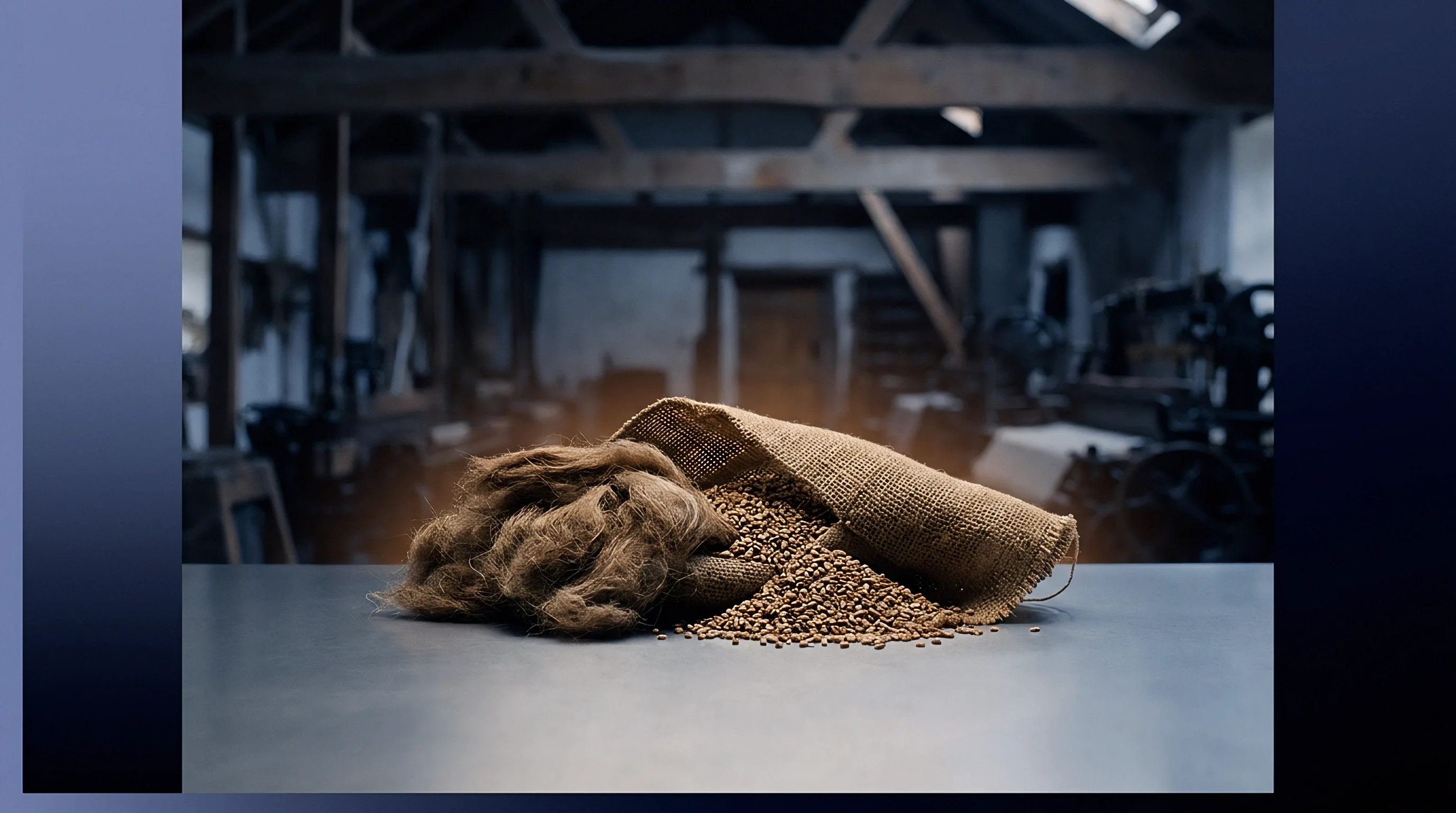
Remedy
Mitigating origin exposure requires an active verification process combining legal analysis, factory audits, laboratory testing, and contractual protections. Sourcing teams need to move past passive certificate collecting and underwrite origin compliance before issuing purchase orders.
Customs brokers can check paperwork, but they cannot verify mill activity.
Effective compliance starts with mapping the multi-tier supply chain down to specific sub-tier processing sites. For each linen program, sourcing must identify the location and manufacturing function of every facility in the chain. When European fibre moves through third countries for intermediate processing, compliance staff must track product classification at each border and confirm the exact tariff shift rule applied by the destination country.
Entry summaries are inspected against mill yield records to confirm origin declarations. These records should be organized into an Evidentiary Origin Dossier for each production run and retained for five years to meet customs recordkeeping rules. A complete dossier gives importers defensive documentation that holds up under formal customs audit.
Every fibre batch retains distinct geographical signatures.
A complete Evidentiary Origin Dossier links core commercial and technical documents:
- Mill conversion agreements specifying authorized production sites, equipment lines, and processing parameters for spinning, weaving, and finishing.
- Certified weighbridge tickets recording gross, tare, and net weights for raw fibre arriving at the facility.
- Batch reconciliation balance sheets tracking material balance across raw inputs, processing waste, and finished fabric output.
- Sub-tier processing invoices confirming payment for specific services, including scutching, spinning, sizing, weaving, and dyeing.
- Independent analytical test reports covering stable isotope, trace element, and fibre cross-section testing for the production lot.
- Advance customs ruling letters setting out formal legal interpretations of tariff shift and substantial transformation for the supply chain workflow.
Isotope ratio analysis and trace element profiling provide a physical defense against origin fraud. Importers build reference libraries by sampling directly from European scutching cooperatives during harvest. When fabric shipments arrive, quality control teams pull samples according to ISO 2859-1 procedures and send them to ISO 17025 accredited laboratories.
Testing delta-carbon-13, delta-oxygen-18, and strontium-87/86 ratios against reference baselines shows whether the cellulose matrix matches the declared regional profile.
Traders frequently confuse physical provenance with customs origin.
Contractual terms back up physical and documentary verification. Master supply agreements and purchase orders need explicit origin warranties and indemnity clauses. Vendors should warrant that all deliveries carry origin declarations compliant with destination country rules.
Contracts must also require the supplier to fully indemnify the buyer ~ via credit memo or cash payment ~ for any back duties, penalties, interest, and legal costs resulting from a customs origin reclassification.
Paper audit trails break down quickly across international borders.
Field-to-cloth claims only hold when mill mass balances align with customs entries and isotopic profiles match the local soil.