
Isotopic Soil Analysis for European Flax Origin Tracking
Strontium isotope mass spectrometry isolates bioavailable soil ratios in flax cellulose, enabling direct verification of European origin against mill declarations.
Strontium isotope mass spectrometry isolates bioavailable soil ratios in flax cellulose, enabling direct verification of European origin against mill declarations.

Reconciling organic flax spinning losses requires adjusting transaction certificates for count-dependent extractive solubilization and moisture regain.

Reconciling wet spun linen mass balance ledgers requires factoring moisture regain adjustments, chemical trough dissolution, and count-specific mechanical waste.
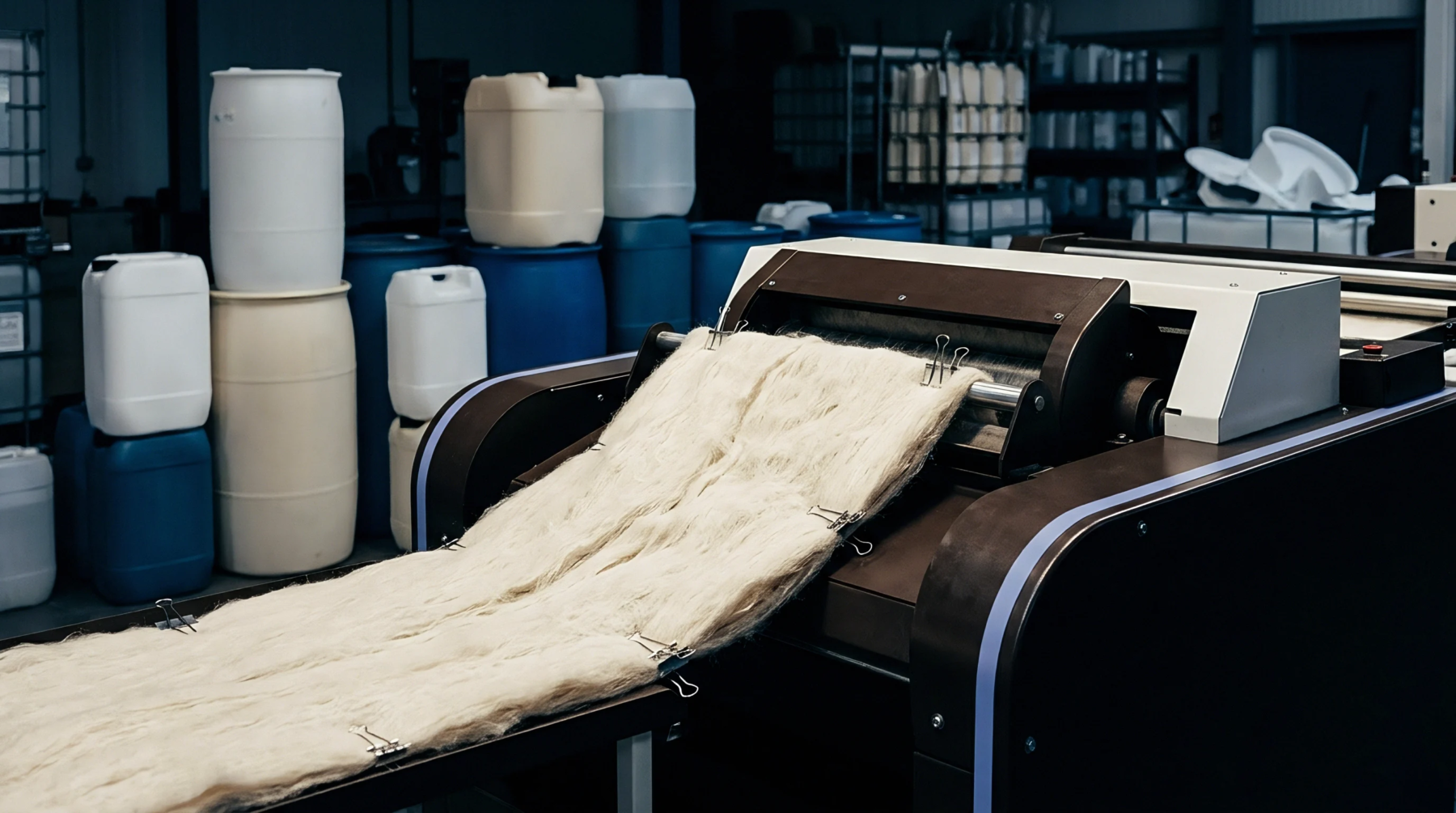
European Flax verification requires matching batch Transaction Certificates with valid supplier Scope Certificates and auditing mill mass-balance yields.

Proving non-preferential origin for Asian spun linen yarns demands mill-level mass-balance audit trails connecting European raw flax to yarn batches.

Verify physical flax batch identity by reconciling bale barcodes, yield conversion balances, and transaction certificates before approving spun yarn dispatches.

Forensic microscopy quantifies chemical degumming residues on bast fibers via cell wall swelling ratios, stereological grid counts, and reagent micro-staining.

Physical segregation of certified Western European flax at high-speed drawframes demands dedicated creel tracks, line flushes, and mass balance audits.

Determining flax rove non-cellulosic mass loss rates requires standardized chemical extraction to reconcile boiling yield shrinkage against certified origin records.

European Flax chain of custody requires batch-level Transaction Certificates for every transfer, separating raw fibre origin from customs manufacturing origin.

Optimize flax wet spinning by maintaining attenuation troughs at 68-72°C with soft water to dissolve pectins without degrading elementary fiber tensile strength.

Reconciling spinning mill mass balance ledgers requires verifying raw intake certificates against physical machine yields, waste rates, and packaged yarn sales.
Resolving transshipment liability requires batch-level mass balance auditing, continuous transaction certificates across all nodes, and explicit contractual origin indemnities.

Scope certificates validate facility processing capacity, while transaction certificates prove specific consignment volume provenance across linen orders.

Mass balance certificates balance inventory on paper but offer zero proof of physical European flax containment in individual fabric bolts.

Auditing European Flax scutched fiber receiving records reconciles dry fiber mass, certificate codes, and scutching lot numbers to defend chain of custody.

Calibrating wet spinning trough temperature and water turnover reconciles organic flax pectin dissolution losses against certified mass balance yields.

European Flax verification for Asian spinning mills demands matching annual facility scope certificates with lot transaction certificates and dry mass balance ledgers.

Cross-border linen contracts allocate chain of custody discrepancy risks through lot specific warranties, mandatory mass balance audits, and immediate seller indemnity.

Harmonized System bast fiber classification relies on physical shive percentage, pectin degradation depth, and mechanical hackling status.

Masters of Linen mandates 100% European transformation, making Chinese processing invalid; European Flax allows overseas processing with verified chain of custody.

Resolving multi-site credit discrepancies requires separating voluntary mass balance ledgers from statutory physical batch origin declarations.
Linen origin rests on Western European raw flax scutching records linked through batch transaction certificates and mill mass-balance audits to finished bolts.

Scope certificates approve mill processing capability while transaction certificates validate specific physical shipment mass; buyers must hold final payment until verified transaction paperwork arrives.
Expertise is a utility, not a secret. sentiention™ publishes its working knowledge as open reference: intelligence layer covering the materials it sources, the markets it enters, and the reference that serves both.