Pectin Dissolution Kinetics in Bast Fibre Wet Spinning Troughs
Trough temperature at 68°C accelerates pectin dissolution, lowering drafting force to stabilize wet-spun linen yarn counts up to Nm 60.

Matrix
Cellular cohesion across technical flax bundles relies on complex pectic polysaccharides embedded in the primary cell wall and middle lamella. In raw scutched flax ( Linum usitatissimum ), individual ultimates measure 10 to 40 millimetres in length with diameters between 12 and 30 micrometres. These single cells consolidate into multi-cellular technical fibres through an intercellular binder composed primarily of pectic substances, hemicellulose, and structural proteins, and the integrity of that intercellular layer ultimately dictates how roving strands draft on spinning frames.

Galacturonan Chain Binding in Elementary Fibres
Homogalacturonan domains form the structural backbone of bast fibre intercellular cement. Linear chains of alpha-1,4-linked D-galacturonic acid monomers constitute up to 65 percent of the total pectic fraction in dew-retted flax. Carboxyl groups along the galacturonan backbone exist in both methyl-esterified and free acidic forms.
The degree of esterification in commercial scutched line flax ranges between 50 percent and 70 percent, depending on soil mineral profile and retting history. Higher degree of esterification values correlate with greater resistance to cold-water solubilisation, as methyl ester groups block ionic cross-linking sites while sterically hindering hydrolytic enzyme access.
Branched rhamnogalacturonan-I domains extend from the homogalacturonan backbone, carrying side chains of galactan and arabinan polymers into the adjacent hemicellulosic matrix to anchor elementary fibres together. During wet spinning, twisted roving with 15 to 45 turns per metre enters a heated trough, where thermal energy disrupts hydrogen bonds across neutral side chains, allowing the gel-like middle lamella to swell prior to drafting.

Calcium Pectate Gel Softening under Thermal Stress
Divalent calcium ions establish ionic bridges between unesterified carboxyl groups on adjacent galacturonan chains. This egg-box configuration transforms soluble pectin molecules into insoluble calcium pectate gel networks. The structural rigidity of these cross-linked domains prevents inter-fibre drafting in dry conditions, capping spinnable yarn counts at coarse levels.
- High initial drafting force creates stick-slip movement in the drafting zone, generating thin-thick count periodicities in the spun yarn.
- Fibre bundle snaps take place when unsoftened structural nodes resist shear stress at the roller nip, triggering end breaks.
- Uneven sliver mass flow yields a wide coefficient of variation in lea count test reports generated under ISO 2060.
- Unsoftened middle lamella core restricts individual ultimate movement, capping the maximum achievable yarn count to coarse numbers below Nm 26.
Heating the trough liquor initiates non-enzymatic thermal hydrolysis and ion displacement within the calcium pectate lattice. Water molecules force their way into the cross-linked gel network, hydrating galacturonan chains and increasing the spatial distance between calcium binding sites. As water temperature rises, thermal agitation exceeds the binding energy of weak calcium coordinate bonds, destabilising the egg-box array.
Pectic substance removal from the middle lamella reduces inter-fibre cohesion without compromising individual ultimate tensile strength.
The transition from a rigid polymer gel to a hydrated fluid solute reduces the shear strength of the middle lamella, letting elementary fibres slide smoothly past one another when subjected to drafting forces between the back and front rollers. Because cold water stops dissolution instantly, controlling the kinetic rate of this phase change across the length of the spinning trough stabilizes drafting tension across high-speed wet spinning frames.
Raw fibre stiffness is often attributed to retting duration rather than incomplete thermal gelation in the trough.
Heat
Thermal energy driving the wet spinning trough governs the cleavage kinetics of methyl ester bonds within galacturonan chains. Non-enzymatic pectin dissolution follows Arrhenius kinetic models, where reaction velocity scales exponentially with absolute temperature. Below 50°C, pectin dissolution proceeds slowly, yielding minimal reduction in gel shear strength during typical roving immersion windows.
Between 60°C and 72°C, the rate of galacturonan chain hydration accelerates, driving a sharp drop in middle lamella viscosity.

Kinetic Activation and Temperature Thresholds
Dissolution rates of middle lamella pectic polymers follow Arrhenius temperature relationships across standard processing windows, with activation energy for the hydrolytic cleavage of galacturonan coordinate bonds in bast fibres sitting between 48 kJ/mol and 62 kJ/mol. Cold water bath operations fail because kinetic activation requires localized liquid temperatures above 55°C to initiate backbone hydration. As bath temperature increases from 55°C to 68°C, assisted by fluid exchange through the bundle, the dissolution rate constant triples, allowing effective polymer softening within immersion times under five seconds.
Exceeding 75°C introduces process defects without improving drafting performance. Higher thermal levels accelerate the degradation of low-molecular-weight hemicelluloses, softening the fibre core and causing excessive sliver mass loss. Thermal energy consumption climbs rapidly above 70°C due to evaporative heat loss from open trough surfaces.
Maintaining tight temperature control prevents bath boiling, steam generation, and uncontrolled water loss.

Thermal Energy Balance in High-Speed Troughs
Continuous delivery of cold roving strands into the fluid bath extracts significant calories from the liquor. At frame delivery speeds reaching 30 metres per minute, dry fibre entering the trough acts as a continuous heat sink, cooling the boundary layer immediately surrounding the bundle. If organic accumulation retards heat transfer without forced circulation, localized water temperature around the roving drops 5°C to 10°C below the setpoint registered on sump thermocouples.
| Trough Temperature (°C) | Pectin Solubilisation Rate (%/min) | Trough Liquor Viscosity (mPa·s) | Average Drafting Force (cN) | Spinnable Count Limit (Nm) |
|---|---|---|---|---|
| 50 | 0.12 | 2.85 | 185 | Nm 26 |
| 60 | 0.45 | 1.90 | 110 | Nm 36 |
| 68 | 1.15 | 1.38 | 62 | Nm 60 |
| 75 | 1.82 | 1.12 | 48 | Nm 80 |
| Data recorded at 20 m/min delivery speed with 400 mm immersion length using dew-retted French flax roving (tex 660, twist 22 turns/m). | ||||
Heating elements must deliver heat directly to the immersion zone rather than relying on static thermal conduction from peripheral sump locations. Steam injection tubes or circulation heat exchangers ensure temperature uniformity across all spindle positions along the frame rail. Because speed adjustments alter residence time, fluctuations exceeding 2°C across the rail generate observable lot-to-lot variance in yarn linear density and tensile strength.
Water temperature sustained at 68°C reduces pectin gel viscosity to 1.4 mPa·s within 4.2 seconds of immersion.
Operating below the 60°C kinetic threshold multiplies yarn end-breakage rates, forcing speed reductions that destroy frame productivity.

Bath
Fluid mechanics within the wet spinning trough govern the rate at which dissolved pectic fragments migrate away from the roving core. Roving strands travel through the liquid bath at linear speeds between 15 and 35 metres per minute across an immersion length of 200 to 500 millimetres regulated by guide rollers, fixing contact residence time between 0.4 and 2.0 seconds.

Hydrodynamic Residence Time and Fluid Exchange
Submersion length and frame delivery speed dictate the temporal window available for thermal diffusion into the fibre mass. Twist in the incoming roving creates a physical barrier to water penetration. Outer ultimate layers hydrate rapidly, but the inner core remains dry if residence time falls below 0.8 seconds.
Dynamic pressure generated by moving roving forces liquor into inner void spaces, driving fluid exchange within the twisted bundle structure.
Extending immersion path length via deep guide rollers increases residence time without slowing delivery speeds. Deep immersion increases mechanical drag on the unattenuated roving strand, elevating pre-drafting tension. Balancing submersion geometry against strand tension prevents false drafting before the roving reaches the back draft rollers.
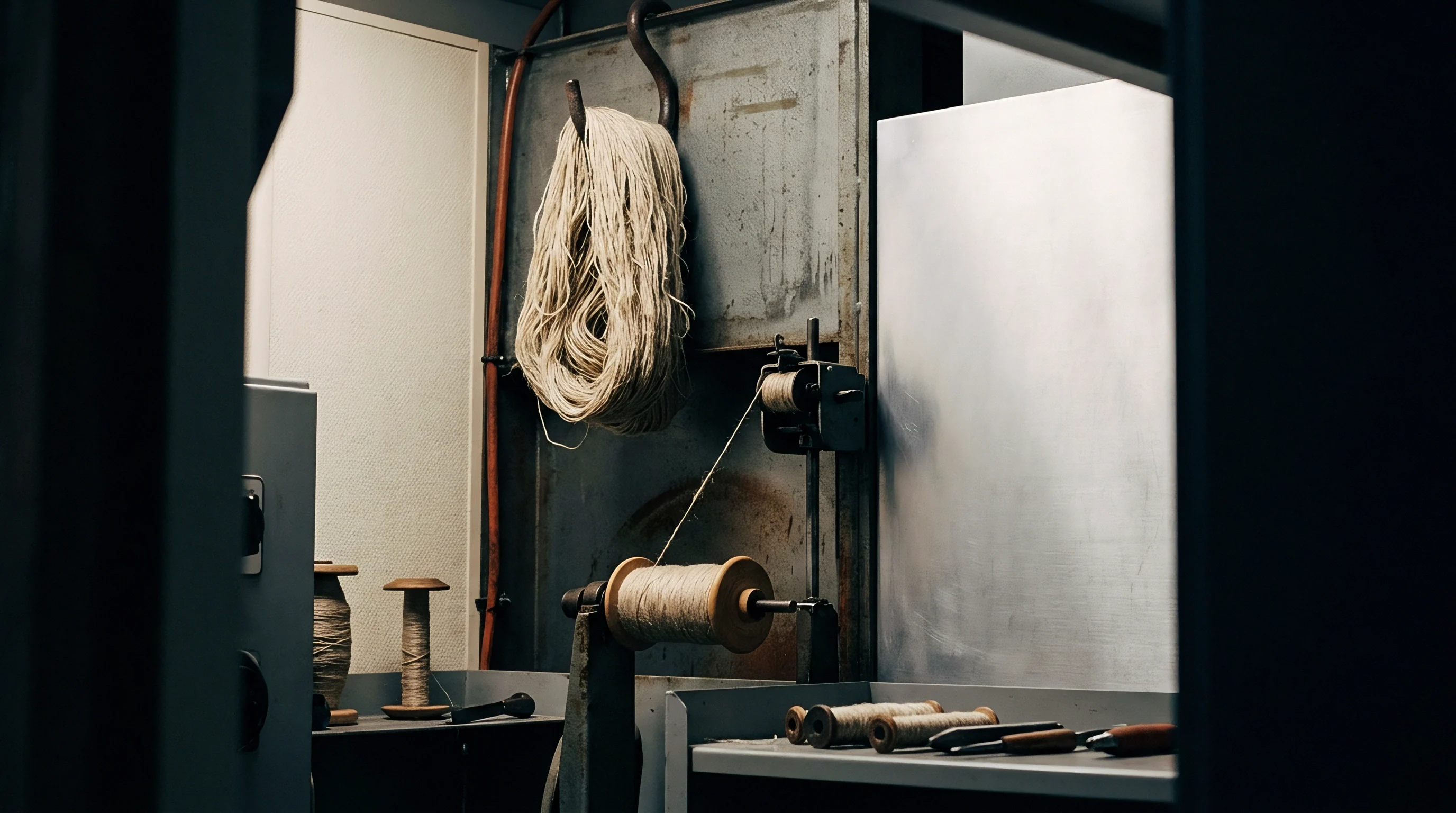
How Does Bath Turnover Prevent Pectin Redeposition?
Continuous replenishment of fresh liquor dilutes galacturonic acid oligomers before saturated solutions reach thermodynamic precipitation thresholds. As pectin dissolves, dissolved organic carbon and calcium ions accumulate in the trough water. When concentrations exceed 1.2 percent by weight, dissolved pectic chains re-aggregate into colloidal gels that coat outer fibre surfaces, forming sticky deposits upon drying.
- Monitor dissolved solids concentration in the trough overflow channel using an optical refractometer twice per shift to detect polymer build-up.
- Purge fifteen percent of liquor volume whenever total dissolved solids exceed zero point eight percent to prevent galacturonan precipitation back onto roving.
- Inject conditioned feedwater maintained at sixty-five degrees Celsius with calcium hardness below ten parts per million to preserve dissolution capacity.
- Verify immersion roller alignments across every spindle position along the rail to ensure uniform contact length and equal residence time.
Fresh feed injection rates of 2.5 to 4.0 litres per spindle hour flush dissolved organic compounds into overflow drains. Recirculation filtration units fitted with 50-micrometer stainless steel mesh capture suspended shive particles and lint without removing active temperature control. Clean water circulation prevents redeposited pectin from increasing yarn surface roughness and harshness.
Immersion length in the spinning liquor determines the depth of thermal penetration through the twisted roving bundle.
High trough flow rates without adequate thermal replenishment cool the liquor faster than freshwater can purge the dissolved polymers.


Slip
The transformation of a dense, twisted roving into a fine single yarn demands controlled inter-fibre movement under active drafting tension. The drafting zone consists of a back roller pair feeding roving into the wet zone and a front roller pair operating at a higher surface speed. The ratio between front and back roller speeds defines the draft ratio, which ranges between 10 and 25 in wet spinning lines.
Effective pectin dissolution converts the rigid middle lamella into a lubricating liquid film, allowing elementary fibres to slide past each other without breaking.
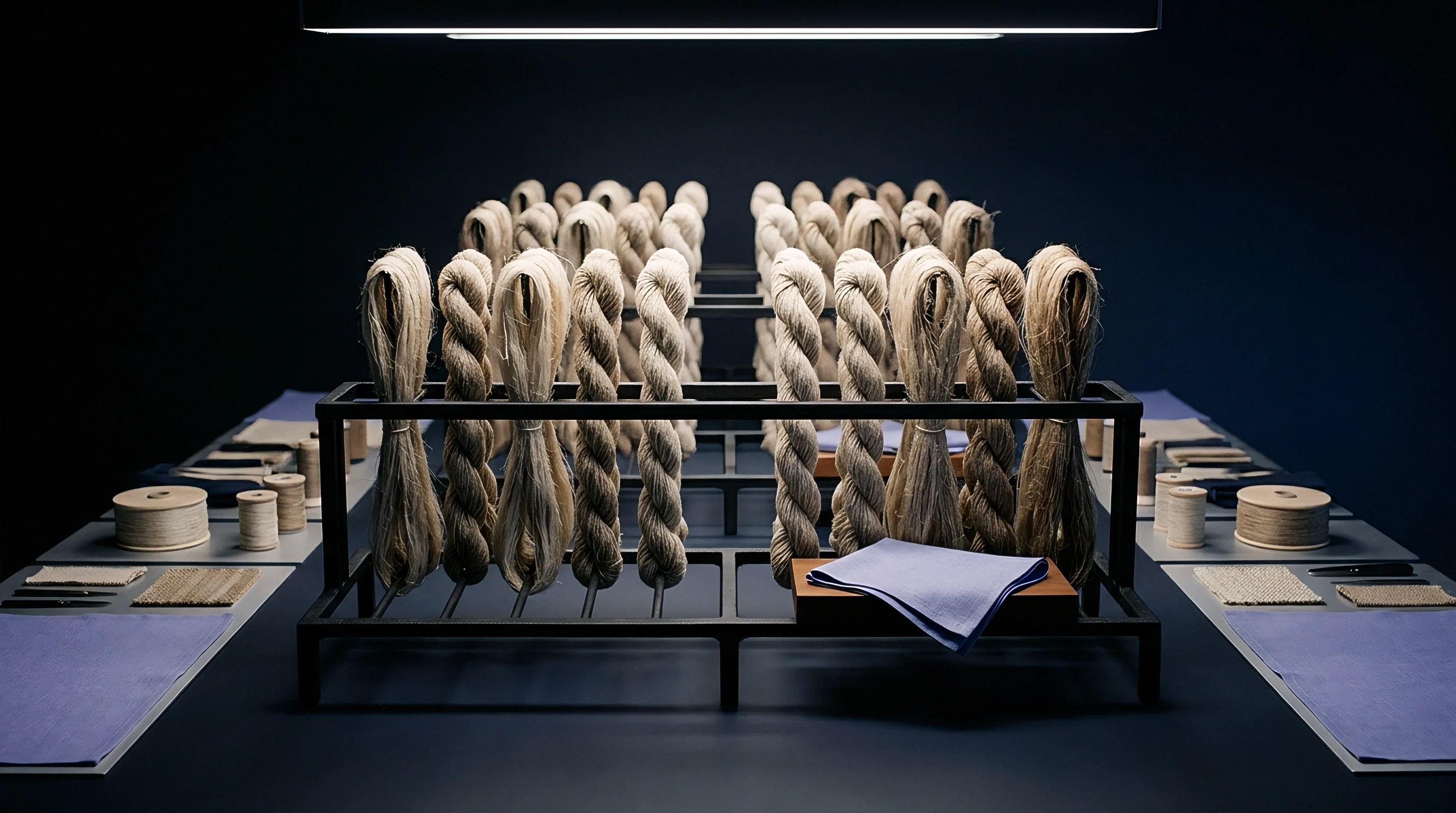
Attenuation Mechanics and Drafting Force Fluctuations
Continuous force measurements at the front roller nip reveal the transition from stick-slip displacement to steady-state viscous drafting. Unsoftened pectin generates force peaks exceeding 250 cN in tex 660 roving bundles, pulling intact technical fibre bundles through the nip to create thick yarn defects or slubs. When thermal dissolution and chelating agents that capture free calcium reduce pectin viscosity, drafting force drops to a stable baseline between 40 cN and 70 cN.
Smooth attenuation depends on maintaining a uniform friction coefficient across the drafting field. Fluidized pectin acts as a natural boundary lubricant, lowering friction between sliding ultimate fibres. While viscometry reveals polymer build-up, excess dissolution strips too much binding material, leaving the strand with insufficient cohesion to survive tension between the front rollers and the flyer, causing immediate end breaks.

Economic Yields across Fine Metric Counts
Achieving high metric yarn counts depends on suppressing end breaks while maximizing frame delivery speed. Dry spinning lines cap economic yarn fineness around Nm 26 due to unyielding pectin matrices. Wet spinning dissolves these binding networks, enabling attenuation down to Nm 80 or Nm 100 long-line flax yarns where pure water preserves yarn tenacity.
| Yarn Count (Nm) | Roving Density (tex) | Trough Temp (°C) | Drafting Force (cN) | Breakage Rate (per 1000 sp-hr) | Waste Factor (%) | Production Cost (USD/kg) |
|---|---|---|---|---|---|---|
| Nm 26 | 1050 | 55 | 155 | 18 | 2.1 | 14.20 |
| Nm 36 | 820 | 62 | 98 | 22 | 2.6 | 16.80 |
| Nm 60 | 500 | 68 | 62 | 29 | 3.4 | 22.50 |
| Nm 80 | 380 | 72 | 44 | 41 | 4.8 | 31.10 |
Optimizing trough temperature and immersion time directly lowers unit production costs. Lower drafting force reduces end breaks per 1000 spindle hours, allowing frame operators to manage up to 800 spindles simultaneously. Because frame speed dictates immersion time, reduced breakage lowers hard fibre waste at the drafting rolls, raising long-line yield per ton of scutched flax input.
- Collect ten metre samples of wet-spun roving immediately after the trough nip rollers.
- Dry the collected samples in a forced-air oven at one hundred five degrees Celsius until constant mass is achieved under ISO 6741.
- Extract soluble pectin compounds using ammonium oxalate solution at eighty degrees Celsius for two hours.
- Calculate residual pectin percentage against dry initial mass to confirm dissolution target levels before full lot drafting.
ISO 2062 testing confirms that unsoftened pectin residual above 1.8 percent increases end-breakage rates by 35 percent at drafting speed.
Standard purchasing contracts for wet-spun flax yarn specify a maximum thin-thick flaw count under Uster Statistics 2023, shifting financial liability to the spinner when thermal trough control fails.

Assay
Precise analytical measurement of trough chemistry enables real-time optimization of pectin solubilisation without degrading cellulosic primary walls. Continuous wet spinning generates organic byproducts that alter bath pH, electrical conductivity, and fluid viscosity over time. Sump monitoring systems track these parameters to prevent over-dissolution or uncontrolled re-precipitation during multishift production runs.
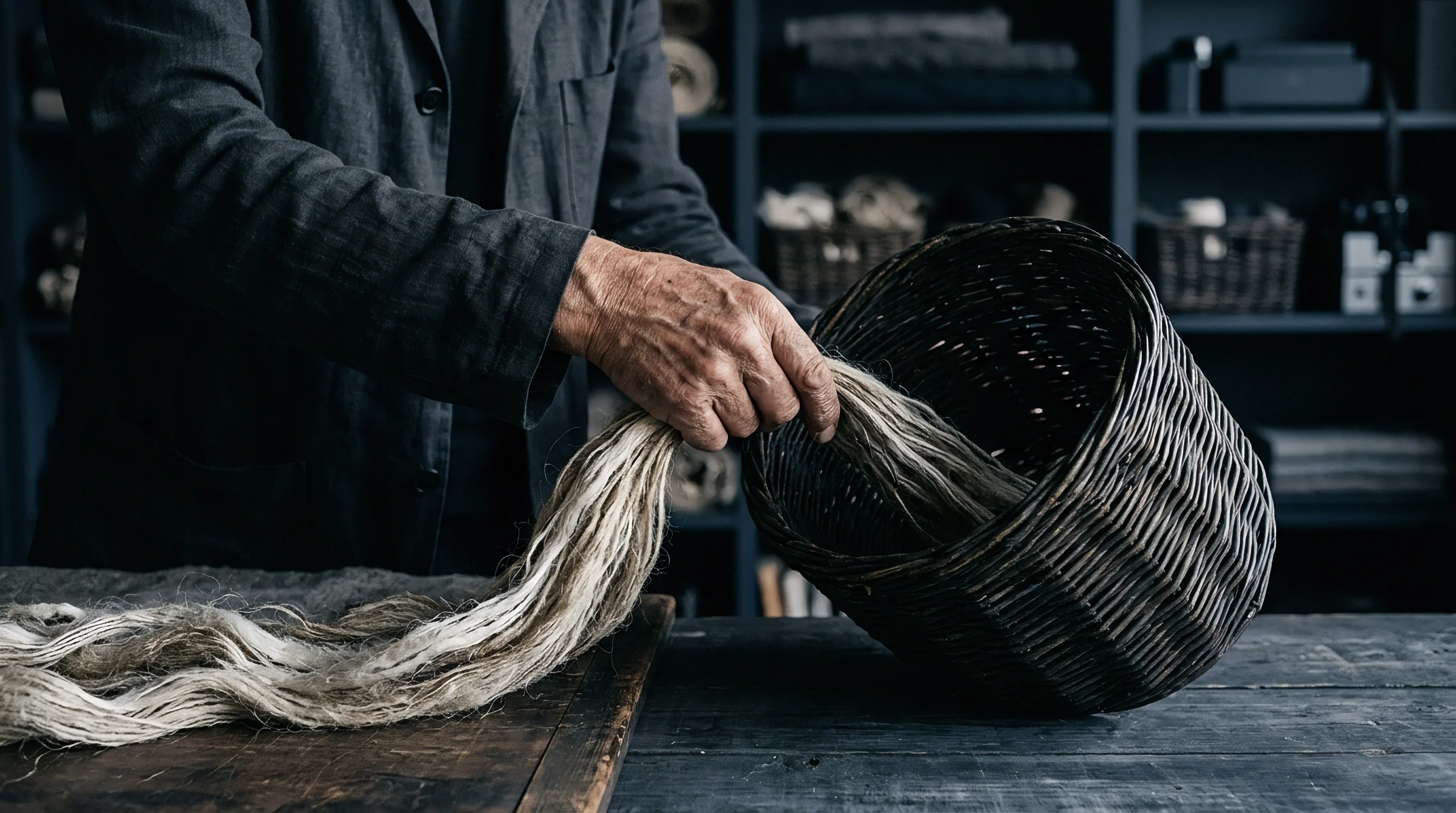
Spectrophotometric and Viscometric Bath Monitoring
Colorimetric determination of galacturonic acid concentrations via m-hydroxydiphenyl reactions provides direct calibration of middle lamella dissolution. Taking 10-millilitre samples from the trough overflow line allows technicians to measure total dissolved pectin against standard calibration curves at 520 nanometers wavelength. Concentrations exceeding 8.5 grams per litre indicate insufficient water replacement, prompting automated freshwater feed valves to open.
Capillary viscometry offers a rapid factory-floor measurement of bath accumulation. Clean water exhibits a kinematic viscosity near 0.47 mm²/s at 65°C. As galacturonan polymers dissolve, liquor viscosity climbs. Viscosity values exceeding 1.20 mm²/s restrict capillary fluid motion into the core of dense roving strands, impairing thermal transfer.
Automated viscometers linked to purge valves maintain trough viscosity within specified operating bands.

Chemical Auxiliaries and Ion Complexation
Adding mild chelating agents to hard supply water accelerates calcium removal from pectic gels. Sodium hexametaphosphate or citric acid added at concentrations between 50 ppm and 150 ppm sequesters free calcium ions in the bath, shifting equilibrium toward soluble sodium pectate formats. Complexing free calcium lowers the required trough temperature by 4°C to 6°C while achieving equivalent drafting force reductions.
Non-ionic wetting agents added at 0.05 percent volume concentration reduce liquor surface tension from 72 mN/m to below 35 mN/m. Lower surface tension eliminates air pocket entrapment within twisted roving bundles, driving rapid fluid penetration into inner ultimate structures. Chemical auxiliaries allow wet spinning mills to operate efficiently at higher frame delivery speeds while maintaining strict yarn count evenness standards.
Whether enzymatic auxiliaries can operate stably in open trough circuits without bacterial contamination remains an open question for mill technologists.