
Predicting Wet Bundle Cohesion Limits from Pectin Degree of Esterification
Flax wet bundle cohesion limits depend on pectin esterification, where levels between 38 and 48 percent optimize drafting resistance and yarn count.
Flax wet bundle cohesion limits depend on pectin esterification, where levels between 38 and 48 percent optimize drafting resistance and yarn count.

Maintain combing halls at 70% RH and control pectin esterification below 58% to maximize high count line flax hackling yields and lower metre costs.

Heat and drought lower flax middle lamella pectin shear strength, reducing hackling long-line yield and dropping wet-spinning count caps from Nm 39 to Nm 26.

Controlled pectin removal enables clean bundle cleavage, elevating metric fibre fineness above Nm 2000 while maintaining long line yield above 60 percent.

Trough temperature at 68°C accelerates pectin dissolution, lowering drafting force to stabilize wet-spun linen yarn counts up to Nm 60.
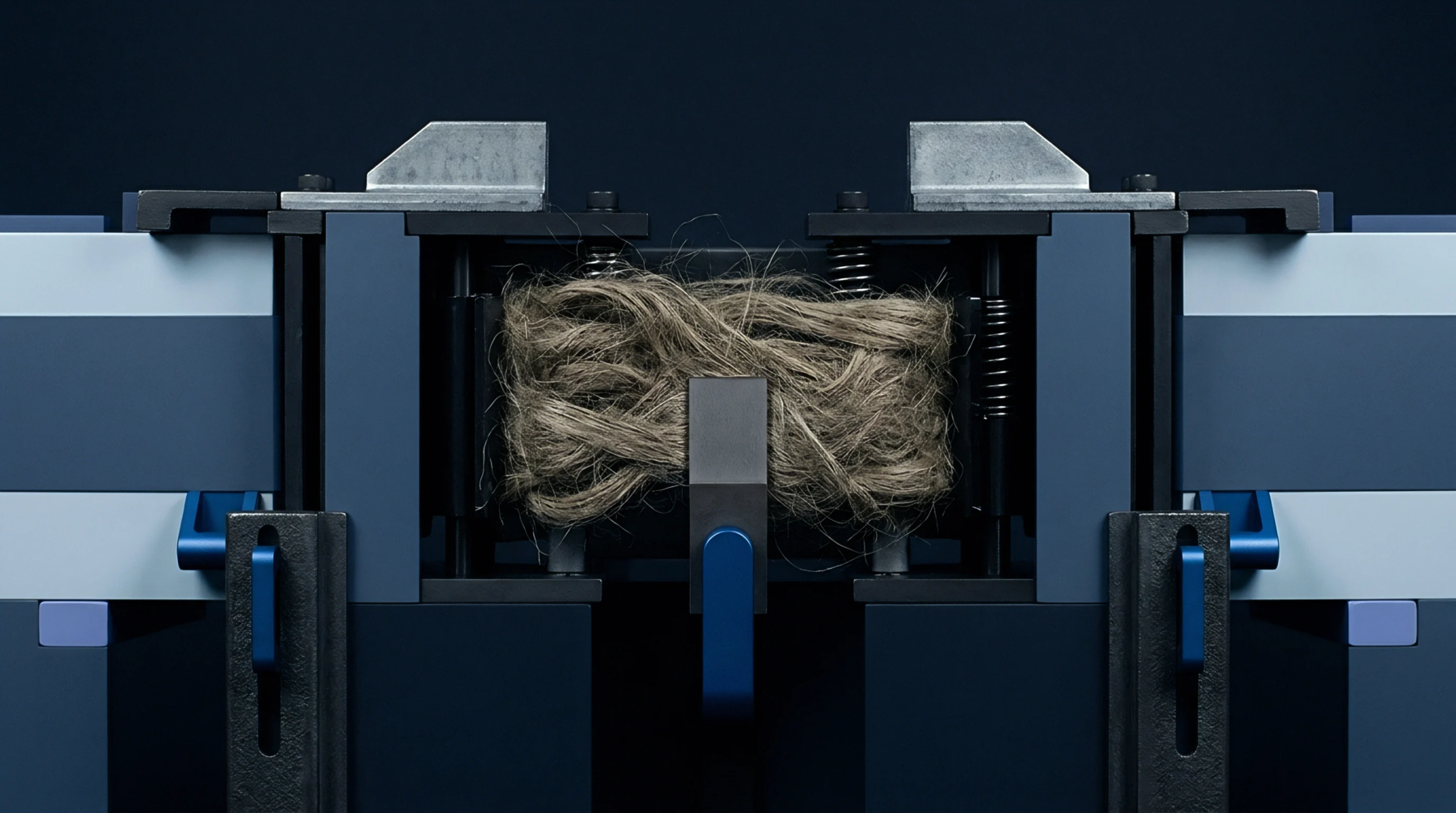
Targeted enzymatic cleavage of middle lamella homogalacturonan enables drafting down to elementary fibrils, yielding Nm 90 wet-spun flax yarns exceeding 38 cN/tex.

Enzymatic degumming for fine wet spinning demands residual pectin levels between 1.2 and 1.8 percent by mass to balance wet drafting and yarn tenacity.

Hydrothermal pectin dissolution rates must match drafting speed and bath temperature to prevent core rigidity or slippage in the wet spinning draft triangle.

Optimizing wet spinning trough temperature, residence time, and chemical chelating parameters accelerates pectin hydrolysis, reducing end breakages and maximizing yarn tenacity in fine linen spinning.

Quantifying residual pectin and protein content via ammonium oxalate extraction and FTIR prevents wet-spinning end-breakage disputes in fine bast lots.

Spectrophotometric m-hydroxydiphenyl quantification of ammonium oxalate extracted pectin predicts bast fibre sliver drafting behavior and wet spinning yield.
Expertise is a utility, not a secret. sentiention™ publishes its working knowledge as open reference: intelligence layer covering the materials it sources, the markets it enters, and the reference that serves both.