Hydrothermal Pectin Hydrolysis Impact on Wet-Spun Line Linen Count
Controlled hydrothermal pectin dissolution in wet-spinning troughs unlocks elementary flax filaments, enabling drafting beyond 80 Lea counts.
Bath
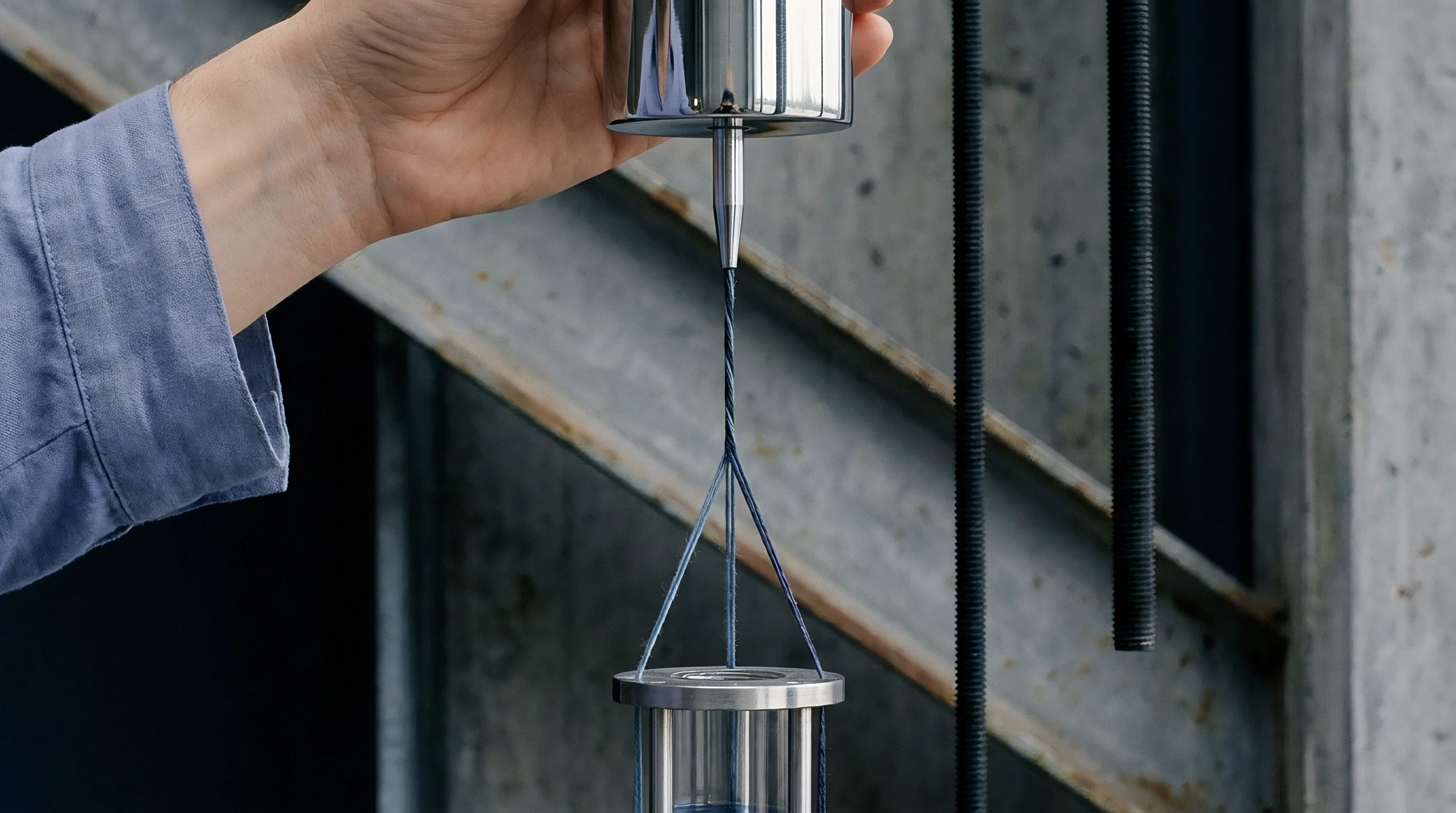
Water circulating through the wet-spinning trough softens the calcium pectate complexes in the middle lamella, allowing long-line flax roving to separate into elementary fibrils. Once heated water loosens this intercellular cement, technical bundles measuring twenty to forty micrometres across split into five to ten micrometre filaments under tension from the drawing rollers. Without this chemical cleavage, the drafting zone snaps intact bundles instead, capping yarn fineness at coarse counts below 40 Lea.
Industrial troughs submerge the strand for three to five seconds over an immersion path of forty to sixty centimetres. The water temperature controls how fast homogalacturonan de-esterifies and branched rhamnogalacturonan chains dissolve. At 45 degrees Celsius, pectin breaks down slowly; the gummy matrix stays intact and forces the frame to draw with excessive drafting force, rupturing ultimate fibres.
Bringing the bath to 70 degrees Celsius speeds pectin solubility by more than sixty percent, lowering bundle cohesion enough to spin fine counts of 80 to 120 Lea.
Hot liquor loosens cellular glue before mechanical rollers grip the strand.
Trough temperatures require tight regulation. Cool pockets leave heavy slubs where undivided bundles slip past the drafting zone, while overheating past 85 degrees Celsius strips out too much binding agent, causing drafting slip and web collapse. The balance between bundle splitting and remaining structural cohesion sets the lower limit on ribbon linear density.
| Trough Temperature | Immersion Dwell | Pectin Removal Share | Mean Filament Diameter | Drafting Resistance |
|---|---|---|---|---|
| 40 Celsius | 4.2 seconds | 2.1 percent | 28.5 micrometres | 8.4 Newtons |
| 55 Celsius | 4.2 seconds | 4.8 percent | 21.0 micrometres | 5.8 Newtons |
| 70 Celsius | 4.2 seconds | 9.6 percent | 14.2 micrometres | 3.1 Newtons |
| 85 Celsius | 4.2 seconds | 14.3 percent | 9.8 micrometres | 1.7 Newtons |
Trough liquor must be refreshed continuously so dissolved sugars and uronic acids do not build up and shift chemical equilibrium. Over an eight-hour shift, accumulated solutes drag bath pH down from neutral to 4.8. This rising acidity retards further pectin extraction and discolours bleached rove stocks.
Running near-boiling liquor can force stubborn bundles apart through thermal shock on under-retted flax lots, though it risks degrading fibre strength.

Grip
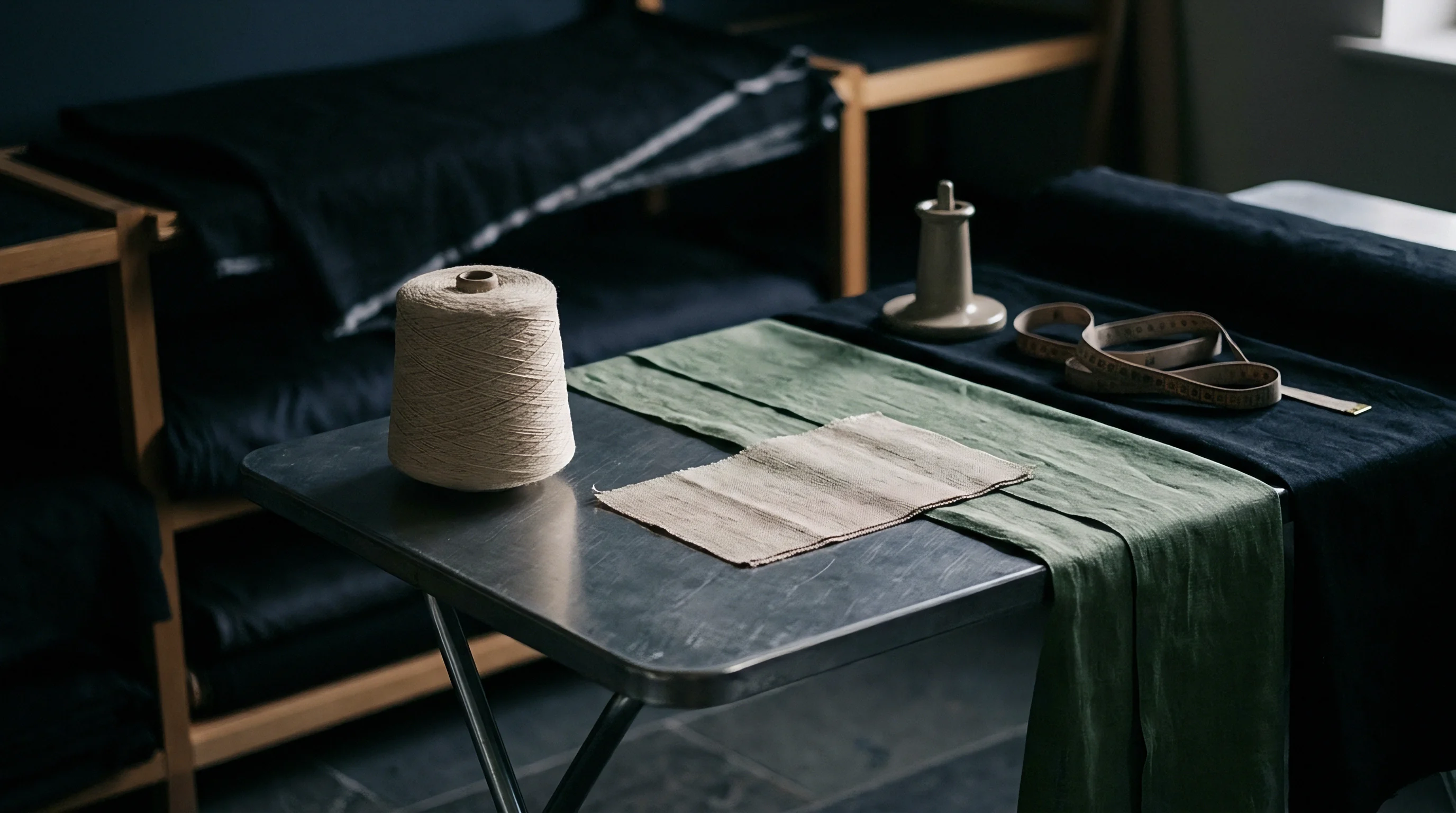
Roller pairs apply localized clamping loads above 120 decanewtons across the contact line to hold the softened flax strand. The wet drafting zone places the feed pair and drawing pair apart at a reach set to the average staple length of the elementary filaments, generally thirty-five to forty-five millimetres. Because pectin softening cuts inter-fibre friction, adjacent elementary cells slide lengthwise past one another without snapping transversely.
Drafting Resistance and Roller Fluting
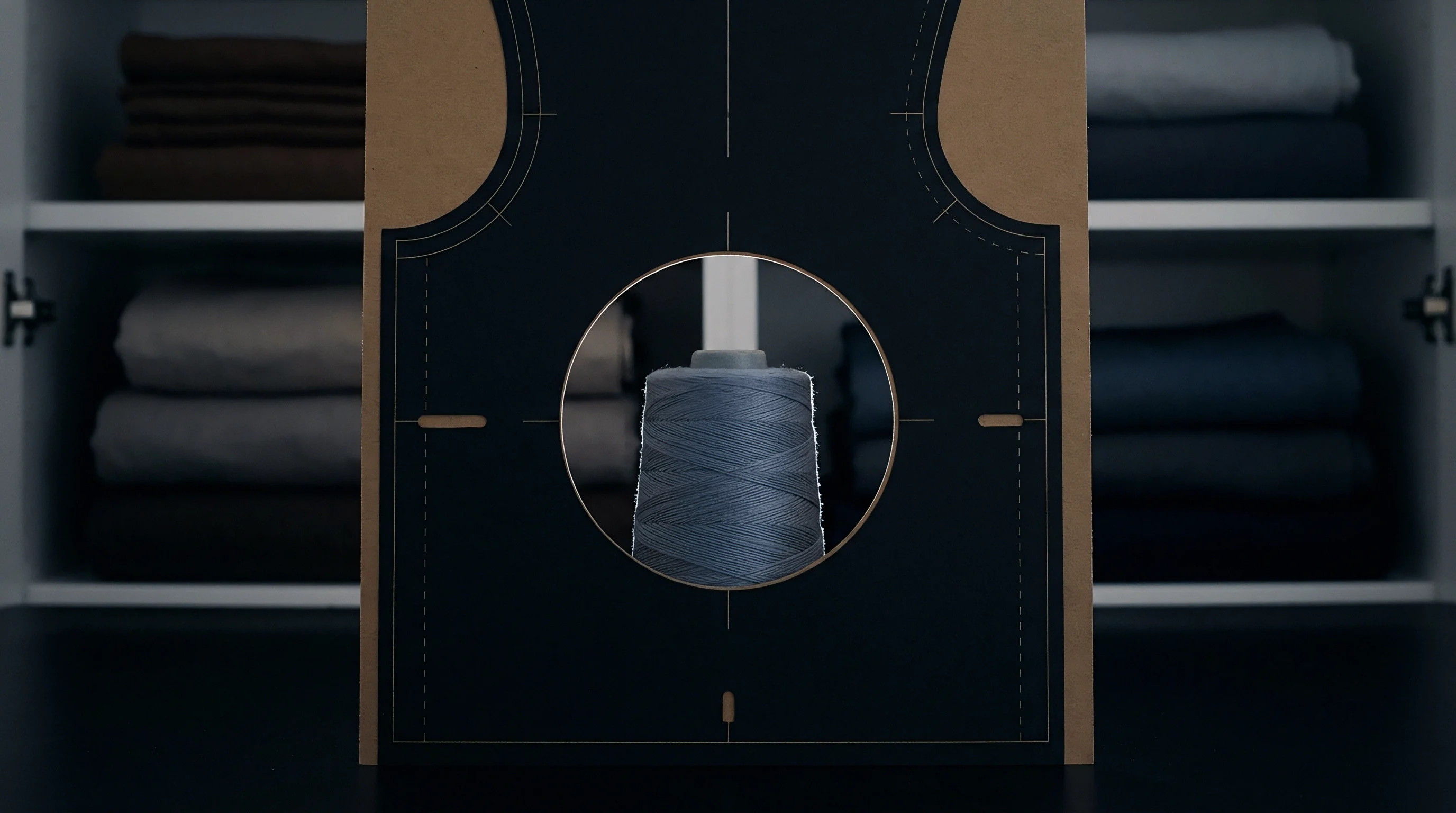
Grooved bottom rollers grip the wet fibre through a residual liquid film against synthetic rubber cots. If that water film runs too thick, hydroplaning sets in: the pinched ribbon slips, introducing long thin faults along the yarn. Flute profiles therefore use pronounced crowns to cut through the boundary layer and keep positive mechanical bite on the flax matrix.
A drafting force exceeding four Newtons on eighty Lea rove triggers immediate spindle breaks.
Cot hardness sets the nip footprint. Soft 75 Shore A compounds yield broader contact patches that spread clamping force across delicate filaments, curbing crush damage under heavy drafts. Harder 85 Shore A formulations withstand abrasive wear from rigid flax shives, but their narrower contact zone raises slip risks on fine yarns.
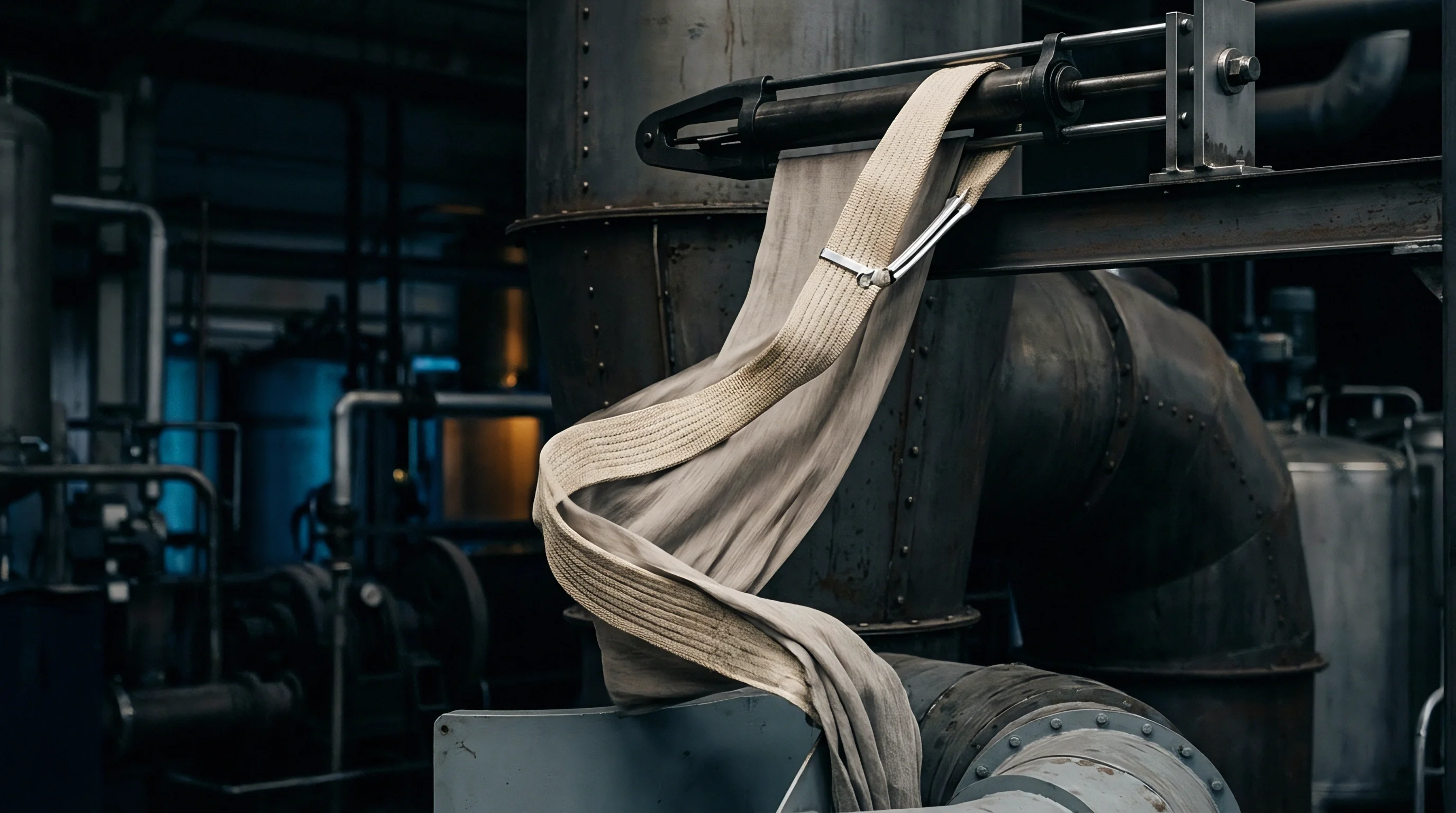
What Thermal Threshold Unlocks Elementary Flax Filaments?
Plant data places the sharpest dissolution transition between 62 and 68 degrees Celsius. Below that span, calcium cross-links in the pectate matrix stay rigid, locking elementary fibrils into clustered bundles that fight attenuation. Above 65 degrees Celsius, ester linkages along the galacturonan backbone hydrolyze rapidly, dropping adhesion between cell walls and letting filaments draw out cleanly.
Attenuating the strand requires exact balance across multiple mechanical vectors to avoid yarn failure modes:
- Bundle shearing occurs when excessive roller pressure crushes partially hydrolysed bundles, causing irregular cross-sections and rapid end-breakage across the ring frame.
- Fibre rafting emerges when insufficient heat leaves stubborn pectin nodes that pull entire unattenuated clusters into the yarn core simultaneously.
- Filament lap-up develops as over-hydrolysed sticky gums transfer to spinning cots, wrapping broken filaments around rotating top rollers and halting production.
- Tension starvation takes place whenever low trough temperatures increase drafting resistance beyond the tensile capacity of wet roving strands.
Drafting too fast disrupts bundle division. Liquid drag in the trough stirs turbulence that skews fibre alignment right before the nip. For high-count yarns, spinners run delivery speeds no higher than thirty metres per minute to keep the strand parallel.
Consistent attenuation depends on maintaining firm roller pressure against an evenly dissolved pectin matrix.
Decay
Extended contact with hot water breaks down cellulose polymers within the flax cell wall through hydrolysis. Amorphous hemicellulose and associated non-cellulosic polysaccharides normally protect crystalline cellulose microfibrils in the primary wall, but sustained heat cleaves glycosidic linkages and pulls down the degree of polymerisation.

Degree of Polymerisation Loss
Native scutched line flax typically tests at a degree of polymerisation between 2500 and 3200 by cupriethylenediamine viscometry. Holding roving above 80 degrees Celsius drops that figure under 1800 within twenty minutes of immersion. The resulting molecular degradation cuts directly into yarn tenacity, producing ends that snap during weaving prep.
Liberated galacturonic acid acidifies the circulating liquor, which in turn accelerates autohydrolytic attack on glucan chains. Left unbuffered, the bath enters an acidification cycle that attacks stainless steel tanks and weakens the fibre.
When Does Liquor Chemistry Damage Ultimate Fibres?
Process control dictates immediate intervention when acidity passes predetermined limits. Technicians follow an established operational sequence to stabilize the spinning trough environment:
- The laboratory samples trough water directly from the immersion zone using a borosilicate pipette.
- Chemical titration establishes free uronic acid concentration against a standard sodium hydroxide solution.
- Automatic metering pumps inject demineralized makeup water to reduce dissolved pectin concentrations below five grams per litre.
- Sodium bicarbonate buffer enters the feed tank to hold bath pH between 6.8 and 7.2.
- Conductivity probes verify that total dissolved solids remain below eight hundred parts per million.
Cellulose degradation shows up directly in skein strength. Severe thermal exposure can reduce dry yarn tenacity by up to fifteen percent, leaving finished linen vulnerable to abrasion during high-speed winding.
Where beneficial pectin removal ends and permanent structural cell damage begins remains an open dispute in mill testing.
Count
Yarn linear density reflects how cleanly bundles divided in the drafting zone. Under the English linen count, Lea indicates the number of 300-yard cuts per pound; higher values denote finer yarn. Reaching 80 Lea or 100 Lea requires splitting line flax roving down to elementary filaments that average under fifteen micrometres across.
Fineness Verification Protocols
Count is checked to ISO 2060 on conditioned wrap reels and analytical balances. Evenness and defect levels are measured by capacitive testing under ISO 16549 to track mass irregularity along the strand. Bundles that failed to divide register as repeated thick places and slubs, driving up the coefficient of variation.
Unprocessed bundle aggregates yield coarse linen counts that plateau below fifty Lea.
Single-end breaking force and elongation at break follow ISO 2062. Yarns drawn from properly hydrolysed line flax show dry tenacity between 35 and 45 centinewtons per tex, with elongation around 1.8 to 2.2 percent. Under-hydrolysed rove loses strength to bundle slippage, while over-hydrolysis damages the cellulose backbone itself.
| Nominal Yarn Count | Trough Temperature | Draft Multiplier | Mass CV Percentage | Tenacity (cN/tex) |
|---|---|---|---|---|
| 40 Lea (Nm 24) | 50 Celsius | 12.5 | 14.8 percent | 38.2 cN/tex |
| 60 Lea (Nm 36) | 62 Celsius | 18.0 | 16.2 percent | 36.5 cN/tex |
| 80 Lea (Nm 48) | 72 Celsius | 24.5 | 18.1 percent | 34.1 cN/tex |
| 100 Lea (Nm 60) | 82 Celsius | 31.0 | 21.4 percent | 31.8 cN/tex |
Audit Framework for Delivered Yarn Lots
Quality assurance teams verify physical parameters before approving incoming warehouse deliveries to ensure compliance with commercial commitments:
- Linear density tolerance requires individual skein test results to stay within plus or minus 2.5 percent of nominal Lea count specifications.
- Twist factor consistency ensures that measured turns per metre across twenty bobbin samples match specified contract twist within a three percent margin under ISO 2061.
- Mass variation limits enforce a strict ceiling of twenty percent CV on counts finer than 60 Lea to prevent visual banding in woven fabric panels.
- Residual pectin content measures galacturonic acid equivalents, which must fall below 1.8 percent by weight to guarantee adequate bleaching uptake.
Standard purchase agreements stipulate that yarn lots displaying mass CV values beyond contract thresholds permit buyers to enforce price debits or trigger full batch rejections.
Margin
Energy for heating bath water weighs heavily on unit economics. Maintaining an eighty-spindle wet-spinning frame at 75 degrees Celsius demands continuous thermal input to offset ambient surface cooling and cold makeup water. Open-trough frames consume an average of 1.8 kilograms of steam per kilogram of yarn, an energy demand that climbs with every step toward finer counts.
Spinning Yield and Waste Economics
Spinning finer yarns calls for higher-grade line flax, lifting fibre procurement costs. Hackling yield drops sharply when sorting for flax strong enough to endure drafting out to 100 Lea. Mill records show that shifting production targets from 40 Lea to 80 Lea drops hackling yield from fifty-two percent down to thirty-eight percent, concentrating raw material expense onto fewer finished spools.
Pectin extraction also strips physical mass. Dissolved organic matter accounts for eight to twelve percent of the initial roving weight, flushing out in wastewater rather than winding onto invoiceable yarn packages. Spinners have to factor this hydrothermal shrinkage directly into lot sizing to protect gross margins.
Metre Cost Consequences
A standard 140 grams per square metre woven linen requires thirty-two warp ends and twenty-eight weft picks per centimetre in 60 Lea yarn. If spun from under-hydrolysed fibre, frame end-breakage surges from twenty breaks per thousand spindle-hours to more than eighty breaks. Frequent stoppages pull spinning efficiency down from ninety percent to seventy-four percent, driving up direct labour costs per kilogram.
Higher break rates create heavy waste as roller laps and pneumatic collections, degrading costly line flax into low-value tow. When water troughs run out of balance, the resulting operational losses can raise finished fabric costs by more than twenty-five percent per linear metre.