Roller Span
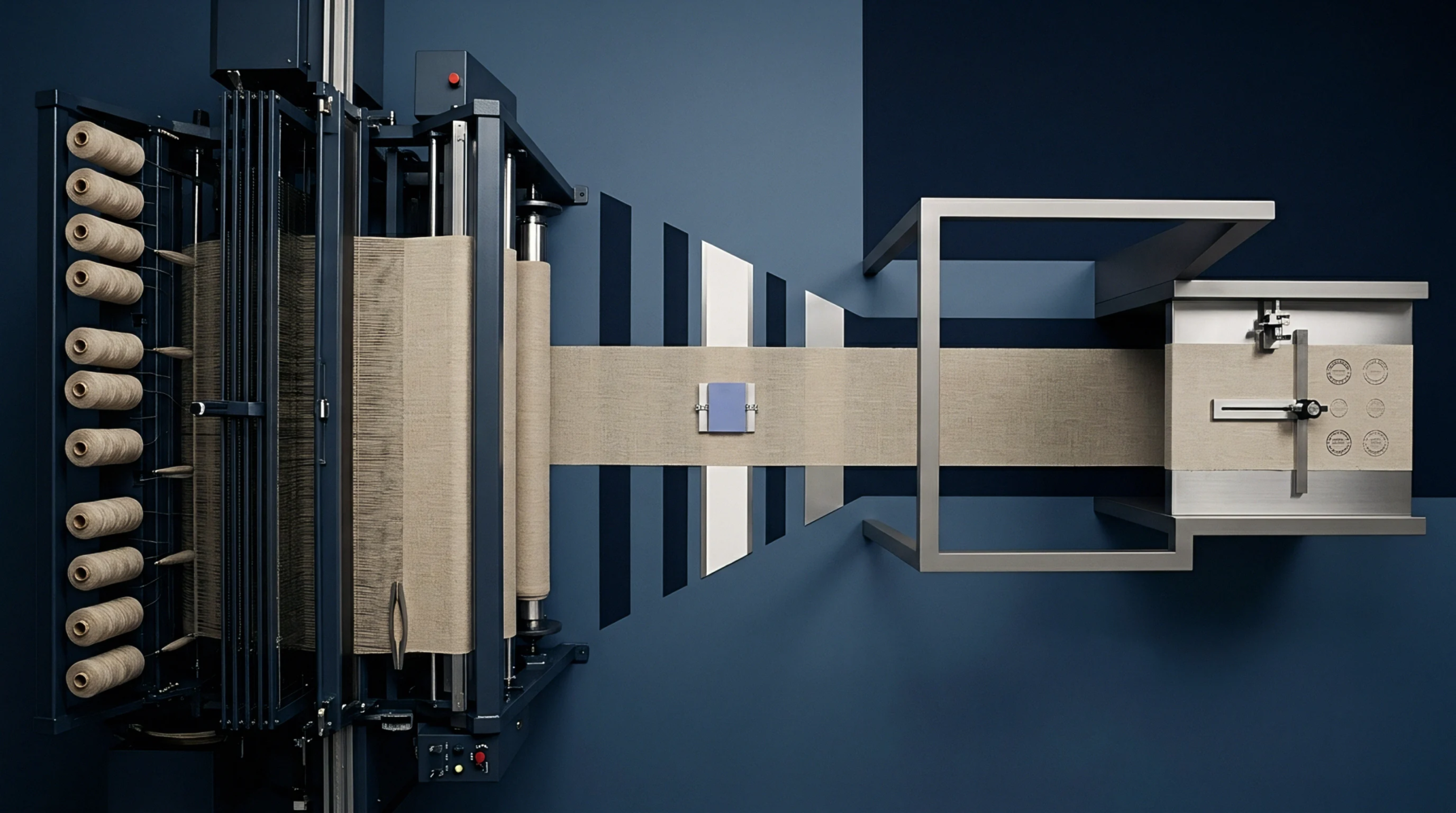
Fiber attenuation geometry defines the mechanical area situated between the back retaining rollers and the front delivery rollers of a textile processing frame. Machine technicians adjust the drafting zone across flax drawing heads, roving machines and wet ring spinning frames to control the progressive thinning of fiber assemblies. Fibers undergo longitudinal displacement within this mechanical field, transforming heavy slivers into slender rovings or twisting-ready yarn streams.
The spatial boundary of this processing segment ends precisely at the front roller nip line where fiber drafting terminates and structural yarn twist begins. Shift technicians document roller gauge settings and draft ratio selections on the spinning machine setup log.
Kinematic Progression
Bottom steel fluted rollers and top synthetic rubber cots grip the flax strand to enforce controlled linear acceleration. In wet spinning frames, the drafting zone contains an immersion bath or spray manifold that introduces heated water to soften residual natural pectins, allowing elementary bast filaments to divide under roller traction. Shorter fibers lack continuous grip from both roller pairs simultaneously, drifting unpredictably unless supported by intermediate control elements such as aprons, condensers or dead weights.
Long line flax fibers bridge the entire roller span, transferring tensile drafting forces across the entire moving fiber strand. Misaligned roller clearances create undrafted clumps or severed fiber bundles, destroying sliver regularities before spinning. Drafting aprons smooth out fiber velocity transitions across modern high-speed linen drawing passages.
Inspection Tolerance
Machine manufacturers specify precise roller alignment tolerances to ensure continuous drafting stability, whereas weaving buyers inspect finished fabric yarn count variability governed by roller nip performance. Wet spinning mills establish strict maintenance routines to regrind rubber cots and descale wet troughs before mechanical wear induces drafting wave defects. When roller nip pressure drops below operating standards, uncontrolled slippage introduces thick defects that fail downstream yarn clearing matrices.
Greige fabric testing centers cross-reference high coefficient of mass variation back to worn drafting components on the original spinning frames. Routine maintenance validation confirms roller distance accuracy across every spinning spindle bank.