Optimizing Wet Spinning Trough Hydrolysis Parameters for Fine Linen Yarns
Optimizing wet spinning trough temperature, residence time, and chemical chelating parameters accelerates pectin hydrolysis, reducing end breakages and maximizing yarn tenacity in fine linen spinning.
Bath
Submerging flax roving in liquid before it enters the drafting zone alters the cohesion of technical fibre bundles. When wet spinning fine flax yarns between metric count Nm 60 and Nm 100, the liquid in the trough softens the intercellular pectin matrix binding elementary filaments together. Without this pre-conditioning, high drafting forces snap fibres immediately, yielding coarse, uneven yarn with excessive hairiness due to slippage in the immersion channel.
Entry dynamics, recirculation, and temperature uniformity across the trough define the boundary conditions for yarn fineness and frame stability.
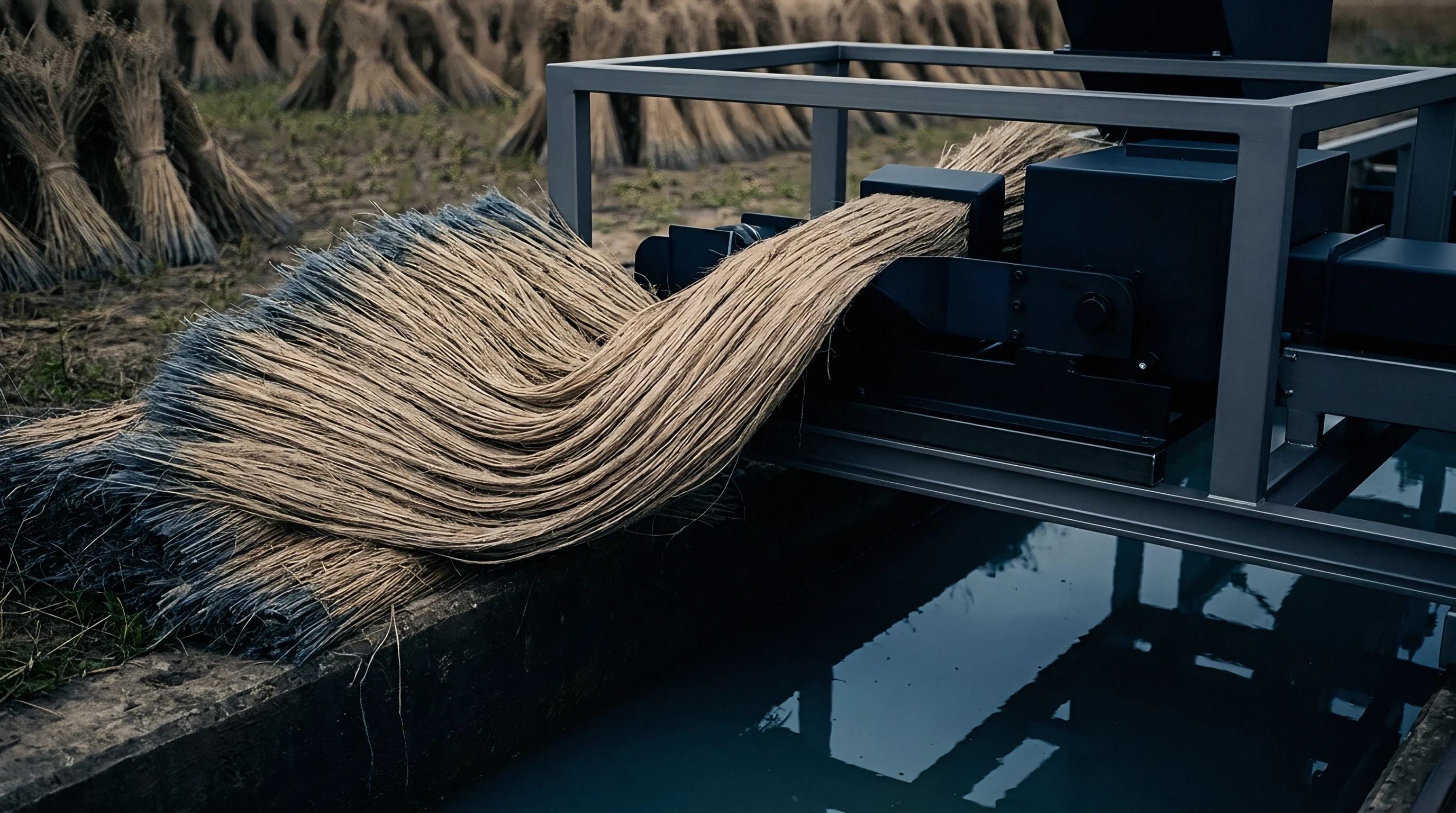
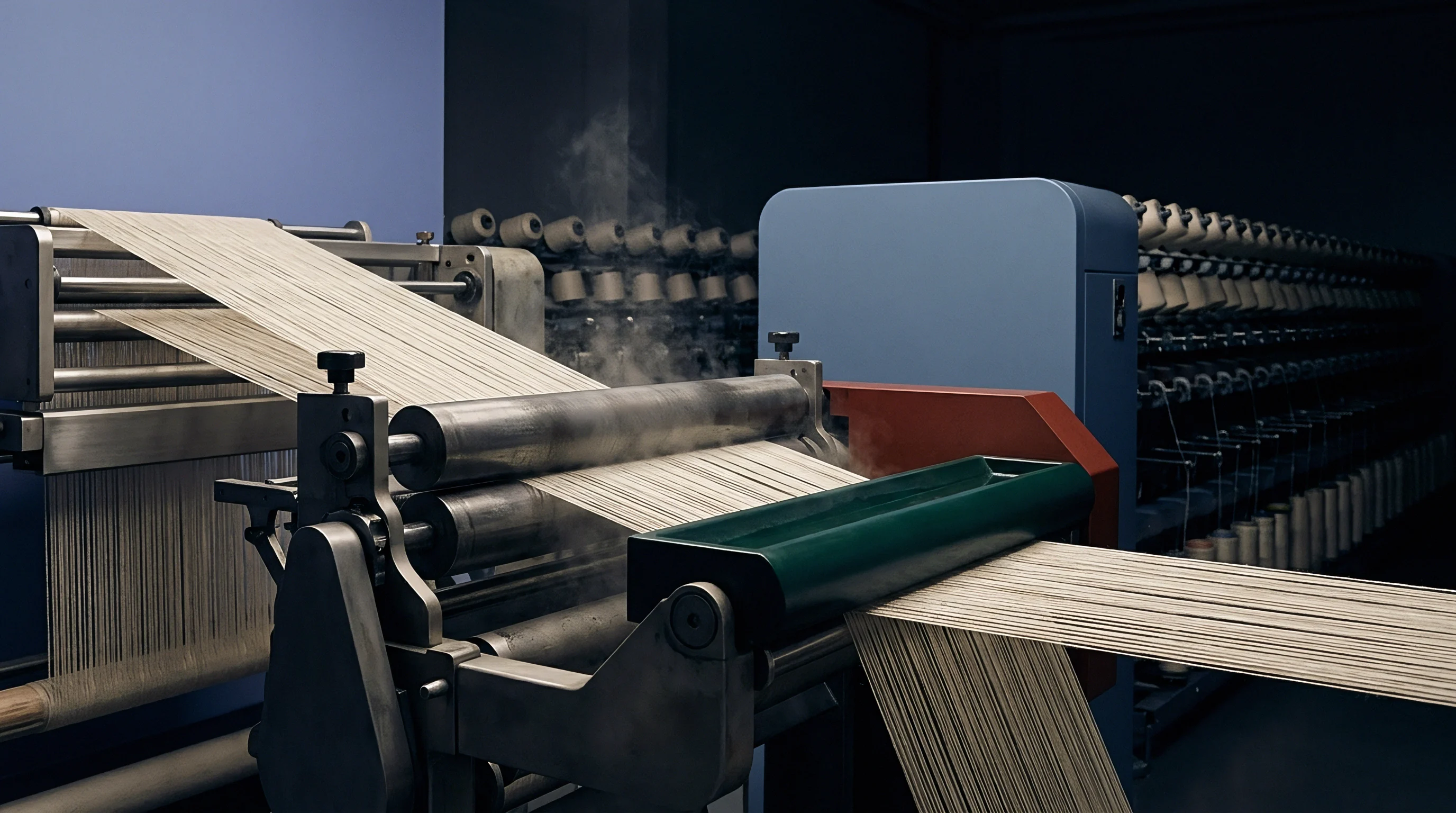
Trough construction determines the thermal and chemical uniformity of the roving as it passes through. Standard industrial wet spinning frames use continuous stainless steel vats set directly behind the drafting rollers. Roving pulls down from overhead supply bobbins through submersible guide bars that force complete immersion before hitting the nip of the back drafting rollers.
Fluid volume per spindle usually runs between 0.35 and 0.50 litres, which calls for active recirculation to prevent local temperature drops and chemical exhaustion. Shifts in fluid depth or immersion length cause immediate variations in middle lamella softening, showing up downstream as periodic count variation and drafting waves.
Mechanical Layout and Trough Residence Dynamics
The geometry of the transit path sets how long bast fibre bundles remain exposed to the heated liquid. Standard frame designs allow an adjustable immersion depth between 250 millimetres and 600 millimetres. At typical delivery speeds of 12 to 24 metres per minute for fine counts, residence time in the channel ranges from 1.2 to 3.0 seconds.
Brief residence times prevent liquid from penetrating dense roving cores, leaving central filaments hard while outer filaments undergo full pectin hydration.
Liquid displaced by the moving strand creates boundary layer drag along its surface. As roving speed rises, a stagnant fluid envelope builds around the strand, insulating inner fibre bundles from fresh heated liquid. Vat turbulence disrupts this boundary layer, and counter-current fluid injection ~ injecting fresh liquor near the delivery rollers so it flows back toward the entry point ~ improves mass transfer across the strand cross-section.
Incoming dry roving meets lower concentration liquor first, while exiting roving reaches final equilibrium with target temperature and chemical strength.
Water temperature within the trough must remain within a tolerance of plus or minus 1.5 degrees Celsius across all spindle positions to prevent frame-wide draft variance.
Trough height relative to the back roller nip line controls the wet entry angle. Setting this angle between 15 degrees and 25 degrees from horizontal avoids mechanical abrasion on the trough edge while keeping strand tension stable. Too much tension during transit drafts the softened roving prematurely before it hits the back nip, creating thick-and-thin defects known as drafting slubs.
Too little tension lets the strand slacken, wrapping guide bars and shutting down spindles.
Fluid Replenishment and Concentration Equilibrium
Evaporation from open liquid surfaces at operating temperatures skews chemical concentrations over long shifts. Loss rates reach 1.8 to 2.4 litres per hour per spindle metre in unjacketed troughs running at 70 degrees Celsius. Automatic level controllers paired with dosing pumps keep liquid volume and chemical equilibrium steady.
Concentration swings beyond five percent of target strength produce measurable changes in drafting force, throwing off yarn mass uniformity.
Immersion sheds loose shive particles, short fibres, and residual dirt, polluting the bath over time. Accumulations of suspended solids raise fluid viscosity and alter capillary wicking speed into the roving bundle. Continuous filtration using 50-micron stainless steel mesh elements clears solid debris from circulating liquor.
Regular filter backwashing prevents pressure drops across recirculating pumps, keeping fluid velocity constant through injection nozzles along the trough floor.
Process makeup water quality establishes the baseline buffering capacity of the bath. Hard water with dissolved calcium and magnesium ions cross-links pectic acid chains in the flax cell wall, actively opposing softening. Softening process water via sodium ion exchange to drop total hardness below 0.5 degrees German hardness prevents divalent ion interference.
Dissolved iron must remain at or below 0.05 milligrams per litre to prevent catalytic oxidation of bast cellulose during hot processing.
| Immersion Length (mm) | Fluid Velocity (m/s) | Residence Time (s) | Drafting Force (cN) | End Breakage Rate (per 1000 sp-hr) | Yarn Mass CV% (Uster) |
|---|---|---|---|---|---|
| 250 | 0.05 | 0.95 | 480 | 62 | 16.8 |
| 400 | 0.12 | 1.52 | 310 | 38 | 14.2 |
| 550 | 0.25 | 2.10 | 215 | 19 | 12.5 |
| 700 | 0.30 | 2.66 | 190 | 24 | 13.1 |
Managing chemical additions requires tracking non-ionic surfactant levels. Wetting agents lower interfacial tension between water and natural flax wax, speeding liquor penetration into hydrophobic grey roving. Typical formulations use ethoxylated fatty alcohols added at 0.5 to 1.5 grams per litre.
Excess wetting agent foams in high-turbulence zones, trapping air pockets in the liquid channel that leave sections of the strand dry during transit.
When end-breakage spikes, incoming roving lots may contain native gums that no trough conditioning protocol can dissolve at mill production speeds.
Pectin
Biochemical constituents in the intercellular middle lamella govern the structural integrity and drafting capability of flax filaments. Native fibre bundles consist of elementary cellulosic cells 10 to 40 millimetres long and 12 to 30 micrometres in diameter, held together by a non-cellulosic matrix of highly branched pectins, hemicelluloses, structural proteins, and variable amounts of lignin depending on retting quality, with pectin linking the individual cells. Hydrolyzing this polysaccharide network inside the trough allows elementary fibres to slide smoothly past each other during drafting, converting heavy roving into fine yarn.
Rhamnogalacturonan-I is the main pectin compound responsible for cell adhesion, interspersed with homogalacturonan regions cross-linked by ionic calcium bridges. Trough hydrolysis targets these homogalacturonan chains. Cleaving alpha-1,4-glycosidic bonds in the galacturonan backbone or chelating bound calcium breaks the middle lamella network.
Controlled depolymerization lowers bundle shear strength just enough for uniform attenuation without degrading individual cell tenacity.
Biochemical Architecture of the Middle Lamella
Variations in natural retting change the initial pectin content of incoming scutched flax sliver. Dew-retted flax typically retains 3.5 to 5.2 percent total pectin by dry mass, while water-retted stock holds 2.1 to 3.8 percent. Dew-retted fibre contains more calcium-bound pectate, requiring higher temperatures or chemical chelators to separate fibres during drafting.
Ultimately, the fineness achievable at the front roller depends directly on the residual pectin left after trough treatment.
Lignin distribution in the middle lamella creates a physical barrier to thermal and enzymatic hydrolysis. Lignified regions block liquid penetration and chemical cleavage, leaving rigid bundles that refuse to split into elementary filaments. Spinning fine yarn beyond Nm 70 requires low-lignin line flax, ideally under 1.8 percent dry mass.
Highly lignified tow fibre creates mechanical resistance in the drafting zone, causing needle-like slubs and high end-breakage rates on the ring frame.
Pectin molecular weight drops rapidly as bath temperature and chemical exposure increase. Native pectin averages over 100 kilodaltons. Partial hydrolysis during a two-second trough residence aims for a reduction to between 15 and 30 kilodaltons.
This target window provides adequate fluid lubrication between cell walls while retaining enough viscous drag to stop uncontrolled strand drafting at high frame speeds.
Solubilization Kinetics and Hydrolysis Mechanics
Pectin solubilization follows pseudo-first-order reaction kinetics governed by fluid temperature, hydrogen ion concentration, and chelator activity. Galacturonan bond cleavage accelerates exponentially above 55 degrees Celsius. Chemical additives speed the process by converting insoluble calcium pectate into soluble sodium or potassium salts.
Adding organic acid chelators like citric acid or trisodium citrate to the liquor sequesters divalent calcium ions from the middle lamella. At concentrations of 1.0 to 2.5 grams per litre and a pH of 4.5 to 5.2, citric acid complexes calcium, breaking homogalacturonan cross-links without hydrolyzing core cellulosic polymers. Removing these ionic locks lowers the thermal activation energy needed for drafting, permitting equal attenuation at lower bath temperatures.
Enzymatic methods use commercial pectinases ~ specifically endo-polygalacturonases ~ dosed into the recirculating liquor. These enzymes selectively cleave internal alpha-1,4 linkages in un-esterified galacturonan chains. Operating within a pH window of 4.2 to 4.8 at 50 to 55 degrees Celsius achieves rapid cell separation with lower thermal energy input.
Enzyme denaturing from local hot spots or pH excursions above 6.0 ruins process consistency, requiring tight feedback control over dosing lines.
Over-hydrolysis destroys strand cohesion completely. When excessive pectin is stripped from the middle lamella, elementary fibres lose inter-filament friction in the drafting zone. The drafting rollers pull unbonded fibres apart prematurely, causing complete strand separation known as drafting severance before the spindle can insert twist.
Balanced hydrolysis requires tuning chemical exposure to match the retting degree and initial pectin concentration of each fibre lot.
Testing long-staple line flax against short tow blends reveals distinct attenuation profiles. The differential rate of pectin solubilization between outer bundle layers and core filaments creates a radial viscosity gradient across the roving cross-section. The relationship between this radial viscosity gradient and the precise rate of elementary fibre displacement across high draft ratios remains unquantified under production mill conditions.
Heat
Thermal energy transfer into the roving core drives pectin softening in standard wet spinning. Raising fluid temperature lowers the viscosity of hydrated pectinous gums in the middle lamella, allowing smooth inter-fibre sliding under draft tension as viscosity drops. Precise thermal regulation across all positions keeps drafting forces consistent, directly controlling yarn linear density stability and tensile property distribution.
Heat transfer through raw flax strands depends on bundle density, fluid velocity, and the thermal conductivity of the liquid. Dry roving enters the vat at ambient room temperatures, typically 20 to 24 degrees Celsius. Reaching complete thermal penetration across a 1000-tex strand within a 1.5-second immersion requires high thermal gradients between bath liquor and the inner core.
Water at 70 degrees Celsius provides enough thermal flux to bring central strand temperatures to 58 degrees Celsius before roller entry.
Thermal Gradient across Roving Cross Sections
Uneven thermal distribution across the roving diameter causes differential drafting resistance. Outer filaments reach higher temperatures, softening completely to draft smoothly around the perimeter. Inner filaments stay cooler and more viscous, resisting draft forces and travelling as coarse, intact bundles.
This core-sheath disparity causes structural yarn non-uniformity, showing up as elevated Uster CV percentages and surface hairiness spikes.
Thermal diffusivity in bast fibre bundles is much lower than in pure water. Fluid turbulence accelerates heat transfer by driving hot water into microscopic voids between individual technical fibres. Ultrasonic transducers along the trough floor create high-frequency acoustic cavitation, forcing rapid fluid exchange inside dense roving structures.
Agitation at 40 kilohertz increases heat penetration rates by up to 35 percent, permitting lower bulk bath temperatures while maintaining target core softening.
Temperature drops down the length of long spinning frames pose a constant operational challenge. Frames with 400 to 600 spindles lose heat through open trough surfaces and uninsulated pipework. A drop of just 4 degrees Celsius between the central fluid inlet and the end spindles increases drafting force by 22 percent on those end positions, causing significant count variation across packages spun on a single frame.

Energy Demands of High Temperature Troughs
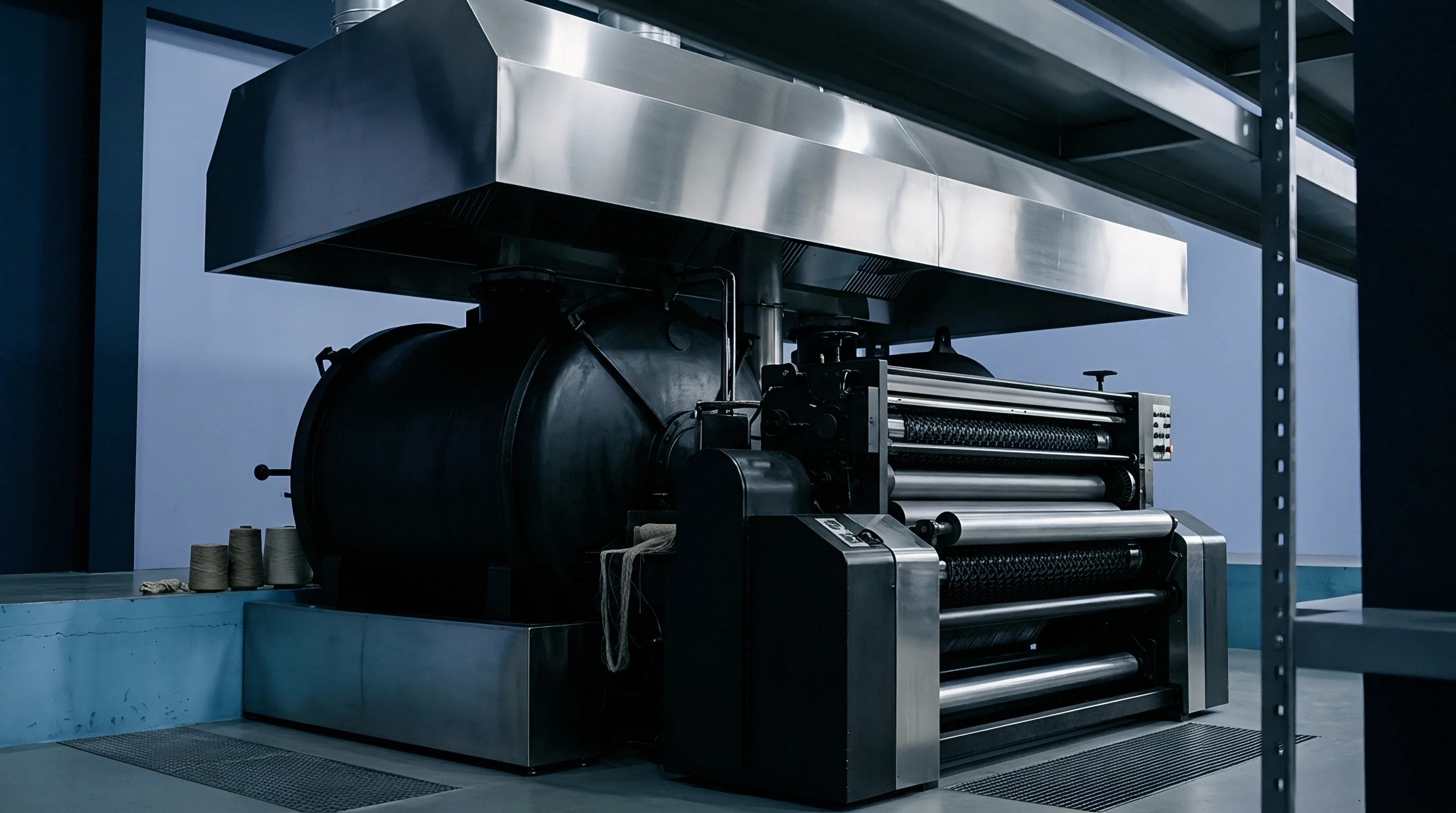
Running troughs at elevated temperatures takes substantial steam energy. Closed-loop heat exchangers fed by central steam lines maintain bulk tank temperatures, but evaporative loss from open surfaces remains the largest energy sink on the spinning floor. Placing floating plastic insulation spheres or automated hinged covers over open trough channels cuts evaporative loss by up to 60 percent, drastically reducing steam consumption per kilogram of yarn.
| Trough Temp (°C) | Yarn Tenacity (cN/tex) | Elongation at Break (%) | Uster Mass CV% | End Breakage (per 1000 sp-hr) | Thermal Energy (kWh/kg) |
|---|---|---|---|---|---|
| 40 | 18.4 | 1.85 | 17.5 | 78 | 0.42 |
| 55 | 22.1 | 2.10 | 14.8 | 42 | 0.85 |
| 70 | 25.6 | 2.45 | 12.2 | 18 | 1.48 |
| 85 | 23.2 | 2.25 | 13.6 | 31 | 2.25 |
Operating above 80 degrees Celsius harms both yarn structure and machine components. Excessive heat degrades natural wax coatings on elementary cell walls, stripping protective lubrication and leaving spun yarns harsh and brittle. High bath temperatures also accelerate rubber cot degradation on drafting rollers.
Polyurethane and synthetic nitrile covers swell and lose hardness in hot aqueous environments, requiring frequent buffing to maintain uniform nip pressure.
- Verify that incoming process supply water meets total hardness limits below 0.5 degrees German hardness and iron content below 0.05 milligrams per litre before filling bulk storage tanks.
- Calibrate primary temperature sensor loops using a certified reference thermometer submerged across four equidistant points along the primary trough channel.
- Initiate steam injection to preheat recirculating liquor until bulk vat fluid reaches a stable setpoint temperature of 70 degrees Celsius with active recirculation pumps engaged.
- Measure pH levels across recirculating flow lines to ensure chemical buffering remains within the target operating window of 4.8 to 5.2 prior to loading roving bobbins.
- Thread roving through submersible guide bars, confirming that strand transit depth guarantees full immersion over a minimum length of 400 millimetres.
- Engage frame drive mechanisms, verifying that back-roller entry angles remain between 15 and 25 degrees under active strand transit tension.
- Inspect exiting yarn packages after 30 minutes of continuous running to evaluate mass uniformity, end-breakage rates, and cot surface wear patterns.
Drafting force falls with warmth. Selecting a bath temperature below 55 degrees Celsius for fine line flax results in incomplete pectin hydration, increasing mechanical draft resistance and causing severe strand breakage that can shut down entire spindle banks.
Roving
Pre-spinning preparation converts drawn flax sliver into twisted roving suitable for wet trough entry and final drafting. Bobbin quality, mass linear density, and inserted twist directly govern strand behavior inside the liquid channel. Fine linen production relies on light roving ~ typically 600 to 1000 tex ~ with precise twist levels that hold the strand together during wet transit without impeding fibre attenuation between drafting rollers.
Inserting twist during roving creates radial binding forces that hold sliver mass and technical fibre bundles together against mechanical handling. Excessive twist, however, prevents hot water from penetrating into the core during trough passage. Too little twist allows the strand to blossom and disintegrate in the vat, causing floating fibre accumulation and immediate strand breakages before entering the back rollers.
How Does Trough Residence Time Alter Yarn Hairiness?
Extending immersion in the heated bath fully hydrates surface elementary fibres, causing them to lay flat against the core strand during drafting. When residence time drops below 1.2 seconds, incomplete surface wetting leaves loose fibre ends projecting outward as the strand exits the front roller nip. These protruding ends lock in place when ring twist is inserted, elevating hairiness indices.
Conversely, residence times beyond 2.5 seconds cause excessive pectin solubilization at the surface, washing away natural binders and allowing fibres to peel off the core under air drag during traveler rotation.
Drafting zone friction relies on controlled surface wetness of incoming roving. As twisted roving enters the back roller nip, mechanical compression forces trapped liquor out of the core, forming a liquid lubrication wedge at the nip point. This hydrodynamic wedge reduces friction between synthetic cots and metallic fluted bottom rollers.
Controlling liquid expression requires precise top-roller clamping pressure to maintain stable draft ratios across varying machine speeds.
Roving twist factor must be held within a range of 18 to 22 alpha metric to guarantee strand stability during wet transit while permitting complete draft attenuation.
Density variations from uneven bobbin winding introduce local changes in liquid absorption rates. Soft-wound packages absorb liquor rapidly, over-softening the outer layers, while hard-wound packages resist fluid penetration and reach the draft rollers semi-dry. Maintaining constant winding tension on flyer frames standardizes package density, ensuring uniform fluid uptake across entire lots.

Twist Retention and Draft Zone Cohesion
As roving passes through the back rollers, mechanical twist unravels in the drafting zone while the front rollers pull fibres forward. Maintaining strand cohesion during this phase prevents draft failure. Softened, high-viscosity pectin within the inner lamella provides temporary bonding ~ acting as a fugitive adhesive that substitutes for mechanical twist during high-ratio attenuation.
Spinning fine yarns like Nm 80 from 800-tex roving demands high draft ratios between 40 and 60, pushing flax fibre assemblies close to their physical limits. If trough hydrolysis fails to produce uniform friction across all elementary filaments, the drafting field becomes unstable. Floating fibre groups then drift uncontrollably through the zone, creating thin places followed by thick, undrafted slubs.
- Sliver Linear Density must remain within a two percent tolerance across all supply cans fed to the flyer frame to prevent roving weight drift.
- Roving Twist Uniformity requires coefficient of variation values below 3.5 percent to prevent localized hard-twist zones that resist trough liquor penetration.
- Package Moisture Content prior to trough entry must not exceed 8.5 percent regain to prevent mold growth and pre-mature pectin hydrolysis during bobbin storage.
- Shive Content Mass Fraction inside incoming roving must fall below 0.5 percent to prevent mechanical blockage of drafting roller nips during wet operation.
- Oil and Wax Fraction must remain between 1.2 and 1.8 percent by dry weight to ensure initial surface re-wetting speed inside the aqueous bath.
Roving with uneven twist distributions will draft unevenly in hot water regardless of chemical additives.

Tenacity
The tensile performance of fine wet-spun linen yarn depends on the length distribution of elementary filaments and the strength of inter-fibre bonds formed during drying. Breaking force and elongation profiles show how effectively trough hydrolysis separated technical bundles without damaging individual cellulosic cell structures. Optimizing bath parameters yields high specific tenacity while maintaining enough extensibility to handle downstream weaving and knitting stresses.
Evaluating yarn strength requires single-strand tensile testing under ISO 2062 conditions. Fine wet-spun line yarns between Nm 60 and Nm 100 typically show breaking tenacity values of 22 to 32 centinewtons per tex. Low tenacity figures indicate either over-hydrolysis from aggressive chemical baths or under-hydrolysis that fractured elementary cells during mechanical drafting.
Tensile Distribution and Elementary Fibre Length
The length distribution of elementary fibres liberated in the trough governs final yarn strength. Longer filaments (30 to 45 millimetres) provide larger contact areas for inter-fibre friction once the yarn dries and pectin resolidifies. Short filaments under 15 millimetres add little load-bearing capacity, serving mainly as fill that increases yarn bulk without adding strength.
Acidic hydrolysis lowers the degree of polymerization in single-cell cellulose if pH drops below critical thresholds. Running troughs with organic acid concentrations below pH 3.8 at temperatures above 75 degrees Celsius causes acid hydrolysis of beta-1,4-glucan chains in the cell walls. Tensile testing of yarns spun under these aggressive conditions reveals a sharp drop in cell strength, marked by brittle fractures and elongation at break below 1.5 percent.
Alkaline hydrolysis using mild sodium carbonate or sodium tripolyphosphate at pH 8.5 to 9.2 preserves cellulose chain length while saponifying residual fats and waxes. Saponification improves water penetration into stubborn technical bundles, promoting uniform filament separation. However, excess alkalinity swells cell walls, increasing fibre diameter and limiting achievable yarn fineness for high-count specs.

Splice Integrity under Wet Drafting Mechanics
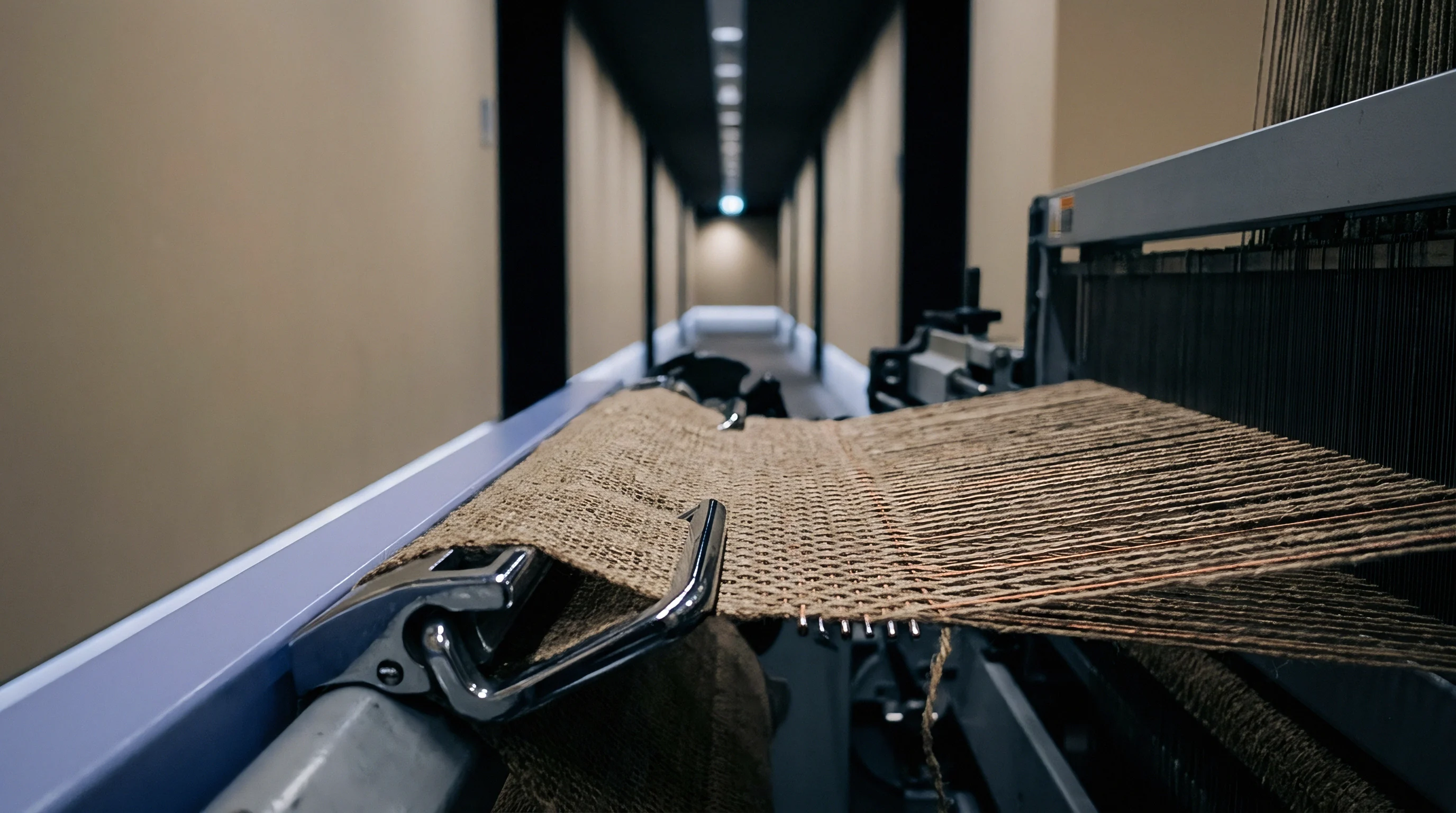
Joining roving ends during continuous operation requires mechanical or pneumatic splices that survive wet trough transit and drafting forces. Spliced areas absorb fluid at different rates than intact roving. Water-swollen splices entering the back rollers experience localized pressure spikes, leading to splice slippage or total joint failure in the drafting zone.
| Chemical Additive System | Bath pH | Tenacity (cN/tex) | Elongation (%) | Uster CV% | End Breakage (per 1000 sp-hr) |
|---|---|---|---|---|---|
| Standard Pure Water | 6.8 | 21.4 | 1.90 | 15.2 | 45 |
| Citric Acid (1.5 g/L) | 4.8 | 27.8 | 2.35 | 11.8 | 16 |
| Sodium Carbonate (1.0 g/L) | 8.8 | 23.1 | 2.10 | 13.6 | 31 |
| Trisodium Citrate (2.0 g/L) | 5.2 | 28.5 | 2.40 | 11.2 | 14 |
Pneumatic splices prepared with specialized water-soluble adhesive inter-locks improve joint survival through high-temperature vats. The temporary binder holds spliced overlap zones together against liquid turbulence until the joint enters the front drafting rollers, where ring twist integrates splice fibres into the continuous yarn structure. Optimizing splice geometry minimizes mass variation at joint locations, preventing yarn clearers on automatic winders from cutting spliced sections downstream.
Single-strand yarn tenacity measured according to ISO 2062 must equal or exceed 25.0 cN/tex with an Uster mass CV below 13.0 percent on all delivered Nm 80 line flax yarn lots.
Because splices fail under uneven draft, the mechanical splice zone must match the linear density and flexibility of the native roving strand to pass through the bath without altering local draft dynamics.
Delivery contracts for fine linen yarn specify that any lot failing to meet tenacity limits under ISO 2062 testing is subject to full rejection or a landed price reduction of 1.5 percent for each 0.5 cN/tex deficit below specification.
Economics
Operating costs in fine linen wet spinning depend directly on trough energy consumption, chemical additive costs, hackling yields, and net frame productivity. Cost models for fine counts must balance chemical trough optimization against frame efficiency. Chemical costs affect margins, but optimal pectin hydrolysis reduces end-breakage, allowing higher spindle speeds that offset the expense of trough heating and chemical additives.
Raw fibre selection is the single largest variable cost in fine linen manufacturing. Spinning Nm 80 yarn requires high-grade scutched line flax with hackling yields over 65 percent. Low-grade fibre bought at a discount increases hackling waste and yields high proportions of low-value tow.
Trying to offset poor raw material by ramping up trough chemicals or operating temperatures raises bath costs without reaching target yarn tenacity or mass evenness.
Cost Allocation between Chemical Baths and Spindle Speed
Maintaining high bath temperatures adds significantly to conversion cost per kilogram of yarn. A 400-spindle frame running uninsulated 70 degree Celsius troughs consumes roughly 35 kilowatt-hours of thermal energy per hour. Installing closed-loop heat recovery systems to capture heat from drained liquor and preheat fresh process water cuts steam boiler load by 28 percent, saving substantial utility costs over annual production runs.
Chemical expenditure varies widely depending on formulation. Running pure water incurs zero chemical cost but increases end-breakage rates, lowering overall frame efficiency. Adding citric acid and non-ionic wetting agents adds roughly 0.08 to 0.14 Euros per kilogram of spun yarn.
However, cutting end-breakage from 45 down to 16 breaks per 1000 spindle-hours raises frame efficiency from 88 percent to 96 percent. The financial gain from higher yarn output far outweighs the chemical cost.
Shifting from standard 80 degree Celsius water baths to 55 degree Celsius chelate-assisted hydrolysis baths yields a net conversion cost saving of 0.42 Euros per kilogram of Nm 80 line yarn in mill production trials.
Landed Metre Pricing across Fine Linen Counts
Translating yarn production economics into finished fabric cost requires evaluating linear density limits, weaving performance, and waste factors. Fine linen yarns command premium prices per kilogram. An Nm 80 line yarn fetches significantly higher rates than coarse Nm 26 tow yarn, reflecting the scarcity of suitable long-staple flax and the lower throughput speeds of fine-count frames.
- Raw Fibre Selection Audit requires verifying that hackling yield on line flax lots exceeds 65 percent prior to allocating stock to fine yarn spinning schedules.
- Chemical Dosing Cost Ratio mandates calculating the cost per kilogram of yarn spun against net frame efficiency gains before adopting proprietary bath additives.
- Thermal Energy Recovery Verification requires installing flow meters and temperature sensors across drain lines to audit heat exchanger efficiency monthly.
- Waste Allowance Tracking mandates measuring total fiber loss across hackling, roving, and wet drafting stages to establish true landed yarn manufacturing cost.
Evaluating total manufacturing cost requires following a lot of raw line flax through conversion to finished fabric. Consider a starting lot of 1,000 kilograms of premium dew-retted Courtrai line flax bought at 5.20 Euros per kilogram, for a total raw material cost of 5,200 Euros. Hackling yields 680 kilograms of long-staple line sliver and 270 kilograms of short tow fibre valued at 1.80 Euros per kilogram.
Net fibre input cost for the line sliver, after crediting the tow value, equals 4,714 Euros, or 6.93 Euros per kilogram of hackled sliver.
Processing 680 kilograms of hackled sliver through drawing and flyer frames into 800-tex roving incurs conversion costs of 1.15 Euros per kilogram, adding 782 Euros. Wet spinning this roving into Nm 80 yarn at 70 degrees Celsius with organic acid chelating agents adds wet conversion costs of 4.85 Euros per kilogram ~ covering labor, energy, bath consumables, frame maintenance, and bobbin winding. Spinning yields 646 kilograms of net yarn after accounting for five percent hard waste during drafting and spinning.
Cumulative cost for 646 kilograms of Nm 80 yarn reaches 10,210 Euros, or 15.80 Euros per kilogram.
Weaving this Nm 80 yarn into a fine plain-weave linen apparel fabric with a finished target weight of 110 grams per square metre requires 0.125 kilograms of yarn per square metre, accounting for loom take-up, warp sizing loss, and finishing shrinkage. At a weaving and finishing conversion cost of 2.10 Euros per linear metre at a 150 centimetre fabric width, the fabric consumes 0.1875 kilograms of yarn per linear metre. Raw yarn content cost equals 2.96 Euros per linear metre.
Total landed fabric manufacturing cost reaches 5.06 Euros per linear metre. Because yield losses compound early at hackling, running wet spinning troughs under unoptimized parameters increases yarn mass variation, raising loom stop rates from 1.2 to 3.8 stops per 100,000 picks ~ adding another 0.45 Euros per metre in lost weaving efficiency and fabric downgrades.