
Certified Fibre Surcharge Weighed against the Unprovable Claim Discount
Certified fibre surcharges protect legal compliance and landed margin stability, whereas unprovable claim discounts expose importers to severe customs liabilities.
Certified fibre surcharges protect legal compliance and landed margin stability, whereas unprovable claim discounts expose importers to severe customs liabilities.

Linen origin rests on Western European raw flax scutching records linked through batch transaction certificates and mill mass-balance audits to finished bolts.
Resolving multi-site credit discrepancies requires separating voluntary mass balance ledgers from statutory physical batch origin declarations.

Mass balance credit allocations fulfill voluntary sustainability metrics but fail statutory non-preferential customs origin rules requiring physical transformation proof.

Classification between Chapter 53 flax and Chapter 63 made-up linen depends strictly on Section XI Note 7 edge finishing, sewing, and structural shape criteria.

Non-preferential origin for woven linen fabric assigns strictly to the country where yarn is woven into greige cloth on industrial looms under tariff shift rules.

Masters of Linen mandates 100% European transformation, making Chinese processing invalid; European Flax allows overseas processing with verified chain of custody.
Non-preferential origin for woven linen textiles is conferred by the country of weaving rather than the country of agricultural flax fibre cultivation.
Reclassifying third country blended yarn under Union Customs Code requires audit files linking ISO 1833 dry mass testing to mill spinning logs.

Statutory non-preferential origin for hemmed linen bed and table linens remains attached to the weaving location under 19 CFR 102.21 and UCC Annex 22-01.
Harmonized System Chapter 53 classification of flax fabrics relies on an 85 percent mass threshold verified through dry-weight chemical analysis.

Linen non preferential origin follows exact HS tariff shifts where spinning yarn confers 5306 origin and weaving cloth confers 5309 origin under customs law.
European Flax certificates verify raw fibre origin, but US Customs non-preferential classification derives strictly from the country where yarn spinning or fabric weaving occurs.

European Flax verification for Asian spinning mills demands matching annual facility scope certificates with lot transaction certificates and dry mass balance ledgers.

Mass balance certificates balance inventory on paper but offer zero proof of physical European flax containment in individual fabric bolts.
Scope certificates validate facility processing capacity, while transaction certificates prove specific consignment volume provenance across linen orders.

Verifying substantial transformation in linen fabric requires machine-level loom allocation logs, doff records, and mass-balance yarn reconciliations.
European Flax fibre spun in China retains certified raw material status under valid Transaction Certificates, but confers Chinese country of origin and forfeits Masters of Linen eligibility.
Customs country of origin depends on transformation laws like spinning and weaving, making fibre certificates invalid as sole statutory proof.

Non preferential origin for imported linen cloth resides in the country where greige yarns are interlaced on the loom, not where flax fibres were grown or spun.

Scutching confers non-preferential origin when mechanical decortication permanently transforms raw straw into clean fiber under verified mass balance audit dockets.

Validating European Flax transaction certificates across spinning mills demands reconciling mass balance ratios against certifier lot numbers and invoice weights.

Non-preferential origin verification requires matching mill processing yield records against issuing chamber stamps and customs tariff shift rules.

Non-preferential origin under Union Customs Code Annex 22-01 hinges on meeting primary processing rules or proving predominant constituent fiber weight.

Woven flax goods transition from Chapter 53 fabric to Chapter 63 made up status upon meeting edge hemming, cut-to-shape, or drawn-thread criteria under Note 7.

Proving substantial transformation in cross-border linen finishing requires matching chemical mill execution dockets to exact HS tariff shift rules.

Adding synthetic edge finishes under Section XI Note 7 shifts tariff lines to made-up goods but fails to change non-preferential origin from base fabric weaving.
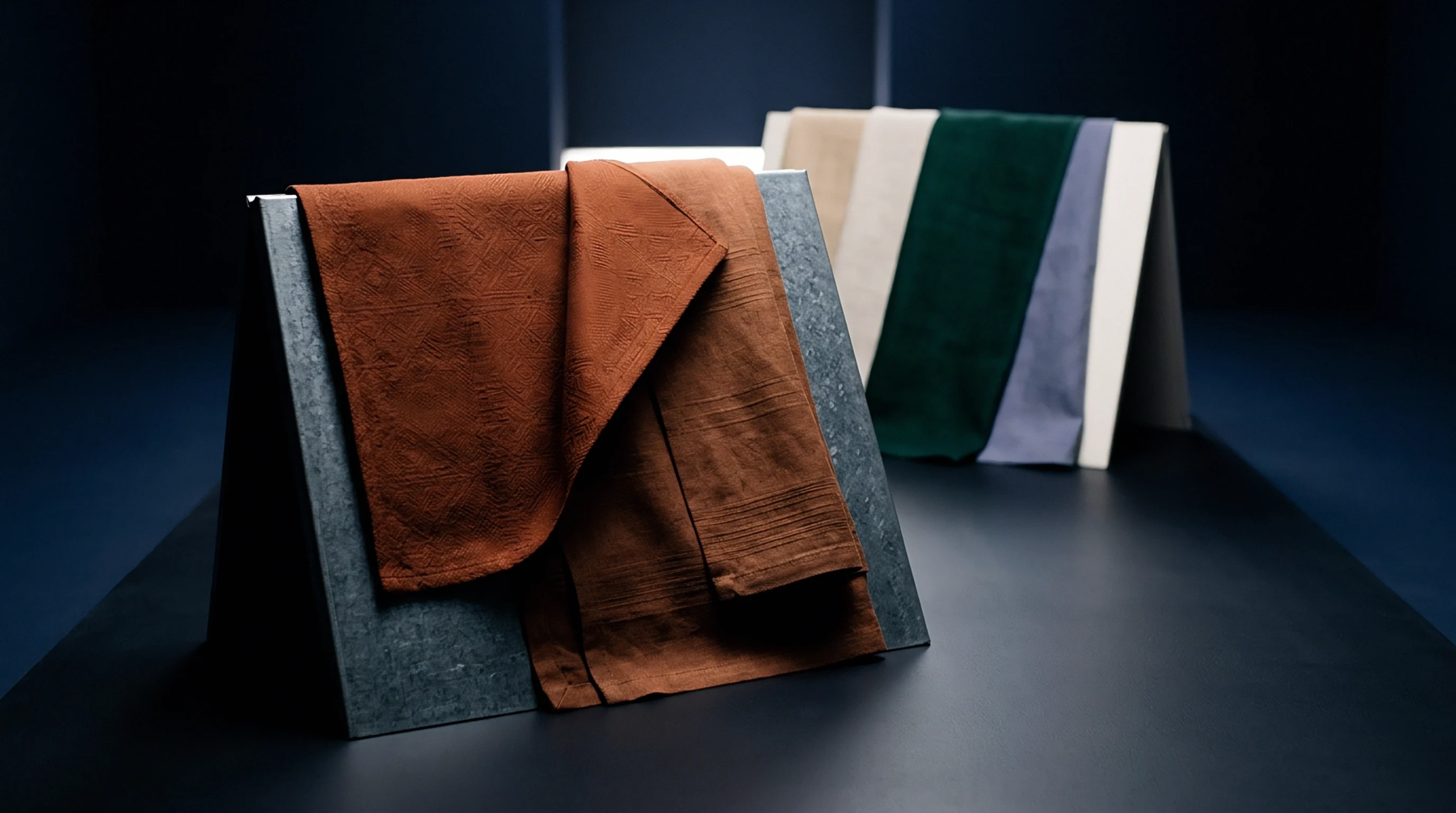
Hemmed imported linen sourcing requires Chapter 63 classification, mandatory transaction certificates matching lot yields, and origin proof at weaving.
Substantial transformation audits in multi-country linen supply chains require linking lot-level transaction certificates from European flax fields to Asian spinning and weaving facilities to satisfy customs origin rules.

Mechanical scutching parameters govern flax fiber separation efficiency, yield ratios, customs origin transformation, and commercial batch verification.
Expertise is a utility, not a secret. sentiention™ publishes its working knowledge as open reference: intelligence layer covering the materials it sources, the markets it enters, and the reference that serves both.