Resolving Third Country Blended Yarn Non Preferential Origin Rejections under Union Customs Code
Reclassifying third country blended yarn under Union Customs Code requires audit files linking ISO 1833 dry mass testing to mill spinning logs.


Sliver
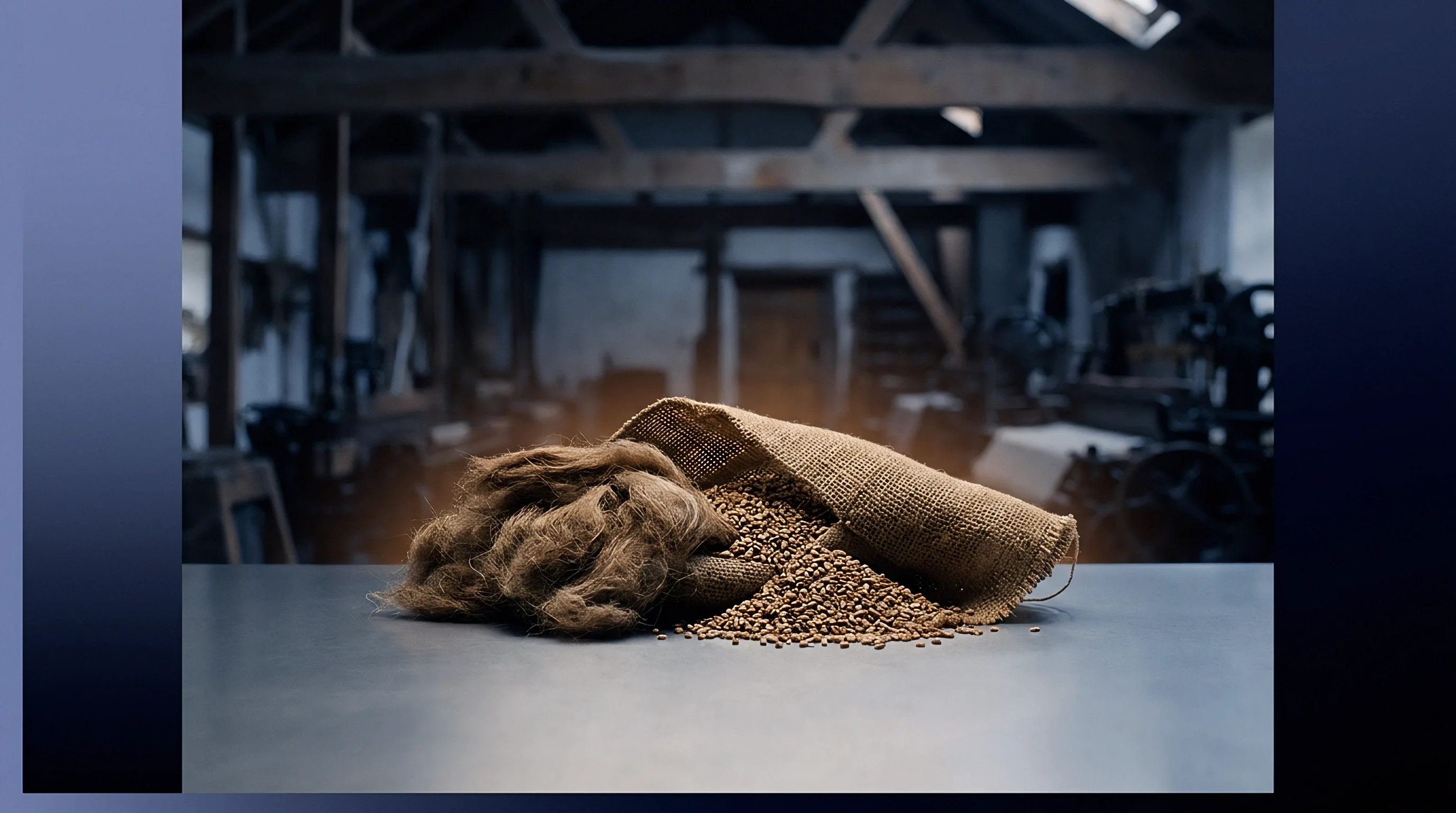
European Union customs authorities reject non-preferential origin declarations on imported blended yarns whenever physical fiber structure contradicts entry documentation. Mechanical yarn preparation blends raw flax with cotton, viscose, or synthetic staple fibers, converting loose material into a continuous, parallel strand before twisting. Mill processing introduces separate fiber types at the blowroom or during draw-frame passage, forming a mixture where individual fiber lengths, deniers, and surface frictions determine final linear density and strength.
Under the Union Customs Code, EU administrations inspect shipments under Harmonized System headings 5205, 5206, 5306, 5307, 5509, and 5510, testing whether physical composition matches the processing claimed on the Non-Preferential Certificate of Origin.
Mechanical yarn production turns scutched flax, combed cotton sliver, or cut synthetic tow into spun yarn through carding, combing, drafting, and ring or rotor spinning. Physical separation of raw fiber lots ends once slivers reach the draw frame. Blending Chinese combed cotton sliver with imported Western European flax tow forms a single strand that cannot be mechanically separated back into distinct origin streams.
Audits of origin declarations at Asian spinning mills confirm whether raw fiber inputs match what is declared to customs. Officials at ports such as Rotterdam, Hamburg, or Antwerp routinely pull samples from landed containers for quantitative chemical analysis under ISO 1833 protocols, comparing measured fiber weights with the descriptions logged in customs clearance systems.
Testing a 50 Nm ring-spun yarn under ISO 1833-11 reveals an actual flax proportion of 46.2 percent by weight, invalidating a declaration of 55 percent flax origin under dry-mass conditions.
Discrepancies between physical fiber ratios and declared non-preferential origin trigger immediate customs holds under Article 198 of the Union Customs Code. Officers examine constituent fibers through microscopic cross-sectioning and selective chemical dissolution, separating cellulosic material from synthetic filaments or distinguishing bast fibers from seed hairs. A two percent variance in fiber composition beyond commercial moisture regain allowances under ISO 2060 invalidates the origin rule applied at entry.
If a yarn declared as flax-dominant falls below the statutory threshold in Annex 22-01 of the UCC Delegated Regulation, its tariff classification changes, exposing the importer to higher Most-Favoured-Nation duty rates and trade defense measures.

Physical Fiber Mechanics and Blending Discrepancies
Fiber blending at the mill determines both structural performance and legal origin classification. Processing short-staple flax tow with long-staple cotton requires specialized drafting rolls with modified apron clearances to manage uneven fiber lengths. Short flax fibers, typically 25 to 60 millimeters after cottonization, have irregular cross-sections and high bending stiffness compared to combed cotton fibers averaging 32 millimeters.
While mills adjust draft ratios to maintain yarn evenness, micro-variations during sliver feeding create batch-to-batch composition shifts across extended runs.
Natural fiber chemistry complicates physical verification testing. Raw flax contains non-cellulosic impurities like pectin, lignin, and hemicellulose, which make up 15 to 22 percent of unbleached fiber dry weight. During quantitative laboratory extraction using hot sodium hydroxide or cupriethylenediamine solutions, incomplete pectin removal or cellulose degradation skews calculated dry weight ratios.
Importers relying on unverified mill certificates frequently find that official laboratory results show lower flax content than declared, leading to swift origin rejections.
Origin checks test physical fiber characteristics against raw material records. Microscopic analysis under polarized light ~ examining cross-markings, lumen diameters, and cell wall thickness ~ confirms whether declared linen content is genuine flax or substitute bast fibers like ramie or hemp. Substituting ramie into yarn declared as a flax blend changes the origin analysis under the Union Customs Code, given that ramie and flax follow separate supply chain routes and regulatory frameworks.
Inaccurate fiber declarations result in immediate tariff reassessment, retroactive duty recovery under UCC Article 102, administrative fines up to three times the evaded duty, and ongoing clearance delays for future shipments.


Subsumption
Non-preferential origin determinations for textiles imported into the European Customs Territory rely on Article 60 of Regulation (EU) No 952/2013, alongside Commission Delegated Regulation (EU) 2015/2446. Under Article 60(2), goods produced in more than one country originate where they underwent their last substantial, economically justified processing. For textile yarns in Chapters 52, 53, 54, and 55 of the Combined Nomenclature, Annex 22-01 of the UCC Delegated Regulation sets list rules defining which manufacturing steps confer non-preferential origin.
Substantial transformation of blended yarn generally requires complete spinning within a single territory. Converting raw staple fibers into spun yarn changes the multi-digit HS heading, turning loose fibers under 5201, 5203, 5301, or 5506 into single or folded yarns under 5205, 5206, 5306, 5307, 5509, or 5510. Processing French or Belgian raw flax inside a Chinese mill confers Chinese non-preferential origin under Article 60(2), assuming the spinning meets single-country processing rules.
Problems emerge when intermediate conversions occur across multiple countries ~ such as cottonizing flax in one country, blending fibers in another, and executing final ring spinning in a third.
| HS Heading | Product Description | UCC Annex 22-01 Primary Rule | Critical Processing Requirement |
|---|---|---|---|
| 5206 | Cotton yarn (under 85% cotton by weight), mixed mainly with flax or synthetics | Manufacture from natural fibers, synthetic/artificial staple fibers, not carded or combed | Complete spinning process from uncarded/uncombed fibers; origin conferred where spinning occurs |
| 5306 | Flax yarn (single or multiple/cabled) | Manufacture from scutched or hackled flax fiber or flax tow | Wet or dry spinning from prepared flax sliver; origin matches spinning location |
| 5307 | Yarn of other vegetable textile fibers; jute, ramie | Manufacture from raw or processed bast fibers | Spinning operation converts prepared bast fiber into continuous yarn |
| 5509 | Yarn of synthetic staple fibers (under 85% synthetic), blended with flax/cotton | Manufacture from chemical materials, synthetic staple fibers, or natural fibers | Fiber blending and spinning executed within a single customs territory |
Origin rejections frequently follow customs evaluations of multi-component yarns containing fibers from different sources. If a mill in Vietnam produces a 50 percent flax, 50 percent combed cotton yarn using French flax tow and Indian cotton sliver, European authorities look solely at where final spinning occurred under Annex 22-01. If entry documents make conflicting claims ~ such as asserting European origin based on the value of the raw flax ~ customs will reject the declaration for misstating non-preferential origin.
Origin Determination Architecture for Multi-Fibre Yarns
Determining how tariff classification and non-preferential origin rules intersect requires examining Note 2 to Chapter 53 and the General Interpretative Rules (GIR) of the Harmonized System. Classification follows a strict weight hierarchy: yarn containing 55 percent flax and 45 percent cotton belongs under HS heading 5306. If laboratory testing reveals actual flax content is 48 percent and cotton is 52 percent, classification moves to HS heading 5206.
That shift alters the applicable origin rule under Annex 22-01, invalidating the original certificate of origin.
Customs authorities systematically review incoming declarations for failure patterns that reveal origin misstatements during entry clearance.
- Documentary Inconsistency Across Freight File ~ The Certificate of Origin issued by a third-country chamber of commerce lists raw material origins that contradict the country of manufacture declared on the commercial invoice and bill of lading.
- Incorrect HS Heading Selection ~ Declarations list a single-fiber tariff line to bypass the list rules and weight-threshold verification protocols associated with blended yarn headings.
- Omission of Intermediate Conversion Locations ~ Customs entries fail to document fiber processing steps conducted in intermediate countries, such as cottonization, carding, or combing performed before final spinning.
- Unverified Fiber Weight Fractions ~ Declarations rely on nominal mill blend ratios rather than certified dry-mass laboratory test reports, leading to post-clearance duty adjustments when official testing reveals lower flax proportions.
Spinning remains the principal origin-conferring process under UCC Annex 22-01. Steps taken before spinning ~ including washing, scutching, hackling, bleaching, or dyeing ~ do not confer non-preferential origin if spinning occurs elsewhere. Purchasing EU-grown raw flax, shipping it to China for cottonization and spinning, and exporting the finished yarn back to the EU yields Chinese non-preferential origin.
The product remains subject to standard MFN tariffs, autonomous quota suspensions, or anti-dumping duties applied to Chinese textiles.
Importers often face resistance when seeking retroactive adjustments from suppliers who insist that harvest-country origin certificates override European customs manufacturing rules.


Dossier
Defending an origin declaration against a duty demand under UCC Article 102 requires a batch-traceable audit file assembled before shipment. Customs auditors reject generic origin statements, commercial affidavits, or standard origin certificates that lack direct links to mill logs. Auditors examine spinning production records alongside bills of lading to check for unrecorded fiber substitutions.
Importers must establish an unbroken custody chain connecting raw fiber procurement, bale delivery, spinning lot allocations, laboratory tests, and export filings.
The audit dossier requires primary operational records generated during production, not summary affidavits written after customs issues a challenge. A compliant file tracks every kilogram of raw fiber entering the mill through to the exported yarn lot. When customs issues a Form C218 information request or audit notice, importers usually have 30 days under national procedures to submit verified proof.
| Document Type | Issuing Authority / Entity | Supply Chain Stage Covered | Required Data Elements | Customs Vulnerability Point |
|---|---|---|---|---|
| Scutcher / Fiber Delivery Ticket | Raw Fiber Processor / Scutching Mill | Raw Material Input | Bale numbers, net weight, fiber grade, farm lot code, harvest year | Missing bale tags or mismatched gross/net weights against commercial invoice |
| Spinning Lot Production Register | Yarn Mill Production Office | Fiber Blending & Spinning | Machine allocation, sliver blend ratios, total input vs output weight, waste factor | Unaccounted fiber loss or missing shift production log entry numbers |
| ISO 1833 Test Certificate | ISO 17025 Accredited Laboratory | Product Quality Verification | Quantitative fiber analysis, dry mass basis, moisture regain correction factors | Testing performed on non-representative samples or unaccredited laboratory report |
| Non-Preferential Certificate of Origin | Authorized Chamber of Commerce (e.g. CCPIT) | Export Formalities | Consignment details, HS code, non-preferential origin criteria, chamber stamp | Certificate issued post-shipment without physical verification or reference to mill lot |
| Commercial Invoice & Packing List | Exporting Merchant / Spinning Mill | Financial Transaction | Detailed description, net/gross weight, yarn count (Nm/Ne), blend breakdown | Generic descriptions omitting precise fiber weight percentages or blend ratios |
Every non-preferential certificate of origin submitted to European authorities must align with physical goods and supporting commercial paperwork. Certificates from third-country chambers, such as the China Council for the Promotion of International Trade (CCPIT), hold weight only when backed by mill production records. If officers suspect a certificate relies solely on seller statements without mill verification, they open an administrative cooperation inquiry under UCC Article 61, asking destination authorities to perform an on-site audit.
Contractual specifications must mandate that the seller supply lot-indexed spinning records and ISO 17025 fiber analysis certificates for every lot prior to customs entry submission.

Documentary Proof Assembly Protocol
Importers structured for customs compliance assemble their audit documentation through a systematic validation process before lodging customs declarations.
- Raw Material Procurement Traceability ~ Verify that raw fiber purchase orders, supplier bills of lading, and mill receiving records cite identical bale identification numbers and net weights matching the declared blend volume.
- Spinning Mill Batch Log Verification ~ Audit internal mill blending registers to confirm that the declared proportions of flax and secondary fibers were physically loaded into the mixing hoppers during the designated production run.
- Laboratory Analysis Validation ~ Secure an independent quantitative fiber analysis test report from an ISO 17025 accredited laboratory, confirming fiber weight percentages on a corrected dry-mass basis under ISO 1833 standards.
- Consignment-Specific Certificate Mapping ~ Cross-check the Non-Preferential Certificate of Origin reference number against the bill of lading, commercial invoice, and container packing list to prevent document swapping between distinct production batches.
Gaps between raw fiber purchases and final export filings drive most origin rejections. If a mill buys 10 metric tons of raw flax tow but exports 30 metric tons of yarn declared at 50 percent flax content, auditors calculate an immediate material deficit. Mills must account for inventory balances, waste factors, and processing yields.
Unexplained volume discrepancies invalidate origin claims, leading to retroactive duty assessments across linked entries.
To secure documentary enforceability, importers insert specific origin compliance covenants into their international purchasing agreements.
“The Seller warrants that all yarn supplied under this agreement strictly complies with the non-preferential origin rules set out in Article 60 of Regulation (EU) No 952/2013 and Annex 22-01 of Delegated Regulation (EU) 2015/2446, and agrees to deliver complete mill spinning batch registers, raw material bale tickets, and ISO 17025 accredited quantitative fiber analysis test reports for each production lot prior to dispatch, accepting full financial liability for any duty recovery, fines, or legal costs incurred by the Buyer resulting from origin rejection by customs authorities.”


Reconciliation
Mass-balance auditing is the primary tool customs investigators use to confirm whether a mill had enough raw fiber input to manufacture the declared yarn volume. Mechanical preparation and spinning generate considerable waste during opening, carding, combing, drafting, and spinning. Processing flax produces higher waste ratios than combed cotton or synthetics due to irregular fiber lengths, shives, and dust removed during processing.
A mill must demonstrate a balanced account between raw fiber arrivals, process waste, and exported output.
Determining true material balances requires adjusting raw fiber inputs and finished yarn weights to standard moisture regain levels. Under ISO 2060, moisture allowances are set at 12.0 percent for flax yarn, 8.5 percent for combed cotton, 13.0 percent for viscose staple, and 0.4 percent for polyester staple. Running mass-balance checks on unadjusted gross weights introduces errors that customs auditors exploit during post-clearance reviews.
| Process Stage | Fiber Component | Raw Input Weight (kg) | Process Waste Rate (%) | Net Fiber in Yarn (kg) | Corrected Commercial Mass (kg) |
|---|---|---|---|---|---|
| Blowroom & Carding | Cottonized Flax Tow | 10,000 | 12.5% | 8,750 | 9,800 (12.0% Regain) |
| Combing & Drawing | Combed Cotton Sliver | 8,000 | 6.0% | 7,520 | 8,159 (8.5% Regain) |
| Ring Spinning | Total Blended Fiber | 18,000 | 3.5% (Fly/Pneumafil) | 15,705 | 17,358 (Combined Regain) |
| Final Package Winding | Delivered 52 Nm Yarn | N/A | 1.2% (Yarn Waste) | 15,516 | 17,150 (Final Invoice Net) |
Discrepancies between calculated fiber consumption and recorded warehouse inventories account for seventy-three percent of formal origin rejections during post-clearance audits. When internal mass balances show raw flax consumption falling short of production volume, customs authorities reject non-preferential origin claims for the entire shipment series, reclassifying the yarn under secondary tariff lines with higher duty rates.

Step-by-Step Mill Mass Balance Verification Procedure
Assessing the mathematical validity of a supplier’s origin declaration requires a systematic quantitative audit of mill production records.
- Obtain all raw fiber receiving records, weighbridge tickets, and supplier invoices for the specific production window covering the yarn batch.
- Extract total raw fiber input weights broken down by individual fiber type, applying standard moisture regain correction factors to convert all figures to oven-dry mass.
- Calculate process waste allocations for each stage of yarn preparation, deducting carding waste, comber noils, fly waste, and spinning room pneumafil collections from the initial dry mass.
- Determine the net dry mass of each fiber component incorporated into the continuous blended sliver prior to ring spinning.
- Reconcile net fiber output weight against final warehouse dispatch logs, packing lists, and commercial invoices issued for the exported yarn lots.
- Verify that the calculated yield matches physical mill capacity and that unaccounted material variance remains within the maximum allowable threshold of two percent.
Abnormally high waste adjustments or unbacked raw fiber allocations indicate potential origin non-compliance. When mills attribute material deficits to extreme waste rates, auditors demand waste sales receipts or disposal records. If a mill cannot prove the sale or destruction of reported waste, authorities disallow the deduction and conclude that unverified fiber entered the production run.
Raw fiber weight inputs minus documented process waste must balance with final exported yarn volume within a two percent commercial tolerance margin.

Appeals
When European customs issues a notification of intent to reject an origin declaration under UCC Article 22(6), a mandatory administrative process begins. Article 22(6) requires authorities to give importers 30 days to respond before taking adverse action. Importers should use this window to submit technical evidence, mass-balance data, and lab test results rather than standard protest letters.
If customs confirms the rejection and issues a duty demand under UCC Article 102, the importer can file an administrative appeal under UCC Article 44. This appeal must be lodged within national timeframes ~ usually 30 to 60 days ~ with the competent authority in the issuing member state. Filing an appeal does not suspend the decision under UCC Article 45, so importers must pay the duty or provide a financial guarantee under UCC Article 89 to clear goods or stop enforcement.
- Submit Formal Right to be Heard Response ~ Present batch-indexed spinning logs, raw material bills of lading, and ISO 17025 test certificates within the statutory 30-day window under UCC Article 22(6).
- Lodge Financial Security under UCC Article 89 ~ Post a comprehensive customs bond or bank guarantee covering disputed duty amounts and potential penalty assessments to obtain immediate release of seized shipments.
- File Formal Administrative Appeal under UCC Article 44 ~ Submit a legal memorandum contesting the customs origin determination, detailing errors in customs sampling, testing methodology, or interpretation of UCC Annex 22-01 list rules.
- Apply for Binding Origin Information (BOI) ~ Request an official, legally binding origin decision from an EU customs authority under UCC Article 33 to establish non-preferential origin rules for future importations.
- Initiate Judicial Litigation ~ Escalate unresolved administrative appeals to national specialized customs tribunals or administrative courts, seeking annulment of the duty assessment and recovery of guarantee costs.
Binding Origin Information (BOI) rulings under UCC Article 33 offer legal certainty for future import operations. A BOI decision binds customs authorities across all EU member states for three years, provided the goods and production processes match the application details. Importers facing repeated origin questions on blended yarns apply for BOI rulings by submitting technical disclosures covering fiber origin, blending sites, spinning parameters, and yarn samples.
Structuring origin indemnification provisions into purchase contracts protects importers against unexpected duty assessments. When litigation shows an origin rejection resulted from fraudulent supplier documentation, administrative appeal records support arbitration or breach-of-contract claims against the exporter. Preserving all customs correspondence, lab reports, and ruling notices within corporate compliance archives ensures legal remedies remain viable.
Will customs authorities standardize digital traceability requirements under the Union Customs Code reform to make electronic raw fiber batch tracking mandatory for all non-preferential origin declarations?