Applying Substantial Transformation Thresholds to Wet Spun Linen Yarn Supply Chains
Wet spinning hackled flax roving into single yarn constitutes non-preferential substantial transformation, conferring customs origin where spinning frames operate.
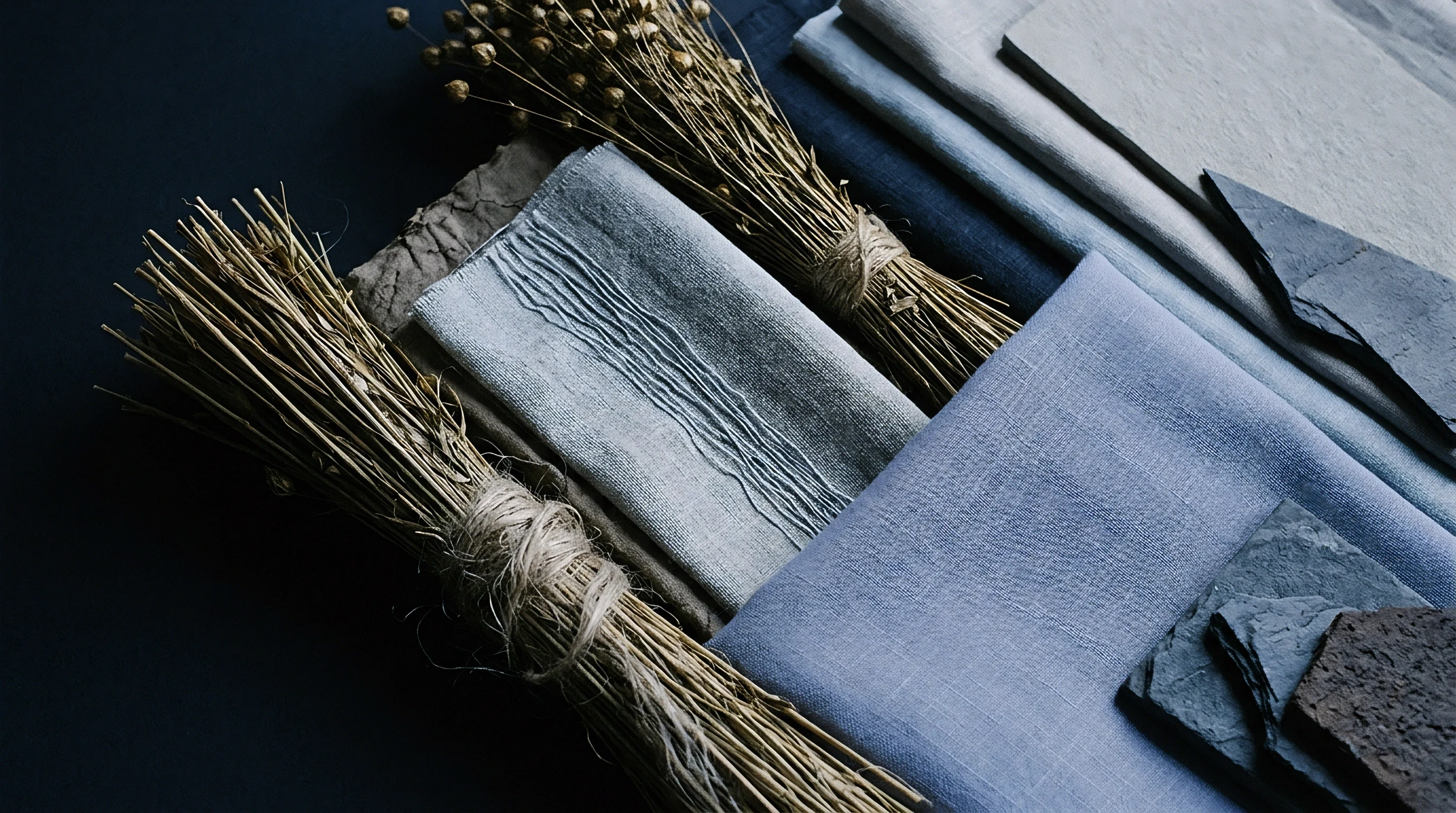
Roving
Harmonized System Shifts across Linen Processing
Non-preferential rules of origin apply whenever imported materials are processed across more than one customs territory. In wet spun linen supply chains, raw scutched flax crosses borders under Harmonized System heading 5301 as unspun, hackled, or processed flax tow. Wet spinning converts this prepared fibre into single yarn under Harmonized System heading 5306.
Customs authorities in major importing regions, such as the United States and the European Union, examine whether this conversion meets the threshold for substantial transformation.
Under United States customs regulations codified in 19 CFR 102.21, origin determinations for textile yarn depend on a specific tariff shift rule. Changing flax roving or hackled sliver of heading 5301 into wet spun flax yarn under heading 5306 qualifies as a change in tariff classification, making the physical spinning operation the origin-conferring step. For US import declarations, a spinning mill in Jiangsu processing flax tow grown in France and scutched in Belgium produces yarn whose non-preferential country of origin is China.
Sourcing managers often confuse raw fibre certification with customs origin. Fibre documentation simply establishes agricultural provenance; the customs entry records where physical spinning took place.
A tariff shift from raw flax sliver to wet spun yarn assigns origin to the country executing the spinning frame operation.
European Union rules under the Union Customs Code non-preferential framework also treat spinning as origin-conferring. Annex 22-01 of the Union Customs Code Delegated Regulation specifies that for heading 5306, the qualifying manufacturing process is production from natural fibres that have not been carded or combed, or from chemical materials or textile pulp. Spinning is the stage that confers origin.
If European flax roving is wet spun outside the customs union, the finished yarn enters destination markets as a foreign product. Preferential trade agreements add further requirements, often demanding double transformation or minimum regional value content before granting lower duty rates.
Listing the fibre’s growing site instead of the wet spinning location as the country of origin on commercial invoices exposes importers to administrative penalties, back-duty assessments, and consignment seizures under customs enforcement laws.


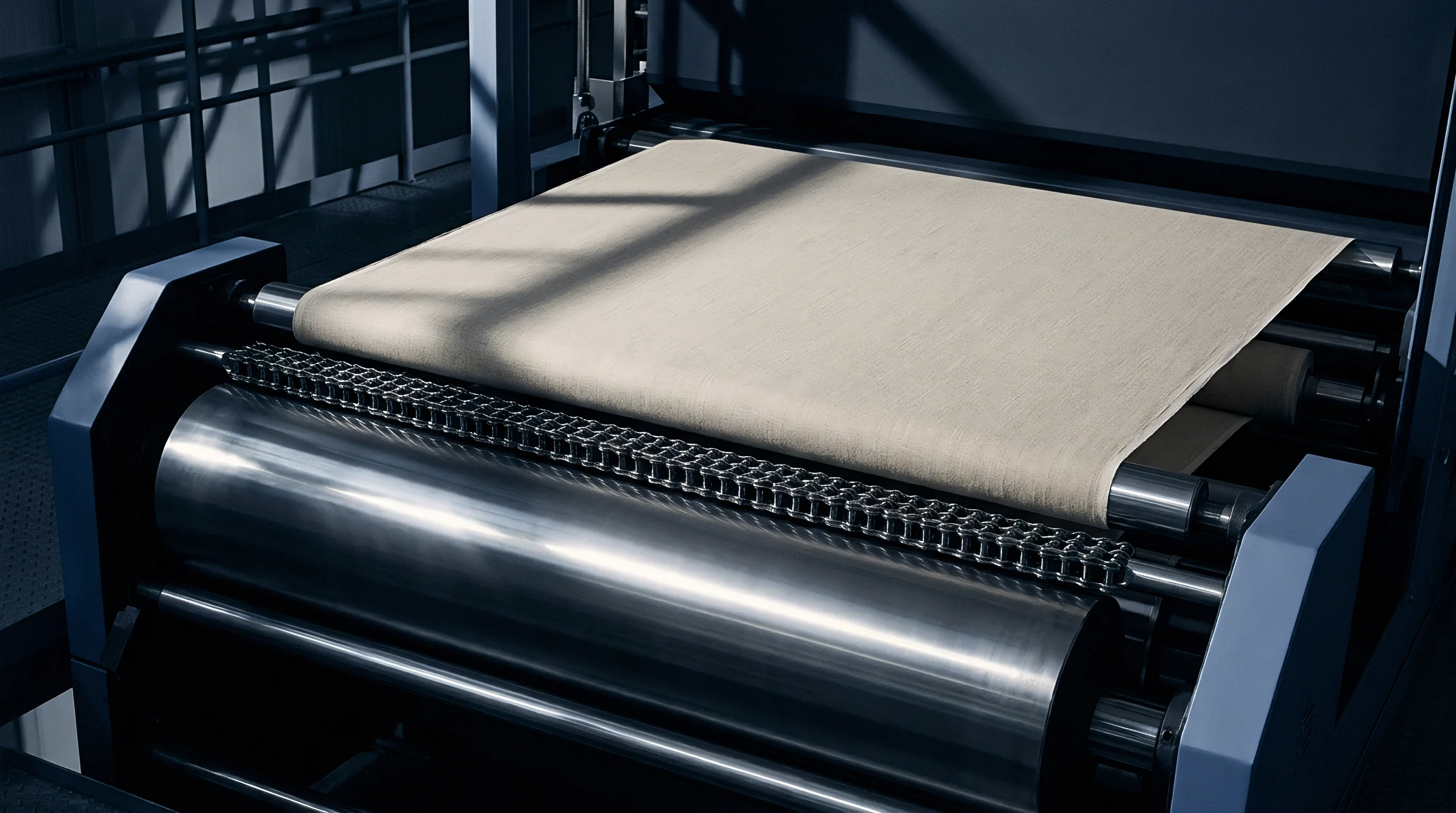
Trough
Physical Mechanics of Wet Spinning Transformation
Wet spinning permanently alters the structure of the flax fibre bundle, distinguishing yarn manufacturing from basic assembly. Before entering the drafting zone, raw hackled flax roving passes through a hot water bath held between 50 and 70 degrees Celsius. This heat softens the natural pectin matrix binding individual elementary fibrils together.
As pectins dissolve, drafting rollers can draw down the bundle far past the physical limits of dry spinning.
Ring spinning spindles rotating between 4,000 and 8,000 revolutions per minute insert twist into the drawn strand, locking the repositioned fibrils into a dense, compact cylinder. As the yarn dries on the bobbin, dissolved pectins migrate and recrystallize into secondary chemical bonds throughout the yarn core. This produces the high tensile strength, smooth surface, and low hairiness typical of wet spun yarn.
Dry spinning, by contrast, drafts unsoftened bundles with their intercellular pectins intact, creating bulkier, lower-count yarns.
Thermal immersion in the spinning trough dissolves inter-fibre pectins to enable structural bundle attenuation.
Customs rules assess substantial transformation by whether processing creates a new article with a distinct name, character, and commercial use. Wet spun linen yarn possesses physical, mechanical, and chemical characteristics not present in raw roving, tailoring it for specialized weaving and knitting that demand high tensile strength and dimensional stability under tension. Bench testing and cross-sectional microscopy verify these permanent structural changes.
Water immersion is sometimes framed as an auxiliary finishing step rather than a primary conversion process to assign non-preferential origin to the agricultural source country, though the resulting structural changes meet standard transformation criteria.
Provenance

Voluntary Schemes against Regulatory Origin Rules
Voluntary certification bodies operate separately from official customs standards for substantial transformation, requiring sourcing teams to manage private supply-chain labels alongside statutory declarations. The European Flax standard, managed by the Alliance for European Flax-Linen & Hemp, certifies that long-staple fibre was grown in France, Belgium, or the Netherlands. It uses chain-of-custody tracking ~ either mass balance or physical segregation ~ across global spinning, weaving, and processing plants.
Consequently, a mill in China spinning European Flax-certified tow produces European Flax-certified yarn, even though its non-preferential customs origin is China.
The Masters of Linen trademark imposes stricter regional limits, requiring 100 percent of production steps ~ cultivation, scutching, spinning, weaving, and finishing ~ to occur inside European borders. A wet spinning mill in Zhejiang cannot produce Masters of Linen yarn even when using raw sliver bought directly from European scutching cooperatives. Importers who mistake European Flax transaction certificates for proof of European customs origin routinely face border rejections.
| Framework or Standard | Issuing Body | Eligible Processing Geography | Custodial Tracking Mechanism | Customs Origin Alignment |
|---|---|---|---|---|
| European Flax | Alliance for European Flax-Linen & Hemp | Global spinning permitted for EU fibre | Transaction Certificates with mass balance | Fibre provenance only, ignores tariff shift |
| Masters of Linen | Alliance for European Flax-Linen & Hemp | Strictly European territory for all stages | Physical segregation with site audits | Aligns with European regional origin rules |
| OEKO-TEX Standard 100 | OEKO-TEX Association | Global facility qualification | Lot-based chemical analytical testing | Zero origin standing, chemical safety only |
| US 19 CFR 102.21 | United States Customs and Border Protection | Global statutory application | Customs entry documentation and mill logs | Non-preferential statutory origin benchmark |
| UCC Annex 22-01 | European Commission Directorate-General for TAXUD | Global statutory application | Supplier declarations and EUR.1 movement forms | Statutory origin benchmark for non-preferential trade |
Chemical verification schemes present a different operational boundary. OEKO-TEX Standard 100 tests compliance with limits on heavy metals, pesticides, and formaldehyde residues, but its scope certificates carry no weight regarding where fibre was grown or spun. An auditor reviewing a technical dossier will reject OEKO-TEX paperwork offered to defend an origin claim.
Each document serves a distinct purpose: statutory customs origin, voluntary agricultural pedigree, or product chemical safety.
Under international commercial contracts, origin warranty clauses make the supplier financially responsible for customs penalties that arise from confusing private provenance labels with statutory origin rules.

Ledger
Reconciling Mill Inputs and Production Losses
Verifying substantial transformation and provenance integrity requires reconciling physical mass at the mill. Wet spinning generates significant fibre loss through mechanical drafting, roving ends, and wastewater extraction. Audit teams cross-check hackled sliver intake records against yarn dispatch ledgers to confirm that declared volumes of certified flax match the finished yarn output.
Unverified mill ledgers can easily mask the addition of uncertified domestic flax or cotton tow into the spinning line.
Yields for high-count wet spun linen yarn (metric count Nm 36 to Nm 50) typically range from 72 to 81 percent of input roving weight. The remaining 19 to 28 percent turns into wet spinning waste ~ short fibrils, pectin wash-off, and winding combings. Coarser counts (metric count Nm 14 to Nm 26) reach higher yields of 80 to 87 percent because lower draft ratios retain longer fibre bundles.
A mass balance audit for a 10,000-kilogram lot of certified French hackled roving relies on these output limits before issuing transaction approvals.
| Yarn Metric Count (Nm) | Expected Mass Yield Range | Certified Yarn Output | Process Waste Allocation | Unaccounted Mass Threshold |
|---|---|---|---|---|
| Nm 14 to Nm 20 | 83 to 87 percent | 8,300 to 8,700 kg | 1,300 to 1,700 kg | Max 1.5 percent (150 kg) |
| Nm 26 to Nm 30 | 78 to 82 percent | 7,800 to 8,200 kg | 1,800 to 2,200 kg | Max 2.0 percent (200 kg) |
| Nm 36 to Nm 42 | 74 to 78 percent | 7,400 to 7,800 kg | 2,200 to 2,600 kg | Max 2.5 percent (250 kg) |
| Nm 50 to Nm 60 | 70 to 74 percent | 7,000 to 7,400 kg | 2,600 to 3,000 kg | Max 3.0 percent (300 kg) |
| Yield benchmarks assume 100 percent European Flax hackled sliver input at standard moisture regain of 12 percent. | ||||
Bale inventory discrepancies signal potential provenance failures. Auditors trace raw fibre consumption by examining the following critical documents on the mill floor:
- Weighbridge Delivery Receipts recording gross vehicle mass and net container weight at the mill gate when raw sliver bales arrive.
- Scutcher Lot Allocation Tags attached to individual bales showing supplier identity, harvest year, scutcher facility code, and certified batch numbers.
- Spinning Frame Run Logs tracking line allocation, spindle operating hours, water bath temperatures, and sliver lot consumption by date and shift.
- Transaction Certificates verifying that the volume purchased by the spinner is deducted from the upstream merchant’s custodial balance.
A mass balance discrepancy exceeding three percent across yarn output and recorded process waste invalidates the production batch claim.
Mills sometimes blend certified European long-staple roving with cheaper, uncertified tow sliver during preparing and drawing. This adulterates the yarn while preserving convincing gross weights on dispatch invoices. Microscopic cross-section analysis reveals uneven fibril lengths and irregular pectin distribution whenever low-grade tow is blended into long-staple stock.
Combining document audits with physical bundle length testing (Schlesing fractionation) verifies whether substantial transformation occurred using the genuine input lots named on import filings.
Failing to reconcile spinning waste ratios against finished yarn weights stops certifiers from issuing downstream transaction certificates, which can leave shipments stranded at the port of arrival.

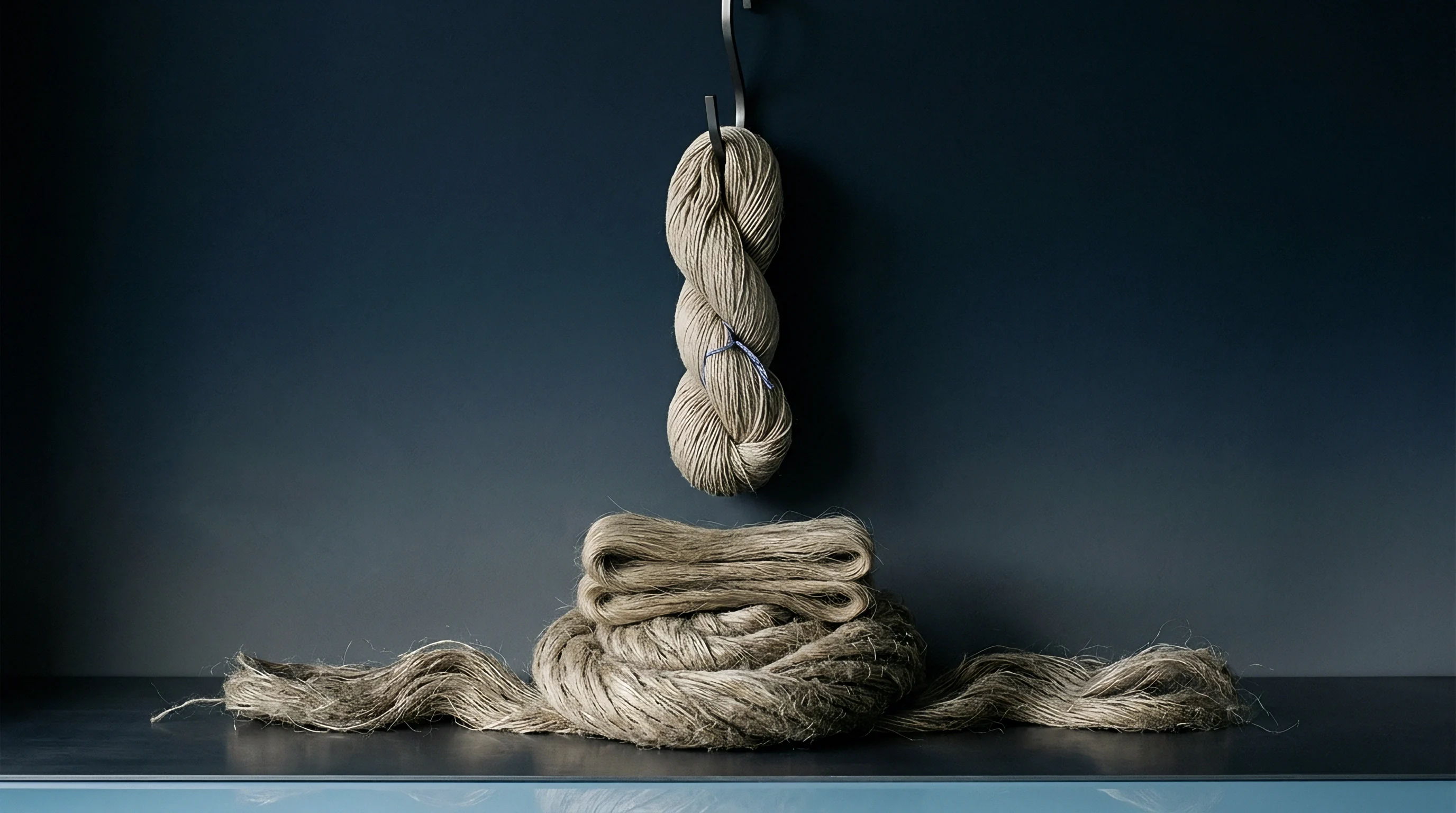
Parity
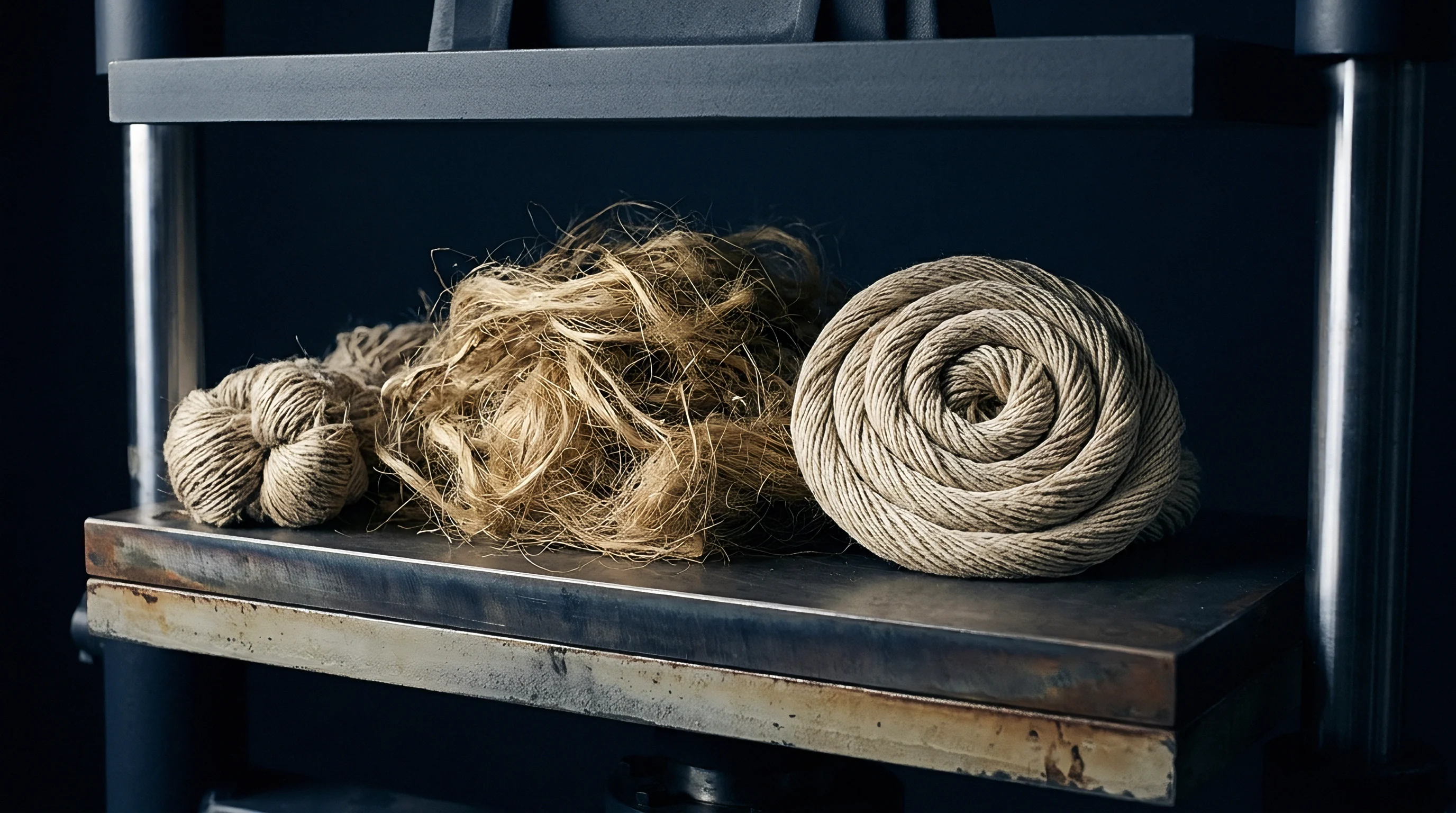
Audit Costs and Landed Price Mechanics
Producing traceable, substantially transformed linen yarn carries structural costs above standard commercial alternatives. Chinese spinning facilities operating audited European Flax lines charge a distinct provenance premium. This margin reflects sea freight for raw roving, machine flushes between runs, mass-balance audits, and certification fees.
Sourcing teams build these verification expenses into landed cost calculations alongside standard import tariffs.
Take a 40,000-kilogram order of single wet spun linen yarn at count Nm 26. Standard, unverified flax yarn from Chinese mills carries an ex-works base price of 14.50 United States dollars per kilogram. Sourcing the same count produced with certified European Flax raises the ex-works price to 18.20 dollars per kilogram.
The 3.70 dollar difference reflects the premium for French or Belgian hackled sliver, freight from Antwerp to Shanghai, container demurrage, and custodial certification charges. Transaction certificates from accredited bodies add 250 to 450 dollars per shipment batch.
On-site supply chain traceability audits run about 2,200 to 3,500 dollars per day, plus auditor travel. Importers typically add 0.08 to 0.12 dollars per finished metre of fabric to amortize mill audits and tracking fees across annual production. Upon entry, the declared country of origin determines the Most Favoured Nation tariff rate.
Single flax yarn imported into the United States under subheading 5306.10 carries an ad valorem duty of 2.7 percent, whereas finished woven fabric under heading 5309 incurs duties between 0.8 and 2.8 percent based on weight and weave.
The buyer writes specific indemnity language into the procurement master agreement to reallocate commercial exposure:
- The supplier guarantees that all wet spinning for declared lots occurs in the designated facility using authenticated roving inputs.
- The seller agrees to provide matching transaction certificates, spinning logs, and waste reconciliation sheets within ten business days of export dispatch.
- The mill assumes liability for duty recalculations, storage fees, and administrative fines resulting from origin reclassifications by customs authorities.
Documentary gaps uncovered during post-clearance customs audits can erase commercial margins through retroactive tariff assessments and fines that reach up to double the domestic value of the goods.