
Dynamic Tensile Fatigue Decay Mechanics under Asymmetric Loom Shed Geometry
Asymmetric loom sheds accelerate flax warp fatigue by shifting cyclic peak tension onto the lower yarn sheet, causing rapid microfibril fracture and stops.
Asymmetric loom sheds accelerate flax warp fatigue by shifting cyclic peak tension onto the lower yarn sheet, causing rapid microfibril fracture and stops.

Optimizing PVA starch sizing rheology suppresses micro-fibrillar friction spikes on fine wet spun flax warps, preventing clingage and raising loom efficiency.

Starch synthetic hybrid sizing films achieve optimal rapier weaving efficiency when elastic strain recovery exceeds 70 percent under 10 Hz dynamic shedding.

Resolving jacquard linen loom allocation disputes requires tying minimum order economics directly to harness setup hours, denting friction, and humidity limits.

Dynamic tension decay in sized wet spun flax yarns is minimized by controlling size penetration to 25 percent and keeping dynamic strain amplitudes below 1.2 percent.

Asymmetric high-tension shedding accelerates viscoelastic creep and microfibrillar fatigue in linen warp yarns, demanding precise dwell and stagger tuning to control breakage rates and fabric crimp imbalance.
Wet spun flax linear density and mechanical properties depend on strict moisture regain control, hot water pectin drafting, and CRE tensile evaluation.
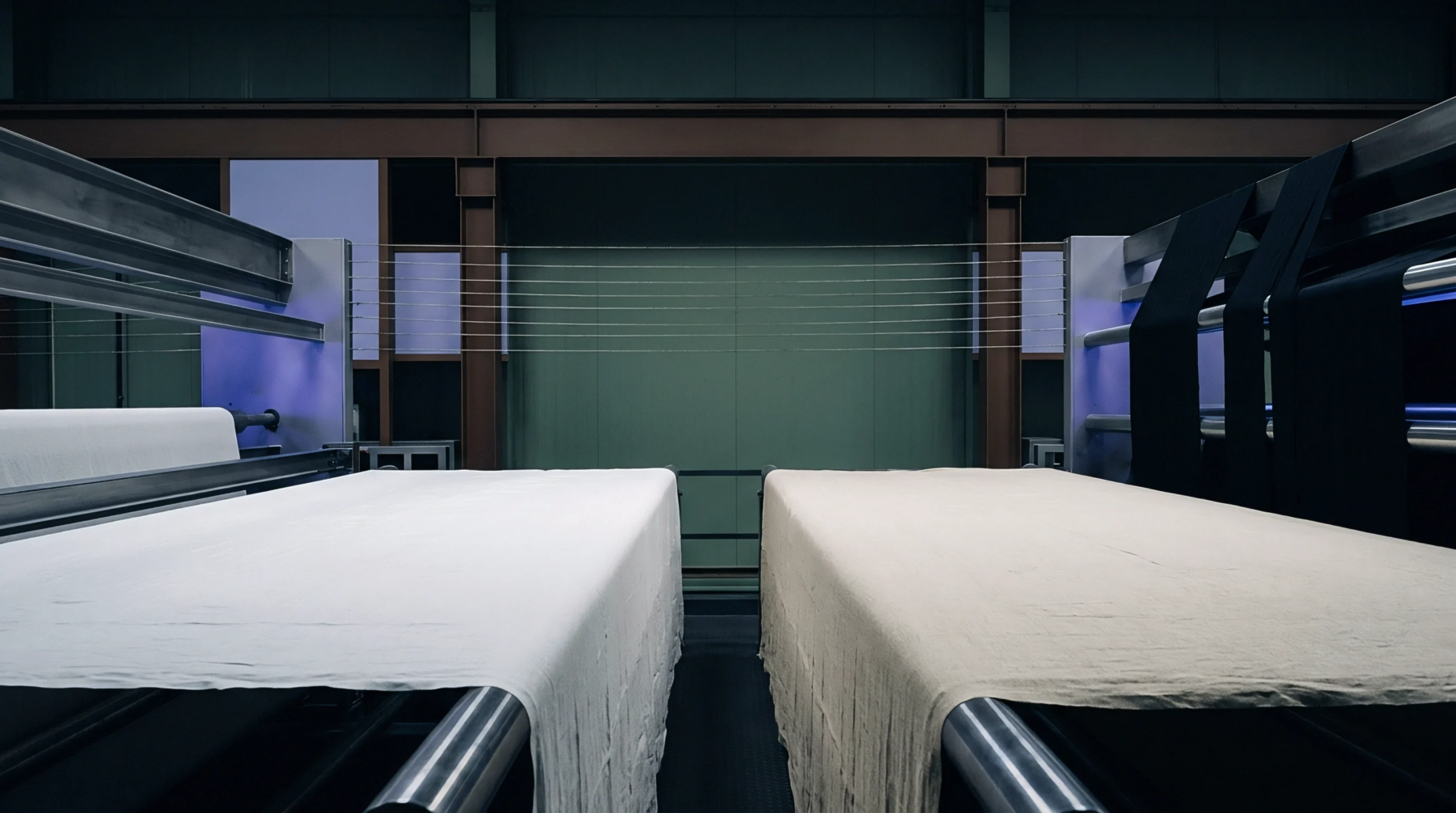
Fine linen weaving requires optimized PVA-starch sizing, tight humidity controls, and calibrated loom allocations to limit frictional warp breaks and prevent severe landed cost workload penalties.

Transitioning hand-loom samples to automated looms requires increasing warp cover factor and tuning shed dynamics to withstand high-speed night-shift tension.
Expertise is a utility, not a secret. sentiention™ publishes its working knowledge as open reference: intelligence layer covering the materials it sources, the markets it enters, and the reference that serves both.