Viscoelastic Creep Mechanics and Dynamic Tensile Fatigue under Asymmetric High Tension Shedding
Asymmetric high-tension shedding accelerates viscoelastic creep and microfibrillar fatigue in linen warp yarns, demanding precise dwell and stagger tuning to control breakage rates and fabric crimp imbalance.


Strain
When high-speed shedding applies tensile loading to bast fiber yarns, their mechanical response reflects the hierarchical architecture of the ultimate flax fibers. Wet-spun linen yarns consist of technical fiber bundles held together by middle lamellae made of amorphous pectins and hemicelluloses. Under continuous warp tension on an industrial loom, this cellulosic network responds in distinct phases.
In the initial phase, the yarn undergoes quasi-elastic extension as crystalline cellulose microfibrils absorb stress by deforming their bond angles. This immediate extension occurs within milliseconds of harness frame motion as the shed opens for filling insertion. Flax fibers deform elastically at once, and stress relaxation begins immediately.
After the elastic phase, the yarn enters a time-dependent viscoelastic creep region. At sustained shedding peaks of 8 to 14 centinewtons per dtex, the non-crystalline polysaccharide matrix around the microfibrils experiences irreversible shear strain. Continuous loading dissociates the hydrogen bonds cross-linking the hemicellulose polymers, letting adjacent elementary fibers slip past each other inside the bundle.
Because moisture content in wet-spun yarns stays between 8.5 percent and 10.5 percent during weaving, water acts as a plasticizer that lowers the glass transition temperature of the amorphous pectin phase. This molecular mobility drives up the creep rate relative to dry-spun or synthetic yarns under the same mechanical loads.
Viscoelastic extension in wet-spun Nm 26 flax yarn exceeds 2.8 percent after 12,000 continuous shed cycles at a sustained peak load of 11.5 centinewtons per dtex under 65 percent relative humidity.
When bast fiber assemblies remain under sustained tensile loading, primary viscoelastic creep turns into secondary linear creep over prolonged loom runs. Secondary creep is a steady-rate deformation driven by progressive microfibrillar slippage. While harness frames hold the warp sheet open at peak shed lift, permanent yarn elongation accumulates with each loom cycle.
This shift reduces the yarn’s residual elasticity, altering its tensile response during subsequent shedding motions and beat-up.
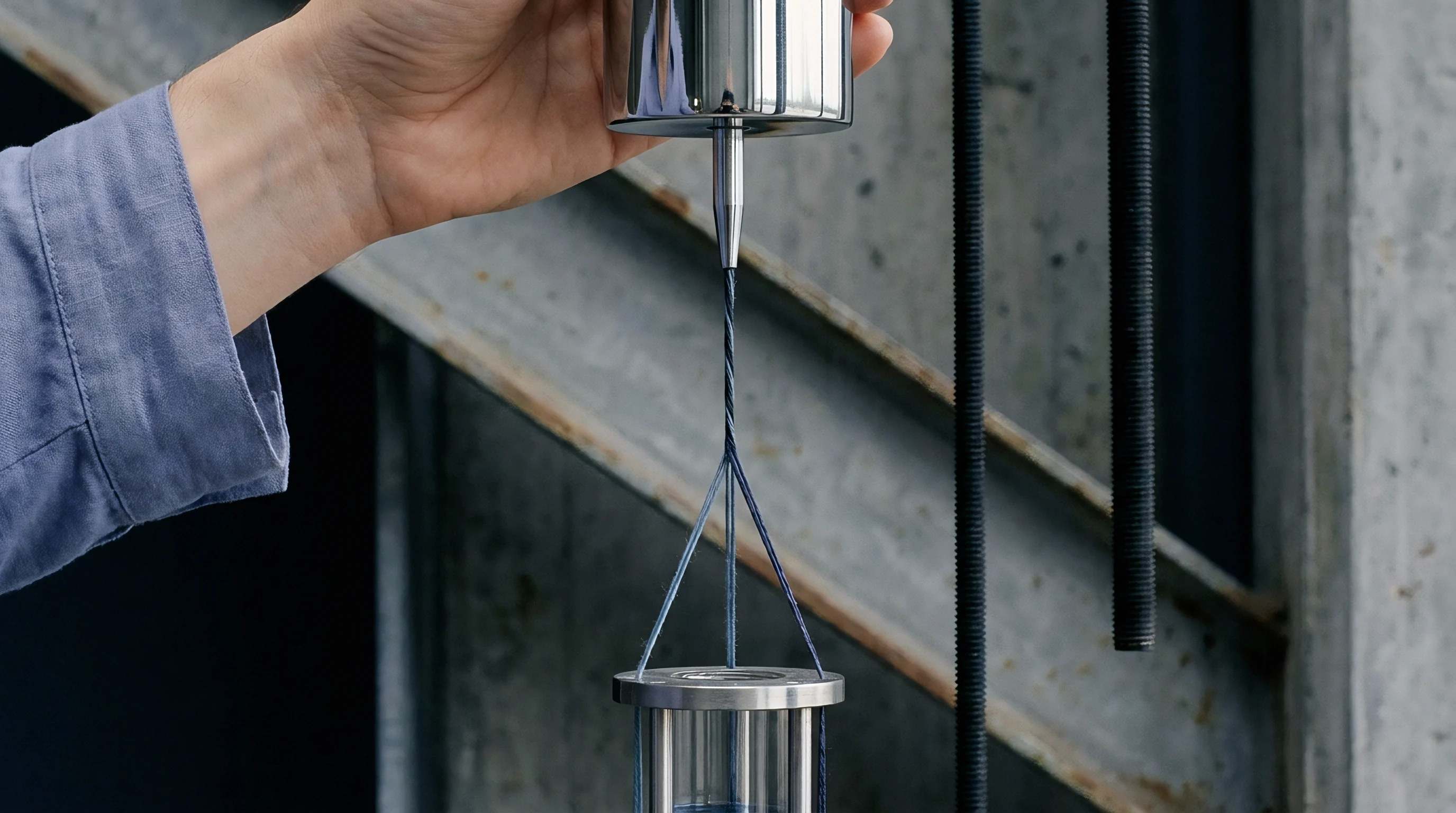
Elastic and Viscous Phases in Flax Fibers
Total deformation in a cellulosic yarn during shedding combines immediate elastic recovery, delayed viscoelastic recovery, and permanent plastic set. Mechanical models represent this behavior with parallel combinations of elastic springs and viscous dashpots. The spring component captures the high axial stiffness of crystalline cellulose regions ~ which have an intrinsic Young’s modulus of roughly 100 to 135 gigapascals ~ while the viscous dashpot models the flow of the inter-fibrillar matrix, whose time-dependent shear depends on temperature and moisture regain.
When the loom shed opens rapidly, instantaneous stress on the warp sheet transfers straight to the elastic spring element. During the short dwell at maximum opening, stress redistributes into the viscous dashpot, driving continuous stress relaxation: internal tension falls while overall yarn length stays fixed by loom geometry. As the shed closes, elastic energy releases immediately, but viscous extension recovers far more slowly.
If the shedding cam’s dwell time is shorter than the relaxation time of the pectin matrix, the yarn fails to recover its original length before the next cycle starts. Over thousands of picks, this unrecovered strain permanently distorts the yarn geometry.
Crystalline Microfibril Realignment under Load
The internal arrangement of cellulose microfibrils in the secondary cell wall sets the ultimate limit of viscoelastic extension. In raw flax fibers, microfibrils spiral around the cell axis at angles between 6 degrees and 11 degrees. Dynamic shedding tension forces these spiraled domain chains to rotate toward the longitudinal fiber axis.
This reorientation narrows the microfibrillar angle, temporarily raising axial tenacity while reducing the yarn’s capacity to absorb strain during later impact loads.
This reorientation alters the yarn’s mechanical cross-section. As microfibrils align with the tensile axis, Poisson contraction reduces lateral cohesion between elementary fibers, shrinking yarn diameter by 3 to 7 percent at full shed extension. This radial shrinkage breaks down interfacial friction between short staple fibers in the core, leaving low-twist yarns vulnerable to local drafting faults.
Reduced lateral support also promotes micro-slubs and fuzzing as the yarn passes through heddle eyes and reed dents.
Continuous Tension Degradation across Long Loom Runs
Running a loom continuously over multi-hour shifts causes cumulative creep damage in warp yarns. As permanent elongation builds up, the warp line between the back rest roller and cloth fell grows physically longer. This change drops baseline static warp tension.
Without compensation from an electronic let-off system with real-time load cell feedback, the loss of static tension distorts shed geometry, bringing on poor shed opening, mispicks, and insertion failures.
Electronic let-off mechanisms calculate beam speed adjustments from average tension readings taken across multiple loom cycles. Viscoelastic creep, however, creates a non-linear gap between beam rotation speed and actual warp length: unspooling rates calculated for rigid yarns underestimate the required beam advance when yarns show significant delayed elasticity. This divergence worsens in high-density weaves that demand tight reed setts and high shed lifts.
Matrix breakdown weakens outer fiber layers, causing localized tensile failure under peak beat-up loads.
How localized moisture variations across the width of the loom shed alter viscoelastic deformation rates in wet-spun yarns remains a key open question in creep dynamics.

Asymmetry
Looms set up for high-density weaves often use asymmetric shed geometry to balance clearance against beat-up resistance. Elevating the back rest roller or dropping the breast beam shifts the neutral warp line, creating unequal path lengths between upper and lower shed sheets during harness movement. The lower warp sheet stretches further to keep clear of the insertion element, while the upper sheet carries less mechanical stress.
This imbalance creates different tensile profiles across the two layers, driving distinct creep rates in top and bottom yarns during the same cycle.
These contrasting path lengths establish asymmetric stress fields inside individual yarns. The tighter bottom shed line undergoes rapid viscoelastic creep, microfibrillar alignment, and radial strain. The slack top line is prone to sagging, yarn entanglement, and poor clearance during insertion.
This tension difference redistributes warp crimp unevenly at the cloth fell, leaving structural imbalances in the greige fabric that persist through wet processing and finishing.
The top shed line takes lower mechanical stress during harness frame motion, while the bottom shed carries the heavier load.

Differential Path Lengths and Line Tension
Warp line tension in asymmetric shedding depends on the geometric relationships between harness position, heddle eye location, back rest height, and fell position. As the shed opens, the bottom warp sheet traces a longer geometric arc from fell to back roller than the top sheet, forcing the bottom yarns to absorb most of the shed lift displacement.
Depending on back rest offset, the instantaneous stress ratio between upper and lower warp lines ranges from 1.4:1 to 2.2:1. At a 1.8:1 ratio, bottom shed yarns exceed their proportional elastic limit on every pick. While this higher tension maintains clean clearance for rapier heads and prevents filling stops, it exposes bottom yarns to rapid dynamic fatigue.
Top shed yarns absorb less mechanical work, causing uneven crimp uptake when the two sheets interlace with the filling during beat-up.
| Back Rest Offset (mm) | Shed Opening Lift (mm) | Top Sheet Tension (cN/tex) | Bottom Sheet Tension (cN/tex) | Viscoelastic Creep Rate (%/hr) | Warp Breakage Rate (per 100k picks) |
|---|---|---|---|---|---|
| 0 (Symmetrical) | 62 | 7.2 | 7.2 | 0.14 | 1.2 |
| +15 (Asymmetric) | 62 | 5.1 | 9.8 | 0.31 | 2.8 |
| +25 (High Asymmetric) | 64 | 4.2 | 12.4 | 0.58 | 5.4 |
| +35 (Extreme Asymmetric) | 68 | 3.6 | 14.9 | 0.92 | 11.1 |
Heddle Motion Curves and Kinematic Peaks
Modern electronic dobby and jacquard mechanisms execute optimized cam profiles or servo motion curves to control shedding. While standard sinusoidal profiles distribute acceleration evenly across the cycle ~ minimizing peak inertial forces on harness frames and yarns ~ asymmetric shedding requires modified kinematic curves to handle the shifted neutral line. The resulting skewed acceleration profiles produce sharp tension spikes during shed transition.
As harness frames drop from top peak to bottom position, rapid acceleration subjects the yarn to peak dynamic loads within a narrow 15 to 25 millisecond window. These spikes exceed the steady-state viscoelastic creep threshold of wet-spun flax yarns. Loading happens too quickly for viscous flow to occur, concentrating mechanical energy into micro-cracks inside the pectin binder.
Repeated exposure to these spikes degrades the yarn structural integrity well before it reaches the fell line.
- Micro-Fibrillar Shear Banding occurs when differential strain rates between adjacent yarn layers exceed the plastic deformation threshold of the middle lamella, causing local lateral slippage along elementary fiber boundaries.
- Asymmetric Warp Line Sag stems from inadequate tension on the upper warp sheet, letting individual ends drop into the insertion path and causing filling stops or broken pick faults.
- Unequal Reed Friction Abrasion develops as the tight bottom warp sheet presses against the lower section of the reed dent under high downward force during harness movement.
- Crimp Differential Imbalance shows up as structural variations in finished fabric weight and density, caused by unequal warp path consumption during beat-up at the fell.
Because asymmetric harness motion interacts directly with warp line geometry, shed timing should be set according to warp yarn stiffness rather than default symmetric settings.
Hysteresis
Cyclic mechanical loading during shedding generates tension-elongation hysteresis loops in flax yarns. Internal friction dissipates energy as heat within the viscoelastic pectin matrix during each load-unload sequence. The area enclosed by the hysteresis loop measures mechanical energy absorbed per cycle, tracking irreversible damage to the fiber matrix.
Over tens of thousands of loom revolutions, this energy loss degrades yarn integrity through dynamic fatigue.
The shape of the dynamic hysteresis loop changes continuously during weaving. Over the first few hundred shed cycles, plastic deformation and microfibrillar alignment produce a wide loop area. As the yarn work-hardens and viscoelastic creep exhausts short-term extension capacity, the loop narrows and steepens, indicating a higher dynamic modulus.
But this added stiffness reduces yarn compliance, leaving it vulnerable to brittle failure under severe beat-up forces.
How Does Peak Shed Line Stress Accelerate Microfibrillar Fatigue?
Peak tensile loads during asymmetric shed opening compress crystalline microfibrils into tight structural packing, elevating localized intra-chain friction. Rapid cycling between minimum static tension and peak shedding load gives internal stresses too little time to relax during the shed dwell. This kinetic bottleneck concentrates strain energy at cell-wall defects like knees, nodes, and slip planes.
These slip planes, created during fiber growth and scutching, act as focal points for stress during dynamic fatigue. At dynamic loads above 10 centinewtons per dtex and speeds of 500 cycles per minute, micro-cracks spread from slip planes into the middle lamella. Dynamic tenacity drops by around 14 percent after ten thousand load cycles at six cN per dtex.
Accumulating micro-cracks degrade yarn fatigue life, leading to sudden tensile breaks when the reed strikes during beat-up.
| Yarn Count (Nm) | Cyclic Frequency (Hz) | Peak Load (cN/tex) | Cycles to Failure (Mean) | Hysteresis Loss (mJ/m) | Dynamic Modulus Decay (%) |
|---|---|---|---|---|---|
| Nm 26 | 7.5 (450 ppm) | 8.0 | 142,000 | 4.2 | 8.5 |
| Nm 26 | 9.0 (540 ppm) | 10.5 | 86,000 | 6.8 | 14.2 |
| Nm 39 | 7.5 (450 ppm) | 8.0 | 115,000 | 3.9 | 11.0 |
| Nm 39 | 9.0 (540 ppm) | 10.5 | 62,000 | 6.1 | 18.7 |
| Nm 50 | 7.5 (450 ppm) | 8.0 | 78,000 | 3.1 | 15.4 |
| Nm 50 | 9.0 (540 ppm) | 10.5 | 34,000 | 5.4 | 24.6 |
Energy Dissipation Loops in Wet-Spun Yarns
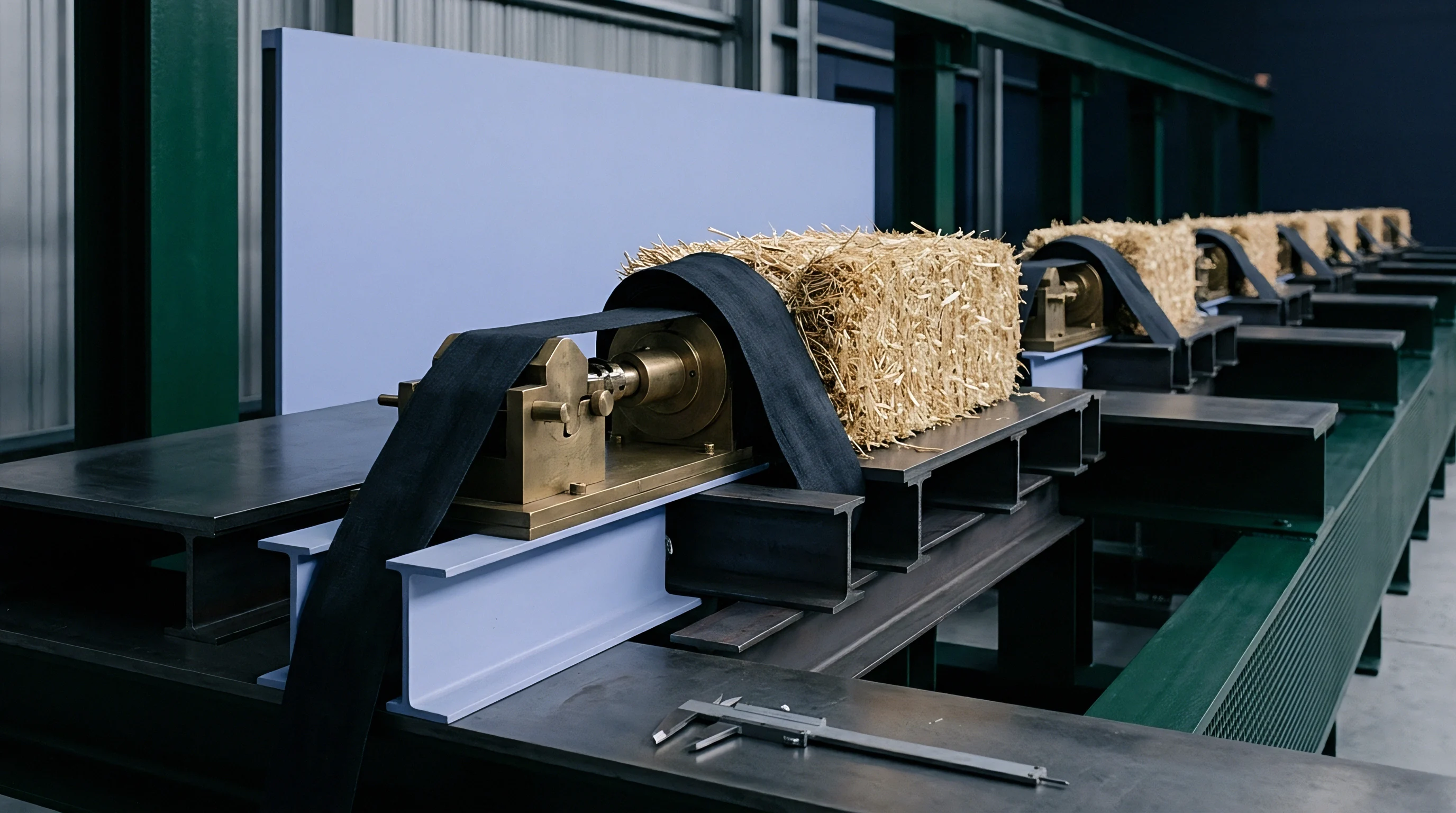
Quantifying hysteresis loss requires integrating the dynamic tension curve over the elongation path of a complete shedding cycle. Energy lost per cycle (expressed in millijoules per metre) correlates directly with pectin matrix breakdown. Higher weaving speeds increase the rate of energy dissipation per unit time, building up localized heat in dense warp setts.
Trapped moisture in wet-spun yarns alters this hysteresis behavior. Water acts as an internal lubricant, easing microfibrillar movement and limiting heat build-up. However, if shed relative humidity falls below 60 percent, rapid evaporation stiffens the pectin matrix, widening the hysteresis loop and accelerating micro-fractures.
Maintaining consistent humidity inside the shed controls energy losses and extends yarn fatigue life during long runs.
Warp yarn dynamic fatigue testing per ISO 13934 conditions dictates continuous tension monitoring to identify micro-damage accumulation prior to structural yarn failure.
Cyclic Stress Accumulation during Beat-Up
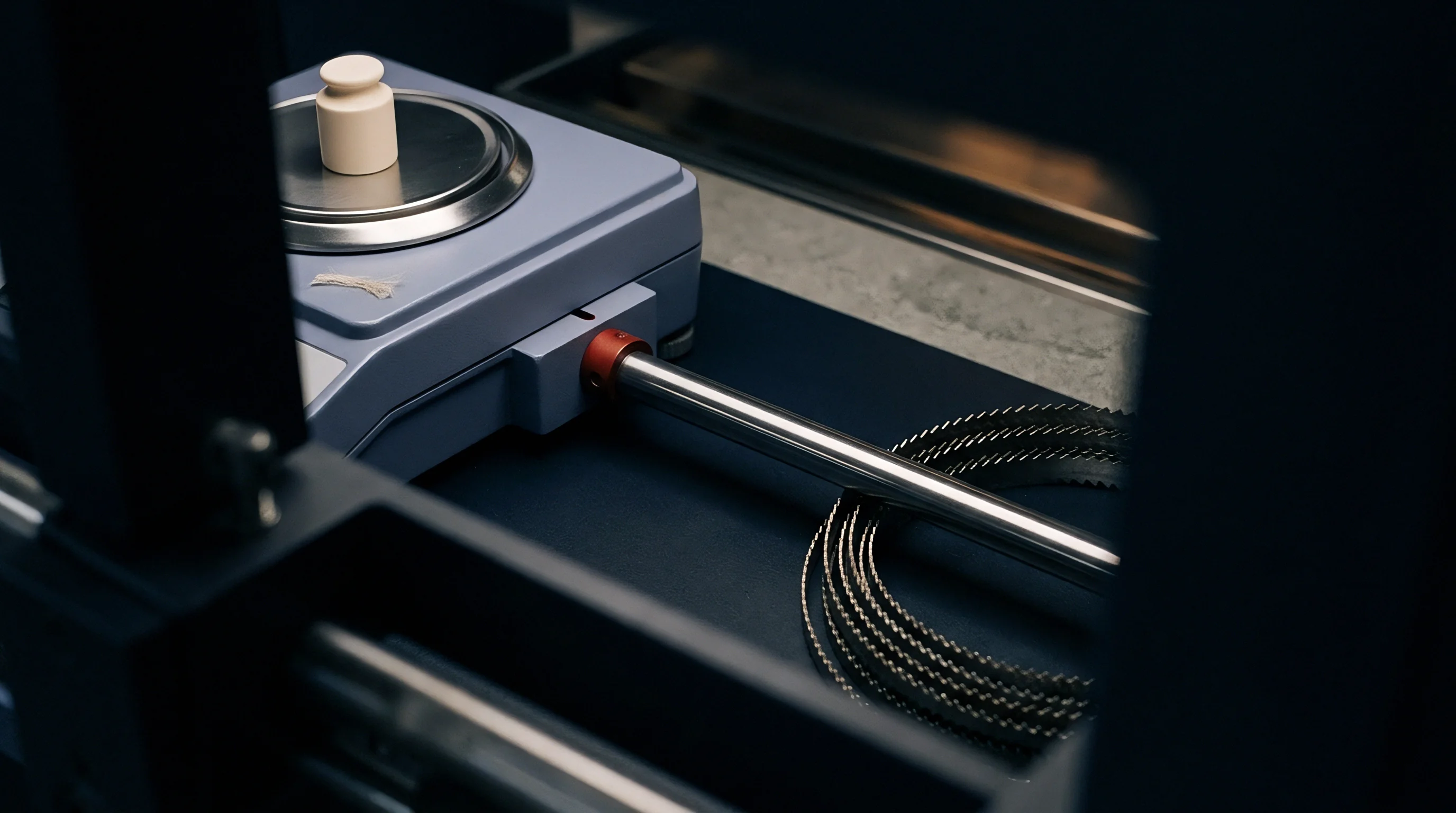
Beat-up delivers an impact load to warp yarns that are already under open-shed stress. When beat-up occurs before the shed finishes closing ~ known as early shedding ~ total mechanical stress reaches its peak. Dynamic stress spikes during early beat-up can exceed 16 centinewtons per dtex for 5 to 10 milliseconds.
This localized stress causes non-linear deformation at the fell. Constrained by dense reed wires, warp yarns undergo severe lateral compression alongside high axial tension. The resulting biaxial stress triggers longitudinal splitting along fiber boundaries, weakening the yarn.
Repeated beat-up loads under peak shedding tension account for over 70 percent of warp breaks near the fell line in dense linen weaves.
Failing to keep dynamic tension spikes below the viscoelastic yield point causes systemic warp breaks, high loom downtime, and permanent density variations across the bolt.
Reed
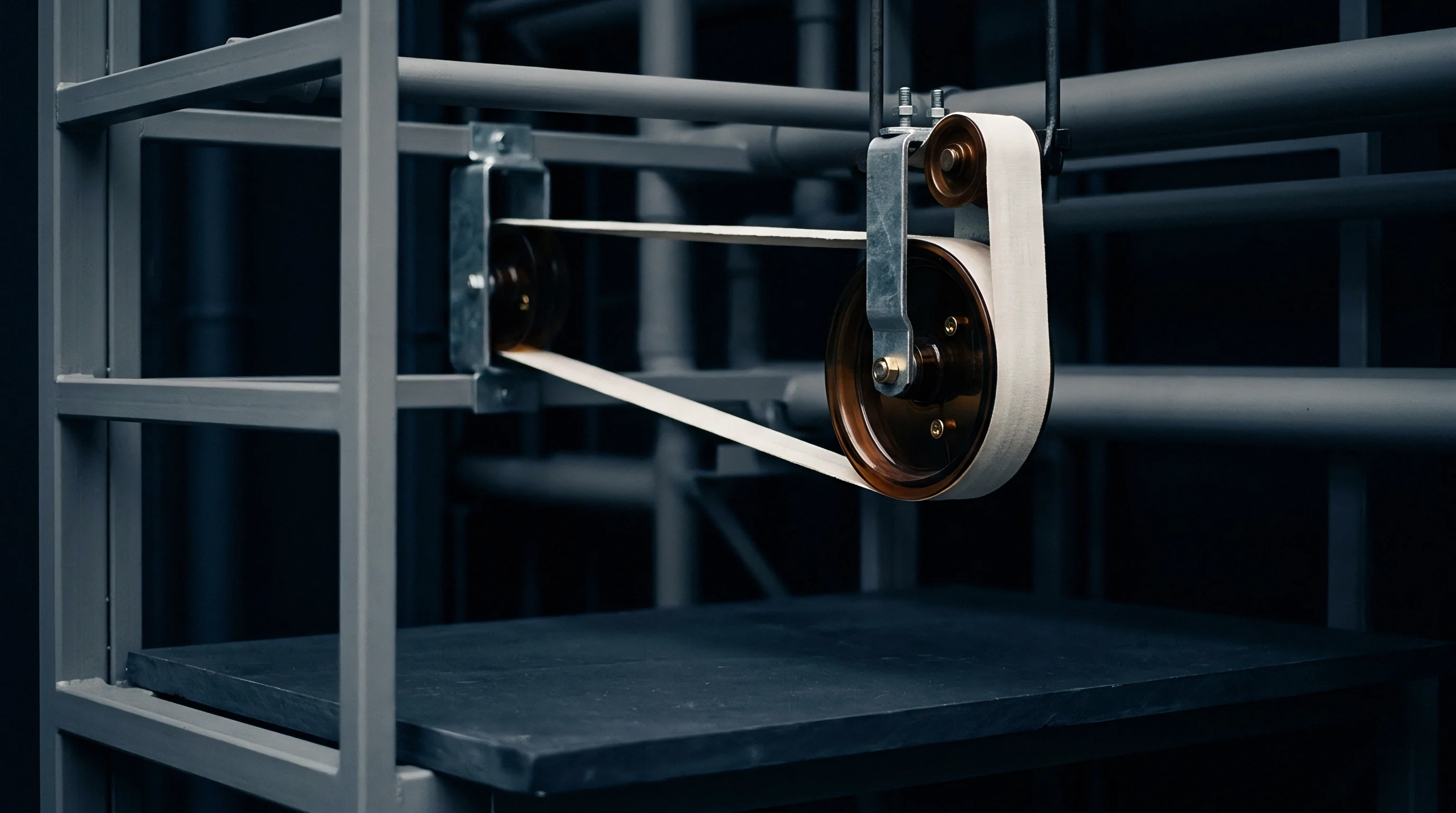
Contact between warp yarns, heddle eyes, and reed dents creates a high-friction environment where creep and dynamic fatigue turn into active wear. Because asymmetric shedding changes the entry and exit angles of top and bottom warp sheets through the reed, these contact angles shift dynamically with every harness cycle. The tight bottom sheet presses against lower dent wire edges, producing localized shear and frictional heat.
This contact abrades the surface of wet-spun flax yarns, shaving off micro-fibrils and generating fly. Accumulated fly inside heddle eyes and reed dents distorts thread spacing, tangles yarns, and increases warp drag. Higher friction raises the tension needed to open the shed, driving a feedback loop that accelerates dynamic fatigue across remaining ends.
Dwell timing governs shedding stress, while shed clearance dictates shuttle travel.
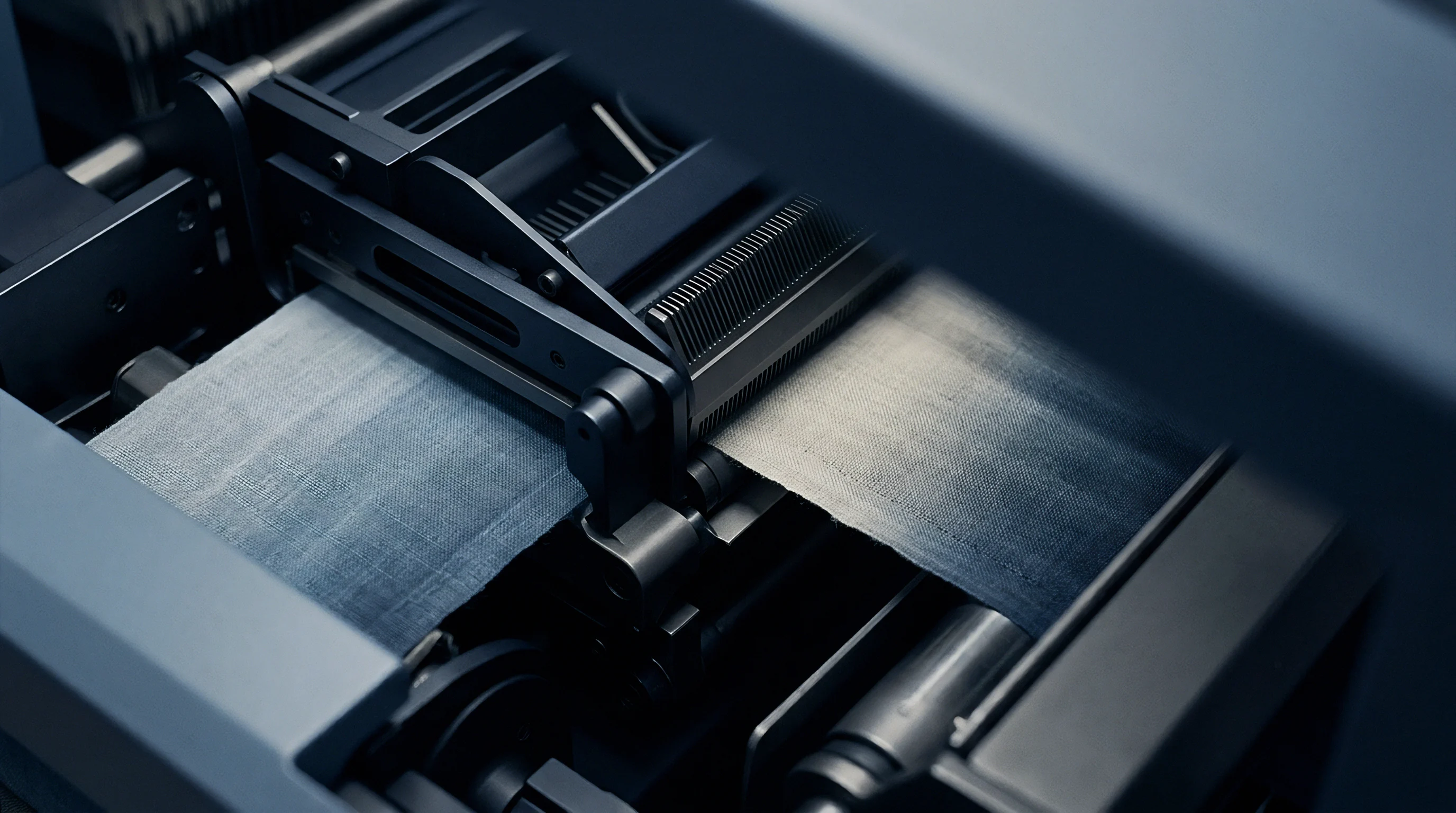
Stagger Timing and Beat-Up Friction
Staggered shedding moves adjacent harness frames at slightly offset intervals, lowering peak warp tension by spreading out end displacement. This offset prevents adjacent ends from clinging, which improves clearance. But staggering also lengthens the contact time between warp yarns and reed dents, increasing total abrasion per cycle.
Friction on a warp yarn passing through a reed dent follows modified Amontons’ law, accounting for viscoelastic contact deformation. As tension rises in the bottom shed line, the contact patch between the rounded yarn profile and the flat steel dent expands, producing a non-linear increase in drag. This friction restricts tension transfer along the warp line, creating local tension peaks between heddle eye and fell that can run up to 30 percent higher than static let-off settings indicate.
Dwell Angle Optimization for High-Density Weaves
The dwell angle defines how long harness frames stay stationary at maximum lift during insertion. Longer dwell angles create clear windows for high-speed rapiers or air jets, but subject warp yarns to prolonged creep at peak tension. Shortening the dwell angle reduces creep strain, but demands faster frame acceleration, raising kinematic tension spikes.
Optimizing the dwell angle requires balancing insertion clearance against yarn fatigue thresholds. For fine wet-spun linen, dwell angles between 90 degrees and 110 degrees give adequate insertion clearance while holding peak creep duration within safe limits. Setting dwell angles above 120 degrees accelerates plastic deformation in the bottom shed line, causing permanent yarn distortion, end breaks, and reed marks in dense weaves.
- Align back rest roller height to establish the minimum asymmetric shed geometry needed for clean insertion clearance.
- Adjust electronic harness drive timing to set an offset stagger of 5 to 8 crank degrees between adjacent frame groups.
- Check heddle eye vertical alignment at neutral shed position to eliminate uneven friction across top and bottom warp sheets.
- Set shedding cam dwell duration to the smallest angle that allows rapier head passage without yarn interference.
- Calibrate real-time let-off tension load cells using direct yarn tension sensors placed between back rest and harness frames.
Inter-dent friction coefficient increases non-linearly when relative humidity inside the loom shed drops below 58 percent during continuous weaving.
Shed inspections frequently trace mechanical abrasion back to heddle eye alignment issues, though mill technicians often blame poor yarn sizing for fuzzing and lint buildup.
Yield
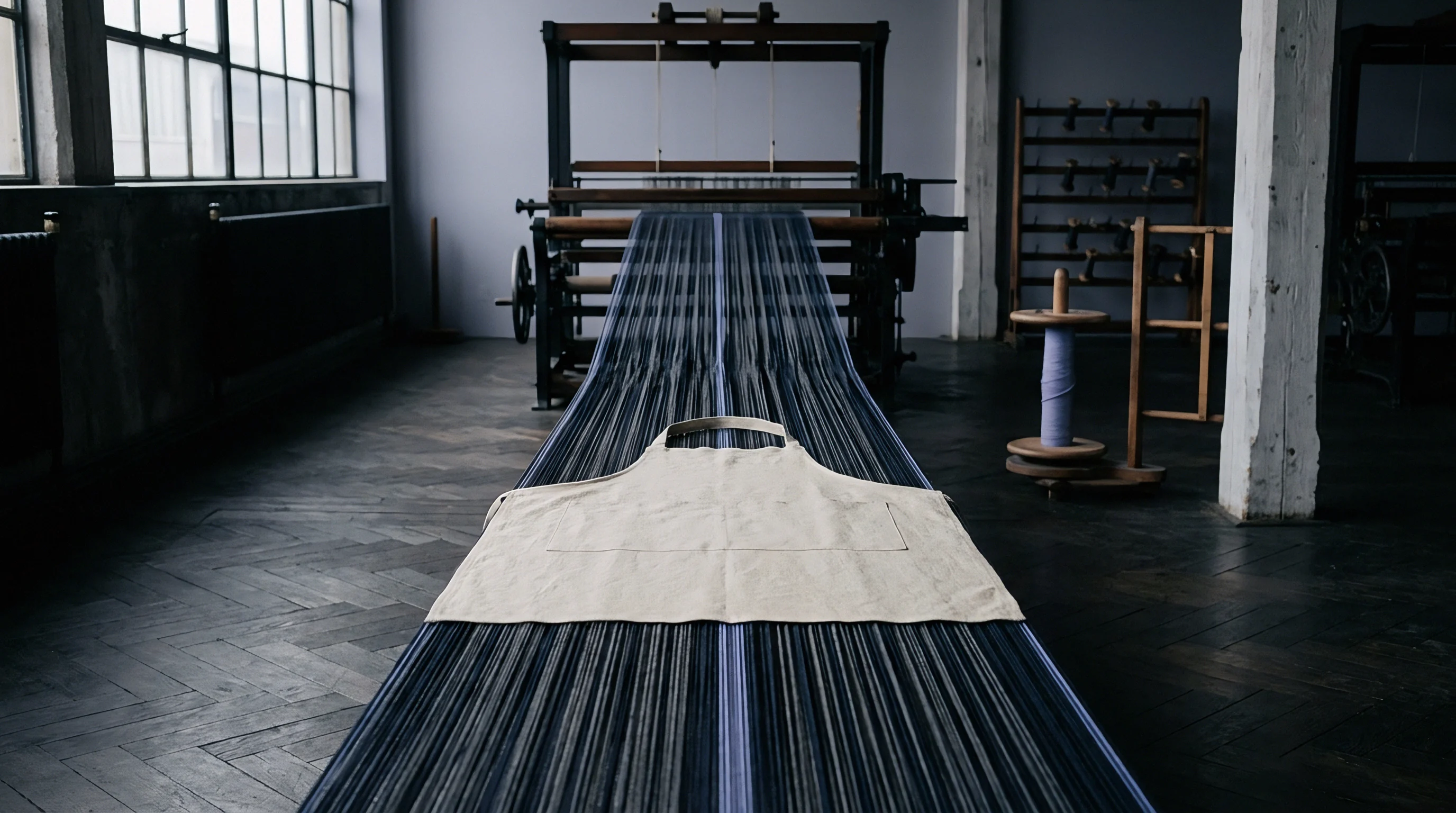
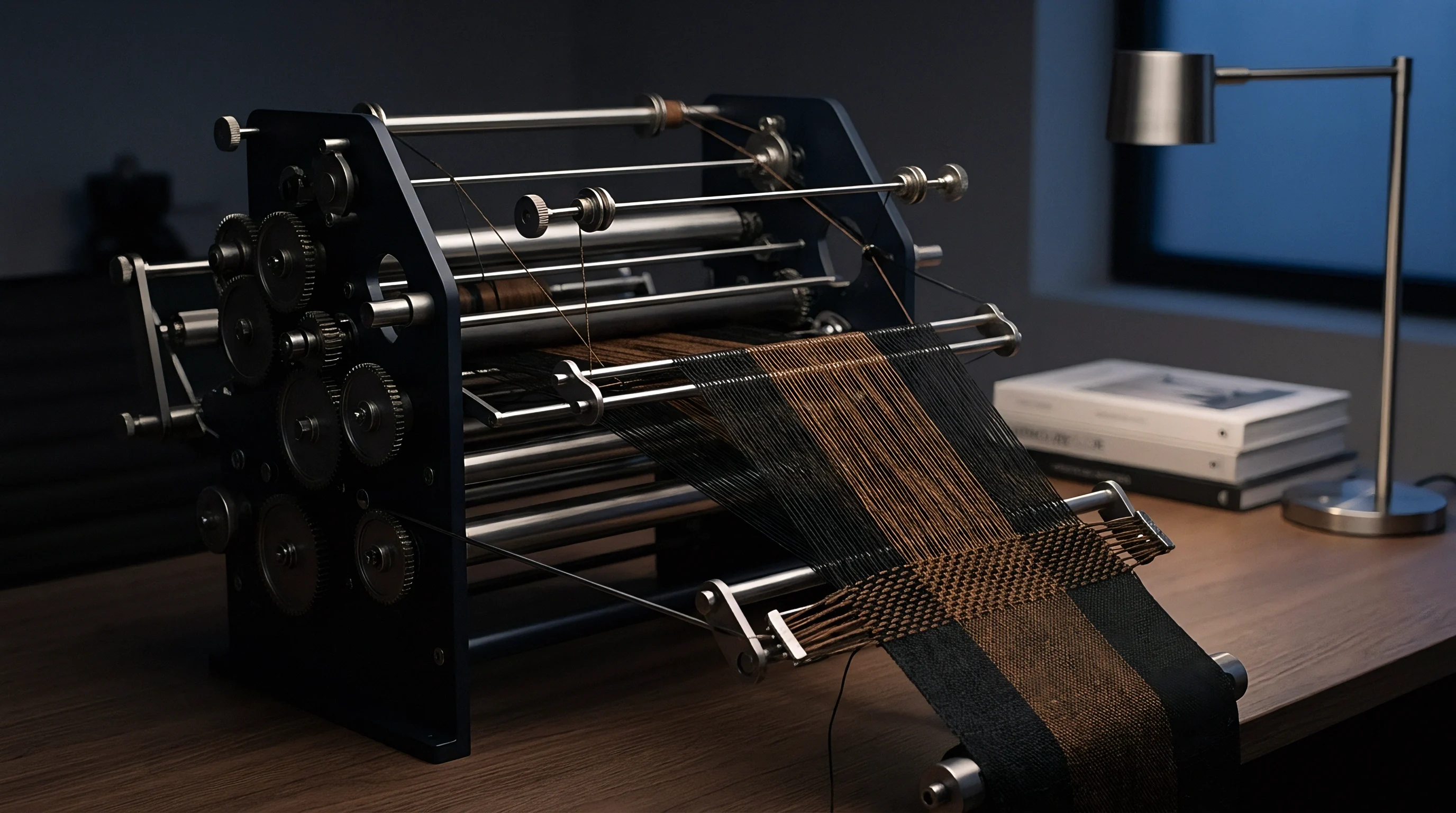
Mechanical stresses applied during asymmetric shedding leave lasting structural signatures in greige and finished linen. Differences in viscoelastic creep, plastic set, and internal strain between top and bottom warp sheets yield uneven crimp distribution across the fabric. When the cloth leaves the loom and tension releases, stored elastic strain recovers non-uniformly, driving dimensional instability and structural distortion.
Warp crimp imbalance causes uneven contraction during scouring, bleaching, and dyeing. Yarns exposed to higher shed tension carry lower residual elasticity and greater permanent stretch, absorbing less crimp during beat-up than slack yarns. This discrepancy leads to skewing, bow distortion, and widthwise GSM variations in finished goods, hurting cutting efficiency and commercial performance.
Greige skew alters finishing yield, and higher linear velocity increases stress rates.
Warp Crimp Divergence and Dimensional Instability
Total warp crimp content measures how the yarn winds through the woven matrix ~ specifically the percentage increase in yarn length relative to overall fabric length. Symmetric shedding distributes crimp equally between upper and lower sheets. In asymmetric shedding, the tight bottom sheet stays straight under load while the slack top sheet bends around filling picks, creating asymmetric crimp profiles across pattern repeats.
This crimp divergence introduces internal bending moments within the fabric structure. During wet finishing, as hydrogen bonds in the cellulosic matrix relax, the fabric tries to equalize these internal stresses. The resulting structural relaxation produces uneven shrinkage along both length and width axes.
Dimensional stability testing under ISO 5077 shows that fabrics woven under uncompensated asymmetric shed tension can exhibit shrinkage variations exceeding 4.5 percent between central and selvedge warp sections.
| Processing Stage | Warp Crimp Top Sheet (%) | Warp Crimp Bottom Sheet (%) | Fabric Density (picks/cm) | Residual Stress (N/cm) | Dimensional Shift (%) |
|---|---|---|---|---|---|
| On-Loom (Tensioned) | 1.8 | 0.6 | 22.0 | 14.5 | 0.0 |
| Off-Loom Greige (Relaxed) | 4.2 | 2.8 | 23.2 | 4.1 | 1.8 |
| Scoured & Bleached | 6.8 | 5.9 | 24.5 | 0.8 | 3.9 |
| Finished & Sanforized | 7.5 | 7.3 | 24.8 | 0.2 | 0.4 |
Physical Skew and Bowing in Finished Linen
Fabric skew occurs when filling picks run out of perpendicular alignment with warp ends, while bowing appears as an arc-like curvature of filling yarns across the fabric width. Asymmetric shedding drives both defects when tension variations spread unevenly across the harness width. Because harness frames flex at high speeds, central warp ends undergo greater deflection than selvedge ends, creating a parabolic tension profile.
This lateral tension gradient forces filling picks to curve forward in low-tension zones during beat-up, causing severe bowing. Attempts to pull picks back into square alignment during tentering introduce high residual shear stress. When finished rolls are unrolled and cut, these residual stresses release, twisting cut panels out of shape and rendering them unsuitable for high-spec apparel or home textiles.
- Verify Residual Warp Crimp Differential by dissecting 100-centimetre swatches per ISO 7211-3, ensuring variance between top and bottom warp sheets stays below 0.5 percent crimp content.
- Inspect Fabric Skew and Bowing Angles under ISO 3954 methods, rejecting lots with filling deviation greater than 1.5 percent of total usable fabric width.
- Measure Widthwise Mass Uniformity using GSM cut samples across five positions from selvedge to selvedge, enforcing a maximum tolerance spread of 3.0 grams per square metre.
- Audit Dimensional Change After Wet Relaxation according to ISO 5077 procedures, confirming post-wash relaxation shrinkage stays within contractual limits of 2.0 percent.
Fabric structural evaluation under ISO 7211 procedures dictates complete physical relaxation of swatches for 24 hours under standard laboratory atmosphere prior to crimp dissection.
Standard quality clauses should include strict caps on allowable crimp differential to prevent finishing mills from rejecting asymmetric greige bolts affected by severe skew.
Ledger
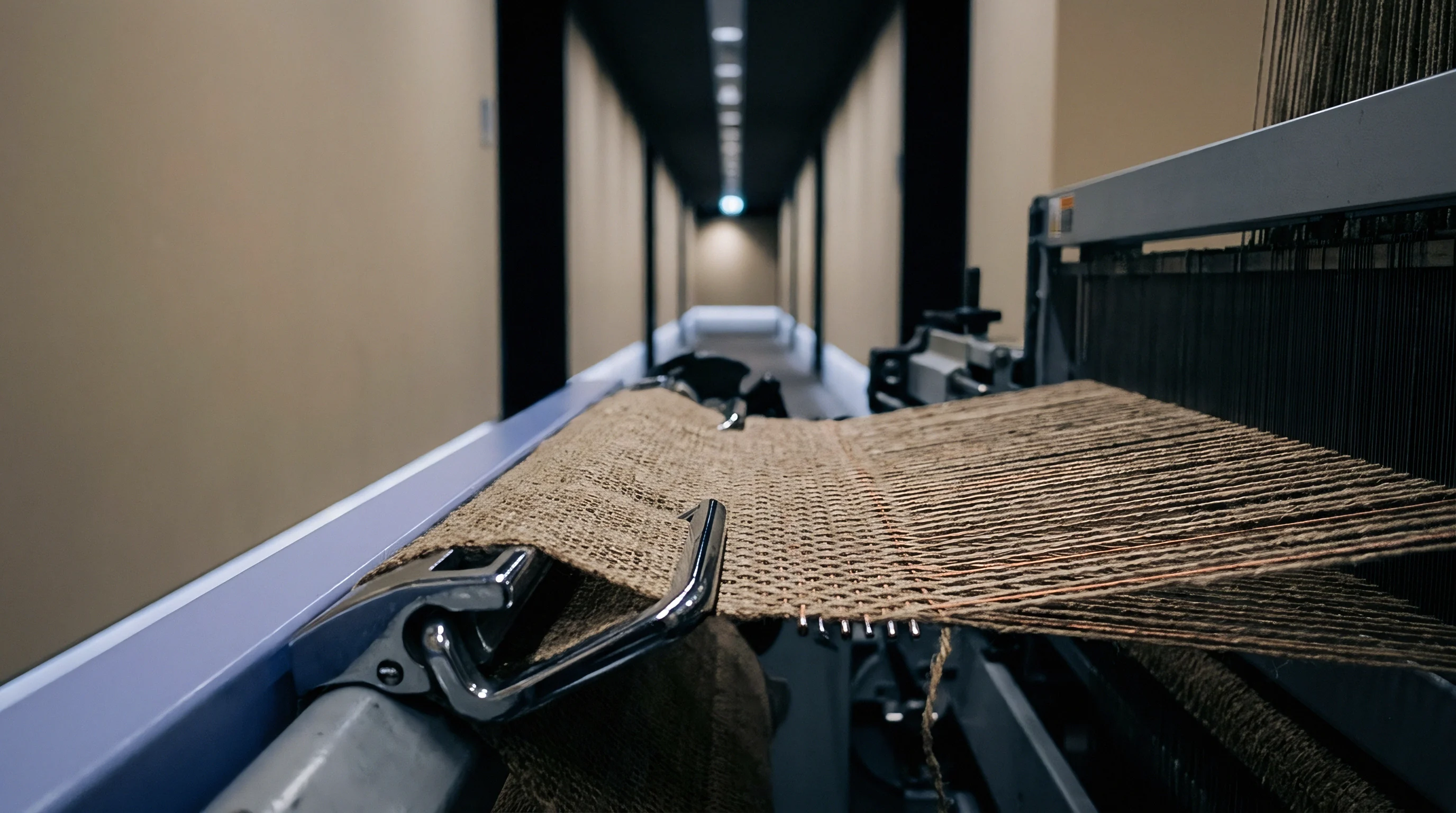
The economics of viscoelastic creep and dynamic fatigue during asymmetric shedding turn on loom efficiency, yield loss, and unit cost per linear metre. While high-tension asymmetric shedding improves shed clearance and cuts filling stops, it increases warp breaks through dynamic fatigue. Balancing loom running speed, warp stop rates, and fabric specifications dictates landed costs for technical and high-end linen.
Every warp break stops the loom, requiring an operator to mend the end, locate the pick line, and restart the machine. In high-density linen weaving, an end break averages 1.2 to 2.5 minutes of downtime. If severe asymmetric tension drives warp break rates from 1.5 to 8.0 stops per 100,000 picks, shed efficiency drops from 88 percent to under 72 percent, sharply inflating fixed overhead per order.
Pick count drives loom cost, and yarn breaks stop production.
Mill Efficiency Loss from Tension-Induced Stops
Quantifying the cost of dynamic warp fatigue means turning stop frequencies and efficiency losses into financial metrics. Operational costs ~ power, labor, shed overhead, and capital depreciation ~ are calculated as a fixed hourly rate per machine.
When warp breaks double from dynamic fatigue, overhead costs mount quickly. To meet delivery dates, management must either slow looms to reduce peak dynamic strain or add warp-tying labor to speed up repairs. Cutting loom speed from 520 to 440 picks per minute eliminates tension spikes, but it reduces shift output by 15.3 percent, directly raising base weaving costs per metre.
| Loom Speed (ppm) | Warp Stop Rate (per 100k picks) | Shed Efficiency (%) | Shift Output (metres/8hr) | Loom-Hour Cost ($/hr) | Base Metre Cost ($/m) |
|---|---|---|---|---|---|
| 520 | 1.8 | 89.5 | 116.3 | 28.50 | 1.96 |
| 520 | 5.4 | 78.2 | 101.6 | 28.50 | 2.24 |
| 520 | 11.2 | 65.4 | 85.0 | 28.50 | 2.68 |
| 440 | 1.2 | 92.1 | 101.3 | 28.50 | 2.25 |
| 440 | 3.1 | 85.6 | 94.1 | 28.50 | 2.42 |
Metre-Cost Impact of Reduced Shed Velocity
Calculating finished metre costs requires accounting for yarn loss, greige downgrades, and re-weaving allowances caused by fatigue defects. Uncompensated creep causes width variations along the roll, producing trim waste at the selvedge. Sections with frequent stop marks fail four-point visual inspection under ASTM D5430, forcing mills to downgrade rolls to second quality at a 30 to 50 percent discount.
Tension logging across the full width of the harness verifies compliance with peak mechanical limits before production warps are authorized. Writing continuous tension monitoring into purchase contracts shifts financial liability for creep damage to the mill if looms operate outside agreed parameters. Clear technical bounds protect buyers from inconsistent greige while keeping the weaving shed within sustainable limits.
- Maximum Dynamic Tension Limits must specify absolute peak shedding loads per yarn count, capped at 10.0 centinewtons per dtex for wet-spun linen.
- Allowed Warp Breakage Rates must enforce an upper threshold of no more than 3.0 stops per 100,000 picks before efficiency penalty clauses take effect.
- Shed Asymmetry Geometry Bounds must restrict back rest vertical offset to a maximum of 20 millimetres unless pre-approved by technical draughtsmen.
- Quality Grading Concession Scale must establish price reduction percentages linked directly to ASTM D5430 four-point penalty scores resulting from warp stop marks.
Landed cost calculations must weigh the higher unit price of slower, lower-tension weaving against the secondary processing costs incurred when finishing unevenly creased greige.