Nonlinear Bundle Linear Density Scaling Effects on Flax Drafting Wave Dynamics
Coarse flax bundles widen drafting waves by lifting roller cots and escaping pin fields, multiplying mass variance and driving severe yarn spinning breaks.


Wave
Bundle linear density across a bast sliver can fluctuate across orders of magnitude, ranging from twenty tex in poorly divided raw strands down to zero point two tex in thoroughly refined commercial roving. Once these multi-cellular structures enter an attenuation zone, mechanical coupling between overlapping elements generates severe mass oscillations along the drafting direction. These periodic fluctuations in linear density ~ drafting waves ~ govern downstream count variation, breaking force distributions, and weaving efficiency.
While synthetic or cotton slivers offer uniform cylindrical fibres with narrow length distributions, bast fibres consist of branched groupings of ultimate cells cemented by pectinaceous middle lamellae, creating an irregular cross-sectional profile that resists affine displacement during drawing.
The drafting zone relies on the velocity transition point where fibres accelerate from the surface speed of the back rollers to that of the front rollers. In an idealized strand of single-cell fibres of identical length, this transition occurs along a stationary boundary line. In a flax bundle matrix, however, the physical dimensions of each passing entity dictate its specific contact area, shifting the ratio of kinetic to static friction against adjacent strands.
As the linear density of individual bundles increases, the normal forces exerted by drafting pins or nip rollers distribute unevenly across the sliver cross section. Coarse bundles shield neighbouring fine bundles from mechanical control, leaving finer groupings to float freely within the inter-roller span.
A sliver bundle linear density shift from zero point four tex to one point eight tex at a draft ratio of twelve increases drafting wave mass variance by two hundred and forty percent under standard atmospheric conditioning.
Floating elements surge forward prematurely, accelerating before their leading tips reach the front roller nip because they are dragged along by the viscous pull of adjacent fast-moving strands. This premature acceleration empties mass from the drafting zone, leaving an instantaneous thin spot. Longer bundles then drag subsequent material forward in a concentrated surge, producing an immediate thick spot behind it.
The cyclical repetition of this depletion and accumulation mechanism forms the drafting wave, whose dominant wavelength correlates directly with effective staple length and bundle coarseness distribution.
Attenuation behaviour depends heavily on how bundle bulk scales through consecutive drawing passages, governed by several distinct physical mechanisms:
- Bundle Decortication Splitting reduces the effective mass per unit length across consecutive passes, shifting the inter-fibre frictional surface area ratio nonlinearly.
- Pectin Middle Lamella Shear yields under localized tensile strain, causing abrupt velocity jumps among adjacent cellular filaments.
- Transverse Compressive Collapse flattens coarse polygonal bundles within the nip, distorting the local draft velocity profile across the roller contact line.
- Trailing Fibril Entanglement snags unextended floating fibres, dragging whole bundles forward ahead of the calculated kinematic acceleration point.
Heavy slivers strongly resist attenuation. When incoming slivers exceed thirty kilotex in industrial gill drawing, the spatial volume occupied by pectin-rich bundle joints prevents uniform pin penetration. Front roller load cells register sharp, non-Gaussian force spikes rather than the smooth harmonic profiles observed in combed wool processing.
As bundle linear density scales upward, the critical velocity transition shifts upstream toward the feed roll, shortening the effective free drafting distance and compressing the drafting wave wavelength while driving its amplitude higher.
Coarse bundle dimensions ultimately govern sliver cohesion across the drafting field.
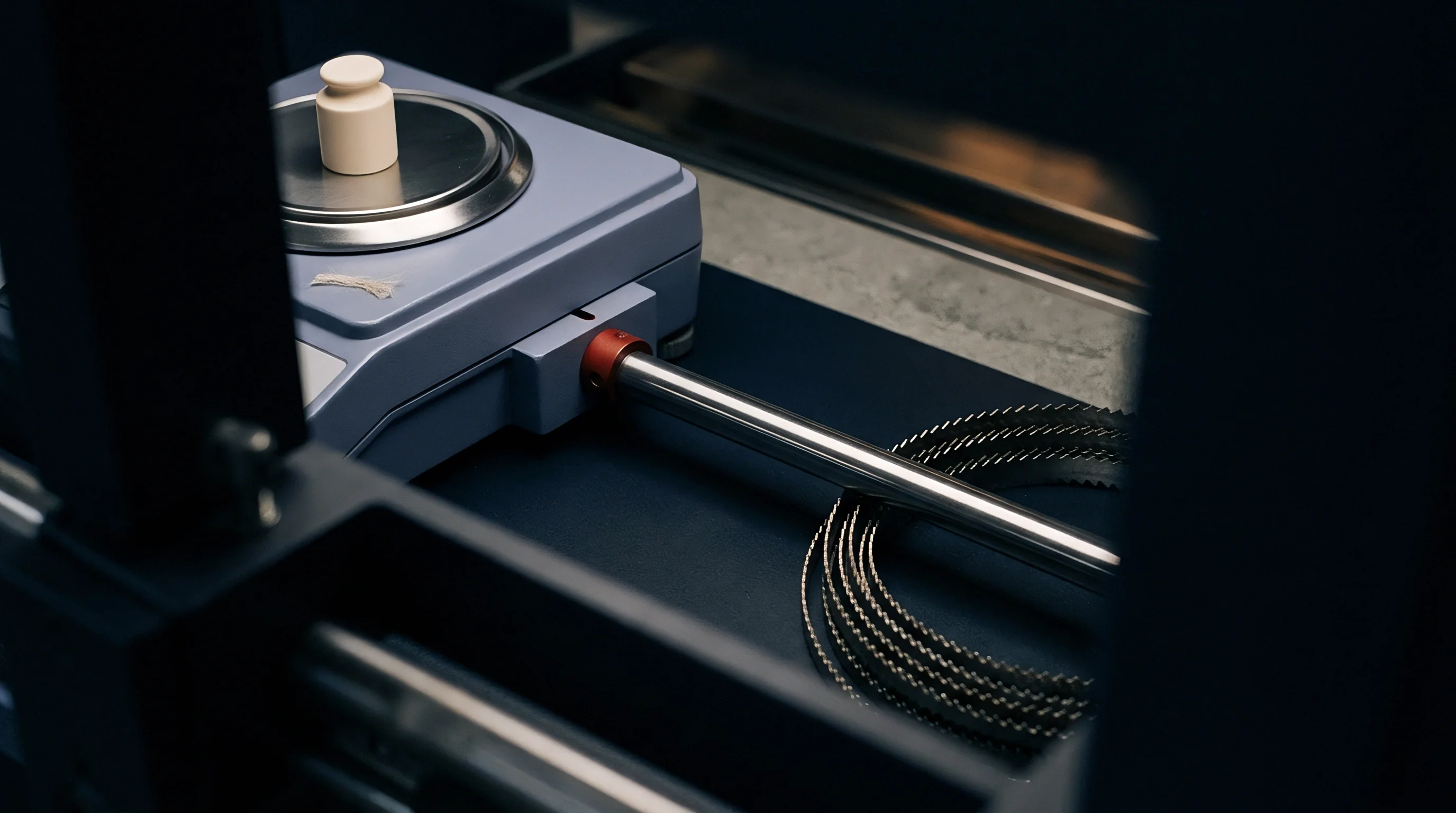

Nip
Clamping surfaces must arrest trailing fibres while delivering accelerated fibres without slip. Roller loading mechanisms in flax processing utilize polyurethane or nitrile elastomer cots operating against fluted steel bottom rollers. Because flax bundles possess high bending moduli and non-circular transverse geometry, localized point pressures at the contact interface vary widely across the roller face.
A thick bundle passing through the line of contact lifts the flexible cot off adjacent smaller bundles, creating localized voids where clamping pressure plummets to zero. Finer bundles caught in these pressure voids travel through the drawing field entirely uncontrolled by either back or front rollers.

What Clamping Pressure Suppresses Floating Bundles?
Contact mechanics at the roller interface dictate the boundary conditions under which floating fibres accelerate. For an elastomer cot hardness between eighty-two and eighty-eight Shore A, contact widths vary from six to nine millimetres under working pneumatic loads of sixty to one hundred decanewtons per centimetre of roller face. If bundle linear density displays a high coefficient of variation, the effective gripping force per fibre drops precipitously for any entity whose transverse diameter measures less than thirty percent of the local bundle mean.
This pressure deficit expands the zone of uncontrolled floating movement, multiplying drafting wave amplitude.
In water-retted Courtrai line flax, bundle diameters remain relatively uniform along the stem axis, maintaining an even footprint along the cot. In dew-retted or decorticated green flax, bundle coarseness varies by factors of four to six over axial lengths of ten centimetres. The resulting mechanical bridging across the roller nip destabilizes the velocity boundary layer.
| Bundle Linear Density Class | Mean Bundle Diameter | Nip Loading | Footprint Width | Pressure Void Fraction | Slippage Index |
|---|---|---|---|---|---|
| Fine (0.2 to 0.5 tex) | 38 micrometres | 80 daN/cm | 7.2 mm | 0.04 | 1.12 |
| Medium (0.6 to 1.4 tex) | 74 micrometres | 80 daN/cm | 7.5 mm | 0.12 | 1.48 |
| Coarse (1.5 to 3.2 tex) | 145 micrometres | 80 daN/cm | 8.4 mm | 0.31 | 2.84 |
| Industrial Line (3.5 to 6.0 tex) | 220 micrometres | 80 daN/cm | 9.1 mm | 0.52 | 4.65 |
To verify the mechanical integrity of clamping across the working width, technical operators deploy a sequential verification routine at every frame overhaul:
- Position carbon pressure paper across the full working length of the steel fluted roller without introducing twist.
- Lower the top elastomer cot under zero pneumatic pressure, zeroing the mechanical dial indicators at both bearing ends.
- Engage operating line pressure to eighty decanewtons per centimetre for thirty seconds, releasing the load cleanly without lateral rotation.
- Measure the impressed footprint width at five-millimetre increments using an optical reticle to confirm contact band symmetry within zero point two millimetres.
Uncontrolled bundle slippage at the gripping line injects severe downstream yarn irregularity, causing ring-frame spinning breaks, defective yarn packages, and fabric reject claims that penalize overall lot revenue by up to eighteen percent.
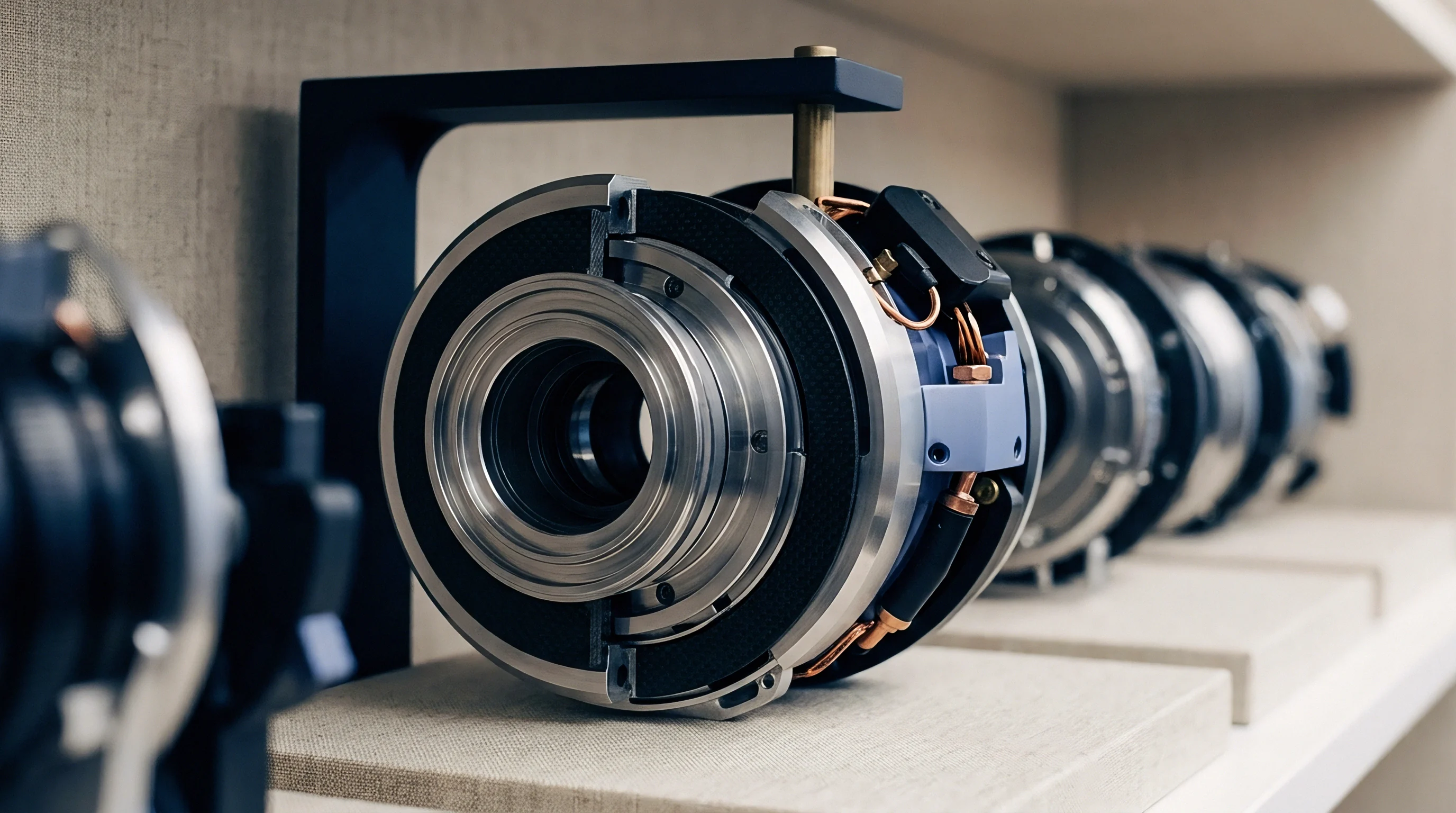
Pin
Faller bars in bast drafting machinery insert arrays of tempered steel needles directly into the travelling fibrous ribbon. These pins impose directional resistance against premature acceleration, creating an artificial frictional field that holds floating fibres back at the speed of the feeding carriage. The spacing, diameter, and inclination of these pins govern how effectively the gill bed can restrain irregular flax structures.
When bundles retain residual gummy substances, the effective penetration resistance increases nonlinearly with incoming sliver mass, causing mechanical deflection of the needle points.
Needle penetration depth defines the actual boundary of frictional control. If the incoming flax sliver displays an elevated bundle linear density, the dense core of the strand prevents faller needles from entering the matrix entirely. Instead of piercing the material to establish individual bundle restraint, the pin field compresses the sliver bulk downward against the faller bed.
Floating bundles in the upper strata of the ribbon escape needle interaction completely. They draft forward under uncontrolled boundary drag, inducing a high-amplitude periodic wave whose base frequency matches the pitch of the faller bar advance.
Inter-fibre shear resistance during drawing scales with the square of the bundle diameter rather than following a proportional geometric increment.
The chemical retting history of the bast stock establishes the basal coefficient of inter-bundle friction. Over-retted European flax yields soft, thoroughly separated bundles that enter needle channels readily, whereas under-retted Baltic or Chinese dew-retted material retains stiff pectic bridges that resist pin penetration. The drafting force fluctuates violently when unretted woody fragments or shives arrive at the pin interface, bending the faller pins and creating permanent voids in the controlling field.
Industrial drawing configurations require rigorous management of pin field parameters to suppress drafting wave propagation across coarse strands:
- Pin Density Gradients must match the progressive reduction in strand cross section, shifting from two pins per centimetre in breaker heads to eight pins per centimetre at finishing.
- Needle Forward Inclination angles set at fifteen degrees counteract the vertical lifting component induced by heavy bast bundles during high-draft attenuation.
- Faller Drop Frequency timed between eight hundred and twelve hundred drops per minute maintains continuous geometric overlap between retreating and advancing needle rows.
- Inter-Bar Backlash Clearances adjusted below zero point four millimetres eliminate hunting cycles that introduce artificial harmonic waves into the sliver.
Higher delivery speeds do not smooth drafting wave irregularities through centrifugal bundle alignment; doubling front roller velocity instead shortens the available relaxation window for pectin shear, amplifying the mass variation of floating bundles threefold.

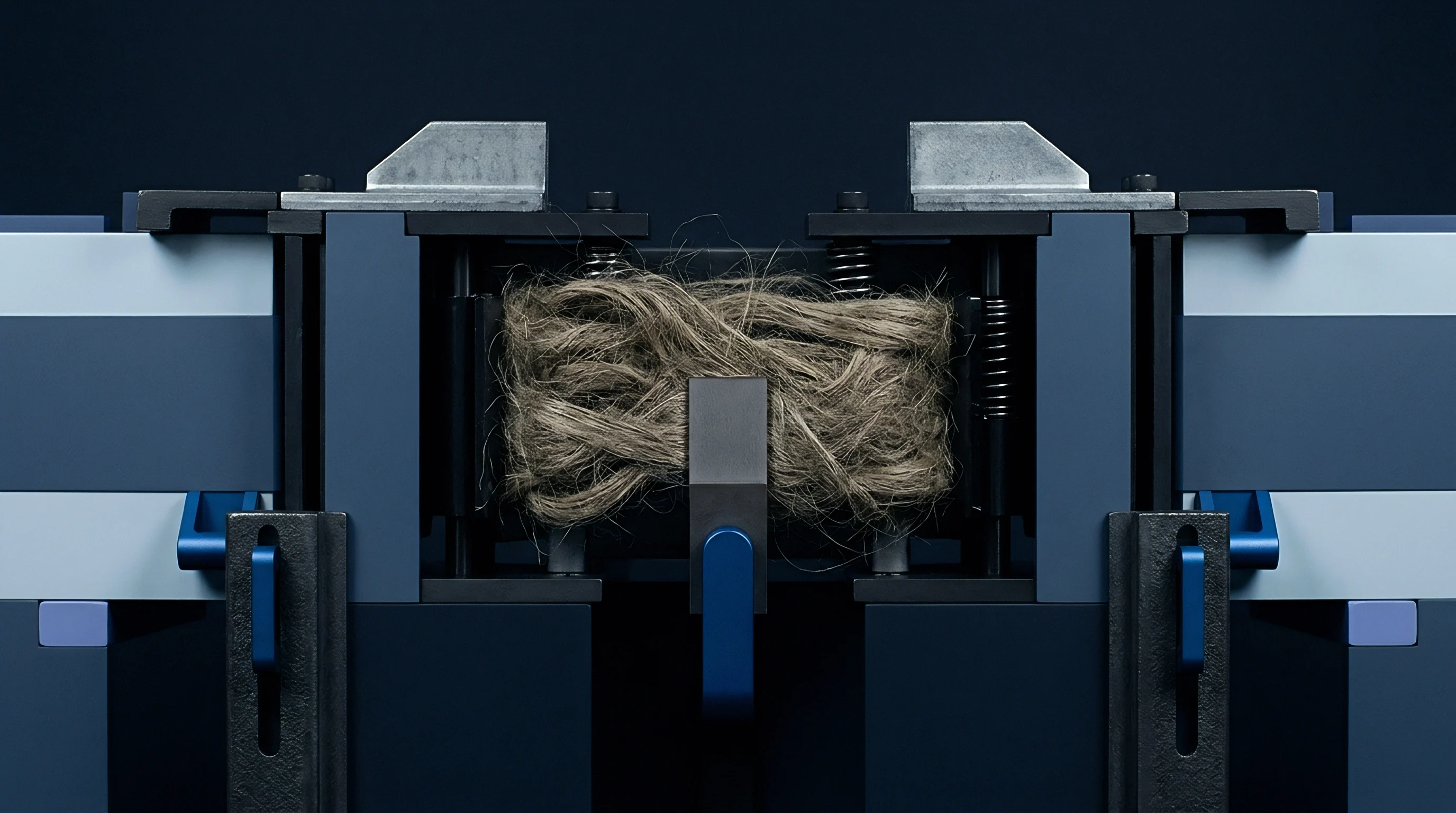
Trace
Measurement of mass variation in bast slivers and rovings requires capacitance-based mass sensors paired with mechanical cut-length gravimetric testing. An evenness tester pulls the strand through a high-frequency condenser zone, recording fluctuations in dielectric constant proportional to local bundle mass. The output signal, processed through Fourier transformation, produces an amplitude spectrogram where drafting waves appear as distinct spectral peaks across specific spatial wavelengths.

Whose Spectrogram Signatures Confirm Boundary Slippage?
Spectrogram analysis separates drafting waves from mechanical machine defects. Mechanical defects originating from eccentricity in drafting rollers, worn gears, or loose drive belts appear as narrow, razor-sharp peaks at wavelengths exactly equal to the circumferential rotation of the damaged component. Drafting waves generate broad, bell-shaped humps spreading across wavelengths corresponding to two point five to four times the mean fibre length.
When bundle linear density scales upward from zero point five to two point five tex, the peak of this drafting wave hump shifts toward longer wavelengths while its integrated area under the curve increases dramatically.
To observe the interaction between draft ratio, bundle linear density scaling, and resulting wave dynamics, consider an industrial trial comparing dew-retted line flax with unhackled enzymatic tow under controlled mechanical draft.
| Fibre Classification | Input Bundle Tex | Mechanical Draft | Spectrogram Peak Wavelength | Uster CVm (1m) | Cut-Length CV (10cm) |
|---|---|---|---|---|---|
| Water-Retted Line Flax | 0.42 tex | 6.5 | 280 mm | 4.2% | 6.8% |
| Water-Retted Line Flax | 0.42 tex | 14.0 | 410 mm | 6.8% | 10.4% |
| Dew-Retted Line Flax | 1.25 tex | 6.5 | 360 mm | 7.4% | 11.2% |
| Dew-Retted Line Flax | 1.25 tex | 14.0 | 580 mm | 12.6% | 19.5% |
| Enzyme-Scoured Bast Tow | 2.80 tex | 6.5 | 490 mm | 11.8% | 18.1% |
| Enzyme-Scoured Bast Tow | 2.80 tex | 14.0 | 820 mm | 21.4% | 34.2% |
| Measurements conducted on an evenness tester at one hundred metres per minute with ten kilotex sliver input; values represent averages of five consecutive five-hundred-metre test lengths. | |||||
Linear density scaling alters the internal coherence of the moving sliver. In classical fluid dynamic models of drafting, the bundle matrix approximates a continuum with uniform viscous damping. Bast fibres break this continuum assumption.
The discontinuous transitions between coarse multi-cell bundles and split single-cell fibrils create localized shear zones. The drafting force exhibits stick-slip dynamics analogous to seismic friction along tectonic fault lines, where energy builds elastically in pectin bonds before releasing in an explosive slippage event.
A mass variation spectrogram from an evenness tester isolates drafting wave humps from narrow mechanical gear faults by displaying mass variance spread across three octaves of wavelength.
The relationship between bundle division and wave amplitude remains mathematically nonlinear. If bundle diameter doubles, the flexural rigidity of the strand increases by a factor of sixteen under classic beam theory. Stiff bundles resist the radial compression imposed by faller bars or intermediate control aprons.
They bridge the gap between clamping points, transmitting tensile shocks deep into the reservoir of floating fibres. This mechanical shock wave triggers early acceleration cascades across entire bundle colonies, generating massive, low-frequency drafting waves that no autoleveller system can counteract in real time.
Does the presence of residual hemicellulose dictate drafting wave amplitude through surface adhesive friction, or does internal bundle bending stiffness control the physical slip boundary?
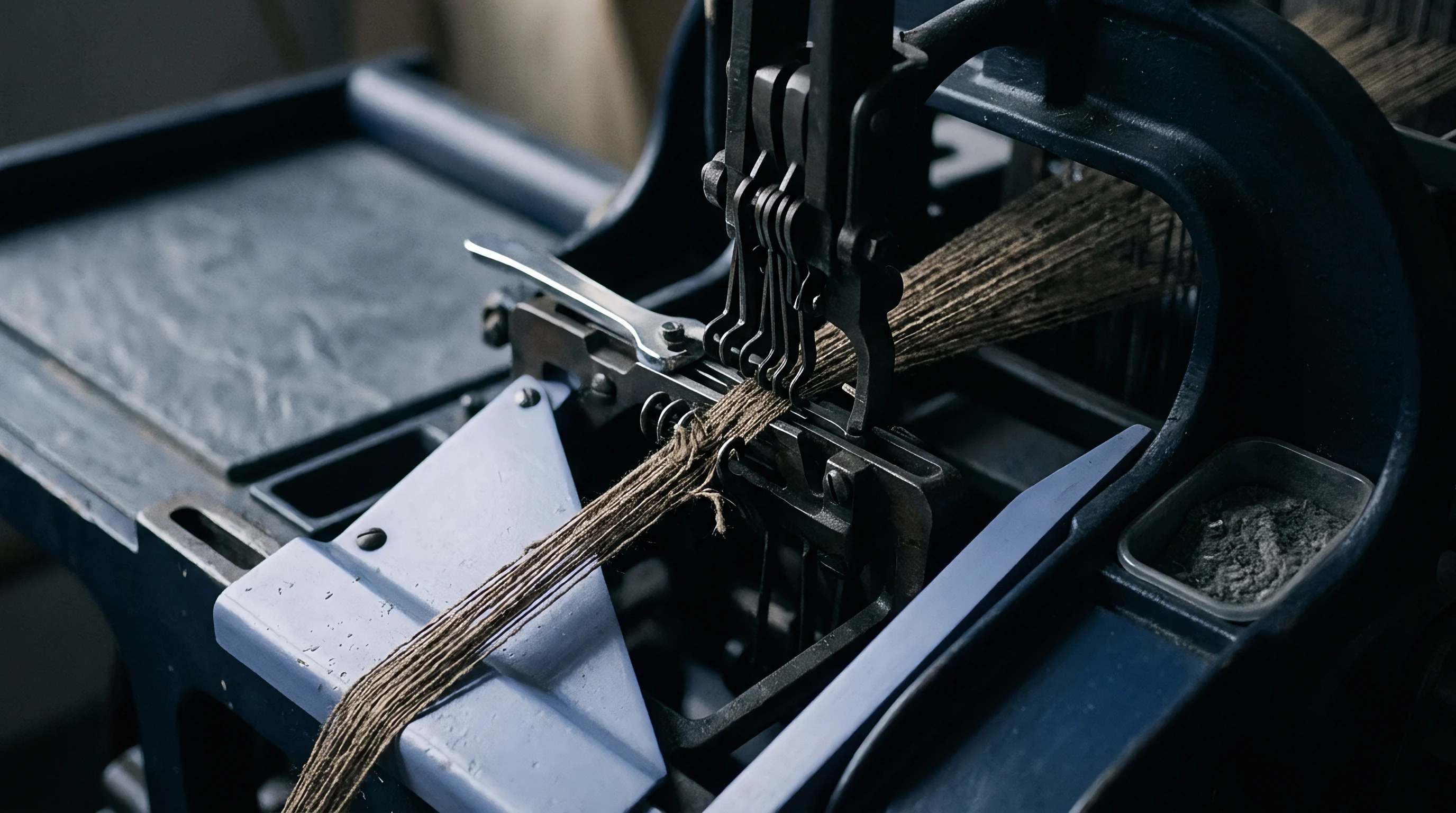
Settlement
Drafting waves directly erode commercial margin by forcing spinners to increase yarn twist multipliers, downgrade count targets, or absorb catastrophic weaving shed efficiency penalties. When a drafting wave enters the ring frame or wet-spinning trough, its periodic thin sections receive excess twist per unit length, while the adjacent thick sections remain under-twisted. In downstream bleaching and dyeing operations, these twist differentials manifest as barré bands and irregular dyestuff absorption.
In high-density weaving, warp breaks rise exponentially when drafting wave thin sections encounter cyclic reed abrasion.
Financial calculations demonstrate the severe fiscal penalties of unmanaged bundle coarseness. Assume a commercial production run of twenty tonnes of nominal metric count thirty-nine (Nm 39, equivalent to twenty-six tex) wet-spun pure linen apparel yarn. When using properly hackled line flax displaying a controlled bundle linear density of zero point forty-five tex, the carding and drawing line generates a drafting wave CV of five point eight percent.
At this evenness level, yarn spindle breaks average eighteen breaks per one thousand spindle hours, producing a first-grade package yield of ninety-six percent.
If the spinner substitutes coarse, under-divided tow or low-grade dew-retted material with a bundle linear density of one point eighty tex, the drafting wave amplitude expands the drawing sliver CV to twelve point four percent. The resulting Nm 39 roving displays severe periodic thin spots. At the spinning frame, end breaks escalate to sixty-four breaks per one thousand spindle hours.
First-quality yarn yield drops to eighty-two percent, while sixteen percent of delivered yarn downgrades to coarse weft or industrial twines at a thirty-five percent commercial discount.
Accounting for raw material purchase price, machine operating overheads of forty-five dollars per spindle hour, and downgrade discounts, the financial recovery plummets from nine dollars and twenty cents per kilogram of spun yarn down to six dollars and forty cents per kilogram. Across a twenty-tonne delivery lot, this drafting wave instability erases fifty-six thousand dollars in gross spinning margin. In finished cloth, an irregular yarn forces weavers to lower loom insertion speeds from six hundred to four hundred and twenty picks per minute to avoid warp failures, increasing weaving conversion cost by zero point thirty-eight dollars per linear metre of fifty-four-inch linen shirting.
European flax procurement specifications under contract standard CETIL-FLAX-2018 enforce an automatic four percent invoice deduction whenever sliver mass variation CV exceeds eight point five percent across five hundred consecutive metres.
Under international linen purchasing agreements, buyers invoking standard quality arbitration clauses under the General Conditions of the Confederation Europeenne du Lin et du Chanvre penalize any delivered yarn lot showing a spectrogram drafting wave peak exceeding three times the base random noise level. The financial penalty deducts the full conversion cost from the raw bale invoice, returning the unspun fibre to the merchant at the seller’s freight expense.