Spatial Arrangement
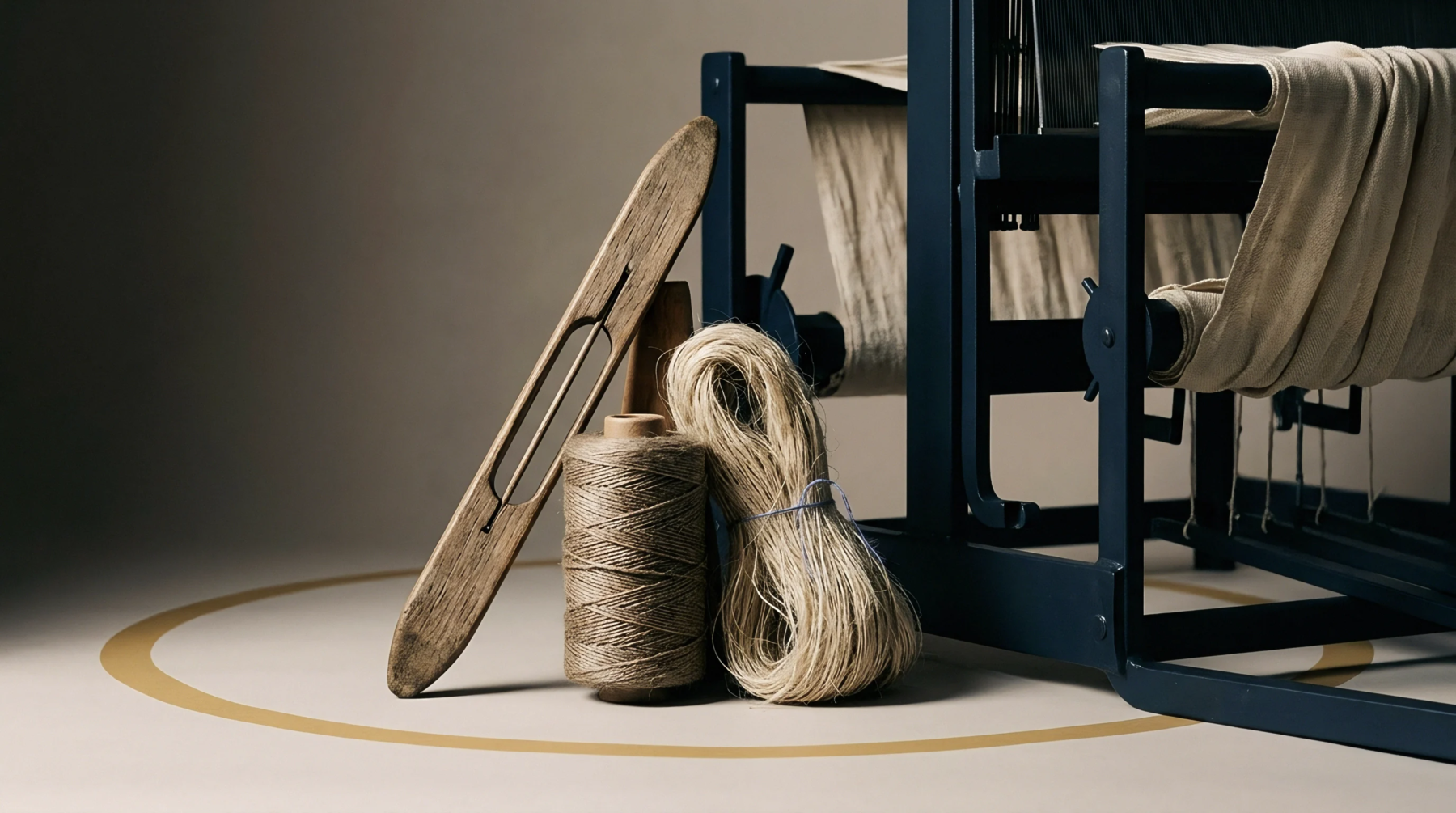
Mechanical configuration of the warp yarns as they are lifted and lowered to create an opening for the weft insertion defines the interlacing conditions. Shedding geometry includes the angles of the yarn sheets and the timing of the harness movement. Proper geometry is necessary to minimize the stress on linen yarns.
Yarn Protection
Optimization of these angles prevents the warp yarns from rubbing against each other or the loom components. If the shedding geometry is too aggressive, the friction will cause the flax fibres to fray, leading to increased yarn hairiness and potential breaks. Adjusting the height of the back rest and the position of the harness frames allows for a clean shed where the weft can pass through without obstruction.
Precise alignment of the frames is necessary for high-speed rapier looms.
Fabric Layout
Distribution of tension between the sheets of the shed affects the appearance of the fabric surface. By altering the shedding geometry, an operator can influence the cover of the linen cloth, making it appear more uniform. Precise control over these settings ensures that the finished fabric meets the buyer’s requirements for handle and aesthetics.
The geometry is a fundamental aspect of loom setup.