Viscoelastic Deformation Limits of Starch Synthetic Hybrid Films under Dynamic High Speed Rapier Shedding Loads
Starch synthetic hybrid sizing films achieve optimal rapier weaving efficiency when elastic strain recovery exceeds 70 percent under 10 Hz dynamic shedding.


Stress
Modern rapier looms running between 600 and 800 picks per minute subject warp yarns to extreme cyclic extension during shed opening. As harness frames cycle up to 13.3 times per second, individual ends take sharp, repetitive tensile peaks. Sizing films deposited on spun staple or filament warps act as the primary barrier against these forces.
When the shed opens fully, warp sheet geometry stretches past its resting length, driving transient strain rates of 150 to 300 percent per second into the protective surface film. If the film fails to absorb these rapid pulses, it micro-fractures, sheds, and exposes core fibers to direct abrasion.
Shed Opening Kinematics and Tensile Dynamic Spikes
Harness frame movements follow parabolic or modified sinusoidal velocity profiles that concentrate deformation into millisecond intervals. Acceleration peaks during the middle third of the shed opening stroke, driving sharp tension spikes along the thread line. Because flax, cotton, and blended spun yarns have high initial moduli, they transmit most of this shedding force directly into the surface sizing layer.
Total deformation in the sizing film combines elastic strain, delayed viscoelastic recovery, and permanent viscous flow. On high-speed rapier looms, the window for elastic strain recovery drops below 40 milliseconds between consecutive shed cycles. Native starch films lack the molecular flexibility needed to recover that fast, developing micro-cracks under repeated tensile peaks.
Blending synthetic polymers into hybrid formulations shifts the relaxation time spectrum, matching the coating’s mechanical response to loom shedding frequency.

Asymmetrical Tension Profiles across Warp Sheets
Shedding geometry varies across the width of the warp beam and between different harness frames. Ends controlled by back frames undergo greater angular deflection than those on front frames to reach the same clearance height, subjecting them to higher peak extensions.
Top shed sheets often carry higher static tension than bottom sheets because of back-rest roller positioning and heddle eye alignment. Sizing films must maintain structural integrity across these varying strain amplitudes. When a coating lacks compliance under high peak loads, outer fibers rupture and form fuzz balls that catch in the reed and drop wires ~ accounting for a large share of warp stops on high-speed rapier machines.
Mechanical energy delivered during each shedding cycle splits into recoverable strain energy and dissipated heat. In hybrid starch-synthetic coatings, energy dissipates through internal molecular friction within the amorphous regions of the polymer network. If too much energy dissipates without immediate elastic recovery, viscous flow accelerates, thinning the film at contact points with drop wires and heddle eyes.
Mapping where these peak extensions occur allows sizing technicians to adjust add-on percentages across the reed width based on harness position and yarn density.
Blend
Protective coatings for high-speed weaving rely on balancing rigid natural starch polymers with flexible synthetic chains. Native corn, wheat, or tapioca starches offer high strength, film hardness, and low material cost, but unmodified starch molecules retrograde quickly upon cooling. This creates rigid crystalline regions that fracture under cyclic high-speed extension.
Chemical modification ~ such as carboxymethylation, hydroxyethylation, or thin-boiling acid hydrolysis ~ suppresses retrogradation, establishing a stable baseline matrix for synthetic polymer integration.

Native Starch Retrogradation and PVA Compatibility
Polyvinyl alcohol is the primary synthetic modifier paired with modified starches to improve film flexibility and toughness. Fully hydrolyzed PVA grades supply high tensile strength and chemical resistance, whereas partially hydrolyzed grades (87 to 89 percent hydrolysis) offer superior flexibility and water solubility. Compatibility relies on extensive hydrogen bonding between hydroxyl groups along both polymer backbones.
Above 40 percent PVA by weight, phase separation can occur during drying unless kettle temperatures and shear rates are tightly managed.
The film elastic strain recovery drops below 55 percent when native starch retrogradation creates crystalline domains larger than 12 nanometers inside a 70:30 starch-PVA film matrix.
Water-soluble polyacrylates and acrylic acid esters are added to starch-PVA mixtures to lower glass transition temperatures and improve adhesion to synthetic or blended staple fibers. Adding polyacrylate chains increases film elongation at break while keeping adhesion forces to fiber surfaces high. Polyol plasticizers ~ including glycerol, sorbitol, and polyethylene glycol ~ penetrate amorphous domains in the starch-PVA matrix, increasing free volume and permitting chain mobility under dynamic loads.
Plasticizer Migration and Thermal Transitions
Plasticizers act as low-molecular-weight agents that interrupt intermolecular hydrogen bonds between starch and synthetic chains. As free volume increases with plasticizer content, the glass transition temperature of the hybrid coating drops below normal loom shed operating conditions (typically 20°C to 25°C at 65 percent relative humidity).
Water serves as a powerful secondary plasticizer in starch-based formulations. Below 50 percent relative humidity, hybrid films become overly rigid and suffer brittle failure under shedding loads. Conversely, humidity levels above 75 percent cause over-plasticization, leading to film tackiness, increased drop-wire drag, and size migration onto machine guides.
Maintaining optimal moisture balance inside the weaving shed stabilizes film response.
Selecting a hybrid formulation requires evaluating physical characteristics against the specific mechanical stress parameters encountered during rapier insertion.
- Starch modification degree provides the structural baseline for viscosity stability, film clarity, and retrogradation resistance during prolonged cooking cycles.
- PVA hydrolysis percentage determines water desizability, film tensile strength, and moisture absorption equilibrium under standard loom room conditions.
- Acrylic copolymer ratio regulates interfacial adhesion strength to hydrophobic fibers and enhances ultimate film elongation under dynamic shedding strain.
- Plasticizer loading level controls the film glass transition temperature, preventing embrittlement under low-humidity shed environments.
- Size bath solids concentration dictates the viscosity profile, size penetration depth into the yarn core, and surface coating film thickness.
Proprietary acrylic blends are often promoted as a way to eliminate PVA entirely while maintaining weaving efficiency on modern rapier machinery. However, floor trials consistently reveal that fully eliminating PVA reduces film strain recovery under high-frequency dynamic loads, resulting in elevated sizing dust accumulation beneath harness frames after several hours of continuous operation.
Creep
Under cyclic loading, starch-synthetic films exhibit time-dependent viscoelastic responses rather than purely elastic or purely viscous behavior. Storage modulus values reflect elastic energy stored during shed opening, while loss modulus values represent energy dissipated as heat through viscous molecular motion. The ratio of loss modulus to storage modulus, designated as loss factor or tangent delta, offers a precise measure of internal damping within the film matrix.
Dynamic mechanical thermal analysis reveals critical thermal and mechanical transitions that govern film behavior under shed loading.
Does Strain Rate Acceleration Shift the Yield Point?
Dynamic strain rate acceleration alters the stress-strain response of hybrid films, shifting the yield threshold toward higher stress levels while simultaneously reducing total strain capacity at break. At quasi-static speeds (1 to 10 mm/min), starch-synthetic hybrid films exhibit clear yield points followed by plastic deformation regions. At strain rates above 200 percent per second ~ representative of 700 rpm rapier shedding ~ the time available for polymer chains to disentangle and slide decreases significantly.
This shifted yield stress limits plastic flow before micro-cracking begins. If peak strain imposed by shed opening exceeds the dynamic yield strain limit, micro-fractures form within the starch-rich continuous phase. Over thousands of shedding cycles, these cracks propagate, weakening the film structure until the coating flakes away from the yarn substrate.
ISO 527-3 testing of free sizing films cast at 100 micrometers thickness requires conditioning at 20 degrees Celsius and 65 percent relative humidity for 48 hours to yield valid viscoelastic strain data.
The accumulation of unrecovered plastic strain over repeated shed openings causes permanent elongation of the surface coating.
When a film permanently elongates, it loses its ability to pull back tightly against the yarn core during shed closing. This slack creates localized buckling in the sizing layer, exposing underlying fiber bundles to abrasion from adjacent warp ends, drop wires, and reed dents. Controlling creep compliance through balanced cross-linking and synthetic binder selection prevents premature structural degradation of the applied coating.
Hysteresis Loss and Cumulative Thermal Dissipation
Energy loss per cycle manifests as the mechanical hysteresis loop bounded by loading and unloading stress-strain curves. Heat generated by internal friction inside the film matrix elevates localized film temperature during continuous weaving. In high-speed sheds operating without forced air cooling, yarn surface temperatures can rise by 3°C to 8°C above ambient loom room temperatures.
Elevated localized temperatures shift the viscoelastic response further into the rubbery regime, increasing creep compliance while lowering tensile yield strength. If the thermal dissipation rate of the yarn sheet is slower than the rate of mechanical energy input, the film softens excessively, leading to sticky size transfer onto shedding machinery components.
Data derived from dynamic mechanical testing highlights the performance boundaries of various starch-synthetic formulation balances under simulated loom operating frequencies.
| Formulation (Starch:PVA:Acrylic Ratio) | Storage Modulus E’ (MPa at 23°C) | Loss Modulus E” (MPa at 23°C) | Loss Factor Tan Delta (10 Hz) | Dynamic Yield Strain (%) | Elastic Recovery after 1000 Cycles (%) |
|---|---|---|---|---|---|
| 100 : 00 : 00 (Pure Modified Starch) | 2450 | 185 | 0.075 | 2.1 | 42.5 |
| 80 : 20 : 00 (Starch / PVA Blend) | 1850 | 165 | 0.089 | 3.4 | 61.2 |
| 60 : 30 : 10 (Standard Hybrid Formulation) | 1420 | 148 | 0.104 | 4.6 | 78.4 |
| 40 : 40 : 20 (High-Flexibility Formulation) | 980 | 122 | 0.124 | 6.2 | 86.1 |
| 20 : 60 : 20 (Synthetic Dominant Matrix) | 620 | 95 | 0.153 | 8.5 | 92.3 |
The data demonstrates that increasing PVA and acrylic components systematically lowers the rigid storage modulus while expanding elastic strain recovery under 10 Hz cyclic strain. Pure starch formulations display low yield strain limits and poor recovery, leading directly to film fracture under high-speed shedding conditions. Incorporating synthetic polymers enables the sizing film to maintain structural continuity over hundreds of thousands of shedding cycles, preserving the film against dynamic failure on 800 rpm rapier lines.

Reed
During rapier insertion, warp yarns maintain contact with drop wires, heddle eyes, and reed wires under tension. Inter-yarn friction and metal-to-yarn friction generate cyclic shear stresses acting directly on the surface sizing coating. The beat-up movement pushes the newly inserted pick tightly into the cloth fell, generating high localized impact forces and sliding friction along reed dent surfaces.
Sizing films must resist both normal tensile extension from shedding and parallel shear stresses from metal guide contact.

Micro-Cleavage and Dusting Mechanisms at Beat-Up
Repeated friction forces at the heddle eye weaken the interfacial bond between the sizing film and outer fiber surfaces. When the viscoelastic deformation limit of the coating is exceeded, micro-cleavage cracks propagate parallel to the yarn axis. Small particles of sized material detach from the yarn surface, generating fine white powder commonly known as size dust.
Accumulation of size dust inside heddle eyes and drop wire slots increases static friction on passing yarns, accelerating fiber fraying. High dust accumulation forces frequent machine stops for compressed-air cleaning, reducing overall productivity. Formulations containing insufficient acrylic binder or plasticizer exhibit significantly higher dusting rates during high-speed rapier operation.
Size film dusting mass exceeding 1.2 grams per kilogram of processed yarn indicates imminent film embrittlement and catastrophic warp end breakage risk.

Friction Coefficients along Reed Wires
The coefficient of friction between sized warp yarns and polished stainless steel reed wires depends on film surface smoothness, hardness, and moisture content. Hybrid starch-synthetic coatings form smoother surface layers than pure starch formulations, lowering both static and kinetic friction coefficients. Lower friction reduces peak tension during shedding frame movement.
These frictional contacts generate sudden, repeated strain pulses along the thread line.
Excessive softeners or waxes added to the sizing recipe can migrate to the film surface, creating sticky deposits on reed wires during prolonged production runs. These deposits collect airborne lint and sizing fragments, creating rough spots that abrade adjacent warp ends. Balancing hard native starch components with ductile synthetic binders yields a smooth, tough film surface that minimizes deposit formation while maintaining low friction against loom guide surfaces.
Field observation identifies multiple distinct fault modes originating directly from sizing film mechanical breakdown during shedding and beat-up phases.
- Film flaking fault occurs when weak interfacial adhesion causes large patches of sizing coating to peel off the yarn core during heddle eye passage.
- Transverse brittle fracturing develops when high peak tensile strains exceed the film ultimate elongation, creating cracks perpendicular to the yarn axis.
- Gummer deposit formation arises from excess low-molecular-weight plasticizers or waxes migrating to reed surfaces, catching loose fibers and creating slub-like yarn defects.
- Fuzz ball buildup results from incomplete surface film coverage, allowing individual fiber ends to brush out, entangle with adjacent warp ends, and cause shed mispicks.
- Abrasion thinning defect occurs when high contact pressure against drop wires grinds away the film coating, leaving bare yarn zones vulnerable to end breaks.
Monitoring shedding dust generation rate under fixed relative humidity conditions provides direct insight into film mechanical integrity inside the weaving shed.
| Relative Humidity (%) | Film Moisture Content (%) | Dusting Rate (g/kg Yarn) | Abrasion Cycles to Failure | Warp Stops per 10^5 Picks |
|---|---|---|---|---|
| 50 % | 5.2 | 2.85 | 850 | 3.8 |
| 58 % | 7.1 | 1.42 | 1420 | 1.9 |
| 65 % | 9.4 | 0.58 | 2350 | 0.6 |
| 72 % | 12.1 | 0.31 | 2100 | 0.9 |
| 80 % | 15.8 | 0.18 | 1250 | 2.4 |
Operating a rapier weaving shed below 55 percent relative humidity increases sizing film embrittlement, driving dusting rates up and accelerating warp stop frequency. Operating above 75 percent relative humidity softens the film excessively, lowering resistance to drop-wire abrasion and increasing cling-related warp stops. Sizing technicians must maintain ambient shed humidity within the target band between 62 and 68 percent relative humidity to maximize film durability and maintain low stop frequencies.
Inadequate size film elasticity leads to immediate drops in loom operational efficiency, increased greige cloth defect rates, elevated labor requirements for warp stop repairs, and rapid wear on expensive heddle wires and reed dents.


Tolerances
Verifying the mechanical suitability of a starch-synthetic sizing formulation requires standardized laboratory film casting procedures coupled with dynamic mechanical testing protocols. Testing raw yarn sizing add-on percentage alone does not guarantee weaving performance; characterization of the isolated film provides fundamental quantitative metrics on mechanical limits. Cast film thickness must match the typical size film layer thickness found on actual warps, ranging between 15 and 30 micrometers.
Film casting techniques utilize Teflon-coated glass plates or continuous stainless steel belt casting systems to produce uniform film sheets free from pinholes, air bubbles, and thickness gradients.

Film Casting and DMTA Testing Standard Operations
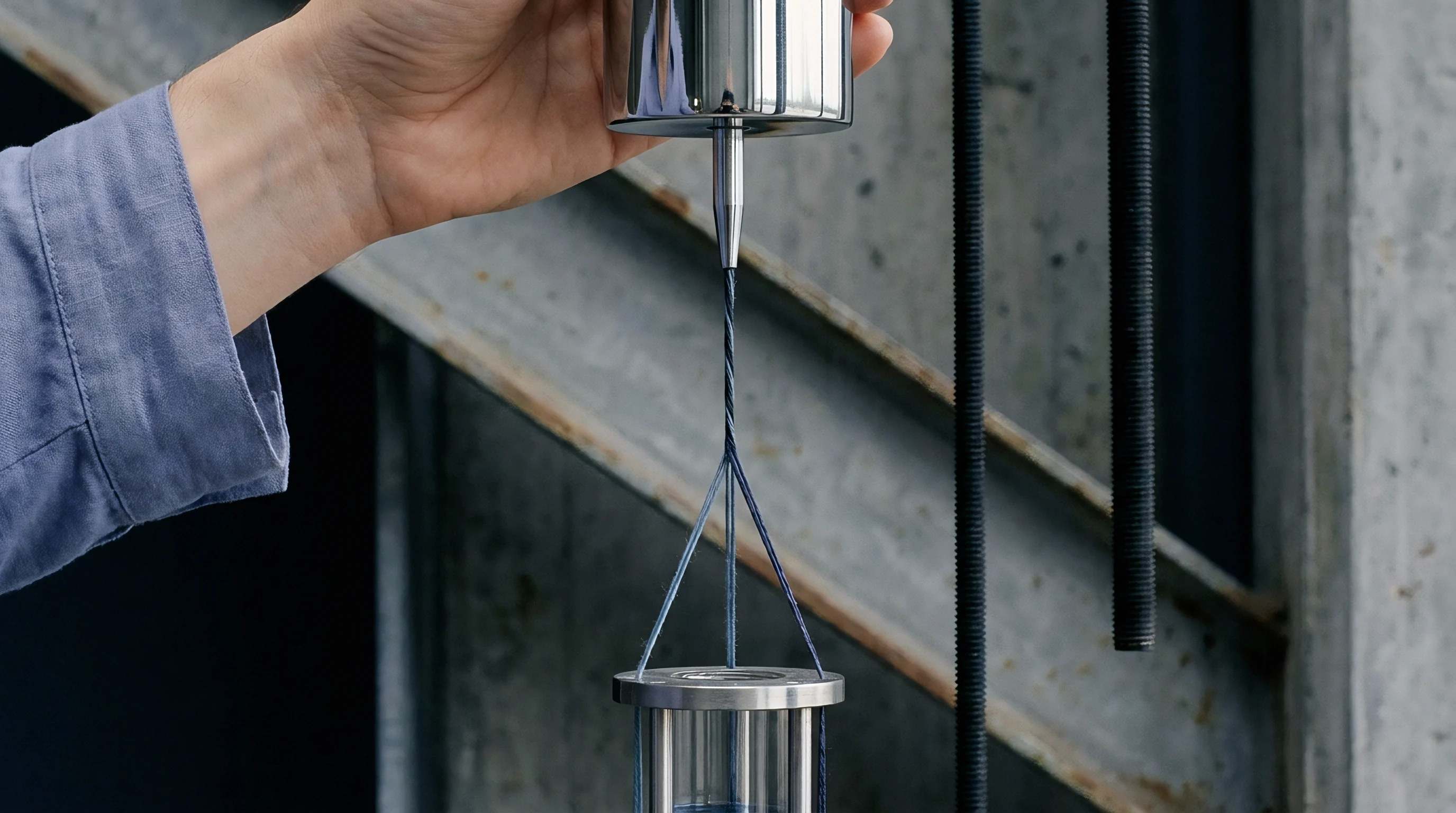
Film samples prepared for dynamic mechanical testing undergo strict conditioning inside controlled environmental chambers. Standard test protocols mandate conditioning at 20°C ± 1°C and 65% ± 2% relative humidity for a minimum of 48 hours prior to testing under ASTM D882 or ISO 527 tensile standards. Free cast sizing films are mounted in high-frequency electro-dynamic test frames capable of executing tension-tension fatigue cycles at frequencies up to 20 Hz.
Temperature drops in the size kettle or application box can noticeably alter bath viscosity and pickup.
Linear variable differential transformers measure specimen displacement, enabling accurate calculation of real-time stress, strain, storage modulus, and loss modulus curves. Tensile test crosshead speeds are adjusted to match peak strain rates observed on high-speed rapier shedding systems. By systematically varying test temperature and frequency, laboratory technicians construct master relaxation curves that predict long-term film durability on the loom floor.

Tensile Recovery Thresholds for High-Speed Shedding
Dynamic recovery limits establish acceptable passing criteria for size batch qualification prior to committing warps to production sizing runs. A hybrid film must exhibit an elastic recovery ratio exceeding 70 percent following 1,000 continuous cyclic strain pulses at 10 Hz with an applied strain amplitude of 3.5 percent. Films demonstrating elastic recovery below 60 percent accumulate plastic deformation rapidly, resulting in excessive sizing shedding and end breakages under actual weaving conditions.
Viscoelastic deformation limit testing under ISO 527-3 establishes that sizing films exhibiting tensile strain recovery below 65 percent generate excessive warp breakage on rapier looms running above 700 picks per minute.
Establishing clear quality verification steps ensures consistent size batch performance across variable raw material lots and changing ambient mill environments.
- Prepare a standardized 10 percent dry solids solution of the candidate size formulation in distilled water, heating to 95°C under constant mechanical stirring for 60 minutes.
- Cast the cooked size solution onto a level Teflon-coated glass plate using a precision doctor blade set to produce a dry film thickness of 25 micrometers.
- Dry the cast film inside a conditioned enclosure at 23°C and 50 percent relative humidity for 24 hours, followed by vacuum drying at 40°C for 4 hours to eliminate residual free moisture.
- Die-cut dog-bone film specimens measuring 10 mm in width and 50 mm in gauge length using a calibrated precision punching press.
- Condition specimen strips in an environmental chamber at 20°C and 65 percent relative humidity for 48 hours to reach moisture equilibrium.
- Mount the specimen in a dynamic mechanical analyzer equipped with tension clamps, setting the baseline static pre-tension load to 0.5 N.
- Execute a sinusoidal dynamic strain program at a frequency of 10 Hz and a peak strain amplitude of 3.5 percent for 10,000 continuous stress cycles.
- Record storage modulus E’, loss modulus E”, loss factor tan delta, and calculate total unrecovered plastic strain following test completion.
Standard master supply agreements specify that incoming sizing compound shipments must comply with ISO 9001 quality audit limits, requiring batch-to-batch film tensile strength variations to remain within ± 5 percent of established reference samples. This requirement prevents unannounced chemical supplier formulation changes that could compromise film strain recovery during high-speed rapier production runs.

Settlement
Formulating high-performance sizing systems involves balancing raw material input costs against loom room efficiency gains. Synthetic components like PVA and polyacrylates carry unit costs three to six times higher than modified industrial starches. Minimizing synthetic polymer content while meeting viscoelastic strain recovery thresholds optimizes size formulation economics per warp metre processed.
Add-On Unit Costs and PVA Substitution Ratios
Size add-on percentages typically range from 8 to 14 percent by weight on staple warps, depending on yarn count, fiber blend, and reed density. Increasing PVA content from 10 percent to 30 percent within a hybrid size recipe elevates raw sizing material cost per kilogram by approximately 45 percent. High-speed rapier looms running fine-count cotton or linen warps incur significant economic penalties when warp breakages cause loom downtime.
Unresolved tension loss and slack warp ends lead directly to mispicks and shed obstructions.
A single warp stop on a 750 rpm rapier loom results in approximately 0.75 to 1.5 minutes of lost loom time, including operator reaction, end piecing, and restart sequence. At an average loom hour cost of $18.50 to $24.00 per machine hour, preventing two warp stops per loom shift fully justifies the higher chemical cost of elevated synthetic polymer levels in the size recipe.
Loom Efficiency Recovery Calculations
Calculating the landed economic impact of size film formulation choices requires analyzing total sizing compound cost, warp preparation efficiency, sizing energy consumption, and loom shed efficiency across multi-thousand-metre warp runs.
A worked comparative cost model demonstrates the financial impact of sizing film optimization on a typical commercial production run.
| Parameter | Recipe A (80:20 Starch:Synthetic) | Recipe B (60:40 Hybrid Matrix) |
|---|---|---|
| Sizing Material Unit Cost ($/kg dry solids) | $ 1.85 | $ 2.75 |
| Target Size Add-On Percentage (%) | 11.5 % | 10.0 % |
| Total Size Dry Solids Consumed (kg per 10,000 m warp) | 345 kg | 300 kg |
| Total Sizing Chemical Cost ($ per warp) | $ 638.25 | $ 825.00 |
| Warp Stop Rate (stops per 10^5 picks) | 1.85 stops | 0.55 stops |
| Total Lost Loom Time per Warp Run (hours) | 14.2 hours | 4.2 hours |
| Loom Operating Efficiency (%) | 88.5 % | 96.2 % |
| Loom Downtime Cost incurred ($ at $22.00/loom hour) | $ 312.40 | $ 92.40 |
| Net Landed Processing Cost ($ per warp run) | $ 950.65 | $ 917.40 |
The calculation reveals that while Recipe B increases dry sizing chemical cost by $186.75 per 10,000-metre warp, the reduction in warp stops saves 10.0 hours of lost loom time, yielding a net savings of $33.25 per warp run alongside higher total cloth output. Higher synthetic binder ratios prove commercially advantageous on high-speed rapier equipment whenever warp stop rates are driven primarily by size film failure.
Size formulation selection follows a simple rule of thumb: when loom speed increases by 100 picks per minute, increase the synthetic binder ratio in the sizing formula by 5 percentage points to preserve elastic strain recovery margins.