Flax Bundle Optical Sizing and Wet Drafting Parameters
Optical bundle sizing defines the maximum draft ratio and ratch setting in wet flax spinning by quantifying pectin division before immersion.
Morphology
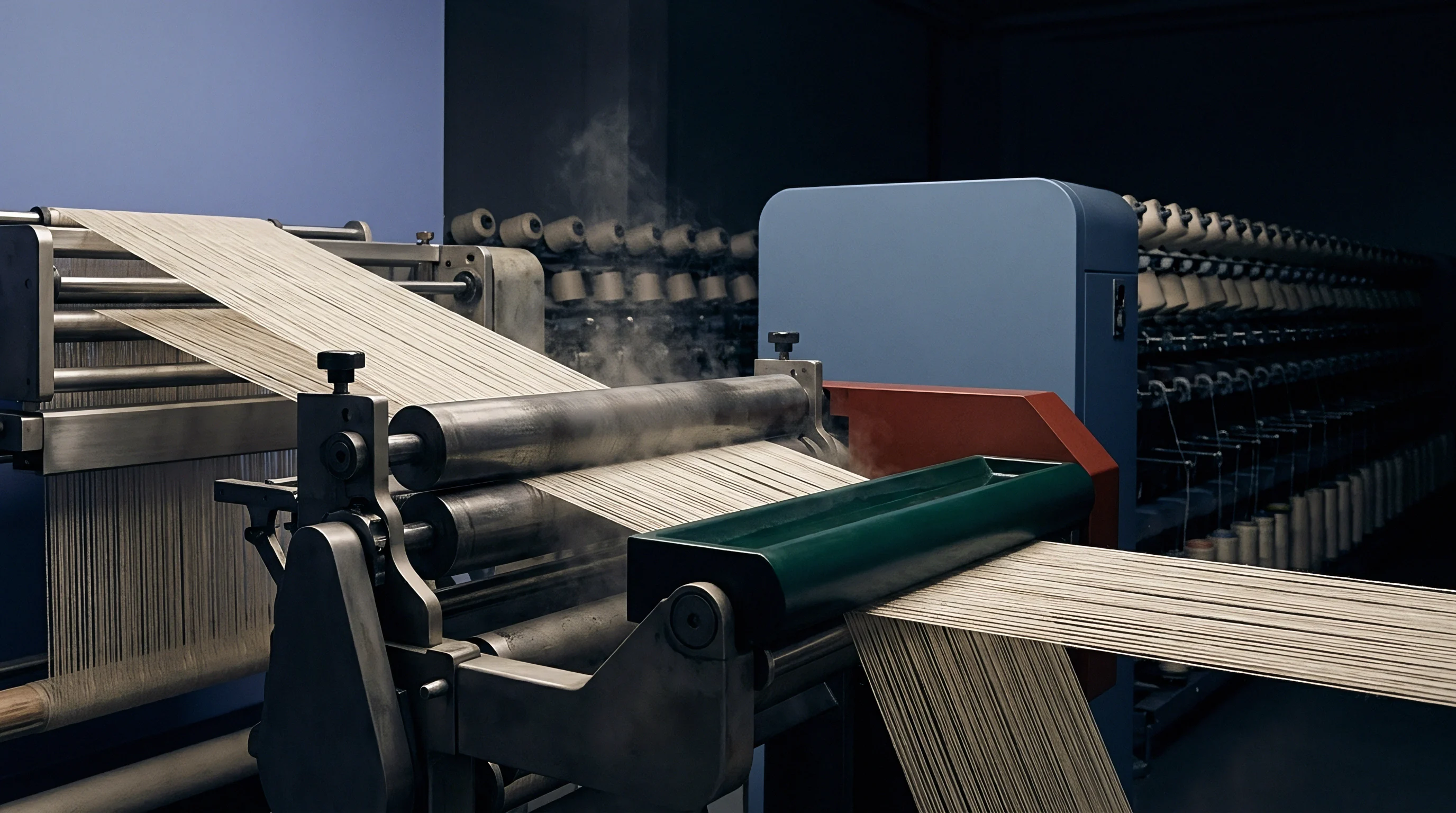
Optical projection benches measure the transverse dimensions of technical flax fibres using transmitted high-intensity backlighting. Image capture arrays register the shadow of each dry strand down to sub-micron pixel resolutions, calculating equivalent circular diameter alongside cross-sectional eccentricity. Raw scutched and hackled line flax reaches the mill as composite bundles bound by inter-cellular matrix layers.
Technical bundle diameter dictates how readily strands split in hot water during roving attenuation. Optical measurements establish the practical boundary between spinnable line fibre and coarse drafting reject material.
Perimeter assessments separate elementary filaments from unrefined bast aggregates. An individual elementary flax cell spans a narrow diameter band between 12 and 22 micrometres, with an aspect ratio close to unity. Technical bundles contain anywhere from ten to forty elementary cells held together by highly branched rhamnogalacturonan and xyloglucan polymers.
Optical systems categorize these groupings through the division index, defined as the ratio of measured surface perimeter to total cross-sectional area. Higher division indices reflect advanced decortication and thorough mechanical splitting during hackling.
Standard delivery contracts stipulate a maximum optical variation coefficient of thirty-eight percent across bundle diameter distributions to prevent dry drafting voids.
Eccentricity values point to flat, ribbon-like bundle geometry caused by incomplete retting. Non-circular bundles twist unpredictably on entering drafting zones, producing localized variations in nip friction. Automated benches scan roving segments at production speeds, recording diameter profiles every five millimetres along the strand.
Bimodal diameter distributions within a single lot generally indicate a blend of coarse, under-retted base straw with finer top-growth line flax. Technicians review these optical histograms before releasing sliver cans to the drawing frames.
| Fibre Bundle Grade Class | Mean Optical Diameter (µm) | Aspect Ratio (Major/Minor) | Bundle Division Index (mm⁻¹) | Target Wet Spun Count (Nm) |
|---|---|---|---|---|
| Superfine Line Class A | 38.5 ± 4.2 | 1.22 | 86.4 | Nm 60 to Nm 100 |
| Medium Line Class B | 54.2 ± 6.8 | 1.48 | 62.1 | Nm 36 to Nm 50 |
| Coarse Line Class C | 72.0 ± 9.5 | 1.85 | 44.7 | Nm 20 to Nm 30 |
| Standard Tow Class T1 | 88.6 ± 14.1 | 2.10 | 32.8 | Nm 10 to Nm 18 |
Coarse bundles exceeding eighty micrometres resist fluid penetration during short submersion cycles. If technical bundles retain high transverse thickness, warm fluid cannot reach the core pectin layers before mechanical drafting rollers apply longitudinal tension. Outer cells shear away while the bundle core remains rigid, leaving slubs and mass irregularities in the finished roving.
Wide standard deviations in sizing data force spinners to downgrade the achievable lea count before drawing begins. Overly optimistic count targets based on skewed sizing tables cause severe end-breakage spikes on the spinning floor and produce cloth prone to warp stripping in the loom shed.
Bath
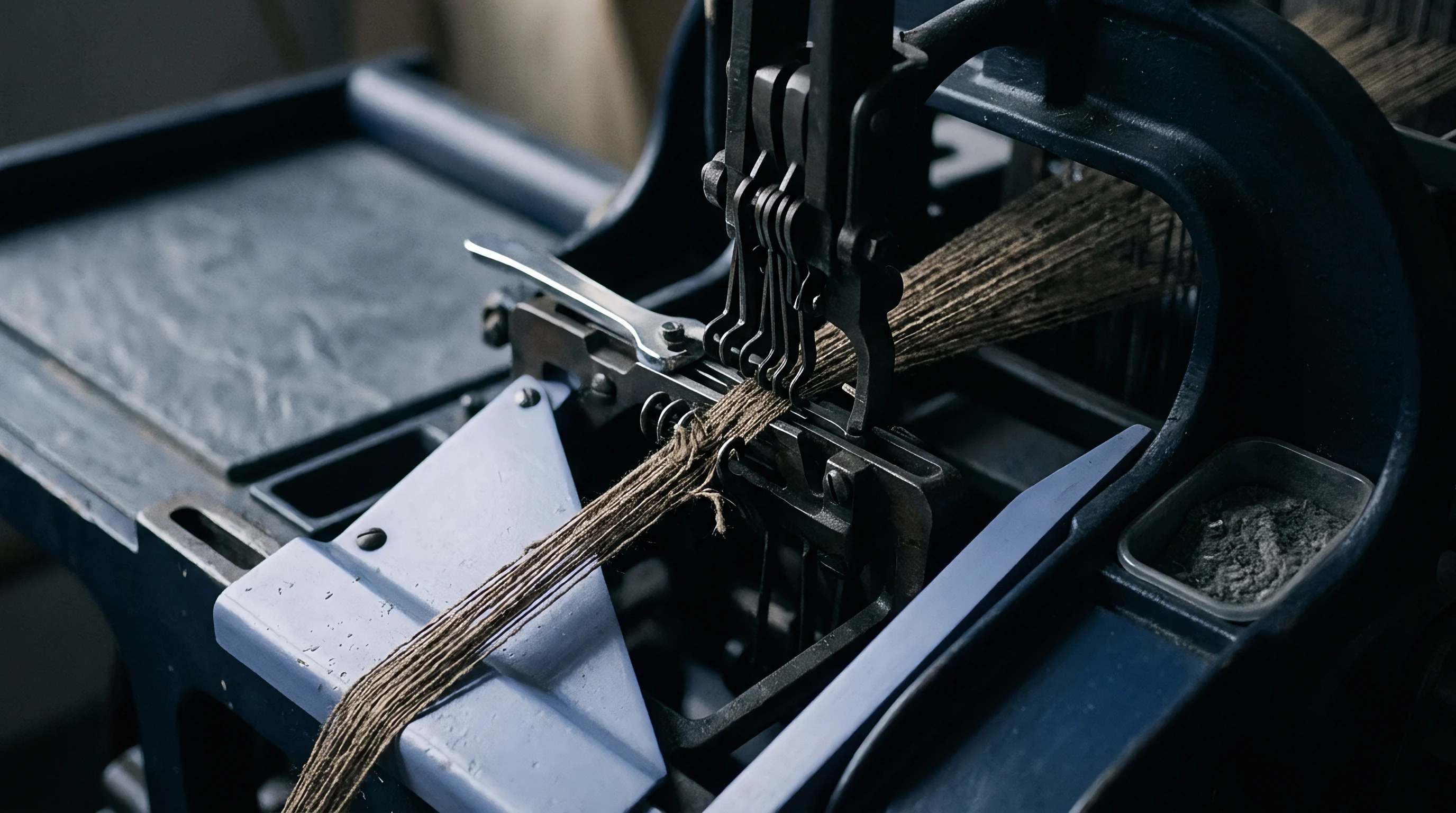
Aqueous immersion softens the binding components anchoring elementary flax cells into structural groups. The immersion vessel sits directly upstream of the drafting zone, holding conditioned water at temperatures between 60 and 72 degrees Celsius. Heat accelerates the hydration of calcium pectate within the middle lamella.
De-esterified homogalacturonan regions lose their rigid, gelated structure as thermal agitation disrupts non-covalent bonds, and calcium ions diffuse into the circulating water, allowing the long polymeric chains to slide under shear forces.
Channel water chemistry governs the rate of middle lamella dissolution. Acidic process water below pH 5.8 stabilizes calcium salt bridges, preventing the plasticization required for filament separation. Conversely, alkaline water above pH 8.2 triggers uncontrolled hydrolysis, stripping hemicellulose and degrading elementary fibre tenacity.
Technicians dose chelating agents such as sodium hexametaphosphate to sequester alkaline-earth cations washed out of the straw. Soft water below five German hardness degrees ensures uniform fluid uptake across the roving cross-section within twelve seconds of submersion.
A roving submerged in alkaline liquor at seventy degrees Celsius sheds eight percent of its tensile dry weight through excessive middle lamella extraction.
Residence time balances wet drafting mobility against strand integrity. Slivers pass through stainless steel troughs at speeds set by front-roller delivery demand. If immersion is too brief, bundle cores remain dry and brittle, snapping under roller tension.
Excessive dwell times dissolve structural matrix polymers altogether, turning the strand into a weak pulp that fails before reaching the draft nip. Adjusting the trough path length ensures bundles reach their glass transition temperature without losing structural cohesion.
Trough circulation patterns govern thermal distribution along the running strand. Counter-current circulation continuously carries away dislodged pectins, waxes, and microscopic shive fragments from the wetting channel. Stagnant pockets collect dissolved organic matter, shifting local pH and causing uneven softening across consecutive metres of roving.
Material that wets out unevenly then splits erratically under the drafting nips.
Nip
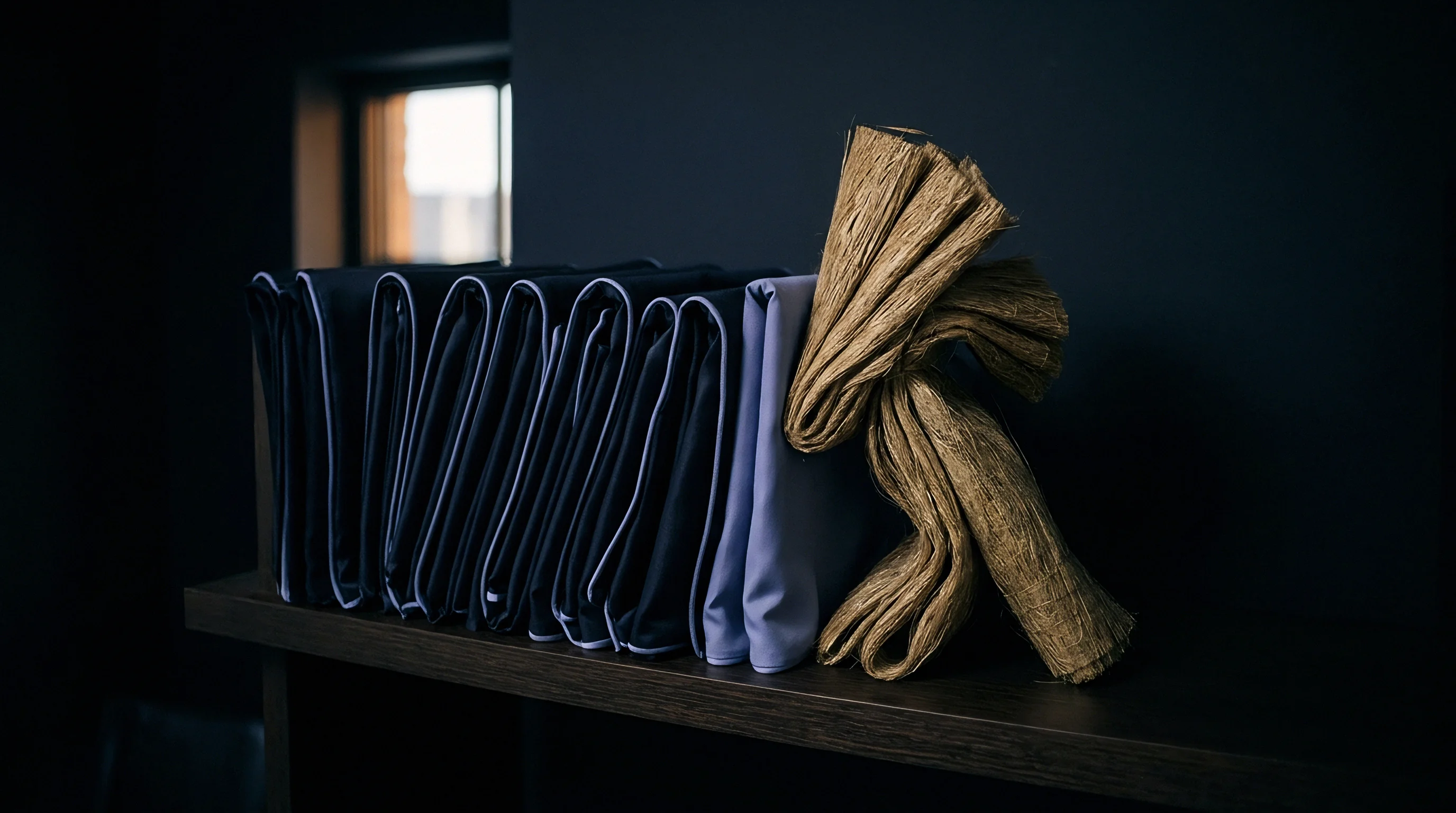
Drafting rollers apply mechanical pressure to draw the plasticized roving into a uniform ribbon. Bottom cylinders are fluted, case-hardened steel driven by gear trains, while top pressure rollers use synthetic polyurethane cots. Cot hardness runs between 80 and 90 Shore A, giving enough deformation to grip wet bundles without crushing delicate cell walls.
Roll pressures between 4.5 and 7.0 bar squeeze out excess liquid, establishing an active boundary layer where sliding friction governs filament displacement.
Draft Distribution across Processing Zones
Attenuating wet strands requires dividing total draft between break and main drafting assemblies. The break draft applies a modest ratio between 1.15 and 1.35 to overcome initial inter-fibre friction and orient filaments. The main zone then draws softened bundles apart using draft ratios from 10 to 28, depending on target yarn count.
Roving twist must stay high enough to preserve cohesion through the wetting channel, but low enough to allow bundle displacement under the rolls. Too much twist leaves hard, rope-like cores that slip through the nip without drawing down.
Does Water Temperature Dictate the Ratch Setting?
The ratch setting defines the spacing between back feed and front delivery nips, corresponding directly to the effective staple length of the attenuated bundles. In wet spinning, effective bundle length drops as higher bath temperatures dissolve more pectin and release shorter fragments. Processing line flax through an 85-millimetre ratch at 70 degrees Celsius produces uncontrolled floating fibres whenever the bundle structure degrades prematurely into short elementary cells.
- Ratch measurement aligns roll centres with certified bundle length distributions to prevent premature fibre snapping.
- Cot alignment verification checks for lateral roller skew across all spindles to maintain uniform clamping pressure.
- Thermal stabilization maintains water supply at target operating temperatures throughout entire spinning shifts.
- Twist factor adjustment balances wet roving transport stability against drawing resistance within the drafting nip.
| Roving Linear Density (tex) | Ratch Gauge (mm) | Draft Ratio Range | Nip Clamping Force (N/cm) | Delivery Speed (m/min) |
|---|---|---|---|---|
| 800 tex | 110 to 125 | 10.0 to 14.5 | 140 to 160 | 18 to 22 |
| 500 tex | 95 to 110 | 14.0 to 18.0 | 120 to 140 | 22 to 26 |
| 300 tex | 85 to 95 | 18.0 to 24.0 | 100 to 120 | 26 to 30 |
| 150 tex | 70 to 85 | 22.0 to 28.5 | 90 to 110 | 30 to 35 |
Improper clamping distorts velocity distribution across the drafting field. When top roll loads drop below ninety Newtons per centimetre of contact width, buoyant fluid films lift the synthetic cot off the steel flutes. Bundles then slip unchecked, producing severe mass surges known as drafting waves.
Excessive roller loads, on the other hand, accelerate cot wear by grooving the polymer surface, creating channels where roving escapes mechanical control.
Drafting roller nip gauges must match the upper quartile of the optical bundle length array to avoid widespread elementary cell rupture.
Contract specifications commonly cite ISO 2060 for linear density and ISO 2062 for single-end tensile testing, penalizing yarn lots whose deliverable cones exceed four percent count CV from nip slippage.
Defect
Drafting instability produces distinct physical defects along the yarn. When technical bundles fail to split during drawing, unopened aggregates pass straight into the spinning triangle. These undispersed bundles resist twist insertion and protrude from the yarn core as coarse hairiness that hampers weaving.
High bundle diameter variability under optical testing directly correlates with elevated mass irregularity, thin spots, and thick places.
When Do Undivided Bundles Induce End Breaks?
End breaks happen whenever drafting resistance exceeds the tensile strength of the attenuated strand. Coarse bundles with low division indices retain high shear resistance, refusing to yield to the speed differential between front and back rollers. The strand then jams in the nip, building tension until the fibre stream snaps before reaching the twisting ring.
Running frames with mismatched draft and bath temperatures drives up spindle downtime across the floor.
- Stick-slip drafting creates repeating diamond waves in yarn mass profiles when pectin softening proceeds unevenly along the roving.
- Roller lapping occurs when fragmented, over-softened elementary fibres stick to wet cots rather than following the delivery path.
- Shive entanglement introduces thick, unyielding points that deflect drafting rollers and trigger thin spots downstream.
- Drafting furrowing cuts circular grooves into polyurethane cots when hard, coarse bast slivers run through the same track continuously.
Polyurethane cots wear steadily under continuous exposure to hot, acidic process water. Microscopic pitting develops across the surface, trapping free cellulose fibrils and causing frequent roller laps. Maintenance crews regrind and polish top rollers on set schedules to restore flat contact across the nip.
Leaving worn cots in service leads to count drift toward the coarse side as clamping pressure falls off.
Uneven yarn mass profiles often reflect field retting that yielded unusually hard straw resistant to standard mill immersion protocols.

Margin
Raw fibre procurement accounts for more than fifty percent of the total landed cost of wet-spun linen yarn. Operating margins depend on matching incoming bundle morphology to the finest spinnable metric count without generating excessive waste. Sizing analysis on incoming line flax lots determines whether a parcel can run economically at Nm 50 or must be downgraded to Nm 26 ~ a shift that immediately alters the return on the entire batch.
Processing a five-metric-ton parcel of hackled line flax purchased at 6.80 Euros per kilogram illustrates the economics. Converting this lot into Nm 39 yarn requires an average optical bundle diameter under 55 micrometres and a division index above 60 reciprocal millimetres. Under those conditions, spinning waste ~ combining wet lap, trough residues, and pneumafil collection ~ stabilizes at seven percent of throughput.
The resulting yield is 4,650 kilograms of yarn valued at 14.20 Euros per kilogram on the open market.
Running the same machinery on a lot with coarse sizing ~ mean bundle diameters of 74 micrometres ~ shifts the yield balance. Higher transverse dimensions force lower draft ratios, capping the finest safe production count at Nm 26. Pneumafil suction waste climbs to twelve percent as unseparated bundles jam the nips and cause frequent traveler breaks.
The coarser yarn fetches 10.50 Euros per kilogram, compressing conversion margins.
| Fibre Fineness Grade | Landed Fibre Cost (€/kg) | Spinnable Yarn Count (Nm) | Drafting Waste Proportion (%) | Finished Yarn Price (€/kg) | Gross Margin Contribution (€/kg) |
|---|---|---|---|---|---|
| Optical Grade 1 (<45 µm) | 7.80 | Nm 60 | 5.5% | 18.50 | 10.25 |
| Optical Grade 2 (45-60 µm) | 6.80 | Nm 39 | 7.0% | 14.20 | 6.91 |
| Optical Grade 3 (60-75 µm) | 5.60 | Nm 26 | 12.0% | 10.50 | 4.23 |
| Optical Grade 4 (>75 µm) | 4.40 | Nm 14 | 16.5% | 8.10 | 2.92 |
Procurement teams inspect raw flax deliveries against dimensional benchmarks to protect margins. Lots failing optical screening face price renegotiation or rejection before bales are opened.
The commercial outcome ultimately hinges on how accurately bench optical sizing predicts middle lamella dissolution on production frames running thousands of spindles.