Quantifying Non Volatile Solvent Mass Loss during High Temperature Desiccation of Wet Spun Flax Roving
Solvent volatilisation during roving desiccation falsifies flax dry mass baselines, skewing commercial weight regain formulas and certified origin balances.

Bath
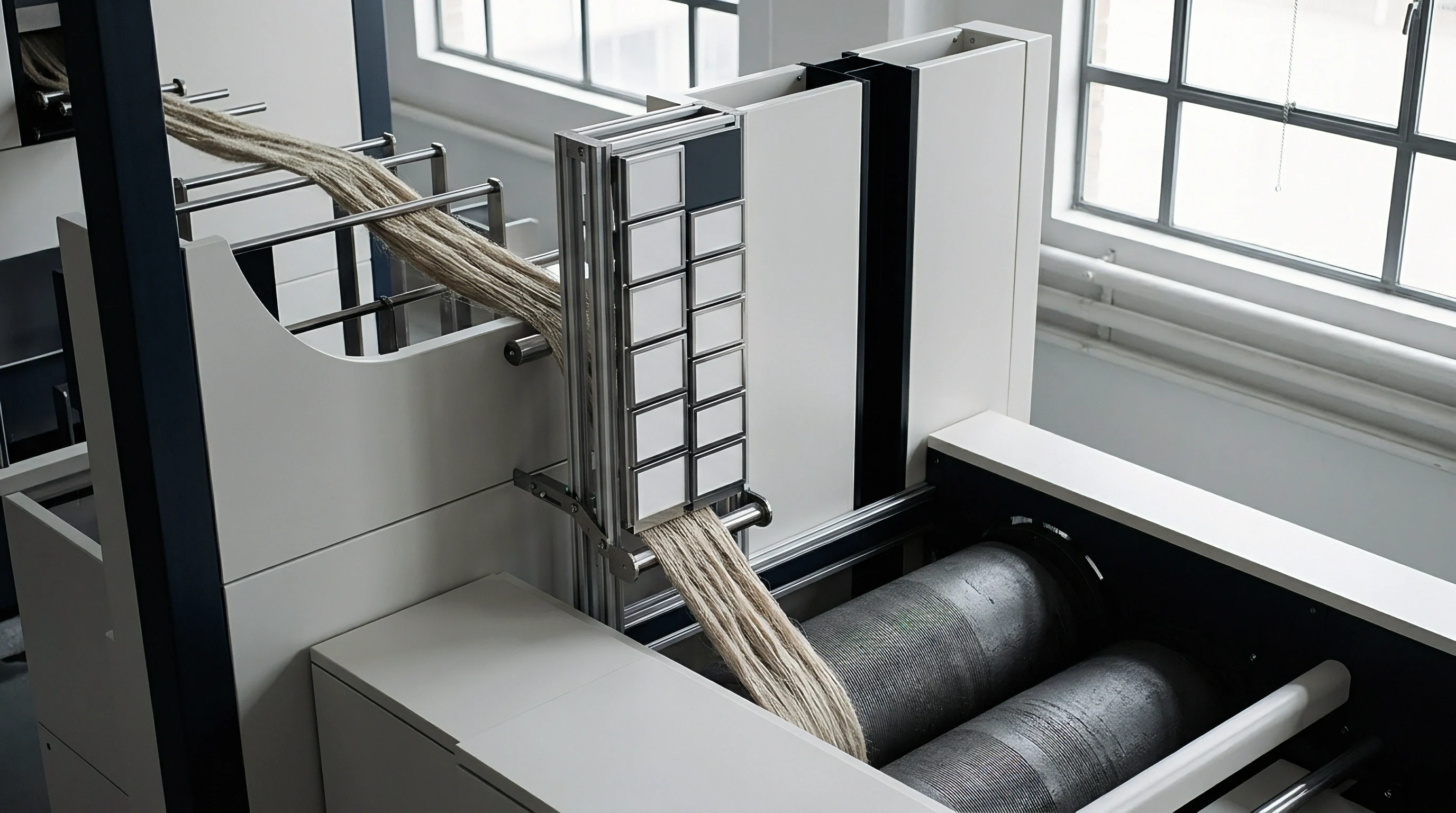
Heated liquor troughs on industrial wet-spinning frames soften technical flax fibre bundles by dissolving middle lamella pectins. Roving passes through aqueous baths held between 50 and 70 degrees Celsius before reaching the drafting rollers, where attenuated bundles split into finer elementary filaments. Mills frequently add chemical surfactants, polyethylene glycol lubricants, wetting agents, and ethoxylated fatty acids to the hot immersion liquor.
These non-volatile organic additives ease interfibre slippage during drafts exceeding ratios of twelve to one.
Standard moisture determination procedures assume that heat removes only unbound water from the lignocellulosic matrix. When mills submit wet-spun roving or dried yarn bobbins for commercial regain analysis under ISO 6741, conditioning ovens operating between 105 and 110 degrees Celsius drive mass loss through parallel mechanisms: water evaporates first, but the high drying temperatures also drive off organic dispersants long before cellulose chains begin thermal pyrolysis.
Thermal desiccation at 105 degrees Celsius strips 1.82 percent of roving dry weight through solvent volatilisation when ethoxylated castor oil concentrations exceed forty grams per litre.
Spinning chemists monitor liquor pickup ratios to regulate drafting resistance on high-speed frames. This deposits substantial amounts of processing chemicals across the roving bundle, leaving residues that cold quenching will not wash out. Across wet spinning operations, the sequence from immersion to weight determination follows a predictable path:
- Immersion Liquor Impregnation deposits non-volatile wetting agents and synthetic glycols into the cortical parenchyma of the roving strand, raising wet tenacity while introducing thermally unstable solvent fractions.
- High Draft Attenuation squeezes surplus surface liquor from the roving bundle, leaving high-boiling processing solvents trapped in internal voids by capillary forces until oven heat breaks surface bonds.
- Oven Desiccation Exposure subjects wet-spun packages to temperatures from 105 to 135 degrees Celsius, liberating light fractions of high-boiling solvent compounds alongside hygroscopic moisture.
- Mass Register Depletion records the loss of these volatilised additives as if the vanished weight were pure water, corrupting the true dry-fibre baseline.
Drafting additives may wash out during subsequent fabric scouring, but preliminary dry mass figures are still treated as acceptable trade practice despite chemical volatilisation during quality audits.

Leach
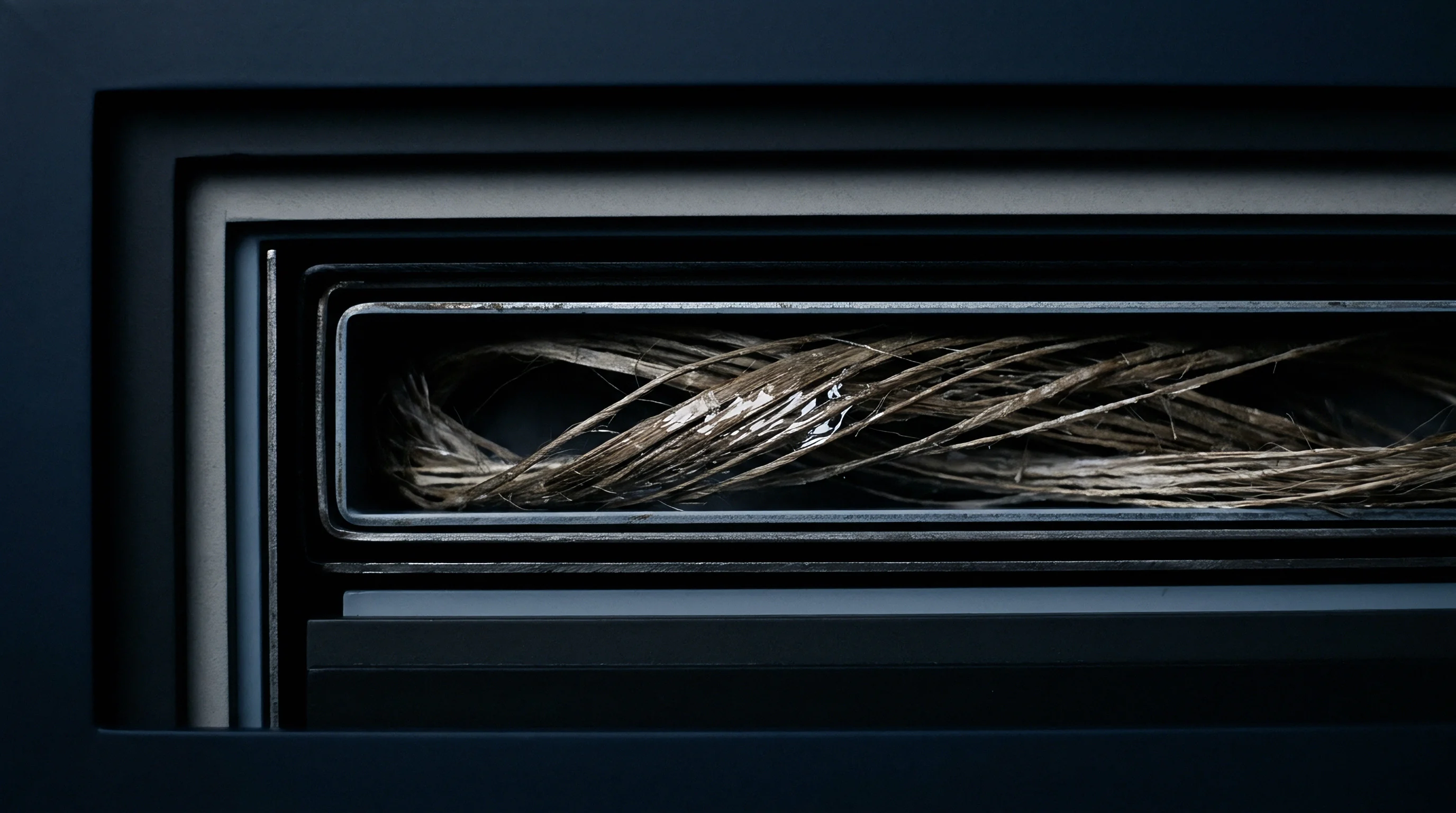
Drying chambers with forced air trigger simultaneous moisture desorption and thermolysis of low-molecular-weight processing polymers. When hot air circulates through dense roving windings at velocities above two metres per second, chemical carriers with boiling thresholds near 200 degrees Celsius undergo accelerated mass transfer through steam distillation. The escaping water vapour acts as a carrier gas, stripping non-volatile solvents, natural flax waxes, and introduced emulsifiers at temperatures thirty to fifty degrees below their standard atmospheric boiling points.
Desiccation mass loss curves deviate sharply from the Fickian diffusion profiles seen in untreated linen fibres. Untreated flax roving reaches steady-state dry mass asymptotically within ninety minutes at 105 degrees Celsius, whereas roving impregnated with polyglycol drafting aids shows continuous gravimetric reduction over four hours of sustained heating.
High drying temperatures drive off organic dispersants long before cellulose chains begin thermal pyrolysis.
Uncontrolled solvent leaching compromises mass balance integrity across international provenance declarations. Sourcing auditors tracing European Flax fibres into Asian spinning centres reconcile gross fibre consumption against outbound yarn deliveries. When drafting chemical loss is masked as moisture departure, physical segregation tallies reveal unaccountable raw material shrinkage, which mills sometimes try to offset by altering yarn counts or blending uncertified short fibres into the preparatory sliver.
- Glycol Thermal Stripping artificially elevates measured moisture content, creating false compliance with standard commercial regain percentages while lowering actual cellulose yarn yield.
- Natural Wax Co-Evaporation strips protective hydrophobic layers from flax cell walls during aggressive desiccation, leaving fibres brittle and prone to breakage during loom beaming.
- Chemical Residue Pyrolysis deposits carbonised surfactant degradation products onto internal bobbin layers, producing yellowing that complicates non-chlorine bleaching certifications.
- Inaccurate True Tare Calculations skew certified consignment net weights, causing buyers to pay virgin fibre prices for synthetic processing chemicals that leave the yarn during industrial drying.
Failure to quantify these chemical losses leads directly to Customs tariff reclassifications and substantial retroactive duties when import laboratories spot discrepancies between declared dry mass and actual solvent-free cellulose content.

Gravimetry
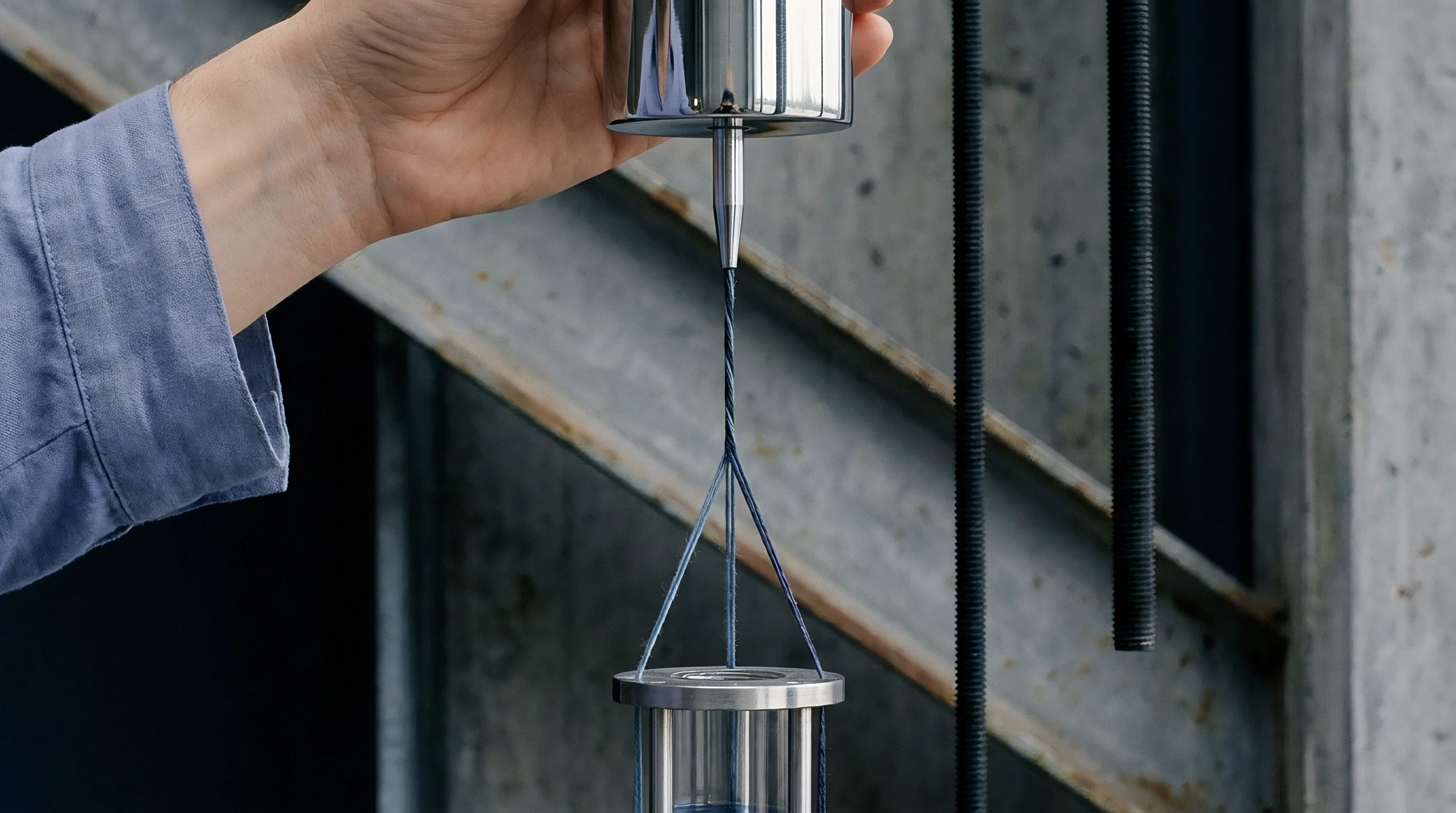
Separating volatile moisture from volatilised chemical solvents requires multi-stage differential drying. Standard textile testing ovens cannot isolate chemical evaporation because they register only the total mass change after heating. Combining dual-stage vacuum desiccation with gas chromatography mass spectrometry headspace analysis allows testing labs to isolate the solvent loss fraction.
Vacuum drying at 60 degrees Celsius under 10 millibars extracts pure moisture without exciting the vapour pressure of high-boiling non-volatile solvents; subsequent desiccation at 105 degrees Celsius then yields the exact mass fraction of escaped drafting aids.
The discrepancy compounds at scale. Sourcing contracts for certified flax yarns enforce strict tolerances on processing residues. Under European Flax audit protocols, transaction certificates track custody from scutching cooperatives to international spinning mills, relying on accurate invoice weights adjusted for moisture regain.
The table below outlines how different drying temperatures affect solvent loss across common wet-spun roving formulations:
| Immersion Solvent Formulation | Solvent Concentration (g/L) | Desiccation Temperature (°C) | Pure Water Loss (%) | Solvent Volatilisation Loss (%) | Net Measured Loss (%) |
|---|---|---|---|---|---|
| Aqueous Polyethylene Glycol 400 | 35.0 | 105 | 10.45 | 1.38 | 11.83 |
| Ethoxylated Fatty Acid Amine | 50.0 | 105 | 9.80 | 2.15 | 11.95 |
| Ethoxylated Castor Oil Blend | 40.0 | 120 | 10.12 | 2.84 | 12.96 |
| Sulfonated Vegetable Oil Base | 25.0 | 105 | 10.30 | 0.92 | 11.22 |
| Demineralised Water Control | 0.0 | 105 | 10.60 | 0.04 | 10.64 |
Commercial contracts tied to international spinning standards include specific clauses to govern mass calculations, giving auditors grounds to reject unexplained loss margins. When purchasing agreements omit explicit limits on non-volatile solvent extraction, mills can use standard twelve percent commercial moisture regain allowances to cover up fibre volume deficits.
Under European Flax standard section five, unrecorded fibre mass variations exceeding two percent invalidate the transaction certificate for the entire spinning lot.
Procurement teams protect commercial positions by maintaining an incoming verification docket that tracks raw flax inputs against dry yarn outputs, requiring four key documentary confirmations:
- Chemical Auxiliary Technical Datasheets detailing exact boiling ranges, vapour pressure curves, and thermal decomposition temperatures for all wetting solvents introduced into spinning troughs.
- Dual-Stage Desiccation Test Reports confirming that mass loss measurements isolate hygroscopic moisture from evaporated drafting surfactants and polyglycols.
- Certified Raw Fibre Inward Mass Tickets matching scutched tow and line flax bale weights against spinning lot processing orders.
- Outbound Yarn Consignment Tare Deductions demonstrating that bobbin dry weights exclude volatilised and unvolatilised synthetic processing chemicals.
Under standard commercial terms, buyer specifications incorporating ISO 6741 dry mass rules invalidate seller invoices whenever additive volatilisation skews reported yarn weight beyond agreed technical tolerances.
Discrepancy
Unaccounted chemical volatilisation corrupts the mass balance arithmetic that underpins modern provenance verification. In a standard wet-spinning run processing 20 metric tonnes of certified line flax roving, mills introduce up to 400 kilograms of chemical drafting aids into the sliver. If the mill subjects the resulting yarn to aggressive package desiccation at 120 degrees Celsius to speed up cycle times, up to 150 kilograms of processing additives evaporate into the exhaust stack alongside 2,000 kilograms of process water.
The plant then registers the entire 2,150-kilogram drop as pure moisture loss.
When this miscalculated dry mass serves as the baseline for calculating commercial weight using the standard twelve percent regain multiplier, the resulting invoice overstates genuine flax fibre volume by nearly 170 kilograms. Across containerised shipments moving thousands of tonnes between scutching mills in Normandy and spinning complexes in Zhejiang, these ghost kilograms accumulate into substantial financial distortions.
| Reconciliation Variable | Standard Calculation (No Solvent Bias) | Biased Desiccation (1.8% Solvent Loss) | Commercial Variance |
|---|---|---|---|
| Roving Input Mass at Delivery (kg) | 10,000.00 | 10,000.00 | 0.00 |
| Chemical Additives Applied (kg) | 200.00 | 200.00 | 0.00 |
| Observed Desiccation Mass Loss (kg) | 1,000.00 | 1,180.00 | +180.00 |
| Calculated Dry Bone Fibre Mass (kg) | 9,000.00 | 8,820.00 | -180.00 |
| Commercial Invoiced Mass at 12% Regain (kg) | 10,080.00 | 9,878.40 | -201.60 |
| Financial Exposure at 9.50/kg () | 95,760.00 | 93,844.80 | -$1,915.20 |
Oven mass drops that exceed pure moisture loss indicate chemical extraction during drafting.
Spinning enterprises operating under tight margins face strong financial temptation to exploit these drying variances. While flax fibres naturally retain hygroscopic salts, the central technical dilemma lies in distinguishing legitimate natural wax sublimation from deliberate application of volatilising synthetic bulking agents across multi-stage spinning sequences.
The commercial market continues to debate whether differential scanning calorimetry and thermogravimetric testing will become standard requirements on purchase orders, or if customs authorities will independently enforce strict limits on solvent volatilisation during import inspections.
Settlement
Resolving financial claims from solvent desiccation bias requires precise adjustments during commercial reconciliation. Buyers managing international flax procurement tie payment schedules directly to verified dry mass figures rather than gross scale weights on delivery. Standard contract structures place full liability for chemical volatile losses on the spinning mill whenever laboratory audits show that processing aids account for more than 0.5 percent of total package mass loss during conditioning tests.
When discrepancies surface during destination testing, import valuations are adjusted through corrective settlement algorithms. The assessment recalculates true commercial weight by stripping solvent loss percentages from baseline dry mass before re-applying statutory moisture regain figures. This pricing adjustment prevents buyers from paying virgin flax fibre rates for vanished chemicals, while creating an audit trail that preserves chain-of-custody integrity under international certification systems.
Careful purchasers treat any recorded oven mass loss above certified raw fibre moisture levels as uncompensated chemical loss that reduces net invoice value.