Pectin Matrix Shear Failure in Climate Stressed Flax
Climate heat stress reduces pectin methyl-esterification, causing premature middle lamella shear failure, higher hackling waste, and lower spun yarn counts.

Bond
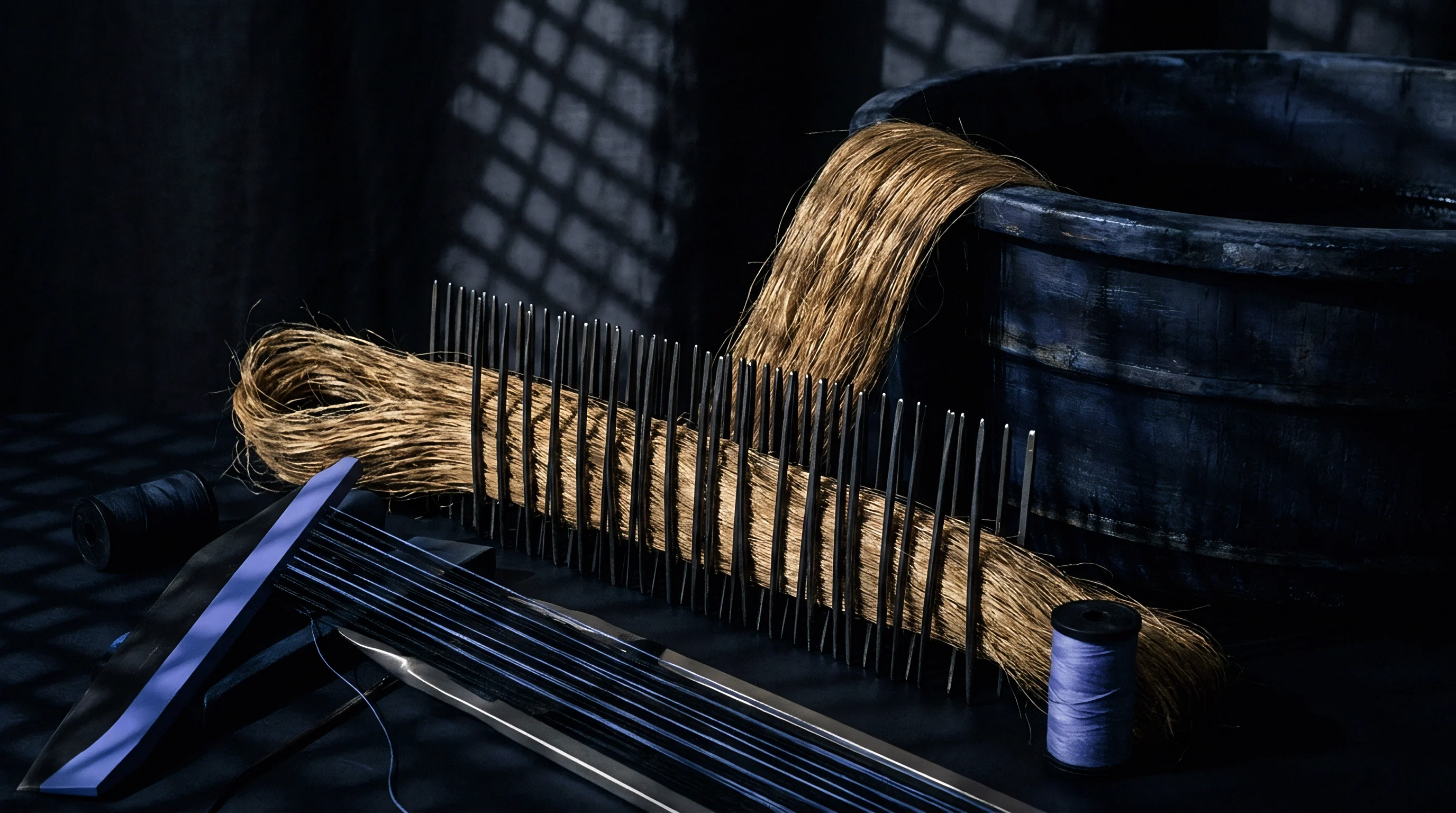
Plant cell walls rely on complex polysaccharides to cement adjacent technical fibers into structural bundles. In flax stems, this cohesion originates in the middle lamella, an extracellular region dominated by pectic substances. While crystalline cellulose microfibrils in the primary and secondary walls give elementary fibers their base tensile strength, long-staple line flax holds together because a continuous pectin network binds 10 to 40 of these fibers into technical filaments.
If growing conditions disrupt matrix synthesis or assembly, bundle cohesion fails under the mechanical forces of scutching and drafting.

Biochemical Construction of the Middle Lamella
Flax phloem tissue contains an intercellular polysaccharide matrix that governs mechanical integrity. Its primary structural component is homogalacturonan, built from linear chains of alpha-1,4-linked D-galacturonic acid residues and interspersed with branched rhamnogalacturonan-I regions bearing neutral galactan and arabinan side chains. Newly synthesized homogalacturonan enters the cell wall heavily esterified at the C-6 carboxyl positions.
Pectin methylesterases then cleave these methyl esters in blocks, leaving free galacturonic acid carboxyl groups that can coordinate with divalent cations.
How these negatively charged carboxyl groups are arranged determines the stability of the resulting supramolecular assembly. Where unesterified domains run parallel along adjacent homogalacturonan backbones, they form cooperative pockets that trap inorganic ions. The resulting network delivers the shear resistance and elasticity stems need to tolerate wind flexure in the field, and later gives harvested strands the mechanical resilience required during scutching and combing.
Calcium Bridge Density and Homogalacturonan Methylation
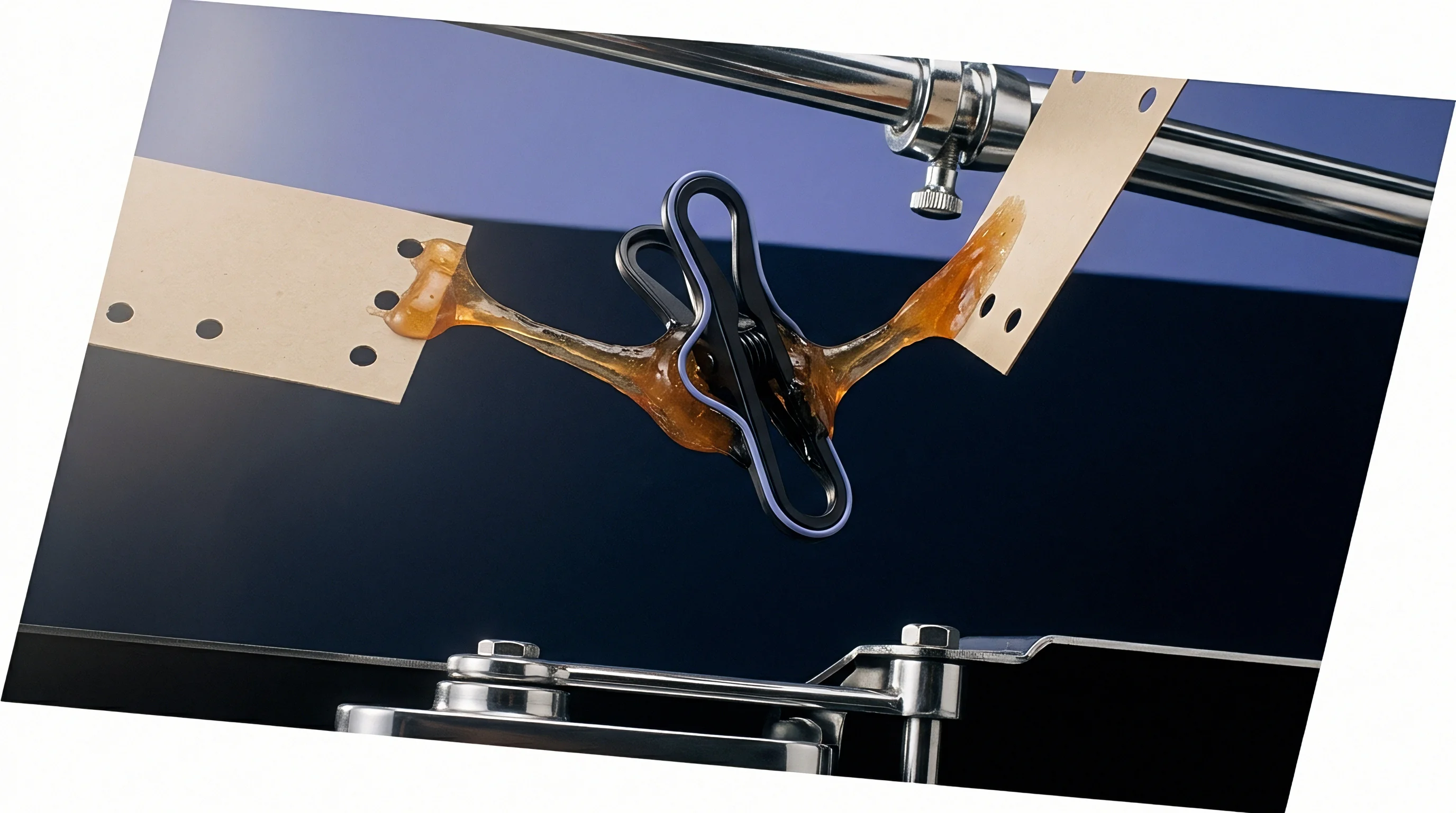
When unesterified carboxyl groups on adjacent galacturonic backbones bind divalent cations, they assemble into rigid junction zones. This egg-box arrangement allows the gelled pectin domains to withstand transverse and longitudinal shear. With sufficient calcium cross-linking, the middle lamella develops a shear modulus high enough to survive field pulling, mechanical scutching, and early hackling.
The degree of methyl-esterification acts as the primary chemical control on cross-link density. Between 55 percent and 65 percent esterification, calcium bridges form at regular, effective intervals. Above that range, too few free carboxyl groups remain for coordination, leaving a weak, uncohesive gel.
Dropping below 35 percent yields the opposite problem: an excessively dense, rigid lattice that micro-fractures under mechanical impact. Stripping those methyl groups also removes hydrophobic sites, altering moisture sorption across the fiber bundle.
Middle lamella structural integrity requires an optimal balance of methyl-esterification and calcium cross-linking to prevent bundle disintegration under processing tension.


Heat
High ambient temperatures paired with soil moisture deficits disrupt biosynthesis in developing bast tissue. Heat stress during rapid stem elongation impairs enzyme kinetics in the Golgi apparatus, where complex pectins are built before transport into the cell wall. The resulting middle lamella displays skewed stoichiometry, shorter polymer chains, and a marked loss in load-bearing capacity.

Thermal and Hydric Stress during Fiber Biosynthesis
Flax stem vascular development slows sharply once midday temperatures rise past twenty-eight degrees Celsius. Heat during vegetative growth suppresses both UDP-D-galacturonate 4-epimerase and homogalacturonan glucuronosyltransferase, directly choking off galacturonic acid production. At the same time, drought reduces transpirational pull, curbing root uptake and phloem translocation of soluble calcium ions.
Without steady hydration and calcium delivery, the plant deposits less total pectin per unit of stem volume. Bundles formed under heat stress show narrow, poorly delineated boundary zones; cross-sections examined under microscopy reveal voids and structural gaps where a continuous gel should sit.

Enzymatic Alterations under Climate Anomaly Conditions
Mid-season heat waves alter pectin methylesterase behavior while triggering endogenous pectinases and pectate lyases ahead of schedule. These enzymes randomly cleave homogalacturonan backbones well before the stem reaches maturity. The resulting fragments are too short to form extended egg-box junction zones, sharply lowering the matrix’s shear modulus.
Several distinct biochemical breakdowns occur when flax matures under heat and drought stress:
- Homogalacturonan Chain Truncation Drops median polymer weight below 120 kilodaltons, preventing the development of a continuous gel network between adjacent cell walls.
- Arabinan Side-Chain Suppression Lowers water-holding capacity in the middle lamella, leaving the matrix brittle when humidity shifts.
- Irregular Methyl-Ester Distribution Clusters esterified and de-esterified zones unevenly, creating localized stress concentrations along the bundle.
- Depressed Calcium Coordinate Density Reduces bound calcium below 1.2 milligrams per gram of dry pectin mass, preventing the gel from fully setting.
On stalks weakened by thermal stress, the mechanical impact of scutching breaks elementary cells apart instead of merely knocking away the shive. The resulting surge in short fibers is frequently misattributed to faulty retting rather than degraded stem chemistry.
| Parameter | Test Method | Optimal Baseline | Moderate Stress | Severe Thermal Stress |
|---|---|---|---|---|
| Degree of Methyl-Esterification (%) | FTIR / Titration | 58.5 ± 2.1 | 44.2 ± 3.5 | 29.8 ± 4.1 |
| Pectin Molecular Weight (kDa) | GPC-MALLS | 185 ± 12 | 132 ± 15 | 84 ± 11 |
| Bound Calcium Content (mg/g pectin) | ICP-OES | 1.85 ± 0.08 | 1.15 ± 0.12 | 0.62 ± 0.09 |
| Matrix Shear Modulus (MPa) | Nanoindentation / DMA | 420 ± 25 | 265 ± 30 | 110 ± 18 |
| Inter-Elementary Cleavage Force (mN) | Micro-tensile Stage | 48.2 ± 3.1 | 29.4 ± 4.0 | 12.1 ± 2.5 |
Early bundle splintering often reflects unseasonable weather patterns during stem elongation rather than deficiencies in retting control.


Fissure
Mechanical processing subjects flax bundles to severe friction and axial tension. In healthy fiber, shear stresses dissipate through the middle lamella as elementary fibers slide past one another during drawing, letting the strand attenuate without snapping. When heat impairs the matrix, shear failure occurs well below the tensile limit of the cellulosic primary walls.
Mechanical Shear Dynamics under Transverse and Longitudinal Loads
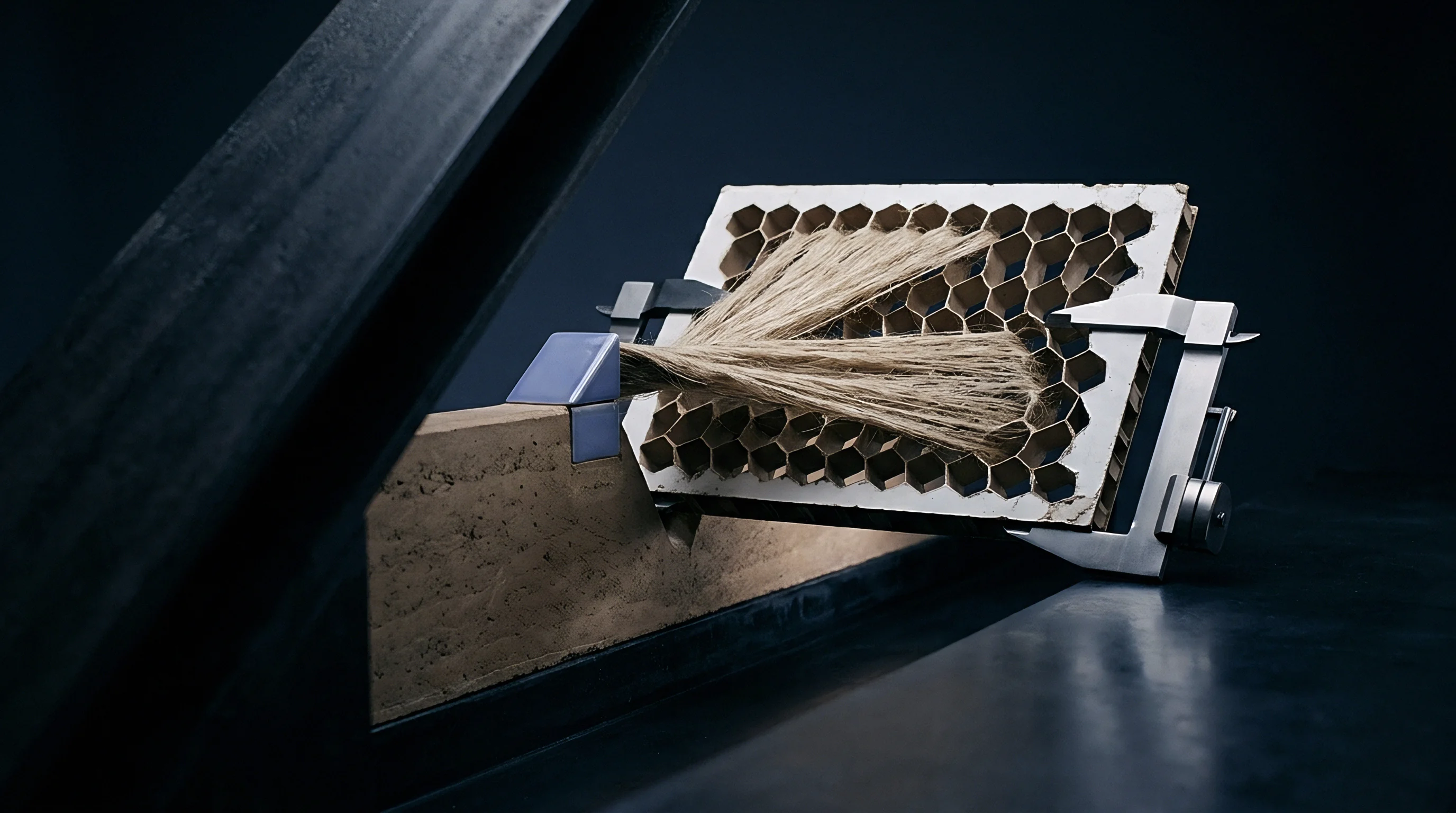
Axial loads during scutching create steep velocity gradients between neighboring elementary filaments. An intact pectin gel accommodates these shifts through viscoelastic flow. But when heat disrupts the homogalacturonan network, the yield threshold drops below the forces applied by scutching blades and hackling pins.
Rather than sliding along natural cleavage planes, the brittle matrix fractures outright. Cracks run straight down the boundary between elementary cells. Under microscopy, the middle lamella reveals smooth, glassy fracture planes characteristic of adhesive failure at the interface rather than cohesive plastic yield.

Elementary Bundle Disassembly and Cohesion Deficits
Splitting technical strands into manageable assemblies depends on even stress transfer through the matrix. When thermal damage lowers shear resistance, fibers tear apart into the short, ragged fragments known as splints or weak ends. Without inter-fiber cohesion, drafting falls apart, producing severe short-wave weight irregularities along the sliver.
Under the drag of carding wires and drafting pins, weakened pectin lets bundles disintegrate into individual elementary fibers. Measuring only 20 to 40 millimeters, these single cells cannot span the drafting zone on their own, generating heavy nep loads, floating fibers, and substantial under-card waste.
A failure of inter-elementary matrix shear strength during early mechanical drafting increases short fiber yield loss by up to thirty percent.
Misjudging the matrix shear threshold leads to ribbon collapse in the card room, causing sliver breaks, line shutdowns, and repeated cylinder re-clearing.


Bench
Laboratory screening can separate sound fiber shipments from heat-damaged lots before bales are fed to the line. Visual classing and hand-break tests miss matrix degradation entirely, because under-retted straw and heat-damaged, shear-sensitive fiber feel equally stiff in the hand. Chemical and micro-mechanical assays isolate lamellar defects before raw material reaches the mills.

Which Laboratory Methods Quantify Middle Lamella Degradation?
Micro-tensile testing provides direct measurement of matrix integrity. Mounting short technical bundles at a 5 mm gauge length on micro-tensile rigs equipped with sensitive load cells allows operators to record the shear force needed to pull elementary fibers apart. Sound fiber registers high failure loads alongside substantial elongation before break.
Biochemical testing maps overall pectin composition and cross-linking capacity. Enzymatic extraction followed by carbazole assays establishes total galacturonic acid, atomic absorption spectroscopy tracks calcium and magnesium concentrations, and high-performance liquid chromatography profiles the neutral sugars ~ galactose, arabinose, and rhamnose ~ to measure branching in the rhamnogalacturonan chains.

Spectroscopic and Titration Protocols for Degree of Esterification
Infrared spectroscopy compares carboxylate and ester carbonyl absorbances to evaluate matrix bonding. Applied to pectin extracted from raw fiber samples, Fourier-transform infrared (FTIR) spectroscopy delivers rapid, consistent readings for degree of esterification. Calculating peak area ratios between 1740 cm⁻¹ (esterified carbonyl stretch) and 1600 cm⁻¹ (carboxylate stretch) determines the proportion of methylated carboxyl groups directly.
Incoming quality control protocols for high-risk flax rely on four primary checkpoints:
- Infrared Degree of Esterification Screening Rejects lots with esterification levels below 40 percent before opening bales.
- Micro-tensile Inter-Fiber Shear Verification Evaluates 50 bundle specimens per lot to confirm average shear resistance exceeds 35 millinewtons.
- Inductively Coupled Plasma Cation Analysis Verifies that bound calcium exceeds 1.2 milligrams per gram of dry fiber.
- Automated Short Fiber Content Analysis Records fiber fractions under 15 millimeters generated during simulated carding.
| Property Measured | Standard / Method Code | Sample Preparation | Acceptable Operating Target | Rejection Threshold |
|---|---|---|---|---|
| Degree of Esterification (%) | ISO 2370 / FTIR Method | Enzymatic Pectin Extraction | 52.0 to 65.0 % | < 40.0 % |
| Bundle Shear Strength (MPa) | ASTM D3822 (Modified) | 5 mm Single Bundle Clamping | > 380 MPa | < 240 MPa |
| Bound Calcium Concentration | ISO 6741 / ICP-OES | Nitric Acid Ash Digestion | > 1.4 mg/g dry fiber | < 0.9 mg/g dry fiber |
| Metric Fibre Number (Nm) | ISO 1973 (Vibroscope) | Conditioned Single Strand | 200 to 260 Nm | < 150 Nm |
Inclusion of ISO 2370 Clause 6.3 in purchase contracts establishes a mandatory degree of esterification threshold of fifty-two percent, shifting financial liability for premature bundle division back to the scutcher.

Sliver
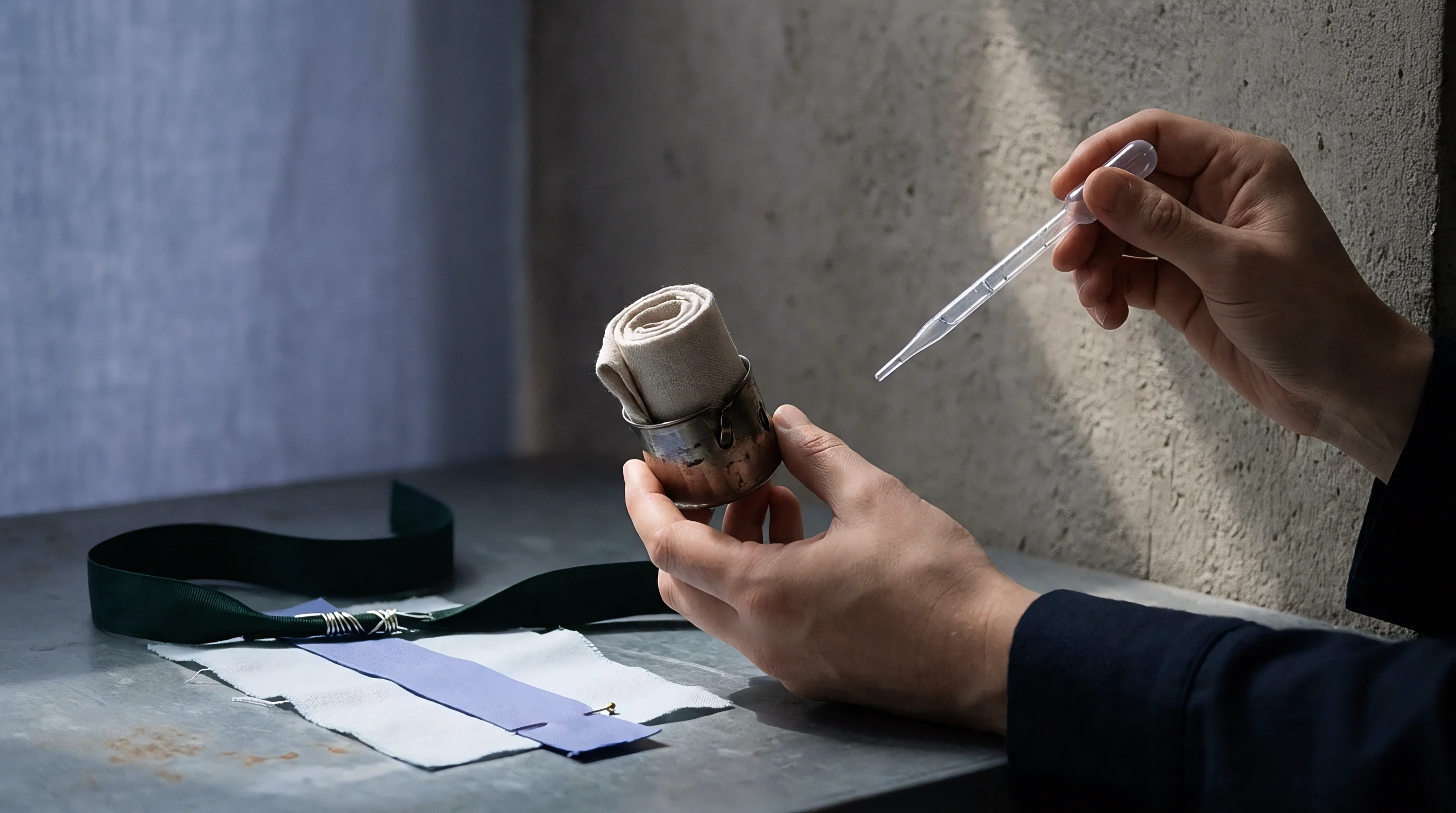
Drawing frames depend on predictable friction to turn hackled ribbons into uniform sliver. When thermal degradation damages the middle lamella, drafting becomes unstable. The loss of lateral cohesion upsets slip-draft dynamics in roving and wet spinning, driving down yarn quality and frame output.

Drafting Zone Instability and Fiber Length Distribution
Defective middle lamellae break down under roller tension, allowing strands to lurch through the nip. Rather than attenuating smoothly, fiber passes in dense, un-drafted clumps followed by stretched, thin sections. When drafting slip generates these repeating mass variations, yarn tensile strength falls by as much as forty percent.
Through successive drawing passages, faller pins shatter the remaining brittle pectin. The length distribution skews downward, accumulating short fibers that drift outside the control of the drafting aprons.

Spinning Frame Parameters and End Breakage Rates
Trough water at sixty degrees Celsius dissolves degraded pectin gels almost immediately. In standard wet spinning, warm water softens the middle lamella just enough for elementary fibers to slide during final attenuation before the ring inserts twist. On heat-stressed lots with low esterification and truncated chains, the hot bath washes the binder away entirely.
With the matrix gone before twist is inserted, the attenuated strand has no internal strength. End breakages climb from normal operational levels of 15 per 100 spindle hours to more than 120, rendering continuous spinning impossible.
At a wet spinning trough temperature of 60°C, fiber bundles with degree of esterification below 38% exhibit a 300% increase in end breakage rates compared to standard line flax.
Spinning mills running heat-damaged lots adjust frame variables through a five-step sequence:
- Lower wet spinning trough water temperature from 60 degrees Celsius to 35 degrees Celsius to slow pectin dissolution.
- Reduce break-draft ratios in the drafting zone from 1.25 to 1.08 to prevent bundles from splitting early.
- Increase roving twist factors by 15 percent to give elementary fibers mechanical hold.
- Decrease main drafting roller speed by 20 percent to lessen dynamic impact shear stress on weak middle lamellae.
- Inject soft chemical cross-linking agents into the roving bath to replace missing calcium bridges.
Shortening the drafting zone and easing roller pressures helps preserve strand continuity across climate-damaged stock.

Invoice
The financial impact of matrix shear failure accumulates long before yarn reaches a loom. Scutchers, hacklers, and spinners absorb compounding yield losses that steadily push up the cost per kilogram of usable product. Flaws in the chemical matrix translate directly into collapsed margins on the finished invoice.

Hackling Yield Degradation and Waste Multipliers
Combing pins pull heavy volumes of short tow whenever the intercellular binder lacks shear strength. Normal long-staple flax yields around 60 percent long line and 30 percent tow during hackling, alongside roughly 10 percent dust and shive loss. On heat-stressed lots, long line yield falls to 38 percent while tow climbs to 50 percent.
Because tow trades at only 25 percent to 30 percent of the price of line fiber, shifting the balance toward combing waste destroys raw material value, forcing spinners to absorb initial bale costs over a much smaller volume of line flax.

Delivered Yarn Economics per Metre across Target Counts
Linen pricing tracks yarn fineness closely. Sound line flax routinely spins to Nm 50 (20 lea) or Nm 60 (24 lea). Heat-damaged fiber cannot sustain spinning tension at those densities, capping practical production at heavier counts like Nm 26 (10 lea) or Nm 39 (15 lea).
Dropping from Nm 60 to Nm 26 increases cloth weight per square meter, requiring substantially more raw fiber for every finished meter. Compounding poor hackling yields, frame downtime from end breaks, and heavier count requirements drives unit costs up sharply.
| Cost & Output Metric | Unit of Measure | Baseline Flax Lot | Moderate Stress Lot | Severe Shear Defect Lot |
|---|---|---|---|---|
| Scutched Fiber Purchase Price | EUR / kg | 4.80 | 4.20 | 3.50 |
| Hackling Long Line Yield | % mass | 62.0 % | 48.0 % | 36.0 % |
| Effective Hackled Line Fiber Cost | EUR / kg | 7.74 | 8.75 | 9.72 |
| Maximum Spinnable Yarn Count | Metric Count (Nm) | Nm 60 | Nm 39 | Nm 26 |
| Spinning Frame Efficiency | % running time | 94.5 % | 82.0 % | 61.5 % |
| Finished Yarn Cost (Wet Spun) | EUR / kg | 14.20 | 18.90 | 26.40 |
| Fabric Weight (Target 150g/m²) | Cost EUR / metre | 2.13 | 2.84 | 3.96 |
Purchase agreements in vulnerable growing regions increasingly demand strict analytical documentation:
- Certificate of Degree of Esterification Requires FTIR spectroscopy data for each batch attached to the bill of lading.
- Hackling Yield Guarantee Clause Imposes rebates if combed long line output falls under 52 percent.
- Maximum Count Capability Warranty Requires compensation if delivered fiber cannot spin to agreed Nm targets.
- Heavy Metal and Calcium Titration Report Confirms adequate mineral content to exclude agronomic cross-linking deficiencies before shipping.
Whether breeding programs can stabilize pectin synthase expression before summer heat destabilizes traditional European flax regions remains an open question.