Staple Length Distribution Analysis and Wet Spinning Performance in Flax Processing
Staple length distribution dictates wet spinning limits because unguided short fibers trigger attenuation waves that multiply end breaks and inflate cost per meter


Comb
A comb sorter bed loaded with twenty milligrams of degummed flax displays the mechanical divergence between line and tow in thirty minutes of manual needle preparation. Technicians lower the faller bars, draw the fibers forward with wide grip tongs, and align the base ends along the zero datum line. The resulting array reveals the true staple length distribution across the bundle specimen.
Buyers assessing scutched flax frequently accept an aggregate metric fiber number without isolating the short fiber tail, obscuring losses that surface downstream during wet attenuation. Bast fiber bundles behave as variable composite structures bound by intracellular pectins; an average length figure hides the standard deviation, the coefficient of variation, and the sub-twenty-millimeter fiber mass that drops into the wet spinning cellar as sludge.
Laboratory determination of flax staple distribution relies on manual array fractionation or optical scanning instruments adapted from bast sorting standards. ISO 6989 specifies comb sorter methods for measuring fiber length by tuft fractionation, establishing numerical length frequencies alongside cumulative mass distribution curves. Unlike cotton, flax elementary bast cells ~ measuring ten to thirty millimeters in length and twelve to twenty-five micrometers in diameter ~ aggregate into long technical bundles reaching four hundred to nine hundred millimeters in unhackled line.
Mechanical hackling breaks these structural aggregates down into spinnable line slivers while releasing short, branched bundles categorized as hackled tow.
The cumulative mass fraction of fibers shorter than thirty millimeters dictates downstream drafting stability in fine counts.
Coarse bundles resist roller grip, causing variable gripping force across the drafting rollers when the length distribution exhibits high positive skewness. The drafting zone relies on uniform frictional contact to attenuate the strand before twist insertion. Short technical bundles lack the surface contact area necessary to sustain continuous drafting tension, producing periodic mass fluctuations known as drafting waves.
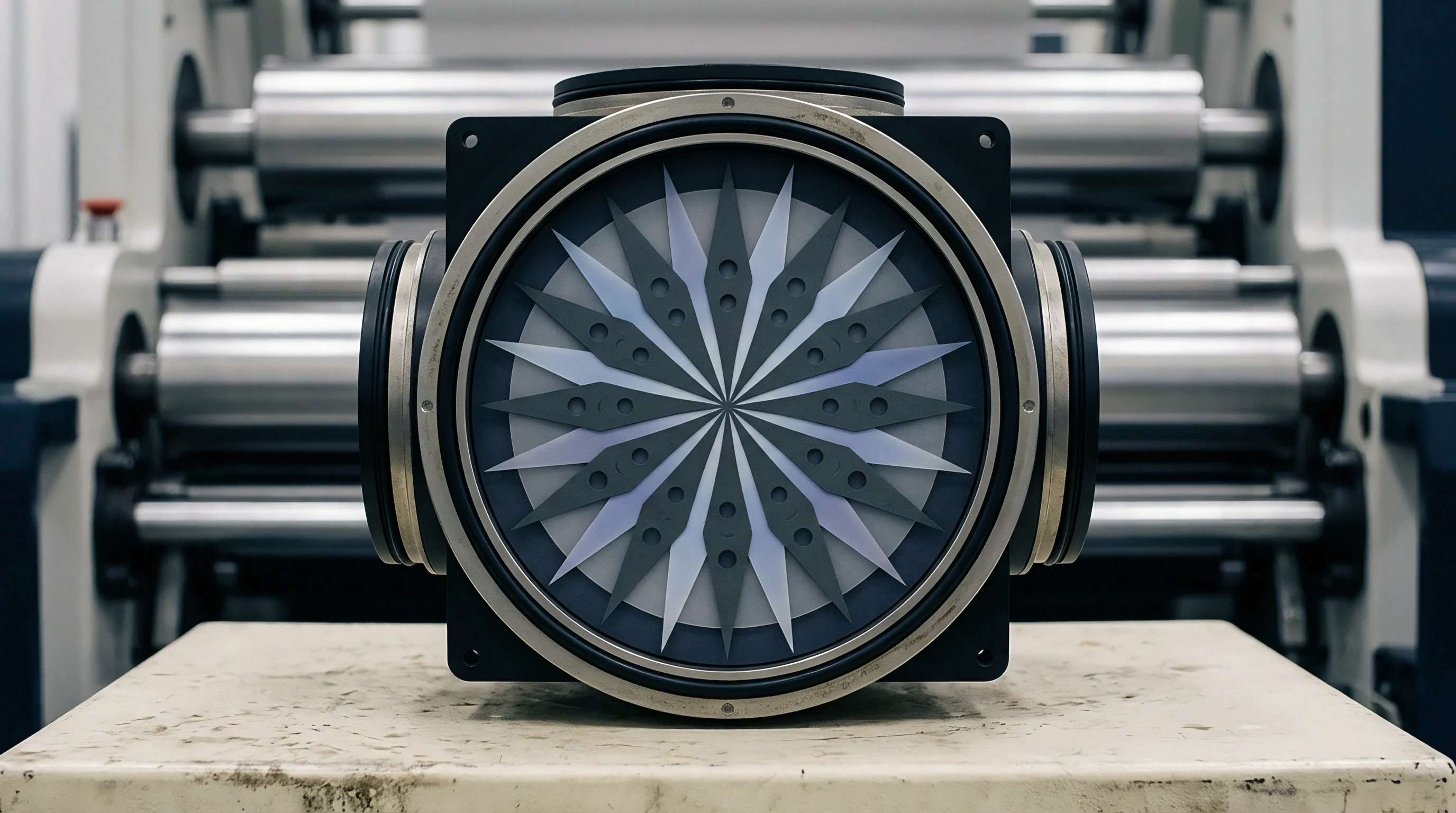
Staple Length Dispersal across Bast Bundles
Fractionating a scutched flax lot on a dual-bed comb sorter yields discrete length groups sorted in descending five-millimeter increments. The technician weighs each length bracket on a microbalance sensitive to 0.01 milligrams to construct the fiber beard diagram. Industrial line flax suitable for wet spinning into counts exceeding Nm 39 displays a modal staple length between 180 and 260 millimeters, with a short fiber content below twelve percent by weight.
Dew-retted stocks from Western Europe show different staple profiles compared to frost-retted continental crops or water-retted Asian fibers. Controlled water retting preserves bundle integrity, producing lower coefficients of length variation under identical hackling pins.
Fiber processors classify length parameters through numerical indices that correlate with spinning stability:
- Mean length by mass registers the central distribution weight, calculated across all sorted five-millimeter tuft divisions after desiccator conditioning.
- Modal staple length identifies the most frequent fiber length class within the comb sorter array, indicating the primary bundle population.
- Upper quartile length measures the boundary value above which twenty-five percent of the sample fiber mass resides, governing the initial ratch setting.
- Short fiber percentage isolates the proportional mass of bundles falling below twenty-five millimeters, predicting trough fallout and ring traveler jams.
Bale moisture fluctuates during shipment, and shifts in relative humidity alter bundle brittleness during mechanical sorting, skewing the recorded percentage of short fragments. Unconditioned testing exaggerates the lower tail of the staple distribution curve through mechanical fiber fracture under the sorter pins.
| Fiber Grade Designation | Mean Length (mm) | Length CV (%) | Short Fiber Mass Below 25 mm (%) | Bundle Fineness (dtex) |
|---|---|---|---|---|
| Hackled Line 1st Quality (Courtalin) | 245 | 28.4 | 6.2 | 18.5 |
| Hackled Line 2nd Quality (Dew Retted) | 195 | 36.1 | 11.8 | 24.0 |
| Carded Tow Grade A (Machine Scutched) | 72 | 54.8 | 26.5 | 38.2 |
| Carded Tow Grade C (Recovered Waste) | 44 | 68.2 | 42.1 | 52.0 |
A buyer specifying line flax contracts under the standard clauses of the Confédération Européenne du Lin et du Chanvre (CELC) secures recourse against length variance through designated commercial tolerances: an unagreed rise of four percent in the fraction of fibers below twenty-five millimeters entitles the purchasing mill to debit the lot value by an equivalent price differential or reject the shipment before the hackling room breaks the protective bale bands.

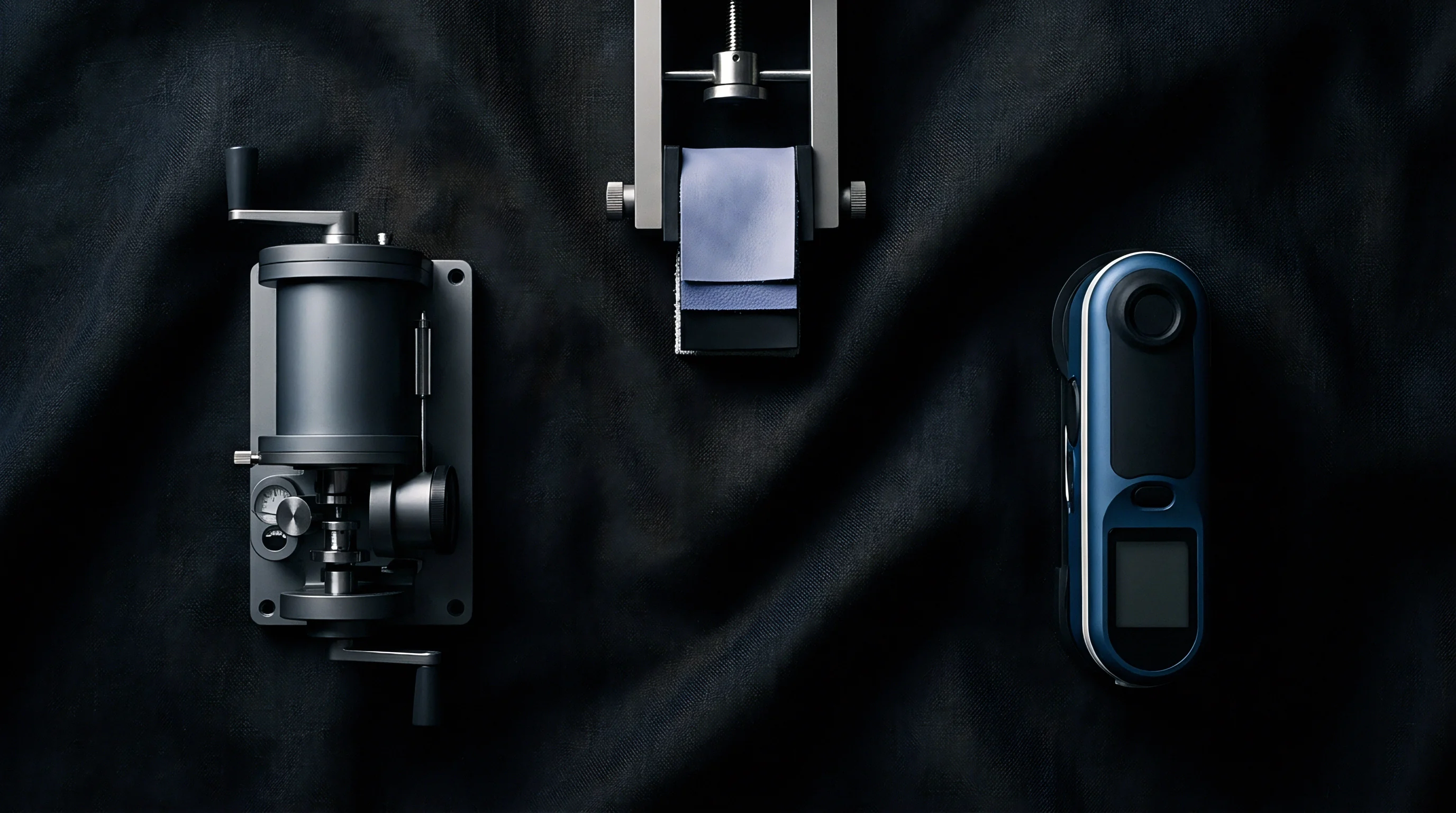
Bath
Hot water immersion alters the viscoelastic response of the flax sliver as roving passes through a heated water bath immediately before entering the wet spinning drafting zone. Water temperature governs pectin rheology: the middle lamella cement, composed of complex rhamnogalacturonans, xylogalacturonans, and calcium-bound polygalacturonic acids, softens rapidly between 60 degrees and 70 degrees Celsius. This biochemical transition permits individual elementary fibers to slide past one another under moderate drafting forces without breaking the crystalline cellulose cores.
Immersing dry flax bundles in water at ambient temperatures produces minimal bundle division. The pectin lamellae remain rigid, compelling the front drafting rollers to break technical bundles by brute tension, which causes fiber fragmentation, excessive roller wrap, and thick slub formations. Raising the trough water to 65 degrees Celsius solubilizes unbound arabinogalactans, softening the structural matrix and converting the thick technical flax bundle into fine sub-bundles and individual elementary fibrils directly within the drafting nip.
Flax spinning efficiency collapses when liquor exchange rates fail to evacuate dissolved hemicelluloses from the trough.
Chemical analysis of wet spinning bath liquor reveals steady accumulation of dissolved organic solids, polyuronides, and calcium salts. As these compounds concentrate in the trough, the hydration rate of incoming roving declines. Hard water complexes with liberated pectins, forming insoluble calcium pectate precipitates that adhere to roller flutes and yarn guides.

Middle Lamella Thermal Dissociation
Thermal softening follows precise kinetic curves determined by retting quality and chemical history. Over-retted flax contains degraded middle lamellae that collapse prematurely at 50 degrees Celsius, releasing short elementary fibers that wash away into the bath collection channel. Under-retted flax retains resistant, highly esterified pectin compounds that require 75 degrees Celsius and extended dwell times to soften.
Wet spinning frame designs maintain a bath travel distance between 400 and 700 millimeters. At delivery speeds of twenty meters per minute, the roving resides in the bath liquor for approximately two seconds, demanding immediate water penetration into the core of the twisted roving package.

Wetting Trough Liquor Management
Industrial wet spinning floors operate continuous bath replenishment schedules to stabilize softening chemistry:
- Fill the stainless-steel immersion reservoir with softened water adjusted to a total hardness rating below 3.0 French degrees.
- Engage the submerged steam injection manifolds to stabilize liquor temperature between 64 and 68 degrees Celsius across all frame divisions.
- Introduce non-ionic wetting surfactants at a concentration of 1.5 grams per liter to accelerate liquid penetration into the compacted roving core.
- Maintain a constant freshwater overflow displacement of twenty liters per hour per frame side to evacuate dissolved polysaccharides.
- Drain, mechanically descale, and neutralize the trough channel every 120 operating hours to eliminate bacteriological biofilms.
Drafting resistance shifts with crop harvest conditions, as summer-harvested bast stems demand higher trough temperatures than winter-stored material to yield identical attenuation.


Draft
The drafting zone governs yarn count uniformity through frictional constraint. Wet spinning machines utilize an inclined two-roller drafting system equipped with double-fluted bottom steel rollers and synthetic rubber or polyurethane-covered top pressure rollers. Ratch defines the distance between the nip line of the feed rollers and the nip line of the delivery rollers.
Because cold water arrests drawing slippage, flax wet spinning relies on heated liquor to soften the pectin binder, allowing a ratch distance between 45 and 80 millimeters ~ significantly shorter than the mean staple length of the raw bast bundles ~ so technical bundles dissociate progressively through the drafting field.
When the ratch setting extends too far beyond the softened bundle length, floating fibers lose guidance, accumulating into erratic clouds that enter the twist zone as thick yarn defects. Conversely, an excessively short ratch traps unbroken technical bundles across both nip lines simultaneously. The front rollers then tear the fibers apart by tensile failure, destroying bundle continuity, wearing the top roller cots, and elevating roving breakage rates.

Ratch Spacing Relative to Span Length
Mechanical setup begins with optical staple length distribution analysis. Fiber technicians determine the 2.5 percent and 50 percent span lengths from cumulative frequency curves generated by automated fibrographs or optical scanners. The 2.5 percent span length indicates the distance spanned by the longest two-and-a-half percent of fibers in the beard, serving as the physical limit for roller clearance.
Setting the wet spinning ratch equal to the 2.5 percent span length plus five millimeters provides mechanical clearance against fiber pinching, preserving bundle attenuation without crushing the cellulose structure.

How Does Span Length Dictate Roller Setting?
Determining the optimal distance between roller nips involves evaluating both staple distribution tails. A raw flax lot exhibiting a broad, multi-peaked staple distribution invalidates standard single-point ratch settings. If the upper length tail exceeds 250 millimeters while thirty percent of the mass sits below forty millimeters, the drafting system operates under contradictory mechanical regimes.
Under ISO 2370 specifications, bundle fineness testing determines the draft limit before mechanical roller slip compromises count stability.
Mechanical control variables in the wet drafting zone govern yarn mass uniformity:
- Drafting ratio sets the relative surface speed between front and back rollers, spanning factors from 8x on coarse yarns to 22x on fine counts.
- Roller clamping force applies mechanical loads between 250 and 450 Newtons per spindle, counteracting bundle sliding resistance within the water film.
- Top roller hardness measures between 80 and 90 Shore A durometer, balancing grip contact area against cot abrasion from abrasive flax shives.
- Saddle traverse movement oscillates the strand horizontally across the roller face by five to ten millimeters, distributing mechanical wear evenly across the synthetic rubber cot.
Finer counts demand tighter spreads, and any increase in fiber length variation requires a corresponding expansion in drafting ratch to prevent fiber fracture.
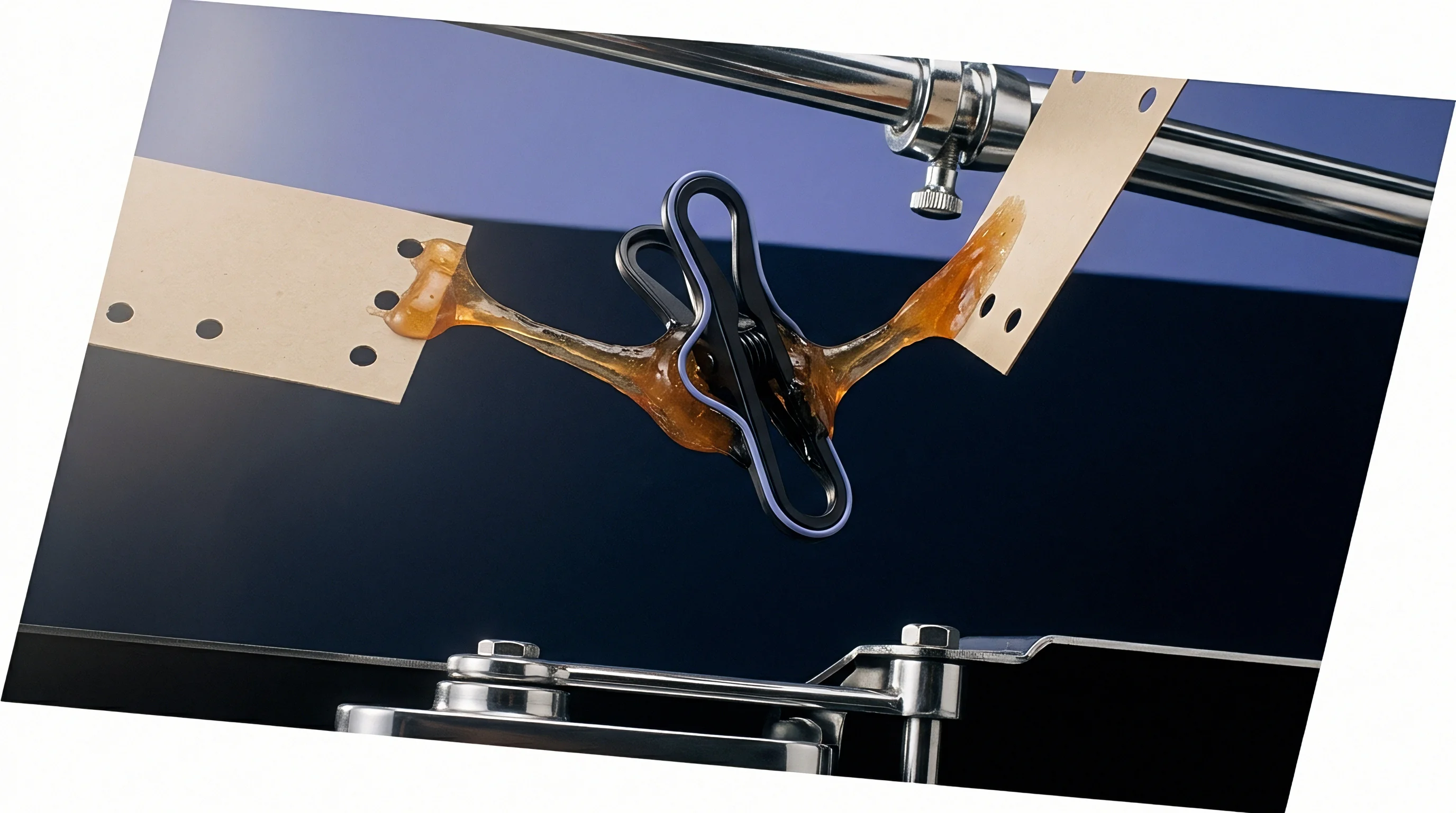

Breakage
End breakages on the ring rail expose every deficiency in the incoming staple distribution. When an attenuated strand emerges from the front roller nip, it enters the twist triangle devoid of structural integrity. Tensile strength develops only after mechanical twist, delivered by the rotating spindle and traveler, propagates up the strand toward the front roller grip.
If the staple distribution contains an excessive proportion of fragments shorter than the drafting zone ratch, these unguided elements drift into the strand erratically, forming thick slubs immediately adjacent to un-twisted thin sectors.
Tensile failure occurs at the junction of the thin sector and the twist triangle. The spinning tension generated by traveler friction and centrifugal balloon drag concentrates squarely on the mass deficit, snapping the strand before it absorbs traveler rotation. Monitoring ends down per 1,000 spindle hours across eight-hour shifts provides direct verification of staple uniformity.
When the short fiber content by weight shifts from eight percent to sixteen percent, end breaks routinely escalate from twenty to over one hundred per 1,000 spindle hours on metric count Nm 39.
Because fiber length governs the spinning limit, thin spots create weak zones along the delivered yarn axis. Bast bundles contain structural flaws, known as dislocation nodes or kink bands, induced by mechanical scutching and carding. These internal dislocations act as stress concentrators during liquid drafting; when exposed to spinning tensions above 0.15 Newtons per tex, fibers shear across these transverse nodes, inducing yarn collapse on the frame.
Cohesive drafting force remains stable only when the staple length distribution curve follows a unimodal Gaussian trajectory.

Drafting Force Dynamics and Strand Separation
Direct measurement of dynamic drafting force within the wet trough zone demonstrates sharp resistance spikes as thick bundle nodes enter the roller nip. High drafting forces correlate with uneven pectin dissolution and excessive bundle coarseness. When drafting resistance exceeds the tensile limit of the softened strand behind the nip, premature breakage occurs within the bath itself, wrapping the feed rollers and halting roving feed.

Where Do Attenuation Waves Trigger End Failures?
Attenuation waves generate rhythmic mass discrepancies along the strand axis. As floating fibers lag behind the rear roller delivery speed, they gather into an unorganized mass until the front roller grip captures them en masse. This action pulls a dense clump through the nip, followed immediately by an attenuated void.
The twist inserted by the spindle flows preferentially into the thin void, leaving the thick clump structurally weak. As the strand traverses the anti-balloon ring, aerodynamic flutter pulls the low-twist slub apart.
| Yarn Count Target (Nm) | Fiber Mean Length (mm) | Short Fiber Mass (<25 mm, %) | Draft Ratio | Spindle Speed (RPM) | End Break Rate (per 1,000 SpH) |
|---|---|---|---|---|---|
| Nm 15 (Coarse Furnishing) | 95 | 22.4 | 8.5 | 6,800 | 18 |
| Nm 26 (Standard Apparel) | 140 | 14.2 | 12.2 | 6,200 | 24 |
| Nm 39 (Fine Shirting) | 190 | 9.8 | 15.8 | 5,500 | 38 |
| Nm 60 (Handkerchief Grade) | 230 | 5.4 | 19.5 | 4,800 | 65 |
The operational divide between acceptable spinning performance and continuous frame disruption centers on whether an unmonitored drop in bundle separation rate within the hot bath can be compensated by adjusting mechanical twist multipliers on the ring frame without degrading finished yarn softness.


Invoice
Fibre costs dominate the financial structure of the wet spinning mill, representing fifty-five to sixty-five percent of the total manufactured yarn cost per kilogram. Hackling yield establishes the initial economic threshold. Processing raw scutched flax through an automated hackling line separates long line slivers from short hackled tows.
A high-grade scutched flax yielding fifty-eight percent hackled line and thirty-two percent hackled tow produces an acceptable cost balance. A lower lot yielding forty-six percent line flax shifts twelve percent of the incoming raw material mass into the lower-value tow stream, elevating the net cost per kilogram of the resulting line sliver by over twenty percent before spinning commences.
Landed costs accumulate through systematic waste allowances across preparatory processing. From hackled line sliver through spread boards, drawing passages, and roving frames where aprons control the floating mass, the mill sheds an additional four to seven percent of fiber mass as comber waste and floor sliver. Wet spinning introduces further losses: insoluble pectins dissolve into the trough water, eliminating two to three percent of dry matter weight, while fiber fragments wash into the filtration sumps.
These physical losses elevate the required fiber purchase volume per metric ton of packaged yarn.
Tension spikes snap weak splices when automatic cone winders equipped with optical clearers cut away slubs, thick sections, and thin points generated by staple irregularities. An erratic staple distribution increases yarn clearer cuts from forty per hundred thousand meters to upwards of two hundred cuts. Each cut produces yarn waste and consumes machine cycle time, decreasing winding productivity and inflating conversion costs.
Worked Cost Model: Hackling Yield and Spinning Efficiency
Take an operational run processing a twenty-metric-ton lot of Western European dew-retted scutched flax priced at 4.80 Euros per kilogram landed at the mill gate. The contract specifies delivery into wet-spun yarn of metric count Nm 39 for plain shirting fabrics. Calculate the financial yield under two contrasting staple distribution scenarios:
Lot A exhibits premium staple parameters: 220-millimeter mean bundle length, 27 percent length coefficient of variation, and 7.5 percent short fiber mass below twenty-five millimeters. Mechanical hackling achieves a 56 percent line yield, producing 11,200 kilograms of line sliver and 6,800 kilograms of tow, with 2,000 kilograms of total sorting dust and shive waste. Tow recovers an immediate secondary market value of 1.90 Euros per kilogram.
Crediting the tow value against the initial 96,000 Euro fibre outlay leaves a net line material cost of 83,080 Euros, establishing the un-spun line cost at 7.42 Euros per kilogram. Wet spinning conversion runs smoothly at thirty-two end breaks per 1,000 spindle hours, achieving a ninety-one percent machine efficiency rating. Total spinning, winding, and bleaching losses equal five percent of input mass.
The finished Nm 39 yarn yield reaches 10,640 kilograms, fixing the raw material component of the finished yarn at 7.81 Euros per kilogram. Adding fixed and variable spinning conversion costs of 4.20 Euros per kilogram yields a total landed yarn cost of 12.01 Euros per kilogram.
Lot B exhibits degraded staple characteristics: 165-millimeter mean bundle length, 42 percent length coefficient of variation, and 17.8 percent short fiber content below twenty-five millimeters. The lower staple stability forces the hackling combs to extract more tangled fiber, reducing hackled line yield to 47 percent. The process yields 9,400 kilograms of line sliver, 8,200 kilograms of tow, and 2,400 kilograms of waste.
Crediting the tow value of 15,580 Euros leaves a net raw material cost of 80,420 Euros applied across 9,400 kilograms of line sliver, driving the un-spun line cost to 8.56 Euros per kilogram. Downstream wet spinning performance deteriorates under the short fiber burden. End breaks surge to eighty-two per 1,000 spindle hours, dragging machine efficiency down to seventy-eight percent.
Heavy clearer cuts on the winding frames, combined with elevated trough sludge losses, push total processing waste to nine percent. The finished Nm 39 yarn yield drops to 8,554 kilograms, raising the raw material share to 9.40 Euros per kilogram. Reduced spinning efficiency inflates conversion expenses to 4.95 Euros per kilogram due to excessive labor interventions and downtime overhead.
The resulting yarn cost hits 14.35 Euros per kilogram.
| Processing Parameter | Lot A (Premium Staple) | Lot B (Degraded Staple) | Variance Impact |
|---|---|---|---|
| Scutched Flax Input (kg) | 20,000 | 20,000 | Baseline parity |
| Hackled Line Sliver Yield (%) | 56.0 | 47.0 | -9.0 percentage points |
| Hackled Tow Recovered (kg) | 6,800 | 8,200 | +1,400 kg lower-value tow |
| Line Sliver Net Cost (EUR/kg) | 7.42 | 8.56 | +1.14 EUR/kg |
| Spinning Frame Efficiency (%) | 91.0 | 78.0 | -13.0 percentage points |
| Finished Nm 39 Yarn Output (kg) | 10,640 | 8,554 | -2,086 kg finished yarn |
| Final Landed Yarn Cost (EUR/kg) | 12.01 | 14.35 | +2.34 EUR/kg (+19.5%) |
| Woven Metre Cost (EUR/m, 140 g/m²) | 1.68 | 2.01 | +0.33 EUR/m fabric cost |
Converting yarn cost into woven fabric reveals the financial consequence for the textile procurement desk. Plain shirting linen at 140 grams per finished square meter consumes 0.140 kilograms of yarn per square meter, excluding weaving crimp and seam allowance waste. Factoring an eight percent loom waste allowance pushes real yarn consumption to 0.151 kilograms per square meter.
A cost penalty of 2.34 Euros per kilogram of delivered yarn adds thirty-five Euro cents directly onto every woven meter produced on the loom floor. When a weaving contract demands 100,000 finished meters of apparel cloth, accepting Lot B on an initial procurement discount of twenty Euro cents per kilogram of raw flax generates an outright operational loss of 31,000 Euros once the fabric clears the finishing inspection table.
Overlooking staple distribution variance during fiber procurement transfers unmanageable conversion costs directly onto spinning frames, wiping out projected yarn margins and driving loom efficiency down through broken ends in weaving.