Laboratory Testing Protocols for Verifying Pure Linen Composition Ratios
Laboratory verification of pure linen composition requires ISO 1833 chemical dissolution paired with optical node analysis and standard moisture regain corrections.


Solvent
Quantitative binary fiber analysis uses selective chemical extraction to separate cellulosic flax from synthetic or animal polymers. Standard laboratory procedures under ISO 1833-11 specify reagents that dissolve secondary fibers while leaving pure flax cellulose intact. For flax and polyester blends, concentrated sulfuric acid at controlled temperatures removes the synthetic component to isolate dry bast residue for weighing.
Blends with polyamide require 80 percent formic acid extraction, stripping nylon filaments without damaging the crystalline structure of the linen fiber.
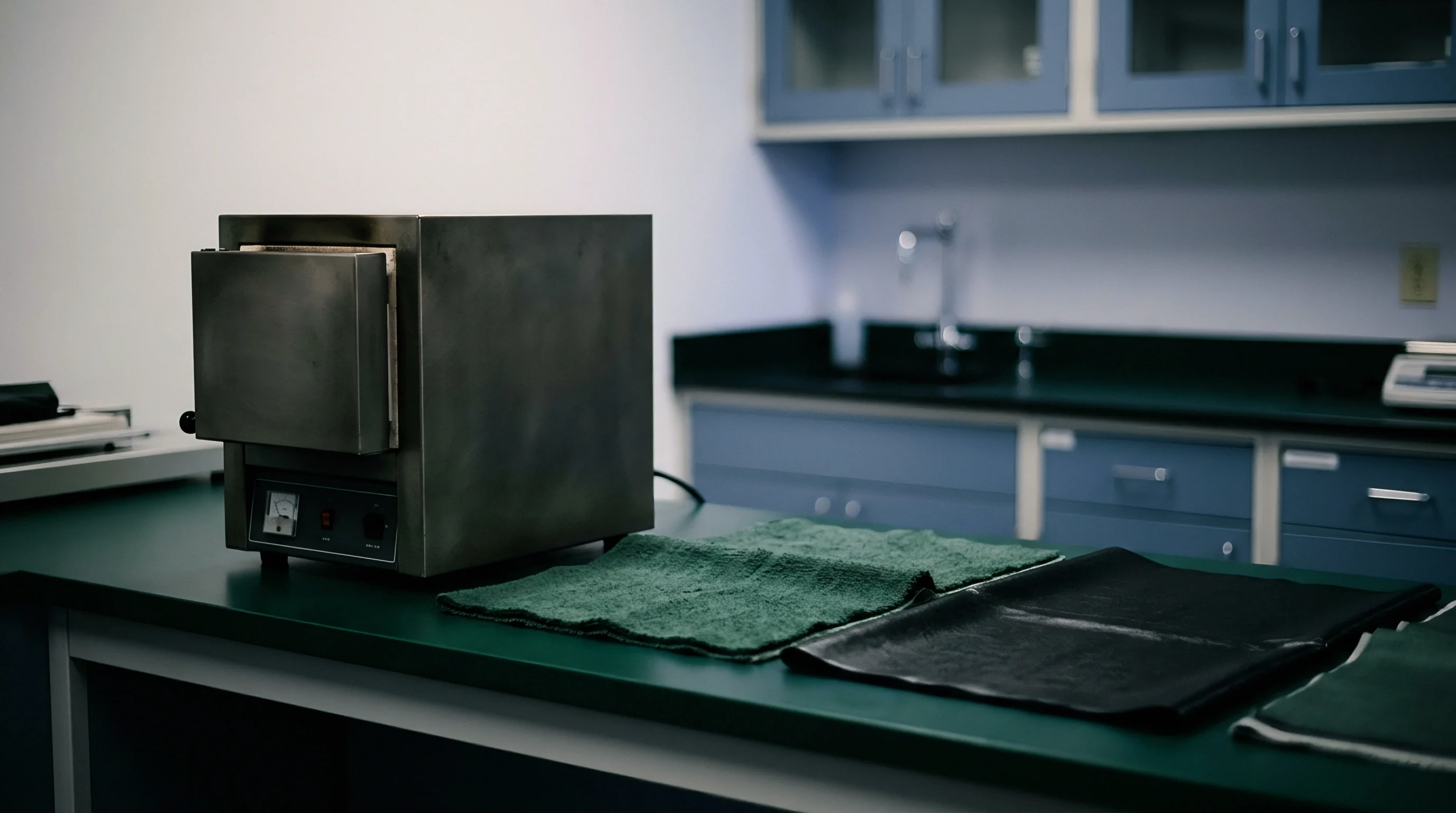
Quantitative Chemical Extraction Protocols
Testing facilities use regulated reagent gravimetry to isolate bast fiber fractions in woven or knitted fabrics. Analysis begins with petroleum ether extraction to remove non-fibrous additives, spinning oils, wax coatings, and mechanical finishes. Pre-cleaned specimens are dried in an oven at 105 degrees Celsius to reach constant mass before chemical treatment.
Standard ISO 1833 procedures set precise bath temperatures, liquor ratios, and agitation times to avoid degrading the insoluble flax residue.
| Target Dissolved Fiber | Reagent Composition | Bath Temperature | Treatment Time | Flax Correction Factor (d) |
|---|---|---|---|---|
| Viscose / Rayon | Zinc chloride and formic acid reagent | 40 degrees Celsius | 15 minutes | 1.02 |
| Polyester (PET) | 75 percent Sulfuric acid reagent | 50 degrees Celsius | 60 minutes | 1.01 |
| Polyamide (Nylon 6,6) | 80 percent Formic acid reagent | 20 degrees Celsius | 15 minutes | 1.00 |
| Cotton | 70 percent Sulfuric acid reagent | 38 degrees Celsius | 20 minutes | 1.03 |
Dissolving cotton-linen blends requires strict temperature control. Because cotton and flax share an identical alpha-cellulose composition, standard solvent separation degrades both fibers at once. Technicians use cold 70 percent sulfuric acid under precise thermal limits to dissolve short-staple cotton while minimizing loss of bast cell mass.
The insoluble flax residue is adjusted using an empirical correction factor, designated factor d in ISO 1833 calculations, to compensate for slight cellulosic erosion in the bath.
ISO 1833-11 mandates a 1.02 gravimetric correction factor for flax mass retained after zinc chloride extraction.
Calculated Dissolution Dry Mass Loss Corrections
Gravimetric evaluation calculates dry residue weight after adjusting for non-cellulosic material lost during pre-treatment. Unbleached flax yarn contains up to six percent natural pectins, waxes, and hemicelluloses by weight. Removing these during specimen preparation alters the baseline dry weight prior to solvent exposure.
ISO 1833 formulas recalculate raw fiber percentages using dry mass correction coefficients tailored to the fiber’s processing state.
Complete dissolution of sample fiber during extraction indicates potential chemical contamination in the raw flax batch.

Morphology
Microscopic evaluation is the definitive method for distinguishing flax from similar bast fibers like hemp, ramie, and jute. Optical inspection of cross-sectional and longitudinal views reveals cell wall structures that chemical testing cannot detect. High-resolution polarized light microscopy identifies transverse cross-markings, known as nodes or dislocations, running perpendicular to the fiber axis across ultimate flax cells.
Polarized Microscopy and Cross Sectional Structure
Cross-polarized light microscopy reveals the cell wall architecture of Linus usitatissimum. Individual flax ultimates feature smooth, polygonal cross-sections with five to seven distinct sides around a narrow central lumen. By contrast, hemp fibers show rounded outer contours, irregular compressed lumens, and frequently branching cell ends.
Under 400x magnification, longitudinal views display sharp, V-shaped node intersections spaced along the flax filament.
- Mount raw specimen threads in liquid paraffin or glycerol medium on clean glass microscope slides.
- Examine longitudinal fiber surfaces under 200x magnification to locate transverse dislocation nodes and lumen walls.
- Rotate the polarizer stage 90 degrees to establish birefringence extinction angles along the longitudinal axis.
- Prepare thin microtome cross-sections to inspect polygonal wall geometry and central lumen dimensions.
- Count fifty individual ultimates to tabulate cross-sectional wall thickness distribution against reference optical profiles.
Lumen diameter measurements distinguish pure linen from hemp contamination in fine yarns. Pure flax shows a pinpoint lumen taking up less than ten percent of the total cross-sectional cell area. Hemp bast cells have wide, oval lumens occupying twenty to thirty percent of the cell area.
Automated image analysis software measures these geometric ratios to verify pure linen content.
Polygonal cross-sections with narrow central lumens separate pure flax fibers from rounded hemp structures under microscopic examination.

Chemical Staining and Starch Reaction Tests
Selective stains differentiate lignified cell structures across natural bast fibers. An iodine and zinc chloride solution turns purified flax cellulose violet. Herzberg reagent stains flax filaments deep blue-violet while turning highly lignified jute or raw hemp fibers yellow.
Differential staining also reveals residual bark fragments and epidermal tissue, indicating lower-grade decortication.
Microscopic image classification struggles to separate processed flax from bleached hemp in fine-count ring-spun yarns once heavy chemical scouring strips surface lignin traces.

Scale
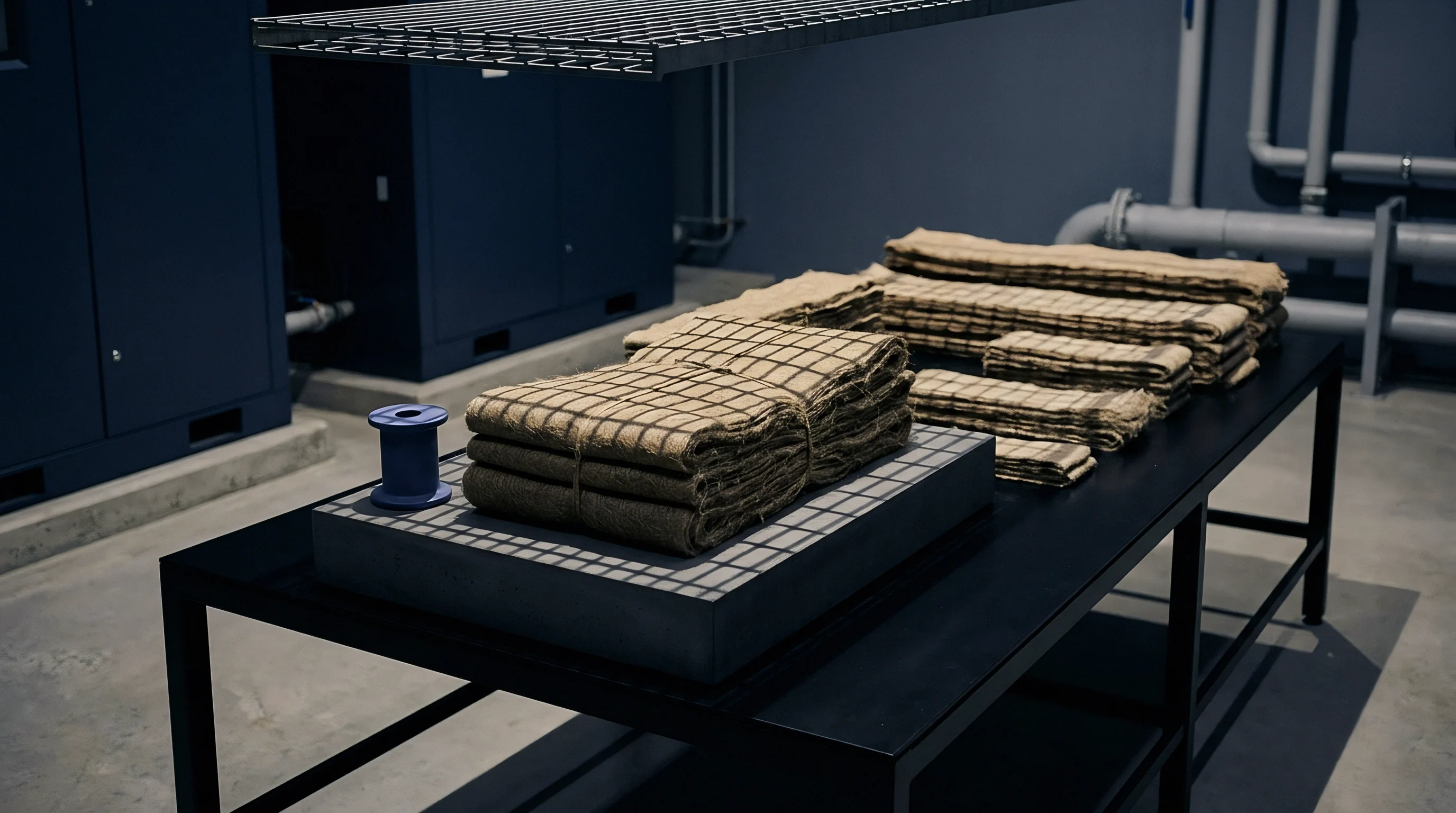
Commercial moisture regain adjustments determine the final billable weight and certified blend ratios of incoming linen consignments. Testing protocols under ISO 6741 measure oven-dry baseline mass before applying standardized commercial regain allowances. Pure flax carries an official commercial regain allowance of 12.0 percent, compared to 8.5 percent for cotton and 1.5 percent for polyester.

Does Moisture Correction Alter Commercial Fiber Content Ratios?
Raw dry weight measurements yield incomplete blend percentages unless official moisture regain additions are applied. Testing begins by desiccating swatches at 105 degrees Celsius in ventilated drying ovens until consecutive weighings show less than 0.05 percent variation. Calculations then convert dry mass to commercial mass using standardized allowances.
Omitting regain calculations distorts the declared blend ratio of linen fabrics by over three percentage points.
Consider a 100-gram sample of a declared 50 percent flax and 50 percent cotton blend subjected to oven drying. Desiccation yields 45.0 grams of dry flax residue and 46.0 grams of dry cotton residue. Applying the 12.0 percent flax allowance converts 45.0 grams into 50.4 grams of commercial flax mass.
Applying the 8.5 percent cotton allowance converts 46.0 grams into 49.91 grams of commercial cotton mass. The commercial ratio calculates to 50.24 percent linen and 49.76 percent cotton, within pure blend tolerances.
| Fiber Classification | Standard Regain Allowance (Percent) | ISO Reference Method | Oven Drying Temperature |
|---|---|---|---|
| Flax / Pure Linen | 12.0 | ISO 6741-1 | 105 degrees C |
| Cotton (Carded/Combed) | 8.5 | ISO 6741-1 | 105 degrees C |
| Viscose Rayon | 13.0 | ISO 6741-2 | 105 degrees C |
| Polyester (PET) | 1.5 | ISO 6741-3 | 105 degrees C |
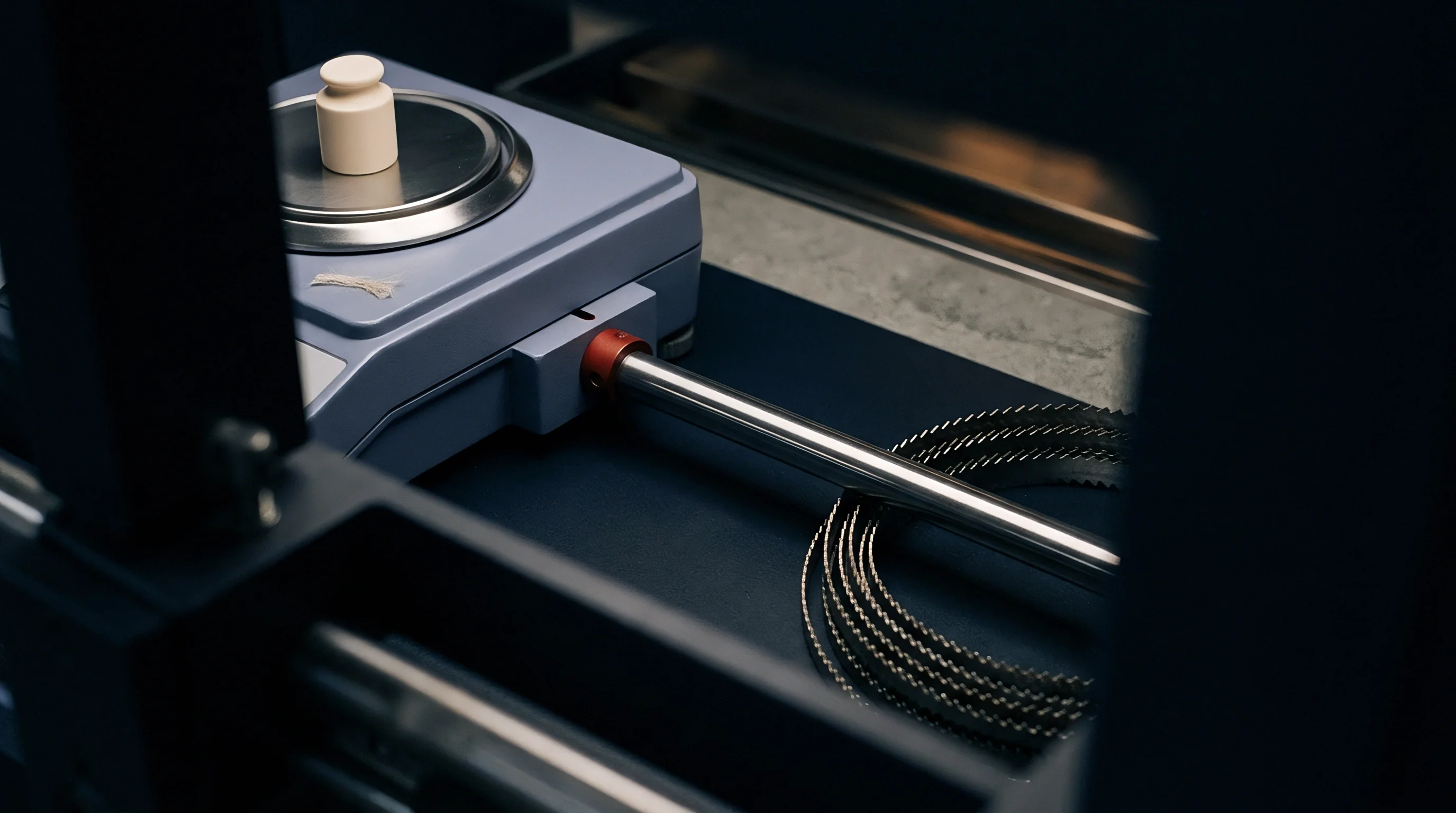
Balance calibration governs the accuracy of dry mass determinations during compositional testing. Micro-analytical balances sensitive to 0.0001 grams prevent cumulative rounding errors over multi-stage solvent extractions. Weighing bottles must stay sealed in desiccators over fresh silica gel while specimens cool, as exposure to ambient humidity during transfer adds unrecorded moisture weight to dry fiber residue.
Uncorrected dry weight data underestimates pure linen content in blended fabrics by omitting official moisture allowance additions.
Failing to calibrate laboratory balances to standard atmospheric conditions invalidates composition claims, leading to rejected customs entries and financial penalties for re-testing at importing ports.


Dispute
Customs agencies enforce strict quantitative tolerances on imported textile fiber declarations. European Union Regulation 1007/2011 permits a 2.0 percent manufacturing tolerance for pure linen products to account for natural variation during spinning. Products labeled 100 Percent Linen must consist entirely of flax fiber, with up to a 5.0 percent allowance for decorative threads or antistatic components added for technical effect.
Regulatory Fiber Labeling Enforcements
United States Federal Trade Commission rules require pure linen designations to apply exclusively to products made entirely of flax bast fiber. Laboratory tests revealing unstated cotton or synthetic content above 3.0 percent trigger reclassification penalties. Customs authorities can seize shipments carrying inaccurate fiber paperwork under trade compliance laws, and test reports must accompany major cross-border consignments to substantiate tariff codes under Harmonized System chapter 53.
- Unregistered Bast Substitutions involve blending lower-cost hemp or ramie into flax yarns without updating content tags.
- Commercial Regain Distortions occur when laboratories fail to apply official dry-mass correction factors during chemical extraction.
- Finishing Residue Extraction Failures happen when silicone softeners or resin coatings remain on fibers, artificially inflating dry weight readings.
- Non-Cellulosic Degumming Deficits take place when incomplete decortication leaves excess natural pectin in raw flax yarn samples.
Laboratory test reports serve as binding proof during commercial arbitration between fabric buyers and spinning mills. When accredited labs produce conflicting composition figures, contracts defer to findings from ISO 17025 accredited facilities. Standard procurement agreements require third-party testing whenever lot sampling shows content variance exceeding one percent of declared specifications.
Contracts typically specify that composition verification follows ISO 1833 parameters, assigning laboratory costs and duty reclassification fees to the seller if a test fails.

Audit
Documentary traceability links laboratory test reports to physical mill production records. Supply chain audits match incoming scutched flax bale lot numbers against spinning frame output and woven roll packing lists. Certified European Flax documentation verifies origin by tracking mass-balance transfers from agricultural scutcher cooperatives to finishing facilities.

Chain of Custody Dossier Requirements
A complete provenance dossier combines analytical lab reports with mill-floor mass reconciliation records. Auditors examine weighbridge tickets, spinning yield logs, and dyehouse batch tickets to trace raw material inputs. Discrepancies between raw flax intake weights and finished fabric yardage signal potential uncertified fiber blending during processing.
- Certified Scope Documentation provides proof of facility certification under European Flax or Masters of Linen traceability schemes.
- Transaction Certificates link physical yarn or fabric shipments directly to specific certified raw material batches.
- Mass Balance Yield Reconciliation Logs compare incoming raw scutched flax weight against output yarn weight, accounting for spinning waste rates.
- Mill Production Run Logs track spinning frame assignments, beam allocations, and loom schedules per customer order lot.
- Independent Lab Test Dossiers validate fiber composition percentage, moisture regain, and microscopic morphology against declared specifications.
Auditing spinning facilities requires physical inspection of raw material warehouses alongside document verification. Auditors check bale tags against declared import entry documents and compare physical origin marks with supplier invoices. Cross-checking lot numbers on spinning frame creels ensures non-certified flax batches do not enter production lines dedicated to pure linen orders.
A well-maintained mass balance reconciliation file ensures incoming fiber quantities match finished goods shipments without requiring destructive chemical testing on every lot.