Enzymatic Flax Retting Control and Pectin Breakdown
Controlled enzymatic retting degrades middle-lamella pectin while preserving core microfibrils, increasing hackled line yields and yarn fineness limits.


Lamella
Flax stems hold high-value ultimate fibres inside bast bundles bound by an intercellular matrix. Pectin makes up the bulk of this binder, concentrating heavily in the middle lamella where rhamnogalacturonan and homogalacturonan polymers cross-link adjacent cell walls. Hydrophobic lignins and structural proteins reinforce the pectin, creating a barrier that resists mechanical scutching.
Retting dissolves this intercellular glue so line fibres separate cleanly from the wooden shive core without snapping the cellulosic core of the ultimate filaments.

Structural Pectin Architecture in Bast Tissue
Unretted flax cortex contains complex polysaccharides organized in distinct spatial domains. Homogalacturonan forms the smooth backbone of the middle layer, comprising linear chains of alpha-1,4-linked D-galacturonic acid residues stabilized by calcium bridges. Methoxyl groups esterify carboxylic acid units along the galacturonan chain, producing high-ester or low-ester pectin domains that dictate enzyme access.
Surrounding these smooth blocks are rhamnogalacturonan-I regions made of alternating galacturonan and rhamnose units with complex side chains of arabinans and galactans. Separating fibres effectively requires targeted enzymes that cleave these specific linkages without damaging the structural alpha-cellulose microfibrils that give the bundle its tensile strength.
Standard purchasing contracts for scutched flax require residual pectin content below two percent by dry weight to ensure clean drafting during wet spinning.

Enzymatic Cleavage of Smooth and Hairy Regions
Biochemical degradation relies on specific catalytic enzymes acting in sequence. Commercial formulations use polygalacturonases to hydrolyze glycosidic bonds in non-esterified homogalacturonan chains. Pectin lyases split highly esterified galacturonan backbones via trans-elimination, avoiding the drop in pH caused by acid-releasing reactions.
Pectin methylesterases strip ester methyl groups to prepare substrates for endo-polygalacturonases, while hemicellulases and endo-arabinanases break down the branched side chains of rhamnogalacturonan, releasing pectin fragments into the bath.
Traditional dew retting relies on wild soil fungi like Cladosporium herbarum to produce these enzymes under variable weather. Controlled bio-retting replaces natural weather fluctuations with purified fungal or bacterial enzyme cocktails added directly to warm water baths. Preserving bundle length requires leaving primary cell wall cellulose untouched while selectively dissolving the intercellular middle layer.
- Endo-polygalacturonase cleaves non-esterified galacturonan chains internally, rapidly decreasing pectin viscosity inside the middle layer.
- Exo-polygalacturonase removes galacturonic acid monomers sequentially from the non-reducing ends of pectin polymers during bath incubation.
- Pectate lyase breaks low-methoxyl pectin chains via trans-elimination in the presence of divalent calcium ions under neutral or alkaline bath conditions.
- Pectin methylesterase strips methyl ester groups from homogalacturonan backbones to generate ionic binding sites for polygalacturonase action.
- Endo-arabinanase hydrolyzes side chains on rhamnogalacturonan segments, dissolving the dense structural polysaccharides that surround core fibre bundles.
Over-retting occurs when enzyme exposure continues after the middle layer clears, allowing enzymes to attack structural cell walls. Under-retting leaves coarse pectin bridges intact, causing mechanical scutching wheels to fracture fibre bundles during extraction. Precise enzymatic action removes middle-layer polysaccharides while preserving bundle ends for hackling.

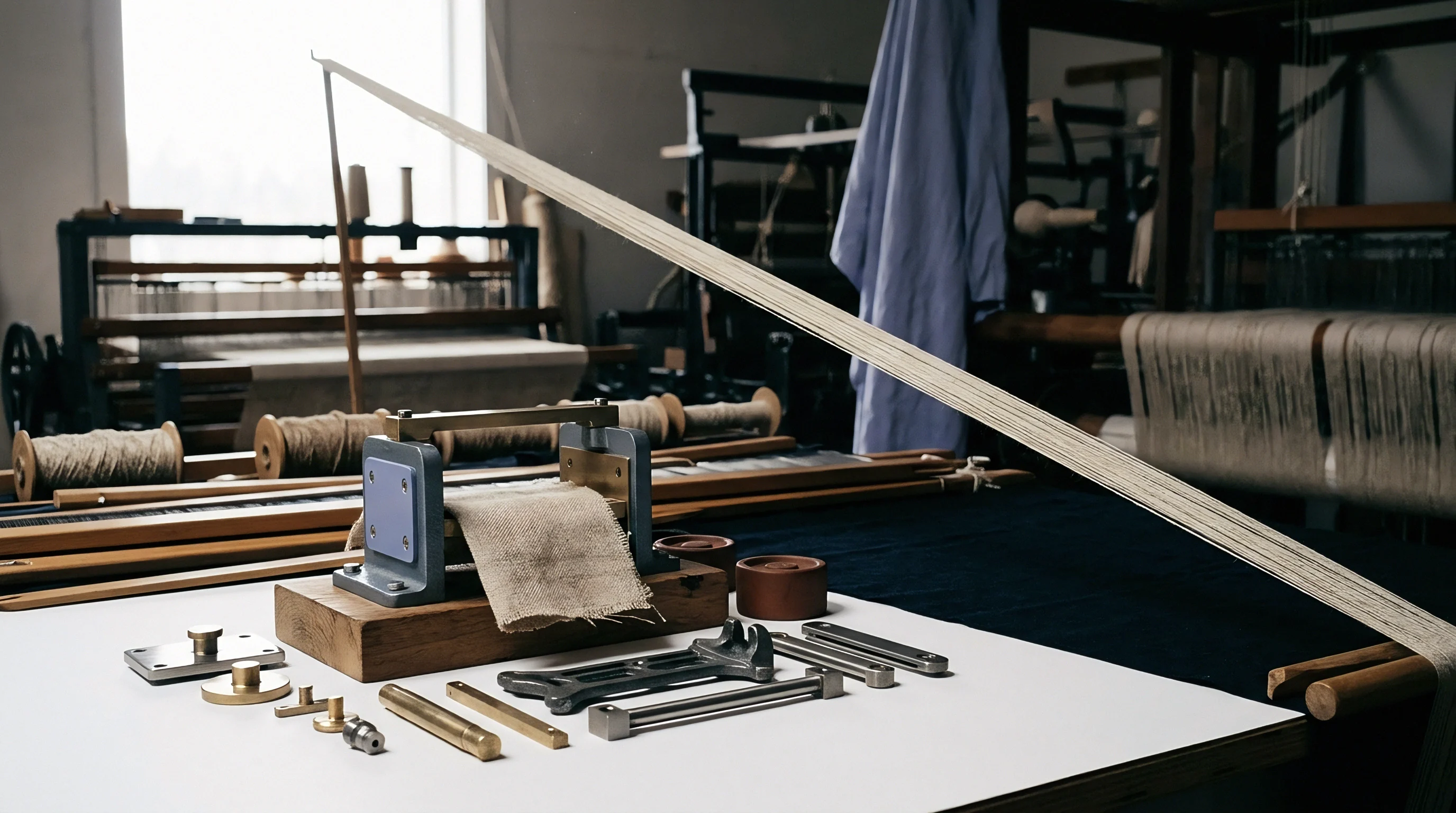
Bath
Processing raw flax straw in industrial enzyme liquor demands tight control over process parameters. Temperature governs catalytic speed, enzyme dosage dictates cleavage rates, and water purity affects buffer stability. Industrial retting is carried out in closed stainless-steel vats fitted with forced circulation systems to ensure uniform contact across tightly packed straw bundles.

Kinetic Variables in Aqueous Enzyme Retting
Enzymatic hydrolysis rates follow Michaelis-Menten kinetics, scaling with temperature, pH, enzyme concentration, and liquor-to-straw ratio. Operating temperature must match the stability window of the enzyme complex ~ typically 45 degrees Celsius to 55 degrees Celsius for fungal pectinases. Going above 60 degrees Celsius permanently denatures the proteins and halts pectin breakdown, while dropping below 40 degrees Celsius extends incubation times past commercial viability.
Bath pH establishes the ionic charge at enzyme active sites. Polygalacturonases require an acidic environment between pH 4.0 and 5.0, while pectate lyases operate efficiently from pH 7.5 to 8.5. Maintaining target pH requires buffer additions or automated dosing with dilute sodium hydroxide and sulfuric acid.
Without buffering, the liquor turns acidic as galacturonic acid monomers release into solution, deactivating lyase complexes mid-cycle.
A liquor-to-straw ratio of ten to one maintained at pH 4.8 and 50 degrees Celsius delivers full bundle separation in eighteen hours.

Liquor Turnover and Temperature Profiles
Proper circulation geometry prevents stagnant zones inside dense straw bales. Pumps run the treatment bath through external heat exchangers to keep the core liquor within half a degree of the target temperature. Low liquor velocity causes localized over-retting near injection ports while leaving stems raw in dense bundle centers.
Continuous agitation flushes dissolved pectins, debris, and organic acids away from stem surfaces, sustaining the concentration gradients that drive catalytic digestion.
- Fill treatment tank with softened process water and heat to 48 degrees Celsius.
- Dose buffered sodium acetate solution to adjust bath acidity to pH 4.8.
- Pack dry flax straw into stainless steel baskets at a bulk density of 120 kilograms per cubic metre.
- Submerge baskets into the vat and establish continuous liquor circulation at four turnovers per hour.
- Inject enzyme formulation at a concentration of 0.15 percent based on dry dry-straw mass.
- Hold reaction temperature at 50 degrees Celsius for sixteen hours while monitoring dissolved sugar levels.
- Raise bath temperature to 80 degrees Celsius for twenty minutes to denature all enzyme proteins and terminate hydrolysis.
- Drain treatment liquor and rinse straw twice with ambient fresh water to purge residual soluble sugars.
Liquor depletion occurs as accumulated sugars slow enzyme activity through competitive inhibition. Refractometers track dissolved organic carbon and galacturonic acid concentrations inline to identify the exact completion point. Timely termination prevents secondary cellulase reactions from attacking structural cell walls.
| Parameter Setting | Liquor Ratio | Bath pH | Duration (Hours) | Residual Pectin (%) | Shive Removal (%) |
|---|---|---|---|---|---|
| Sub-optimal Temp (35°C) | 8:1 | 4.5 | 24 | 4.82 | 72.4 |
| Standard Protocol (50°C) | 10:1 | 4.8 | 16 | 1.15 | 96.1 |
| High Concentration (50°C) | 10:1 | 4.8 | 10 | 0.98 | 97.8 |
| Unbuffered Lyase (50°C) | 12:1 | 7.8 (drift) | 20 | 3.40 | 81.2 |
| Data measured on 50 kg straw lots, scutched on an experimental turbine under standard atmospheric conditions. | |||||
Failing to flush residual enzymes before thermal drying leads to continued hydrolysis inside the hot air tunnel, degrading bundle tenacity across outer bale layers.


Cellulase
Industrial enzyme preparations derived from fungal fermentations rarely consist of pure pectinases; they carry secondary activities, primarily cellulases, hemicellulases, and xylanases. Cellulase contamination breaks structural glucan when endoglucanases and cellobiohydrolases attack amorphous zones within flax cellulose microfibrils, degrading tensile strength long before the fibre reaches the spinning frame. Sourcing enzyme formulations requires explicit certification of cellulase activity limits.

Do Pectate Lyases Preserve Flax Bundle Tenacity?
Purified pectate lyases break down middle-layer pectin without cleaving beta-1,4-glucan chains. Retaining high bundle tenacity depends on keeping the bath free of endoglucanase activity. When cellulases enter the liquor, endoglucanases randomly cleave internal linkages in cellulose chains, causing a sharp drop in the degree of polymerization.
Meanwhile, cellobiohydrolases trim cellobiose units from chain ends, releasing soluble sugars into the bath and thinning the primary wall of ultimate fibres.
Over-retting weakens the primary wall. As structural cellulose breaks down, ultimate fibres lose lateral cohesion. During mechanical scutching, degraded stem bundles rupture into short, weak fragments rather than long, supple line ribbons, increasing tow yield during scutching and hackling.
- Endoglucanase attack severs load-bearing cellulose chains, dropping bundle tenacity below commercial acceptance thresholds.
- Exoglucanase degradation erodes fibre surface integrity, producing high nep counts during mechanical carding.
- Hemicellulase excess strips matrix xylans completely, leaving ultimate fibers brittle and susceptible to shear fracture during scutching.
- Uncontrolled incubation allows secondary micro-flora to proliferate, introducing wild cellulolytic enzymes into the treatment liquor.
Low bundle tenacity is often attributed to raw crop stem variation when unmonitored endoglucanase activity in treatment tanks actually degraded the core cellulose matrix.
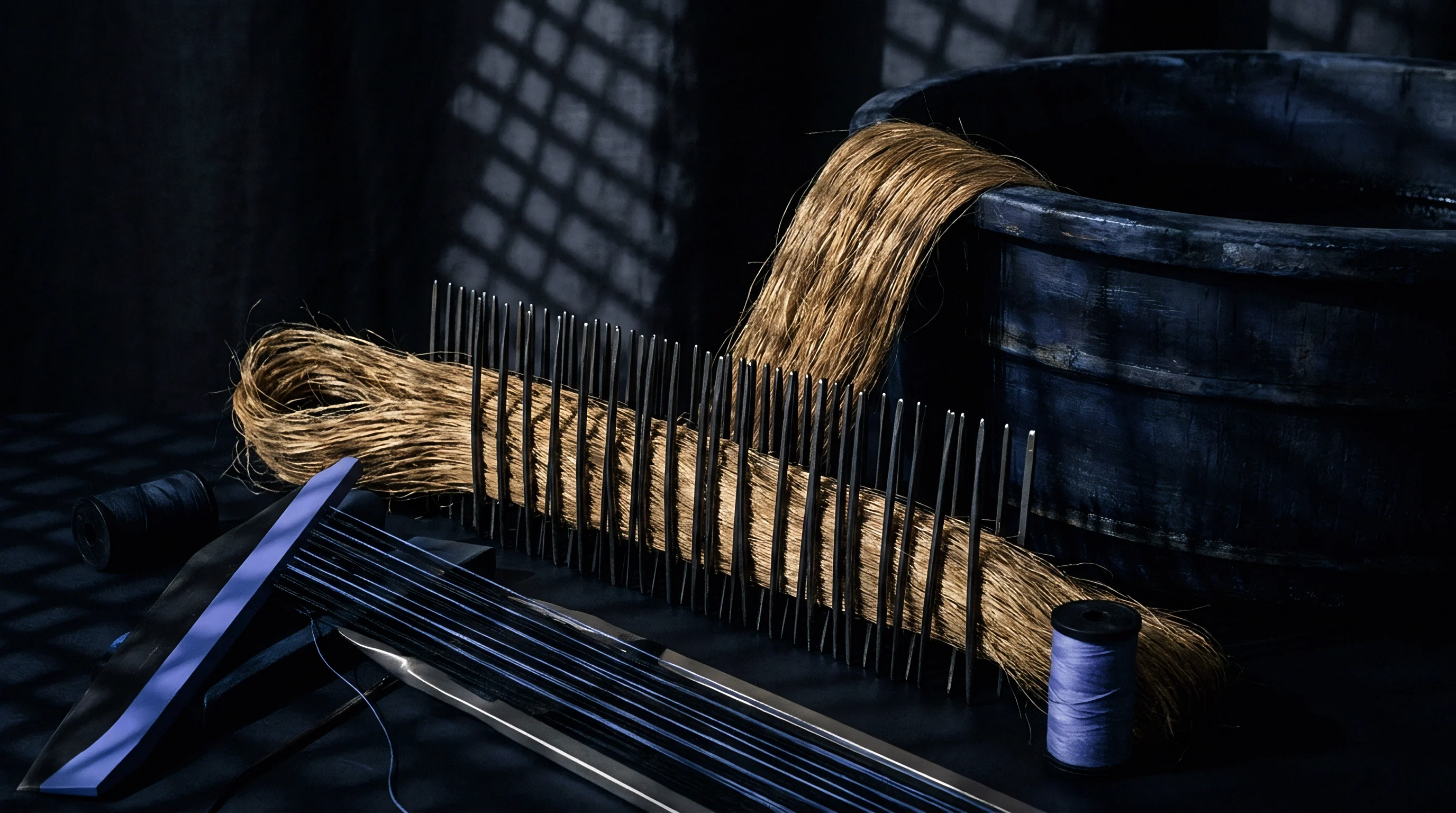

Bench
Verifying retting quality requires rigorous laboratory testing before committing fibre lots to hackling or wet spinning. Gravimetric extraction, automated optical image analysis, and tensile testing establish the true grading profile of enzyme-retted flax. A single fineness measurement cannot predict spinning performance without accompanying tenacity and bundle length spread data.

Standardized Measurement of Fibre Separation
Fineness testing follows ISO 2370 procedures, calculating linear density in tex or metric yarn count equivalents. Fibre bundles are weighed, cut to uniform lengths, and counted using light microscopy or air-flow instruments such as the WIRA apparatus. Efficient enzyme retting splits coarse technical ribbons into fine, uniform ultimate bundles without generating micro-dust or short fibre waste.
Chemical analysis quantifies residual pectin via acid hydrolysis followed by colorimetric carbazole testing or high-performance liquid chromatography. Spectroscopic instruments, such as Fourier-transform infrared spectroscopy, measure the ratio of esterified carboxyl bands at 1740 inverse centimeters to free carboxylate bands at 1600 inverse centimeters, providing an exact measure of de-esterification achieved in the vat.
Fibre lots displaying a coefficient of variation in linear density above thirty-five percent cause frequent end-breaks on wet-spinning frames.

Gravimetric and Tensile Verification Methods
Tensile testing uses a Pressley breaker or stelometer frame adapted for flax ribbons, adhering to standardized jaw distance parameters. Because lower linear density improves spinnability while coarse tow reduces yarn strength, bundle strength ~ expressed in centinewtons per tex ~ correlates directly with maximum spinnable yarn count. Reduced tenacity values reveal microstructural cellulase damage incurred during bath processing.
| Retting Method | Linear Density (tex) | Tenacity (cN/tex) | Hackling Yield (%) | Max Spinnable Count (Nm) |
|---|---|---|---|---|
| Dew Retted (Commercial Standard) | 2.4 to 3.1 | 48.5 | 48.2 | 60 |
| Water Retted (Legacy Warm Tank) | 1.8 to 2.2 | 54.1 | 54.0 | 80 |
| Enzyme Retted (Purified Lyase) | 1.5 to 1.9 | 52.8 | 56.5 | 90 |
| Enzyme Retted (High Cellulase) | 1.2 to 1.6 | 29.4 | 38.1 | 36 |
Quality assurance protocols require testing ten random subsamples per five-tonne bale lot, rejecting batches that fall outside specified linear density ranges.
- Sampling procedure extracts core samples from three distinct depths within selected bales to evaluate lot uniformity.
- Fineness testing determines average bundle tex using air-permeability instruments calibrated against reference flax standards.
- Tenacity assessment measures force to break using a 3.2 millimeter gauge length on a constant-rate-of-extension tensile tester.
- Residual sugar check verifies full removal of enzymatic reaction products by measuring water-extractable solids.
Contractual agreements must specify ISO test conditions, absolute moisture content limits, maximum allowable cellulase units in retting formulations, and precise rejection thresholds for bundle tenacity.


Margin
Enzymatic retting replaces unpredictable field-retting weather with controllable chemical process engineering, but higher processing costs alter the commercial landed-cost equation. Raw enzyme formulation costs, thermal energy for heating water baths, and effluent wastewater treatment add direct overhead per kilogram of scutched flax fibre produced. Financial recovery relies on capturing higher yields of long-staple line fibre, reducing tow waste, and spinning finer yarn counts that command market price premiums.
Hackling Yield and Tow Allocation Dynamics
Over-retting reduces long-line yield by causing excessive fiber breakage during scutching turbine processing, converting high-value line fibre into low-value scutching tow. Controlled enzymatic treatment preserves bundle tenacity, maximizing long-line recovery during mechanical hackling.
Processing 1,000 kilograms of dry unretted flax straw illustrates the commercial difference. Field dew retting yields roughly 160 kilograms of scutched line fibre and 100 kilograms of tow. Controlled enzyme processing of the same straw mass yields 190 kilograms of line fibre and 70 kilograms of tow due to reduced mechanical damage during shive separation.
Line fibre commands roughly three to four times the market price of scutching tow per kilogram.
| Processing Parameter | Dew Retted Standard | Enzyme Retted Controlled |
|---|---|---|
| Enzyme Formulation Cost (USD) | 0.00 | 45.00 |
| Thermal & Water Overhead (USD) | 5.00 | 32.00 |
| Scutched Line Fibre Yield (kg) | 160 | 190 |
| Scutched Tow Yield (kg) | 100 | 70 |
| Hackling Long Line Recovery (%) | 48% | 56% |
| Finished Hackled Line Fibre (kg) | 76.8 | 106.4 |
Gaining ten percent in hackled line fibre yield absorbs typical enzyme bath operating costs while increasing net yarn revenue per tonne of processed straw.

Landed Metre Economics in Industrial Spinning
Spinning mill economics depend heavily on spinnable yarn count limits. Coarse dew-retted line fibre tops out around Nm 60 in wet spinning before end-breakage becomes excessive. Fine, enzyme-retted line fibre with low linear density and high tenacity spins cleanly to Nm 90, producing lighter woven fabrics per kilogram of input fibre that command substantial market premiums per metre.
Wastewater management represents a major cost factor in enzyme retting. High biological and chemical oxygen demand in bath effluent requires on-site anaerobic treatment and water recycling systems. Mills operating zero-liquid-discharge loops recycle eighty-five percent of bath water, recovering thermal energy and lowering environmental compliance costs.
Integrating continuous liquor filtration extends bath lifespan across multiple production cycles, reducing enzyme consumption per tonne of processed straw. Paired with high hackling recovery, efficient liquor management makes enzyme retting a commercially viable alternative to traditional field dew retting.