Resolving Micro-Structural Tension Discrepancies and Density Shift Faults in Night-Shift High-Speed Linen Production
Night-shift linen weaving defects disappear when electronic let-offs calibrate dynamically to mill hall relative humidity drops and machine thermal expansion.
Drift
Night shifts introduce distinct physical variables into high-speed linen weaving sheds. Between midnight and six in the morning, ambient hall temperatures drop, altering machine thermal equilibrium. Mechanical oil in gearboxes cools down, shifting drive torque and resistance across the main shaft.
Hall relative humidity fluctuates as central climate units adjust output, directly impacting raw flax moisture regain. Flax fiber cellulose structures react rapidly to atmospheric moisture loss, so lower humidity raises yarn flexural rigidity while reducing physical strain capacity. These shifting environmental conditions contract machine frames while stiffening flax warp threads, causing recurring micro-structural tension discrepancies.
Micro-structural tension discrepancies manifest as subtle load changes across individual warp ends across the total reed width. High-speed rapier and air-jet looms running between 450 and 600 picks per minute require continuous warp tension stability to prevent shed mispicks. When night ambient temperatures fall by three to five degrees Celsius, metal beam supports contract by a fraction of a millimeter.
This structural dimension change, combined with a five to ten percent drop in hall relative humidity, increases warp sheet tension across the beam flanges while the center remains slack. Uncorrected tension gradients produce irregular crimp distribution during beat-up, resulting in local density shift faults in the woven greige cloth.
Stable night-shift density depends on locking beam let-off rates to hall humidity rather than mechanical loom clocks.
Monitoring environmental parameters against warp tensile behavior reveals clear correlations between shift timing and defect frequency. Night operators often encounter higher warp break rates during early morning hours without recognizing the underlying mechanical cause. Machine frames expand under continuous load during day shifts, then cool during reduced shed activity or shift changes.
The resulting physical variance requires continuous automated adjustment rather than fixed mechanical control settings.

Environmental Dynamics on Night-Shift Machinery
Automatic climate control systems in industrial weaving sheds often operate on wider tolerance bands during off-peak energy hours. A drop in relative humidity from 68 percent down to 52 percent causes standard linen yarn moisture regain to fall from 10 percent to under 7.5 percent within two hours. Dry flax yarn exhibits higher modulus and lower elasticity.
When the loom shed cools, yarn stiffness accelerates tension spikes during shed opening, driving pick spacing variations across the fell of the cloth.
| Shift Period | Hall Temperature (°C) | Relative Humidity (%) | Yarn Moisture Regain (%) | Warp Sheet Tension (cN/tex) |
|---|---|---|---|---|
| Day Shift (12:00) | 24.2 | 67 | 10.2 | 2.15 |
| Night Shift (02:00) | 21.5 | 58 | 8.4 | 2.48 |
| Night Shift (05:00) | 19.8 | 51 | 7.2 | 2.85 |
Thermal Drift and Shed Dynamics
Thermal variance in the weaving machinery directly alters electronic let-off drive precision. Gearbox friction increases at lower temperatures, creating a subtle lag in motor response times. Electronic load cells positioned on the backrest roller send millivolt signals to the main control unit to adjust warp delivery rates.
When oil viscosity increases during cold night runs, mechanical let-off response lags behind real-time sensor demand. The warp sheet holds excessive tension for milliseconds longer than programmed, stretching the flax thread past its elastic limit.
Density shifts occur when warp threads do not absorb beat-up impact uniformly. High warp tension prevents the pick from resting closely against the preceding pick, creating a low-density line across the cloth. Conversely, a sudden release in warp tension allows the beat-up reed to push picks closer together, producing a high-density band.
These alternating structural shifts form visible band marks after fabric dyeing and finishing.
- Thermal frame contraction reduces distance between whip roll supports, altering geometry across wide loom widths.
- Oil viscosity elevation increases drag in mechanical let-off gear trains during early morning hours.
- Yarn regain loss elevates flexural modulus, making flax fiber less yielding under reed impact.
- Shed geometry shift alters warp path angle, elevating peak tension during shedding motion.
Night-shift pick density bands are frequently attributed to transient yarn count variations from wet spinners rather than ambient temperature shifts within standard air-conditioning tolerances.

Draft
Sizing formulation and beam winding density establish the baseline mechanical response of flax warp sheets. Proper warp sizing coats staple linen fibers with a flexible protective film that retains internal yarn moisture. Polyvinyl alcohol and refined starches create a protective shield, preventing rapid moisture loss when ambient humidity drops during night shifts.
Inconsistent size pickup across the warp width creates uneven moisture retention, accelerating tension discrepancies when shed environmental conditions shift.
Backrest roller geometry dictates how dynamic loads distribute across the warp sheet during reed beat-up. Position settings must allow the backrest assembly to absorb beat-up peak forces without transferring excess strain back to the warp beam. In high-speed linen production, active backrest rollers equipped with torsional springs or pneumatic dampeners maintain constant warp sheet geometry.
Correct position settings minimize tension spikes during high-speed shed changes.

Let-off Kinematics and Electronic Tension Control
Modern high-speed looms utilize closed-loop electronic let-off systems to synchronize warp delivery with fabric take-up rates. Load cells mounted beneath the backrest roller measure continuous warp sheet resistance. Control algorithms convert force signals into motor speed commands, adjusting beam rotation to maintain setpoint tension within fraction-of-a-gram tolerances.
Flax fibers lose elasticity when dry. Tension spikes cause immediate end breaks unless let-off response curves adapt dynamically to hall psychrometric fluctuations.
A relative humidity drop from 65 percent to 50 percent increases flax warp tension by 18 percent at a constant let-off speed.
Dynamic tension programming accounts for the physical drop in beam diameter as weaving progresses. A full warp beam measuring 1000 millimeters in diameter requires lower rotational speeds to deliver a given length of yarn than an expiring beam measuring 300 millimeters. The control system continuously updates motor drive ratios based on beam radius calculations.
When night temperatures alter motor resistance, torque feedback algorithms correct speed drift before pick density discrepancies materialize in the greige fabric.
Reed Denting Strategies for High Modulus Flax
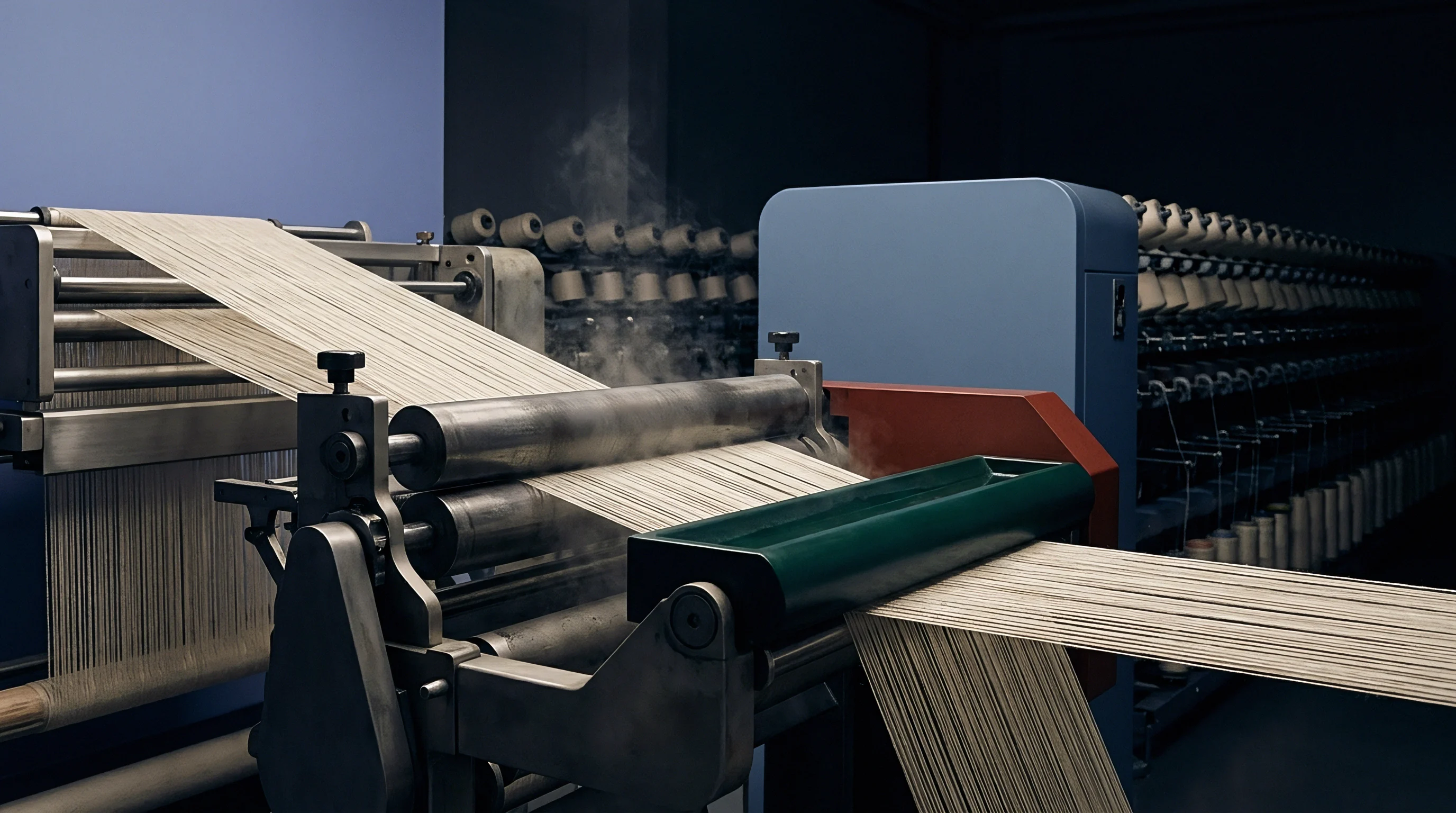
Denting plans organize warp threads through the weaving reed to ensure uniform spacing across the reed width. High modulus linen yarns require precise denting distributions to avoid lateral crowding inside reed dents. Crowding increases inter-yarn friction during shed opening, generating localized tension spikes that disrupt pick insertion geometry.
- Verify baseline warp tension across the entire beam width using an electronic hand-held tension meter before initiating night shift production.
- Calibrate backrest roller load cell zero-points while the warp sheet remains completely relaxed during shift handover inspection.
- Adjust electronic let-off sensitivity parameters to increase motor reaction speeds when ambient shed humidity drops below 60 percent.
- Inspect reed dent alignments to confirm equal thread clearance across left, center, and right sections of the loom bed.
- Set fabric electronic take-up drive parameters to lock pick insertion rates directly to live encoder feed data from the main shaft.
Backrest roller height adjustment should prioritize uniform shed opening lines over operator ease during beam changes.

Peak
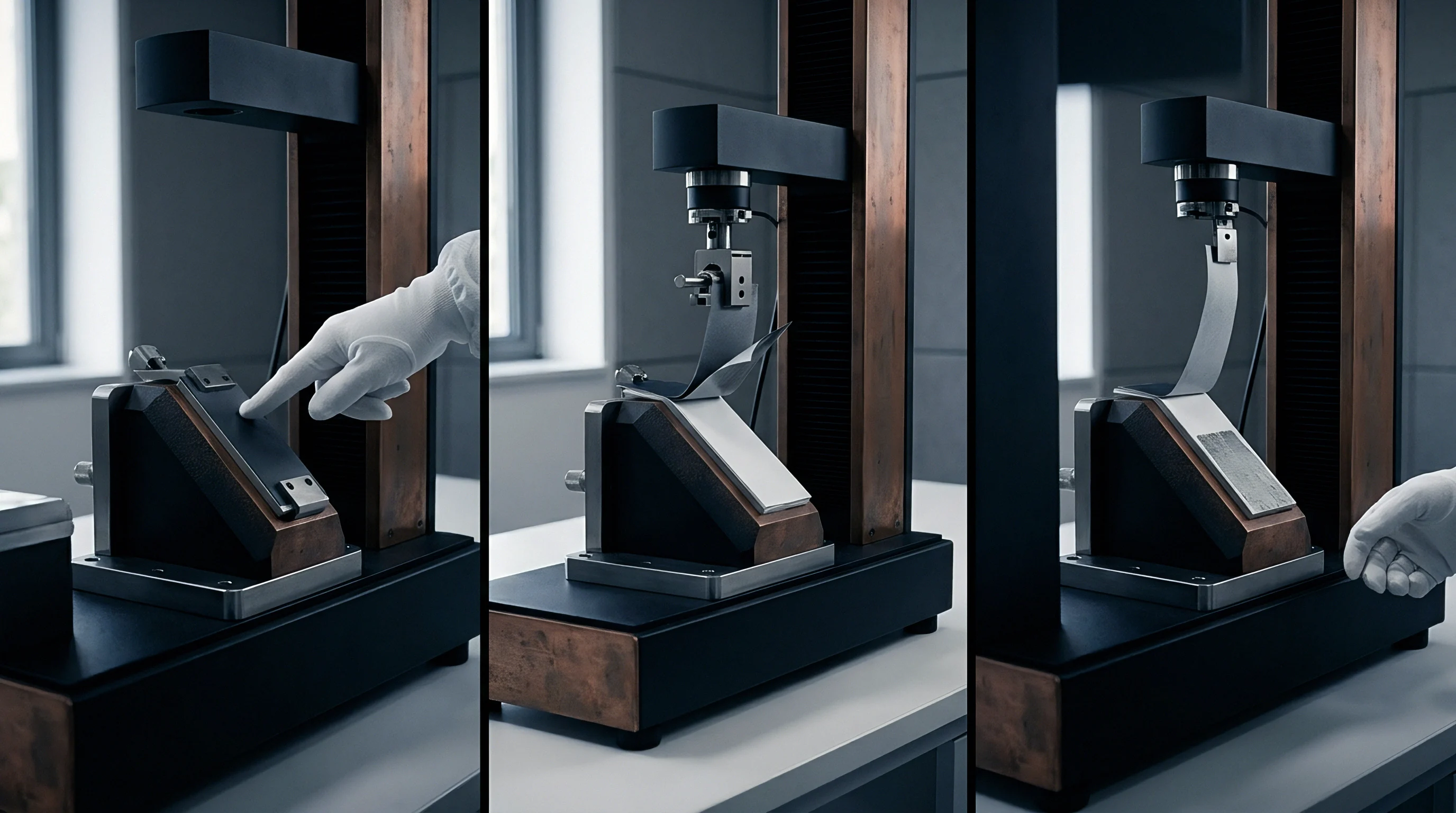
High insertion speeds on modern rapier looms exert transient mechanical stress on rigid cellulosic yarns. Linen yarns possess minimal strain capacity, breaking at extensions below 2.5 percent. When running at 500 picks per minute, a single shedding cycle completes in 120 milliseconds.
During this brief window, warp ends move from closed shed to fully open position, increasing physical tension to extreme maximums. Shed geometry determines peak strain values.
Peak stress management demands continuous synchronization between harness frame motion and let-off motion. Symmetric shed opening balances strain between upper and lower warp sheets. Asymmetric shed setups increase tension on the lower warp sheet to ensure clean shed openings for rapier entry, but elevate stress on individual flax ends.
Night shifts amplify peak strain levels because lower ambient temperatures stiffen harness motion cables and mechanical linkages.

Shed Opening Stresses at High Insertion Speeds
Peak dynamic tension occurs at maximum shed opening, precisely when rapier heads enter the warp sheet. Fiber friction increases as warp ends slide past each other during shed movement. Uncontrolled tension spikes alter the position of the beat-up point relative to the reed, causing pick spacing variations across the fell line that optical sensors detect.
| Insertion Speed (ppm) | Shed Type | Yarn Regain (%) | Average Tension (cN) | Peak Tension Spike (cN) |
|---|---|---|---|---|
| 480 | Symmetrical | 10.5 | 22.4 | 38.5 |
| 480 | Symmetrical | 7.5 | 28.1 | 51.2 |
| 540 | Asymmetrical | 10.5 | 25.8 | 46.3 |
| 540 | Asymmetrical | 7.5 | 33.2 | 62.8 |
Which Tension Adjustments Compensate for Night Shift Psychrometrics?
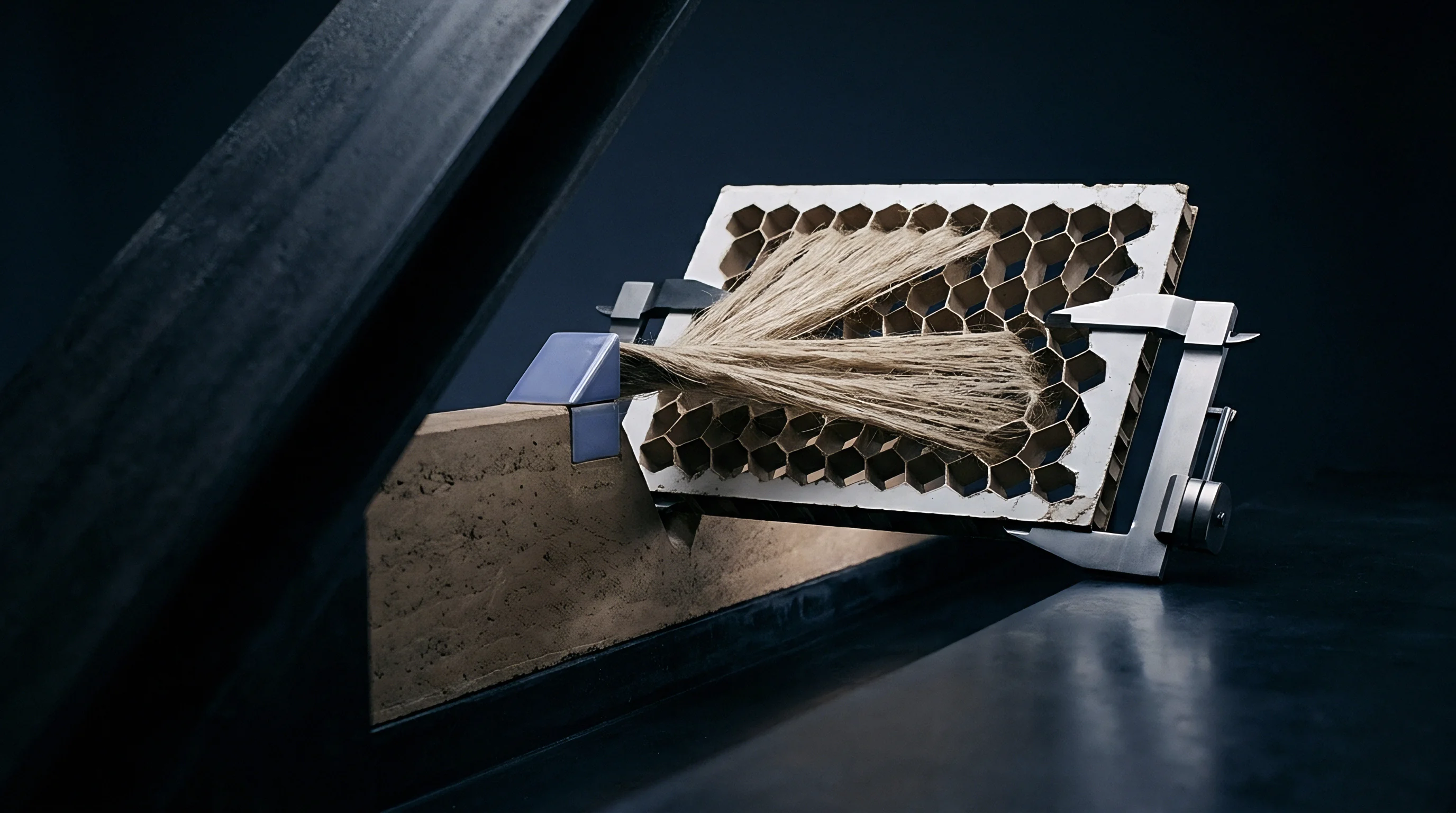
Lowering baseline static warp tension by eight to twelve percent during night shifts balances dynamic tension spikes caused by dry, stiff flax yarns. Pneumatic dampeners on active backrest rollers absorb instantaneous strain surges during shed opening, preventing stress concentration at the fell line. Integrating continuous relative humidity readings into the loom control unit allows automatic baseline adjustments as environmental parameters drift from target values.
Loom stop-marks form when machine emergency stops interrupt continuous weaving motion. The sudden release and re-application of high tension distorts pick placement at the stoppage point. Minimizing dynamic tension peaks reduces yarn breakages, eliminating primary sources of night-shift loom stops and resultant pick density defects.
Failure to damp dynamic tension spikes during night-shift operations produces systemic warp end breakages, resulting in excessive loom stop-marks and rejected greige rolls.

Damp
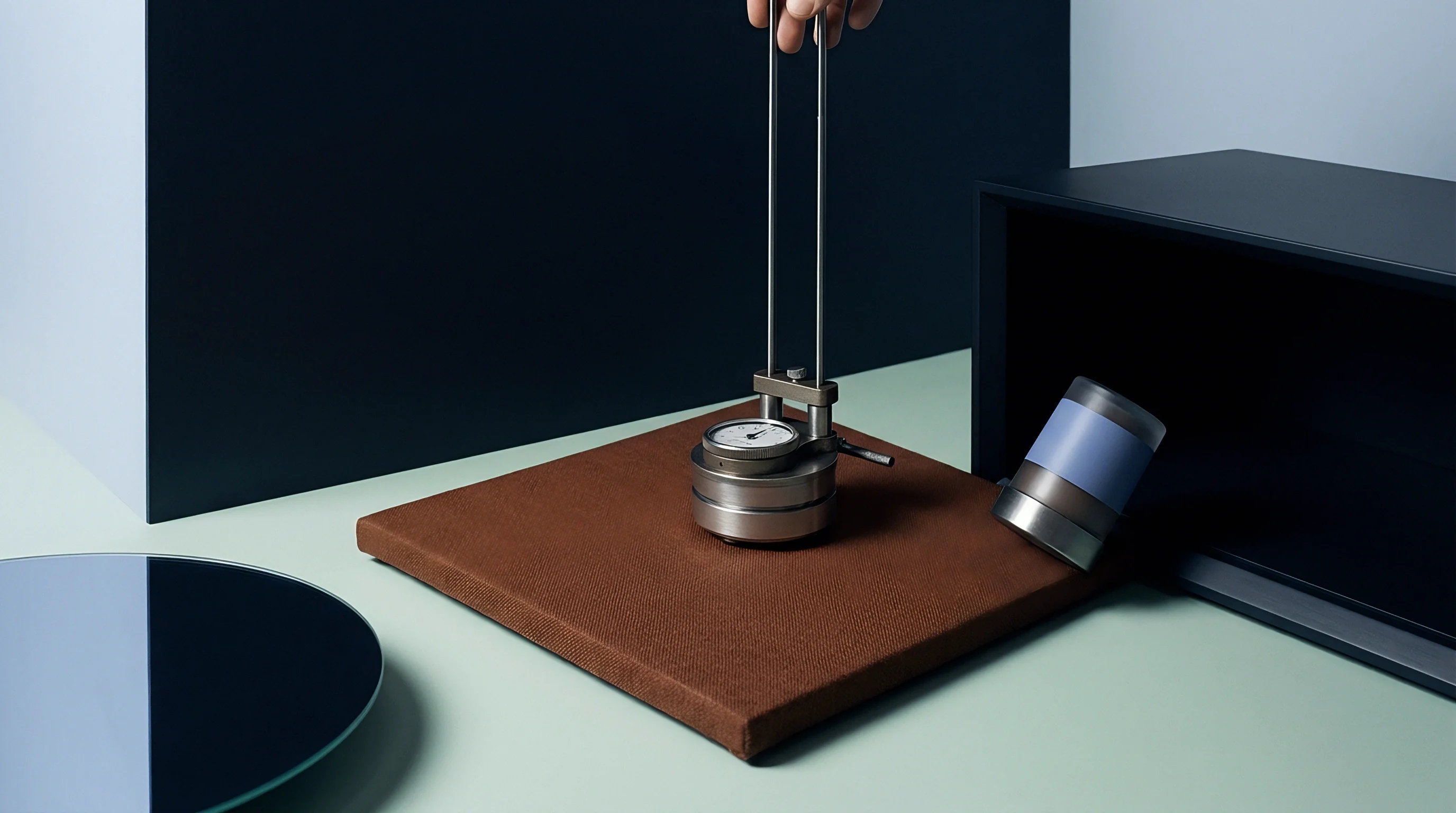
Moisture retention in continuous filament and staple flax fiber governs transverse yarn swelling during beat-up. Dry flax fibers shrink in cross-sectional area while increasing in axial stiffness. When night-shift relative humidity drops, yarn diameter decreases by four to six percent.
Decreased yarn cross-section alters the structural cover factor of the cloth, allowing beat-up reeds to push pick threads closer together than original design specifications intend.
Density shift faults develop through this physical interaction between fiber dimensions and mechanical beat-up force. A fixed mechanical take-up rate advances cloth by a precise distance per revolution. If yarn diameter shrinks due to moisture loss, picks experience less lateral resistance during beat-up, creating loose density zones or narrow fabric widths.
Off-loom relaxation changes pick counts.
Moisture Equilibrium and Pick Density Shifts
Equilibrium moisture content in linen yarns responds dynamically to ambient vapor pressure. Water molecules form hydrogen bonds within amorphous cellulose regions, lubricating internal crystalline chains and granting fiber flexibility. When dry air extracts bound moisture, internal friction increases, locking fiber structure into a rigid state.
This stiffness prevents natural crimp interchange between warp and pick threads during beat-up.
| Nominal Pick Rate (picks/cm) | Ambient RH (%) | Measured Pick Rate (picks/cm) | Off-Loom Crimp (%) | Mass Deviation (%) |
|---|---|---|---|---|
| 22.0 | 65 | 22.0 | 8.5 | 0.0 |
| 22.0 | 55 | 22.4 | 7.2 | +1.8 |
| 22.0 | 45 | 23.1 | 5.8 | +5.0 |

Regain Mechanics in High-Speed Weaving
Maintaining localized moisture regain on high-speed looms requires direct micro-climate management within the shed. Overhead ultrasonic humidifiers target atomized water droplets directly into the warp sheet above the harness frames. Direct application ensures flax fibers maintain optimal nine to eleven percent moisture regain, keeping fiber modulus stable regardless of ambient hall conditioning drops.
ISO 7211-2 pick density deviations exceeding two picks per centimetre trigger full lot rejection under standard high-grade linen purchasing contracts.
Unchecked tension drift alters finished weight. When warp yarns stiffen due to low regain, pick threads absorb a greater share of structural crimp. This crimp differential changes finished fabric handfeel, tearing strength, and directional dimensional stability after washing.
Precision manufacturing requires maintaining equilibrium across both warp and pick directions simultaneously.
The exact rate at which localized air-jet atomizers can restore core yarn regain inside dense warp sheets running at five hundred picks per minute without introducing surface water spots remains unquantified across heavy commercial weights.

Frame
Off-loom inspection table analysis reveals structural defects that remain invisible during active shedding. Lighting angles on standard inspection frames project parallel shadows across greige rolls, highlighting subtle pick density variations. Optical pick-counting cameras mounted on rewind frames measure continuous picks per centimeter across thousands of fabric meters.
These automated systems log density shift faults directly to a digital roll profile map.
Greige density mapping isolates recurring defect patterns tied to specific shift times. A gradual increase in pick density between 02:00 and 05:00 identifies environmental humidity drops or thermal machine contraction as primary failure causes. Instantaneous density spikes indicate operator intervention errors, manual let-off overrides, or mechanical loom stops.
Greige Inspection Protocols and Density Mapping
ISO 7211-2 outlines standard procedures for counting threads per unit length in woven fabrics. Manual counting utilizing counting glasses verifies automated camera measurements. Technicians record pick counts across five distinct zones along the fabric length to calculate density variance percentages.
Density shifts exceeding two percent from nominal specification indicate process instability during night production.
ASTM D5430 provides guidelines for visual inspection and fabric grading using the 4-Point System. Under this inspection code, continuous density shift defects extending over three yards incur maximum point penalties. High defect point totals reduce fabric commercial value from prime grade to second quality, destroying profit margins on high-speed runs.
- Density shift banding appears as parallel horizontal lines caused by cyclic warp tension variations during night runs.
- Warp streak faults manifest as vertical lines resulting from localized reed damage or single-end tension discrepancies.
- Loom stop-marks produce distinct high-density or low-density bars across the full woven width at stoppage points.
- Off-loom width variation occurs when warp tension changes alter side-to-side fabric contraction during relaxation.

Optical Verification and Pick Metering
Laser doppler velocimeters measure continuous fabric movement at the loom take-up roll, comparing real-time surface speed against main shaft rotation encoders. Discrepancies between take-up speed and shaft rotation signal slip in drive belts or electronic control variance. Automated feedback loops adjust take-up motor frequencies instantly to maintain constant pick insertion geometry.
Density shift distortion disrupts downstream processing steps, particularly dyeing and printing. Unseen crimp variations cause uneven dyestuff absorption, creating shade bands across finished fabric rolls. Rigorous off-loom verification catches greige defects before commitment to expensive chemical finishing processes.
Standard purchase contracts incorporate ASTM D5430 Section 8.2, which assesses a ten-point penalty for density shifts spanning more than three continuous meters.
Ledger
Commercial performance in high-speed linen manufacturing depends on machine utilization rates and greige yield percentages. Loom-hour costs reflect capital amortization, energy consumption, labor rates, and overhead allocations. High-speed rapier looms carry high hourly operating costs.
Uncontrolled density shifts destroy commercial value long before physical tensile failure occurs on the loom.
Operating a loom shed at 500 picks per minute generates roughly 25 to 30 meters of linen fabric per hour, depending on nominal pick counts. A ten-hour night shift generates 250 to 300 meters per machine. When uncorrected environmental drift produces density shift faults across a night run, entire fabric rolls fail quality audits.
Converting prime grade linen into downgraded secondary goods or scrap yields substantial financial losses.

Commercial Consequences of Micro-Structural Defects
Consider a practical cost evaluation of night-shift density defect generation across a 10,000-meter production run of 200 g/m² linen fabric. Assume nominal loom speed of 500 ppm, target density of 22 picks/cm, and standard production cost of 4.50 EUR per finished meter. Operating uncalibrated machinery across four consecutive night shifts introduces density shifts across 15 percent of total yardage.
Scrapping or discounting 1,500 meters of defective cloth at a 60 percent price markdown incurs a direct financial loss of 4,050 EUR on material alone. Added costs include wasted loom hours, unrecoverable energy expenses, and lost production capacity. Investing in closed-loop humidity control and dynamic let-off automation requires initial capital outlay but eliminates recurring night-shift yield losses within months.
Commercial value is destroyed by density shifts long before physical tensile failure occurs on the loom.

Cost Modeling for Density Shift Scrap Allowances
Production scheduling models incorporate scrap allowances based on historical defect rates. Standard scrap targets for high-speed linen weaving hover between 1.5 and 2.0 percent. Night-shift defect spikes drive overall scrap rates above 5.0 percent, eroding operational margins.
Implementing continuous warp tension monitoring and automatic climate compensation brings scrap rates back within acceptable commercial thresholds.
Mastering micro-structural tension control requires aligning mechanical setups, fiber psychrometrics, and automated loom controls into a single continuous feedback system. Shed managers who discipline environmental drift and calibrate electronic let-offs secure high fabric quality, consistent greige density, and stable profitability across all operational shifts.