Permeability Measurement
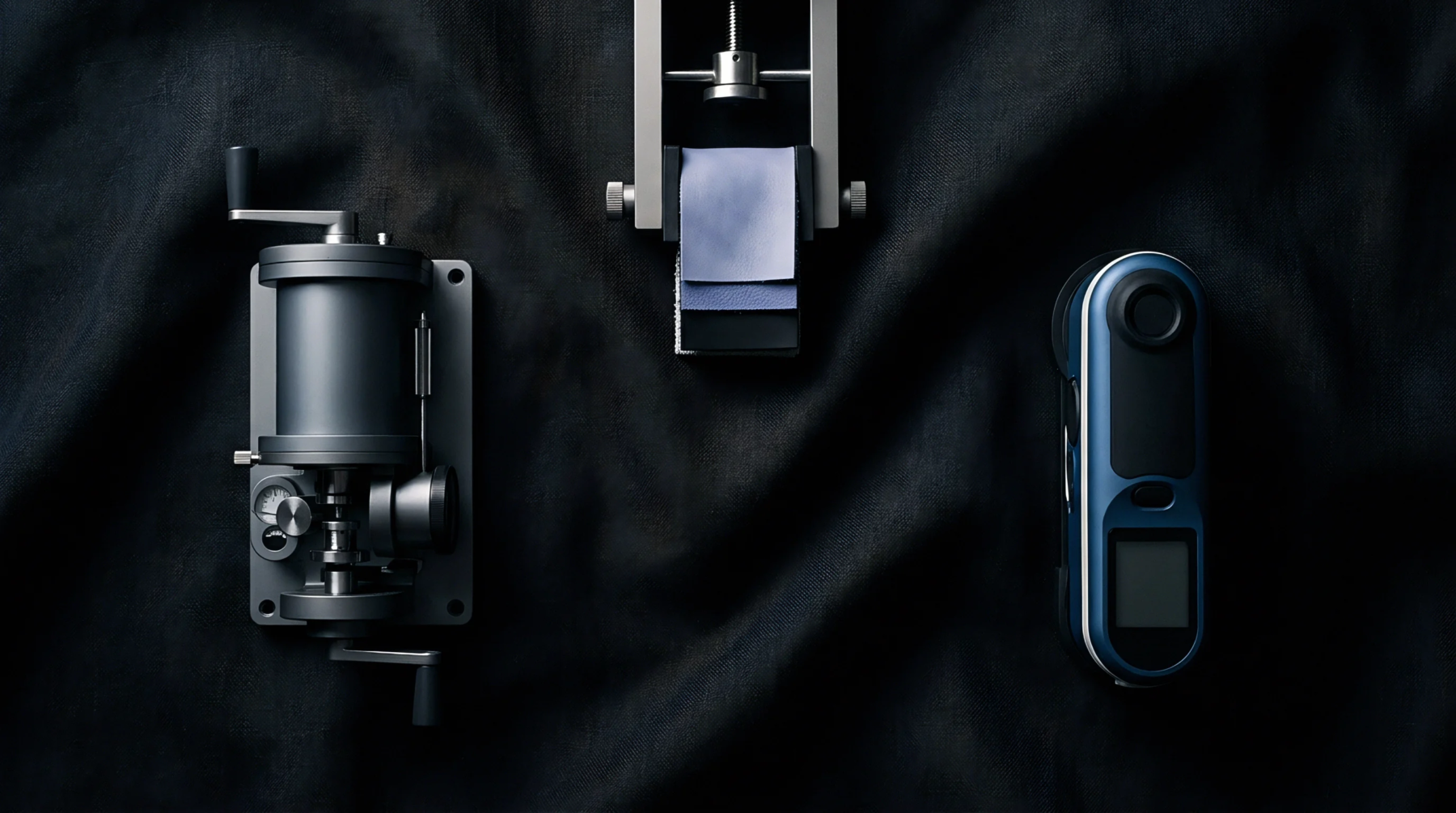
Laboratory devices developed by the Wool Industries Research Association determine the average diameter of fibres by measuring the resistance they offer to a steady stream of air. The wira fineness meter utilizes a standardized plug of flax to observe the pressure drop across the sample. Since finer fibres have a greater total surface area, they create more resistance to the airflow than coarser ones.
This measurement provides a rapid and objective alternative to microscopic analysis in a production environment.
Corrective Calibration
Correct results in the laboratory depend on the precise preparation of the fibre sample and the control of its moisture content. While the wira fineness meter was originally designed for animal fibres, its application in the linen industry requires specific calibration tables to account for the different cross-sectional shapes of flax. A technician weighs a specific amount of cleaned fibre and packs it into a cylinder of a fixed volume.
The resulting scale reading is converted into microns or a mill-specific grade. This data allows the spinning manager to blend different lots of flax to achieve a consistent yarn count.
Operational Boundary
High levels of shive or dust in the sample can clog the airflow and lead to an overestimation of the fibre fineness.