Dew Retted Line Flax Surface Wax Quantification Protocols
Solvent-extractable surface wax between 1.15 and 1.55 percent optimizes line flax wet-spinning draft and prevents hackling comb yield loss.
Cuticle
Lipid Boundaries in Bast Fiber Separation
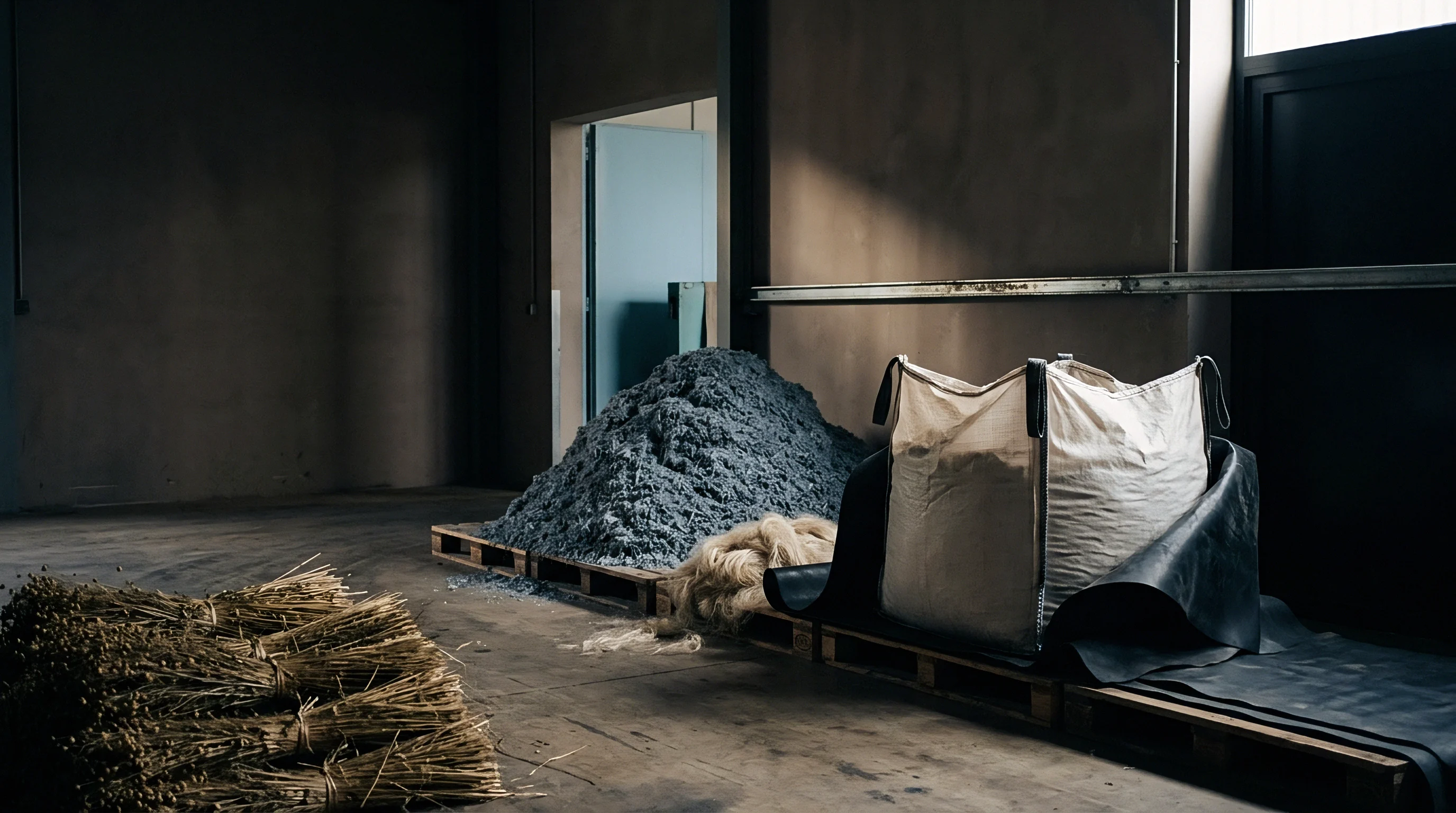
As soil fungi colonize the flax stem during field exposure, dew retting degrades cortical pectin by metabolizing inter-cellular polygalacturonic acids, though portions of the outermost protective sheath remain attached to technical line bundles. The outer epidermis carries an insoluble cutin network interpenetrated by non-polar waxes ~ mainly long-chain fatty acids, unbranched wax esters, aldehydes, and secondary alcohols. Scutching fractures this cuticular envelope, leaving residual surface lipids that govern individual ultimate cell sliding friction during line drawing and dictate wettability in roving preparation.
Fiber testing distinguishes total extractable material from outer surface wax. Hexane selectively extracts non-polar external lipids without solubilizing underlying parenchymal pectins or hemicellulosic structural polymers. Dew-retted line flax typically registers solvent-extractable lipid contents between 0.95 percent and 1.85 percent of dry fiber mass.
Stems exposed to extended rain cycles show reduced wax fractions from physical weathering and fungal breakdown of ester linkages. Under-retted flax retains intact epidermal strips where wax readings reach 2.40 percent to 3.10 percent, raising boundary friction and resisting wet pin penetration on the hackling bed.
A dew-retted line lot showing solvent-extractable lipids above 2.20 percent under dry conditions will resist sliver attenuation at the gill box.
Lipid distribution along the fiber length is notably uneven, with basal stem sections carrying thicker epidermal deposits than apical zones. Mechanical scutching strips outer bark unevenly as well, concentrating residual cuticular fragments in the lower third of the line bundle. Mills spinning high metric counts (Nm 39 to Nm 60) experience drafting variability when incoming fiber bundles show wide standard deviations in surface grease.
High lipid mass combined with persistent bark fragments leads to elevated end-breakage rates and fluctuating drafting force across drawing passes, producing coarse slubs and rejected cloth.

Flask
Where Does Solvent Selectivity Alter Residual Pectin Content?
Gravimetric determination depends heavily on solvent polarity and thermal exposure during the wash cycle. Soxhlet runs using technical grade n-hexane (boiling point 69 degrees Celsius) isolate external wax fractions while leaving cell wall polysaccharides undisturbed. Accelerated solvent extraction systems operating with dichloromethane at 100 degrees Celsius and 10 megapascals co-extract mid-lamella pectins, artificially inflating measured grease values by 0.60 to 1.15 percentage points.
With hexane boiling off at sixty-nine degrees, laboratory technicians conditioning samples to standard atmosphere (20 degrees Celsius, 65 percent relative humidity per ISO 139) must dry specimens at 105 degrees Celsius prior to weighing to eliminate hygroscopic regain moisture. Any residual moisture distorts gravimetric yields. Fiber specimens weighing five grams yield between 45 and 95 milligrams of crude wax residue, which analytical balances with four-decimal precision isolate following rotary evaporation and vacuum desiccator stabilization.
| Solvent System | Extraction Temperature | Duration or Cycles | Yield on Dry Mass | Extracted Species Target |
|---|---|---|---|---|
| n-Hexane (pure) | 68 to 69 °C | 24 Soxhlet cycles | 1.10% to 1.45% | Surface waxes, free fatty acids |
| Petroleum Ether (40-60) | 40 to 60 °C | 28 Soxhlet cycles | 0.90% to 1.25% | Non-polar cuticular lipids |
| Dichloromethane | 40 °C | 20 Soxhlet cycles | 1.60% to 2.10% | Wax esters, sterols, cutin oligomers |
| Toluene / Ethanol (2:1) | 78 to 82 °C | 16 Soxhlet cycles | 2.80% to 4.20% | Total lipids, resins, partial lignin |
Because toluene strips structural lignin fractions, Soxhlet extractions using ethanol-benzene or toluene-ethanol complexes breach the primary cell wall, solubilizing intra-fiber compounds that do not participate in boundary lubrication. While hexane extracts surface lipids cleanly, buyers establishing specifications must strictly exclude aromatic and alcohol solvents to isolate boundary wax from total extractables.
Variations across bench executions corrupt commercial lots when sampling technique fluctuates. The following laboratory errors distort reported wax percentages:
- Incomplete Solvent Desolventization leaves residual solvent in the drying flask, overstating measured wax mass.
- Thimble Channelling permits liquid bypass through uncompacted fiber bundles without contacting interior fiber surfaces.
- Specimen Moisture Drift skews dry base mass calculations when atmospheric exposure occurs during transfer and weighing.
- Boiling Flask Thermal Degradation chars long-chain esters when dry bath temperatures exceed eighty-five degrees Celsius.
Higher boiling points pull deeper cell wall constituents into the solvent flask.
Because cold solvent runs miss heavier esters, reliable comparative data emerges only when laboratory technicians maintain uniform cycle timing and uniform sample packing densities.

Spectra
Chemical Signatures of Weathered Cuticular Layers
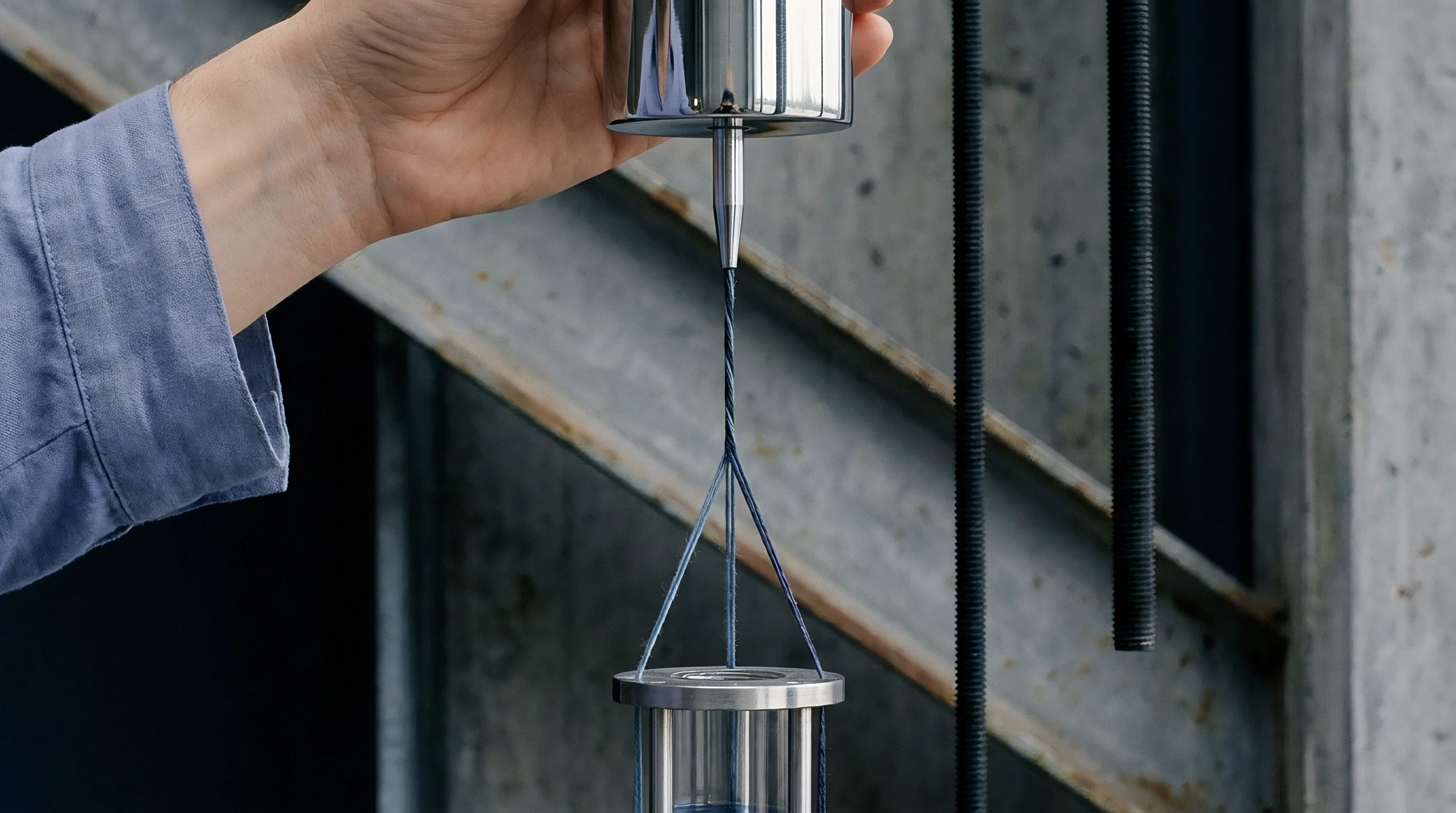
Fourier transform infrared spectroscopy pinpoints cuticular constituents without relying solely on bulk gravimetry. Attenuated total reflectance spectra of dew-retted line flax show distinct aliphatic stretching absorptions at 2918 cm⁻¹ and 2849 cm⁻¹, corresponding to asymmetric and symmetric methylene (CH₂) vibrations in long aliphatic chains. Carbonyl ester stretches register sharply at 1734 cm⁻¹, marking the presence of cutin networks and wax esters.
Gas chromatography paired with flame ionization detection or mass spectrometry separates homologous alkyl chains and resolves extracts into specific chain lengths. Dew-retted flax wax contains saturated straight-chain fatty acids from C16:0 (palmitic acid) to C30:0, alongside primary alcohols dominated by octacosanol (C28) and triacontanol (C30). Soil fungi active during field retting secrete cutinases and esterases that break down primary ester bonds, transforming long-chain esters into free fatty acids and free fatty alcohols.
| Analytical Band or Elution Peak | Chemical Functional Assignment | Diagnostic Relevance |
|---|---|---|
| FTIR 2918 cm⁻¹ / 2849 cm⁻¹ | Aliphatic CH₂ stretching | Magnitude indicates long-chain hydrocarbon abundance |
| FTIR 1734 cm⁻¹ | Ester carbonyl (C=O) | Ratio to 1595 cm⁻¹ aromatic peak tracks retting severity |
| FTIR 1160 cm⁻¹ | Ester C-O-C asymmetric stretch | Differentiates cuticular wax from core cellulose |
| GC-MS C28 / C30 Alcohols | Octacosanol and triacontanol | Primary markers for true epicuticular wax |
| GC-MS C16:0 / C18:0 Acids | Palmitic and stearic acids | Cleavage products generated by retting microorganisms |
| Testing parameters: ATR-FTIR scanning 4000 to 600 cm⁻¹ at 4 cm⁻¹ resolution with 64 scans; GC-MS using splitless injection on DB-5MS capillary column (30 m × 0.25 mm × 0.25 µm) with helium carrier gas. | ||
Because lipophilic extracts solidify below forty degrees, calculating the ratio between the ester carbonyl peak at 1734 cm⁻¹ and the cellulose skeletal absorption at 1030 cm⁻¹ yields an index of surface wax concentration directly on unground technical bundles. This nondestructive check verifies whether low gravimetric yields stem from thorough microbial retting or over-scutching. What remains unresolved is whether the molecular ratio of free fatty acids to esterified alcohols directly dictates sliver cohesion under commercial drawing velocities.
Spindle

Will Hot Water Troughs Emulsify Critical Fatty Esters?
In wet-spinning frames, roving passes through a heated water bath maintained between 60 and 70 degrees Celsius to soften residual polygalacturonic acids before entering the drafting zone. Water at this temperature approaches the melting point of flax wax fractions, which liquefy between 62 and 68 degrees Celsius. Molten surface waxes act as boundary lubricants between individual ultimate fibers as drafting rollers apply draft ratios between 8 and 14.
Because dry drafting demands boundary lubrication, drafting tension increases sharply when roving lacks sufficient native surface wax. Inter-fiber stick-slip friction promotes uncontrolled bundle rupture, generating fiber breakage and lowering spinning limits from Nm 50 down to Nm 36. Conversely, excess wax fouls gill box pins and causes mill floor complications.
Molten lipids wash off into the wet-spinning trough, forming a greasy emulsion that redeposits on spinning aprons and drafting rollers.
A roving bath set at sixty-five degrees Celsius extracts three grams of native wax per kilogram of processed line sliver.
To prevent high wax levels from increasing roller wrap, mills managing wet-spinning performance follow strict parameters to balance bath chemistry and fiber slip:
- Monitor trough temperature continuously to prevent fluctuations below sixty degrees Celsius.
- Dose non-ionic wetting agents to maintain uniform bath surface tension across all spinning positions.
- Purge trough bath volume every eight operating hours to remove accumulated wax emulsions.
- Inspect front drafting roller cots weekly for gummy cuticular deposits that cause yarn lap-ups.
- Measure yarn linear density variations (Uster CV%) to catch drafting stick-slip before roving lots clear the creel.
As roving absorbs warm trough water, fatty wax esters help prevent premature fiber breakage. However, in processing dew-retted Baltic line lots, natural field ret variations can generate unpredictable drafting tensions that water bath adjustments cannot neutralize.

Tolerance
Commercial Specifications and Landed Metre Yields
Fibre contracts specifying dew-retted line flax establish wax thresholds to control processing waste. A lot carrying 1.30 percent surface wax processes smoothly through hackling and wet spinning, yielding fine yarn counts with minimal breakage. If incoming fiber holds 2.50 percent wax, hackling comb yield drops by 2.5 to 4.0 percentage points due to fiber stiffness and cohesion resistance, shifting material directly into low-value tow.
The economic impact manifests directly in finished fabric costs. Line flax bought at 4.80 dollars per kilogram clean scuffed basis converts to roving with measurable losses. The comparison below illustrates landed cost variances across two distinct wax profiles:
Consider a 10,000-kilogram lot of dew-retted line flax graded for wet spinning to Nm 39 yarn. Lot A exhibits 1.25 percent hexane-extractable wax, while Lot B exhibits 2.65 percent wax due to uneven autumn retting. Processing Lot A produces a hackling yield of 58 percent line sliver, yielding 5,800 kilograms of spinnable sliver at an effective fiber cost of 8.28 dollars per kilogram.
Lot B yields only 53 percent hackled line due to poor bundle splitting, producing 5,300 kilograms of sliver at an effective cost of 9.06 dollars per kilogram. Spinning Lot A to Nm 39 generates 226,200 meters of yarn with an end-break rate of 18 breaks per 1,000 spindle hours. Lot B suffers 42 breaks per 1,000 spindle hours, forcing the mill to spin at Nm 30, producing only 159,000 meters of heavier yarn.
| Wax Range (Hexane Extract) | Hackling Yield (%) | Spinning Route Capability | Break Frequency (per 1,000 Spindle Hours) | Finished Plain Cloth Cost (USD / Metre) |
|---|---|---|---|---|
| 0.80% to 1.10% (Over-retted) | 51% to 54% | Dry-spun or coarse wet (Nm 26) | 38 to 55 | 4.65 |
| 1.15% to 1.55% (Target Dew-Retted) | 57% to 61% | Fine wet-spun (Nm 39 to Nm 60) | 12 to 20 | 3.85 |
| 1.60% to 2.10% (Moderate) | 54% to 57% | Medium wet-spun (Nm 26 to Nm 36) | 22 to 34 | 4.20 |
| 2.15% to 2.90% (Under-retted) | 48% to 53% | Tow blending or coarse dry-spun | 45 to 70 | 4.95 |
Technical textile procurement protocols establish standardized verification checkpoints before bale acceptance. Sourcing managers evaluate suppliers using specific analytical criteria:
- Standard Test Method Compliance with Soxhlet extraction performed under ASTM D1574 or ISO 6741 using high-purity n-hexane.
- Laboratory Composite Sampling drawn from at least ten percent of incoming bales per lot under ISO 1130 guidelines.
- Gas Chromatographic Fingerprinting demonstrating alcohol-to-acid ratios above 1.8 to confirm complete biological retting.
- Extractable Wax Thresholds contracted between 1.15 percent and 1.55 percent on bone-dry fiber mass.
Every one-percent increase in non-extractable bark debris adds twenty cents per finished metre in weaving stop-time penalties.
Fibre sale contracts incorporating the European Flax technical annex cap allowable hexane-soluble lipids at 1.60 percent on dry fiber mass, rendering lots exceeding this value subject to immediate price renegotiation or rejection before opening.