Verifying Physical Batch Identity in Flax Processing Operations
Verify physical flax batch identity by reconciling bale barcodes, yield conversion balances, and transaction certificates before approving spun yarn dispatches.


Tag
Physical segregation begins at the receiving dock of the primary processing facility. Raw flax straw arrives from retting fields in large round or rectangular bales, carrying field identification numbers tied to specific farm locations, harvest years, and seed varieties. When bales enter the scutching facility, mechanical equipment breaks the woody stem (shive) away from the bast fibre bundles.
Maintaining batch identity through mechanical processing demands continuous physical labeling systems that survive mechanical stress, dust exposure, and high-humidity environments.
Fibre identity collapses without clean separation. Processing mills handle raw stock by assigning a unique internal lot code upon intake. Bales enter storage bays arranged strictly by farm origin and retting classification.
Mixing raw straw from different fields prior to scutching destroys the downstream audit trail, rendering subsequent origin claims legally unsupportable.

Physical Segregation at Raw Fibre Intake
Intake protocols require physical segregation of un-scutched straw in dedicated bay zones. Each bale stack receives a weather-resistant sign stating the grower registration number, harvest date, gross weight, and crop classification. Scutching mills operating under certified origin schemes isolate certified straw lines from conventional stock through physical space buffers or timed production runs.
Timed runs enforce complete machinery clean-downs between batches to prevent cross-contamination of fibre lengths and retting grades.
Barcode labels and radio-frequency identification tags represent common physical identity vectors during initial intake. Scutcher tags carry the lot code. Physical tags are attached to the binding wires of raw bales and scanned into the inventory management system prior to breaking the bale ties.
The table below outlines the physical marking mechanisms applied across primary transformation stages.
| Processing Stage | Physical Marking Instrument | Data Encoded | Primary Risk Point |
|---|---|---|---|
| Bale Intake | Barcoded wire tag | Grower ID, field lot, harvest year, moisture content | Tag detachment during transport or automated wire cutting |
| Scutched Tow / Long Flax | Stenciled bale wrap and internal sleeve barcode | Scutcher mill ID, lot number, net weight, fiber grade | Wrap destruction during high-density pressing |
| Hackling Machine Output | Color-coded bundle ties and batch bin card | Hackler ID, lot code, hackled sliver yield grade | Manual tie mixing during comb transfer |
| Gilling and Combing | Coiler can barcode and RFID pin | Sliver lot number, draw frame pass, net weight | Can reassignment without digital system update |
| Spinning Bobbin / Package | Cone core stamp and crate label | Spinner code, yarn count, twist, lot batch ID | Package swapping during manual pallet packing |

Mechanical Traceability across Scutching and Hackling
Scutching machines extract long fibre and short fibre (tow) through mechanical beating turbine drums. The resulting long fibre bundles are hand-sorted, weighed, and bound into stricks. Each strick bundle is assigned to a specific scutched bale.
Scutched long flax bales are pressed under high hydraulic force, wrapped in polypropylene sheeting, and secured with steel or plastic strapping. An internal identity sleeve containing a printed barcode label goes inside the bale wrap alongside the exterior package stencil. External stencils alone remain vulnerable to abrasion during transit across maritime shipping routes.
Scutched long flax bales stored in unconditioned warehouses lose up to three percent moisture mass within forty-five days, altering net weight figures on transaction paperwork.
Hackling operations receive scutched long flax and comb the fibers to parallelize them into sliver. Combing removes remaining shives and short fibers, generating hackled tow as a co-product. Hackling mills track batch continuity by running single-origin long flax lots through dedicated hackling lines.
Sliver drawn from the hackling comb is deposited into coiler cans marked with physical batch cards. When sliver transfers to gilling frames, the coiler can barcodes are scanned at the frame entry creel. Physical tracking relies on strict operator discipline at every creel loading sequence.
Verifying intake discipline requires systematically evaluating physical intake procedures before raw fibre enters processing lines.
- Bale Wire Inspection checks physical tag attachment integrity and confirms readability of grower barcodes prior to wire cutting.
- Bay Allocation Mapping verifies that physical stack locations match warehouse management system bay entries precisely.
- Line Clean-Down Audit confirms machinery comb clearance and dust pit evacuation between distinct grower lots.
- Strick Bundle Marking validates the presence of internal batch identification sleeves inside pressed long-flax bales.
- Coiler Can RFID Audit tests signal read accuracy on sliver cans staged before gilling and drawing frames.
Failing to establish physical tag continuity at the scutching stage renders downstream spun yarn untraceable to its original cultivation site, exposing the buyer to origin rejection by customs authorities and immediate forfeiture of certified fibre price premiums.


Balance
Mass-balance calculations provide the mathematical proof that physical batch identity remained intact throughout mechanical processing. Flax processing involves substantial mass loss as raw un-retted straw converts into refined spun yarn. A processing facility receiving forty tonnes of raw flax straw produces a predictable yield of scutched long fibre, scutched tow, shives, and dust.
Mass balance exposes volume padding.
Yield losses compound across hackling. Unscrupulous mills attempt to mask yield shortfalls or batch swapping by introducing uncertified fibre into spinning lots. Tracking input masses against output yields using strict conversion coefficients flags unauthorized fibre blending immediately.

Yield Coefficients across Processing Nodes
Flax processing yield rates vary based on crop quality, retting efficacy, and mechanical adjustment of turbine scutchers. Standard long fibre yields from scutched green or dew-retted straw range between twelve and sixteen percent of total raw straw weight. Scutched tow yields account for an additional eight to twelve percent.
The remainder converts into woody shives and process dust during mechanical extraction.
Spinning operations convert scutched long flax into hackled sliver, roving, and fine yarn through wet or dry spinning. Wet spinning of high-line counts demands rigorous hackling yield controls. The worked example below illustrates a mass balance reconciliation for a forty-tonne batch of European dew-retted flax processed through scutching, hackling, and wet spinning.
| Transformation Stage | Input Weight (kg) | Output Product | Output Weight (kg) | Stage Yield (%) |
|---|---|---|---|---|
| Primary Scutching | 40,000 (Raw Straw) | Scutched Long Fibre Scutched Tow Shives and Dust | 5,600 4,000 30,400 | 14.00 10.00 76.00 |
| Hackling (Comb & Sort) | 5,600 (Long Fibre) | Hackled Sliver Hackling Tow Combing Waste | 3,920 1,400 280 | 70.00 25.00 5.00 |
| Drawing and Roving | 3,920 (Hackled Sliver) | Drawn Roving Roving Waste | 3,763 157 | 96.00 4.00 |
| Wet Spinning (Nm 26) | 3,763 (Drawn Roving) | Spun Yarn Packages Spinning Waste / Fly | 3,462 301 | 92.00 8.00 |
Total yield from raw straw to spun wet-spun yarn package computes to 3,462 kilograms from the initial 40,000-kilogram straw input. This represents an overall process transformation yield of 8.655 percent. When a spinner delivers 4,200 kilograms of yarn certified against that same 40-tonne raw straw input lot, uncertified fibre substitution occurred within the draw frame or spinning creel.

Reconciliation Mechanics in High-Volume Mills
Auditing a spinning mill requires reconciling physical weighbridge tickets, moisture meter records, and production logs. Raw flax absorbs and releases atmospheric moisture rapidly. Standard commercial moisture regain for flax yarn stands at twelve percent under standard standard temperature and humidity conditions.
Scutched flax entering a mill at fourteen percent moisture content generates apparent weight loss purely through ambient drying during warehouse storage.
Commercial weight adjustments must normalize dry fibre mass using official regain formulas before calculating batch loss tolerances.
Mass-balance models account for volatile moisture variance by converting all batch weighings to standard dry weight figures before applying yield filters. Chinese wet-spinning mills operating at high speed process multi-origin blends to optimize yarn tenacity and cost structures. In these facilities, physical segregation requires dedicated roving frame loading and continuous machine isolation.
Spinning mills frequently justify volume discrepancies on audit declarations by claiming higher-than-standard tow retention rates or unexpected variations in raw straw retting density across field lots.


Scope
Documentary proof of physical batch identity relies on a chained hierarchy of Scope Certificates and Transaction Certificates. A Scope Certificate confirms that a specific processing mill possesses the operational capability, machinery, and management systems required to process certified fibre under scheme standards such as European Flax or Masters of Linen. Scope Certificates carry annual validity periods and cover facility-level operations.
Transaction Certificates validate individual physical shipments of fibre moving between specific commercial entities. A Transaction Certificate lists the seller, buyer, net weight, gross weight, raw material origin, and unique lot numbers associated with the physical dispatch. Audit trails require linking every transaction certificate back to its predecessor document without gaps.

Reconciliation of Scope and Transaction Certificates
Document verification demands cross-referencing input transaction certificates against outgoing sales invoices. When a yarn merchant sells certified linen thread, the accompanying transaction certificate must cite the exact spinning lot and raw fibre transaction certificates used in manufacture. Schemes such as European Flax mandate that certification bodies verify mass-balance records before issuing transaction documents.
Audit trails require complete paper chains. Chinese spinning mills purchasing European scutched flax receive an export Transaction Certificate issued by a recognized European certification body. Upon arrival in Qingdao or Ningbo, the importer registers the certificate with the domestic certifying office.
Transformation into yarn generates a new spinning Transaction Certificate only after the mill presents internal production logs proving batch segregation during carding, hackling, and spinning.
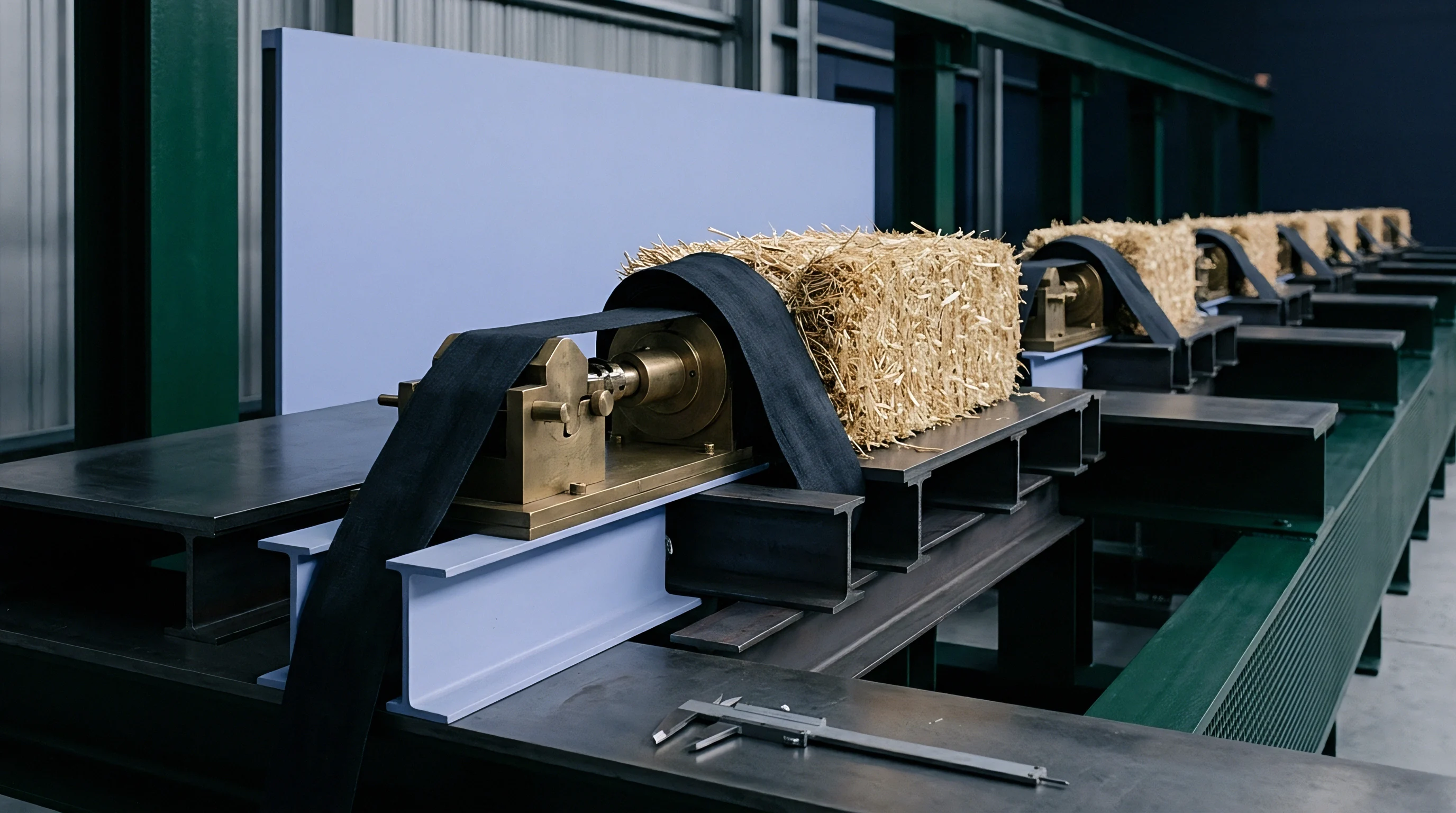
What Information Must a Scutcher Transaction Certificate Carry?
A valid scutcher Transaction Certificate must display specific mandatory metadata fields to preserve origin authority under international chain of custody standards. Missing metadata invalidates the document for commercial origin tracing.
- Official title of the issuing certification body and its ISO 17065 accreditation identifier.
- Unique transaction certificate reference number matching the central scheme database registry.
- Full legal name, registered business address, and scheme license number of the seller.
- Full legal name, registered business address, and facility location of the buyer.
- Net mass and gross mass of scutched fibre broken down by individual bale lot numbers.
- Harvest year, country of cultivation, and farm grower identification numbers.
- Harmonized System code classification covering the raw or processed fibre shipment.
- Authorized digital signature, stamp, and formal issue date of the certifying officer.
Discrepancies in net mass between the exporting scutcher transaction certificate and the importing spinner receipt ticket require written mill investigation reports prior to downstream release. Small variations under one percent are attributable to moisture evaporation during sea transit. Variations exceeding two percent require physical bale sampling and re-weighing at the port of entry.
Contractual specifications require sellers to replace invalid transaction certificates within fourteen business days of customs notification or accept full financial liability for duty adjustments.
Commercial contracts governing international flax transactions specify precise documentary compliance covenants to protect buyers against chain-of-custody breaks.
Standard purchase contract clause 14.2: The seller warrants that each consignment of certified flax yarn delivered under this contract is accompanied by a valid Transaction Certificate issued by an accredited ISO 17065 certification body, explicitly matching the physical lot numbers stamped on the cone package crates; failure to provide matching certificates upon delivery entitles the buyer to reject the consignment at the seller’s sole expense.


Testing
Analytical laboratory testing provides an independent method for validating physical batch identity and geographic origin claims. While paperwork chains can be forged or mismanaged, the chemical and physical characteristics of the flax fibre retain environmental signatures established during plant growth and retting.
Stable Isotope Ratio Analysis and elemental profiling evaluate the geographical origin of raw flax. Plants absorb water, nitrogen, and minerals from soil during the growing season. The isotopic ratios of hydrogen, oxygen, carbon, and strontium inside plant cellulose reflect local precipitation patterns, soil geology, and climate conditions.
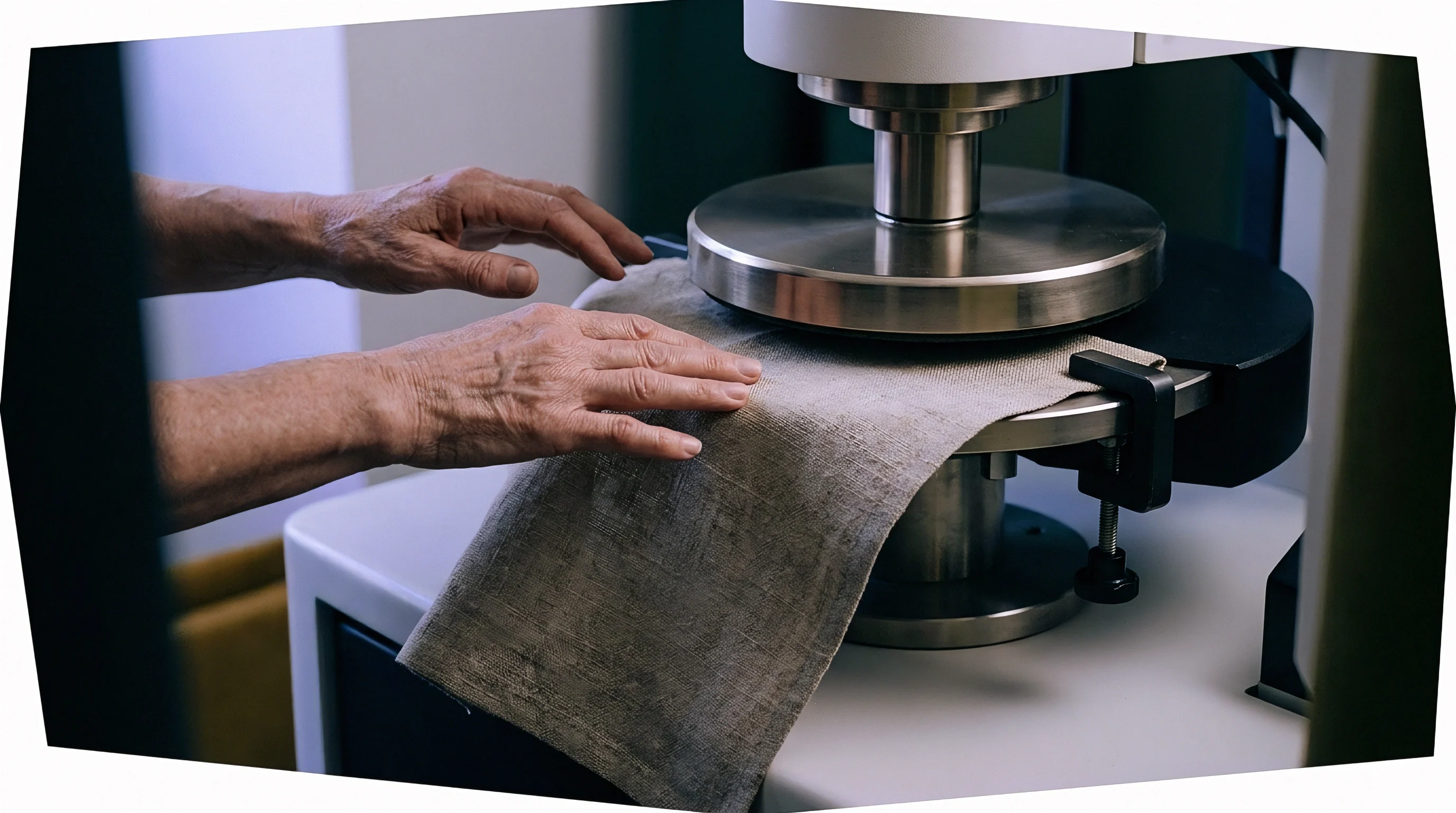
Analytical Methods for Origin and Batch Verification
Isotope analysis maps soil chemistry. Oxygen isotopic ratios in cellulose correlate strongly with latitude and distance from oceanic coastlines. Strontium isotope ratios reflect the geological age and mineral composition of underlying bedrock.
Combining isotopic metrics creates a geographical fingerprint that verifies whether raw flax declared as Western European was grown in Eastern Europe or Asia.
DNA marker analysis provides species identification but faces technical limitations when distinguishing within-species cultivars of Linum usitatissimum. Commercial processing treatments, including hot-water retting, caustic scouring, and wet-spinning acid baths, degrade plant DNA, restricting genetic testing utility to raw straw and scutched fibre stages. The table below details the performance boundaries of key analytical methods used in batch identity verification.
| Testing Methodology | Target Marker / Analyte | Sample Stage Suitability | Origin Resolution | Cost per Sample (USD) |
|---|---|---|---|---|
| Stable Isotope Ratio Analysis (SIRA) | Isotopic ratios of Hydrogen, Oxygen, Carbon, Strontium | Raw straw, scutched fibre, yarn, finished fabric | Regional macro-zone (e.g. Western Europe vs Inland Asia) | 350 to 550 |
| Inductively Coupled Plasma Mass Spectrometry (ICP-MS) | Rare earth elements and trace metal signatures | Scutched fibre, greige yarn | Micro-region soil fingerprinting | 250 to 400 |
| DNA Barcoding / Polymerase Chain Reaction (PCR) | Chloroplast genomic sequences | Raw straw, un-retted bast fibre | Species level (fails on bleached yarn) | 180 to 300 |
| Synthetic Fluorophore / Biomarkers | Topically applied luminescent chemical markers | Scutched bale spray, sliver spray | Batch-specific (lot identification) | 50 to 120 |

Physical Synthetic Marker Application
Synthetic markers carry distinct costs. To overcome the limitations of natural chemical variations, processors apply food-grade synthetic DNA or chemical fluorophores directly to raw fibre bundles during scutching or hackling. These microscopic markers adhere to cellulose surfaces and survive spinning, weaving, and wet processing.
Handheld field readers detect fluorophore markers instantly at port inspectors or garment manufacturing plants. Quantitative PCR analysis extracts synthetic DNA tags from a tiny sample of woven fabric, confirming exact batch identity against the producer library database. Applying synthetic markers adds processing steps but creates an un-forgeable link between physical goods and digital transaction records.
Applying topical fluorophore markers at a concentration of five parts per billion provides complete batch identity protection without altering fibre dye affinity or hand feel.
Despite these technological capabilities, analytical testing faces commercial limits when applied to blended yarns. When a mill blends thirty percent Western European long flax with seventy percent domestic Chinese tow, stable isotope analysis yields an intermediate isotopic value that requires complex multi-component unmixing algorithms to interpret correctly.
Can isotopic unmixing models reliably isolate small percentages of uncertified fibre introduced into wet-spun linen yarn when baseline regional soil signatures overlap across contiguous European growing regions?


Margin
Traceability mechanisms add real cost to every stage of the flax supply chain. Certified Western European flax fibre commands a price premium of twenty to thirty-five percent over conventional uncertified flax straw from alternative regions. Processing mills, spinners, and weavers invest significant operational capital in physical segregation, digital scanning equipment, administrative documentation management, and third-party auditing fees.
Tariff margins dictate customs duty. Preferential trade agreements, mandatory supply chain due diligence regulations, and import prohibitions against specific regions elevate batch identity management from a marketing feature to a primary risk management requirement. Importers failing to prove physical batch origin face shipment seizures, financial penalties, and retroactive tariff assessments.

Cost Structure of Traceability Compliance
Establishing traceability compliance requires funding both fixed facility audits and variable per-kilogram certification surcharges. Third-party auditors charge between 1,800 USD and 3,500 USD per day for on-site facility audits under schemes like European Flax or Masters of Linen. In addition, certification bodies levy transaction certificate issuance fees ranging from 30 USD to 80 USD per certificate dispatch.
Synthetic marker application adds approximately 0.05 USD to 0.12 USD per kilogram of treated fibre. Laboratory verification using stable isotope analysis costs approximately 450 USD per sample, representing an ongoing operational testing expense for high-risk supply chains. The commercial failure modes below outline where origin claims break down under commercial pressure.
- Document Inconsistency occurs when total invoice weights exceed transaction certificate net masses due to un-normalized moisture accounting.
- Bale Tag Omission happens when spinning mills remove physical bale labels during blending operations without logging package barcodes.
- Batch Splitting Errors emerge when a single fibre lot splits into multiple spinning batches without issuing corresponding partial transaction certificates.
- Subcontractor Non-Compliance arises when greige yarn transfers to uncertified third-party commission dye houses for bleaching or softening.
- Incompatible HS Classification takes place when custom brokers re-classify hackled tow under raw fibre tariff lines to reduce duties.

Customs Origin Rules and Contractual Allocation
Under international customs frameworks, including the Union Customs Code and United States Customs and Border Protection regulations, non-preferential origin is determined by the country of substantial transformation. For textile goods in Harmonized System Chapter 53, spinning raw or hackled fibre into yarn constitutes a substantial transformation that changes non-preferential country of origin.
A yarn spun in China from French dew-retted flax carries Chinese origin for general customs tariff application, but retains its European Flax raw material provenance claim for consumer labeling purposes. Merchandisers must maintain clean separation between customs origin declarations and raw material content claims. Confusing non-preferential customs origin with raw material provenance triggers regulatory sanctions for false advertising and deceptive trade practices.
Commercial contracts protect buyers by shifting origin compliance burdens directly to the seller through clear financial liability indemnities. Uncertified yarn forfeits premium pricing. Clean documentation preserves buyer remedies.
Purchase orders must explicitly tie payment release schedules to third-party verification of physical lot identification tags and valid transaction certificate registration. When audit checks reveal physical batch mixing or missing paperwork links, buyers exercise contractually defined chargeback rights, deducting the certified fibre premium from final invoice settlements and requiring immediate mill replacement of compromised yarn batches.