Establishing Multi Party Supply Chain Liability Protocols for Complex Friction Defects in Sized Ultrafine Linen Warps
Resolving multi-party friction defect claims on ultrafine linen warps requires standardized sizing telemetry audits and retained un-sized yarn sample testing.

Shed
Ultrafine wet-spun linen yarns finer than metric count Nm 100 break easily under cyclic tension spikes on high-speed rapier looms. Flax fibers consist of ultimate cell bundles bound by pectin and hemicellulose matrices. Unlike continuous synthetic filaments or uniform staple cotton, flax ultimate fibers vary between fifteen and forty millimeters in length, with individual cell diameters ranging from twelve to twenty microns.
In wet-spun yarns, twisting packs these bundles tightly against the core, creating a smooth surface with high tensile modulus. Flexural rigidity in wet-spun flax is extraordinarily high, but bending elongation tops out below two percent. When an ultrafine Nm 120 or Nm 150 warp sheet enters the shedding zone at insertion rates exceeding five hundred picks per minute, abrasive shear builds rapidly across adjacent yarns, drop wires, heddle eyes, and reed dents.
Friction in the loom shed acts along two distinct axes: normal contact pressure against structural metal guides creates boundary friction, while high-density warp packing drives yarn-to-yarn dynamic abrasion. Ultrafine linen warps running at thirty-six to forty-four ends per centimeter undergo extreme lateral squeeze as heddle frames alternate positions. On high-speed rapier beams running Nm 120 wet-spun flax, mechanical rubbing lifts short surface fibrils away from the yarn core, initiating progressive micro-fibrillation.
Fuzz balls form as free fibrils tangle with neighboring warp ends, bridging adjacent yarns until they block the rapier tape or air-jet payload.
Sizing polymers applied before warping act as protective armor against shedding abrasion. Formulations combining thin-boiling modified potato starches, carboxymethyl cellulose, and cold-water-soluble polyvinyl alcohol form cohesive films over the outer sheath of the yarn bundle. The polymer matrix needs to penetrate fifteen to twenty-five percent of the yarn core radius to lock internal ultimate fibers without making the structure brittle.
Excess sizing creates a glassy, rigid exterior that shatters under high-frequency flexure; insufficient sizing leaves surface fibrils exposed to immediate mechanical strip-back.
Dynamic Friction in Ultrafine Flax Warps
Frictional force along an ultrafine flax warp thread scales directly with yarn tension, contact angle, and relative velocity at loom contact points. Passing through the heddle eye generates the highest localized heat. As a warp end moves through a hardened steel or ceramic heddle eye, the contact angle oscillates between eight and sixteen degrees during each shed opening cycle.
At six hundred picks per minute, the yarn surface undergoes twelve dynamic stress cycles per second, generating tension pulses that spike twenty to forty percent above static warp line settings.
Flax fiber bundles shear cleanly under sudden impact, while continuous static loads tear micro-fibrils from the yarn core.
Under these tension spikes, the sizing film suffers rapid flexural shear fatigue. If adhesion between the polymer and the hydrophilic flax substrate fails, the protective film splits longitudinally along the yarn axis. Glassy sizing fragments shed as solid dust, building up inside drop wire boxes and heddle race channels.
Removing that coating exposes raw flax ultimate fibers directly to metal contact, accelerating micro-fibrillation and pushing yarn hairiness to four times pre-weaving baseline levels.
Mechanical Tribology of Sizing Films under Flexure
Sizing film performance depends heavily on shed relative humidity. Flax cellulose requires sixty-five to seventy-two percent relative humidity at twenty-two degrees Celsius to maintain flexural compliance. Below sixty percent relative humidity, sizing films made from high-viscosity modified starches become brittle.
The matrix modulus rises, causing the coating to fracture rather than flex during shedding. Conversely, relative humidity above seventy-five percent plasticizes polyvinyl alcohol components, turning the protective coating tacky and raising yarn-to-yarn friction.
Size film hydration below forty-eight percent relative humidity accelerates micro-fibrillation in wet-spun flax warps within twenty minutes of shed loading.
The friction coefficient of sized ultrafine linen varies across the length of the warp beam. Warps prepared with uneven size add-on show noticeable fluctuations in surface roughness. A localized drop in size pick-up from ten percent down to six percent cuts abrasion resistance by a factor of five.
As under-sized warp regions cross the whip roll and lease rods, added friction triggers rapid fiber shedding, clogging reed channels and throwing false stop-motion signals in loom control systems.

Micro-Fibrillation and Dusting in Shed Operations
Dusting occurs when weaving mechanically sheds sizing fragments, short flax fibers, and ungelatinized starch solids. Accumulation along the reed race restricts effective dent spacing and increases lateral abrasion against adjacent warp ends. In high-density plain weave constructions, like a forty-end per centimeter square linen sheeting, dust buildup squeezes warp threads together, preventing clean shed separation and causing mispicks or full warp breakages.
Higher loom speeds compound abrasive friction, while maintaining clean beams and guide surfaces prevents premature wear.
Friction damage develops in recognizable stages. Micro-cracks form along the sizing surface within the first two thousand picks. Continued flexure splits the polymer shell longitudinally until the film delaminates entirely from the underlying flax bundle.
Unbound ultimate fibers then flare outward under static electrical charges and mechanical friction, weaving together into sticky clumps that halt production. Spinners often blame severe fuzz balling on excessive shed geometry height, maintaining that the Nm 120 wet-spun flax met all single-end tensile specifications before sizing.

Assay
Diagnostic testing determines whether warp breakage stems from inherent yarn variability, chemical size degradation, or mechanical friction. Evaluating incoming sized warp beams requires separating structural fiber properties from applied surface chemistry. Analytical protocols quantify single-end tensile parameters, cross-sectional size penetration, hairiness progression metrics, and dynamic friction coefficients under simulated shed conditions.
A comprehensive laboratory audit forms the baseline for assigning multi-party financial liability across supply chain partners.
Testing begins with single-end tensile measurements under controlled atmospheric conditions according to ISO 2060 standards. Retained un-sized greige yarn samples from original spinning lots undergo tensile evaluation using constant-rate-of-extension instruments. Tenacity values for ultrafine wet-spun warp yarn must exceed twenty-two centinewtons per tex, with a coefficient of variation in breaking tenacity below eleven percent.
High tenacity variation points to uneven fiber drafting or irregular pectin removal during retting, both of which impair the yarn’s capacity to withstand tension spikes during sizing and weaving.
Sized warp yarns undergo identical tensile testing to evaluate strength gain and elongation loss from chemical sizing. Sizing should increase single-end breaking strength by fifteen to twenty-five percent over the greige baseline. Elongation at break decreases as the polymer matrix locks internal fibers.
An elongation loss exceeding thirty percent indicates an overly rigid size film, presaging flexural brittle fracture on high-speed looms.
Bench Metrics for Size Cohesion and Hairiness
Sizing film cohesion is evaluated using modified Zweigle abrasion testing alongside microscopic analysis of cross-sectional size distribution. Warp samples drawn from the weaver beam undergo cyclic rubbing under a static load of ten centinewtons per tex. The test counts the number of abrasion cycles required to cause single-end failure or generate a set volume of fiber fuzz.
Superior size formulations maintain film integrity beyond forty thousand abrasion cycles on Nm 120 linen yarn.
Yarn hairiness metrics give early warning of friction-induced warp degradation. Laser monitors count projecting fibers past specific length thresholds per hundred meters of yarn. The s3 hair count value ~ measuring fibers projecting beyond three millimeters from the core ~ serves as the key benchmark for shed entanglement risk.
Sized ultrafine linen warps must show s3 values below fifteen per hundred meters before loom mounting. An s3 hair count exceeding fifty signals severe micro-fibrillation capability that will generate heavy fuzz balls at the reed line.

Why Do High-Speed Frictional Coefficients Drift during Weaving?
Dynamic friction testing uses capstan-style yarn friction meters to record kinetic friction coefficients against polished chrome pins, ceramic guides, and steel reed wires. Testing occurs across insertion speeds from fifty to six hundred meters per minute under variable humidity settings. The kinetic friction coefficient for properly sized, lubricated ultrafine linen against hardened steel should stay stable between zero point twenty-two and zero point twenty-eight.
Frictional drift occurs when applied surface lubricants migrate into the porous structure of the flax fiber core during warm beam storage. Fiber wax additives, typically applied at rates between zero point five and one point five percent of dry size weight, lower kinetic friction against metal guides. If storage temperatures drop below the lubricant’s melting point or if drying profiles during sizing cause wax phase separation, the dynamic friction coefficient spikes above zero point thirty-eight.
Increased surface drag strips the sizing film within hours of starting a new beam.
| Parameter | Metric Count Nm 100 | Metric Count Nm 120 | Metric Count Nm 150 | Testing Standard |
|---|---|---|---|---|
| Single-End Tenacity Greige (cN/tex) | 22.5 – 25.0 | 23.0 – 26.5 | 24.0 – 28.0 | ISO 2060 |
| Sized Yarn Strength Increase (%) | 18.0 – 22.0 | 15.0 – 20.0 | 12.0 – 18.0 | ISO 13934-1 |
| Elongation at Break Sized (%) | 1.8 – 2.2 | 1.5 – 1.9 | 1.2 – 1.6 | ISO 13934-1 |
| Size Pick-up Target (% Dry Weight) | 10.0 – 12.0 | 9.0 – 11.0 | 8.0 – 10.0 | ISO 7211-3 |
| Zweigle Abrasion Cycles to Failure | > 50,000 | > 40,000 | > 30,000 | Custom Mill Standard |
| Max Permissible s3 Hairiness Index | < 10 / 100m | < 15 / 100m | < 20 / 100m | Zweigle G552 |
| Kinetic Friction Coefficient (Steel) | 0.22 – 0.25 | 0.24 – 0.27 | 0.25 – 0.28 | ASTM D3108 |
Standardized Testing of Micro-Fibrillation Progression
Micro-fibrillation mapping involves taking warp end cross sections at incremental points along the loom path: post-whip roll, post-drop wire, post-heddle eye, and at the fell of the cloth. Microscopic image analysis quantifies liberated micro-fibrils from the main fiber body, tracking how mechanical shear damage accumulates.
- Film shedding rate exceeding two percent by weight during forty-thousand cycles of modified Zweigle abrasion testing confirms inadequate chemical adhesion between binder polymers and outer cellulosic layers.
- Inter-fiber friction coefficient drifting above zero point thirty-five when ambient shed humidity drops below sixty percent triggers shed entanglements that halt shuttleless rapier tapes.
- Single-end tenacity drop after sizing points to chemical thermal degradation during dry-can passage where surface temperatures exceed one hundred and twenty degrees Celsius.
- Size penetration depth ratio falling below fifteen percent of total bundle radius leaves interior ultimate fibers unsupported and prone to inter-fiber longitudinal slippage.
Chemical verification uses cross-sectional staining techniques combined with optical microscopy. Iodine reagent stains starch components purple, while specific dyes highlight synthetic acrylic and polyvinyl alcohol binders. An effective size application creates a continuous ring-shaped polymer zone around the outer perimeter of the flax yarn, anchoring outer fiber layers while leaving the central core flexible.
Uneven size coats expose raw fiber edges directly to loom friction.
Testing under ISO 13934-1 confirms that warp yarns losing over fifteen percent elongation after sizing suffer three times higher break rates per loom hour.
Solvent extraction procedures quantified under ISO 7211-3 measure total dry size add-on percentages across multiple warp ends taken from the left, middle, and right sections of the beam. Variations in size pick-up exceeding one point five percentage points across these sections point directly to non-uniform squeeze roll pressure or thermal gradients in the sizing box. Whether real-time acoustic sensors can reliably differentiate between sizing film shear and core fiber rupture before major shedding failure occurs remains a subject of ongoing mill trials.


Split
Assigning accountability across the manufacturing chain requires precise demarcation between raw fiber defects, sizing preparation faults, and loom setup errors. Complex friction failures on ultrafine linen warps rarely stem from a single operational failure. Multiple small variances along the processing stream combine to overwhelm the mechanical limits of the warp yarn.
Determining liability requires linking clear failure signatures to specific processing steps.
The flax spinner bears responsibility for structural yarn defects that prevent successful sizing and weaving. Inadequate retting leaves excessive structural pectin, creating stiff fiber bundles that shatter on the sizing drying cans. Conversely, over-retted flax suffers degraded ultimate fiber strength, dropping single-end yarn tenacity below critical loom thresholds.
Uneven yarn drafting that produces extreme thin and thick places creates stress points that fail quickly under friction: thin places lack cross-section to absorb dynamic tension, while thick places strip size films as they force through drop wire slots.
The sizing mill carries liability for chemical formulation errors, incorrect sizing box temperatures, improper squeeze roll pressures, and bad drying profiles. Size viscosity must match the specific yarn count and density demands of the weave construction. Low size bath viscosity leads to over-penetration into the yarn core, starving the outer surface of protective polymer coating.
Excessive size bath viscosity creates thick, irregular surface skins that shed rapidly as solid dust during weaving. Tension control faults that stretch ultrafine warps past their elastic recovery limits during wet processing destroy residual elongation, causing immediate loom failure.
Root Cause Mapping across Supply Chain Nodes
Loom shed operators manage machinery alignment, ambient humidity controls, and shedding setup parameters. Mounting a high-density ultrafine linen warp on a loom with grooved reed dents or worn drop wires introduces localized mechanical friction that ruins valid yarn beams. Improper backrest roll height settings that create asymmetric shed tensions force the lower warp sheet to bear twice its rated static load, accelerating flexural fatigue during pick insertion.
Twist levels directly regulate surface hairiness by binding loose outer fibrils into the core bundle.
Warp breakages frequently trace back to size bath crystallization when a processor runs degraded starch with an elevated gelation point. As circulation slows, starch retrogradation forms microscopic insoluble gels that deposit directly onto the yarn. These hard, crystalline inclusions act like rasps against neighboring ends during shedding, cutting through adjacent ultimate fiber bundles within two thousand loom revolutions.
| Defect Manifestation | Physical Root Cause | Responsible Party | Verification Benchmark |
|---|---|---|---|
| Systematic Fuzz Balls at Reed Line | Inadequate outer size film continuity and low lubricant content | Sizing Mill | Size pick-up < 8.0% via solvent extraction (ISO 7211-3) |
| Catastrophic Single-End Tensile Fracture | Low intrinsic fiber tenacity and severe thin place frequency | Yarn Spinner | Un-sized tenacity < 20.0 cN/tex; CV of tenacity > 13% |
| Glassy Dusting in Drop Wire Box | Over-drying on size cans leading to starch embrittlement | Sizing Mill | Moisture regain < 6.0% upon beam exit; film flexure testing |
| Asymmetric Warp Strip-Back (One Side) | Misaligned harness frames or uneven whip roll height | Weaving Shed | Laser alignment audit; tension differential > 25% across shed |
| Brittle Shear at Lease Rods | Excessive warp sheet tension during wet sizing passage | Sizing Mill | Sized yarn elongation loss > 35% relative to greige state |
| Center-Shed Inter-Fiber Entanglement | Low warp twist multiplier combined with high s3 hairiness | Yarn Spinner | Alpha twist metric < 105; s3 hairiness count > 45 / 100m |
Matrix of Multi-Party Responsibilities
Distinguishing between spinner yarn faults and sizer chemistry faults requires systematic laboratory verification comparing greige yarn retained samples against post-sized warp samples. Sizing cannot correct underlying raw fiber defects like low flexural endurance or high short-fiber ratios. However, incorrect sizing easily destroys a top-tier spinning lot through thermal degradation or dynamic over-stretching during beam preparation.
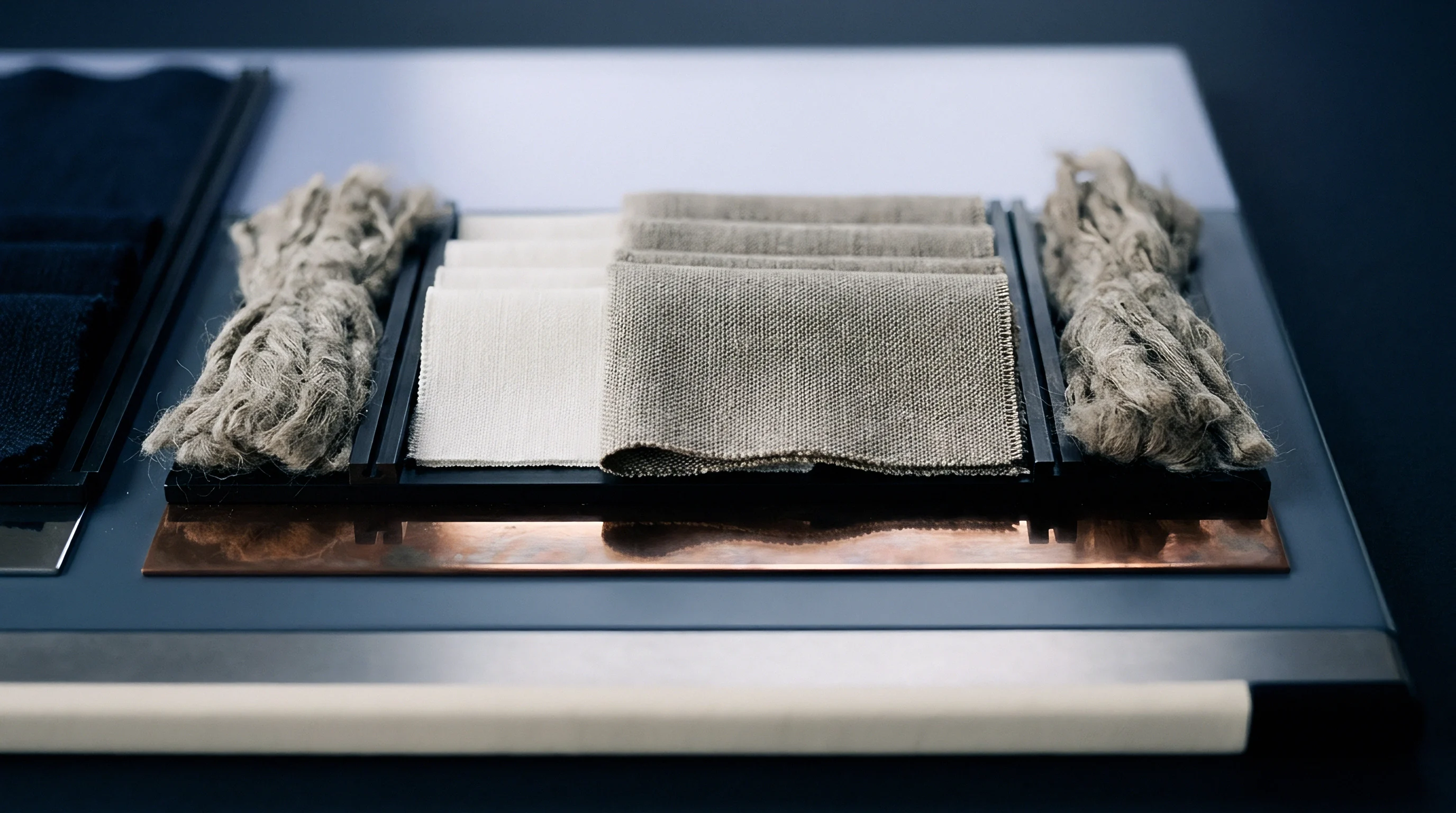
Spinner Defect Signatures versus Sizer Rheology Faults
The diagnostic sequence for isolating complex friction failures works step by step:
- Isolate greige fabric swatches immediately upon the appearance of fuzz balls at the reed line to preserve un-mended yarn geometry for forensic analysis.
- Perform solvent extraction of the sizing agent under ISO 7211-3 to evaluate dry size pick-up percentage against the sizing mill certification sheet.
- Measure cross-sectional fiber orientation using scanning electron microscopy to identify whether fibrillar cleavage occurred before or after chemical size application.
- Audit loom drop wire tension settings and reed alignment tolerances to verify machine compliance before lodging a formal raw material claim.
- Cross-examine sizing telemetry logs for temperature drops, speed changes, or squeeze roll pressure fluctuations during the production of the specific beam lot.
Shedding geometry dictates the flexural strain imposed on warp ends during each opening cycle.
When yarn hairiness spikes are restricted to specific harness frame locations, machine alignment causes the fault. If hairiness increases uniformly across the full width of the warp sheet as weaving progresses, chemical size breakdown serves as the dominant failure mechanism. High s3 hairiness on incoming greige yarn combined with substandard lubricant application by the sizer creates shared financial liability between spinner and sizer.
A warp sizing pick-up deviation exceeding one point five percent from the target specification voids the yarn spinner liability cap.
Attribution disputes escalate when greige yarns pass initial tenacity benchmarks but fail during weaving due to low inter-fiber friction within ultimate bundles. Low twist multipliers applied during spinning lower processing costs but reduce mechanical resistance to surface shearing forces. Clause 14B of the international linen weaving accord transfers full material liability to the sizing processor whenever un-sized yarn bobbin tenacity meets ISO 2060 standards while size penetration depth falls below forty percent of fiber bundle diameter.

Covenant
Commercial agreements across multi-party linen production require rigorous legal terms to manage latent material defects that only manifest on the loom. Standard yarn supply contracts written for cotton or continuous synthetic yarns fail when applied to ultrafine wet-spun linen warps. Supply protocols must establish precise technical parameters, mandatory sample retention rules, automated telemetry logging requirements, and clear claim escalation triggers across every node of the production matrix.
Supply contracts govern risk by establishing explicit raw yarn retention reserves. Before committing a fifty-beam warp order, the yarn spinner must isolate and store ten kilograms of un-sized yarn per spinning lot in a climate-controlled archive. These retention samples serve as objective benchmarks during neutral laboratory arbitration.
If a warp fails on the loom, retained samples undergo parallel sizing on a laboratory single-end unit to establish whether the greige yarn possessed the physical capacity to accept protective polymer coatings.
Contracts specify precise technical thresholds for single-end tenacity, elongation variance, hairiness metrics, and size formulation chemistry. Deviations from these parameters constitute a material breach, automatically shifting financial liability to the non-compliant supplier. The agreement defines acceptable loom friction limits by establishing maximum permissible stop frequencies per hundred thousand picks inserted.
Tripartite Service Level Structure
Service level agreements bind the spinner, commission sizer, weaving mill, and fabric merchant into a singular quality governance framework. The contractual language specifies that yarn quality certifications provided by the spinner do not release the sizer from performing incoming raw material verification. The sizer must verify that single-end yarn moisture levels sit between eight and ten percent prior to launching sizing operations, as dry linen absorbs sizing water too rapidly, resulting in localized size film over-penetration.
Sizing processors must continuously log operating parameters across every beam lot. Modern sizing machines utilize continuous refractometers, electronic load cells, and non-contact moisture meters to create immutable digital telemetry files covering bath concentration, warp sheet stretch, sizing temperature profiles, and beam winding tension. Contracts stipulate that failure to deliver complete digital telemetry records for a disputed warp beam forfeits the sizer right to dispute liability claims.
Inadequate sizing destroys loom efficiency, whereas proper ambient moisture restores essential pectin flexibility during shed manipulation.

Dispute Escalation and Sampling Protocols
Dispute resolution protocols mandate rapid joint inspection upon the occurrence of chronic warp breakage. If warp stoppages on ultrafine linen exceed two point five stops per hundred thousand picks over a continuous four-hour shift, the weaver must suspend weaving and issue a formal notice of dispute within twelve hours. Continued operation of a failing warp beam beyond eight production hours without supplier notification waives the weaver right to claim full loom downtime compensation.
- Bobbin retention protocol mandating the storage of five hundred meters of un-sized yarn per spinning lot for independent lab arbitrations.
- Sizing bath telemetry records covering viscosity, temperature, and refractometer concentration metrics logged continuously throughout beam winding.
- Loom downtime logging criteria requiring automated stop-motion sensor export data specifying warp-break frequency per hundred thousand picks.
- Greige swatch retention requirement obligating the weaver to cut and seal two full fabric meters prior to loom teardown.
Laboratory arbitration relies on standardized test methods executed by certified independent textile laboratories. The contract designates specific international standards, including ISO 2060 for tenacity, ISO 7211-3 for size pick-up, and Zweigle protocols for abrasion resistance. Test results delivered by the designated independent laboratory stand as binding determinations of material defect origin.
Cross-border claims on ultrafine flax warps fail most frequently due to unstandardized greige sample conditioning prior to laboratory arbitration.
Liability caps are calibrated against the financial realities of processing high-value ultrafine linen. Standard liability agreements limit supplier exposure to the invoice value of supplied material. Covenants for ultrafine linen warps, however, incorporate direct consequential loss provisions covering loom downtime costs and destroyed beam preparation labor whenever gross negligence in sizing chemistry or yarn twisting is proven.
When three separate suppliers touch a single warp beam before weaving, financial recovery always favors the buyer who retained un-sized bobbin samples from the original spinning lot.


Invoice
Financial reconciliation for loom downtime and degraded fabric yield depends on precise cost-accounting models that convert shed stoppage into monetary claims. Ultrafine linen warps running on modern rapier looms consume expensive capital, specialized labor, and high energy inputs. A high-frequency friction defect transforms a profitable weaving run into a net financial loss within hours of shed initiation.
Accounting mechanisms must calculate the full landed cost impact of warp defects, distributing losses accurately among responsible supply chain partners.
Loom downtime costs are calculated using hourly overhead rates assigned to specific loom models. High-speed rapier looms operating at six hundred picks per minute generate fixed overhead costs based on machinery depreciation, facility power, ambient air conditioning maintenance, direct operator wages, and allocated shed management costs. Operating a high-density ultrafine linen line carries a baseline shed operating charge ranging between thirty-five and fifty-five Euros per loom hour, independent of fabric yield.
When friction defects cause warp breaks to rise from a standard baseline of one stop per hundred thousand picks to twelve stops per hundred thousand picks, loom efficiency drops from eighty-eight percent to under forty-five percent. An efficiency drop of this magnitude destroys the weaver operating margin. The financial loss equation combines direct lost cloth meters, unrecoverable fixed overhead burn, excess labor spent re-threading broken ends, and potential late-delivery penalties imposed by downstream retail buyers.

Loom Hour Loss Calculations for High-Speed Shedding
Financial accounting for lost production capacity uses standard loom hour formulas adjusted for warp-defect downtime. Net capacity loss equals the difference between target theoretical fabric output and actual greige meters inspected, multiplied by the contract metre sales price. Unrecoverable loom time spent clearing fuzz balls, repairing broken warp ends, and cleaning clogged reed dents is billed directly back to the party responsible for the defect.
Unscheduled loom stops burn through operating capital by idling high-value machinery.
Greige fabric downgrades represent another substantial financial loss category. Friction defects that do not cause full warp breakage frequently induce surface cloudiness, uneven cover factor, reed streaks, and local fuzziness. Fabric inspection software rates greige cloth quality using the ASTM D5430 four-point penalty system.
Fabric scoring over twenty-eight demerit points per hundred square meters drops from first-quality classification to seconds, incurring a mandatory commercial discount between thirty and fifty percent off original invoice price.
| Cost Category | Calculation Formula | Allocation Baseline | Typical Recovery Settlement |
|---|---|---|---|
| Direct Loom Downtime Charge | Downtime Hours x Hourly Shed Overhead Rate | 35 to 55 Euros per Loom Hour | 100% of proven excess downtime hours |
| Lost Metre Yield Capacity | (Target Metres – Actual Metres) x Metre Profit Margin | Contract Target Loom Efficiency (85%) | 70% to 100% of net margin loss |
| Fabric Quality Downgrade Loss | First-Quality Metre Rate – Seconds Discounted Rate | ASTM D5430 > 28 Points / 100m² | 30% to 50% invoice value discount |
| Beam Preparation Labor Waste | Sizing Labor Hours + Warping Labor Hours | Full Lot Re-Warping Cost | 100% of re-warping and re-sizing fee |
| Yarn Scrap Material Value | Destroyed Yarn Weight x Yarn Purchase Price/kg | Net Un-weaveable Warp Scrap | Invoiced Yarn Value less Scrap Recovery |

Landed Cost Settlement Models for Scrap Yields
Settlement models process claims through multi-tier chargeback procedures. Upon verification of a friction failure originating from improper sizing, the weaver issues a formal debit note to the sizer. The debit note includes the full processing fee paid for sizing, the direct hourly downtime cost logged during loom failure, and the material value of damaged warp yarn that cannot be woven into usable cloth.
The sizer must credit these amounts against outstanding invoices or pay cash settlements within thirty business days.
Yarn count directly governs the necessary size bath viscosity and solids formulation.
If the root cause traces back to spinner fiber defects, the claim structure encompasses the initial yarn purchase invoice, transport freight, import duties, and the wasted capital spent during subsequent sizing operations. When responsibility splits between spinner and sizer due to compound errors, financial liability is apportioned according to the ratio established during neutral laboratory arbitration, such as a sixty-forty split between raw yarn hairiness defects and inadequate lubricant sizing application.
A six-hour stoppage on an air-jet loom running Nm 120 linen warps destroys forty-two meters of billable cloth capacity per beam.
Accounting reconciliation finishes with the final adjustment of the landed cost sheet per finished fabric meter. Friction defects increase unit costs by amortizing downtime losses and scrap material across a reduced volume of billable cloth. Mills frequently absorb twenty-four thousand Euros in unrecoverable loom downtime during arbitration when supply contracts fail to define maximum permissible size viscosity drift on Nm 140 warps.