Reconciling Extractive Dissolution Mass Losses in High Count Organic Flax Wet Spinning Certification
Reconciling organic flax spinning losses requires adjusting transaction certificates for count-dependent extractive solubilization and moisture regain.


Bath
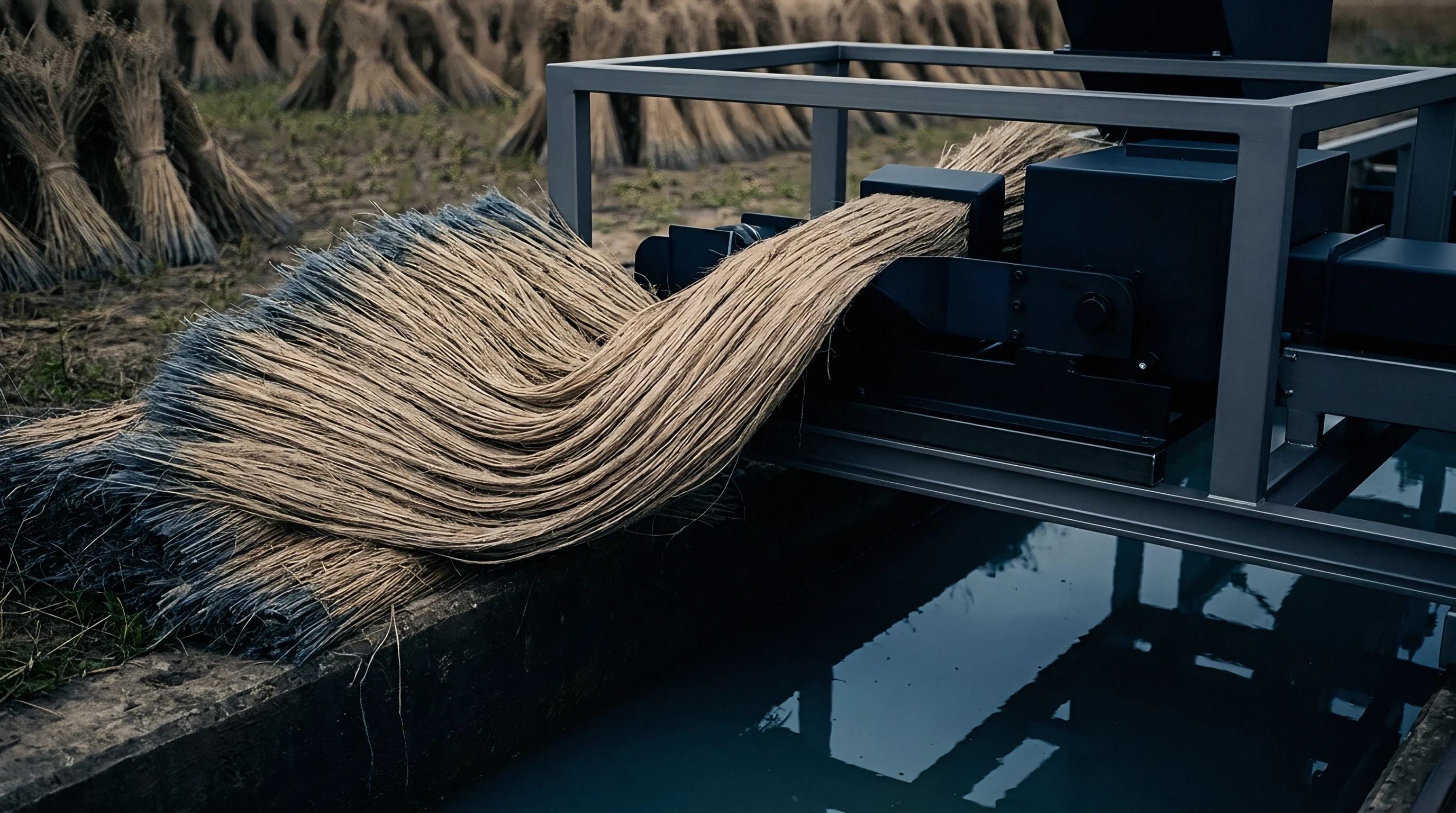
In high count organic flax wet spinning, roving passes through heated liquid immersion immediately prior to mechanical drafting between apron rollers. Water maintained between 60°C and 75°C softens the intracellular pectin matrix that binds individual elementary fibers into technical fiber bundles. For coarse linen counts ranging from Nm 10 to Nm 26, brief contact with heated fluid releases negligible organic material.
High count yarns spanning Nm 60 to Nm 120 demand fine drafting, necessitating aggressive thermal and chemical pre-treatment of the roving alongside prolonged hot immersion. This physical treatment hydrolyzes middle lamella pectins, solubilizes hemicellulosic fractions, and strips natural plant waxes from the cellulosic core.
Cellulose accounts for roughly 70% to 75% of raw flax dry mass, while non-cellulosic constituents comprise the remaining quarter. Pectins, hemicelluloses, lignin, and water-soluble extractives function as structural mortar within the unspun stem. When spinning fine organic threads, mills subject roving bobbins to pressurized water boiling before mounting them on the wet spinning frame.
Chemical auxiliaries permitted under organic certification criteria, such as citric acid, sodium carbonate, or GOTS-compliant non-ionic surfactants, accelerate the dissolution of these binder compounds. Dissolved organic solids pass into the trough effluent, creating a permanent physical mass loss between input roving and output spun yarn.
Hot water leaching at 70°C removes up to 14.5 percent of dry fiber mass during high-count Nm 100 organic flax spinning.
Mass loss during fine wet spinning scales non-linearly with target yarn count. Coarse yarns retain structural pectin to preserve tensile strength across wider fiber bundles. High yarn counts amplify mass loss.
Spinning Nm 80 or Nm 100 organic flax yarn requires ultimate fiber separation, forcing the extraction of up to 80% of native pectin. Mass loss in coarse wet spinning remains below 4%, whereas fine count organic spinning generates cumulative extractive mass losses between 8% and 15% based on oven-dry fiber mass. Standard mill inventory systems that fail to track water-extractable solids record this organic matter loss as unaccounted fiber shrinkage.
Spinning mills frequently characterize missing organic yarn volume as unavoidable environmental degradation during high-temperature wet drafting.

Chemical Extraction in Hot Water Submersion
The thermal bath dissolves water-soluble polysaccharides within seconds of roving entry. High count organic flax roving enters the fluid at linear speeds designed to maximize liquid penetration into the twisted fiber bundle. Water temperatures above 65°C cleave ester bonds within the galacturonan backbone of flax pectins.
Solubilized polygalacturonides diffuse into the surrounding aqueous phase, reducing the structural mass of the roving during drafting. High count spinning frames continually refresh trough liquor to prevent dissolved pectin redeposition, flushing extracted solids directly into mill wastewater streams.
Natural waxes coating the outer walls of flax fibers undergo emulsification during hot wet drafting. Roving pre-boiling removes up to 60% of surface lipids, while the remaining wax fraction dissolves inside the warm trough liquid. Organic spinning regulations prohibit synthetic paraffin coatings or aggressive alkaline scouring agents like concentrated sodium hydroxide, forcing mills to rely on extended hot water leaching cycles.
Extended leaching increases total organic material dissolution. Fiber mass entering the nip rollers weighs less than the dry mass of roving wound onto the supply bobbin.

Pectin Hydrolysis and Non-Cellulosic Dissolution Rates
Extractive dissolution rates depend on fluid temperature, pH, dwell time, and the mechanical twist factor of the incoming roving. Lower twist multiples allow faster liquor ingress, exposing interior fiber surfaces to rapid pectin leaching. Water-soluble extractives dissolve rapidly during the initial five seconds of immersion.
Hemicellulosic polymers dissolve at a slower rate, controlled by bath acidity and liquid movement around the drafting apron.
Pectin removal lowers the linear density of the fiber bundle before final draft attenuation. Dissolved pectins accumulate in the liquid bath as soluble sodium or potassium pectates when mild salts exist in the process water. As high-count flax drafting progresses, total non-cellulosic dry mass drops from an initial 22% in raw hackled sliver to under 8% in finished greige wet-spun yarn.
The missing non-cellulosic mass represents real physical weight lost to the liquid drain rather than solid process waste collected in waste collection bins.


Deviation
Organic textile chain of custody frameworks rely on rigorous mass balance accounting between certified inputs and commercial outputs. Certification bodies operating under standard guidelines monitor transaction certificates by comparing incoming raw material weights against outgoing yarn shipments. Yield loss default thresholds in standard mass balance software assume a uniform mass conversion range across all textile spinning processes.
Most audit algorithms apply a standardized 3% to 5% physical loss allowance for mechanical yarn spinning. That percentage reflects mechanical lint loss, fly waste, and comb short-fiber rejections during dry spinning operations.
Wet spinning high count organic flax breaks these default mass balance models. Extractive dissolution in fine organic spinning destroys up to 15% of initial roving mass through chemical solubilization. When a spinning mill inputs 1,000 kilograms of certified organic flax roving to produce Nm 80 yarn, physical output yields roughly 850 kilograms of greige yarn.
The certification database identifies a 150-kilogram weight discrepancy. Standard audit software automatically flags 100 kilograms of this difference as an unresolved mass deficit, triggering suspicion of uncertified material diversion or illegal yarn substitution.
Mass balance audit failures freeze transaction certificate issuance for entire production runs. Certifiers halt documentation when physical mass output drops below input weight minus the default loss allowance. The spinning mill faces an administrative deadlock: it holds verified organic roving certificates, yet cannot deliver valid transaction certificates to downstream weavers or knitters.
Unresolved extraction losses compromise batch traceability, blocking certified product flow across international borders.
Ignoring extractive dissolution in mass balance declarations causes automatic transaction certificate suspensions, blocking commercial sale of certified organic yarn lots.

Standard Mass Balance Default Allowance Failures
Mass balance accounting systems treat all fiber loss as solid mechanical waste. Certification databases track raw material transformations using static mass loss tables originally compiled for cotton and wool processing. Standard tables assume coarse cotton yield.
Those generic yield models omit chemical dissolution phenomena inherent in wet bast fiber manufacturing. Fiber certification rules under GOTS v7.0 and OCS v3.0 mandate explicit mass reconciliation, yet leave local certifiers without clear quantitative standards for fine flax wet spinning loss adjustments.
Auditors assessing organic processing plants evaluate material balances using simple input-output mass equations. When input weight minus output weight exceeds certified scrap allowances, the system registers an compliance breach. The mill must explain why 10% to 15% of certified organic material disappeared without generating physical sweepings or carding waste.
Lacking documented extraction loss factors, auditors treat missing weight as untracked sales of organic yarn, issuing corrective action requests that delay commercial shipping schedules.
Transaction Certificate Rejection at Certification Audits
Transaction certificates serve as legal proof of organic chain of custody across commercial handoffs. A certifier issues these documents only after reconciling incoming lot transaction certificates against outgoing delivery invoices and weighbridge records. In high count organic flax wet spinning, the physical mass gap between certified roving received and yarn produced causes automated reconciliation engines to reject the application.
Mills attempting to reconcile this deficit by artificially inflating reported fiber moisture content trigger separate audit failures during laboratory testing. Certification auditors collect yarn samples to check physical parameters against declared shipping weights. If measured moisture regain diverges from standard values, certifiers reject the entire documentation file.
The absence of an accepted quantitative method for extractive loss reconciliation leaves fine flax wet spinners exposed to routine compliance flags.
Audit rejections force mills into protracted administrative appeals. Certifiers demand physical evidence that missing organic mass dissolved in process water rather than entering uncertified supply streams. Resolving these challenges requires detailed technical documentation of mill processing conditions, extraction bath chemical profiles, and gravimetric solid loss testing.
- Generic Yield Defaults fail to account for fluid-based pectin dissolution in fine bast fiber processing, leading to false audit discrepancies.
- Static Mass Accounting treats liquid-borne organic material loss as fraudulent fiber diversion, triggering supply chain holds.
- Unadjusted Volume Reporting creates mass balances that fail international transaction certificate verification audits.
- Moisture Inflation Practices designed to offset dissolution loss violate international fiber testing standards and provoke audit penalties.


Equation
Accurate mass reconciliation in fine organic flax wet spinning requires mathematical models that separate mechanical solid waste, chemical extractive dissolution, non-organic additive pickup, and moisture regain. Standard fiber calculations based purely on as-received weighbridge mass generate significant errors due to fluctuations in ambient humidity and water retention. Reconciling organic mass balances demands converting all material quantities to absolute oven-dry mass before evaluating yield loss factors.
Absolute dry mass calculations rely on drying representative fiber samples at 105°C until reaching constant weight, removing all absorbed environmental moisture. The total mass loss percentage across high-count wet spinning represents the sum of mechanical comb waste, carding short-fiber loss, and water-extracted non-cellulosic solids. Expressing material balance through oven-dry weights eliminates environmental humidity variables from certification audit calculations.
Commercial flax yarn trades under standardized moisture regain allowances defined by international standards. ISO 6741 specifies a commercial moisture regain value of 12.0% for linen yarn. Calculating commercial yarn mass from oven-dry yarn mass requires applying this statutory regain factor.
When organic flax loses 12% of its oven-dry substance through dissolution, final commercial mass must reflect both dry substance loss and corresponding reduction in total water absorption capability.
| Yarn Count Range | Roving Preparation Loss (%) | Trough Leaching Loss (%) | Mechanical Solid Waste (%) | Total Mass Variance (%) |
|---|---|---|---|---|
| Nm 14 – Nm 26 (Coarse) | 1.2 – 2.0 | 1.0 – 2.2 | 2.5 – 3.5 | 4.7 – 7.7 |
| Nm 30 – Nm 50 (Medium) | 2.5 – 4.0 | 2.8 – 4.5 | 3.0 – 4.0 | 8.3 – 12.5 |
| Nm 60 – Nm 80 (Fine) | 4.5 – 6.5 | 4.8 – 7.2 | 3.5 – 4.5 | 12.8 – 18.2 |
| Nm 90 – Nm 120 (Ultra-Fine) | 6.5 – 8.5 | 7.0 – 9.5 | 4.0 – 5.0 | 17.5 – 23.0 |
| Data reflects oven-dry mass loss measurements during organic-certified wet processing using 65°C water immersion. | ||||
Quantitative Model for Extractive Dry Mass Losses
Formulating an organic spinning mass balance requires quantifying each physical yield component. Total input mass equals the oven-dry mass of certified organic roving plus initial moisture weight. Total output mass comprises oven-dry yarn, dry mechanical fiber waste, dry dissolved organic solids in effluent, added spinning auxiliaries, and output moisture mass.
The primary mass balance equation models dry fiber mass transformation directly.
Let initial oven-dry mass of organic roving equal M_roving. The mechanical waste factor, W_mech, accounts for dry fiber rejections during drafting, typically ranging from 0.03 to 0.05. The extractive dissolution factor, E_diss, represents dry mass solubilized during boiling and wet trough leaching, ranging from 0.02 for coarse yarn to 0.15 for ultra-fine count yarn.
Added processing aids, such as organic spinning oil or non-ionic lubricants, contribute a pickup mass factor, A_sync, usually between 0.005 and 0.015. The final oven-dry yarn mass, M_yarn, follows this mathematical relationship:
M_yarn = M_roving (1 – W_mech – E_diss + A_sync)
To convert calculated oven-dry yarn mass into commercial certified yarn mass under standard trade regulations, auditors multiply M_yarn by the standard moisture regain multiplier. Applying ISO 6741 standards, the commercial yarn weight calculation uses a multiplier of 1.120. Mass balances that omit E_diss force auditors to attribute missing weight to unrecorded mechanical loss or illegal fiber diversion, compromising transaction certificate validity.
Moisture Regain Corrections under Commercial Standards
Commercial trade in linen yarn uses fixed regain values to standardize commercial invoice weights regardless of ambient storage conditions. Fiber testing labs determine clean dry mass before adding the standard commercial regain percentage. Flax fiber exhibits high moisture absorbency due to porous cell wall architecture and hydrophylic amorphous cellulose content.
ISO 22095 physical segregation rules require mass reconciliation accounting for volatile and soluble fiber losses prior to transaction certificate approval.
Extractive dissolution alters the moisture absorbency of finished linen yarn. Soluble pectins and hemicelluloses absorb more water per gram than crystalline cellulose core fibers. Extracting 12% of non-cellulosic material reduces total amorphous region volume within the fiber matrix, lowering actual equilibrium moisture regain below unrefined fiber baselines.
Applying standard 12% regain figures to heavily extracted ultra-fine yarns yields an effective mass slightly above physical equilibrium mass under ambient conditions.
Moisture regain adds weight back.
A fine yarn mass accounting system must reconcile dry loss and regain adjustments simultaneously. If an organic spinning batch uses 1,000 kg of roving at 12% moisture (892.8 kg dry mass), and undergoes 12% extractive dissolution alongside 4% mechanical loss, the resulting dry yarn mass equals 749.9 kg. Applying the standard 12% commercial regain yields 839.9 kg of certified commercial yarn.
Comparing this 839.9 kg output to the 1,000 kg incoming commercial roving mass establishes a legitimate, mathematically verified operational yield loss of 16.01%.
Correct mass balance reconciliation applies chemical loss factors before calculating commercial moisture regain.

Protocol
Verifying extractive dissolution mass loss to certification bodies demands rigorous analytical laboratory procedures. Auditors reject unverified yield loss assertions that lack empirical chemical testing data from certified testing centers. Mills producing high count organic linen must establish batch-level verification frameworks that document non-cellulosic mass extraction across rove preparation and wet spinning stages.
Laboratory testing isolates non-cellulosic matter removed during hot water treatment. Testing methodologies combine hot-water extractable content analysis under ISO 14456 with Soxhlet wax extraction and mild alkaline solubility evaluations. Running chemical extraction tests on incoming organic roving samples establishes precise baseline non-cellulosic content before wet spinning commences.
Soxhlet extraction isolates non-cellulosic matter.
Mill laboratories retain physical samples from every organic spinning lot, tracking chemical batch records alongside spinning frame temperature logs. Documenting total dissolved solids in spinning bath liquor provides direct gravimetric evidence of extracted organic mass. This analytical trail enables organic certifiers to validate higher yield loss declarations, clearing transaction certificates for high count organic yarns.

Analytical Methodologies for Fiber Loss Verification
Quantifying non-cellulosic content in organic flax roving involves sequential gravimetric extraction. Laboratory technicians dry clean roving samples at 105°C for four hours to record initial dry weight. The sample undergoes continuous extraction in a Soxhlet apparatus using a petroleum ether solvent to determine fat and wax content.
Technicians then boil the dewaxed fiber sample in deionized water for two hours to extract water-soluble pectins and polysaccharides.
Extracted fiber samples undergo secondary hot alkaline washing in 0.1 M sodium hydroxide solution at 90°C to measure residual pectinaceous binders. Rinsing, drying, and re-weighing the remaining fiber residue reveals the total extractable organic mass percentage. Subtracting residual pure cellulosic mass from original dry fiber mass yields the maximum potential chemical mass loss factor for that specific flax crop batch.
Effluent liquor analysis offers secondary verification during active spinning runs. Lab staff take 1,000 ml samples of continuous bath overflow liquid during high count spinning runs. Evaporating the water content at 105°C leaves a dry solid residue consisting of solubilized flax pectins, organic acids, and dissolved minerals.
Weighing total dry solids per liter of bath liquid, multiplied by total bath discharge volume, confirms the total weight of organic fiber mass lost to the effluent drain.

Documenting Batch Roving Extraction and Wet Processing
Establishing an audit-ready verification dossier requires systematic record-keeping at every stage of organic yarn transformation. The following sequential testing procedure documents physical and chemical mass loss for certification authorities:
- Collect 100-gram representative roving samples from each incoming organic fiber lot prior to rove boiling operations.
- Measure baseline moisture content and total dry mass using calibrated oven-drying equipment under ISO 6741 standard procedures.
- Perform gravimetric hot-water extractable testing on pre-spin roving to establish the batch non-cellulosic extraction potential.
- Log all rove boiling parameters, recording bath temperatures, chemical auxiliary dosing weights, boiling cycle durations, and liquid exchange volumes.
- Sample wet spinning trough overflow liquor hourly, testing total dissolved solids concentrations to calculate cumulative fluid mass loss.
- Weigh dry comb sweepings, soft spinning waste, and hard bobbin rejections to isolate physical mechanical waste from fluid dissolution loss.
- Conduct dry mass testing on finished wet-spun yarn bobbins immediately following frame shedding to calculate absolute dry yarn yield.
- Compile the batch extraction report, attaching laboratory gravimetric data, total solids logs, and moisture correction calculations to the certification dossier.
Submitting this technical verification package alongside transaction certificate applications provides certifiers with clear empirical justification for mass yield deviations. Verified analytical data replaces default yield assumptions, allowing automated certification engine approval of high-count organic yarn shipments.
Certifier scope documents updating yield loss allowances specify explicit laboratory gravimetric test protocols to validate non-cellulosic fiber dissolution.

Sampling
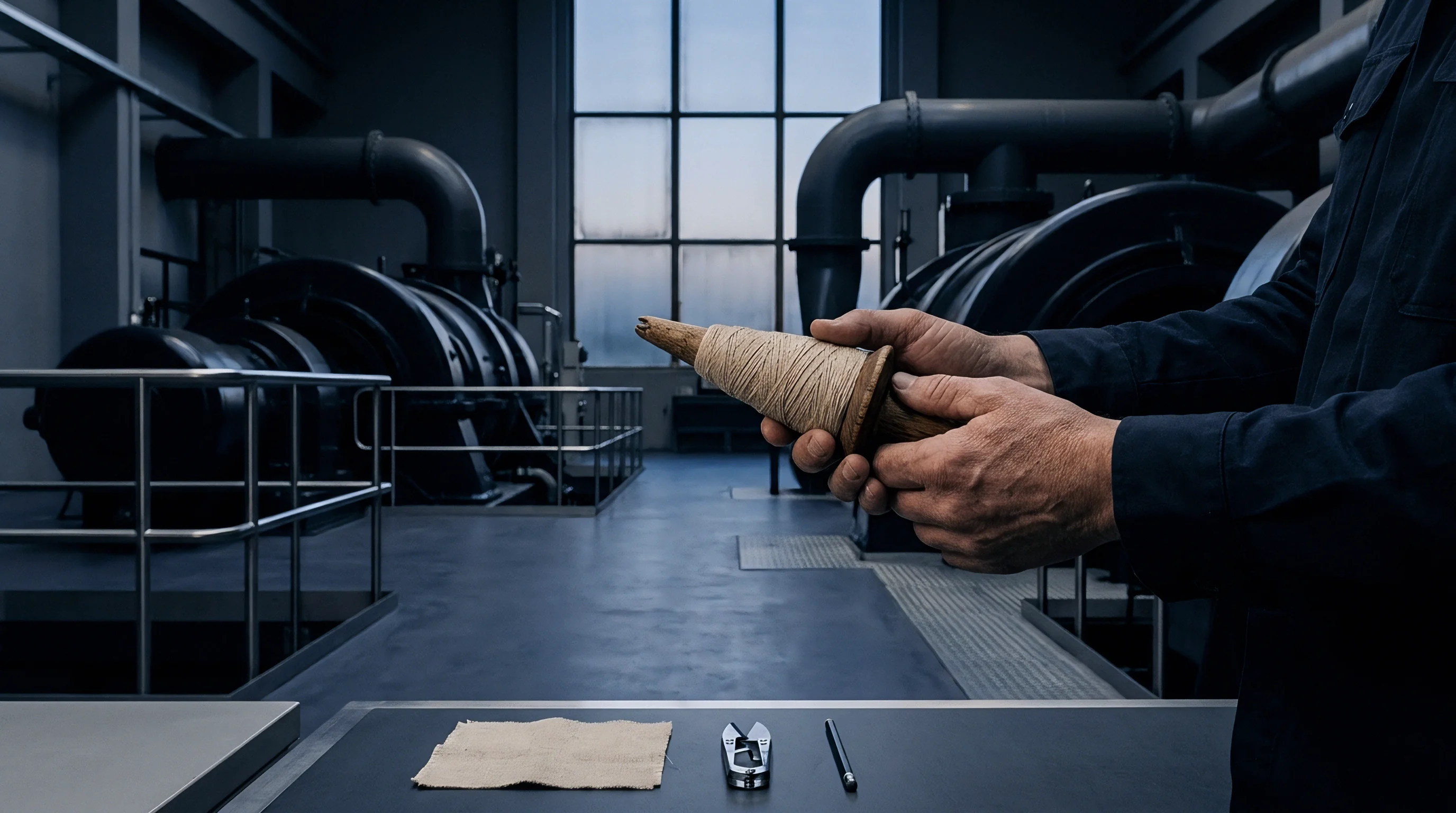
Physical mill audits require rigorous verification procedures to prevent mills from claiming false extractive mass losses on low-count or synthetic-blended yarns. Certification assessors verify that high extractive loss claims match actual processing conditions on the spinning floor. Field auditors evaluate roving boiling vats, drafting trough liquid chemistry, bobbin tare weights, and solid waste collection bins during unannounced site inspections.
The auditor checks bobbin tare mass.
Auditors measure bath operating conditions directly during active spinning runs. Temperature probes verify that trough water reaches required extraction temperatures for high count drafting. Hydrometers and conductivity meters assess dissolved organic solids loading within the drafting bath liquid, ensuring that reported mass extraction aligns with measured liquor density.
Low liquid organic solid concentrations in mills claiming high extractive loss highlight potential yield falsification or uncertified yarn blending.
| Inspection Gate | Physical Verification Point | Audit Test Standard | Acceptable Deviation Limit |
|---|---|---|---|
| Roving Store Intake | Bale tag verification & net dry weight core sampling | ISO 6741 / ASTM D2494 | ± 0.5% against Transaction Certificate |
| Roving Boiling Vat | Chemical add-on logs & pre-spin boil mass loss check | GOTS Input Approval | ± 1.0% against lab extraction baseline |
| Wet Spinning Trough | Liquor temperature, pH & dissolved solids content | Gravimetric Evaporation | ± 0.8 g/L solids concentration variance |
| Yarn Shedding Gate | Greige bobbin tare mass & yarn linear density test | ISO 2060 / Tex Standard | ± 1.5% declared yarn count (Nm) |
| Effluent Monitor | Total organic carbon (TOC) & chemical oxygen demand | ISO 6060 Effluent Test | Matches calculated batch dissolution mass |

Mill Floor Audit Verification Gates
Physical verification begins at the roving store weighbridge. Auditors draw core fiber samples from incoming organic roving packages to verify dry mass, oil content, and non-cellulosic extractables. Discrepancies between certified intake weights and mill intake weighbridge receipts are flagged before fiber enters production.
Solids concentrate in the spinning bath.
The spinning floor inspection focuses on machine operating parameters and liquid waste streams. Auditors measure total flow rates of fresh water fed into spinning troughs, cross-referencing flow volumes against liquid discharge rates. Multiplying total effluent volume by measured total organic carbon content yields total dissolved organic weight.
This figure must match reported extractive mass losses within tight statistical tolerances.

Which Analytical Tests Prove Legitimate Wet Spinning Mass Loss?
High performance liquid chromatography and Fourier-transform infrared spectroscopy confirm the organic chemical composition of bath residue solids. Pectinaceous compounds exhibit distinct infrared absorbance peaks corresponding to galacturonic acid functional groups. Detecting these organic signatures in trough liquor residues proves that mass loss stems from natural flax binder solubilization rather than synthetic fiber degradation or improper mechanical scrap reporting.
Comparative ash content testing provides complementary validation. Raw organic flax fibers contain mineral ash components, including calcium, magnesium, and potassium salts concentrated within the pectin matrix. Hot water leaching extracts these mineral salts alongside soluble pectins.
Measuring ash content reductions between input roving and output spun yarn verifies that the fiber underwent intensive wet leaching during spinning frame passage.
Yield records drive certificate validity.
Unresolved variances between measured wastewater organic mass and declared mass balance losses indicate potential mill-floor reporting errors or untracked mechanical waste. What chemical threshold isolates natural pectin solubilization from fraudulent caustic fiber degradation in organic-certified processing vats?

Adjustment
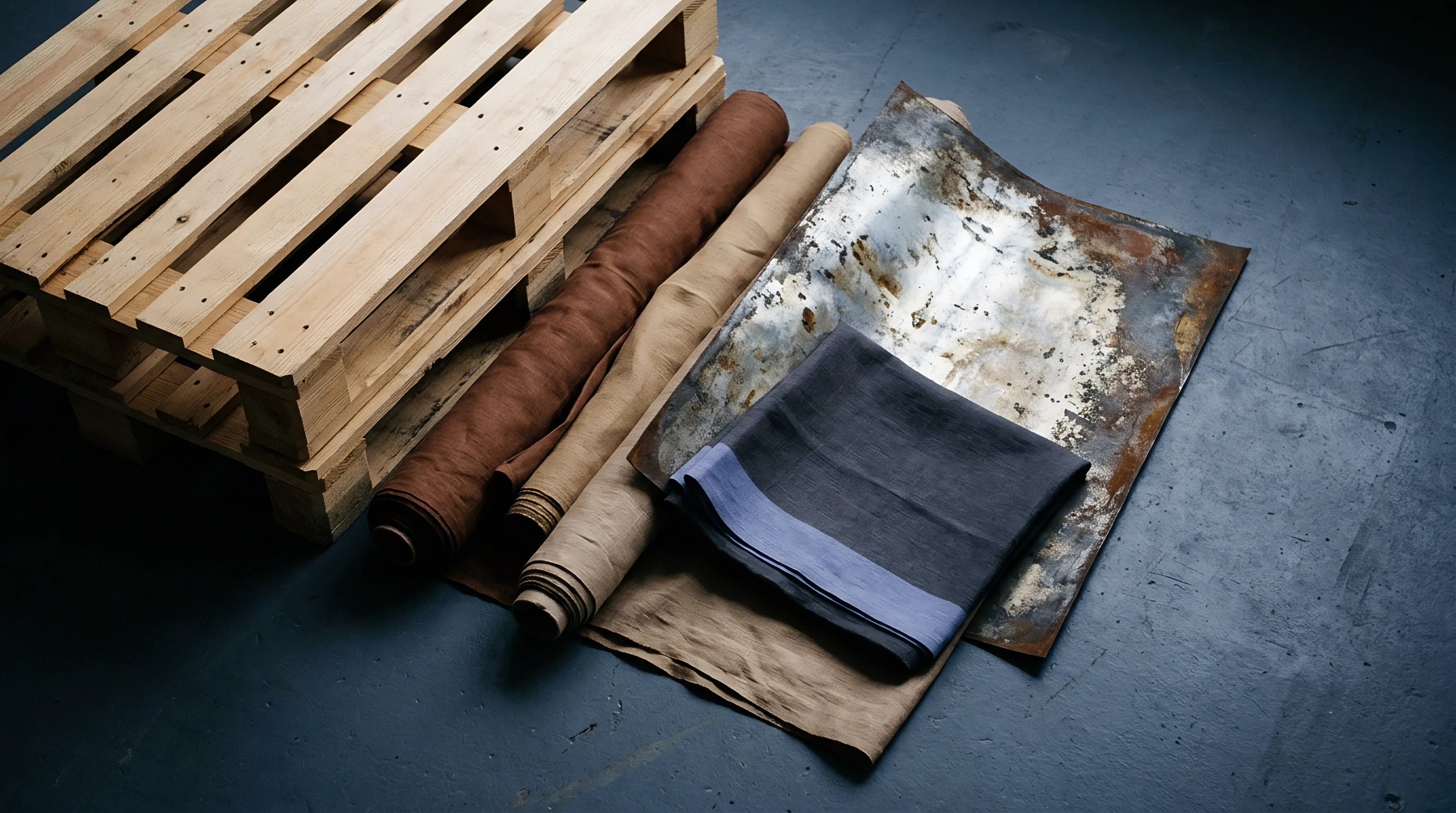
Commercial contracts between organic yarn spinners and brand buyers must account for yarn-count-dependent extractive yield losses to establish fair pricing structures and realistic transaction certificate volume declarations. Purchasing specifications that insist on static 100% mass yield conversions force spinners to absorb legitimate fiber extraction costs or risk certificate rejection. Modern organic linen sourcing contracts integrate explicit yield reconciliation clauses linked to certified yarn counts.
Unadjusted commercial mass balances penalize fine yarn spinners while rewarding mills that blend synthetic waxes to disguise fiber loss.
Yarn contracts specify yield limits.
Commercial price calculations incorporate total certified mass conversion efficiency. High count organic linen yarns command substantial price premiums over coarse yarns, reflecting elevated raw material inputs, slower frame drafting speeds, and higher extractive mass losses. Sourcing agreements that define acceptable yield loss bands protect both parties, ensuring that certified transaction volumes match physical yarn deliveries exactly.

Contractual Yield Allowance Provisions for Wet Spinners
Commercial purchase agreements for organic flax yarn include detailed yield tolerance addenda. Standard terms specify baseline mass yield expectations for each ordered count range. If a buyer places an order for Nm 80 organic wet-spun linen yarn, the contract incorporates a contractually recognized extractive mass loss allowance of 14% alongside a 4% mechanical waste allowance.
The contract specifies that issued transaction certificates will reflect the actual net commercial yarn weight produced from certified roving input lots. Downstream brands accept transaction certificates showing lower total yarn mass than input roving weight, provided the mill supplies an accredited laboratory extraction report validating the count-dependent yield loss. This legal structure eliminates administrative transaction holds while maintaining full chain-of-custody integrity under GOTS and OCS frameworks.

Commercial Surcharge and Mass Reconciliation Frameworks
Reconciling mass losses requires adjusting unit prices per kilogram of finished yarn. Raw organic fiber costs are spread across a smaller total weight of output yarn when spinning ultra-fine counts. A mill purchasing organic flax roving at 8.00 USD per kilogram absorbs raw material loss during wet spinning.
If total mass yield equals 82% when spinning Nm 100 yarn, effective raw material input cost climbs to 9.76 USD per kilogram of finished greige yarn before accounting for mill operational expenses.
Sourcing practices implement structured decision criteria when drafting procurement contracts for wet-spun organic linen yarn:
- Yarn Count Grouping defines progressive extractive mass loss allowances ranging from 3% for coarse yarns up to 16% for ultra-fine count orders.
- Laboratory Verification Requirements obligate the spinning mill to provide lot-specific Soxhlet and hot-water extraction test results for each production run.
- Transaction Certificate Reconciliation Rules instruct certifying bodies to approve mass balances that incorporate verified laboratory extraction loss factors.
- Landed Cost Adjustment Formulas recalculate delivered yarn prices to reflect verified physical mass loss rather than unadjusted raw fiber weights.
Procurement desks execute commercial yarn contracts that tie transaction certificate mass allocations directly to certified laboratory extraction profiles. The buyer agrees to accept transaction certificate volumes calculated through verified dry mass equations, while the mill warrants that no uncertified fiber blending or synthetic mass weighting additives were introduced during wet spinning. Adjusting commercial pricing structures and audit metrics to match actual fiber chemistry secures organic certification validity across global linen supply chains.