Resolving Crimp Imbalance and Structural Deformation in High-Speed Automated Linen Weaving
Rebalance linen crimp by lowering the backrest 25mm, delaying shed crossing to 325 degrees, and running segmented temples to suppress structural deformation.
Modulus
Flax bundles exhibit an exceptionally steep stress-strain curve characterized by an initial tensile resistance between 50 and 85 gigapascals. Elongation at break remains confined between 1.5 and 2.7 percent for high-grade wet-spun strands. When rapier looms accelerate past 450 picks per minute, the cyclic opening of heald frames imposes rapid mechanical strain upon warp ends that possess almost no plastic yield before rupture.
Synthetic filaments and ring-spun cotton dissipate peak shed accelerations through molecular uncoiling, but bast fibers absorb shed displacement through rigid crystalline cellulose microfibrils oriented at an acute spiral angle of 8 to 11 degrees. The consequence is immediate yarn fracture or progressive fibrillar fatigue under tension spikes.

Flax Fiber Tensile Behavior and Elongation Deficits
Wet-spun linen yarns of count Nm 26 (38.5 tex) demonstrate a rupture load near 14 to 18 centinewtons per tex, accompanied by a work-to-break value roughly one-third that of equivalent combed cotton. The non-cellulosic middle lamella, composed of highly branched pectins and lignin, restricts internal microfibril slippage. Under high-speed dynamic loading, these rigid assemblies cannot accommodate shed geometry changes through elongation.
Linen tolerates little stretch. Sizing recipes based on low-viscosity modified starches protect the strand surface against abrasion, yet starch films add flexural rigidity to an already brittle core. When warp preparation fails to control sizing add-on within tight limits of 5.5 to 7.0 percent dry weight, the yarn loses its ability to flex over drop wires and reed wires without surface flaking and microscopic split-burst failures.
The flexural rigidity of bast bundles scales as the fourth power of the effective fiber diameter, following classical Euler-Bernoulli beam mechanics. Thick nodal regions and irregular yarn cross-sections amplify localized bending stresses as ends pass through the eyelets of the heald wires. Warp preparation therefore demands continuous tension monitoring during sectional warping, maintaining individual end tension at 22 to 26 centinewtons across the entire beam width.
Variations exceeding 4 centinewtons across the beam circumference generate localized bands of over-tensioned ends that snap during shed changeover. Brittle warps snap at speed.
Shedding Stress in High-Speed Insertion
Rapier insertion mechanisms cycle through acceleration phases where peak weft insertion rates exceed 900 metres per minute across a 190-centimetre reed space. As the rapier enters the shed, warp ends in both top and bottom sheds undergo maximum angular separation, increasing the instantaneous path length of each yarn by 1.8 to 2.4 percent. Because this geometric extension approaches the ultimate tensile limit of wet-spun flax, uncompensated shed motion fractures outer yarn fibers.
Shedding splits the yarn path.
| Fiber Type and Yarn Count | Initial Tensile Elasticity (GPa) | Elongation at Break (%) | Tensile Tenacity (cN/tex) | Flexural Rigidity (mg cm²) | Dynamic Peak Strain Capacity (%) |
|---|---|---|---|---|---|
| Wet-Spun Flax Nm 26 (38.5 tex) | 68.4 | 2.1 | 16.8 | 42.5 | 0.85 |
| Wet-Spun Flax Nm 39 (25.6 tex) | 74.2 | 1.9 | 18.2 | 21.0 | 0.72 |
| Dry-Spun Flax Nm 14 (71.4 tex) | 48.1 | 1.6 | 11.4 | 88.6 | 0.55 |
| Combed Cotton Ne 30 (19.7 tex) | 8.5 | 6.8 | 22.5 | 4.8 | 3.10 |
| Air-Jet Textured Polyester (16.7 tex) | 12.2 | 18.5 | 34.0 | 3.2 | 8.50 |
When warp tension spikes remain unmitigated during the beat-up cycle, micro-cracks propagate along the pectin-rich interfaces between adjacent flax ultimate cells. The cumulative damage lowers weft insertion efficiency, producing frequent warp stops that cost production line hours and introduce unsightly start marks across the greige web.
Geometry
The equilibrium shape of cross-over points between warp and weft determines the dimensional stability of plain-woven linen cloth. Under the classical structural models formulated by Peirce, yarn axis contours conform to alternating circular arcs and straight tangent lengths governed by yarn diameter, thread spacing, and internal bending resistance. Because flax possesses negligible torsional yield and high resistance to transverse compression, warp and weft yarns refuse to flatten into lenticular profiles at the interlacing point.
Warp ends resist axial bending. The yarn retaining higher tension during shed closure remains flat along its axis, forcing the intersecting perpendicular system to take up the entirety of the crimp amplitude.
Peirce Models Applied to Inelastic Bast Yarns
Calculating the thread geometry of an Nm 26 wet-spun plain cloth with 19 ends per centimetre and 19 picks per centimetre reveals an immediate structural conflict. Assuming an effective compressed yarn diameter of 0.24 millimetres, the theoretical sum of the thread axis heights equals 0.48 millimetres. In high-speed rapier operations running with standard high warp tension, warp crimp measures between 2.2 and 3.4 percent on the loom fell, while weft crimp climbs to 9.5 to 12.8 percent.
Plain balance demands equal crimp.
Warp crimp remains below three percent on the loom fell while weft crimp reaches twelve percent under conventional rapier settings.
This stark divergence in crimp values creates an unstable force couple within the unit cell. The high crimp amplitude of the weft exerts strong inward compressive forces along the fabric width, causing extreme width contraction as the cloth leaves the temple zone. Simultaneously, the low-crimp warp ends carry locked-in axial stresses that remain stored within the cellulose lattices.
Once the cloth is cut from the take-up roll, these stored elastic stresses initiate rapid longitudinal contraction, triggering spontaneous crimp interchange where the warp draws crimp from the weft until internal bending moments equalize. The resulting finished goods display erratic areal density and irregular thread densities that deviate wildly from initial specification sheets.
Structural Skewing and Diagonal Bias Distortion
Unbalanced crimp distribution alters the shear rigidity of the woven web, promoting angular distortion between warp and weft systems. When the ratio of warp crimp to weft crimp drops below 0.35, the cloth loses its square structural stability. Asymmetry skews the grain line.
The transverse rigidity collapses because the straight warp yarns act as rigid compressive struts, while the deeply undulating weft yarns roll over the warp crowns under the slightest transverse handling force.
Inspection frames reveal this deformation as systematic diagonal bias or parabolic bowing across the bolt width. When plain linen cloth is subjected to standardized testing according to ISO 7211-3 for crimp determination and ISO 13934-1 for tensile balance, uncorrected off-loom lots demonstrate severe mechanical asymmetry. Fabric lots showing this imbalance exhibit the following structural defects during handling and garment conversion:
- Right-hand spiral skew develops when the dominant direction of yarn twist drives asymmetric rolling at the interlacing junctions during crimp interchange.
- Edge-to-centre pick density variation emerges as high weft contraction compresses the lateral borders while the central section remains pinned by machine tension.
- Crowning at the cloth fell occurs when uneven warp tension distributions lift the centre of the interlacing zone relative to the temple pins.
- Dimensional instability during laundering manifests as differential shrinkage exceeding 8 percent along the warp axis while the weft remains static or elongates.
| Process State and Loom Setting | Warp Crimp (%) | Weft Crimp (%) | Crimp Ratio (Warp/Weft) | Off-Loom Skew (mm/m) | Wash Shrinkage Warp (%) |
|---|---|---|---|---|---|
| High Static Warp Tension (45 cN/end) | 2.4 | 12.1 | 0.20 | 28.5 | 9.8 |
| Symmetric Shed, Standard Beat-Up | 3.8 | 10.2 | 0.37 | 18.0 | 7.4 |
| Asymmetric Shed, Late Crossing (330°) | 6.2 | 6.8 | 0.91 | 4.2 | 3.5 |
| Optimized Kinetic Tension (22 cN/end) | 6.9 | 6.4 | 1.08 | 2.1 | 2.8 |
Mill technicians frequently blame natural fiber variability and retting heterogeneity for these diagonal distortions, claiming that bast fiber irregularities prevent consistent crimp equalization across wide loom widths.
Cam
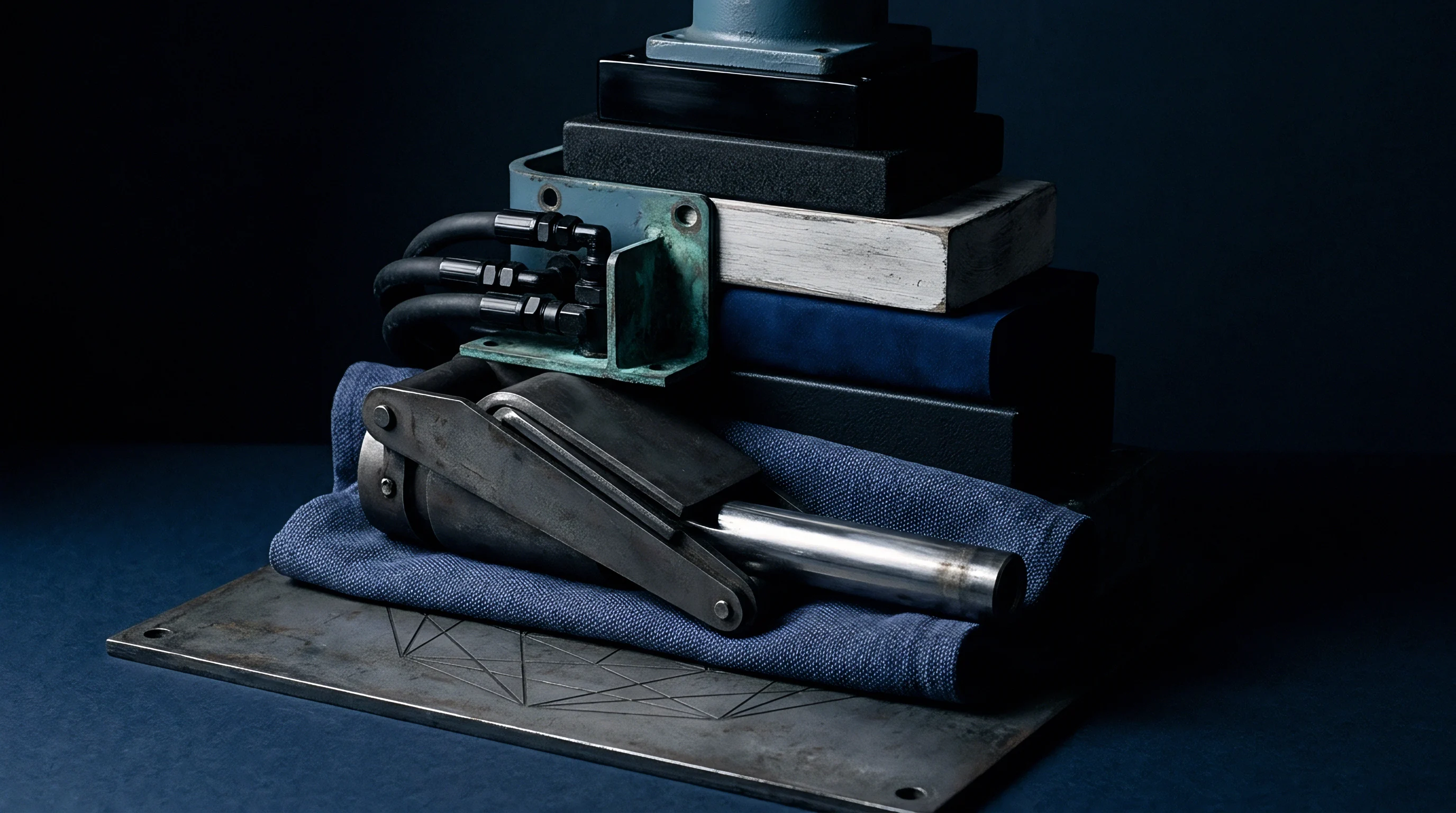
Motion control profiles driving the shedding harness determine whether an inelastic flax warp survives high insertion velocities. Mechanical cams engineered with simple harmonic displacement profiles subject the yarn to continuous acceleration changes that coincide unfavorably with the natural vibration frequencies of taut bast strands. Modern high-speed electronic dobby systems and specialized conjugate shedding cams replace harmonic curves with modified trapezoidal or polynomial acceleration paths.
These profiles introduce defined rest periods at the shed apex, allowing the weft insertion rapier to clear the shed geometry while warp yarns experience smooth, controlled transition phases.
Can Asymmetrical Dwell Profiles Balance Warp Tension?
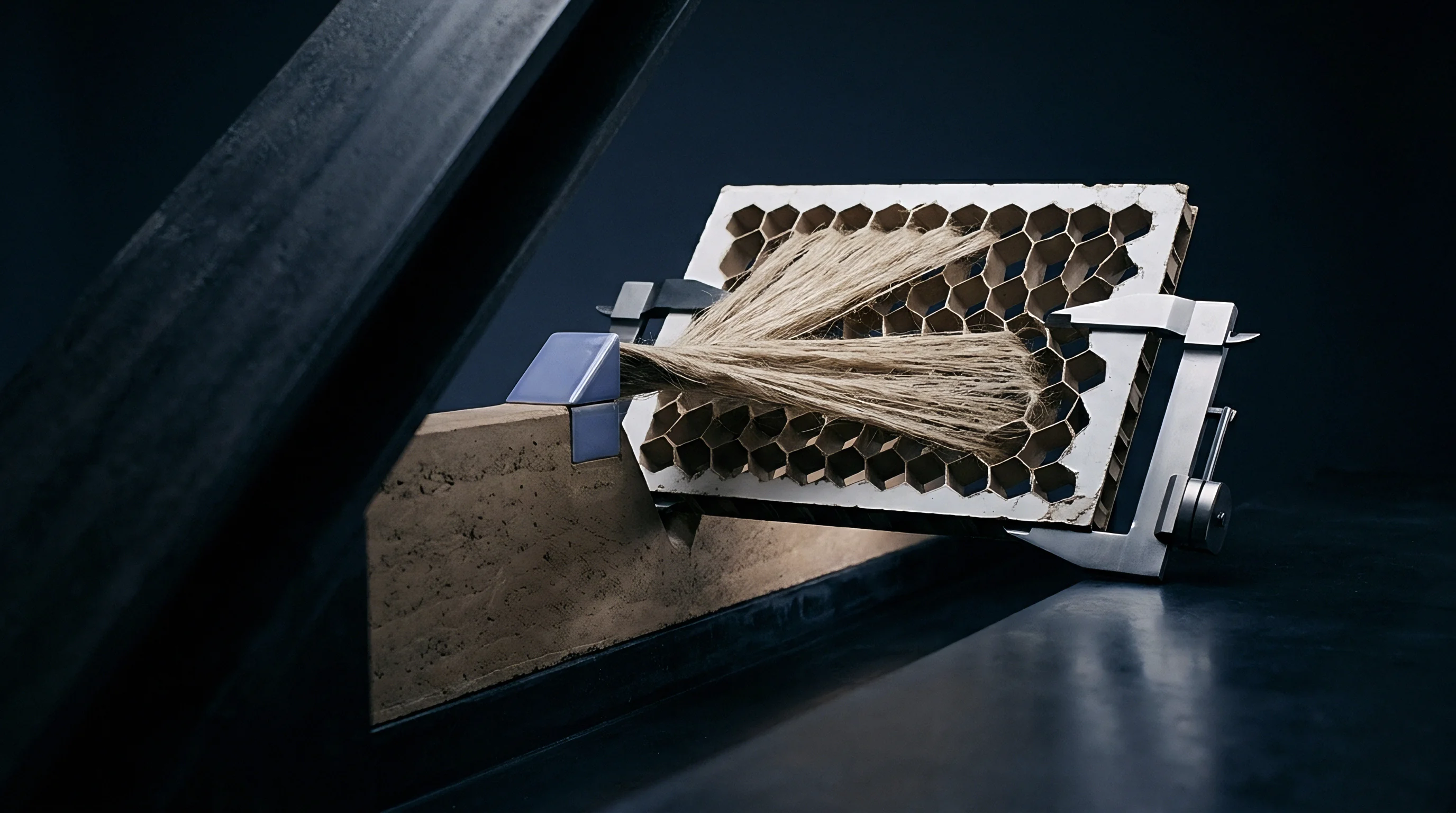
Adjusting the relative dwell angles of the harness frames alters the physical length of the yarn paths between the rear drop wires and the cloth fell. When the top and bottom shed paths share identical geometric lengths and symmetrical dwell angles, both yarn sheets carry identical static tensions during the crossing phase. However, beating up weft picks against a symmetrical closed shed forces the pick to push through high friction boundaries, driving all crimp into the flexible weft and leaving the warp under excessive strain.
Tappet motions lock shed dwell.
Warp break frequency falls below 1.2 stops per hundred thousand picks when backrest drop measures twenty-five millimetres below the horizontal line.
Lowering the backrest roller 20 to 35 millimetres below the horizontal line connecting the breast beam to the dropper box introduces an intentional path difference between the shed halves. The bottom shed becomes tighter than the upper shed. During the beat-up stroke, the slacker top sheet yields slightly, allowing the newly inserted weft yarn to displace the warp ends vertically.
This vertical displacement forces crimp into the warp system at the precise moment of maximum reed impact, lifting warp crimp from 3 percent to over 6 percent and relieving excessive weft crimp.

Loom Kinematics and Crossing Timing Adjustments
Timing the heald frame crossing relative to the circular position of the main crankshaft governs crimp distribution and beat-up resistance. In high-speed rapier configurations, crossing timing typically shifts between 290 and 340 degrees of the weaving cycle. Advancing the crossing to an early timing of 300 degrees causes the shed to close before the reed reaches the fabric fell, trapping the inserted weft pick between tightly crossed warp ends.
Late crossing delays beat impact.
Executing an exact bring-up sequence on the loom shed floor guarantees structural stability across high-speed runs:
- Leveling the backrest assembly to a negative 25-millimetre offset relative to the fabric plane establishes the primary tension differential between the upper and lower shed sheets.
- Retarding heald crossing timing to 325 degrees of mainshaft rotation prevents premature yarn pinching, ensuring that pick placement occurs against a partially relaxed warp sheet.
- Calibrating the electronic let-off sensor to maintain a dynamic baseline tension of 20 to 24 centinewtons per warp end eliminates cyclic tension spikes during shedding harness acceleration.
- Synchronizing the rapier tape motion to achieve maximum shed clearance with a reduced shed opening angle of 21 degrees lowers peak cyclic yarn extension by 18 percent.
Adopting late crossing parameters combined with an asymmetric shed reduces the peak force required to beat each pick home by 25 to 35 percent. Warp ends yield around the weft at beat-up rather than resisting the impact as immovable steel bars, suppressing edge pinching and reed marks. A slacker upper shed always builds a rounder, more balanced plain structure than a taut symmetrical shed.

Nip
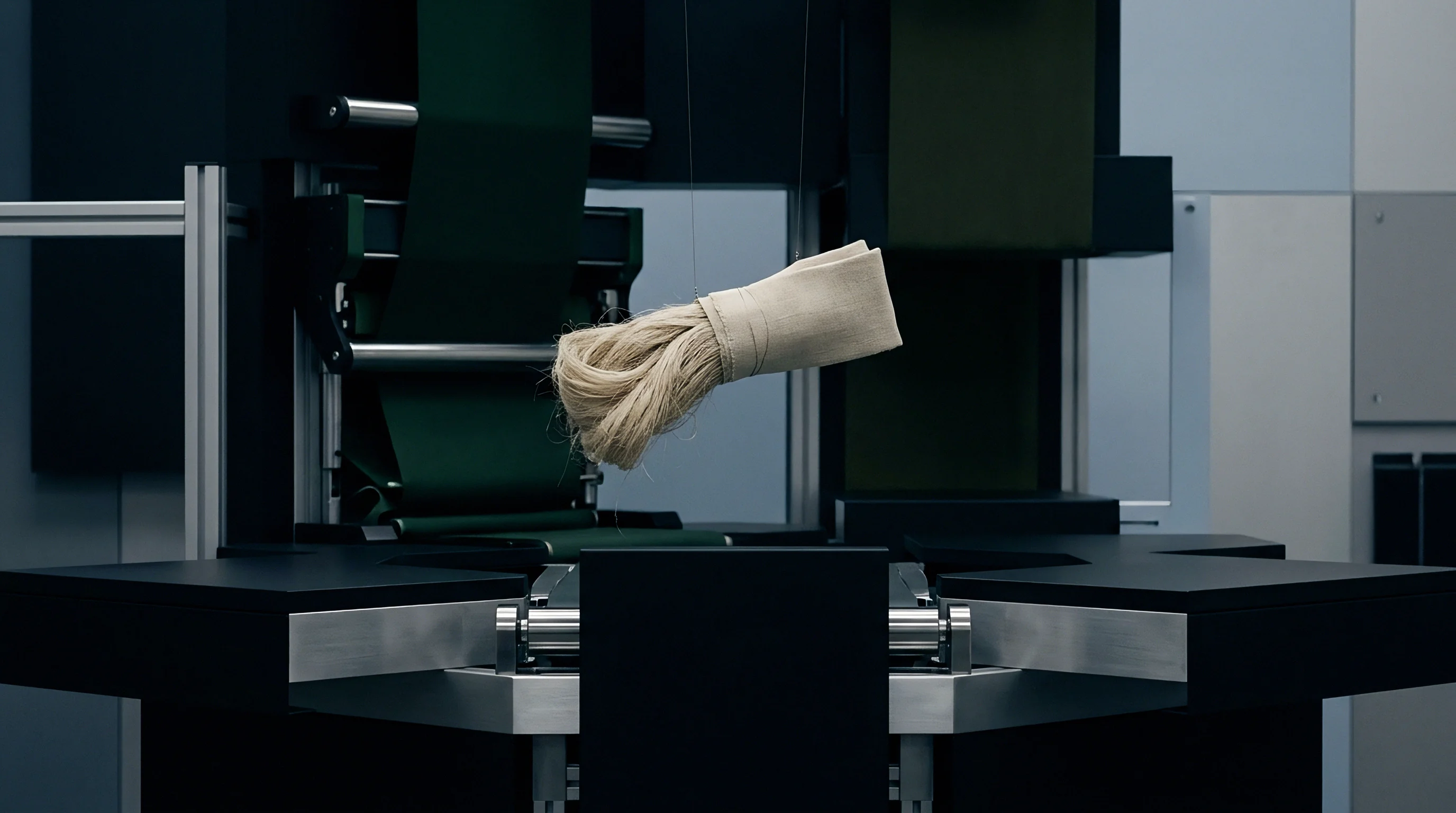
Mechanical control of the woven web between the cloth fell and the sand roller determines the preservation of balanced crimp geometry. As the reed strikes the fell, the newly placed weft pick experiences intense lateral pull from the unwound yarn tail and the natural recovery forces of the warp ends. Without immediate, rigid mechanical clamping across the entire width of the selvedges, the fabric contracts inward, causing outer warp ends to crowd together and lean diagonally toward the machine centreline.
Temples grip the hot selvedge.

Does Differential Temple Grip Eliminate Edge Pinch?
Standard ring temples fitted with uniform brass rings across their entire length frequently fail on automated linen looms. Inelastic flax requires progressive radial holding force to counteract high transverse contraction stresses. When outer rings bite too aggressively into the wet-spun selvedge, the sharp steel pins shear through the dry bast fibers, creating pin-hole perforations and ruptured edge yarns.
Conversely, insufficient pin penetration allows the selvedge to slip inward by 15 to 30 millimetres, provoking severe reed chafing as the outer warp ends scrape against the reed dents at extreme angles.
Uniform temple pin penetration across dense bast selvedges accelerates yarn abrasion and precipitates edge drop-outs.
Equipping the loom with multi-ring segmented temples featuring graduated pin angles solves this lateral control failure. Outer rings carry sharp, hardened steel pins inclined at an angle of 25 degrees toward the outer selvedge edge to resist maximum inward pull. Successive inner rings transition to rounded, conical pins inclined at 15 degrees, terminating in smooth synthetic rings near the fabric body to guide the cloth without fiber damage.
This graduated clamping field holds the cloth fell at 98.5 percent of the total reed spread width, preventing dense edge crowding.

Take-Up Roller Friction and Selvedge Draw
The friction profile across the take-up roller nip dictates longitudinal draw uniformity. Conventional sand rollers covered with coarse emery fillet paper generate micro-slippage along the selvedges because the thicker, doubled warp structures typical of reinforced linen borders ride higher than the single-structure fabric body. The central zone of the roller loses frictional grip, allowing the centre of the cloth web to sag rearward while the selvedges are pulled forward under high traction.
Slack picks create edge waviness.
Maintaining uniform longitudinal traction and preventing lateral neck-down requires strict adherence to physical machine setup tolerances across the take-up zone:
- Interlocking rubber nip coverings with a hardness rating of 70 to 75 Shore A maintain continuous surface contact across both thick selvedges and thin plain grounds.
- Temple pin projection depths set precisely between 0.8 and 1.1 millimetres ensure full engagement with the base weave without perforating the under-surface yarn plies.
- Pressure bar downward deflection held within a tolerance band of 1.5 to 2.0 millimetres prevents lateral web buckling directly behind the temple caps.
- Differential drive speed synchronization between the take-up sand roller and the secondary winder prevents residual stretching of the hot cloth roll.
When cloth inspection teams encounter persistent edge curl, structural bowing, or pin-puncture tearing during post-loom grading under ASTM D5430 standards, the physical evidence establishes immediate contractual grounds for rejecting incoming roll goods before wet finishing begins.
Relaxation
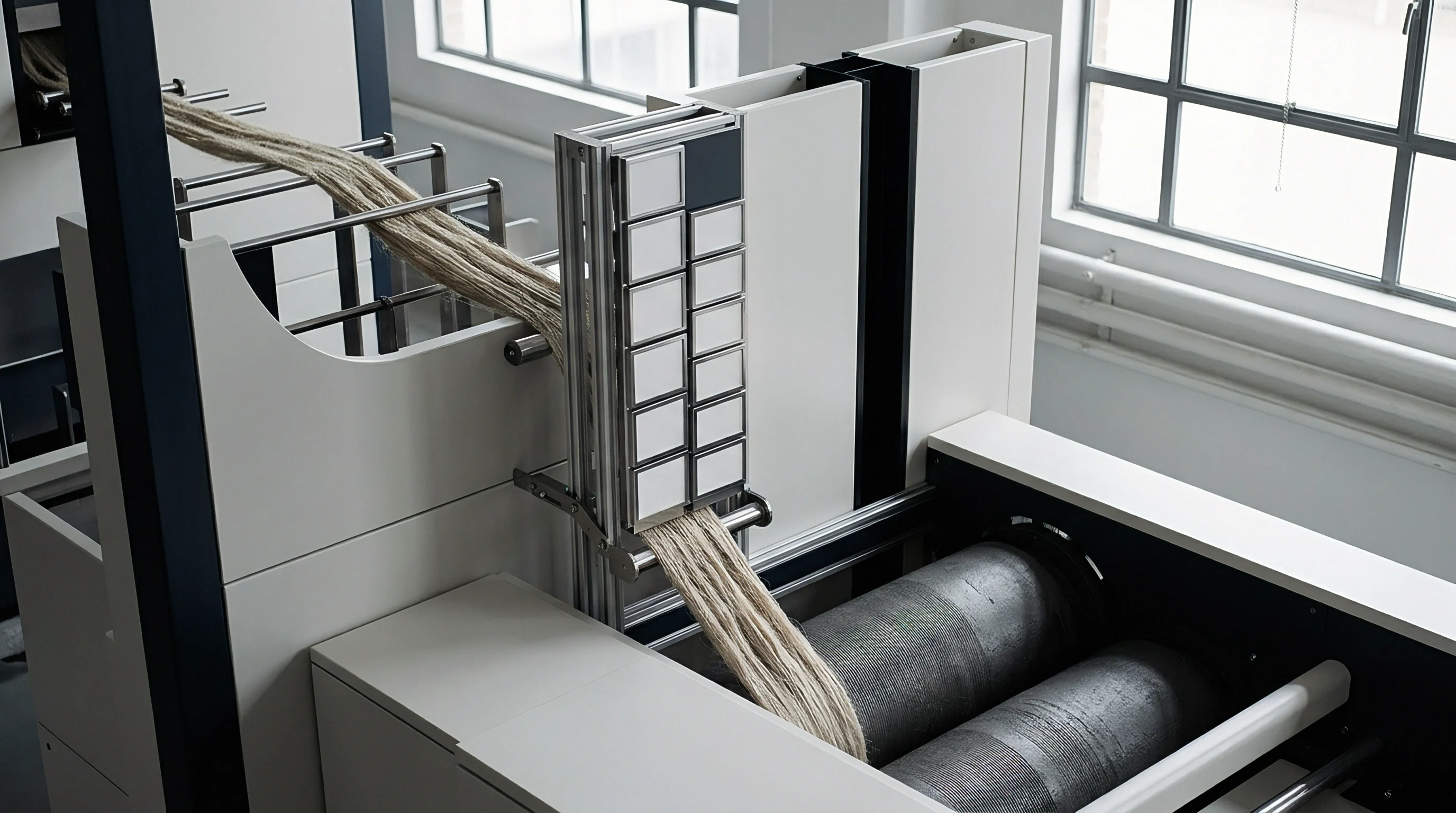
Residual mechanical stresses locked into greige linen cloth during high-speed insertion do not dissipate while wound under tension on the loom roll. Crystalline regions within the flax cellulose chains remain pinned in unrelaxed, high-energy configurations. If the greige cloth enters conventional continuous open-width scouring ranges under high longitudinal tension, these internal strains are permanently set into the weave, locking in skewness, bowing, and harsh hand characteristics that cannot be eradicated downstream.
Open-Width Finishing and Internal Strain Release
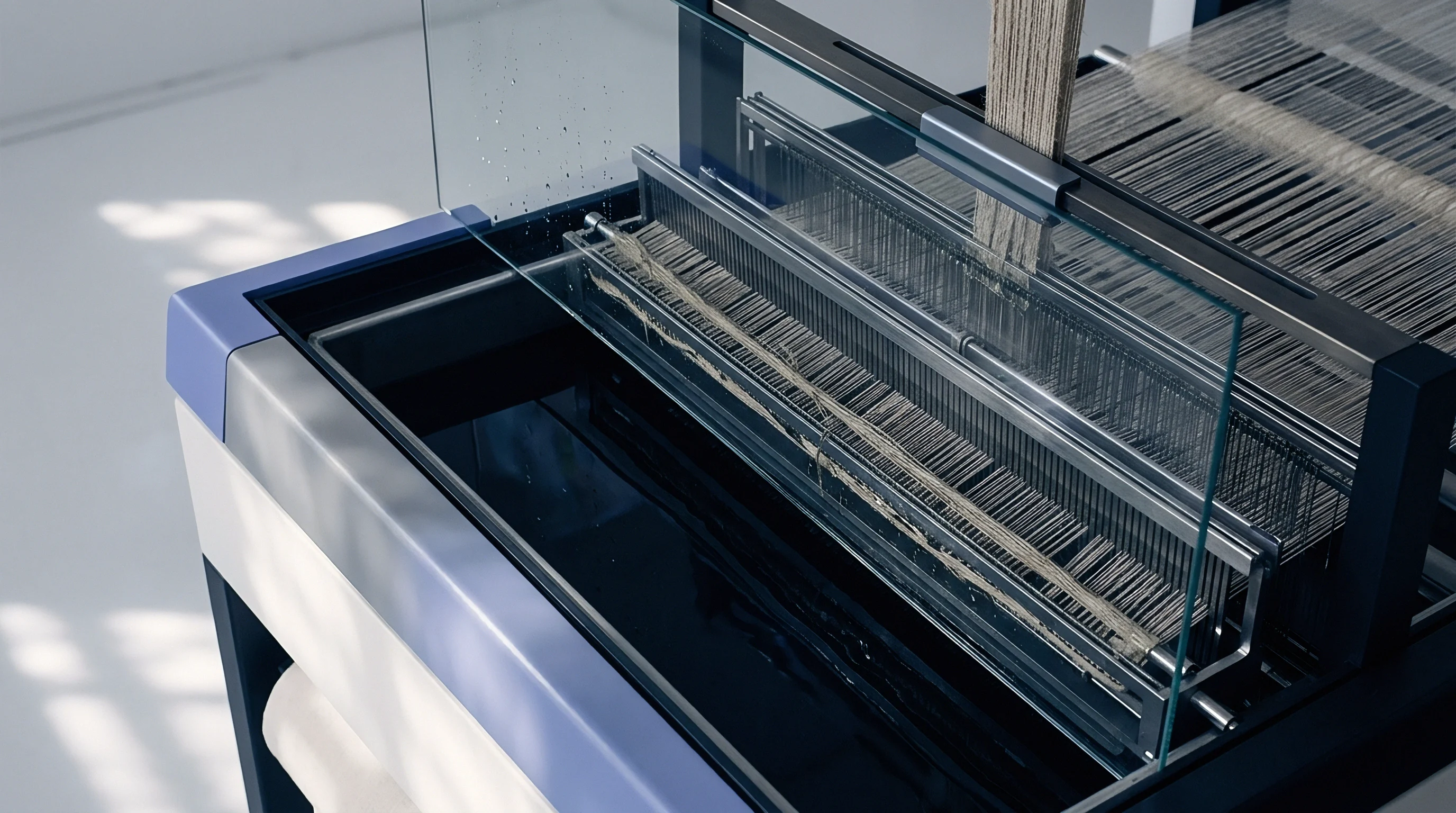
True dimensional stability requires aqueous relaxation in a fully tensionless state. Water molecules break inter-chain hydrogen bonds within the amorphous zones of the bast fiber, allowing the macrofibrils to release the axial torque imparted during spinning and shedding. Cold water sets the crimp.
When greige linen enters an open-width relaxer featuring submerged driven rollers synchronized by sensitive load cells, longitudinal tension remains below 0.05 kilonewtons across the entire bath width.
The bath temperature must climb sequentially from 40 degrees Celsius to a rolling boil at 98 degrees Celsius in the presence of mild wetting agents. As hydrogen bonds rupture and reform, the stored mechanical energy releases, enabling the low-crimp warp ends to shorten and expand their crimp wave while the over-crimped weft picks straighten. The crimp ratio shifts rapidly from its distorted off-loom baseline toward structural parity.
Skew compounds during wet finishing.
Steam Stabilization and Dimensional Set Verification
Following tensionless aqueous scouring, the cloth requires continuous mechanical agitation combined with pressurized steam to stabilize yarn junction geometry. Passing the goods through an open-width tumbler or continuous rope-less aerodynamic aerator drives high-velocity air and steam through the open interstices of the weave. The violent mechanical pulsing vibrates the individual warp and weft intersections, dislodging the rigid yarn crowns from their mechanical friction traps and allowing them to settle into their lowest-energy thermodynamic positions.
Subsequent sanforization on a heavy compressive shrinking machine sets the final warp crimp. The thick rubber belt of the sanforizer contracts longitudinally under compressive nip pressure, forcing the warp ends to buckle into deeper undulations between the picks. Warp shrinkage properties tested in accordance with ISO 5077 drop from double-digit percentages to a stable finished value below 2.5 percent.
What remains uncertain is whether modern enzymatic biopolishing systems applied during tensionless tumbling degrade internal bast lamellae sufficiently over prolonged cycles to compromise tear resistance while chasing absolute crimp balance.


Invoice
Loom speed directly governs the financial performance of high-speed linen operations. Running modern rapier equipment at 550 picks per minute appears advantageous on a theoretical production schedule, but actual output depends on mechanical stop frequencies. Because wet-spun flax lacks elasticity, running dry yarn lots at excessive velocities drives warp end break rates upward from 1.0 stop per hundred thousand picks to over 4.5 stops.
Each break halts the loom, causing thermal variations in the main drive motor, generating start marks at the cloth fell, and idling expensive capital equipment.
Loom Hours Lost to Warp Breaks
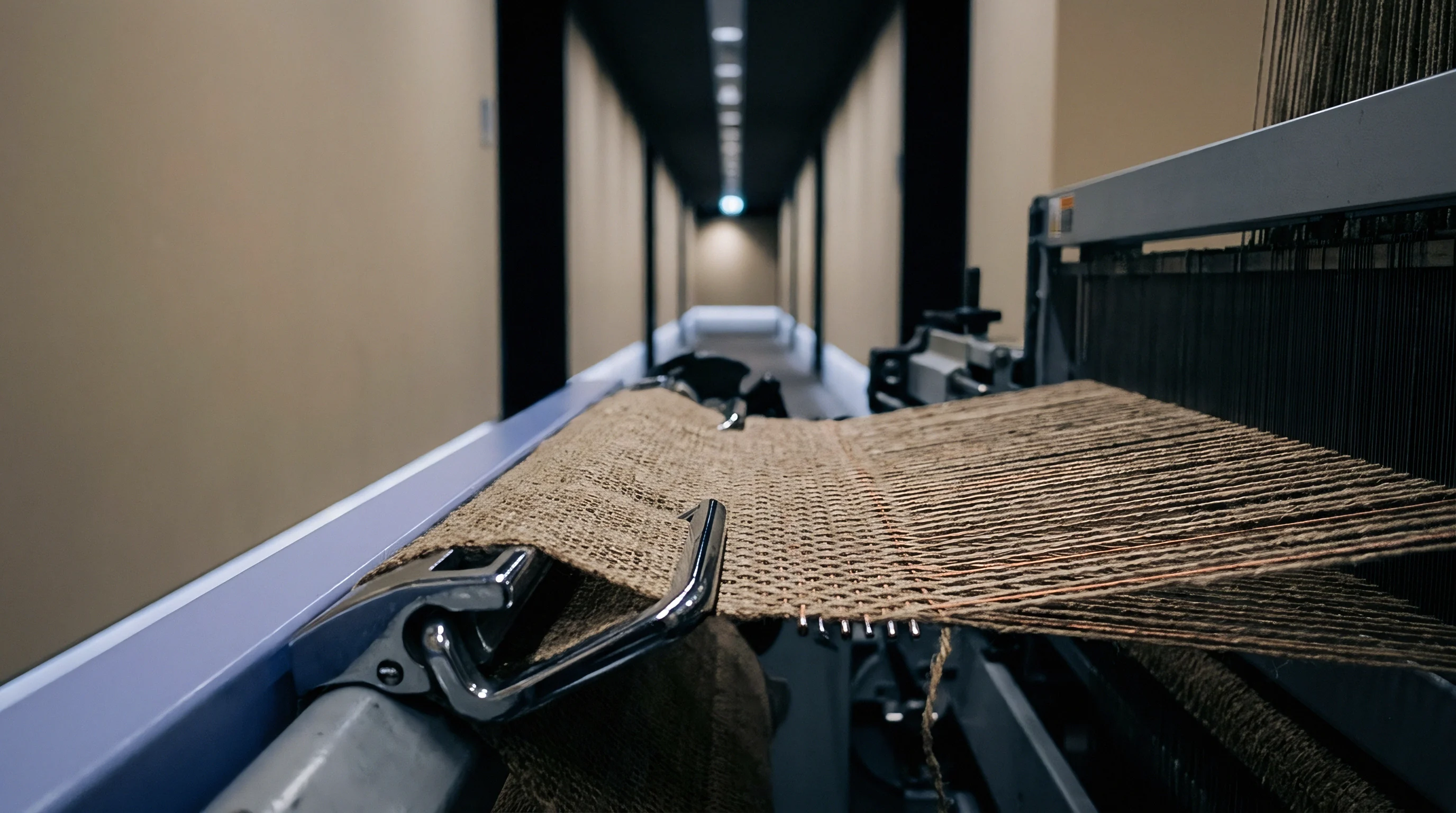
A typical European weave shed operating 60 rapier looms running 190-centimetre width plain linen (Nm 26, 19 ends and picks per centimetre) calculates operational costs on fixed overhead allocations averaging 28.50 euros per loom hour. At 500 picks per minute, theoretical cloth output equals 15.78 metres per hour per machine at 100 percent mechanical efficiency. A warp break rate of 4.2 stops per hundred thousand picks reduces shed efficiency to 74 percent.
Mill margins vanish on down-time.
Under these operating conditions, actual output drops to 11.68 metres per hour, driving the weaving labor and overhead burden to 2.44 euros per linear metre. Slowing the machines to 420 picks per minute, modifying the shed cams to late crossing, and implementing asymmetric shedding kinematics reduces the warp break rate to 0.9 stops per hundred thousand picks. Mechanical efficiency rises to 89 percent, yielding an actual output of 11.78 metres per hour.
The slightly lower machine speed produces more net physical metres per shift while slashing defective cloth cut-outs. Loom hours govern final cost.
| Operational Parameter and Unit Metric | High-Speed Unadjusted Regime | Moderate Velocity Symmetrical Regime | Optimized Asymmetric Low-Tension Regime |
|---|---|---|---|
| Loom Velocity (Picks per Minute) | 520 | 460 | 420 |
| Warp Stop Rate (Stops / 100,000 Picks) | 4.8 | 2.6 | 0.8 |
| Weft Stop Rate (Stops / 100,000 Picks) | 2.1 | 1.2 | 0.4 |
| Operating Shed Efficiency (%) | 71.5 | 81.2 | 90.5 |
| Actual Output (Linear Metres / Hour) | 11.74 | 11.77 | 12.01 |
| Shed Overhead Allocation (€ / Metre) | 2.43 | 2.42 | 2.37 |
| Off-Loom Four-Point Defect Penalties (€ / Metre) | 0.68 | 0.32 | 0.04 |
| Final Landed Metre Price (€ / Metre Greige) | 5.85 | 5.44 | 5.11 |
Landed Metre Cost and Commercial Penalties
Structural deformation imposes heavy penalties beyond the weaving shed floor. Greige goods displaying skew angles greater than 3.0 percent or crimp imbalances exceeding a 1.5 to 1.0 ratio suffer commercial markdowns under international trade rules. Converting mills reject distorted rolls because skewed plain linen jams automated continuous spreading and cutting tables in apparel factories, causing twisted trouser legs and torque-deformed collars.
Contractual delivery terms specifying ASTM D5430 four-point compliance enforce financial penalties equal to fifteen percent of the gross invoice value when greige skew exceeds thirty millimetres per linear metre.
The financial recovery equation must incorporate the cost of chemical sizing, beam preparation, and yarn waste. Broken warp ends generate tangled yarn waste on the drop wire frames, forcing operators to execute partial beam cut-offs that discard up to 40 metres of sized warp per beam set. Dead loss falls on suppliers.
By optimizing shed geometry, adjusting temple kinematics, and accepting a moderate insertion velocity of 420 picks per minute, the weaving plant lowers total landed production costs by 0.74 euros per finished linear metre. This commercial advantage preserves operational margins and protects procurement contracts against quality chargebacks.