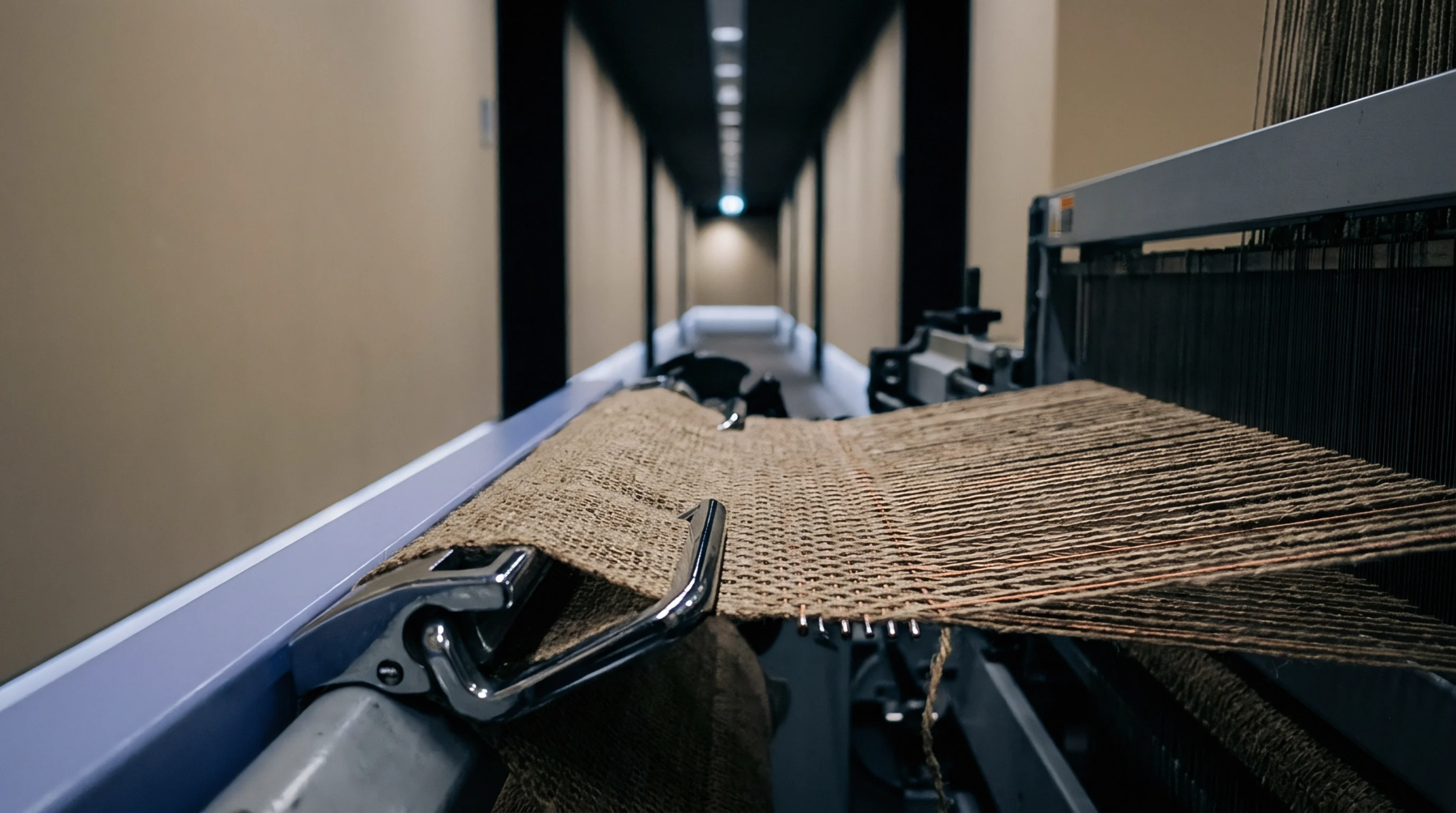
Aerodynamic Efficiency
Dimensionless ratios quantify the transfer of kinetic energy from a moving air stream to a filling yarn inside the guide channel of an air-jet loom. The pneumatic drag coefficient of a yarn determines the speed and reliability of the weft insertion process during high-speed weaving. Spun linen yarns have a higher and more variable drag coefficient than synthetic filaments because of their rough surface and protruding fiber ends.
Yarn Interaction
The drag force is measured by monitoring the yarn’s velocity as it travels through a test nozzle under controlled air pressure conditions. Yarn surface structure, yarn count, and fiber hairiness all influence this coefficient, making it necessary to adjust the air-jet nozzle pressure for different yarn types. Coarse linen yarns with more surface hairiness require higher nozzle pressure to maintain the required velocity across the fabric width.
These adjustments are made by the loom technician to prevent yarn buckling and short picks.
Weaving Velocity
Unstable drag coefficients cause fluctuations in yarn arrival times at the receiving side of the loom, which can trigger automatic machine stops. Optimizing the pneumatic drag coefficient of the yarn through sizing and singeing stabilizes the weft insertion process. This stabilization is necessary for maintaining high loom productivity.