Yarn Count and Sizing Chemistry in Warp Preparation
Warp sizing requires matching yarn packing factor to polymer viscosity, adjusting squeeze nip pressure for precise solids add-on, and maintaining elongation.


Geometry
Cross-sectional mass distribution defines how single yarns pack within a reed dent and absorb sizing liquor during warp preparation. Linear density systems are either indirect, where higher numbers indicate finer threads, or direct, where mass increases with count. Expressing yarn count in Ne, Nm, Tex, or Denier establishes the cross-sectional area, perimeter, and volume that a size film must encase.
A 30s Ne single cotton yarn carries a nominal linear density of 19.68 Tex, whereas a 60s Ne yarn measures 9.84 Tex ~ half the mass per unit length, but a larger surface area per unit mass requiring coverage.
Determining the physical diameter of a spun yarn requires applying a packing density factor to the theoretical volume of a solid polymer cylinder. Pure cellulose has a solid fiber density of 1.54 grams per cubic centimetre, but spun yarns contain internal voids between twisted staple fibers. Compact-spun ring yarns achieve packing factors around 0.65 to 0.70, whereas open-end rotor yarns drop to 0.55 to 0.60 because of peripheral wrap fibers and lower core orientation.
Air-jet spun yarns feature a dual-zone density structure: a dense parallel core wrapped in tight surface bindings. Structural conversion constants then calculate theoretical yarn diameter by combining fiber density with yarn bulkiness.
| Yarn Count (Ne / Tex) | Spinning System | Fiber Packing Density Factor | Calculated Diameter (mm) | Specific Surface Area (m²/kg) |
|---|---|---|---|---|
| 10s Ne / 59.05 Tex | Ring Spun (Carded) | 0.62 | 0.312 | 8.34 |
| 20s Ne / 29.53 Tex | Ring Spun (Combed) | 0.68 | 0.211 | 12.31 |
| 30s Ne / 19.68 Tex | Compact Ring Spun | 0.72 | 0.167 | 15.58 |
| 40s Ne / 14.76 Tex | Compact Ring Spun | 0.74 | 0.143 | 18.22 |
| 60s Ne / 9.84 Tex | Combed Compact | 0.75 | 0.116 | 22.46 |
| 10s Ne / 59.05 Tex | Open-End Rotor | 0.56 | 0.328 | 7.93 |
| 20s Ne / 29.53 Tex | Air-Jet / Vortex | 0.64 | 0.218 | 11.91 |
Specific surface area scales non-linearly as yarn count grows finer. Fine single yarns expose far more surface area per unit mass than coarse yarns, requiring adjustments to both sizing liquor volume and chemical formulation. A 60s Ne yarn presents more than double the specific surface area of a 20s Ne yarn, so an identical size add-on percentage produces a much thinner film across the finer thread.
Without sufficient adhesive tenacity in the formulation, thin size films cannot protect surface fibers against abrasion.
Warping creels feed thousands of individual yarn ends under tension onto a section beam. Diameter variations along the bobbin distort the density profile across the beam width. Count variation above a 12 percent mass Coefficient of Variation creates irregular spacing between warp threads inside the size box.
Densely packed zones restrict size liquor flow, while open zones take up excess liquor, creating uneven chemical pickup across the warp sheet.

Calculating Spatial Envelope in Reed Dents
Reed denting calculations account for the physical width of sized yarn under lateral compression rather than its dry, un-sized circular diameter. During shed formation, adjacent warp yarns flatten slightly as they slide past one another and rub against metallic reed blades. Yarns with high structural density resist lateral compression and maintain predictable clearance within the dent gap, whereas lower-density rotor yarns flatten easily under tension, expanding horizontally and increasing friction against neighboring ends.
Evaluating the packing fraction under tension establishes minimum dent dimensions for high-density constructions. For example, a high-density warp sett of 45 ends per centimetre in a 40s Ne plain weave leaves less than 0.08 millimetres of clearance per dent when drawn two ends per dent in a standard reed. Sizing chemistry must bind peripheral fuzz fibers back into the yarn body to prevent inter-yarn entanglement inside these tight spatial clearances.
Otherwise, unbound surface hairiness causes adjacent ends to cling, generating stitch faults, float defects, and shedding resistance on high-speed looms.
The structural density of compact spun yarn permits a 12 percent reduction in size add-on without increasing loom stop rates on air-jet shedding motions.
The twist multiplier directly impacts size penetration kinetics inside the sizing box. High twist levels ~ an Ne twist multiplier above 4.2 ~ increase internal packing density and hydrophobic resistance, preventing size liquor from penetrating the yarn core. Low-twist yarns with a multiplier below 3.4 draw liquor rapidly into their porous core through capillary action.
Excessive core saturation stiffens the yarn, reducing residual elongation and making the warp brittle under peak beat-up loads.
Managing warp sheet geometry requires precise alignment between linear density, twist structure, and warping beam uniformity. Miscalculating yarn cross-sectional area leads directly to wrong size box concentration settings, causing either excessive hairiness from under-sizing or brittleness and high warp break rates on the weave room floor.
Polymers
Adhesion at the size-fiber interface depends on the molecular architecture of the sizing polymer and its affinity for the yarn substrate. Hydrophilic fibers like cotton, flax, and viscose require adhesives rich in hydroxyl or carboxyl groups that form hydrogen bonds with cellulose chains. Synthetic fibers like polyester demand hydrophobic binders or modified copolymer blends that wet non-polar surfaces effectively.
Native starches, chemically modified starches, polyvinyl alcohol, carboxymethyl cellulose, and acrylic resins form the primary chemical families used in modern warp preparation.
Native starches from corn, potato, or wheat contain two distinct polysaccharide fractions: linear amylose and highly branched amylopectin. Native corn starch is roughly 25 percent amylose and 75 percent amylopectin. Linear amylose retrogrades rapidly as it cools, forming rigid, opaque gels that yield brittle films on spun yarns.
Unmodified starches also generate high paste viscosity even at low solids concentrations, restricting their use on fine, high-count warps that require low-viscosity baths for adequate penetration.
Chemical modification turns native starch into a practical industrial sizing agent. Hydroxyethylation lowers gelatinization temperature and inhibits retrogradation by introducing bulky hydroxyethyl groups onto the anhydroglucose ring, disrupting amylose alignment. Carboxymethylation adds a negative ionic charge, improving cold-water solubility and adhesion to cellulosic fibers.
Thin-boiling starches ~ produced through controlled acid hydrolysis or oxidation ~ shorten polymer chain length, allowing operators to prepare stable liquors at 12 to 15 percent solids concentrations without excessive viscosity build-up.
| Polymer Type | Film Tensile Strength (MPa) | Elongation at Break (%) | Adhesion to Cotton (N/mm) | Cold Water Washability | Viscosity Stability at 85°C |
|---|---|---|---|---|---|
| Native Corn Starch | 22.5 | 2.1 | 0.45 | Poor | Unstable (Retrogrades) |
| Hydroxyethyl Starch (HES) | 28.0 | 4.5 | 0.82 | Moderate | Stable |
| Thin-Boiling Oxidized Starch | 24.0 | 3.0 | 0.68 | Moderate | Stable |
| PVA Fully Hydrolyzed (99%) | 65.0 | 12.0 | 1.45 | Difficult (Requires >85°C) | Very Stable |
| PVA Partially Hydrolyzed (88%) | 48.0 | 18.0 | 1.25 | Excellent (Cold Soluble) | Very Stable |
| Carboxymethyl Cellulose (CMC) | 35.0 | 8.5 | 1.10 | Excellent | Stable |
| Polyacrylate Binder | 18.0 | 40.0 | 1.60 (Polyester) | Excellent | Very Stable |
Polyvinyl alcohol is a synthetic sizing polymer produced by polymerizing vinyl acetate followed by partial or complete alcoholysis. Fully hydrolyzed PVA grades, with hydrolysis above 98 mole percent, yield tough, clear films with high tensile strength and chemical resistance. Partially hydrolyzed grades, at 87 to 89 mole percent hydrolysis, produce slightly weaker films but offer superior solubility in warm water, simplifying desizing.
PVA forms strong hydrogen bonds with cotton fibers, creating a smooth, abrasion-resistant coating that withstands high-speed weaving friction.
Acrylic polymers and copolymers serve as both primary sizing agents and auxiliary binder resins. Polyacrylates feature flexible hydrocarbon backbones carrying ester, carboxyl, or nitrile side groups. Adding acrylic binders to starch formulations enhances film elasticity and reduces brittleness without requiring high add-on levels.
These binders adhere strongly to hydrophobic synthetics like polyester and nylon, bridging the compatibility gap between hydrophilic starch mixtures and synthetic yarns.
- Amylose Retrogradation Gelling causes sudden viscosity spikes inside the size box, leaving chemical lumps on the warp sheet and causing the yarn to stick to drying cylinders.
- High PVA Degree of Hydrolysis causes desizing failure when finishing plants wash at temperatures below 80 degrees Celsius, leaving residual chemical film on greige goods.
- Excessive Acrylic Softener Additive drops the size film’s glass transition temperature below ambient room conditions, creating tacky warp surfaces and causing shed traps.
- Uncooked Native Starch Granules remain suspended as ungelatinized particles, failing to penetrate fiber bundles and flaking off heavily under reed vibration.
- Incompatible Polymer Blending triggers phase separation in the size box, leading to inconsistent size pickup across the width of the warp beam.
Auxiliary chemicals modify film behavior and application dynamics. Hydrogenated tallow, synthetic waxes, and emulsified fats act as internal lubricants, reducing friction between sized warp ends and metallic loom components like drop wires, heddles, and reed blades. Excessive lubricant lowers polymer film tenacity and weakens adhesion at the fiber interface.
Defoaming agents eliminate surface foam from high-speed agitation, preventing air pockets from interfering with wet pickup.
Standard ISO 105-C06 wash fastness testing on finished grey cloth requires total removal of size film solids down to less than 0.3 percent residual starch mass.
Formulation design balances adhesion, elasticity, desizing ease, and material cost. Choosing an inappropriate polymer system leads to poor loom efficiency, severe size flaking, or permanent desizing stains on the finished fabric.
Using unmodified starches on high-speed air-jet looms causes predictable weaving failures that stem from formulation limitations rather than yarn quality defects.

Cook
Thermal gelatinization of starch granules requires precise control over temperature, time, liquor ratio, and mechanical shear. Untreated granules remain insoluble in cold water, forming a low-viscosity suspension. Heating past their gelatinization temperature ~ 62°C to 72°C depending on botanical origin ~ weakens internal hydrogen bonds.
Water enters the granule, causing irreversible swelling and a rapid increase in viscosity.
Batch kettle cooking requires a structured thermal profile to disperse starch polymers fully. Preparation starts by slurring dry powder into cold water under agitation to avoid lump formation. Direct steam injection heats the mixture to 95°C. Holding the bath at 95°C for 30 to 45 minutes ruptures swollen granule envelopes, releasing amylose and amylopectin chains into a smooth, viscous solution.
Can Starch Viscosity Remain Stable across High Shear Pumps?
High-shear centrifugal pumps and high-velocity piping degrade long-chain sizing polymers over time. Synthetic polymers like high molecular weight PVA resist shear breakdown and maintain stable viscosity through continuous recirculation. Starches suffer polymer chain scission under high shear, causing a permanent loss of solution viscosity over extended pumping cycles.
Size preparation systems use low-shear positive displacement pumps, such as lobe or progressive cavity pumps, to preserve solution integrity.
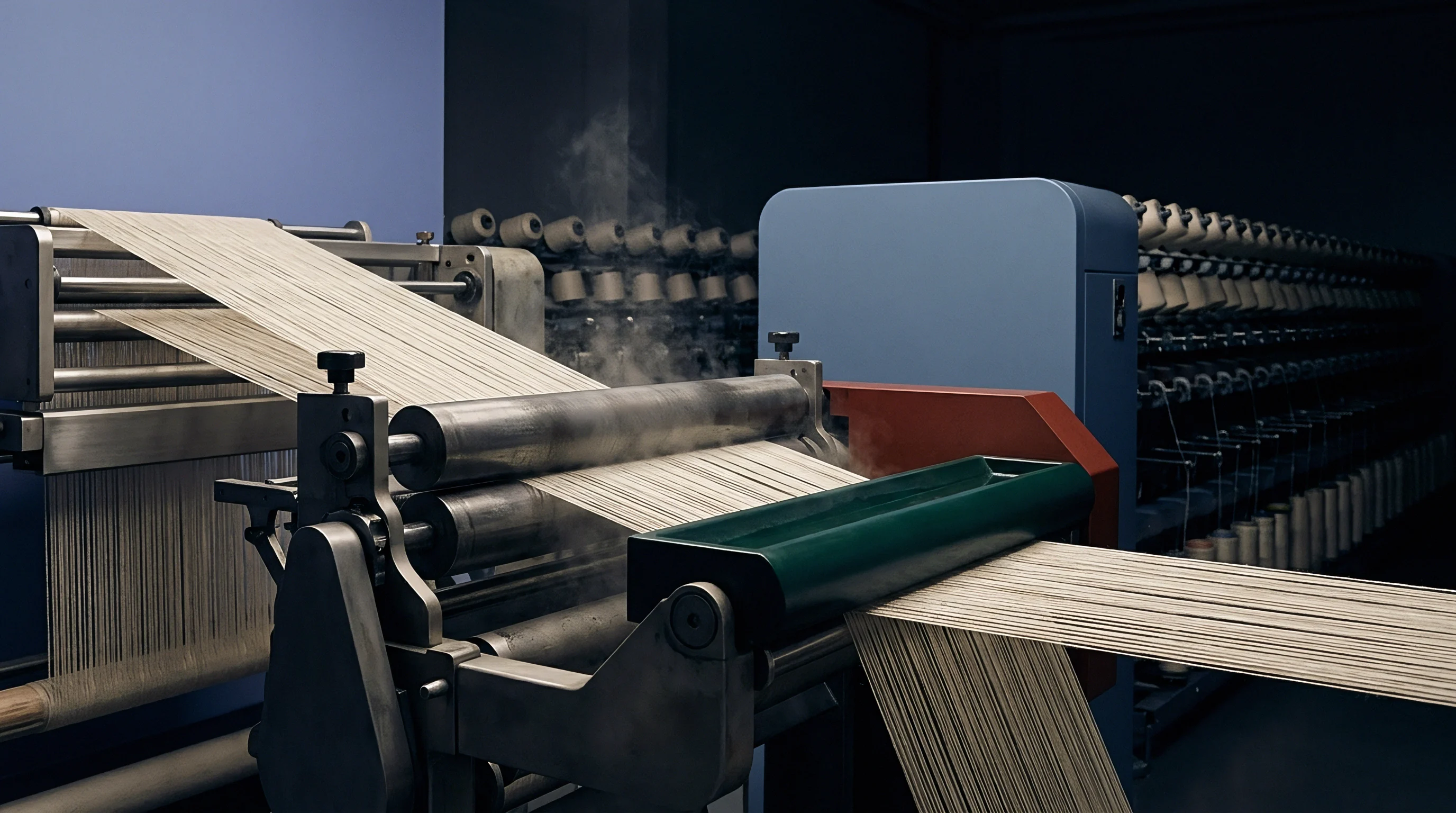
Continuous jet cooking systems replace batch kettles by pumping starch slurry through a high-pressure steam jet orifice. Live steam injection heats the slurry almost instantly to 130°C–140°C under 3 to 4 bar pressure. This rapid thermal cookout completely ruptures starch granules within seconds, producing a solubilized solution with far less thermal degradation than prolonged atmospheric batch cooking.
Jet cookers also eliminate batch-to-batch variation, feeding consistent size liquor to holding tanks.
Maintaining size storage kettle temperature at 85°C with constant slow agitation prevents surface skin formation and preserves viscosity within a 2 centipoise tolerance.
Monitoring concentration during cooking relies on optical refractometers measuring total dissolved solids in degrees Brix. Refractometer values correlate directly with dry solids percentage, giving instant verification on the shop floor. A formulation targeting a 10 percent dry add-on must maintain its tank Brix reading within plus or minus 0.3 Brix.
Evaporation during extended storage increases concentration, whereas steam condensation dilutes the bath, altering delivered solids.
Viscosity is typically checked using portable outflow viscometers or laboratory rotational units at standard temperatures. Running a Zahn or Ford cup test at the supply line provides a quick field check of fluid mobility. A drop in viscosity points to water dilution or thermal degradation, whereas an increase indicates evaporation or retrogradation gelling.
Cooking discipline directly affects film performance on the slasher. Incomplete granule rupture leaves raw starch grains that cannot bind to fibers, whereas over-cooked, degraded solutions lose the molecular weight needed to form strong films.
If a batch drops below its target cooking temperature, it forms an unstable mix that can separate in the size box within minutes.
Squeeze
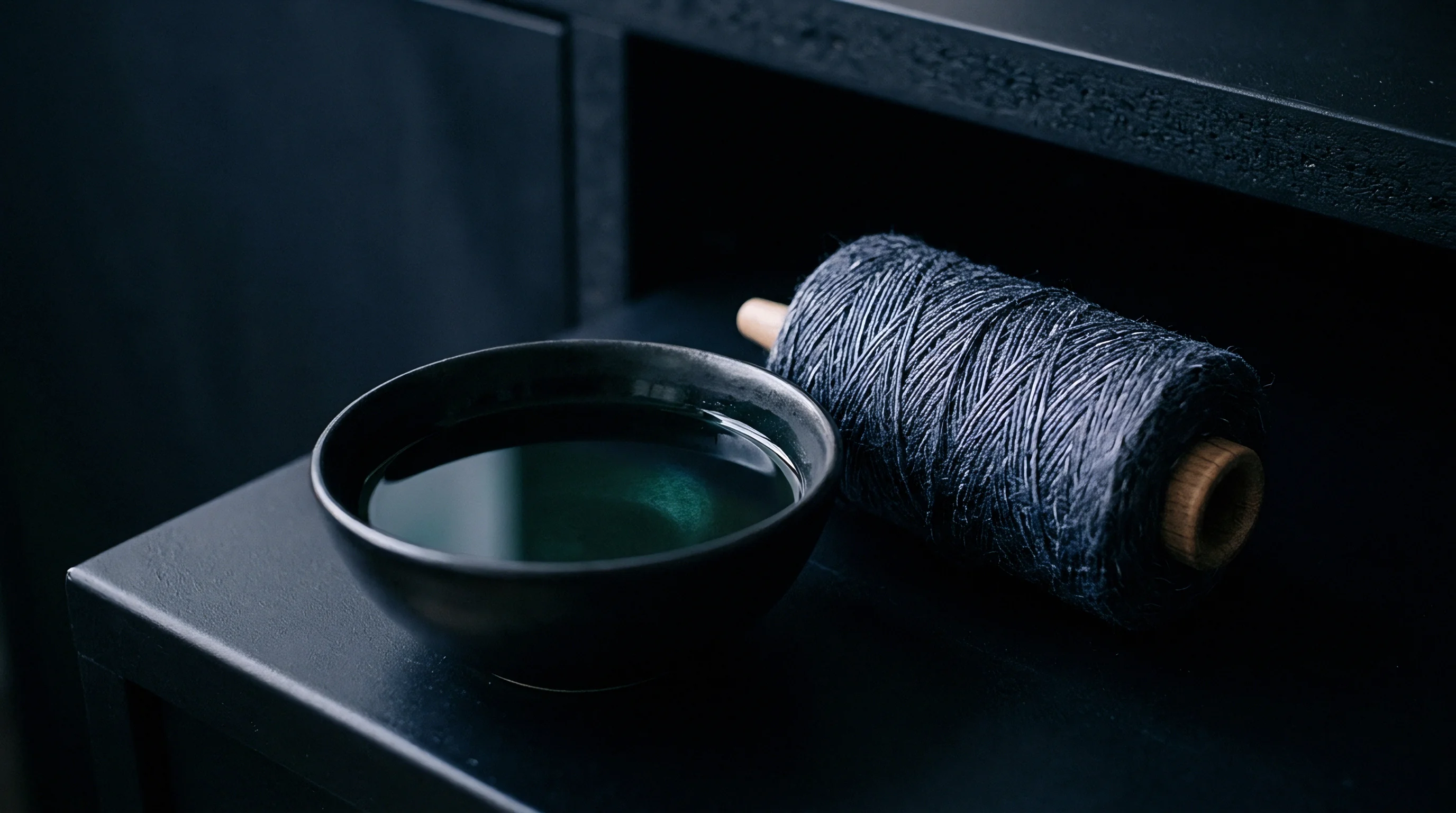
Applying size to a moving warp sheet occurs in the slasher size box through immersion and roller squeezing. The sheet passes under an immersion roller, submerging threads in the heated bath to wet their perimeters fully. It then enters the nip between a driven metallic roller and a heavy rubber-covered squeeze roll.
Pressure in the nip forces liquid into the spaces between fibers while stripping away excess surface liquor.
Wet pickup percentage represents the mass of wet liquor retained by dry yarn as it leaves the squeeze nip. Measuring it requires weighing a sample of wet sized yarn, drying it completely in an oven, and comparing the wet weight to the bone-dry mass. Target pickup varies with yarn count, fiber blend, and bath concentration: fine yarns with high surface area need higher wet pickup for complete coverage, while coarse yarns require lower pickup to avoid core saturation and stiffening.
| Yarn Count (Ne) | Slasher Speed (m/min) | Squeeze Roll Hardness (Shore A) | Nip Line Pressure (kN/m) | Bath Solids (%) | Target Wet Pick-Up (%) | Target Size Add-on (%) |
|---|---|---|---|---|---|---|
| 10s Ne Cotton | 45 | 70 | 22.0 | 14.0 | 75.0 | 10.5 |
| 20s Ne Cotton | 60 | 65 | 18.0 | 12.0 | 90.0 | 10.8 |
| 30s Ne Cotton | 70 | 60 | 14.0 | 10.5 | 105.0 | 11.0 |
| 40s Ne Cotton | 80 | 55 | 12.0 | 9.0 | 125.0 | 11.25 |
| 60s Ne Cotton | 75 | 55 | 10.0 | 8.0 | 140.0 | 11.2 |
| 50/50 Poly-Cotton 30s Ne | 65 | 65 | 16.0 | 11.0 | 85.0 | 9.35 |
Size add-on is the dry mass of polymer remaining on the yarn, expressed as a percentage of original dry yarn weight. Add-on directly links bath solids concentration to wet pickup percentage. Increasing squeeze pressure reduces wet pickup, which lowers dry add-on unless bath concentration is adjusted.
Operators tweak nip line pressure dynamically to compensate for changes in slasher speed.
Squeeze roll hardness, measured in Shore A, determines the contact nip width under load. Soft rubber rolls (50 to 60 Shore A) compress under load, creating a wide nip that distributes pressure gently over a larger area. Harder rolls (70 to 80 Shore A) produce a narrow nip with high peak pressure, ideal for stripping excess size from heavy, coarse warps.
Rollers must remain concentric and smooth across their working length to avoid side-to-center pickup variations.
Matching the sizing formulation to yarn structure reduces warp end breaks by 35 percent.
- Verify dry yarn creel alignment and balance thread line tension across all section beams before feeding into the immersion box.
- Check size box liquid level, temperature sensors, and automatic dilution controls to confirm bath stability at 85°C.
- Inspect squeeze roller surfaces for rubber cracking, grooving, or mechanical runout across the machine working width.
- Adjust nip pneumatic pressure controls to match calculated line load targets based on yarn count and machine speed.
- Dampen and pre-wet dry yarn ends if using a pre-wetting configuration to reduce size liquor consumption.
- Thread the wet warp sheet through Teflon-coated pre-drying steam cylinders to initiate smooth film solidification.
- Pass the dried warp sheet over metallic split rods to separate individual threads stuck together by size bridges.
- Measure final moisture regain at the headstock using microwave moisture sensors, targeting 7.0 to 8.5 percent moisture for cotton.
Separating dried warp ends at headstock split rods places mechanical stress on sized yarn. As size liquor dries on steam-heated cylinders, adjacent threads bond into a continuous sheet. Metal split rods break these chemical bridges to separate individual ends.
Excessive add-on or high starch levels form rigid bridges that tear surface fibers during lease separation, creating fuzz balls and hairiness before the beam reaches the loom.
Warp delivery specifications under ISO 9001 quality audits must document average size add-on within a plus or minus 0.5 percent tolerance band across the full beam width.
Pre-wetting modifies traditional application mechanics by running dry yarn through a hot water bath before it enters the size box. Saturating internal pores with water prevents size liquor from penetrating deep into the core. Sizing chemicals stay concentrated on the perimeter where abrasion resistance is needed, allowing mills to reduce add-on by 20 to 30 percent without sacrificing weaving performance.
Failing to regulate nip pressure during speed changes leads to under-sizing while inching and over-sizing at full running speed, producing streak defects across the warp beam.
Contractual delivery standards specify that any warp beam showing size add-on variation greater than 1.0 percent across its left, middle, and right sections subjects the entire lot to commercial rejection.
Behavior
How sized yarn performs on the loom depends largely on the physical properties of the dry size film. Sizing aims primarily to boost abrasion resistance against repetitive rubbing. During weaving, warp threads undergo high-frequency friction against drop wires, heddles, and reed dent blades, as well as yarn-to-yarn rubbing during shed opening and closing.
A proper formulation forms a tough, flexible shell that stops individual staple fibers from peeling away from the yarn core.
Tensile testing reveals clear changes in strength and elongation after sizing. Film encapsulation locks surface fibers into the yarn body, improving stress distribution under load and raising breaking tenacity by 15 to 30 percent. However, binding the fibers reduces internal mobility, causing an unavoidable loss in elongation at break.
Sizing must preserve at least 50 to 60 percent of the parent yarn’s original elongation so threads can absorb peak tension spikes during shedding.
- Tensile Strength Gain Ratio evaluates the percentage increase in breaking load of sized thread compared to raw yarn samples.
- Residual Elongation Percentage measures remaining strain capacity, confirming yarn flexibility under shedding loads.
- Shirley Abrasion Resistance Cycles quantifies the average number of friction cycles required to break yarn under standard tension.
- Zweiweg Webtester Failure Count tracks end break frequency across a multi-end test sheet under simulated shedding action.
- Uster Hairiness Index Reduction measures the percentage reduction of protruding fibers longer than 3 millimetres after sizing.
- Flexural Rigidity Stiffness Index determines yarn bending resistance to ensure the finished fabric retains proper drape.
Suppressing hairiness is critical for smooth loom operation. Surface fibers longer than 3 millimetres entangle adjacent warp ends, preventing a clean shed opening on air-jet and rapier looms. Incomplete openings cause filling stops, trailing loops, and loose picks.
Sizing chemistry lays surface hairs flat against the yarn body, achieving a Zweiweg hairiness reduction over 70 percent on fine carded yarns.
Controlling yarn-to-metal friction ensures smooth passage through loom elements. Unsized cotton yarn has a dynamic friction coefficient against smooth steel of 0.22 to 0.25. Adding lubricants like hydrogenated tallow or polyethylene wax drops that coefficient to 0.12 ~ 0.15, reducing heat at heddle eyes and minimizing wear on shedding motions.
Excessive lubrication softens the coating and leads to size shedding or dusting around drop wires.
Laboratory evaluation via ASTM D2256 yarn tensile testing dictates that sized warp yarn must retain a minimum of 4.5 percent residual elongation to survive high-speed loom beat-up forces.
Flexural rigidity measures how strongly a sized yarn resists bending. Although sizing increases tensile strength, excessive stiffness makes yarn brittle, causing micro-cracks in the film during continuous flexing. Under cyclic shedding stresses, these cracks propagate until the film flakes off as powder.
Dust buildup in drop wires and reed slots blocks sensors, causing false stops and wearing down shedding components.
Film cohesion can be evaluated in the lab by casting pure size solution into free-standing films. Testing the tensile strength, flexural endurance, and moisture sensitivity of these isolated films shows how the formulation behaves independent of the yarn substrate. In the weave room, high relative humidity (typically 65 to 75 percent) softens hydro-reactive starch films, increasing elasticity but lowering abrasion resistance.
Performance under dynamic loom stresses comes down to balancing tensile strength gains, residual elongation, and surface friction control.
What specific viscoelastic threshold governs the onset of film micro-cracking when sized cotton yarn undergoes two million flexural stress cycles under air-jet shedding acceleration?

Economics
Warp preparation economics link chemical selection directly to weave room productivity and fabric landed cost. Chemical expenses represent a small fraction of total material costs, yet size failure drives loom downtime and labor interventions. On modern high-speed looms, sizing expenditure must always be weighed against loom-hour financial productivity.
Evaluating true sizing costs requires accounting for chemical expenses per kilogram of yarn alongside downstream desizing effluent treatment. Native corn starch costs substantially less per dry kilogram than synthetic PVA or modified acrylics; using pure native starch cuts initial chemical spend by up to 60 percent compared to PVA blends. However, native starch raises warp stop rates on fine setts, dropping weave room efficiency from 92 percent to 82 percent and erasing chemical savings through lost production capacity.
Financial losses from loom stops scale with capital investment and overhead allocation. An air-jet loom running at 1,000 picks per minute produces 60,000 picks per hour. A single warp stop takes an average of 1.5 minutes to repair, costing 1,500 picks per incident.
If a poor formulation increases warp stops from 1.0 to 3.5 per 100,000 picks, a 100-loom shed loses hundreds of operating hours a month, throwing off production schedules.
- Chemical Cost Per Kilogram Sized Warp calculates direct chemical paste expenditure per unit mass of prepared warp beam.
- Warp Stop Frequency Per Hundred Thousand Picks tracks shed performance to establish a direct correlation with sizing formula quality.
- Loom Efficiency Financial Recovery Factor measures gained weave room capacity resulting from sizing optimization.
- Desizing Effluent Chemical Oxygen Demand Load quantifies wastewater treatment costs created by specific sizing polymers.
- Recyclable PVA Ultrafiltration Recovery Yield evaluates recovery systems designed to collect and reuse synthetic size polymers.
Calculating the true financial impact of a sizing formulation means combining add-on costs, loom downtime losses, and wet-processing desizing overhead. Finishing plants face environmental charges for treating effluent with high Chemical Oxygen Demand. Native starch waste creates heavy organic loads that demand extensive biological treatment.
Polyvinyl alcohol can be recovered from wash water via ultrafiltration, allowing mills to recycle up to 80 percent of the polymer and offset its higher purchase price.
Slashing expenses directly affect fabric bolt margins.
Optimizing sizing parameters balances yarn count requirements, chemical add-on targets, machine settings, and weave room economics. Calculations must account for yarn structural density, fiber affinity, squeeze roll kinematics, and film behavior to reach maximum weaving efficiency. Engineers use cost models to weigh chemical selection against productivity targets, ensuring high-speed machinery operates at peak profitability.
Desizing costs belong in any landed cost calculation. Buying cheap sizing chemicals to cut initial spending leads to higher stop rates, fabric defects, and elevated finishing costs downstream. Sourcing teams that measure total cost per finished metre evaluate size performance on the loom before approving warp preparation specs for commercial production contracts.