Predicting Inter-Yarn Friction Coefficients and Localized Tear Propagation in High-Density Jacquard Linen
Balancing inter-yarn friction via controlled finishing softeners enables high-density Jacquard linen to dissipate tear energy through localized yarn bundling.

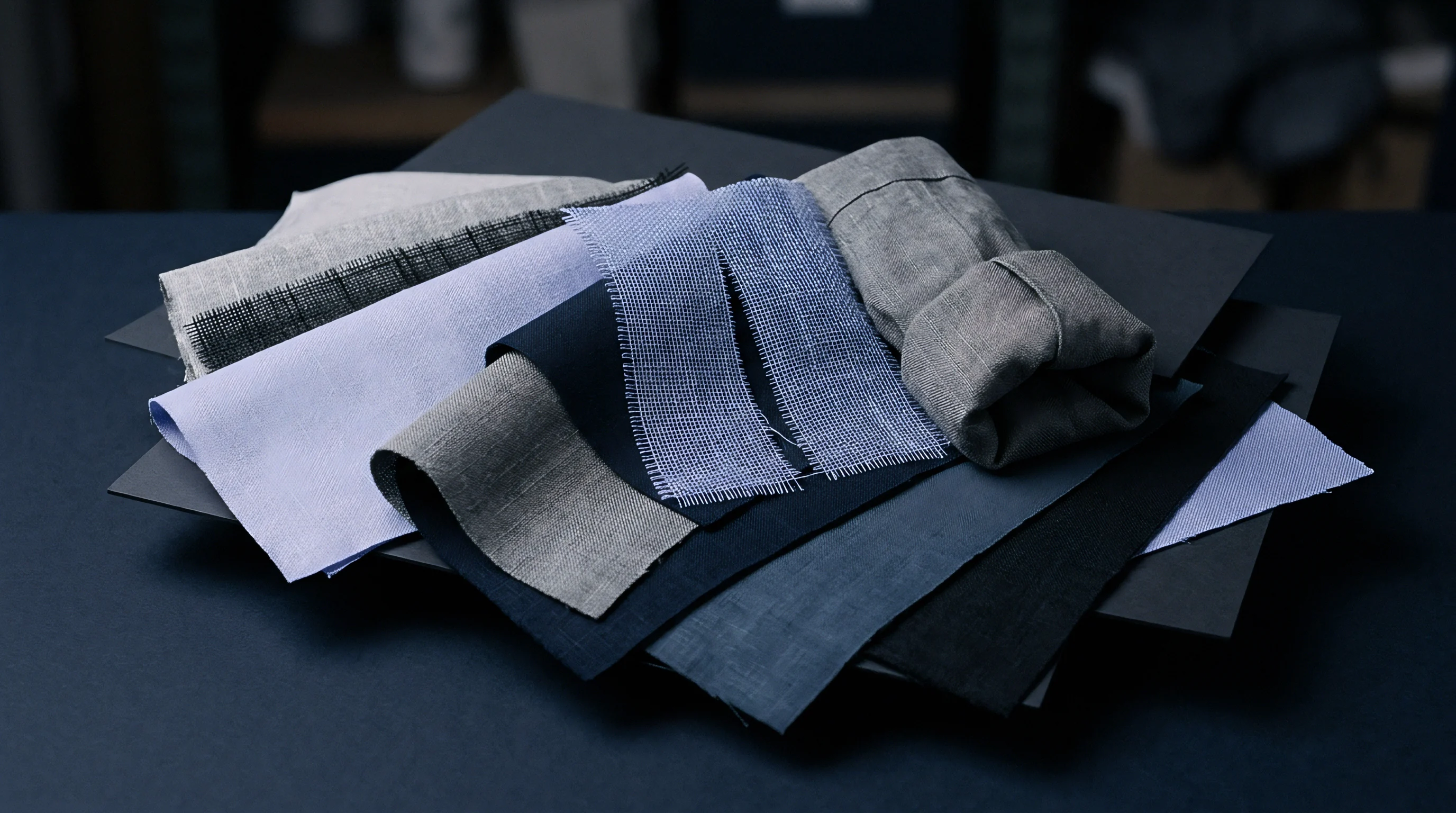
Notch
Applying mechanical force to a densely woven fabric creates steep local strain gradients that determine whether a cut propagates or halts. In Jacquard linen, tensile energy accumulates at the tip of a slit, forcing adjacent yarns to stretch, slip, or fracture. Flax and related bast fibers pair high axial stiffness with minimal transverse elasticity; because the fiber cross-section barely yields under tension, stress concentrates abruptly around defects.
Under tension, stress concentrations develop rapidly at the notch root.
Tight packing of warp and weft picks in dense linen restricts lateral movement. When a notched fabric sample is loaded in tension, energy dissipation relies on adjacent yarns sliding past one another. High inter-yarn friction keeps these threads locked, preventing tension from redistributing across a wider zone.
Peak stress remains localized at the cut tip, severing successive picks at loads well below the unnotched tensile strength.
Interlace contact friction immobilizes the weave crossovers.
Stress Concentration at Flawed Interfaces
Individual flax filaments feature thick cell walls, central lumens, and crystalline microfibrils aligned with the fiber axis. This structure gives high-grade, wet-spun yarns a steep initial Young modulus ~ frequently over forty gigapascals ~ while keeping the lateral shear modulus to a small fraction of the axial value. Once a local tear initiates, stress distribution at the tip reflects the balance between axial stiffness and inter-yarn friction.
Peak stress at a slit root in 28 pick per centimetre Jacquard linen exceeds three times the global nominal strain when inter-yarn friction coefficients surpass 0.45.
Dense Jacquard packing prevents yarns from rotating at crossover points. While open structures allow thread bundles to pivot toward the cut ~ forming a triangular deformation zone that distributes load over adjacent yarns ~ tight layouts suppress this movement. Squeezed together in the reed, warp ends maintain their orthogonal alignment under load, keeping the stress field narrow.
Consequently, flax fibers sustain combined shear and tensile stresses that degrade the middle lamella bonds uniting the ultimate fibers.

Yarn Jamming in High-Density Structures
The jamming limit represents the geometric threshold where yarn bundles occupy all surrounding space. In wet-spun linens with cover factors at or above eighty-five percent, void space between ends and picks disappears. Unable to shift laterally under transverse loads, the fabric can accommodate displacement only through compression of the yarn cross-sections.
Flax yarn cross-sections offer high resistance to lateral compression.
Weaving high pick densities flattens yarn cross-sections into lenticular profiles. The resulting contact area at warp-weft crossovers elevates total frictional resistance without altering the intrinsic friction coefficient. When an advancing tear reaches jammed yarns, the warp ends cannot slide over picks, transferring tear loads directly into axial tension and shifting failure from progressive slip to abrupt tensile fractures across entire yarn bundles.
Primary factors driving stress localization include:
- Inter-yarn friction coefficient dictates the force required for warp ends to slip past crossing picks under local shear.
- Cover factor density establishes the free space for thread movement, defining the transition from steady sliding to complete jamming.
- Yarn crimp differential determines whether warp or weft absorbs initial transverse load before the crack tip advances.
- Float length distribution controls local structural tightness, with longer floats allowing yarns to cluster ahead of the advancing tear.
When high friction suppresses localized slip, tear propagation energy drops markedly. In the absence of yarn mobility, the cut tip remains sharp, maximizing stress concentration so that minimal strain increments snap adjacent threads. Specifying high pick counts without addressing inter-yarn lubrication frequently produces fabrics vulnerable to catastrophic tearing from minor snags.

Traction
Inter-yarn friction in Jacquard linen depends on contact mechanics, surface wax distribution, and mechanical interlocking. Bast yarn surfaces are inherently irregular, featuring diameter variations, nodes, and fine fibrils. These surface asperities prevent pure elastic contact, causing the friction coefficient to vary non-linearly with applied normal load.
Yarn mobility directly governs the capacity for energy dissipation.
Evaluating friction in flax yarns requires distinguishing static resistance from kinetic sliding. Wet-spun linen exhibits a pronounced discrepancy between the two: static coefficients typically range from 0.38 to 0.52, falling to 0.22 ~ 0.31 during motion. This differential initiates stick-slip behavior during tearing, generating force oscillations that accelerate failure.

Capstan Friction Models for Bast Fibers
Contact between intersecting warp and weft yarns follows adapted Capstan models for compressible, anisotropic fiber bundles. As a pick wraps around a warp end, sliding resistance is governed by contact angle and normal force. In dense Jacquard constructions, pronounced crimp elevates contact angles beyond ninety degrees at each crossover, generating substantial cumulative drag.
Static friction values significantly exceed dynamic sliding resistance.
High pick packing deepens crimp amplitude along the yarn path, raising the effective friction coefficient. Steeper crimp angles increase normal force components under constant external tension. Modeling crossover friction requires incorporating adhesive resistance from surface waxes alongside mechanical interlocking from surface nodes.
Pectins and residual hemicellulose on unbleached flax increase adhesive friction, while bleaching removes surface lipids, altering overall friction behavior.
| Yarn Count (Nm) | Spinning Method | Surface Finish State | Static Friction Coefficient | Kinetic Friction Coefficient | Stick-Slip Amplitude (N) |
|---|---|---|---|---|---|
| 26 | Wet-Spun Unbleached | Raw Pectin Layer | 0.48 | 0.31 | 1.45 |
| 26 | Wet-Spun Bleached | Scoured Dewaxed | 0.36 | 0.24 | 0.82 |
| 39 | Wet-Spun Bleached | Softened Silxane | 0.27 | 0.19 | 0.38 |
| 39 | Dry-Spun Unbleached | Raw Fibrous | 0.54 | 0.38 | 2.10 |
| 52 | Wet-Spun Bleached | Enzyme Washed | 0.31 | 0.21 | 0.51 |

Surface Waxing and Lubricant Viscosity
Topical finishing treatments adjust inter-yarn traction without altering the Jacquard draft. Polyorganosiloxane or polyethylene wax emulsions form boundary films over flax fibers, reducing the friction coefficient so warp ends slide across picks under lower shear loads.
Shed tension directly modifies the interlace wrap angle.
Reducing static friction from 0.45 to 0.28 allows yarns to shift laterally at a notch root. This mobility enables adjacent threads to gather into a load-bearing cluster that dissipates energy across a broader region, increasing tear propagation resistance. However, excessive friction reduction destabilizes the weave structure, causing pick displacement, seam slippage, and distortion during handling.
While low tear resistance in dense linens is frequently attributed to fiber degradation during retting or bleaching, chemical processing itself can lock high inter-yarn friction into place.


Rupture
When local stress at a notch exceeds inter-yarn friction, tear propagation begins. In Jacquard patterns, crack trajectory depends on float geometry, repeat boundaries, and loading direction. Fractures seldom follow straight lines; pattern transitions frequently deflect tears off-axis.
Trouser test methods isolate the crack tip under peel shear loading.
Fracture dynamics differ between single-rip trouser and double-rip wing methods. Trouser tests load two cut legs in opposite directions to generate peel shear at the notch. In dense linens, a restricted deformation zone causes sequential pick breakage; each failing yarn releases stored energy, driving the tear forward until it encounters a high-interlace region in the pattern repeat.
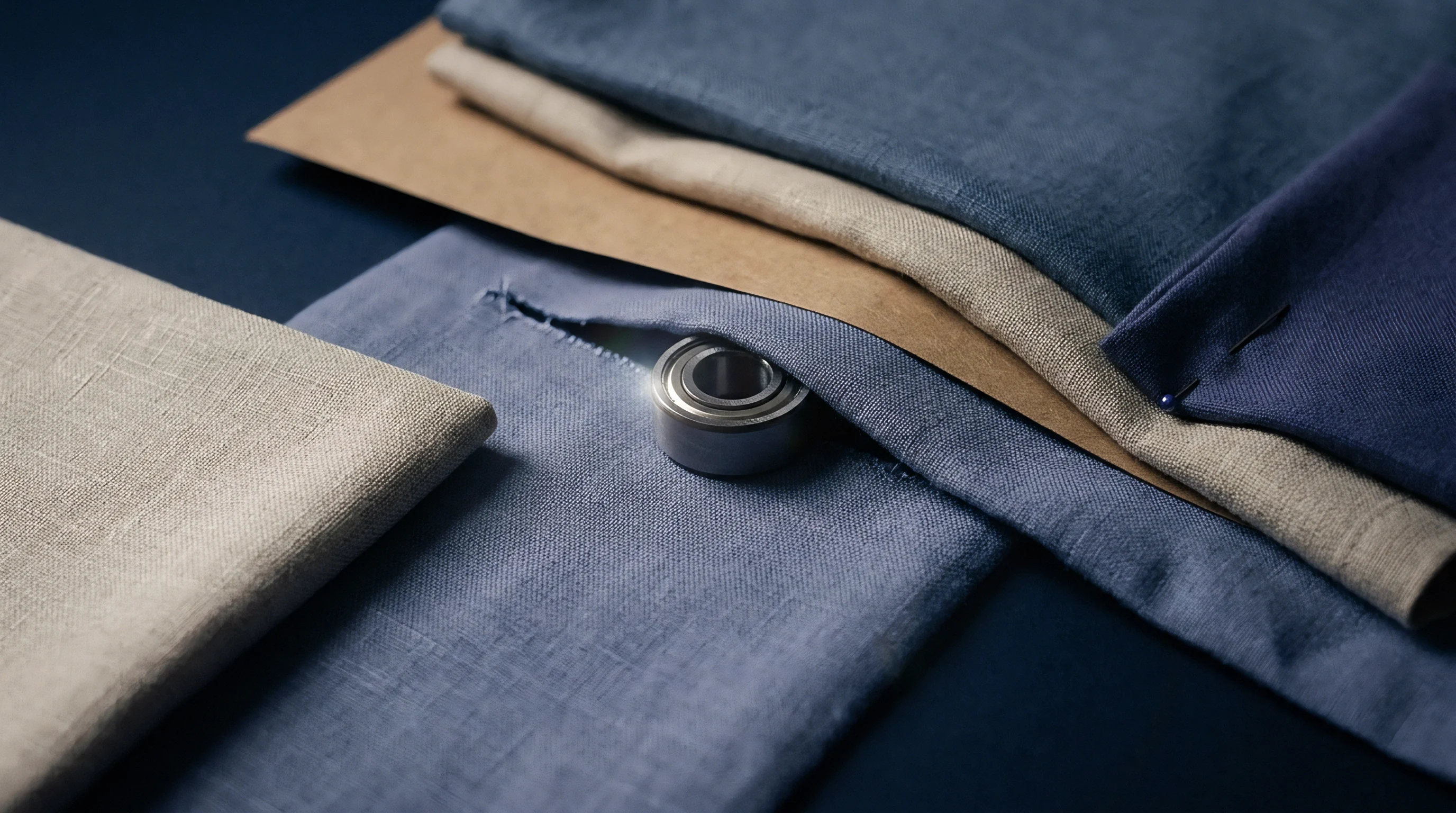
Delamination and Pick Displacement Mechanics
As a tear advances, weft picks parallel to the cut flex prior to failure. Crossing warp ends exert frictional clamping forces on these picks. If clamping forces remain below the yarn yield point, picks shift laterally and cluster ahead of the crack tip.
This grouping substitutes collective resistance for sequential single-yarn fracture, creating discrete spikes in measured tear force.
Inter-yarn clamping forces directly influence the extent of pick displacement.
Dense Jacquard structures constrain pick displacement before encountering an interlace point. Short floats restrict yarn translation and prevent bundling, whereas longer floats permit sufficient sliding for threads to cluster ahead of the cut. Varying float lengths across a weave design produces alternating regions of high and low tear resistance.

Should High-Float Satin Covers Reduce Shear Resistance?
Incorporating long-float satin weaves into a dense ground reduces interlace density per unit area. Lower crossover frequency decreases internal friction within satin regions, allowing threads to translate under shear and redistribute load. However, boundaries between loose satin motifs and tight plain-weave grounds create sharp mechanical property gradients.
Common failure modes in dense Jacquard tearing include:
- Single-yarn tensile cleavage occurs when high friction locks threads in place, causing sequential brittle yarn failure.
- Yarn bundle gathering failure happens when moderate friction permits yarn translation into a wedge that bears load until the bundle fails simultaneously.
- Pattern boundary shear delamination initiates at abrupt transitions between float motifs and ground weaves, deflecting tears along motif perimeters.
- Cross-point slip instability arises when friction is insufficient to maintain structural integrity, leading to pick distortion without clean fiber rupture.
Managing tear behavior in dense Jacquard linens requires mitigating property gradients across pattern boundaries. Sharp drops in interlace density or friction create stress concentrations, encouraging snags to track along motif outlines and damage the fabric.
Standard ISO 13937-2 testing demonstrates that Jacquard pattern transitions with interlace density drops exceeding forty percent experience off-axis tear deflection along motif perimeters.
Long-term changes in static inter-yarn friction from dynamic micro-vibrations during industrial laundering remain insufficiently characterized in dense bast fiber fabrics.

Interlace
The arrangement of warp ends and weft picks across a Jacquard repeat determines local fabric density and crossover pressure. Because individual warp shedding controls thousands of threads, interlace density can be varied across the fabric. Integrating float motifs into a tight ground modifies the friction profile to arrest tear propagation.
Yarn twist multiplier modifies contact geometry at interlace points.
Calculating linen cover factors requires adjusting classical Peirce geometry for non-circular yarn cross-sections and irregular fiber profiles. Warp and weft cover values combine non-linearly into total fabric cover. Above eighty-eight percent total cover, spatial confinement causes inter-yarn friction to increase exponentially.
Jacquard Float Distributions and Load Transfer
Float length defines the unconstrained yarn segment between interlace points. Longer floats reduce crossover frequency per unit length. In a five-end satin, warp threads float over four picks before interlacing, reducing crossover frequency to twenty percent of plain weave.
This reduction lowers local friction, allowing yarn mobility under shear.
Crimp interchange redistributes strain energy between warp and weft.
Integrating short float zones within longer float regions maintains fabric stability without impairing energy dissipation. High-density plain or twill grounds preserve dimensional integrity, while adjacent float motifs act as yield zones that retard advancing cracks. As a tear enters a float motif, reduced friction permits yarn bundling, blunting the notch tip.
| Weave Structure Type | Average Float Length | Interlace Density (per cm²) | Cover Factor (%) | Mean Trouser Tear Force (N) | Peak Energy Dissipation (J) |
|---|---|---|---|---|---|
| 1/1 Plain Weave Ground | 1.0 | 676 | 89.2 | 18.4 | 0.42 |
| 2/2 Mat Structure | 2.0 | 338 | 86.5 | 29.1 | 0.78 |
| 3/1 Twill Weave Motif | 2.0 | 338 | 87.1 | 26.8 | 0.69 |
| 5-End Warp Satin | 3.2 | 135 | 84.8 | 41.5 | 1.25 |
| 8-End Weft Satin | 5.2 | 84 | 83.1 | 56.2 | 1.82 |
| Composite Jacquard Grid | 2.8 | 240 | 86.0 | 38.9 | 1.12 |

Cover Factor Thresholds for Energy Dissipation
The relationship between cover factor and tear resistance is non-monotonic. At low cover factors, yarn mobility is high, but low linear fiber density limits tear strength. At intermediate values, higher yarn density combined with sufficient mobility for multi-yarn bundling maximizes resistance.
Beyond a critical cover factor, compact packing locks yarns in place, suppressing bundling and reducing tear strength.
Elevated warp and weft setts restrict localized yarn displacement.
Optimizing dense Jacquard constructions requires identifying this cover factor threshold. For wet-spun flax yarns from 26 Nm to 52 Nm, peak tear resistance occurs between eighty-three and eighty-six percent total cover. Exceeding eighty-seven percent total cover causes performance to deteriorate rapidly, as jammed geometry elevates local friction and induces brittle single-yarn failure.
Optimizing tear resistance in Jacquard constructions relies on structural balance:
Excessive pick packing causes jamming before a load-bearing yarn wedge can form.
Limiting contiguous plain-weave regions to spans under twenty millimetres prevents continuous high-friction pathways. Interspersing these sections with satin or twill floats creates energy-absorbing regions while preserving fabric stability, directing tear forces away from rigid zones into flexible bundling areas.
Jacquard constructions maintaining total cover factors between eighty-three and eighty-six percent maximize localized tear dissipation by enabling yarn bundling without compromising structural stability.
While excessive interlace density restricts thread movement, balanced float distributions permit the local shear deformation necessary to blunt advancing cuts.


Calibration
Evaluating inter-yarn friction and tear propagation requires controlled testing under stable environmental conditions. Flax fibers are sensitive to humidity due to their hydrophilic cellulose and amorphous hemicellulose matrix. Because moisture regain alters fiber diameter, surface roughness, and friction, mechanical testing requires standard atmospheric conditioning at twenty degrees Celsius and sixty-five percent relative humidity for at least twenty-four hours.
Friction bench testing demands precise, constant yarn pre-tensioning.
Yarn friction characterization utilizes specialized capstan rigs. The test yarn wraps around a rotating drum lined with matching yarn or a stationary loop under specified pretension. The ratio of pulling force to holding tension yields static and kinetic friction coefficients via modified Capstan equations, providing input data for computational tear propagation models.

Trouser and Wing Test Method Comparisons
Standard tear tests employ varied sample geometries to evaluate response under distinct stress states. ISO 13937-2 specifies the single-rip trouser method, pulling two cut legs parallel to the slit. ISO 13937-3 defines the wing test, using a trapezoidal specimen to induce multi-axial strains at the notch root.
For dense Jacquard linens, the wing test provides superior correlation with field snagging failures by capturing off-axis shear.
| Standard Designation | Specimen Geometry | Test Speed (mm/min) | Primary Strain Vector | Dominant Failure Resistance Mode |
|---|---|---|---|---|
| ISO 13937-1 | Ballistic Pendulum (Elmendorf) | Impact Rate | Dynamic Orthogonal Shear | High-Speed Kinetic Friction Friction |
| ISO 13937-2 | Single-Rip Trouser Specimen | 100 | Pure Peel Axial Shear | Static Interlace Slip Friction |
| ISO 13937-3 | Double-Rip Wing Specimen | 100 | Multi-Axial Vector Shear | Yarn Bundle Gathering Resistance |
| ASTM D1424 | Falling Pendulum Apparatus | Impact Rate | Dynamic Tear Propagation | High-Rate Kinetic Dissipation |
| ASTM D2261 | Tongue Tear Specimen | 50 | Uniaxial Tensile Shear | Static Capstan Interlace Friction |
Capstan Friction Bench Configuration Steps
Accurate calibration of inter-yarn friction coefficients requires a strict protocol to eliminate mechanical compliance and signal drift:
- Mount the primary yarn specimen in the load cell clamp under a verified pre-tensioning load of 0.05 centinewtons per tex.
- Guide the secondary yarn strand around the smooth friction mandrel at a wrap angle of 180 degrees, taking care not to overlap adjacent coils.
- Set the motorized drive to pull the primary yarn at a constant sliding speed of ten millimetres per minute.
- Record tension across the load cell at a sampling rate of at least one hundred hertz to capture stick-slip force transients.
- Record peak static tension immediately prior to motion, then average the dynamic force plateau over fifty millimetres of steady travel.
- Calculate static friction coefficients by taking the natural logarithm of the tension ratio divided by the contact angle in radians.
Incorporating empirical friction values into finite element models allows simulation of tear initiation prior to loom setup. Numerical analyses resolve local shear stress at individual crossovers, identifying rigid interlace zones vulnerable to brittle yarn failure under impact.
Procurement specifications should mandate tear testing under ISO 13937-3 conditions, specifying lot rejection if mean wing tear force falls below thirty-five newtons in either warp or weft directions.

Booking
Translating tear mechanics models into commercial production requires balancing loom efficiency, plant capacity, and unit cost. Weaving high-density Jacquard linen imposes substantial mechanical loads on loom motion. Inserting dense, wet-spun weft picks at production speeds demands elevated warp tension, increasing beat-up resistance and reed loads on every cycle.
High pick densities necessitate reduced insertion speeds.
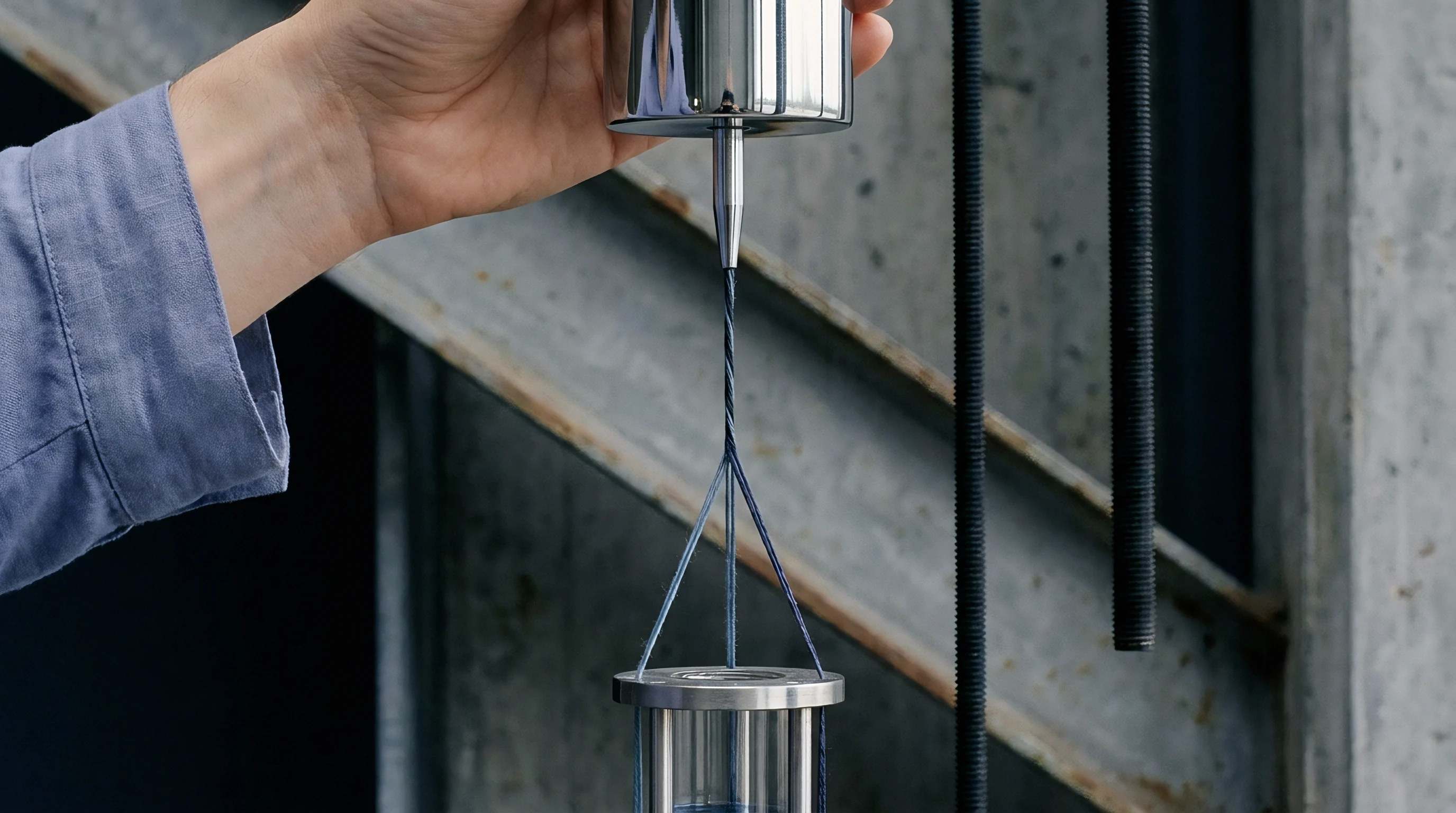
Loom capacity allocation depends on operating speed while maintaining clear shed opening. Constructions exceeding twenty-four picks per centimetre require reducing rapier speeds from six hundred picks per minute to four hundred twenty picks per minute to prevent warp breaks and pick snarls, directly increasing machine loom hours per linear metre.
Loom Efficiency and Harness Selection Economics
Jacquard harness configuration represents a significant fixed cost in heavy linen production. Weaving high-density motifs requires electronic heads controlling at least 5,120 individual gantry cords. Harness cord friction, neckboard wear, and lingo return mass directly affect power consumption and maintenance intervals.
Harness configuration costs represent a fixed initial outlay across production runs.
Weaving efficiency for high-density linen typically ranges from seventy-six to eighty-two percent, compared to ninety-plus percent for standard cotton or synthetic fabrics. Efficiency losses stem primarily from warp breaks induced by crowding in the drop wire zone. Abrasion among hairy bast yarns generates shed fuzz, leading to false warp stops and incomplete shedding.
Reducing friction through sizing improves shed opening, elevating efficiency by four to six percentage points.
Commercial Procurement Tolerances for Linen Performance
Procurement contracts must align mechanical targets with practical manufacturing constraints. Mandating high minimum tear resistance without accounting for pick density yields unrealizable specifications. Structural design requires balancing fabric mass and density against required tear thresholds.
Key procurement variables influencing landed cost and loom utilization include:
- Target pick density dictates beat-up resistance, governing maximum rapier speed and available loom capacity.
- Sizing chemical formulation controls warp hairiness and surface friction, influencing shed clearing efficiency and end-break rates.
- Harness capacity load constrains maximum repeat width on available looms, setting fixed setup costs amortized across production volume.
- Minimum tear force threshold defines allowable float lengths, constraining motif design to ensure operational durability.
Calculating landed cost per finished metre involves combining greige weaving costs, desizing agents, finishing lubricants, and quality assurance overhead. Increased pick density elevates yarn mass and machine time per metre. Applying topical silicone softeners during finishing incurs modest chemical expenditure while restoring tear strength compromised by high weave density.
Specifications defining warp density at twenty-eight ends per centimetre and weft density above twenty-six picks per centimetre should incorporate a five percent tolerance on minimum wing tear values unless topical lubricants are specified in finishing. Ultimately, producing high-density Jacquard linens requires balancing interlace friction for dimensional stability against the yarn mobility required to arrest tear propagation.