Determining Basic Interlace Density Limits in High-Density Linen Weaving
Plain interlace linen hits mechanical jamming when warp and weft cover factors exceed twenty-eight, demanding twill structures for higher densities.

Geometry
Yarn dimensions determine how tightly threads pack within a woven grid. Linen yarns spun from flax differ markedly from synthetic filaments or upland cotton. Built from crystalline bast fiber bundles bound by interlamellar pectin, flax has an axial modulus exceeding eighty gigapascals and an ultimate elongation that rarely exceeds three percent.
These properties resist both transverse compression and bending around perpendicular yarn axes.
Determining the maximum number of warp ends and weft picks in a square centimetre depends on fiber density and yarn diameter. Pure crystalline flax cellulose has a fiber density between 1.50 and 1.54 grams per cubic centimetre. Because spun yarns contain voids between individual bast ultimates, effective packing density drops from 1.10 grams per cubic centimetre in dense wet-spun yarns to 0.82 grams per cubic centimetre in dry-spun qualities.
Dry yarn diameter in millimetres is derived from linear density in Tex, adjusted for effective volumetric density:
Dry diameter equals the square root of Tex, divided by thirty-five point six times the square root of packing density. For wet-spun flax, this formula yields yarn diameters noticeably larger than equivalent cotton counts. A thirty Lea linen yarn, with a metric count of fifty Tex, has a nominal uncompressed diameter of zero point two four millimetres.
Flax fibers show almost no lateral spring.
Wet-spun flax yarns at thirty lea achieve circular packing limits at twenty-four ends per centimetre under twenty centinewtons of winding load.
Peirce Models Applied to Inelastic Flax
Classical structural formulas assume flexible, circular cylinders that bend without resisting axial compression. Frederick Peirce derived his basic geometry on the assumption that round yarns retain their circular cross sections when touching. Under circular jam conditions, warp and weft spacing together cannot fall below the sum of the yarn diameters without forcing yarns out of plane.
In high-density linen, however, the stiff bast bundles create pronounced crimp rigidity.
When warp yarns form a shed under ten to fifteen percent beam tension, they force incoming filling yarns to absorb nearly all the interlace crimp. In plain weaves, theoretical interlace density peaks when center-to-center spacing matches yarn diameter. At a yarn diameter of zero point two four millimetres, the theoretical upper limit is forty-one point six ends per centimetre.
In practice, achieving forty-one ends per centimetre in plain-weave linen is impossible on industrial looms. Yarn hairiness, surface slubs, and high lateral stiffness cause mechanical lockup well before reaching circular geometric limits.
| Yarn Count (Lea) | Linear Density (Tex) | Effective Density (g/cm³) | Calculated Diameter (mm) | Theoretical Round Sett (Ends/cm) |
|---|---|---|---|---|
| 14 | 107.1 | 1.08 | 0.354 | 28.2 |
| 20 | 75.0 | 1.10 | 0.293 | 34.1 |
| 25 | 60.0 | 1.12 | 0.259 | 38.6 |
| 30 | 50.0 | 1.14 | 0.235 | 42.5 |
| 40 | 37.5 | 1.15 | 0.202 | 49.5 |
| 50 | 30.0 | 1.16 | 0.180 | 55.5 |
| 60 | 25.0 | 1.18 | 0.163 | 61.3 |
Cross Section Flattening and Yarn Aspect Ratios
Under lateral pressure, multi-cellular bast bundles deform into elliptical shapes. Rather than remaining round, flax yarns subjected to beat-up force spread horizontally at interlace nodes. The aspect ratio ~ major axis width divided by minor axis height ~ increases from one point zero in relaxed roving to between one point four and one point seven in tightly beaten greige linen.
This flattening permits higher pick densities because minor axis height determines the clearance needed between opposing warp sheets as they cross. At the same time, it widens the major axis parallel to the fabric plane, consuming open space between adjacent warp ends. When neighboring warp yarns flatten too much, their edges meet, causing severe lateral jamming that stops fell advance.
Wet processing shifts these geometric boundaries.
When immersed in water, flax bundles swell up to twenty-five percent in transverse diameter as cell-wall hemicellulose absorbs moisture. Loom setups calculated for tight greige tolerances will cockle, buckle, or show prominent warp streaks during bleaching or dyeing. Workable geometric limits have to account for this downstream aqueous expansion.
Weaving managers balance yarn twist against allowable flattening ratios to maintain interlace integrity across production runs.

Beat
Mechanical impact transfers momentum from the moving sley directly into the cloth fell. In linen weaving, that impact hits a rigid barrier. Lacking the five-to-ten percent mechanical stretch common to cotton or wool, the warp sheet cannot cushion deceleration through elastic stretch.
Every micron of forward fell movement causes immediate tension spikes along the entire warp line.
The reed split width governs mechanical clearance.
Beat-up resistance climbs sharply as filling density approaches structural saturation. Below that point, resistance increases linearly as inserted picks overcome simple sliding friction. Once earlier picks wedge tight against warp crossovers, every reed stroke must physically compress yarn nodes and drive crimp interchange.
In heavy linens, beat-up force often exceeds four hundred decanewtons per metre of reed width, pushing loom motors and crankshafts close to their mechanical limits.

Does Reed Impact Distort Flax Yarn Ellipticity?
High-speed video shows that bast fibers flatten in the microsecond of impact. The reed forces the filling yarn against opposing warp sheets, squeezing the round bundle into an oblate oval. Part of this deformation is permanent: the rigid pectin cementing individual flax cells fractures microscopically under heavy impact, permanently flattening the yarn and widening its contact area.
Sley dwell timing alters warp tension.
As the sley drives the pick forward, the front edge of the reed wire pushes the yarn straight against the cloth fell. Beating while the shed is fully open spikes peak warp tension, locking the new pick before recoil can push it back. If beat-up occurs after shed crossover, the yarn slips backward into the opening shed, causing uneven pick spacing known in weaving mills as reed bounce.
- Tension release cycle drops beam brake force during shedding, preventing warp yarn snap at sixty percent harness rise.
- Sley sword acceleration peaks precisely at reed impact, driving the pick forward before shed closure traps the yarn line.
- Asymmetric harness crossover lifts the upper sheet early, leveling warp displacement across the raceplate to avoid dropped picks.
- Temple grip engagement pins the selvedge borders, maintaining uniform width across the breast beam to avert edge breakout.

Shed Timing and Asymmetric Harness Motion
Moving lease rods further from the heald frames changes mechanical displacement between alternating warp sheets. Symmetric shedding subjects top and bottom sheets to identical tension paths, concentrating beat resistance at a single line along the fell. On heavy linen plain weaves, symmetrical setups consistently stall before reaching target pick counts.
Asymmetric shed geometry bypasses this constraint. Adjusting heald linkages so one sheet stays slack while the other carries full tension divides the beat resistance. The slack sheet yields, letting the filling pick slide over loose crossovers instead of colliding with two taut sheets at once.
When the sley retracts, harness reversal restores tension to the loose sheet, locking the pick into place.
Beater travel distance dictates peak warp tension during shed crossover.
Excessive beat-up force crushes yarn nodes.
Ignoring shed asymmetry on dense linen runs causes frequent warp breaks, distorted reed marks at the fell, and machine lockups capable of stripping drive gearboxes.

Jam
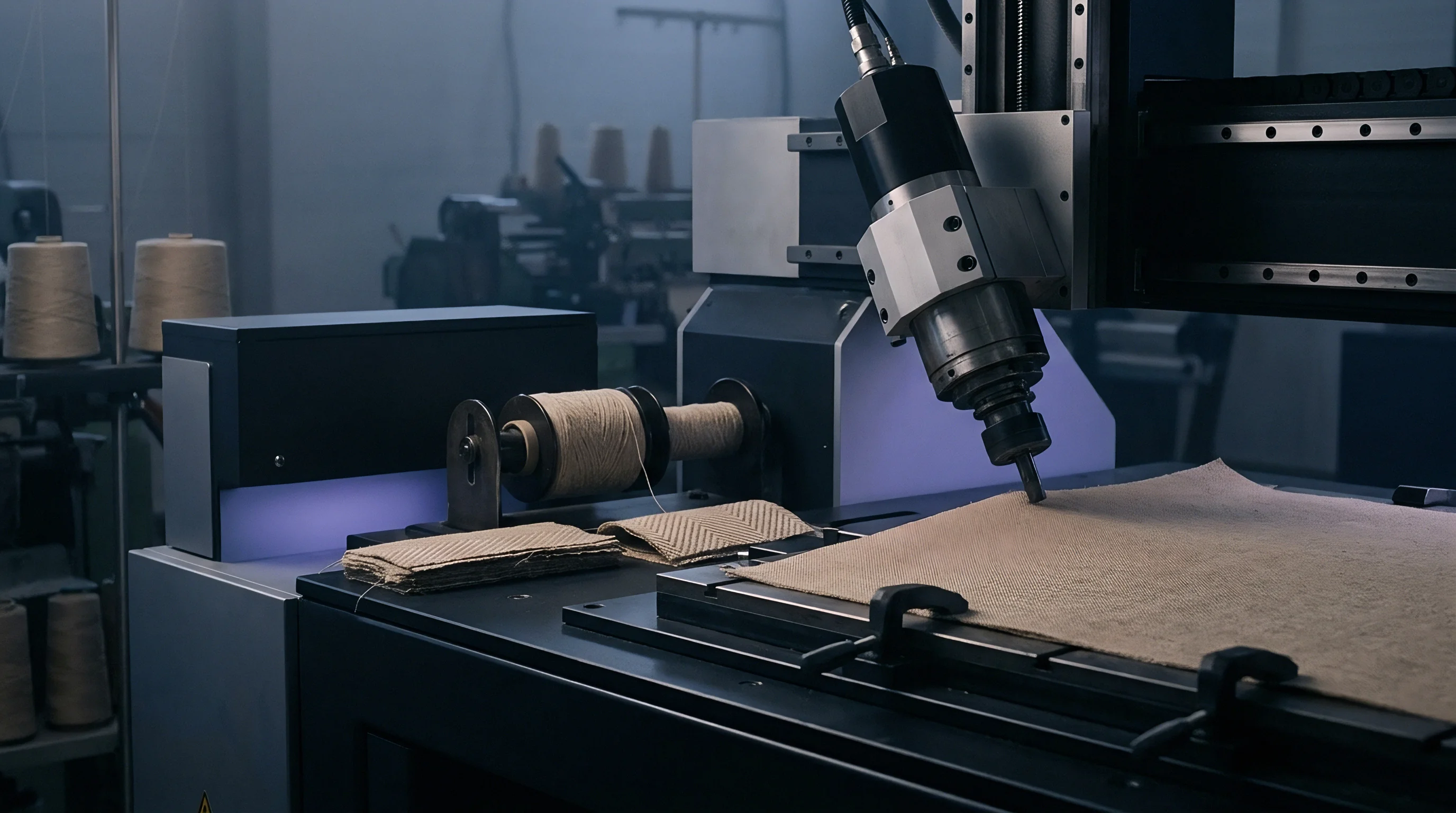
A physical limit is reached when spaces between warp ends equal the compressed diameter of inserted picks. At this stage, the fabric reaches full density, known as the jam limit. Inserting additional picks without reducing warp ends forces the fell to jump erratically, creating defects like fell pumping, wavy selvedges, and broken warp ends.
Plain woven setts bind earlier than twills.
Determining the true jam point for linen requires adjusted formulas. Ashenhurst rules, developed for wool and cotton, overestimate maximum density because they assume uniform yarn compressibility. Peirce equations give a closer theoretical estimate by accounting for yarn crimp angles and thread axes.
When warp and weft share the same diameter, plain weaves lock up when thread spacing equals the sum of the major axes of both flattened yarns.
| Model Formulation | Warp Sett (Ends/cm) | Filling Sett (Picks/cm) | Cover Factor (K) | Achievable Production Status |
|---|---|---|---|---|
| Ashenhurst Diameter Rule | 24.0 | 24.0 | 33.9 | Mechanical lockup on loom |
| Peirce Circular Jam | 22.5 | 22.5 | 31.8 | Excessive warp breakage rate |
| Love Racetrack Geometry | 20.5 | 20.5 | 29.0 | Marginal runnability under sizing |
| Empirical Shed Threshold | 18.5 | 18.5 | 26.2 | Stable commercial efficiency |
| Methods note: Calculations assume 50 Tex wet-spun flax yarn, 1.14 g/cm³ effective density, running on positive rapier looms at 380 picks per minute under controlled 65 percent relative humidity. | ||||

Will Pick Insertion Cease at Theoretical Saturation?
Mathematical models predict fabric locking long before modern rapier looms lose grip on the pick. In practice, yarn compressibility allows insertion beyond nominal limits, though at severe cost to fabric structure. Forcing extra picks into an overpacked shed creates extreme crimp instability: warp yarns bow out of plane, increasing greige cloth thickness and destabilizing the weft.
Longer twill floats slide deeper into crossovers.
Cover factor figures show why plain linen hits its limit so quickly. Cotton plain weaves regularly reach fractional cover factors of zero point eight five, or cotton cover values over twenty-eight. Linen plain weaves seldom pass a fractional cover of zero point seven six ~ or twenty-four on the cotton scale ~ without causing frequent loom stops.
Bast fibers cannot flatten sufficiently to make room for more picks.
Ashenhurst cloth geometry overstates flax sett capacity by omitting yarn flattening at interlace points.
Float Redistribution in High Count Twills
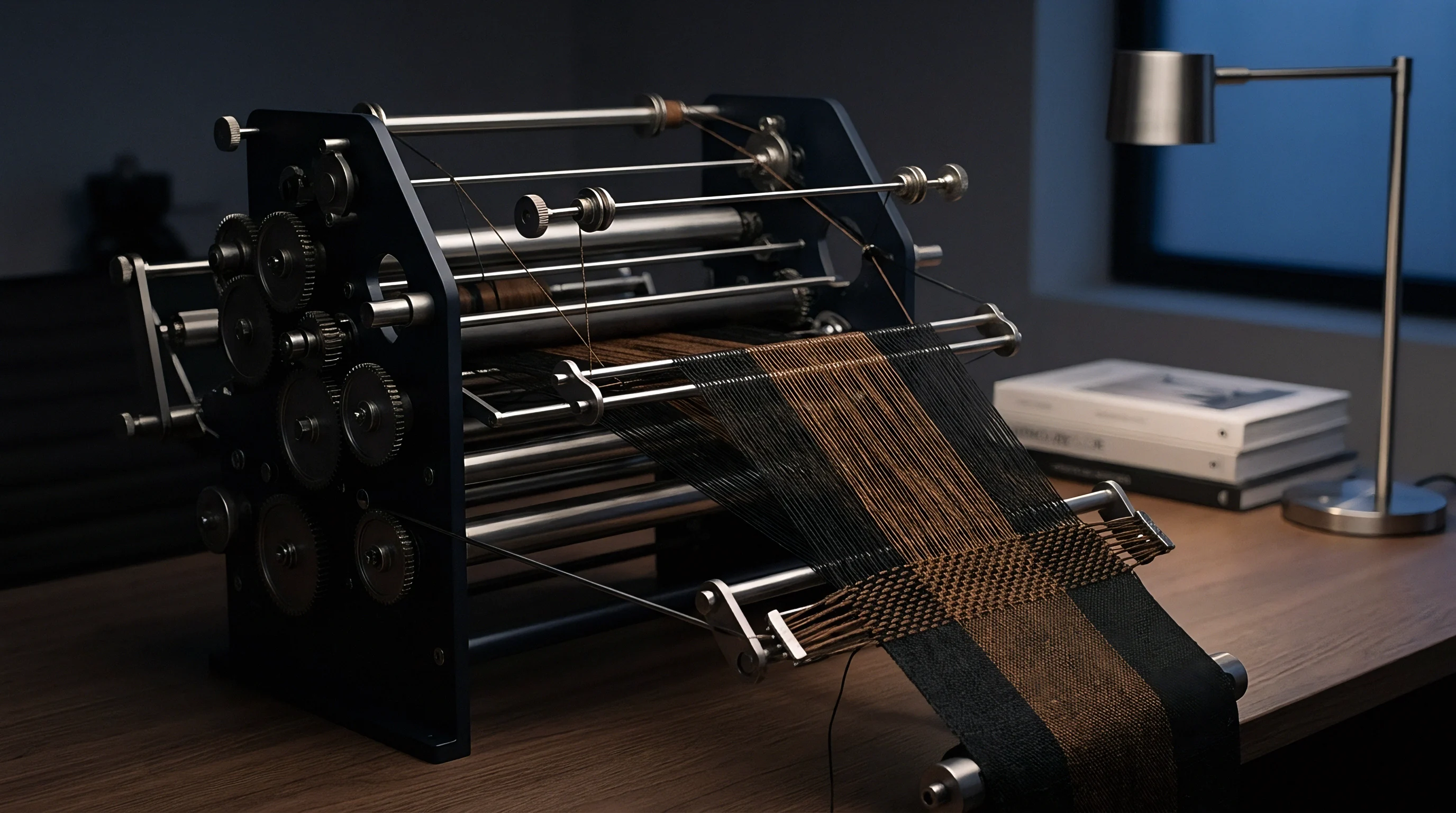
Extending yarn floats over multiple intersections reduces interlace nodes per unit area. In a two-up, two-down twill, each yarn crosses once every two picks, halving the interlace points compared to a plain weave. This cuts in half the friction points resisting beat-up impact.
Twill weaves allow significantly higher warp and weft densities. A thirty Lea linen yarn that locks up at nineteen picks per centimetre in a plain weave will run smoothly at twenty-six picks per centimetre in a two-up, two-down twill, and at twenty-nine picks per centimetre in a four-harness satin. Floats leave open pathways where adjacent yarns slide past each other instead of jamming edge-to-edge.
Will future micro-mechanical finishing models successfully predict the precise crossover point where crimp interchange yields to yarn destruction?


Abrasion
Frictional drag peels fibers from yarn cores during high-speed shedding. Every loom cycle pulls warp yarns through three main abrasion zones: warp stop drop wires, steel heald eyes, and reed dents. In dense setts, neighboring warp ends also rub against each other as harnesses cross, generating inter-yarn shear.
Repeated broken ends stop shedding completely.
Flax bundles peel easily under abrasion. Unlike cotton fibers, which have helical reversals that distribute friction evenly, flax fibrils run straight and stiff along the stem axis. Friction against steel reeds easily peels these outer fibrils back along the yarn core, forming small clusters known as fuzzballs, pills, or slubs.
- Fibril peeling shears outer bast bundles along the reed dents, generating lint piles that choke drop wires within three operating hours.
- Starting mark generation alters pick spacing after loom stoppage, leaving visible density bands that downgrade greige rolls under ASTM D5430 inspection.
- Warp end snapping severs yarns under peak beat-up compression, forcing machine halts and manual piecing.
- Selvedge ballooning pulls outer ends inward through differential crimp, pinching the warp line until harness eyes sever the yarn.
Drop Wire Friction and Heald Wire Wear
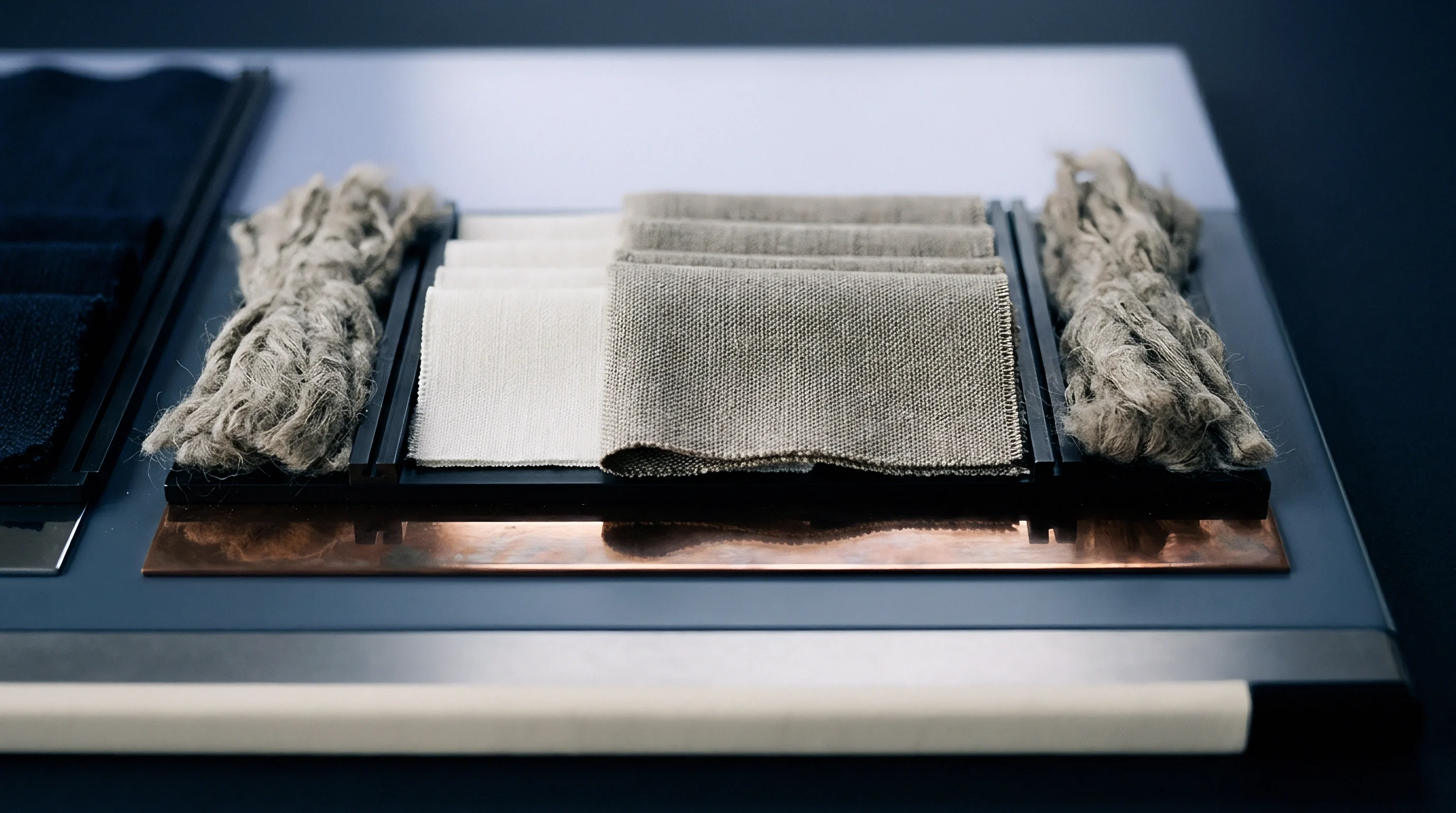
Repeated rubbing wears away sizing polymers, exposing bare cellulose to steel edges. As sett density rises, more ends must be packed into each centimetre of harness width. Standard frames can hold only so many heald wires per centimetre before the wires crowd, tilt, and pinch the passing warp threads.
Constant reed friction strips the bast fibers.
Exceeding sixteen ends per centimetre on a four-frame plain setup forces adjacent heald eyes to rub against passing yarn. Moving to eight or twelve harness frames spreads the wires over a deeper depth line and restores clearance. However, increasing harness depth requires back frames to travel further to open the shed, which increases cyclic tension on the warp.
- Lea count verification confirms yarn diameter consistency across roving lots using dry mass per unit length testing under ISO 2060 rules.
- Sizing pick-up validation audits modified potato starch solids content to guarantee bast cohesion without brittle strand behavior.
- Reed dent selection establishes air space between wires at fifty-five percent or higher, avoiding yarn pinching during reciprocal sley movement.
- Loom speed adjustment caps insertion rates at four hundred picks per minute to preserve yarn tensile integrity on rigid rapier equipment.

Sizing Formulations for High Sett Linen
Modified potato starches form protective surface films while remaining soluble enough for downstream desizing. Sizing linen is strictly a matter of surface cohesion. Cotton yarns absorb size into their cores to gain tensile strength, but crystalline flax bundles resist internal penetration.
Sizing agents must instead form a flexible outer coat that glues loose surface fibrils to the yarn core.
Flaking size creates dry dust around looms.
Weaving room humidity must stay between sixty-five and seventy percent at twenty-two degrees Celsius. If relative humidity drops to fifty percent, starch films turn brittle, shattering within the first few reed strokes and dropping white dust over the raceplate. Without that protective coating, bare flax bundles disintegrate under reed friction within hundred-metre runs.
Natural flax fibers shed surface fibrils under high-density beat-up conditions, driving up greige defect rates.


Reckoning
Weaving accounting balances loom allocation against linear production output. In high-density linen, capital cost ties directly to loom hours per metre. As pick counts approach geometric limits, operating speeds drop and warp breaks rise, turning high-margin fabrics into costly bottlenecks.
Frequent loom stops destroy shift productivity.
Operating a two-hundred-and-twenty-centimetre rigid rapier loom costs between twenty-two and thirty-four euros an hour, covering electricity, depreciation, weaver labor, and overhead. Weaving a twenty Lea plain linen at twelve picks per centimetre runs at five hundred picks per minute and ninety-two percent efficiency, producing twenty-three metres per hour. Increasing density to eighteen picks per centimetre drops speed to three hundred and eighty picks per minute to limit abrasion, while efficiency falls to seventy-four percent from frequent stops.
Slower running speeds consume valuable machine time.
| Pick Density (Picks/cm) | Loom Speed (PPM) | Running Efficiency (%) | Output (Metres/Hour) | Weaving Cost (€/Metre) |
|---|---|---|---|---|
| 12.0 | 520 | 93.0 | 24.18 | 1.16 |
| 14.0 | 480 | 89.0 | 18.31 | 1.53 |
| 16.0 | 430 | 84.0 | 13.54 | 2.07 |
| 18.0 | 380 | 74.0 | 9.37 | 2.99 |
| 20.0 | 320 | 61.0 | 5.86 | 4.78 |
| 22.0 | 260 | 48.0 | 3.41 | 8.21 |
Machine Efficiency at Elevated Pick Counts
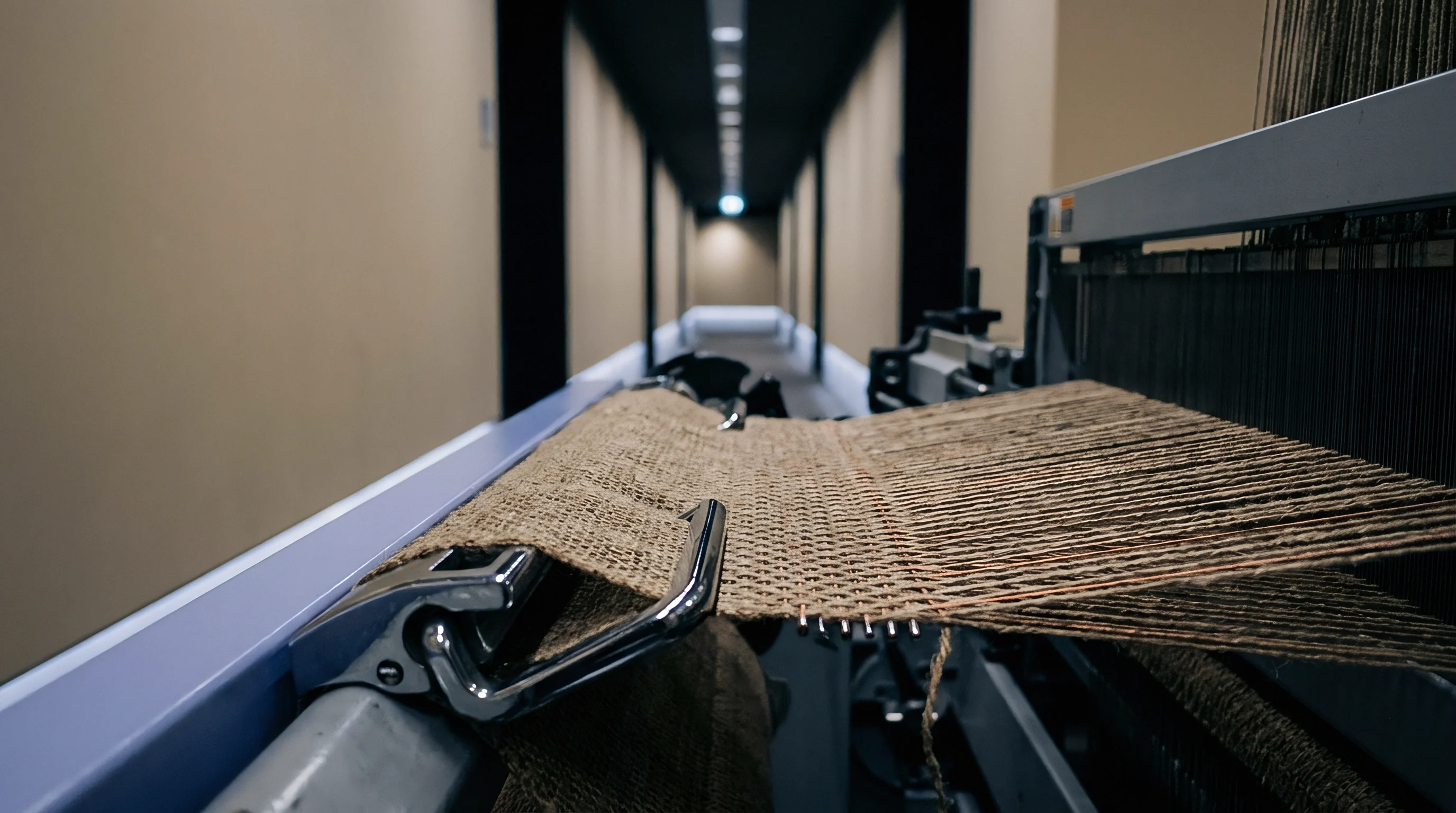
Loom speeds drop rapidly as pick density nears physical limits. A shop running moderate linen counts assigns one weaver to twelve machines. When dense linen contracts enter production, warp breaks and weft stops increase from one point two per hour to eight or nine per hour, making it impossible for one weaver to manage twelve looms.
Heavy setts multiply operating costs per loom.
Weaver assignments drop to four machines per operator, tripling direct labor costs per metre. Down time builds up as looms wait for operators to tie in broken flax ends behind drop wires. Every stopped loom continues incurring overhead, facility amortization, and climate-control costs.
Production schedules slide outward under constant downtime.
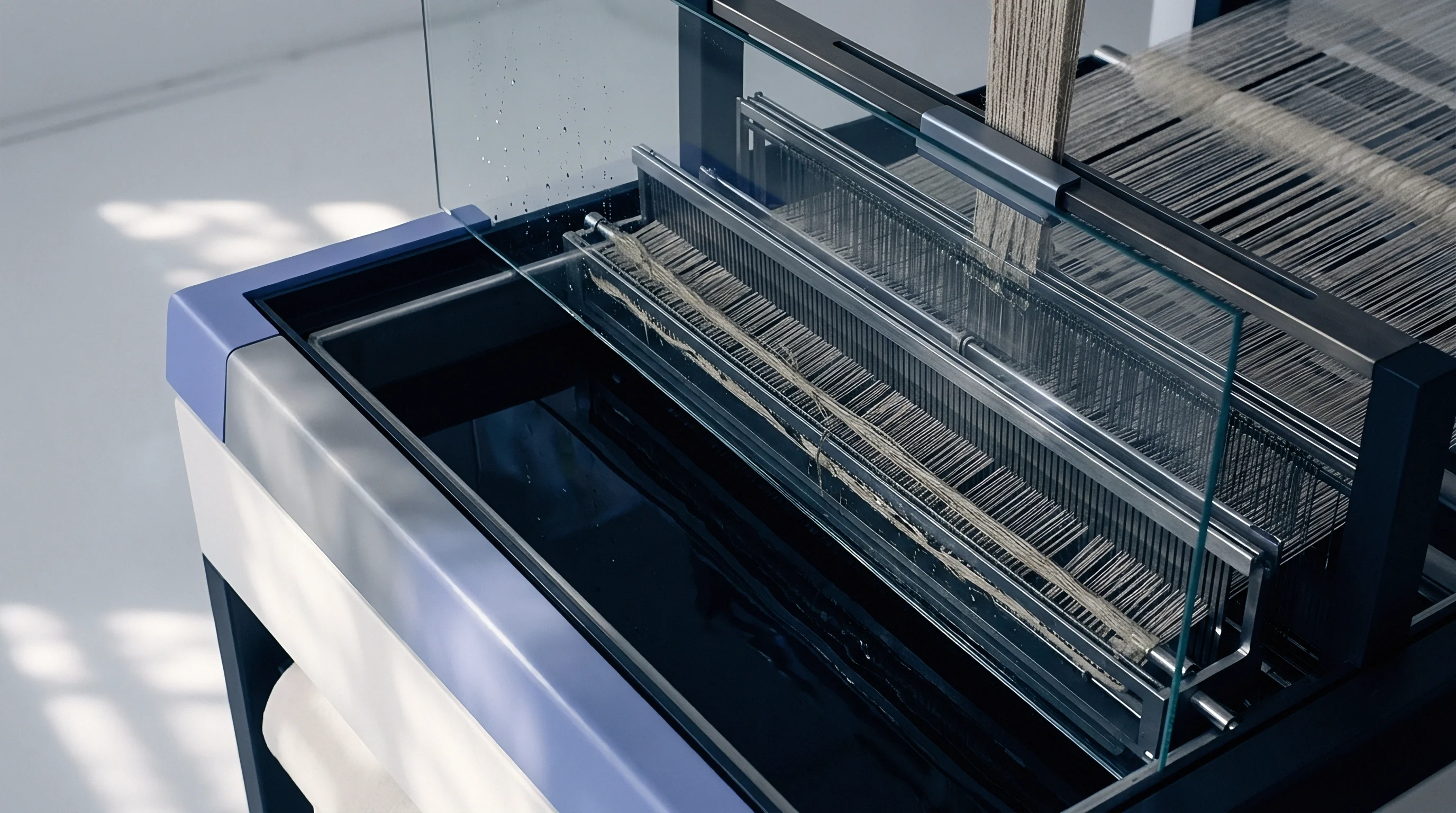
Landed Cost Models per Finished Metre
Calculating landed costs from raw yarn and loom hours requires accurate tracking of fell advance. Technical linen specifications often call for dense thread counts to achieve wind resistance or a firm handle. However, adding four picks per centimetre to an eighteen-pick plain weave increases yarn mass by twenty-two percent while doubling weaving costs.
Higher pick densities sharply elevate unit costs.
Sourcing contracts require precise pick-count tolerances linked to standardized test methods. Under ISO 7211-2, filling density must remain within plus or minus three percent of specification across entire rolls. If a loom operator reduces pick counts by five percent to relieve beat-up pressure, fabric weight, opacity, and air permeability drop out of spec.
A purchase order specifying ISO 7211 compliance with five percent pick tolerance forces mills to absorb greige density penalties.
Contracts referencing ISO 7211-2 and tying density variations to price deductions prevent unannounced reductions in pick count.