Reconciling Moisture Regain Deviations in Industrial Caustic Scoured Flax Packages
Reconciling scoured flax regain deviations requires adjusting dock weights to bone-dry fiber mass plus statutory 12 percent commercial allowance per ISO 6741.
Reconciling scoured flax regain deviations requires adjusting dock weights to bone-dry fiber mass plus statutory 12 percent commercial allowance per ISO 6741.

Commercial mass determination from desorption testing requires converting anhydrous dry mass to invoice weight using standard regain percentage allowances.

Intake specifications for coarse dry ring spinning demand dew-retted tow with moisture below twelve percent and shive content under two percent by weight.

Determining flax metric number requires oven-dry gravimetric cut-and-weigh testing under ISO 2370 to establish true bundle linear density before spinning.

Buoyancy corrections adjust scutched flax microbalance readings for shifting air density, preventing systematic tex errors and commercial lot mass discrepancies.

Standardize bast fiber mass by calculating invoice weights from oven-dry determinations at 105 degrees Celsius adjusted to statutory 12 percent regain allowances.

Non-cellulosic pectin loss lowers flax monolayer moisture sorption capacity and narrows sorption hysteresis while enabling finer wet-spun yarn counts.

Correcting hackled line linear density equations for desorption hysteresis prevents unearned water weight from skewing yarn counts and commercial mass invoices.

Standard hackled flax linear density multiplies bone-dry sliver mass by 1.12 to enforce the twelve percent statutory moisture regain baseline per meter.

Commercial regain calculations correct long flax sliver invoice mass to a twelve percent standard moisture level using validated oven dry weight testing.

Flax moisture disputes require oven-dry testing under ISO 6741, enforcing financial adjustments when measured regain exceeds contractual deadbands by over 0.50%.

Hackled flax sliver mass determination combines exact cut-length gravimetric sampling with oven-dry correction to verify linear density and commercial invoice mass.

Invoicing for international linen shipments adjusts scale weight to commercial mass using oven-dry testing and a standardized twelve percent moisture regain.

Commercial regain standards fix raw scutched flax at 12.00 percent, converting certified oven-dry mass into legally binding invoice settlement weights.

Reconciling flax yarn ledgers requires converting physical weights to standard commercial dry mass to strip out moisture shifts and process waste loss.

Cut-and-weigh gravimetric testing on conditioned bundles establishes the baseline tex that determines drafting limits, spinning counts, and invoice weights.

Inspect linen count by wrapping conditioned lea skeins on calibrated reels under controlled tension to measure linear density against commercial regain values.

Chinese dry spun tow invoices distort commercial mass by applying standard moisture regain to raw dry weight without deducting added batching oils or tube tare.

Standard commercial mass in scutched flax trading converts oven-dry weight to invoice mass using the agreed twelve percent moisture regain factor under ISO 6741.
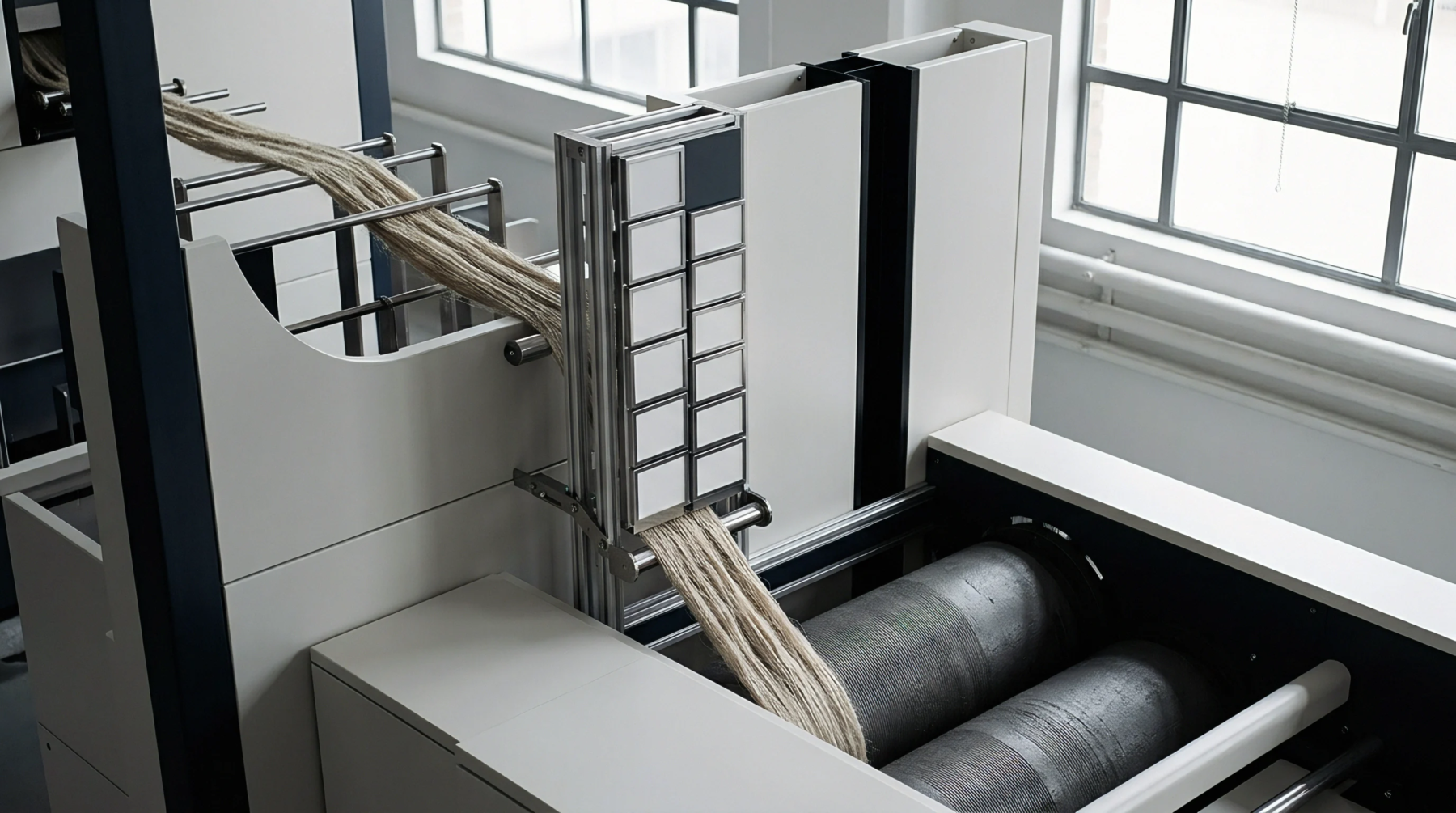
Wet spun linen yarn conversion ratios from hackled sliver range from 68 to 82 percent, governed by chemical boil mass loss and wet spinning drafting waste.

Flax hackling yield hinges on sorption history; desorption-path fibers hold higher internal moisture, cutting brittle breakages and shifting line outturn by 3%.

Non-equilibrium container shipping drives sharp radial moisture gradients in dense flax bales, degrading hackling yield and distorting invoiced fiber weight.
Expertise is a utility, not a secret. sentiention™ publishes its working knowledge as open reference: intelligence layer covering the materials it sources, the markets it enters, and the reference that serves both.