Flax Fiber Extraction Methods and Elementary Bundle Separation
Elementary bundle separation balances pectin removal against cellulose damage to fix hackling yield and the finest spinnable wet-spun yarn count.
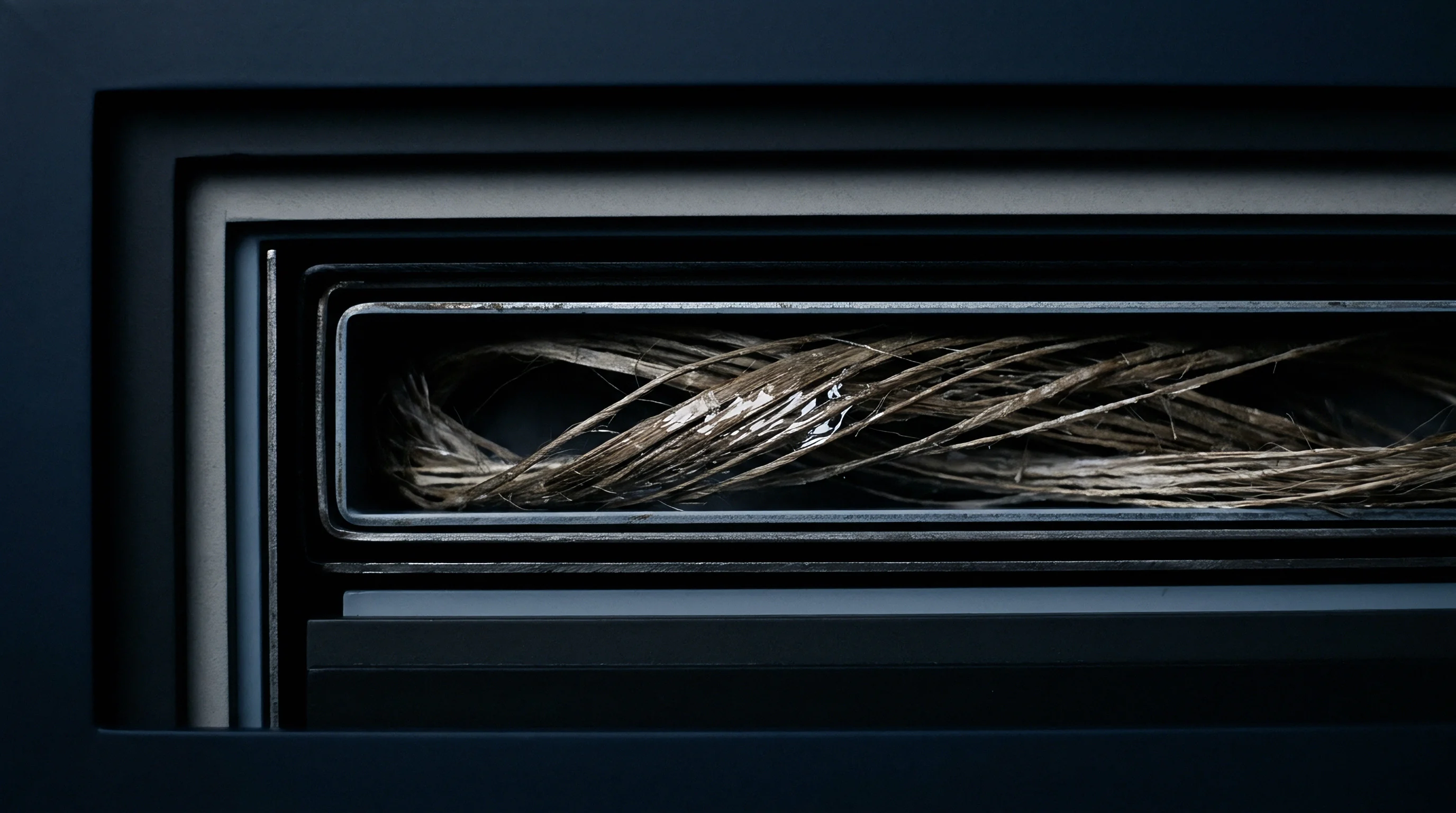
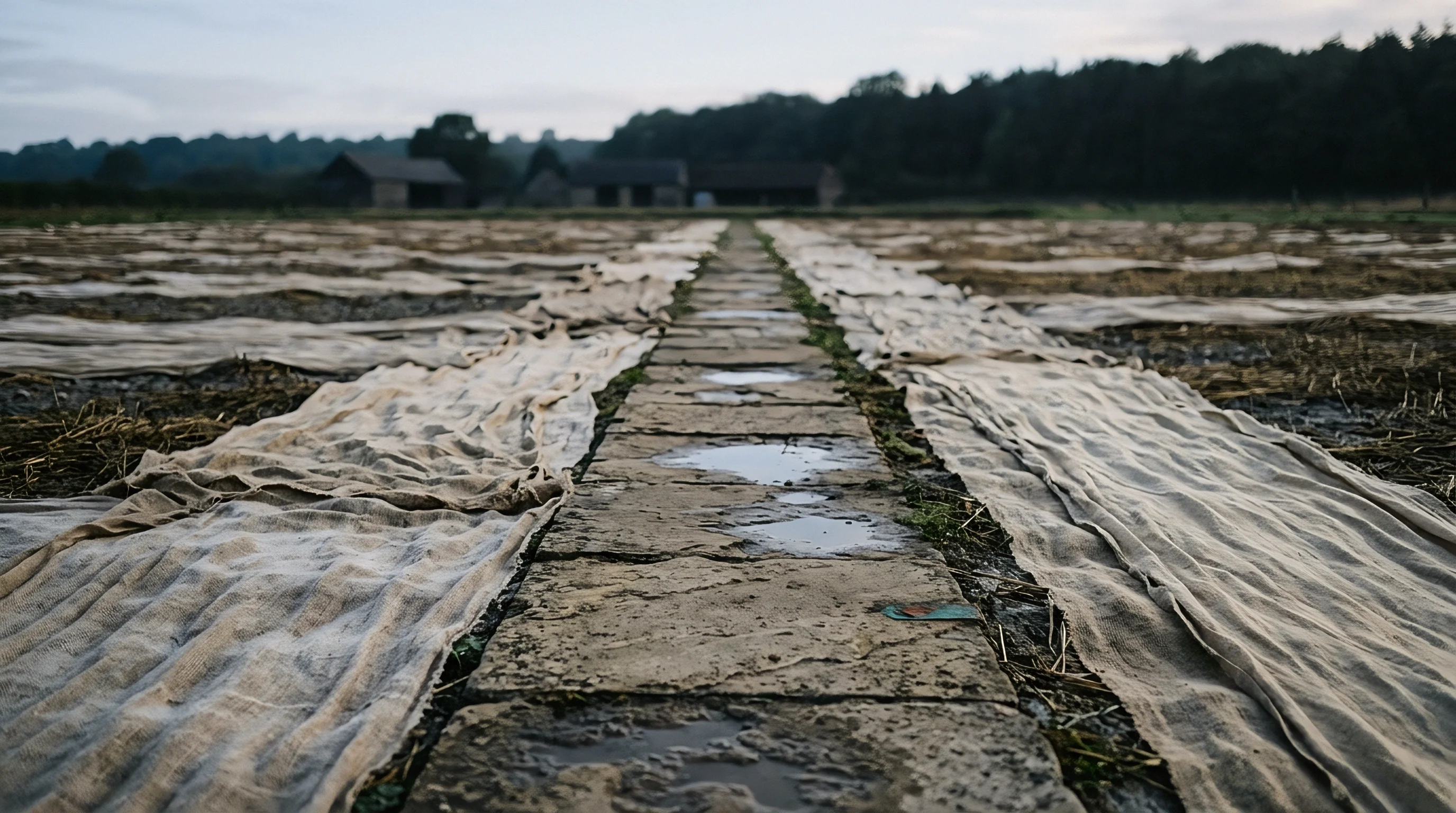
Stalk
In Linum usitatissimum, bast bundles develop in the phloem tissue between the outer epidermis and the inner woody core. Raw bast stems hold defensive resins. During vegetative growth, these form concentric rings of twenty to fifty composite bundles running from the root collar up to the flowering branch points.
A mature plant measuring eight hundred to one thousand millimetres in height produces thirty to forty individual filaments glued along their lateral faces by an adhesive pectin gel. Spinners treat these composite groups as line fibre, yet spinning frames work against the linear density of individual segments rather than broad strips of intact bark. Line yield on a delivery therefore comes down to how cleanly mechanical action cracks the surrounding cuticle without shattering the crystalline cores inside.
Stem cross-sections dictate every subsequent extraction step. In European fiber cultivars like Suzanne, Eden, and Bollica, cross-sections show an outer wax cuticle, a single-cell epidermis, and a parenchymatous cortex enclosing the ring of bast bundles. At the center sits a heavily lignified xylem cylinder around a hollow or pithy core.
Breaking and scutching machinery is set to shear this non-cellulosic boundary mechanically while keeping secondary cell walls whole. Feeding unretted straw straight into decorticating rolls breaks the brittle core into shive, but intact pectins keep those woody fragments glued to the bast ribbons, degrading sliver purity immediately.
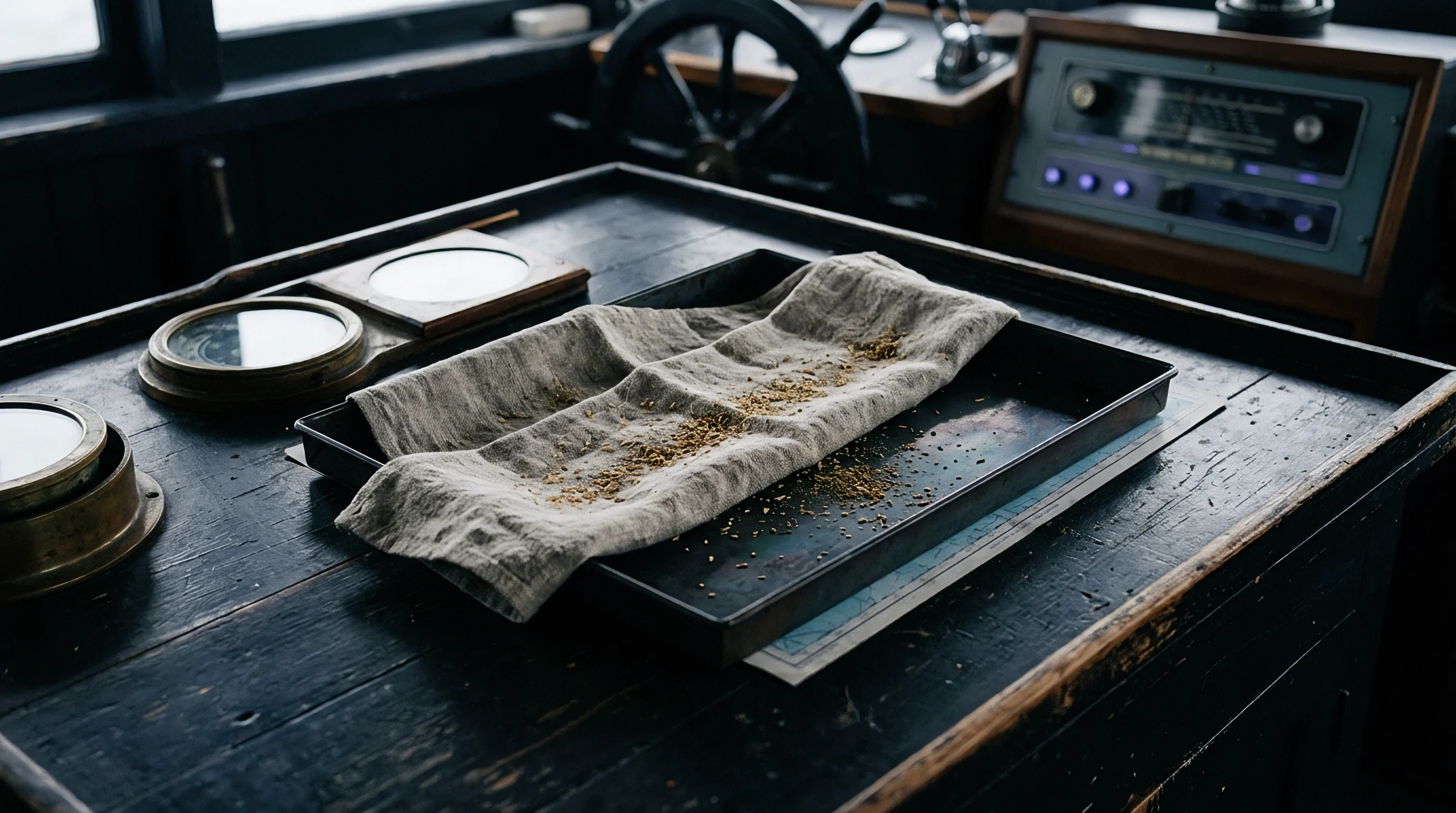
Pectin Middle Lamella and Cortex Architecture
The intercellular cement in the stem phloem is largely a complex polysaccharide matrix binding adjacent walls. Acidic rhamnogalacturonan-I backbones, substituted with neutral arabinan and galactan side-chains, form an insoluble hydrophilic gel between elementary cells. Divalent calcium cations bridge unesterified carboxyl groups across neighbouring polygalacturonate chains, creating rigid egg-box junction zones that resist shear.
Across the cortex-bast interface in unretted straw, cohesive bond strength exceeds seven megapascals. Recovering spinnable filament means breaking down this crosslinked carbohydrate glue without cutting the beta-one-four-glucosidic chains inside the structural microfibrils.
Across the parenchymatous middle zone, homogalacturonan domains show three distinct degrees of methylesterification that shift as the crop matures. Highly esterified pectins resist polygalacturonase, while blocks of de-esterified residues remain open to enzymatic and microbial digestion. Hemicellulosic xyloglucans and glucomannans run throughout this matrix, tying the pectic network directly to primary wall microfibrils.
Peeling this layer mechanically without retting produces coarse, ragged ribbons carrying up to thirty percent non-fibrous cortical residues by mass.

Cell Wall Lignification and Bundle Geometry
How elementary filaments sit within each phloem cluster sets the ceiling on spinnable yarn count. The individual cells are polygonal or hexagonal in section, twelve to twenty-eight micrometres across and fifteen to fifty millimetres long. Their thick secondary walls are ninety to ninety-five percent crystalline cellulose laid down in steep spirals angled at eight to ten degrees relative to the fibre axis.
Lignification in this secondary wall is slight ~ rarely above two percent by dry mass in textile-grade flax. Phenolics concentrate instead in the middle lamellae and adjoining xylem, where lignin levels reach twenty-four to thirty percent.
Bundle dimensions also change along the height of the plant. Basal sections yield thick bundles with coarse walls and wide central lumina, whereas apical sections produce slender, pliable filaments with much narrower cross-sections. Spinning operations require consistent lateral splitting over the entire stem length.
When coarse butt bundles fail to divide during decortication and hackling, drafting irregularities follow, appearing as slubs and thick faults on capacitive yarn testers.
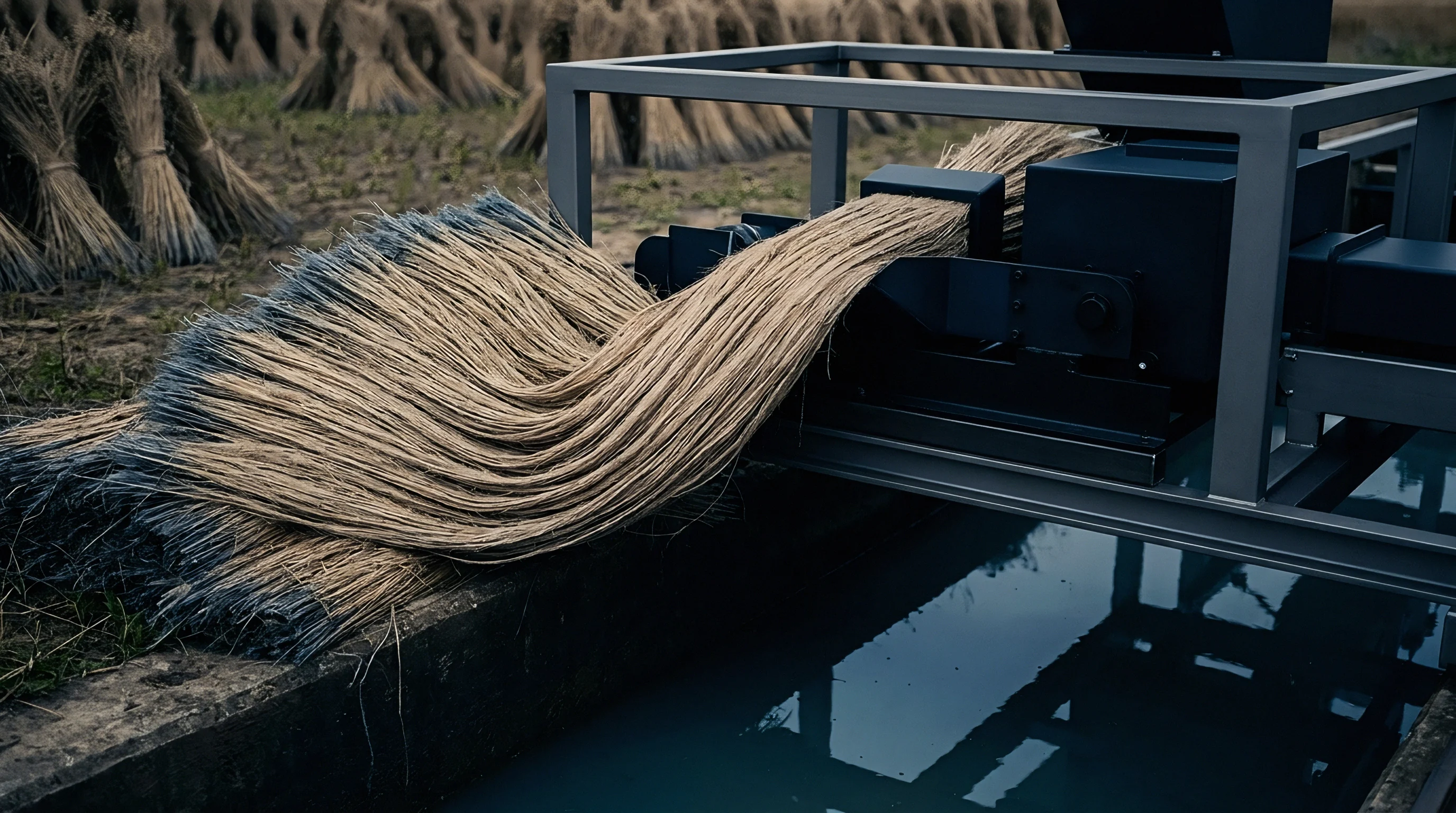
Ferment
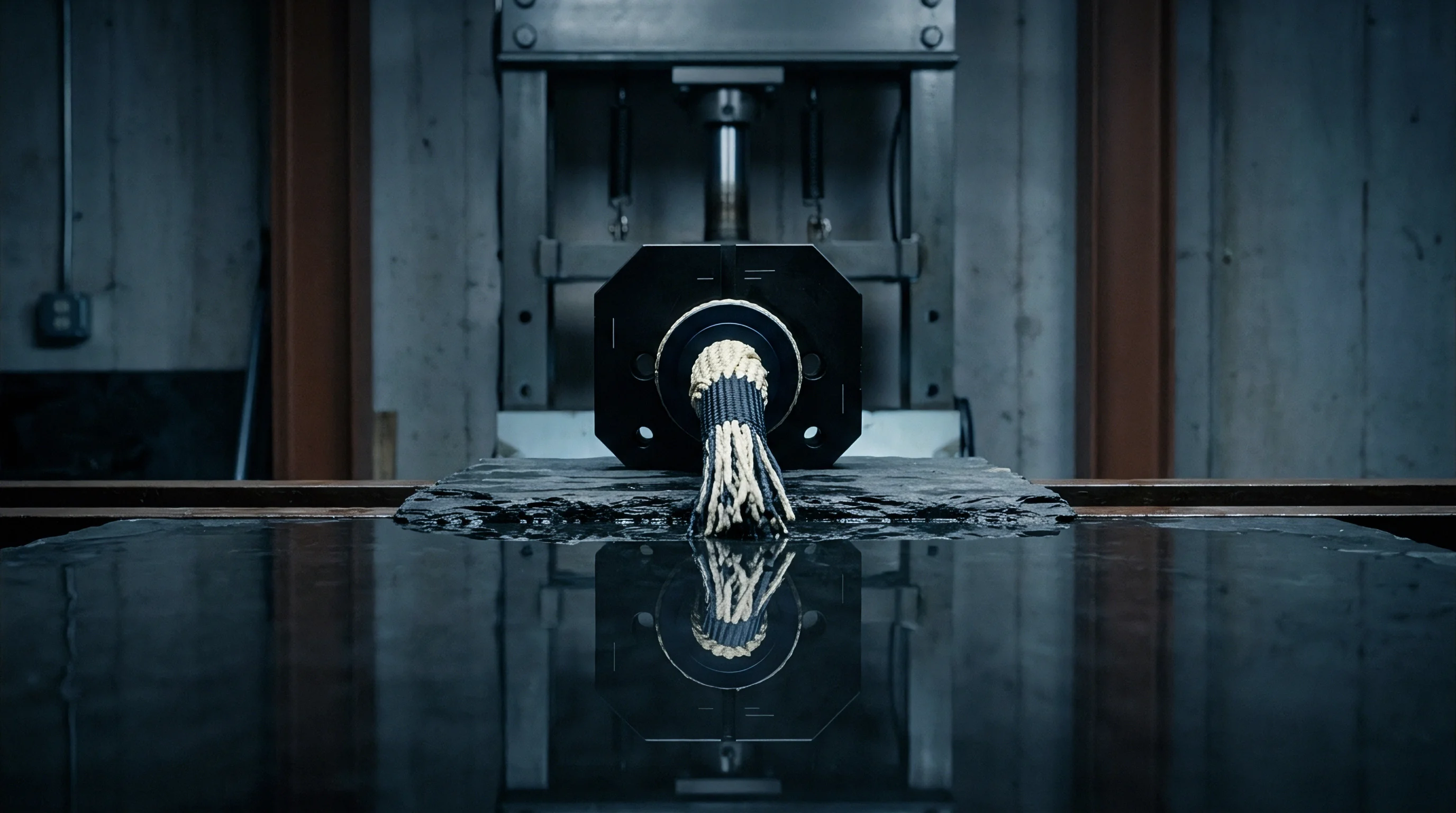
Biological digestion of the inter-bundle carbohydrate matrix establishes the boundary between textile-grade line fibre and coarse tow. Retting dissolves the parenchymatous tissue and pectin middle lamella, enabling clean mechanical separation of bast filaments from the woody xylem during subsequent breaking and scutching operations. Field operators track microbial progress by feel and colour shift, trying to clear the intercellular glue before fungi attack the primary and secondary cellulose walls.
When straw is under-retted, scutching rollers strike rigid bark and snap the stems early, shattering bast ribbons into short fragments that fall through turbine grates as low-value waste.
Under ambient dew retting at eighteen degrees Celsius, galacturonic acid content drops from thirty-eight milligrams per gram of dry stem tissue to nine milligrams over twenty-four days.
Over-retting rots the structural glucan. Excessive colonization by aggressive cellulolytic fungi causes pinhole pitting on elementary cell walls, reducing the ultimate tensile strength of the recovered bast by thirty to sixty percent. Industrial sourcing contracts specify retting degrees between four and six on the historical decimal scale, corresponding to precise ranges of residual pectin mass fraction and cellulose degree of polymerization.
Moisture Regimes and Fungal Colonization
In dew-retting swaths across Normandy, Flanders, and northeastern China, aerobic saprophytes drive the breakdown. Fungal species including Cladosporium herbarum, Epicoccum nigrum, and Alternaria alternata colonize damp outer epidermis within four to six days after pulling. Ambient relative humidity above seventy-five percent and repeated diurnal condensation cycles stimulate the mycelia to enter stomatal openings, releasing polygalacturonases and pectate lyases into the cortical tissues.
Extended drought halts fungal enzyme secretion, leaving straw under-retted on upper surfaces while soil contact preserves localized moisture, generating severe lot-to-lot color and tenacity divergence.
Field swaths require mechanical turning through tractor-mounted flippers to homogenize microbial access across the top and bottom layers of the stem bed. Incomplete turning yields double-sided straw, where ground-facing stems suffer localized over-retting and air-exposed stems retain intact pectin glues. The resulting scutched sliver exhibits uneven dye uptake during wet processing, leading to stripiness in plain woven apparel cloth.
| Retting Method | Duration Cycle | Residual Pectin Mass | Elementary Tenacity | Metric Bundle Fineness | Effluent Load COD |
|---|---|---|---|---|---|
| Dew Retting | 18 to 32 days | 1.8 to 2.4 percent | 48 to 56 cN/dtex | Nm 180 to 220 | 0 g/kg straw |
| Warm Water Retting | 72 to 96 hours | 1.1 to 1.5 percent | 58 to 68 cN/dtex | Nm 240 to 310 | 45 to 65 g/kg straw |
| Enzymatic Retting | 12 to 24 hours | 0.8 to 1.2 percent | 52 to 62 cN/dtex | Nm 280 to 360 | 20 to 35 g/kg straw |
| Chemical Scouring | 2 to 4 hours | 0.4 to 0.7 percent | 34 to 42 cN/dtex | Nm 320 to 440 | 80 to 120 g/kg straw |

Liquor Circulation and Bacterial Polygalacturonase
Controlled anaerobic immersion retting eliminates environmental weather variables through heated water tanks running at thirty to thirty-six degrees Celsius. Anaerobic endospore-forming bacteria, predominantly Clostridium felsineum and Clostridium saccharobutyricum, multiply rapidly within the warm aqueous liquor. These bacilli synthesize extracellular endo-polygalacturonases that hydrolyze unesterified alpha-one-four-D-galacturonan linkages, clearing the inter-bundle middle lamella within eighty hours.
Warm water retting produces lustrous, pale blonde long line fibre possessing superior tenacity compared to weather-beaten dew-retted material. High biological oxygen demand in discarded retting liquor has led municipal regulations across Western Europe to restrict classic river and tank immersion systems.
Modern industrial tanks implement closed-loop bio-reactors with forced liquor filtration, oxygenation buffers, and targeted enzyme dosing. Formulations containing purified pectate lyase derived from Bacillus licheniformis operate at pH 8.0 to 8.5 and fifty-five degrees Celsius. These enzymes cleave alpha-one-four-galacturonosyl bonds through trans-elimination without degrading the adjacent structural cellulose microfibrils.
Industrial adoption remains sensitive to enzyme consumption costs and water recirculation energy overheads.
Improper microbial progress generates specific structural defects across the recovered lot:
- Cortical Gumming leaves thick ribbons of parenchymatous bark bonded to outer bast walls, resisting removal during turbine scutching.
- Cellulolytic Pitting occurs when prolonged saprophytic exposure allows Chaetomium globosum to hydrolyze beta-glucan polymers, causing brittle yarn fractures under tensile load.
- Heterogeneous Retting Bands result from uneven straw swath density in dew fields, creating banded shading differences that resist chemical bleaching in yarn packages.
- Anaerobic Putrefaction develops in stagnant, unbuffered tank liquor when proteolytic bacteria attack the filament core, leaving a dull, matte grey surface lacking standard commercial lustre.
Failure to halt microbial digestion before fungal hyphae penetrate the inner secondary cell walls reduces hackling line yield by up to eight percent, turning potential high-count spinning material into discounted carding tow.

Breaker
Mechanical decortication converts retted flax straw into separated scutched line and broken woody shive. Conditioned straw enters the breaking unit at a controlled moisture equilibrium of ten to twelve percent. Stems passing through pairs of reciprocating fluted metal rollers experience high transverse bending and compressive shear stresses.
Shive fragments cling to raw cellulose. The flutes crack the rigid inner xylem cylinder every two to four millimetres while leaving the flexible phloem bundles unbroken, loosening the boundary between wood core and peripheral bast ribbons.
Mechanical decortication stripping speed directly governs the proportion of broken line fragments swept into the tow collector.
Turbine breaking lines run straw layers through successive roll passes with progressively finer flute pitches. Initial rolls use broad teeth turning at low surface speeds to create primary fractures in the stem. Subsequent pairs use deeper, narrower flutes running faster to shatter the woody core without disturbing parallel bundle alignment.
If straw enters the breaking rolls at moisture levels exceeding fourteen percent, the damp xylem core deforms plastically rather than shattering cleanly, forcing the scutching turbines downstream to strike the material with destructive kinetic force.

Fluted Roll Pressures and Wood Shatter
Precision pneumatic cylinders regulate the normal load applied across the upper fluted rollers of the breaker bed. Contact pressures range from 0.4 to 1.2 megapascals depending on stem diameter distributions and retting degrees. Insufficient roller pressure produces incomplete xylem fracture, leaving broad shive plates attached to the bast that resist subsequent turbine clearance.
Excessive normal force crushes the bast bundles transversely, inducing structural dislocations known as kink bands across the elementary cell walls. These micro-compressive defects serve as primary fracture initiation points during spinning drafting passes.
Flute profiles follow involute or cycloidal curves machined from hardened tool steel. As straw ribbons transition between counter-rotating flutes, the localized curvature forces the outer bast layer into tension while placing the inner woody core into compression. Because lignified xylem exhibits low ultimate tensile strain compared to bast cellulose, the core fractures into polygonal fragments measuring one to three millimetres in length.
Clean separation allows eighty percent of the fragmented shive to dislodge by gravity between the roller table guide grates.
Can Mechanical Decortication Replace Traditional Scutching?
Stand-alone decorticators utilizing high-speed pinned drums or aggressive hammer mills separate bast ribbons from unretted or partially retted green straw without biological retting. These mechanical installations process high volumes of industrial seed flax or unretted textile straw, outputting disordered, short-staple bast slivers suitable for cottonized rotor spinning or composite reinforcement. Severe shear impacts break the longitudinal continuity of long line bundles, transforming the delivered output into irregular tow configurations holding ten to fifteen percent residual shive impurities.
Textile mills requiring wet-spun counts beyond forty metric number reject hammer-mill decorticated material due to disordered bundle orientation and residual cortical pectins. High-speed spinning frames demand parallel scutched line holding minimum staple lengths of five hundred millimetres with intact bundle continuity from root to tip. Mechanical decortication alone cannot separate elementary bundles to the fineness levels required for fine shirting or lightweight apparel linen.
Turbine Beater Geometry and Shive Eviction
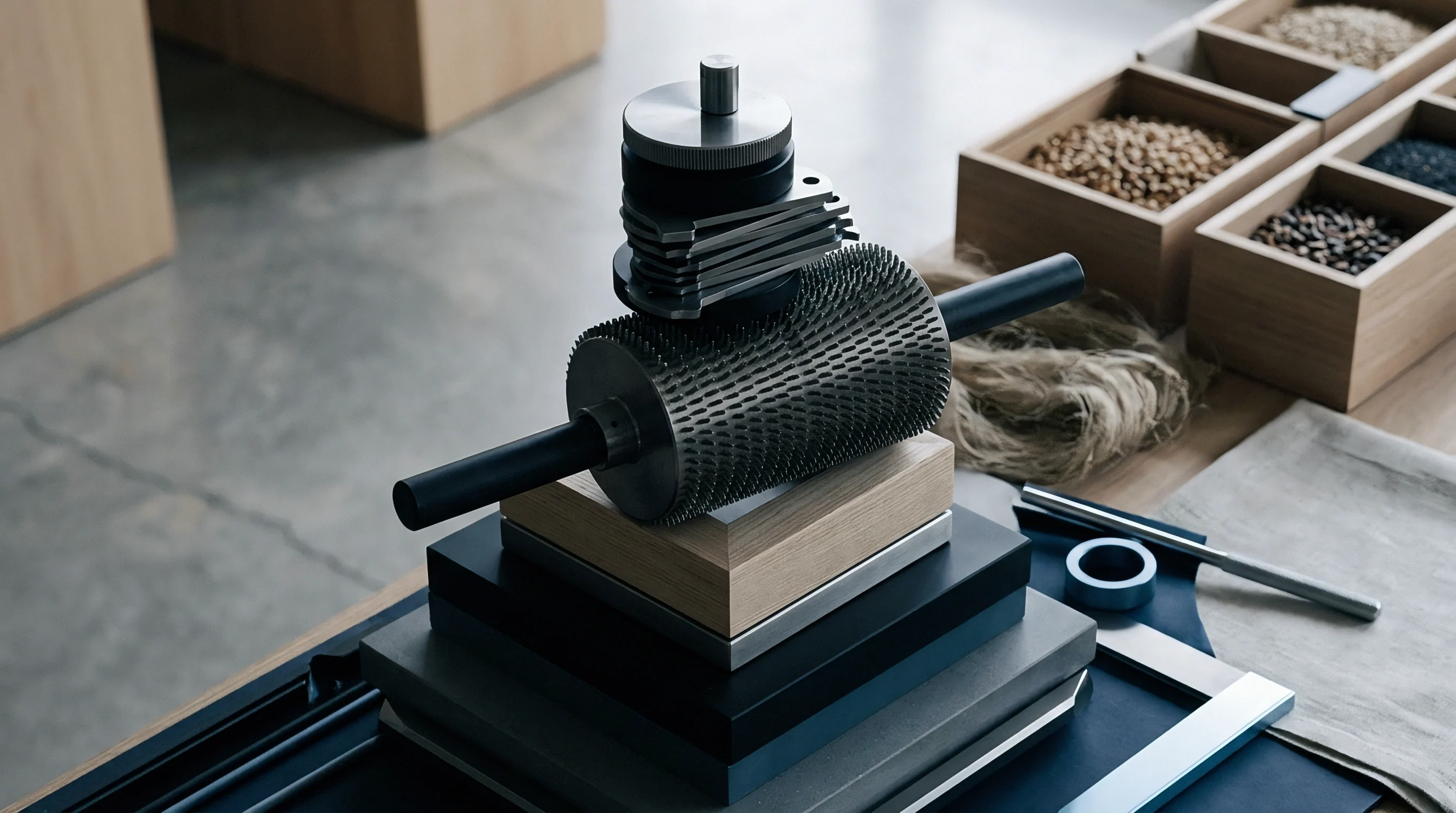
Scutching turbines strip residual wood fragments from broken straw ribbons using rotary scraping drums fitted with axial steel or polymer blades. Paired turbines clean the root ends and tip ends sequentially. Clamping rubber belts grip the central section of the straw bed, presenting the overhang to the rotating blades of the first turbine.
Rotating at one hundred eighty to two hundred forty revolutions per minute, the beater blades strike the hanging straw against adjustable stator grates, beating out the shattered shive and loose tow fragments through centrifugal ejection. Harsh beaters snap the longest tips. A second turbine reverses the clamping orientation, cleaning the previously clamped central and root segments.
Evaluating scutched output on the receiving table follows a rigorous mechanical qualification sequence:
- Inspect the physical parallel alignment of the scutched strick across the sorting table, ensuring that root ends remain cleanly leveled without crossing.
- Assess residual shive mass fraction through gravimetric analysis, rejecting lots exceeding two and a half percent un-evicted wood particles by clean dry mass.
- Measure the ratio of recovered long scutched line to short scutching tow, checking that the line recovery fraction maintains a minimum forty-eight percent threshold relative to total stripped fibre mass.
- Verify tensile resilience by manually bending a representative five-gram bundle around a five-millimetre mandrel, observing whether individual bundles flake away cleanly or generate brittle transverse fractures.
High shive content is frequently attributed to uneven weather during late autumn swathing, though excessive roll clearances and worn beater plates on the turbine contribute just as heavily to incomplete shive eviction.
Comb
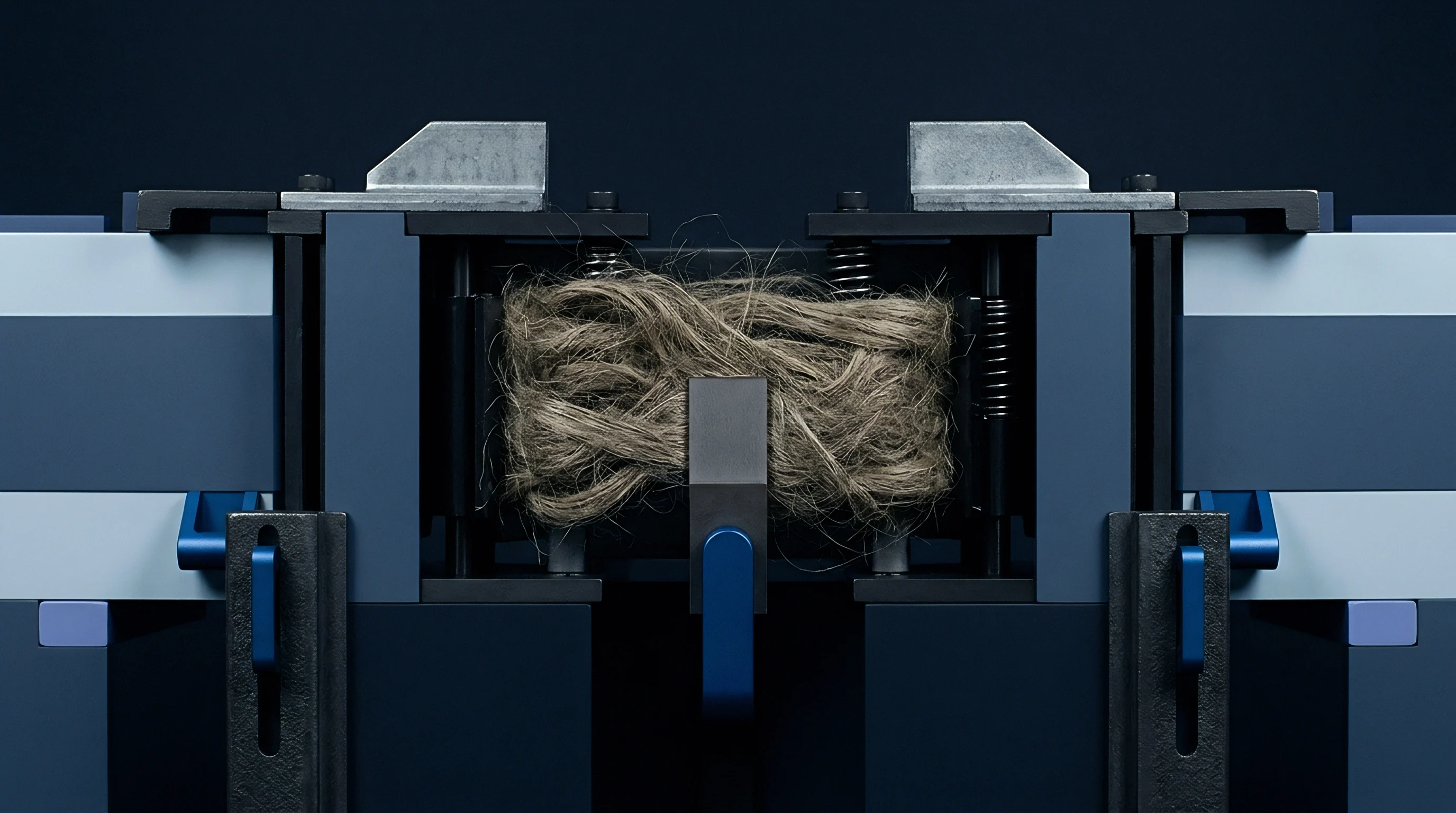
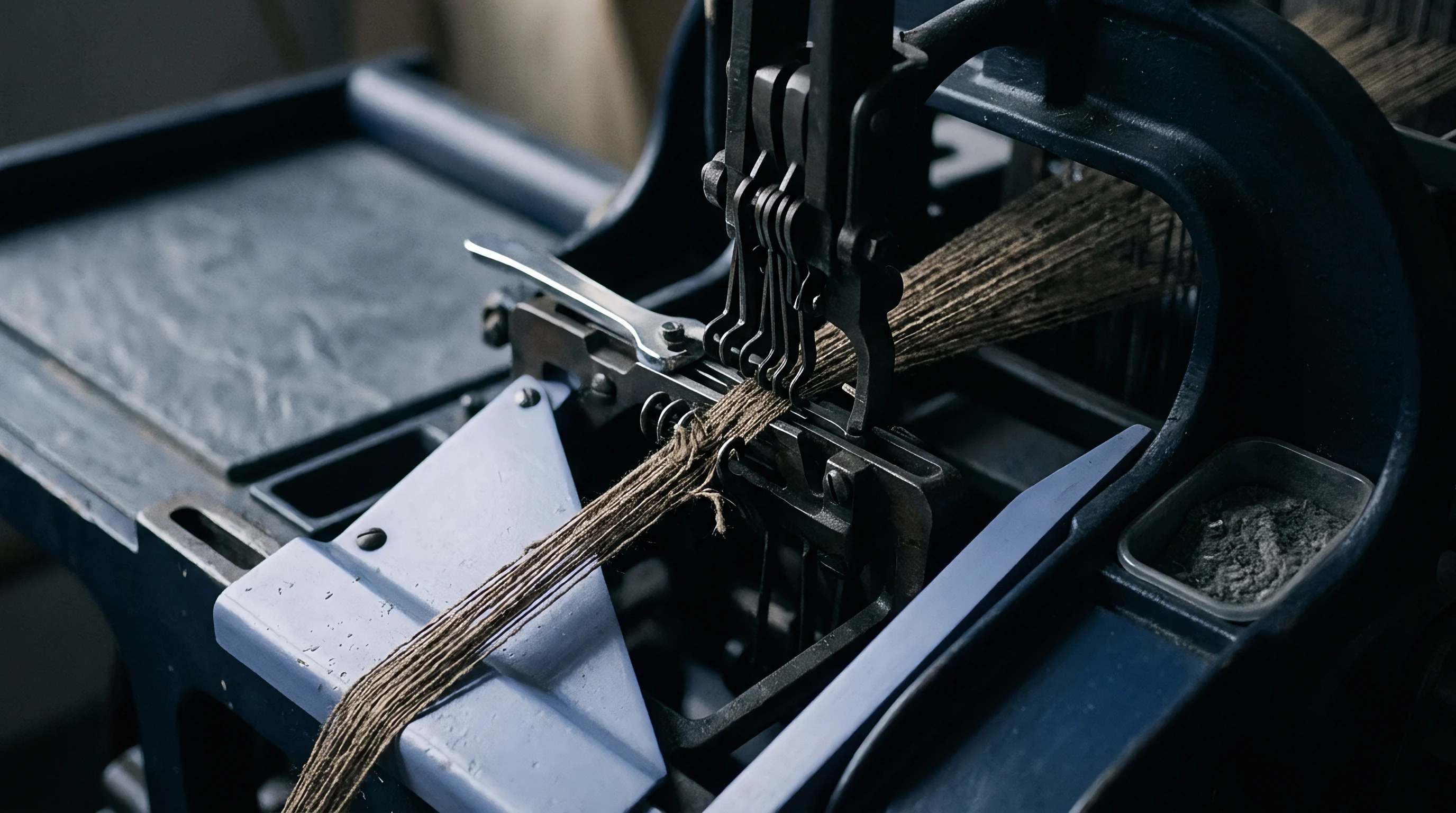
Hackling operations divide broad scutched line ribbons into fine, spinnable elementary and technical bundle groups. The raw scutched strick arrives as coarse ribbons holding linear densities between ten and twenty kilotex. Hackling machines comb these bundles through advancing fields of hardened steel pins, progressively splitting the intercellular pectin middle lamellae along the natural longitudinal planes of the phloem tissue.
Clean extraction preserves long line fibers. The mechanical combing action simultaneously extracts tangled, short, or broken fibers as hackled tow, aligns long line bundles into parallel orientations, and removes any micro-shive fragments surviving the scutching turbines.
Dark grey cast in scutched line indicates fungal over-digestion of the outer secondary cell walls.
Industrial hackling frames employ vertical sheets of moving comb bars carrying pin densities that escalate from one pin per centimetre on initial entry bars up to twenty-eight pins per centimetre on the finishing field. The mechanical action splits the lateral bonds between adjacent elementary filaments without fracturing their longitudinal secondary walls. When comb penetration speeds run too high or comb angles are set incorrectly, long bast fibers snap, shifting expensive long line stock into lower-priced hackling tow.

Pin Density Gradients and Division Ratios
Graduated pinning fields split bundle ribbons incrementally without generating destructive tensile shock loads. Scutched stricks held in automated metal clamps descend into the hackling field, where counter-rotating comb belts penetrate the hanging fibre beard. Initial coarse pins pierce the wide bast ribbons, breaking residual cuticle fragments and dividing macro-bundles into intermediate structures holding metric fineness numbers between Nm 40 and Nm 80.
Intermediate comb fields elevate bundle fineness toward Nm 150, stripping residual wood, while the terminal ultra-fine fields split the ribbons into delicate technical bundles reaching Nm 300 to Nm 500.
Machine settings balance the hackled line yield against the spinnable metric count target of the final yarn. Running aggressive pin gradients increases bundle divisibility, raising the ultimate metric count capability of the drawing sliver. The aggressive combing action concurrently increases the proportion of hackled tow swept into suction collection bins, directly inflating the raw material consumption cost per kilogram of hackled sliver produced.
| Hackling Stage | Pin Density Range | Bundle Linear Density | Cumulative Line Yield | Tow Extraction Fraction | Mean Shive Content |
|---|---|---|---|---|---|
| Entry Field | 1 to 3 pins/cm | 250 to 180 dtex | 92 to 95 percent | 5 to 8 percent | 1.8 to 2.2 percent |
| Coarse Divider | 4 to 8 pins/cm | 140 to 90 dtex | 82 to 86 percent | 9 to 13 percent | 0.8 to 1.2 percent |
| Intermediate Splitter | 10 to 16 pins/cm | 75 to 45 dtex | 68 to 74 percent | 12 to 16 percent | 0.3 to 0.5 percent |
| Finishing Field | 18 to 28 pins/cm | 35 to 20 dtex | 54 to 62 percent | 14 to 18 percent | 0.05 to 0.1 percent |
Does Chemical Splitting Preserve Elementary Tensile Tenacity?
Chemical splitting routes attempt to separate hackled bundles into isolated elementary cells through alkaline scouring or oxidative treatments. Boiling hackled flax slivers in solutions containing twelve to eighteen grams per litre of sodium hydroxide dissolves residual pectin middle lamellae and hemicellulosic matrices. The chemical treatment strips the inter-bundle cement, reducing the technical bundle diameter toward individual elementary cell boundaries measuring fifteen micrometres.
Chemical cleavage weakens individual cell walls. Caustic swelling alters the native Cellulose I crystalline lattice, decreasing molecular chain alignment and reducing single-fibre tensile tenacity by fifteen to twenty-five percent.
Wet-spinning operations overcome this limitation by executing bundle separation thermally inside the spinning trough rather than chemically in bulk sliver stages. Passing roving through hot water baths maintained at sixty to seventy degrees Celsius softens residual calcium pectates immediately prior to drafting roll nip points. The mechanical drafting rollers draw individual elementary filaments across one another while the softened pectic glue functions as a natural lubricant.
Cohesion returns as the yarn package cools and dries on the spinning bobbin, restoring structural tenacity across the finished single yarn.
Assessing parcel suitability for high-count wet-spinning requires verifying specific bundle division criteria:
- Longitudinal Cleavage Index measures the force required to pull an aligned bundle array through a standardized combing box, marking whether lateral middle lamellae release cleanly.
- Metric Fineness Spread tracks the standard deviation of linear density across one hundred individual combed filaments, rejecting lots displaying broad multimodal diameter profiles.
- Pin Drag Resilience verifies that bast ribbons sustain mechanical combing passes without generating micro-fibril dusting or excessive static electrical accumulation across comb bars.
A soft, silky hand in hackled line indicates sufficient bundle divisibility for wet-spun apparel counts.

Parcel
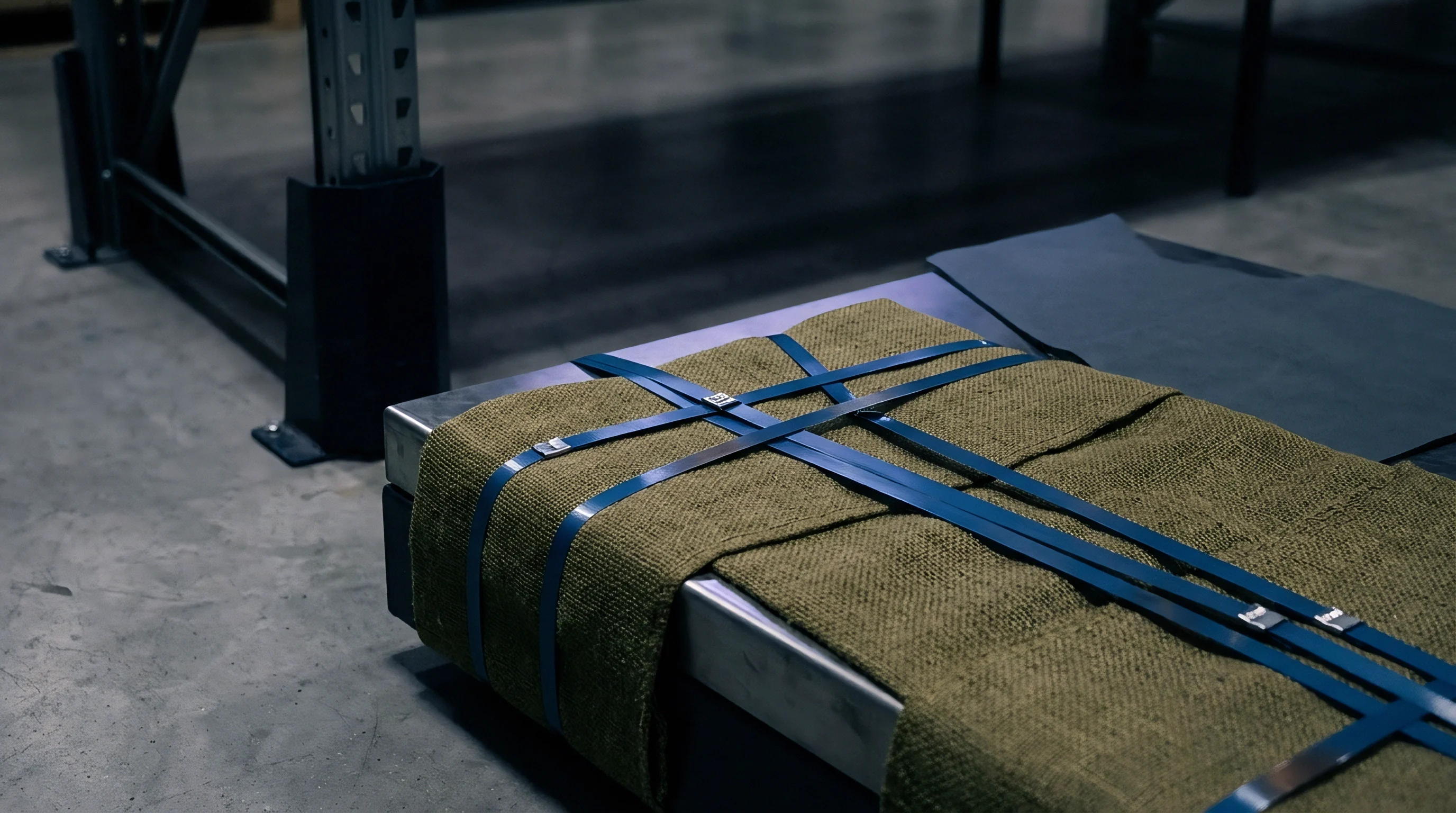
Valuation ties scutching output directly to spinning mill margins. Sourcing offices buy scutched line or hackled sliver based on bundle fineness, tenacity, colour uniformity, and moisture equilibrium. Under International Flax and Hemp Confederation rules, mandatory commercial mass calculations correct gross shipment weights back to the official moisture regain tolerance of twelve percent.
Bales delivered at fifteen percent water content introduce hidden penalties when invoiced at nominal net weight, as excess moisture inflates invoiced mass, while excessively dry bales risk severe fibre breakage during mechanical hackling.
Applying ISO 2370 clause six adjustments penalizes deliveries whose measured bundle linear density deviates by more than seven percent from the purchase contract baseline.
Laboratory testing verifies parcel quality through standardized analytical methods. Technologists evaluate bundle fineness in accordance with ISO 2370, expressing filament linear density in millitex or metric number. Tensile tenacity evaluations utilize constant-rate-of-extension tensile testers operating on clamped fibre bundles over a zero or three-millimetre gauge length, following procedures defined under ISO 3060.
Parcels exhibiting mean bundle tenacities below forty-five centinewtons per tex drop from high-count wet-spinning allocations into dry-spun upholstery or blended knitwear programs.
Moisture Regain and Lot Weight Settlement
Contractual settlement demands precise gravimetric moisture determinations performed on core samples pulled from minimum five percent of delivered bales. Technologists condition extracted samples in ventilated drying ovens running at one hundred five degrees Celsius until reaching constant mass, establishing the true bone-dry weight of the lot. Adding the official commercial regain allowance of twelve percent to the absolute dry mass determines the commercial invoiced weight of the transaction.
If laboratory testing reveals an actual moisture content of 14.5 percent on a twenty-tonne parcel, the buyer deducts 2.5 percent from the gross invoice weight, preventing overpayment for un-evaporated field moisture.
Relative humidity inside the hackling and spinning mill directly affects production performance. Processing dry line stock below sixty percent relative ambient humidity causes the brittle bast bundles to fracture under comb pin impacts, elevating tow loss and reducing hackled line yields by two to four percent. Mill environments run active atomizing humidification systems to hold sliver moisture between ten and eleven percent, maintaining sufficient fiber flexibility during high-speed drawing passes.
| Target Yarn Count | Required Raw Grade | Hackling Line Yield | Spinning Route | Yarn Cost per Kilogram | Cloth Cost per Metre |
|---|---|---|---|---|---|
| Nm 26 (Ne 15 lea) | Scutched Tow / Line Grade 3 | 42 percent (carded) | Dry Spun Ring | 8.40 to 9.20 USD | 2.85 to 3.15 USD |
| Nm 44 (Ne 26 lea) | Water Retted Line Grade 4 | 52 percent | Semi-Wet Spun | 12.80 to 14.10 USD | 3.60 to 3.95 USD |
| Nm 66 (Ne 39 lea) | Dew Retted Line Grade 5 | 58 percent | Wet Spun Warm Trough | 18.50 to 20.20 USD | 4.45 to 4.80 USD |
| Nm 100 (Ne 59 lea) | Selected Line Grade 6+ | 64 percent | Wet Spun Boiling Trough | 28.00 to 31.50 USD | 6.20 to 6.85 USD |
Landed Kilogram to Finished Metre Costings
Calculating the true material expenditure for one finished metre of pure linen shirting requires tracking mass loss across every preparatory stage. Drafting rollers crush weak filaments, and spinning breaks multiply in fine lea. A typical fine shirting cloth constructed at one hundred twenty grams per square metre with a finished width of one hundred forty centimetres requires approximately one hundred ninety grams of clean spun yarn per linear metre, factoring in warp sizing loss, crimp contraction, and loom waste allowances.
Assume a high-count shirting program targeting Nm 66 wet-spun yarn sourcing European scutched long line flax at a raw landed price of 6.20 USD per kilogram. The raw material transitions through progressive yield reductions:
- The hackling pass delivers a fifty-eight percent long line yield, extracting forty-two percent hackled tow valued at a discounted salvage rate of 1.80 USD per kilogram, establishing a hackled sliver raw material cost of 9.38 USD per kilogram.
- Preparatory gill drawing and roving stages incur an aggregate process waste of 3.5 percent, pushing the consolidated roving material cost to 9.72 USD per kilogram.
- Wet-spinning conversion overhead, including trough thermal energy, ring frame operation, electronic yarn clearing, and cone winding, adds 6.80 USD per kilogram of finished yarn output.
- Yarn clearing rejects two percent of delivered bobbin mass as slubs and thick places, elevating final spun yarn landed manufacturing cost to 16.85 USD per kilogram on the cone.
- Weaving one finished linear metre at one hundred ninety grams raw yarn mass expends 3.20 USD in yarn content, which, combined with weaving conversion costs of 1.25 USD per metre, settles the final un-dyed loom-state cloth cost at 4.45 USD per metre.
Finer yarn commands higher fabric revenue, but opting for cheaper, under-retted raw stock to lower initial fibre purchase expenditure invariably degrades line yield at the hackling comb, generating higher tow percentages that elevate the final cost per delivered woven metre beyond the cost of sourcing premier scutched line.
Commercial purchase orders specify that lots failing to meet the agreed minimum line yield of fifty-five percent on an industrial hackling trial trigger an automatic price reduction equal to the landed price difference between line sliver and carded hackling tow.