Reconciling Wet Spinning Yield Losses in Certified Organic Linen
Reconciling organic wet spinning yields requires dry mass correction and soluble pectin extraction accounting before auditing yarn transaction certificates.

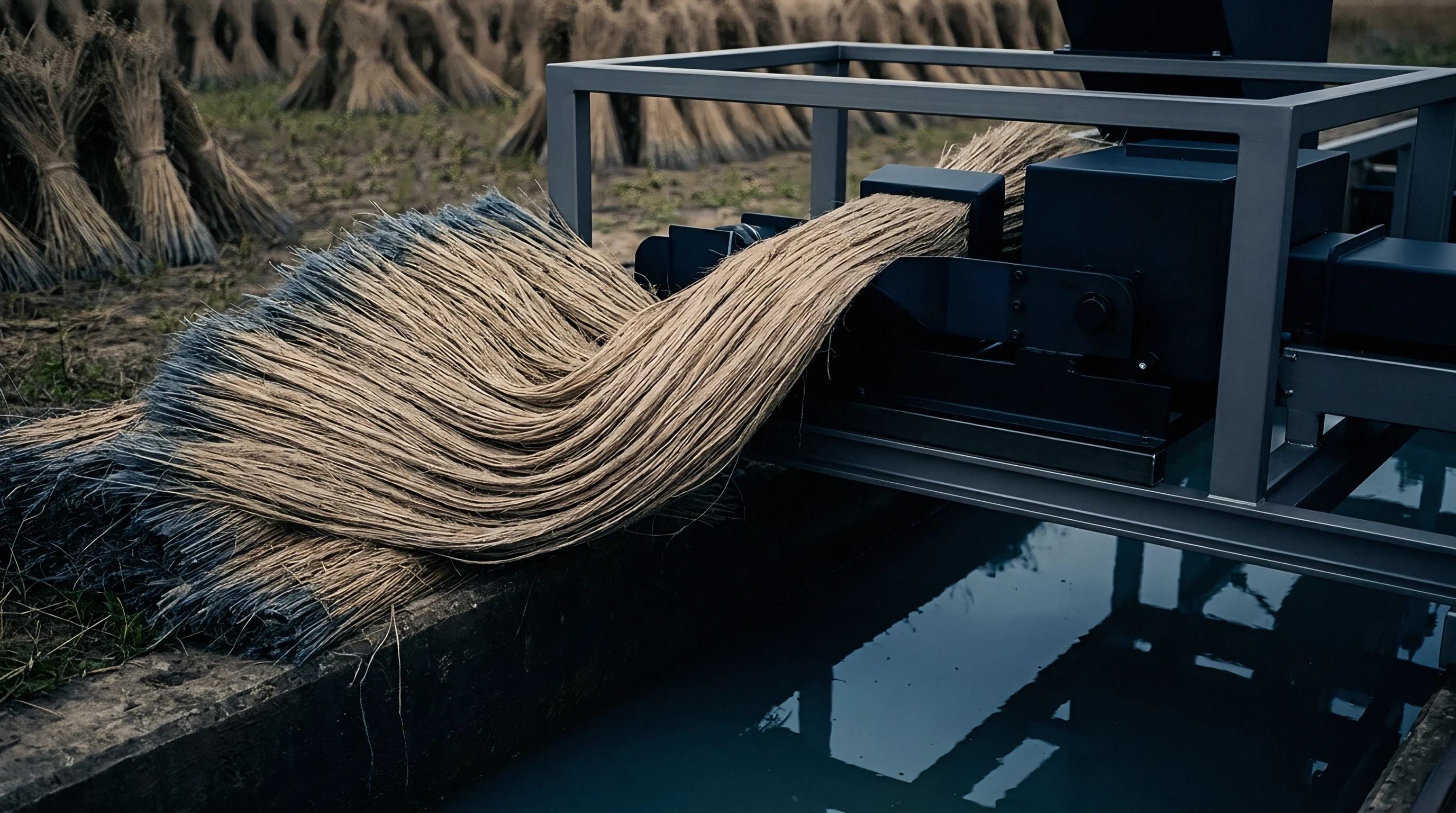
Bale
Certified organic flax fiber reaches the spinning mill holding variable field moisture along with non-cellulosic residues left behind by agricultural retting. Raw fiber lots taken straight from scutching or hackling operations carry moisture levels fluctuating between eight and fourteen percent, depending on atmospheric humidity during transit and warehouse storage. Commercial billing for organic flax yarn relies on standard dry mass calculations adjusted by an official regain allowance.
When unspun flax fiber moves from a certified farm or scutching unit to a wet spinning mill, mass reconciliation requires converting gross landed weight into oven-dry mass. Without an accurate dry mass baseline established at the receiving dock, natural moisture swings obscure physical fiber loss during mechanical processing.

Commercial Regain versus Absolute Dry Mass
Fiber weights recorded at port entry reflect environmental humidity rather than absolute fiber yield. International trade standards set an official regain rate of twelve percent for flax fiber under standard atmospheric conditions of sixty-five percent relative humidity and twenty degrees Celsius. Flax fibers lose moisture rapidly in transit across arid regions, creating phantom mass deficits between shipping manifests and mill scale readouts.
High moisture absorption during ocean freight does the reverse, artificially swelling delivered weight and concealing physical material theft or fiber loss during storage.
Determining the real mass of incoming feedstock requires core sampling shipments and drying the specimens in laboratory ovens at one hundred five degrees Celsius to constant weight. Commercial mass is then calculated by applying the twelve percent standard regain factor to this absolute dry weight. Any variance between certified transaction weights and laboratory dry mass determinations alters the mass balance ledgers required for certified organic compliance under European Union organic regulations and global textile standards.

Organic Retting Residues and Straw Impurities
Unspun flax stricks contain cortical tissue and shive fractions that break away during mechanical opening. Straw residues, epidermic cell fragments, and soil particles cling to organic flax bundles because certified organic standards prohibit chemical degumming agents or aggressive acid washes prior to scutching. The non-cellulosic impurity fraction in certified organic long flax runs between two and five percent by weight before hackling.
Hackling combs then separate shives and short fibers into tow fractions, cutting the long fiber yield before wet roving preparation begins.
Dry mass adjustments must distinguish volatile moisture from non-fibrous solid waste. Mill weighbridges record gross intake, but processing yields depend strictly on clean fiber content. Scutched flax stricks carrying heavy shive loads show higher apparent losses during carding and hackling, distorting the input baseline for subsequent wet spinning stages.
| Feedstock Category | Standard Regain Percentage | Observed Moisture Range | Non-Cellulosic Impurity Fraction |
|---|---|---|---|
| Scutched Long Flax | 12.0% | 8.5% to 14.2% | 2.5% to 4.8% |
| Hackled Long Flax Sliver | 12.0% | 10.0% to 13.0% | 1.2% to 2.5% |
| Combed Tow Sliver | 12.5% | 9.5% to 13.8% | 3.0% to 6.2% |
| Organic Wet Roving | 12.0% | 11.0% to 13.5% | 0.8% to 1.8% |
Initial mass deficits frequently trace back to regional straw content variations across organic flax crops.

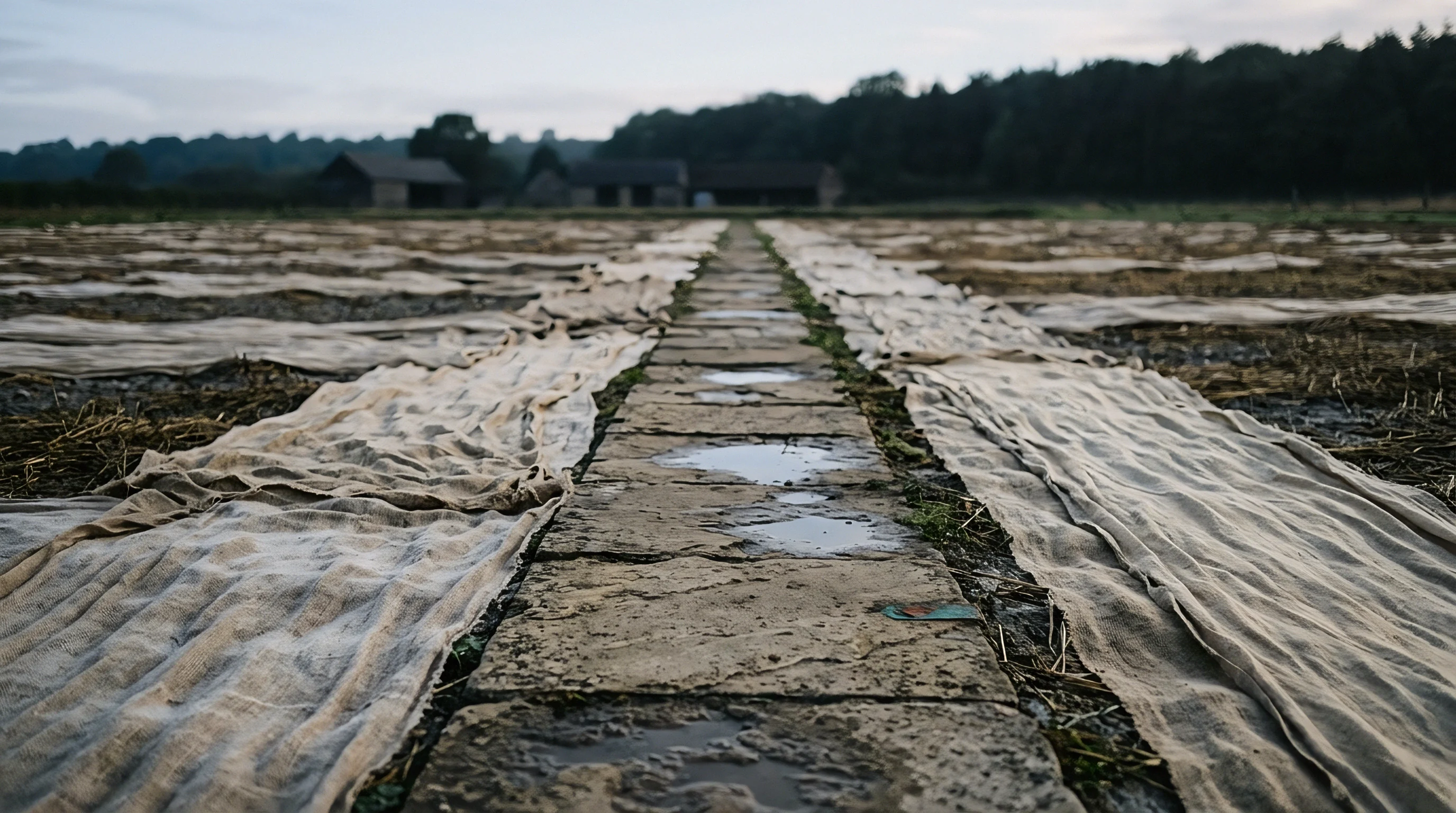
Pectin
Hot water treatment dissolves the inter-cellular gums bonding elementary flax filaments within the roving bundle. Wet spinning uses hot water immersion to soften the middle lamella, which consists mainly of pectic substances, galacturonic polymers, and hemicelluloses. As roving runs through spinning troughs heated to temperatures between sixty and eighty-five degrees Celsius, these binding compounds leach into solution.
This chemical extraction produces an unavoidable reduction in solid dry mass that represents material dissolution rather than fiber destruction or theft.
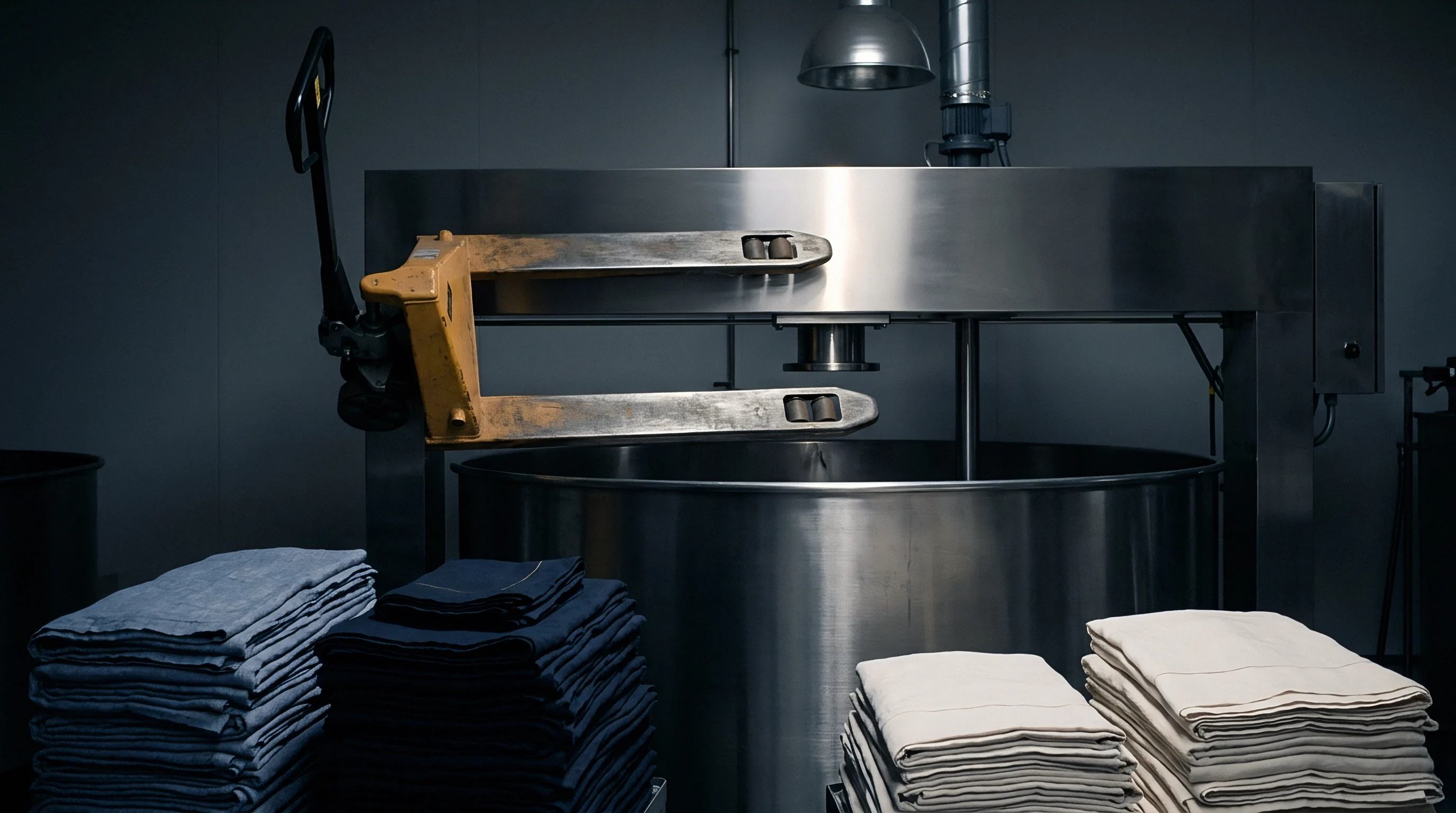
Thermal Dissolution Mechanics in Hot Water Troughs
Bath temperatures above sixty degrees Celsius break down the plant mucilage surrounding bast fiber bundles. Pectin solubilization reaches equilibrium within thirty to ninety seconds of immersion, shedding low-molecular-weight carbohydrates and soluble polysaccharides into the recirculating bath. Conventional flax spinning uses synthetic dispersants or mild alkaline additives to speed degumming, but organic certification standards restrict bath chemistry to pure water or approved pH adjusters.
Organic wet spinning therefore relies entirely on thermal hydrolysis to permit bundle slippage.
The total mass dissolved in hot water troughs varies with water temperature, dwell time, bundle diameter, and the retting degree of the crop. Under-retted flax roving contains higher proportions of insoluble pectin, requiring hotter troughs and yielding greater chemical mass loss during drafting.

Quantifying Non-Cellulosic Mass Dissolution
Immersion times directly govern the chemical mass reduction measured in downstream wastewater. Laboratory extraction tests on certified organic flax roving show that hot water immersion alone dissolves between two point five percent and five point five percent of dry fiber mass. This dissolved fraction leaves the line through trough overflow and drain filters, concentrating in industrial effluent treatment systems as total dissolved solids.
- Galacturonic Acid Hydrolysis breaks down calcium and magnesium pectate complexes holding primary fiber walls together, dissolving up to three percent of dry bundle mass.
- Hemicellulose Solubilization removes soluble arabinogalactans and xylan fractions during high-temperature trough exposure, eliminating one to two percent of raw fiber weight.
- Residual Wax Emulsification strips natural surface lipids from elementary fibers at trough temperatures above seventy degrees Celsius, dropping roving mass by half a percent.
- Water Soluble Ash Extraction leaches mineral salts and inorganic compounds left behind from biological field retting directly into the bath solution.
Hot water trough immersion dissolves between three and six percent of organic flax roving mass as soluble galacturonic acids at eighty degrees Celsius.
Whether enzymatic pre-treatment of organic roving can standardize binder extraction rates across different crop years remains undetermined across commercial spinning trials.
Draft
Mechanical drafting rollers draw softened roving across ratch settings, shedding short fibers and generating wet fly debris. Draft ratios applied between back and front rollers force saturated ultimate fibers to slide past one another under tension. Weak or damaged fibers snap and drop into the trough sump or cast off as wet lint, with flyer speed driving waste volume higher.

Short Fiber Shedding at Narrow Ratch Settings
Roller nip pressure forces unsecured ultimate fibers out of the strand during yarn formation. Long flax fibers require ratch settings matched to mean fiber length, typically thirty-five to fifty-five millimeters. Incorrect settings either crush long fibers or release unconstrained short fibers into the spinning bath.
In certified organic linen processing, where short fiber fractions are higher because gentle mechanical scutching avoids chemical smoothing, short-fiber shedding rates rise accordingly.
Fibers under twenty millimeters lack the contact length needed to bind into the twisting yarn core. These fragments rinse into the trough fluid or wrap around drafting rollers as wet flyer fly. The resulting waste collects across trough screens and suction channels as heavy sludge.
Draff Accumulation and Wastewater Sludge
Trough drainage sumps collect settled insoluble fibers that bypass the winding spindles. Waste from the drafting zone splits into recoverable short fiber fly and unrecoverable trough sludge, or draff. Recoverable fly can be skimmed, dried, and worked into coarse tow yarn or non-woven insulation.
Insoluble draff settles at the bottom of filtration units, forming a dense cake of wet flax dust, broken fibrils, and cell wall fragments.
| Yarn Count Range | Pectin Extraction Loss | Mechanical Fly and Draff | Total Expected Yield Reduction |
|---|---|---|---|
| NeL 10 to NeL 20 (Coarse) | 2.5% to 3.5% | 3.0% to 4.5% | 5.5% to 8.0% |
| NeL 26 to NeL 40 (Medium) | 3.5% to 4.8% | 4.5% to 6.5% | 8.0% to 11.3% |
| NeL 50 to NeL 70 (Fine) | 4.5% to 5.8% | 6.5% to 9.5% | 11.0% to 15.3% |
| NeL 80 and Above (Extra Fine) | 5.2% to 6.2% | 9.5% to 13.0% | 14.7% to 19.2% |
Fine counts require wider draft ratios and narrower ratch settings, accelerating mechanical fiber loss. Spinning extra fine organic linen yarn generates physical process losses exceeding fifteen percent of incoming dry roving weight. Unsorted wet sludge carries zero commercial recovery value and enters municipal waste streams, representing a permanent mass reduction in certified organic yarn yield calculations.
Finer yarn counts increase mechanical wet waste through elevated end breaks and longer trough contact times.
Miscalculating mechanical fly losses leads to false accusations of organic raw material diversion during third-party mass audits.

Balance
Chain of custody rules enforce physical segregation or precise mass balance accounting between incoming fiber lots and finished certified yarn packages. Certification frameworks, including the Global Organic Textile Standard version 7.0 and the Organic Content Standard version 3.0, track mass balance across input-output documentation. Mills processing both organic and conventional flax must calculate physical yield loss accurately to demonstrate that organic yarn output corresponds to organic fiber purchases without uncertified blending.

Where Do Organic Mass Segregation Rules Permit Loss?
Certification frameworks recognize physical waste channels while capping acceptable unaccounted variance thresholds. Certified organic standards permit reasonable yield reductions caused by moisture evaporation, pectin dissolution, and mechanical fly generation. Standards mandate that all waste categories must be categorized, weighed, and recorded in facility transaction registers.
Unaccounted mass loss, representing material that vanishes without corresponding waste records or wastewater effluent measurements, cannot exceed two percent of net input mass.
An audit discrepancy occurs when declared yarn output plus recorded waste categories fails to equal total certified fiber input. If a mill inputs ten thousand kilograms of certified organic flax roving and outputs seven thousand five hundred kilograms of organic yarn while recording only eight hundred kilograms of physical waste, one thousand seven hundred kilograms remains unaccounted. Certification bodies flag this deficit as illegal fiber substitution or untracked commercial diversion.
Transaction Certificate Quantity Matching Formulas
Document reconciliation balances net yarn output against certified dry fiber inputs. Transaction certificates issued by accredited bodies record the net mass of organic material moving between supply chain tiers, and incoming certificates must account for the exact mass consumed during a spinning lot.
- Scope Certificate Verification confirms that the spinning facility holds valid accreditation covering wet spinning processing categories during the production timeframe.
- Transaction Certificate Reconciliation matches incoming raw fiber lot numbers against spinning batch production records to prevent double-counting of input masses.
- Oven-Dry Mass Correction Factors convert gross incoming bale weights into standardized net dry mass baselines before applying process loss deductions.
- Category-Specific Yield Deduction Bands cap maximum permissible loss allocations based on target yarn count and fiber quality grade.
Consider a practical worked reconciliation calculation for a dedicated organic spinning run. A mill receives a shipment of twelve thousand kilograms of certified organic long flax roving. Core sampling determines an average incoming moisture content of eleven point five percent.
The absolute dry mass equals ten thousand six hundred twenty kilograms. Applying the official twelve percent regain factor yields a standardized commercial baseline mass of eleven thousand eight hundred ninety-four kilograms. The mill spins the lot into fine organic linen yarn of count NeL 40.
During processing, water bath monitoring registers a four point two percent soluble pectin extraction loss, removing four hundred forty-six kilograms of organic solids into the wastewater stream. Mechanical draft fly, flyer sweepings, and spindle break waste weigh seven hundred twenty kilograms, leaving a net dry yarn output of nine thousand four hundred fifty-four kilograms. When conditioned back to standard twelve percent regain, outgoing certified organic yarn weighs ten thousand five hundred eighty-eight kilograms.
Total real mass reduction equals one thousand three hundred six kilograms, representing a total yield loss of ten point nine percent. Recorded physical waste plus chemical extraction accounts for eleven hundred sixty-six kilograms of dry mass, placing unaccounted process variance at ninety kilograms, or zero point seventy-six percent of input mass. This processing run satisfies certification audit tolerances.
Global Organic Textile Standard criteria dictate that yield discrepancies exceeding eighteen percent automatically trigger an onsite facility audit.
Section 4.2 of the Global Organic Textile Standard input scope guidelines mandates that all wet processing weight adjustments carry verified oven-dry lab reports.

Audit
Onsite inspections of spinning mill logbooks reveal whether declared yield losses match physical mass movements through the machinery. Auditors test records across purchase invoices, weighbridge tickets, shift log sheets, wastewater logs, and waste sale manifests. A complete audit reconciles physical stock in raw material warehouses against open transaction certificate balances.

Verification Steps for Spinning Mill Waste Streams
Physical inspection of waste bins confirms whether short fiber fly matches recorded yield loss declarations. Auditors verify that spinning waste stored in facility holding areas matches the chemical and physical characteristics of organic flax. Conventional flax waste cannot be mixed with organic waste bins without invalidating mass balance accounting for both streams.
Inspectors analyze water treatment plant sludge and influent total dissolved solids to confirm that recorded soluble pectin losses match actual chemical oxygen demand levels in bath effluent.
- Sample incoming fiber bales for oven-dry moisture determination following standard laboratory testing procedures.
- Measure total water intake and trough discharge total suspended solids during the spinning batch run.
- Weigh all dry carding fly, flyer waste, and spindle sweepings prior to baling or sale.
- Calculate net dry yarn output against gross incoming fiber dry mass to isolate unaccounted loss.
| Audit Point | Verification Method | Tolerance Threshold | Discrepancy Indication |
|---|---|---|---|
| Raw Fiber Reception | Oven-dry core sampling | +/- 1.0% moisture regain | Unrecorded moisture inflation |
| Trough Water Bath | TDS and COD effluent analysis | 2.5% to 6.0% mass loss | Under-declared pectin loss |
| Drafting Waste Bins | Direct mass weighing of fly | 3.0% to 12.0% by count | False waste recording |
| Finished Yarn Store | Conditioned cone weighing | +/- 0.5% invoice mass | Uncertified fiber blending |
| Audit tolerances align with ISO 2060 conditioning standards and GOTS v7.0 mass balance guidelines. | |||
Gaps in wastewater total dissolved solids provide reliable evidence of falsified yield reduction declarations. When a mill logs a six percent pectin loss while wastewater samples carry minimal organic solids, raw fiber has been diverted from certified production.
Unannounced mill scale verification prevents the artificial inflation of organic waste records between processing runs.
Verified waste records always match wastewater sludge discharge volumes on well-managed mill floors.
Claim
Contracts for certified yarn spinning must define acceptable yield loss bands to head off financial disputes between brands and commission spinners. When a brand supplies certified organic flax fiber to a contract mill, spinning yield determines total garment production and unit fabric costs. Contracts omitting moisture variations and chemical extraction create immediate disputes when finished yarn shipments fall short of projection.

Contractual Yield Allowances for Commission Spinning
Supply agreements specify allowable waste percentages based on target yarn count and fiber grade, setting explicit allowances for moisture regain, soluble extraction, and mechanical waste. Contracts allocate risk by establishing standard yield baselines. If a spinner achieves higher yields than contracted, the gain stays with the mill, but excessive loss triggers financial adjustments.
Spinning agreements set specific chargeback terms for missing organic material. When yield losses exceed contract tolerances, the spinner reimburses the buyer for the commercial market value of certified raw fiber lost above the allowance. The mill also forfeits processing fees on the missing volume and pays compensation for idle downstream manufacturing capacity.

Financial Chargebacks for Unexplained Mass Losses
Fiber losses exceeding contractual thresholds trigger monetary deductions from spinning invoices. To enforce these chargebacks, brand buyers require lot-specific mass balance summaries with each invoice, including laboratory dry mass data, waste scale tickets, and effluent test reports for each certified lot.
When an audit exposes unverified yield losses, the buyer files a formal dispute claim. Deductions are calculated by multiplying the unaccounted mass deficit by the landed cost per kilogram of certified organic flax, including freight and import tariffs. Standard dispute clauses require independent laboratory testing on retained fiber samples to settle moisture or binder disagreements before moving to arbitration.