Correlating Wet Spinning Drafting Instability to Lignin Monomer Profiles
High syringyl lignin enables uniform hot-water fibre attenuation; guaiacyl-rich lots trigger stick-slip drafting surges, spiking yarn defects and spinning costs.

Monomer
Technical flax bundles separate into elementary filaments during wet spinning only when the intercellular middle lamella softens inside the hot water trough. Phenylpropanoid polymers deposited between primary cell walls govern this separation. Analytical pyrolysis gas chromatography mass spectrometry and thioacidolysis establish that flax bast lignin differs markedly from wood lignins, carrying a low total concentration between 1.5% and 4.0% by dry weight alongside a highly labile monomeric composition.
Sourcing line flax for counts above Nm 39 demands direct verification of the ratio between syringyl and guaiacyl subunits. Lots exhibiting a syringyl-to-guaiacyl molar ratio below 0.75 generate drafting force oscillations exceeding 300 centinewtons during drawing, driving yarn unevenness beyond commercial acceptance.
Guaiacyl monolignols possess a free carbon-5 position on the aromatic ring, permitting carbon-carbon coupling during lignification that forms biphenyl and phenylcoumaran networks. Syringyl monolignols bear methoxy substitutions at both carbon-3 and carbon-5, restricting polymerization to ether linkages such as beta-aryl ether bonds. Water retting and prolonged dew retting allow fungal pectinases and esterases to cleave peripheral rhamnogalacturonan chains, isolating the lignin core.
When dew retting terminates prematurely to avoid cellulolytic mould damage, technical bundles arrive at the spinning mill with high concentrations of non-esterified p-coumaric acid and condensed guaiacyl dimers. These structures resist hydration at standard trough temperatures.
Single-end drafting tension spikes past 420 centinewtons when the syringyl-to-guaiacyl ratio drops below 0.70 at 65 degrees Celsius.
Laboratory assessment of phenolic composition relies on cleavage methods that differentiate non-condensed ether structures from condensed aromatic linkages. Thioacidolysis isolates monomers linked solely by beta-O-4 bonds through ethyl mercaptan derivatization in boron trifluoride etherate. Alkaline nitrobenzene oxidation provides an alternative oxidation pathway, yielding syringaldehyde and vanillin as diagnostic indicators of syringyl and guaiacyl precursors.
Gas chromatography coupled with flame ionization detection determines the precise stoichiometric ratios within bast bark strips sampled before hackling.
| Bast Origin and Grade Classification | Total Lignin Content (% Dry Weight) | Syringyl to Guaiacyl Molar Ratio | p-Hydroxyphenyl Fraction (% Total Phenols) | Mean Drafting Force at 65°C (cN) | Drafting Force Coefficient of Variation (%) |
|---|---|---|---|---|---|
| Water-retted Courtrai Line Grade 1 | 1.82 | 1.38 | 4.2 | 84 | 8.6 |
| Dew-retted Normandy Line Grade 2 | 2.15 | 1.12 | 5.8 | 112 | 12.4 |
| Dew-retted Heilongjiang Line Grade 3 | 2.68 | 0.82 | 8.4 | 195 | 22.1 |
| Under-retted European Scutched Tow | 3.45 | 0.64 | 11.2 | 340 | 38.7 |
| Enzyme-retted Experimental Line | 1.64 | 1.45 | 3.1 | 76 | 7.9 |
| Values represent means from five replicate 50-gram bale core extractions analyzed via analytical thioacidolysis followed by gas chromatography. | |||||
High fractions of p-hydroxyphenyl units indicate immature or tension-stressed bast tissue. These un-methoxylated rings crosslink heavily into three-dimensional complexes that prevent hot water penetration. Mill testing shows that every 2% increase in p-hydroxyphenyl monomers elevates drafting force variation by 6% across the drawing zone.
Irregular attenuation produces thick slubs alternating with thin, over-drafted lengths. The operational consequence appears at the ring rail as erratic yarn tension and immediate drafting roller wraps.
Committing capital to under-retted straw with compressed syringyl fractions forces spinning speeds downward by a third while multiplying sliver waste, locking the mill into coarse yarn counts that fail to cover the landed cost of imported scutched flax.

Swell
Plasticization of bast cell wall polymers occurs within seconds of water contact inside the spinning trough. The process relies on breaking hydrogen bonds between cellulose microfibrils and the surrounding pectin-hemicellulose-lignin matrix. Pure cellulose experiences minimal hydrothermal expansion below 100 degrees Celsius, leaving the middle lamella as the sole responsive phase.
Water molecules penetrate the non-crystalline polyuronides, lowering the glass transition temperature of water-soluble pectins from approximately 120 degrees Celsius in the dry state down to 45 degrees Celsius under full saturation.
Guaiacyl-rich lignin domains elevate this thermal threshold. The tight inter-unit bonding of condensed guaiacyl polymers resists water absorption, retaining a local glass transition temperature above 75 degrees Celsius even during submerged transport. Syringyl-rich domains, structured via flexible ether linkages, hydrate rapidly at 60 degrees Celsius.
When roving passes through water at 65 degrees Celsius, syringyl-rich middle lamellae soften into an amorphous gel. Guaiacyl-rich regions remain rigid, maintaining mechanical anchorage between individual elementary fibres.
Can Thermal Water Baths Hydrolyze Guaiacyl Bonds?
Industrial wet spinning troughs operate at temperatures between 55 and 75 degrees Celsius with immersion times ranging from 3 to 10 seconds. Chemical cleavage of covalent phenylpropanoid linkages cannot take place within these kinetic boundaries. Hydrolysis of alkyl-aryl ether bonds in neutral aqueous media demands temperatures above 160 degrees Celsius under elevated pressure.
Roller drafting relies strictly on physical hydrothermal softening rather than chemical degradation.
Process adjustments at the trough modify hydration rates without altering chemical architecture. Mill technicians frequently inject neutral surfactants or mild alkaline buffers to wet out refractory roving. These chemicals accelerate pectin solubilization, yet they leave condensed guaiacyl structures intact.
If the lignin phenotype carries insufficient syringyl fractions, thermal softening remains incomplete across the roller nip.
Industrial spinning troughs running at 65 degrees Celsius achieve physical softening of syringyl ethers within four seconds while leaving condensed guaiacyl networks structurally rigid.
Auditing the wet-spinning frame requires checking both fluid dynamics and thermal distribution across the entire trough assembly:
- Sample fluid temperatures at the roving entry guide, the center baffle, and the draft roller discharge using a calibrated immersion thermocouple.
- Measure fluid replenishment velocity to confirm residence time permits complete bundle wetting before the nip point.
- Extract roving segments directly from the delivery submerged horn to measure liquor absorption gravimetrically.
- Check dissolved pectin accumulation in the circulating bath using refractometry to prevent back-precipitation onto moving strands.
Failure to soften the binding matrix forces drawing rollers to pull intact technical bundles across the drafting zone. Technical bundles measure 40 to 100 micrometres in diameter, whereas individual elementary fibres measure 12 to 25 micrometres. Forcing large unsoftened bundles through small nip clearances damages the synthetic rubber cot covers on drawing rollers, generating grooved wear paths that ruin yarn evenness across subsequent shifts.
End breaks from unsoftened bundles are often attributed to coarse seasonal straw rather than insufficient trough temperature or unfavourable lignin ratios.

Surge
Drafting force instability originates when fibre bundles resist division under continuous mechanical displacement. Between the back feed rollers and the front delivery rollers, roving undergoes a draft ratio typically set between 8 and 14. This acceleration demands steady inter-fibre slippage.
When middle lamella softening is uniform, drafting force registers as a low-amplitude, high-frequency signal on line tensiometers. When guaiacyl-condensed zones enter the drafting field, the fibres lock together, causing the drafting force to climb until inter-fibre friction is violently overcome.
This dynamic constitutes stick-slip behavior. The technical bundle behaves as an elastic rod under tension until the shear limit of the softened middle lamella is exceeded. At that instant, an entire cluster of elementary fibres slips forward simultaneously, flooding the front roller nip with unattenuated material.
This cluster moves into the twisting zone as an oversized slub. Deprived of downstream anchorage, trailing fibres float uncontrolled in the drafting field, producing an adjacent thin place that snaps under tension.
| Trough Water Temperature (°C) | Lignin S/G Molar Ratio | Peak Drafting Force (cN) | Stick-Slip Oscillation Frequency (Hz) | Drafting Zone End Breakages per 1,000 Spindle Hours | Uster Mass Variation (CVm %) |
|---|---|---|---|---|---|
| 50 | 1.25 | 210 | 14 | 28 | 18.4 |
| 60 | 1.25 | 115 | 42 | 12 | 15.1 |
| 70 | 1.25 | 82 | 68 | 6 | 13.8 |
| 50 | 0.72 | 460 | 4 | 74 | 28.9 |
| 60 | 0.72 | 345 | 8 | 52 | 24.6 |
| 70 | 0.72 | 280 | 11 | 38 | 22.2 |
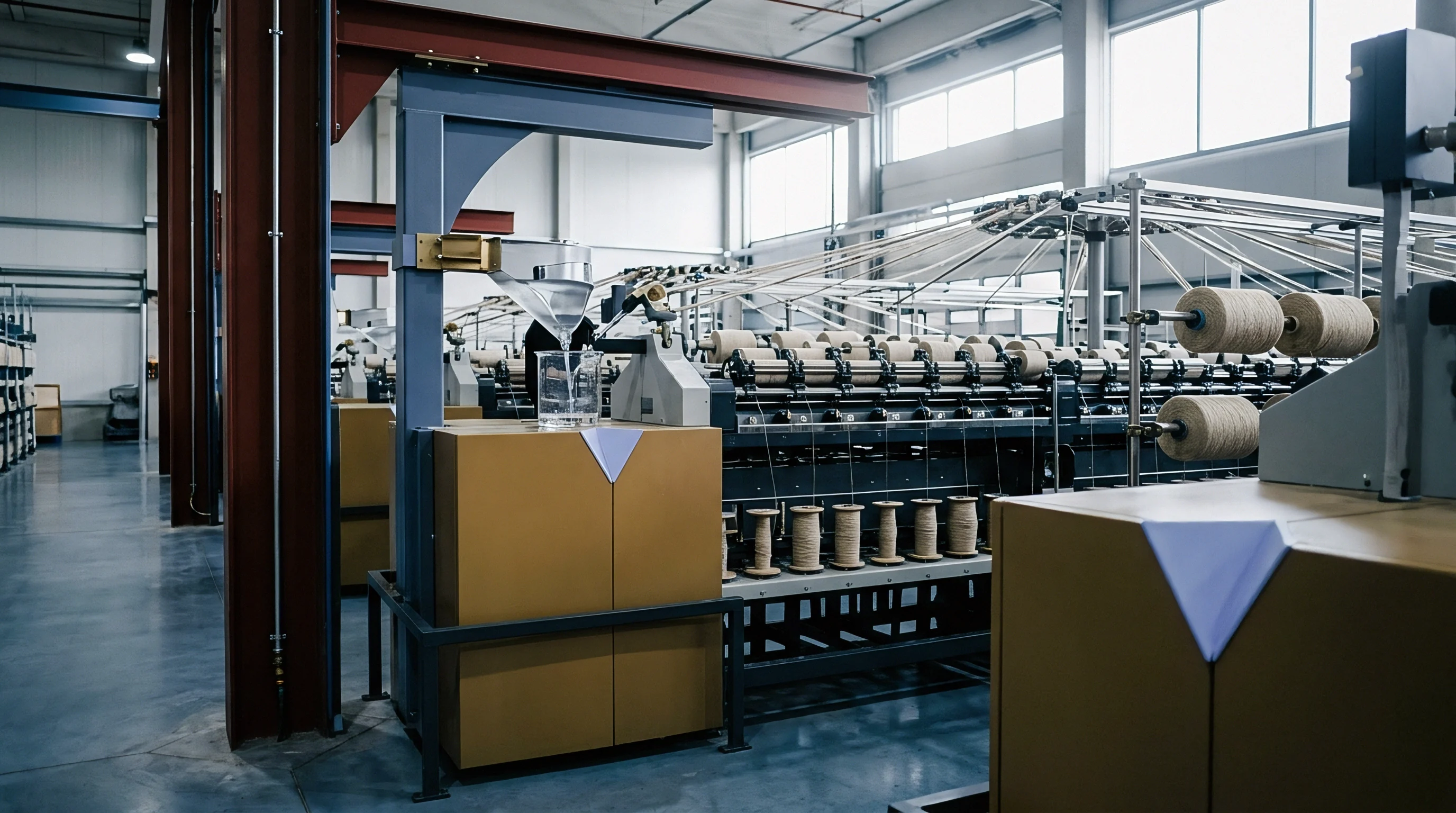
Stick-Slip Phenomena in Roller Draft
Static friction between unsoftened elementary fibres exceeds dynamic friction by a factor of three. During drafting, the back rollers feed roving at 2 metres per minute while the front rollers pull yarn away at 20 metres per minute. If the intercellular cement fails to deform plastically, the bundle travels into the drawing field as a solid unit, surging drafting force and allowing shives to score synthetic apron sleeves.
Fibre breakage occurs when drafting force exceeds the tensile strength of individual elementary fibres, which averages 45 to 65 centinewtons per tex. Instead of cleanly separating along the middle lamella, cell walls tear apart, leaving jagged fibre ends and generating short lint fragments that accumulate in the water trough. The accumulation of fractured fragments destabilizes spinning geometry and fouls the thread guides.

Where Do Undivided Bundles Jam Roller Nips?
Clearance between front drafting rollers is calibrated for thin ribbons of elementary fibres. When an unattenuated bundle arriving with a diameter exceeding 80 micrometres strikes the front roller nip, local nip pressure spikes. The synthetic rubber cot deforms elastically, momentarily releasing pressure on adjacent fibres in the draft ribbon.
The released adjacent fibres rush forward without receiving drafting elongation, creating uncontrolled mass surges. Oscilloscope traces of drafting force confirm that each sudden load drop corresponds to a thick place exiting the front rollers. These surges destroy yarn cross-sectional circularity and destabilize downstream twist insertion.
Centrifugal force throws loose fibres out of the unhardened strand before the twist from the flyer or ring traveller can secure them.
Drafting force spikes exceeding 300 centinewtons force the front roller rubber cots to deform, releasing neighbouring fibres into uncontrolled thick slubs.
Specific structural markers govern how technical bundles respond under the stress of continuous drawing:
- Syringyl ether linkages deform smoothly under sustained thermal tension, allowing progressive bundle slippage without force accumulation.
- Condensed guaiacyl biphenyls anchor neighbouring elementary walls rigidly, provoking sudden stick-slip shearing when mechanical stress peaks.
- Non-esterified uronic acid complexes swell rapidly in warm water baths, forcing initial bundle expansion prior to roller entry.
- Cuticular shive remnants reject aqueous saturation entirely, jamming the roller pinch and inducing immediate yarn cleavage.
The open physical question remains whether chemical modification of process water can induce true plastic flow in condensed guaiacyl domains without degrading primary cellulosic chains during the few seconds of trough passage.

Tenacity
Single-end tensile strength reflects the geometric uniformity established on the spinning frame. Uneven drafting generates mass irregularity that translates directly into weak points along the yarn axis. In bast yarn mechanics, breaks under tensile testing per ISO 2062 occur almost exclusively at thin spots created by upstream stick-slip drafting cycles.
Even where coarse counts hide minor drafting faults, erratic attenuation from guaiacyl clusters elevates the coefficient of variation for breaking force even when mean strength appears commercially acceptable.
Mass variation tested on capacitance instruments such as the Uster Tester reveals characteristic drafting waves. Wavelengths corresponding to twice the spinning ratch length signal defective bundle separation. For a standard wet spinning ratch of 75 millimetres, periodic faults appearing at intervals of 150 to 180 millimetres confirm that unsoftened technical bundles entered the front nip intact, pulled a cloud of floating fibres with them, and left an empty zone behind.
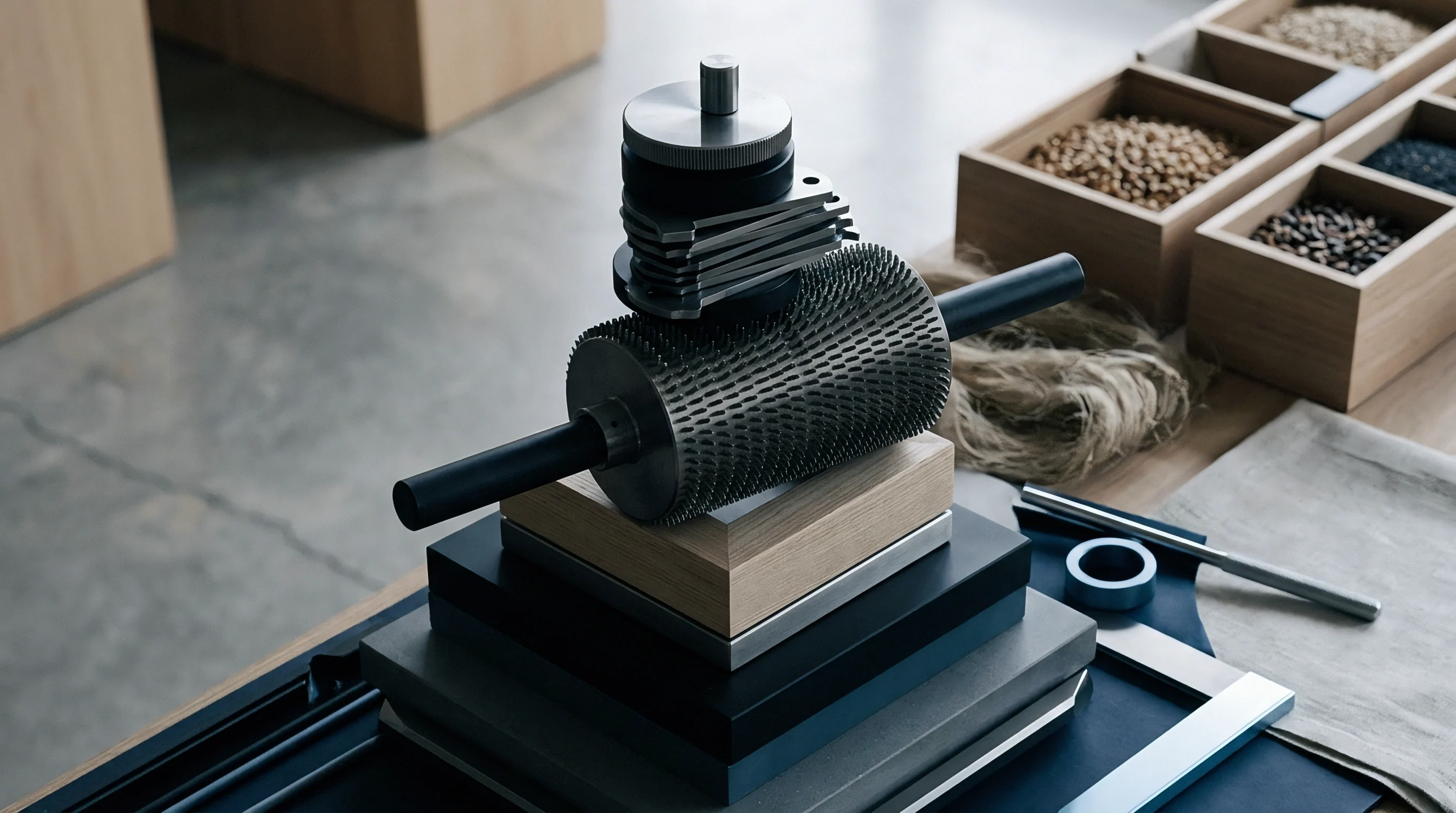
Single-End Breaking Force and Mass Variation
Fine linen yarns destined for apparel or high-density table damasks demand count execution up to Nm 68 (40 lea). Achieving this count requires technical bundles to subdivide down to three or four elementary fibres per cross-section. If the raw flax lot contains elevated guaiacyl content, the minimum bundle diameter achievable without fibre rupture remains fixed around 40 micrometres, forcing spinnable count limits down sharply.
Attempting to spin fine counts from low-syringyl fibre creates catastrophic spinning end breaks. At count Nm 50, spinning frames show an increase from 8 ends down per 1,000 spindle hours to over 60 ends down when the syringyl-to-guaiacyl ratio falls from 1.20 to 0.70. Operators spend their shifts piecing broken ends rather than tending spindles.
Each piecing creates an un-cleansed knot or thick joint that stops downstream automatic winding machines and lowers loom efficiency during weaving.

Metric Count Ceilings in High-Syringyl Lots
High syringyl concentrations allow drafting to proceed smoothly at lower water temperatures, conserving energy and preserving machine components. Flax fibres exhibiting a syringyl-to-guaiacyl ratio above 1.15 yield yarn counts up to Nm 68 with mass variation CVm values remaining below 16.5%. The resulting yarn features low hairiness, as elementary fibres remain bound longitudinally rather than snapping into protruding ends.
Yarn hairiness measured by optical sensors stays under 3.5 on the Zweigle scale.
Sliver procurement teams must align fibre phenolic specifications with the mechanical limits of the target spinning count:
- Target counts below Nm 26 permit guaiacyl-dominant lots with syringyl ratios down to 0.65, as the thick yarn cross-section absorbs mass irregularities without failing.
- Intermediate counts between Nm 39 and Nm 50 demand balanced phenolic profiles with syringyl-to-guaiacyl ratios starting at 0.95 to maintain end-break rates under 15 per 1,000 spindle hours.
- High-count yarns exceeding Nm 60 operate reliably only when raw stock demonstrates syringyl-to-guaiacyl ratios above 1.20 and total lignin content below 2.0%.
Relying on high twist multiples to overcome drafting unevenness merely shifts the defect downstream, yielding hard-twisted yarn that curls, snarls, and skews finished woven textiles.

Settlement
Commercial flax transactions historically settle on subjective organoleptic parameters including hand, colour, scutching cleanliness, and scutching yield. These parameters fail to predict drafting performance in the wet-spinning trough. Grey, dew-retted scutched flax from Northern France may present excellent bundle length and apparent softness to a classer yet perform poorly on a fine-spinning frame due to elevated guaiacyl condensation resulting from dry retting conditions.
Real economic performance is established by the net yield of combed line sliver and the continuous efficiency of the spinning frames.
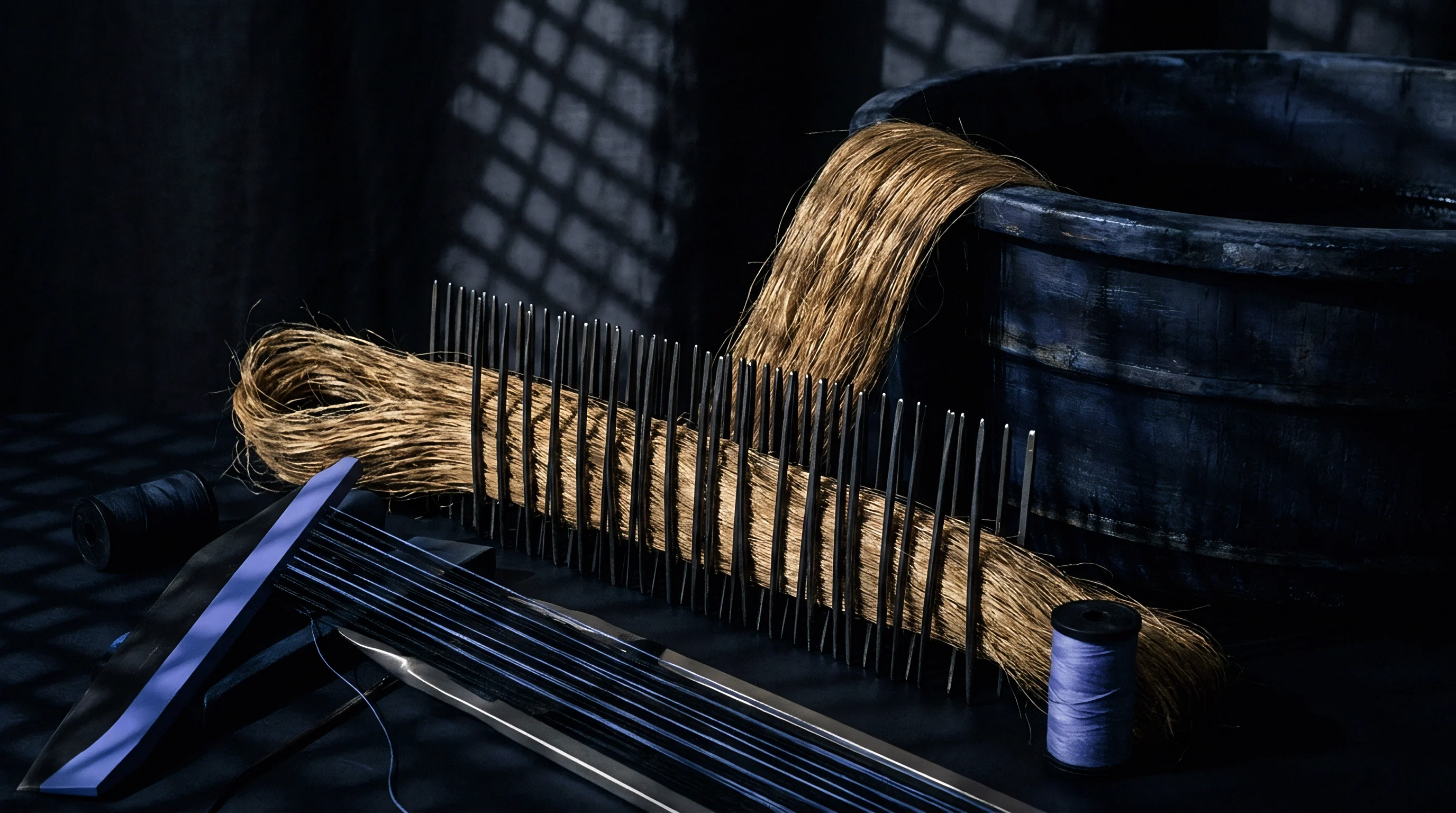
Under-retted fibre displaying low syringyl-to-guaiacyl ratios produces excessive hackling waste. As hackling pins comb through technical bundles, unyielding phenolic bridges resist division, causing pins to break whole strands rather than splitting them into fine ribbons. Combed line yield drops from a target of 58% down to 44%, diverting costly long-staple flax into low-value hackled tow.

Hackling Line Losses across Phenolic Fractions
Financial calculations demonstrate the immediate loss generated by inappropriate lignin architecture. Consider a procurement contract for 20 metric tons of imported scutched long-staple flax priced at 4.80 Euros per kilogram landed mill gate. The intended production target is an Nm 39 wet-spun yarn for shuttleless rapier weaving into 145-gram-per-square-metre apparel fabric at 150-centimetre finished width.
A lot characterized by a favourable syringyl-to-guaiacyl ratio of 1.25 achieves a hackling yield of 58% combed line, producing 11,600 kilograms of spinnable sliver. Hackled tow byproduct captures 32% (6,400 kilograms), credited at a tow value of 1.60 Euros per kilogram. Hackling dust and waste account for the remaining 10%.
Wet spinning runs at 94% mechanical efficiency, incurring an end-break rate of 9 per 1,000 spindle hours. Net finished yarn output reaches 10,670 kilograms after accounting for spinning and winding waste.
A low-syringyl lot exhibiting a ratio of 0.68 drops hackling yield to 45%, delivering only 9,000 kilograms of combed sliver. Tow generation expands to 43% (8,600 kilograms), and unrecoverable waste increases to 12%. During wet spinning, severe drafting instability forces frame speeds down by 20% to control ends down, which nevertheless surge to 48 per 1,000 spindle hours.
Spinning waste rises to 11%. Net finished yarn output collapses to 7,610 kilograms.
| Cost Component and Performance Yield | High Syringyl Lot (S/G: 1.25) | Low Syringyl Lot (S/G: 0.68) | Variance Impact per 20-Tonne Lot |
|---|---|---|---|
| Initial Raw Fibre Outlay (20,000 kg @ €4.80/kg) | €96,000 | €96,000 | €0 |
| Hackling Tow Credit Value (Tow Output x €1.60/kg) | €10,240 | €13,760 | +€3,520 |
| Net Combed Sliver Cost per Kilogram | €7.39 | €9.14 | +€1.75 / kg |
| Wet Spinning Conversion Cost per kg of Yarn | €3.20 | €4.45 | +€1.25 / kg |
| Total Manufacturing Outlay (Raw Net + Conversion) | €119,904 | €116,105 | -€3,799 |
| Net Delivered Yarn Volume (kg Nm 39) | 10,670 | 7,610 | -3,060 kg |
| Final Delivered Cost per Kilogram of Yarn | €11.24 | €15.26 | +€4.02 / kg |
| Woven Metres Produced (145 g/m² @ 1.5m Width) | 49,057 m | 35,000 m | -14,057 m |
| Fibre and Spinning Cost per Finished Metre | €2.44 | €3.32 | +€0.88 / m |

Commercial Terms and Metre Cost Conversion
The resulting difference of 0.88 Euros per finished metre eliminates operating margins on commodity linen piece goods. The mill absorbs a 35.8% cost increase per kilogram of yarn spun, generated entirely by drafting failures, machine slowdowns, and the diversion of prime fibre into tow bins. This loss cannot be recovered during wet finishing, bleaching, or weaving.
Incorporating chromatographic phenolic verification into raw fibre contracts protects line spinning yields from under-retted bast stock.
Raw material purchase agreements for flax sliver intended for wet spinning must incorporate precise chemical thresholds. Mill procurement contracts should specify acceptable monomer parameters alongside metric count guarantees:
Every delivery of combed line sliver intended for counts exceeding Nm 39 must carry a certified analytical test report specifying a minimum syringyl-to-guaiacyl ratio of 1.05 and a maximum total lignin content of 2.2% measured by analytical thioacidolysis, failing which the buyer retains the contractual right to reject the delivery or reclassify the lot at the prevailing market price for scutched tow with immediate debiting of the difference.