Dynamic Liquid Draft Modulation Limits for Mitigating Stochastic Fibre Bundle Mass Variance
Dynamic liquid draft modulation limits depend on bath temp and nip elastohydrodynamics; exceeding critical acceleration triggers hydrodynamic slip and yarn break.


Kinematics
Linear density fluctuations in flax roving stem directly from the irregular overlapping of bundle elements. Bast fibres arrive at the drafting zone as technical bundles held together by middle-lamella pectins. These composite structures vary in length from 200 millimetres to over 500 millimetres, with individual ultimate fibres within the bundles measuring between 15 and 40 millimetres.
When drafting rollers apply tension to attenuate the strand, bundle separation relies on the balance between mechanical friction and matrix cohesion. Pectin binds bast bundles. Uncontrolled slippage across these variable bundle lengths produces stochastic mass surges that appear as periodic and non-periodic waves in the drawn sliver.
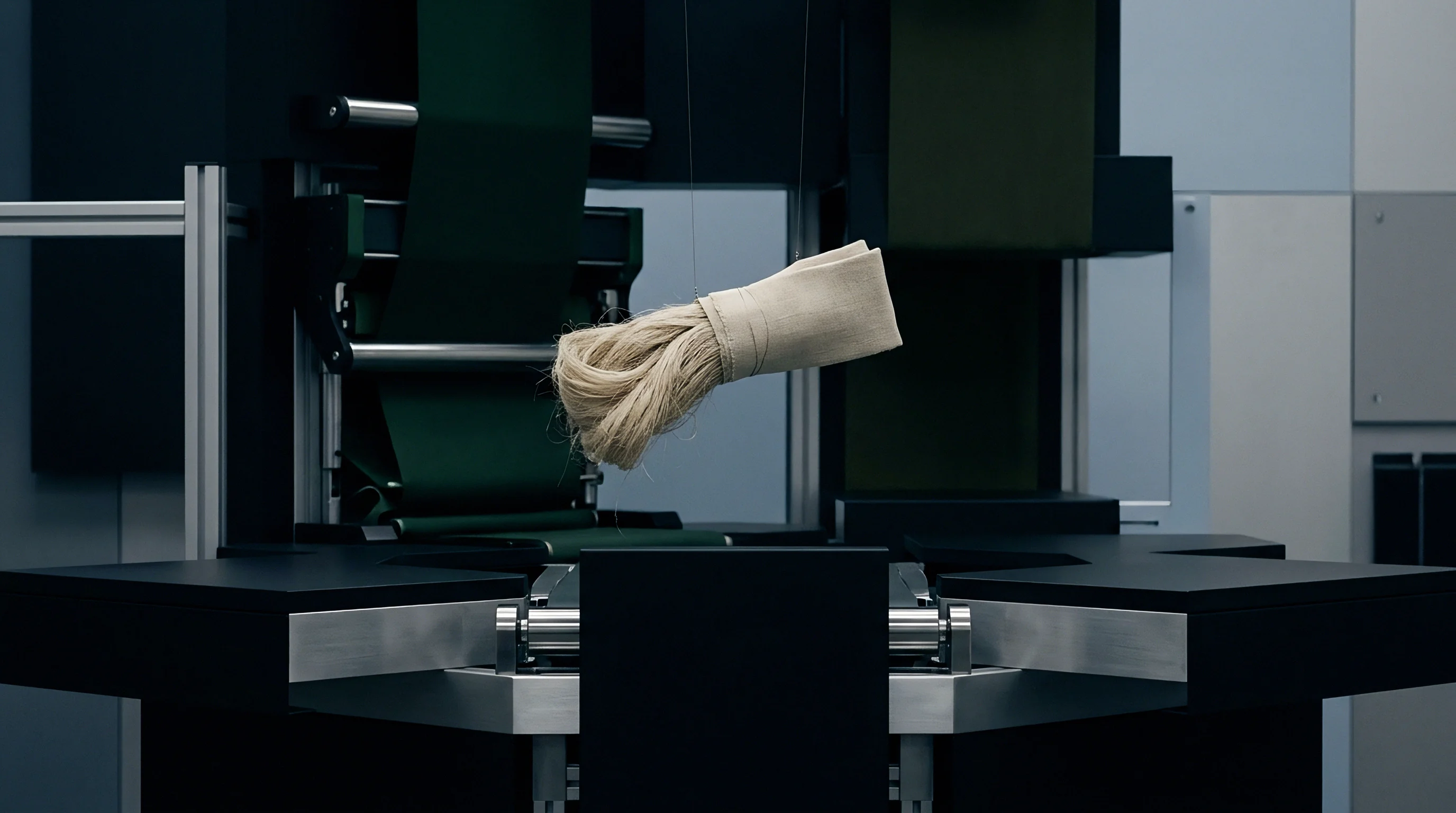
Velocity Differentials across the Attenuation Zone
Drafting rollers set the mechanical draw ratio by holding fixed rotational ratios between consecutive nips. The back rollers feed the roving strand at velocity v1, while the front rollers pull the attenuated fibre strand at higher velocity v2. The nominal mechanical draft ratio E equals v2 / v1.
In conventional wet spinning of long-staple flax, nominal draft ratios range from 10 to 20. High speeds force slippage. Dynamic draft modulation attempts to suppress mass surges by applying continuous velocity corrections Δ v2(t) to the front drafting roller, altering the instantaneous draft ratio to compensate for measured mass spikes entering the drafting field.
Physical constraints limit the rate and magnitude of velocity corrections. The acceleration of the front drafting roller is constrained by the inertia of the roller assembly, the torque capabilities of the driving servo motor, and the mechanical coupling stiffness. Furthermore, rapid changes in surface velocity induce inertial shear forces within the wet fibre bundle, causing premature fiber slip rather than controlled attenuation.
| Draft Speed (m/min) | Spatial Mass Wave Frequency (Hz) | Maximum Servo Acceleration (rad/s²) | Phase Shift at Control Loop (deg) | Correction Efficiency (%) |
|---|---|---|---|---|
| 15 | 8.5 | 120 | 12 | 91.4 |
| 25 | 14.2 | 220 | 28 | 82.0 |
| 35 | 19.8 | 350 | 54 | 61.5 |
| 45 | 25.5 | 450 | 98 | 24.1 |

Spatial Wave Lengths and Actuator Latency
Positioning optical sensors relative to the front roller nip determines total signal transport delay. The physical distance ds between the mass detection sensor and the drafting point creates a transit delay td = ds / v1. As drafting speed increases, td decreases, reducing the time window available for signal processing, transfer function computation, and motor speed adjustment.
Drive lag breaks roving. If the actuator response latency exceeds td, the speed correction arrives at the nip point after the target mass variance has already passed, amplifying mass fluctuation instead of dampening it.
At draft ratios exceeding fifteen to one, an actuator response lag above twelve milliseconds doubles mass variation in flax sliver.
Modulation limits emerge when short-term spatial wavelengths match the physical nip line contact width. When mass surges occur over lengths shorter than the drafting roller nip width, local attenuation adjustments become impossible because the roller grips multiple mass zones simultaneously.
- Stick-slip transition failure occurs when rapid roller speed increases overcome static inter-fibre friction instantly, converting controlled draft into catastrophic bundle breakdown.
- Resonant drafting wave amplification takes place when the closed-loop frequency matches the natural drafting wave frequency dictated by mean fibre bundle length.
- Roller surface slip manifests when drive motor torque exceeds the grip coefficient between the synthetic rubber roll cover and the wet flax strand.
- Roving twist unwinding happens when high-frequency speed modulation imparts reverse torsional oscillations into the incoming wet strand.
When velocity modulation limits are exceeded during rapid mass surges, the drafting rollers slip completely against the saturated fibre matrix, causing an instantaneous drop in draft force that leaves massive thick places in the drawn yarn and results in immediate end breaks at the spinning frame.

Rheology
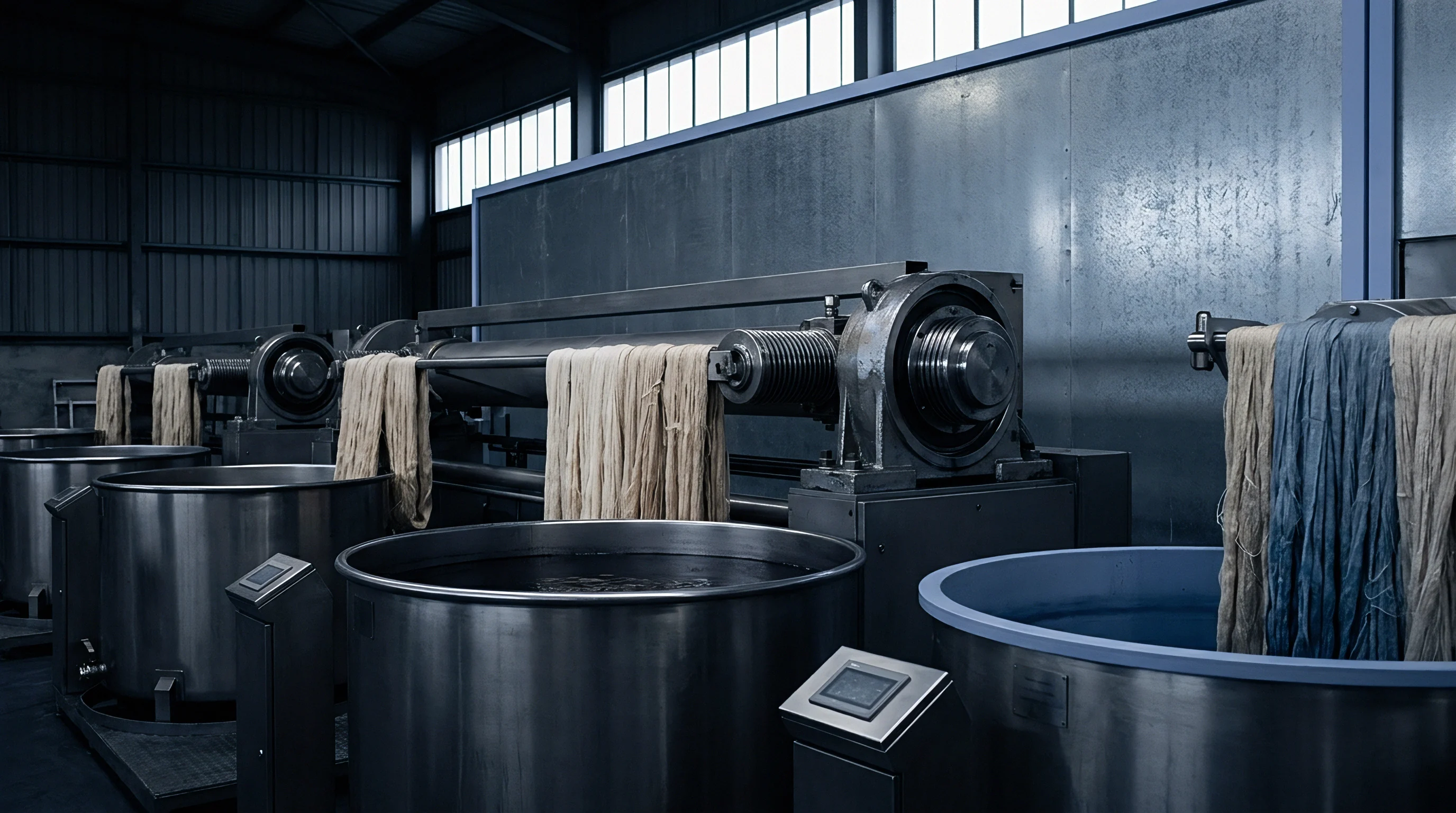
Pectin matrix dissolution during wet spinning changes the inter-fibre friction from static dry contact to hydrodynamic lubrication. Roving passes through a hot water bath prior to entering the drafting rolls, raising the core moisture content above 80 percent based on dry fibre mass. The liquid medium plasticizes the cell wall polymers and dissolves the soluble calcium pectate layers holding technical fibre bundles together.
This phase transformation converts rigid inter-bundle bonds into a viscous gel, permitting smooth sliding between individual elementary fibres.

Thermal Softening Kinetics of Pectinous Inter-Fibre Matrix
Hot water immersion at sixty degrees Celsius alters the calcium pectate gel inside bast structures. Pectin softening follows temperature-dependent reaction kinetics governed by the Arrhenius relation. Higher water temperatures accelerate the breakdown of inter-bundle ester bonds, lowering the shear yield stress of the middle lamella.
Water temperature shifts viscosity. At water bath temperatures below 50 degrees Celsius, incomplete pectin softening maintains high inter-fibre cohesion, requiring excessive draft forces that cause mechanical fibre breakage. At temperatures above 75 degrees Celsius, aggressive pectin degradation reduces cohesion to levels where bundles separate without control under minimal tension.
Higher bath temperatures lower fluid viscosity and reduce drafting force while increasing bundle slip risk.
Bath residence time governs thermal energy transfer into the roving center. At high delivery speeds, the core of a dense 4.0 ktex roving fails to reach bath temperature before arriving at the drafting rollers, creating an uneven viscosity gradient across the strand cross-section. Short fibres slip first. Outer bundles undergo full pectin softening while inner bundles remain rigid, generating non-uniform draft behavior during speed modulation.
Viscous Drag Forces during Bundle Separation
Fluid resistance opposing bundle slippage scales directly with drafting speed and bath fluid density. The dynamic liquid viscosity η of the bath solution decreases as temperature rises, following an exponential decay curve. During active liquid draft modulation, accelerating the drafting speed alters the local shear rate dotγ within the liquid film separating adjacent fibres.
Because the pectin-water solution behaves as a non-Newtonian, pseudoplastic fluid, increasing the shear rate lowers the apparent viscosity.
The total friction force Ff resisting fibre sliding combines boundary lubrication friction and hydrodynamic drag. Friction governs draft force. At low drafting speeds, boundary friction dominates, determined by chemical surface properties and normal contact pressure. At high drafting speeds, hydrodynamic drag dominates, governed by fluid viscosity, shear surface area, and relative sliding velocity.
Dynamic velocity modulation alters the balance between boundary and hydrodynamic friction continuously, introducing non-linear force spikes that challenge motor control stability.
Flax scutching and hackling suppliers frequently attribute yarn count variation to uneven retting degree across raw material lots, claiming that natural variation in pectin content invalidates machinery speed calibration limits during wet spinning operational runs.

Hydraulics
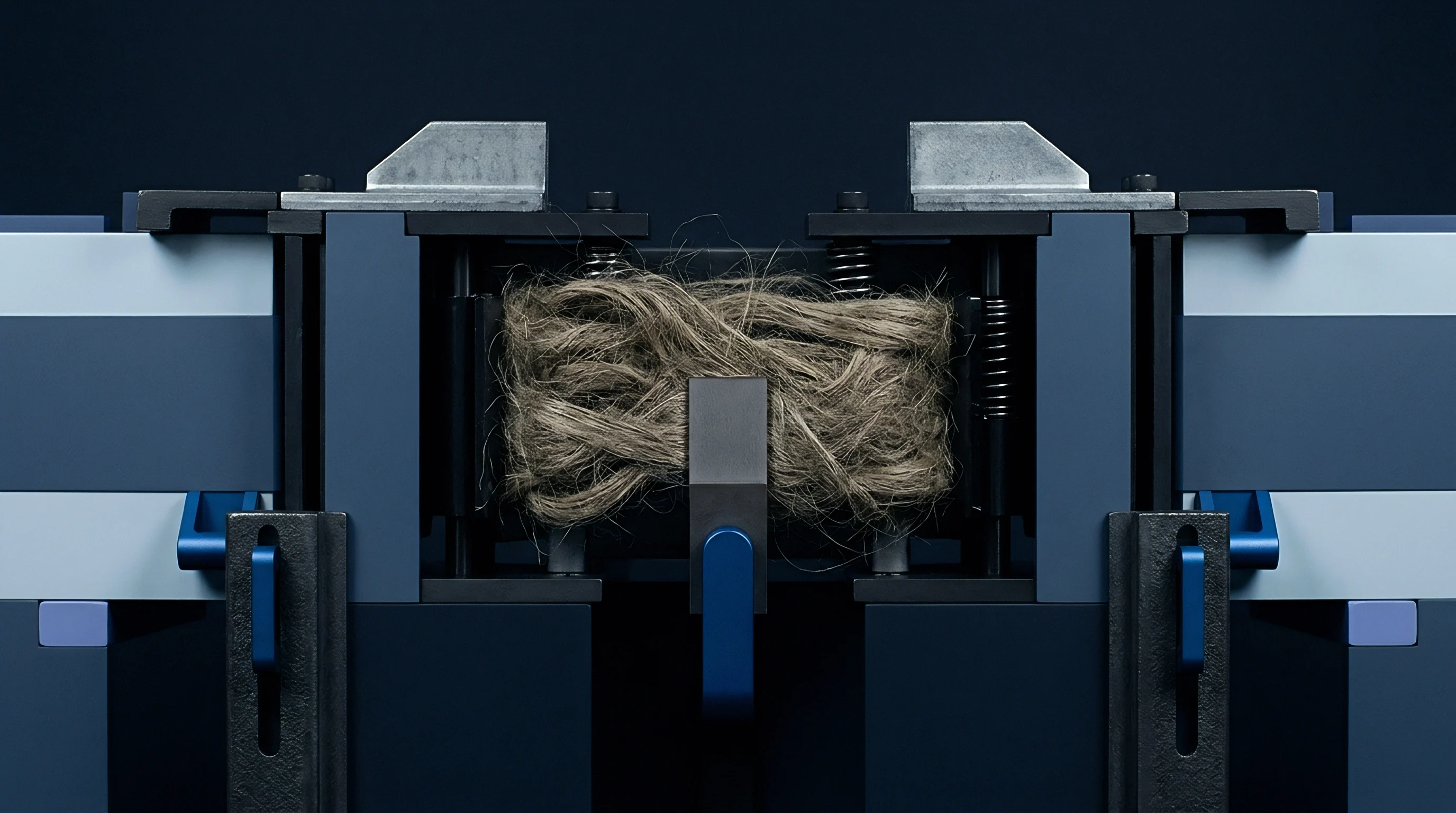
Fluid entrainment between rubber-covered drafting rolls creates squeeze films that alter physical nip pressure. As wet flax roving enters the roller nip, excess surface liquid is displaced backward against the incoming strand, forming a standing liquid bead ahead of the contact zone. Hydrodynamic pressure within this fluid wedge counteracts the mechanical clamping pressure exerted by the top roller loading springs.
When drafting speeds increase, hydrodynamic pressure rises, lifting the top roller slightly and reducing effective nip friction.

Elastohydrodynamic Film Thickness at Drafting Nips
Roller deformation under mechanical loading creates a variable pressure distribution inside the wet nip zone. Rubber covers with Shore A hardness values between 75 and 85 deform elastically under loads ranging from 200 to 400 Newtons per end. This contact zone width typically measures 2 to 4 millimetres.
Fluid entering the nip experiences extreme pressure gradients, establishing an elastohydrodynamic lubrication film. Wet roving holds water. Film thickness h0 increases with drafting speed v2 and liquid viscosity η, following power-law relations established in lubrication theory.
| Bath Temp (°C) | Surfactant Conc. (g/L) | Kinematic Viscosity (mm²/s) | Friction Coeff. (μ) | Critical Slip Speed (m/min) |
|---|---|---|---|---|
| 50 | 0.0 | 0.55 | 0.38 | 22 |
| 60 | 0.5 | 0.47 | 0.29 | 31 |
| 70 | 1.0 | 0.41 | 0.21 | 38 |
| 80 | 1.5 | 0.36 | 0.14 | 44 |

Is Real-Time Speed Compensation Viable above Forty Metres per Minute?
Operating wet drafting frames at high throughput collapses the fluid boundary layer thickness within the water bath. Liquid drag forces on the surface of the strand strip away boundary water layers, altering the internal hydrostatic pressure of the roving bundle. When velocity modulation triggers sudden roller accelerations at delivery speeds exceeding 40 metres per minute, the fluid film thickness inside the nip exceeds the critical threshold required to maintain solid contact between roller surface and bast fibres.
The resulting hydroplaning effect destroys draft force control entirely.
Operators calibrating liquid draft zones implement systematic setup verification steps prior to authorizing high-speed production runs on long-staple flax lots.
- Measure water bath temperature at four distributed points across the spinning trough using calibrated immersion thermocouples to verify thermal uniformity within plus or minus one degree Celsius.
- Adjust surfactant chemical metering pumps until liquid surface tension drops below 32 millinewtons per metre as confirmed by bubble pressure tensiometry.
- Set top roller mechanical spring loads to 350 Newtons per spin point using static load cell gauges placed between top and bottom steel rolls.
- Confirm rubber roll cover hardness using a Shore A durometer, replacing covers that deviate by more than three points from the nominal 80 Shore A specification.
- Run a baseline 50-metre sliver sample without dynamic speed modulation to record static mass variance profiles across all active spinning positions.
Excessive liquid carryover into the draft zone alters mass measurements on capacitive sensors, introducing artificial density spikes caused by water droplets rather than actual fibre bundle concentrations. Draft waves degrade yarn. Proper drainage wicks must clear surface fluid prior to optical profiling.
Compliance with ISO 2060 yarn linear density testing requires pre-conditioning samples at sixty-five percent relative humidity prior to mass verification.
Under international yarn supply agreements operating under ISO 6741 commercial mass rules, yarn delivered with linear density variations exceeding contract agreement thresholds due to unmanaged liquid drafting slip triggers automatic rejection of the affected lot and financial debiting of mill processing costs.


Feedback
Real-time measurement of roving cross-section provides the input variable required for closed-loop motor acceleration. Optical arrays evaluate strand shadow width, while capacitive sensors measure dielectric permittivity variations across the wet fibre bundle. Because dielectric constants for pure flax cell walls range between 4 and 5, while water possesses a dielectric constant near 80, moisture fluctuations introduce substantial noise into mass readings.
Advanced feedback units combine optical width profiling with high-frequency capacitive sensing to isolate fibre mass from liquid content variations.

Capacitive Mass Profiling and Sensor Spatial Resolution
Dielectric sensors evaluate volumetric variations in wet technical flax bundles as the strand enters the draft field. High-resolution sensor plates must feature narrow gap geometry, typically 1.0 to 2.5 millimetres, to capture short-term mass fluctuations. Sensors detect mass surges. As the wet roving passes through the sensor gap at speed v1, the spatial resolution limit prevents detection of mass variations occurring on scales smaller than the physical length of the sensing electrode.
Consider a representative worked example of wet-spun flax roving attenuation. A 4.2 ktex (g/km) wet flax roving passes an optical sensor positioned 35 millimetres upstream of the back roller nip. The target count is Nm 26, corresponding to a final yarn linear density of 38.5 tex.
Achieving this count requires a nominal draft ratio E = 109.1, split into a pre-draft ratio E1 = 1.15 between feed roll and back draft roll, and a main draft ratio E2 = 94.9 across the wet drafting zone. The back roller feeds roving at v1 = 0.25 metres per minute, yielding a delivery speed v2 = 27.28 metres per minute at the front roller.
When the upstream sensor detects a short-term mass surge rising to 4.8 ktex over a strand length of 8 millimetres, the control system calculates the required main draft ratio adjustment. To maintain a constant output linear density of 38.5 tex, the main draft ratio must increase to E2′ = 108.5. This requires accelerating the front roller from v2 = 27.28 metres per minute to v2′ = 31.19 metres per minute, representing an instantaneous speed increase of 14.3 percent.
The transport time for this target mass segment to cover the 35-millimetre distance from sensor to drafting point equals td = 0.035 / (0.25 / 60) = 8.4 seconds. While this transport time appears generous, the low feed velocity means the mass segment remains inside the sensor gap for 1.92 seconds. The control loop must compute the target velocity profile, accelerate the front roller assembly, hold the elevated speed for the precise duration required to process the 8-millimetre segment, and decelerate back to nominal speed without overshooting.
At a main draft ratio of 94.9, the 8-millimetre high-mass segment stretches to 759.2 millimetres of delivered yarn. If the front roller acceleration lags by just 0.15 seconds, a 68-millimetre segment of uncorrected thick yarn passes through the nip, followed by an over-corrected thin spot of equal length, creating a severe double-defect in the finished yarn.

Transfer Function Phase Lag and Wave Amplification
Drafting wave resonance occurs when the closed-loop control delay matches half the transport time between sensor and nip point. At this critical phase lag of 180 degrees, the controller applies maximum velocity acceleration to a thin place rather than a thick place, artificially inflating total yarn variance. Mass peaks cause breaks. Mathematical transfer functions governing speed-controlled drafting frames must incorporate phase-lead compensation units to stabilize loop response near resonance frequencies.
- Capacitive moisture compensation isolates water distribution shifts from genuine fibre mass variations.
- High-torque direct-drive motors eliminate mechanical gearbox backlash in the front roller drive train.
- Adaptive predictive filtering models spatial wave movement through the bath zone using real-time cross-correlation.
- Optical shadow array calibration corrects for flat bundle cross-sections rotating as they pass the sensing point.
Capacitive sensors overestimate wet flax mass when water bath salinity fluctuates during continuous spinning operations.
What fundamental hardware limits constrain optical spatial resolution when evaluating wet, translucent flax strands carrying entrapped air micro-bubbles through high-speed draft zones?


Audit
Yarn mass irregular distribution dictates downstream weaving efficiency and final fabric appearance. Irregularities in spun linen yarn are classified into mass variation, measured as coefficient of variation (CV%), and discrete thin or thick places evaluated per thousand metres. Uncontrolled stochastic mass variance in the roving leads to high yarn count CV%, which degrades tensile strength and leads to elevated end breakage rates on high-speed rapier and air-jet looms.

Mass Coefficient Variation and Woven Mass Tolerances
Standard deviation of yarn count determines the frequency of structural thin spots that cause frame downtime. Wet-spun flax yarns produced without dynamic liquid draft modulation typically exhibit mass CV% values between 22 percent and 26 percent for Nm 26 counts. Implementing real-time draft modulation reduces yarn mass CV% to levels between 16 percent and 18 percent, directly suppressing short-term mass periodicities.
Count variance raises costs. Lower mass variation stabilizes the minimum break load of the yarn, enabling weavers to operate warping and sizing equipment at maximum speed without thread rupture.
| Yarn Count (Nm) | Modulation Regime | Mass CV (%) | Thin Places (-50% / km) | Thick Places (+50% / km) | Spinning Breaks (per 1000 sp-hr) | Yarn Cost Differential (€/kg) |
|---|---|---|---|---|---|---|
| 26 | Unmodulated Static | 24.2 | 180 | 310 | 42 | Baseline |
| 26 | Modulated Dynamic | 17.1 | 35 | 62 | 11 | + 0.85 |
| 60 | Unmodulated Static | 28.5 | 420 | 680 | 88 | Baseline |
| 60 | Modulated Dynamic | 21.0 | 95 | 140 | 24 | + 1.40 |
Landed Yarn Valuation Based on Spectrogram Cleanliness
Commercial pricing reflects yarn evenness parameters measured on high-speed capacitive testing instruments. Spectrogram analysis reveals periodic draft waves as distinct peaks rising above the ideal random-fibre mass variance curve. Yarns showing prominent drafting wave peaks at spatial wavelengths corresponding to double the mean fibre length suffer commercial price discounts ranging from 8 percent to 12 percent due to their propensity to form unsightly streak patterns, known as fabric moiré, in flat woven linen cloth.
Fine yarns demand control. Modulated drafting machinery suppresses these spectrogram peaks, restoring the ideal random distribution expected of premium long-staple flax strands.
Investing in dynamic draft modulation hardware increases initial capital outlay per spinning frame while simultaneously requiring higher maintenance spending on optical sensor cleaning and servo calibration. Draft ratios alter twist. However, the resulting reduction in yarn mass variation delivers lower end-breakage rates, higher machine productivity, and premium commercial pricing per finished metre of fabric that outweighs raw processing costs.
Strict adhesion to maximum roller acceleration limits prevents inter-fibre hydrodynamic slip and preserves bundle structural integrity across high-speed wet drafting fields.