
Viscoelastic Stress Decay Mechanics in Dense Flax Yarns
Dense flax yarn stress decay stems from matrix shear along cellulose microfibrils, requiring active let-off compensation to prevent restart density defects.
Dense flax yarn stress decay stems from matrix shear along cellulose microfibrils, requiring active let-off compensation to prevent restart density defects.

Active tension control and asymmetrical dobby dwell minimize stress spikes on low-stretch flax warps to prevent end breaks and starting marks.

Calibrating electronic let off parameters requires tuning PID loops and phase offsets to manage flax fiber rigidity and prevent dynamic tension spikes.

Night-shift linen weaving defects disappear when electronic let-offs calibrate dynamically to mill hall relative humidity drops and machine thermal expansion.
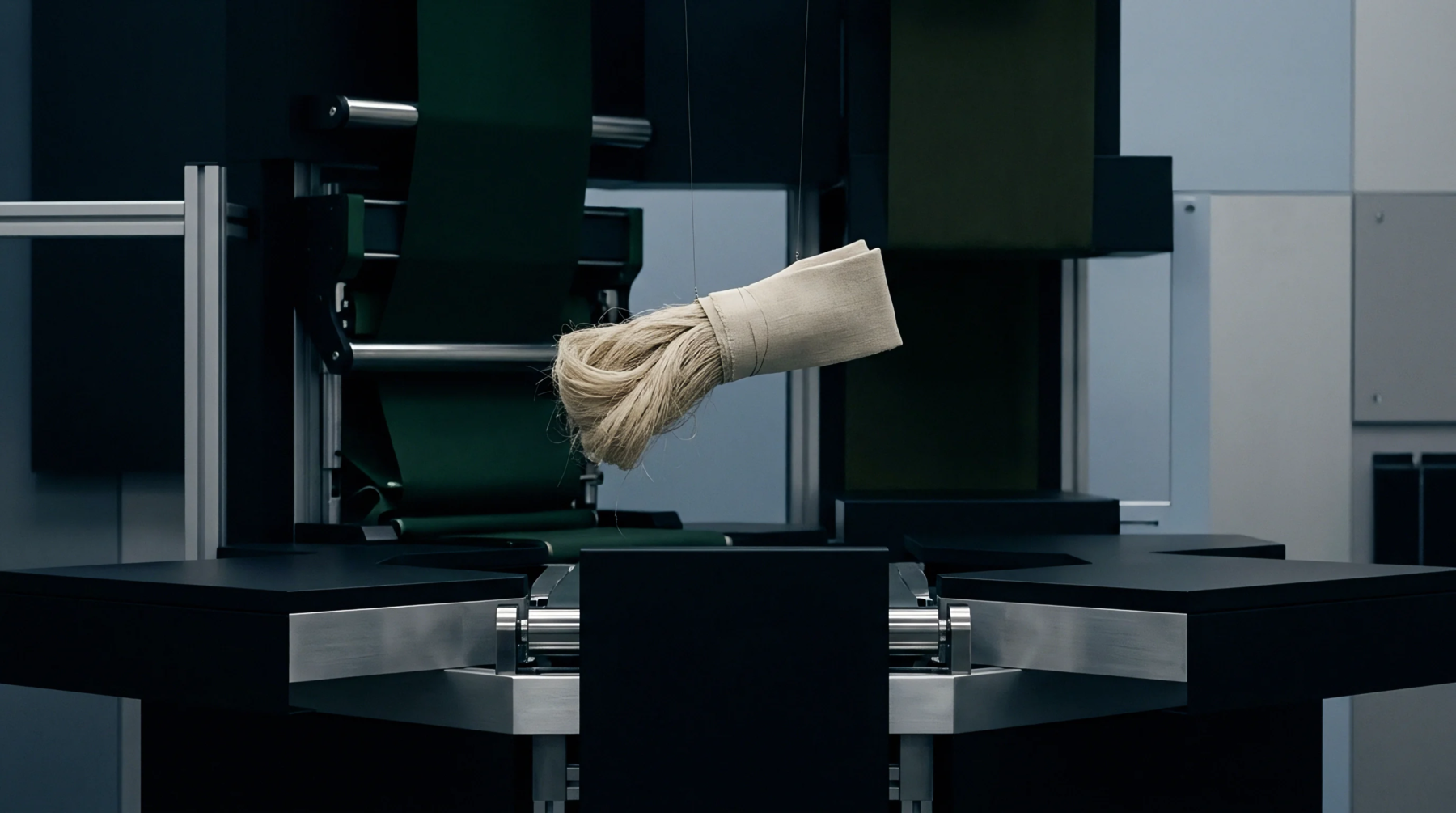
Controlling peak dynamic warp strain in fine linen weaving requires balancing backrest roller damping, shed geometry, and moisture to prevent yarn fatigue.

Managing off-loom flax warp crimp contraction requires precise reed denting allowances, ELO tension tuning, and size solubility control to hit target grey widths.

Greige reed marks and starting marks map directly to reed wire spacing and loom stoppage dynamics, requiring electronic let-off adjustment to eliminate defects.

Transitioning hand-loom samples to automated looms requires increasing warp cover factor and tuning shed dynamics to withstand high-speed night-shift tension.
Expertise is a utility, not a secret. sentiention™ publishes its working knowledge as open reference: intelligence layer covering the materials it sources, the markets it enters, and the reference that serves both.