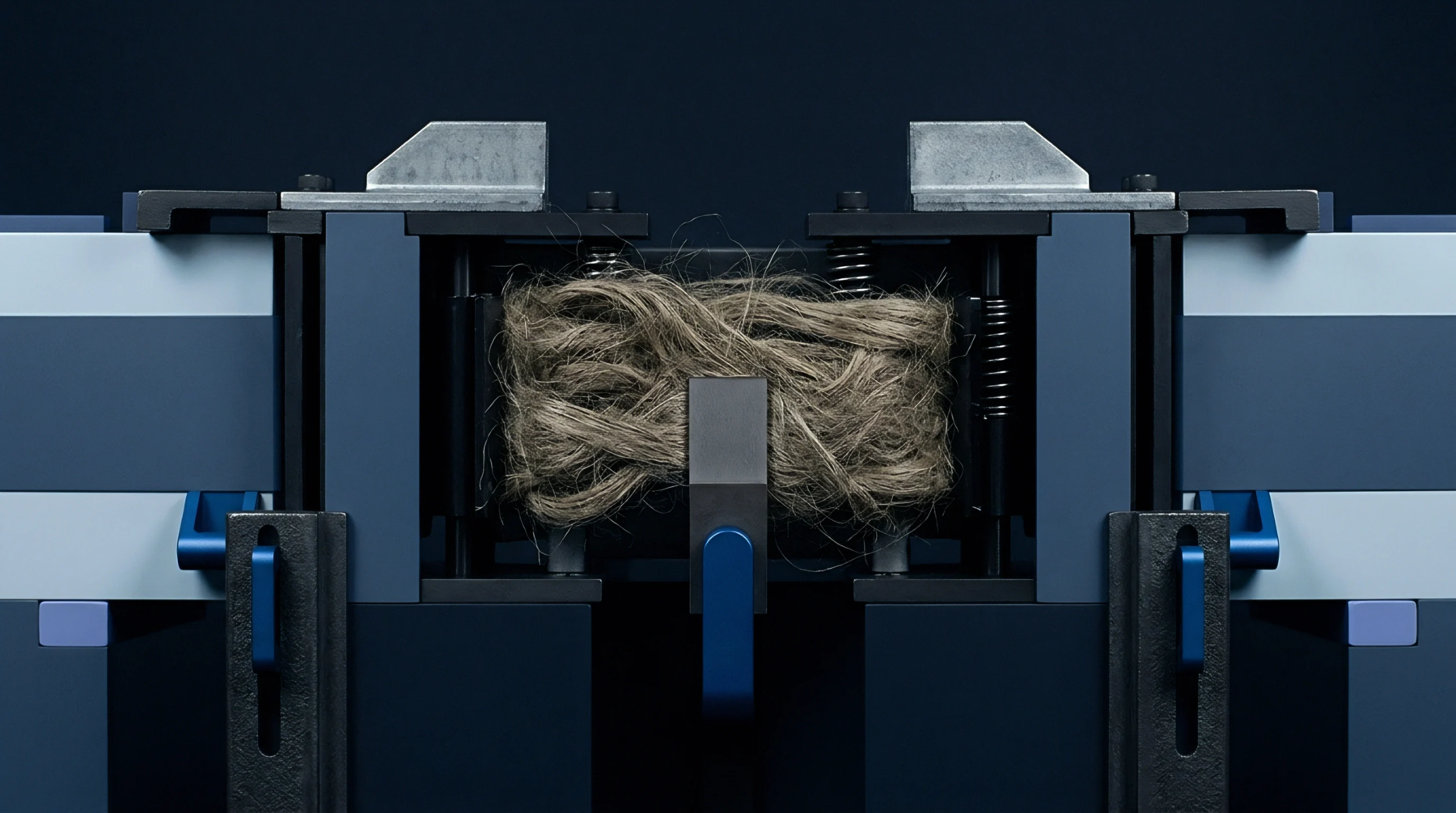
Fine Count Flax Warp Tensile Fatigue in High Speed Shedding
Fine flax warps require asymmetrical shed timing and controlled PVA size penetration to prevent tensile fatigue breaks above 550 picks per minute.
Fine flax warps require asymmetrical shed timing and controlled PVA size penetration to prevent tensile fatigue breaks above 550 picks per minute.
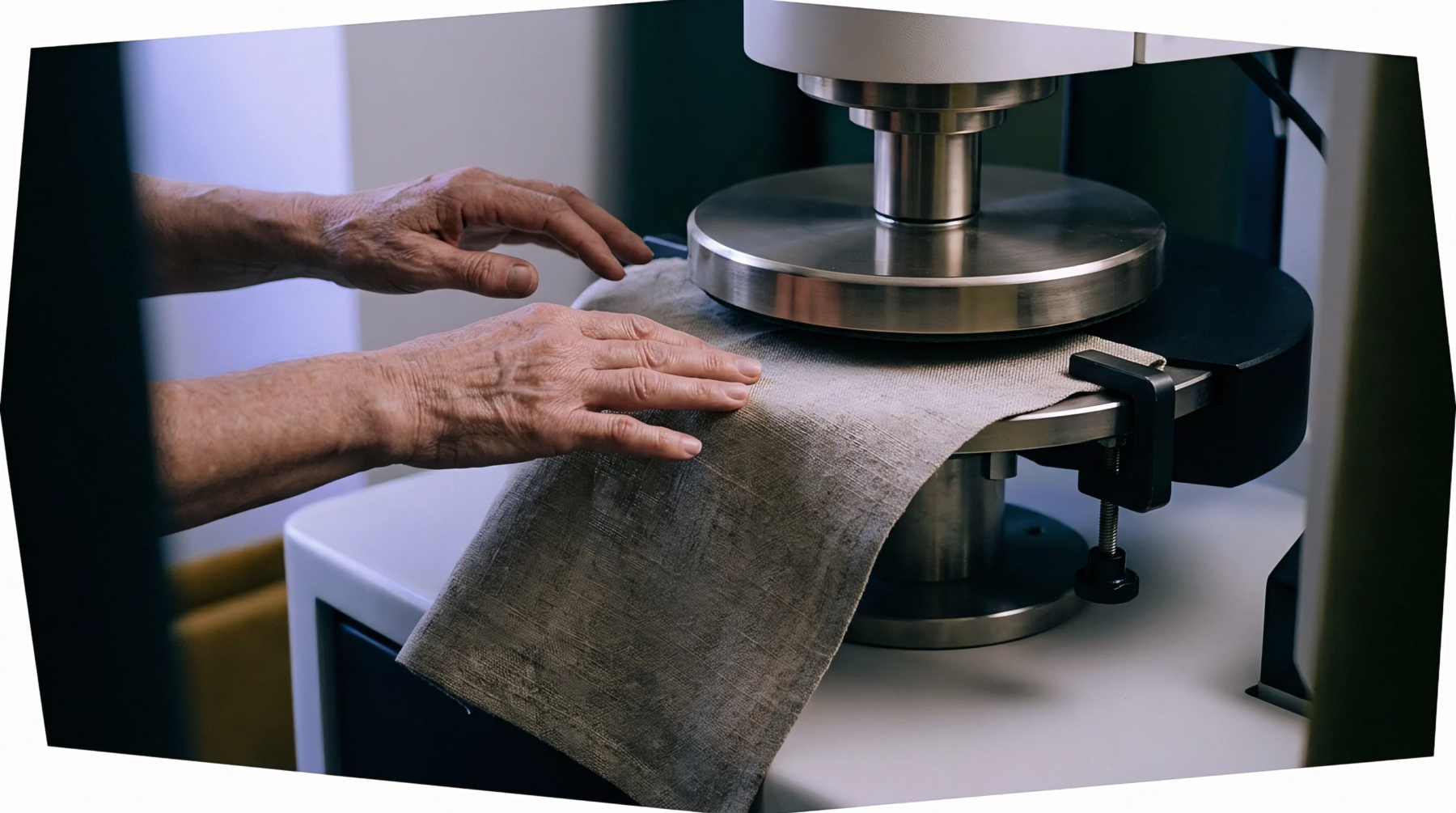
Dynamic relay nozzle pressure gradients eliminate pick stalling in high sett linen while holding air consumption below fifteen cubic meters per loom hour.

Calibrating loom shed geometry to low-stroke asymmetric settings cuts flax warp strain below 1.2 percent, reducing end breaks and lowering metre production costs.

Dynamic tension peaks on rapier looms limit linen weaving speeds by exploiting lower-tail Weibull defects, requiring precise shed geometry to control breaks.

Limiting fine flax warp elongation below two percent through asymmetric shed geometry preserves loom speeds above five hundred picks per minute.
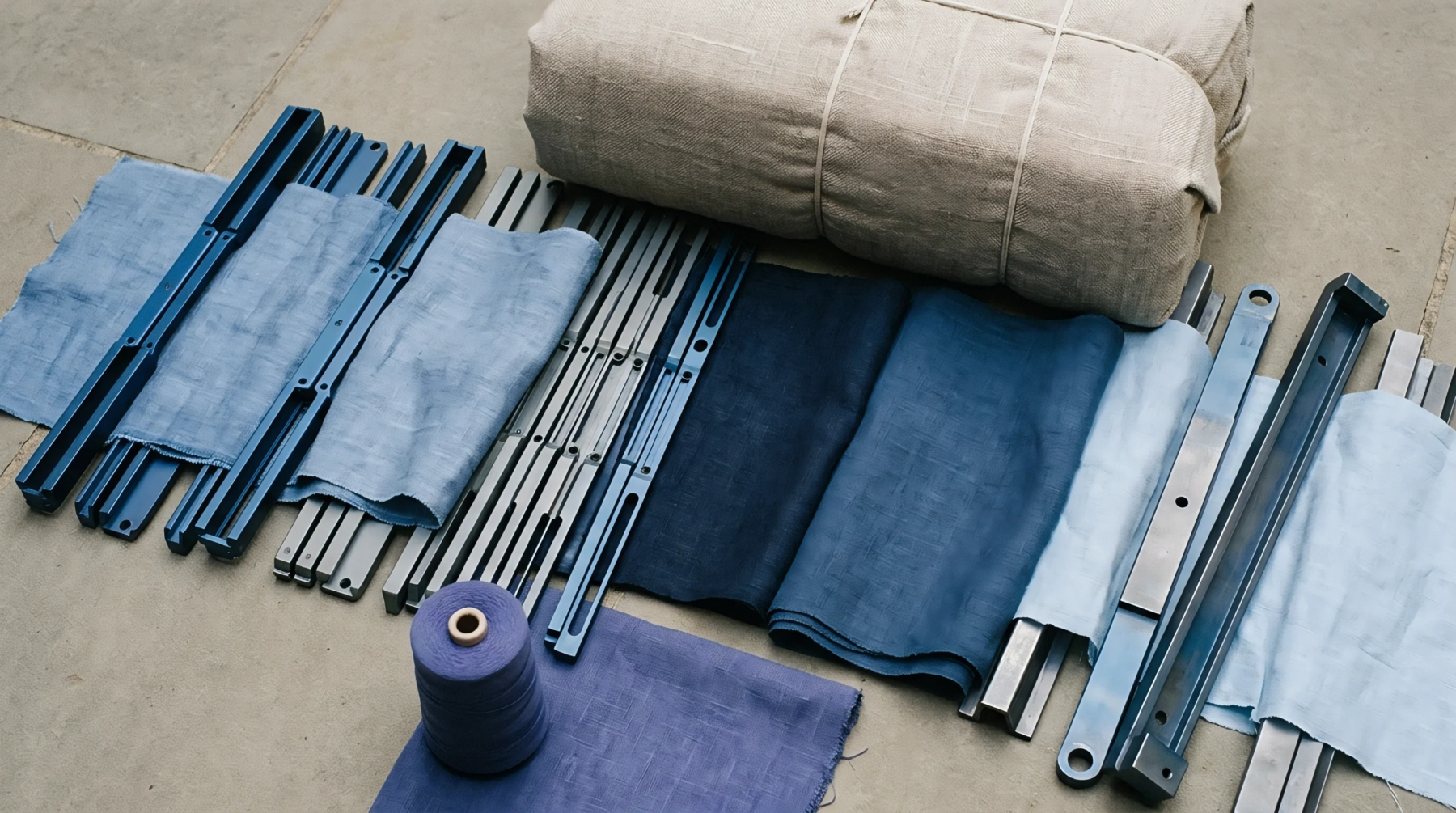
Dynamic beat-up force in high-sett bast textiles scales with yarn bending modulus and crimp resistance, dictating loom warp stoppage rates.

Distributing bast fiber warp ends across 8 or 12 harness frames expands heald eye clearance, eliminating inter-yarn friction and reducing warp breakage rates.

Calculating reed allocation for dense plain linen requires balancing yarn swollen diameter against reed air space ratio to prevent warp end friction stops.

Auditing wet spun flax pairs isotope spectrometry with mass balance logs to expose undocumented fiber blending masked by paper transaction certificates.

Core sizing penetration ratios exceeding 0.65 anchor bast microfibrils, cutting humidity warp fatigue stops by sixty percent on high-speed rapier looms.

Polymer binders preserving tensile strength under loom abrasion require low bath viscosity, ductile synthetic additives, and precise surface encapsulation.

Optimizing sizing chemistry for wet spun flax requires modified starch and polyvinyl alcohol blends targeting eight percent add-on to bind brittle surface fibrils.

Comber board core temperatures above fifty degrees Celsius cause differential cord elongation, distorting linen warp sheds and causing severe center-cloth defects.

Derating ultra-high-speed damask looms to 820 rpm prevents comber board overheating, cord elongation, and severe four-point greige float defects.

Commercial mass adjustment isolates reversible hysteretic moisture desorption from true bast fiber shedding through certified oven-dry testing.

Forced convection during high speed shed execution strips moisture from linen yarns within ninety seconds, dropping regain below thresholds where breaks spike.
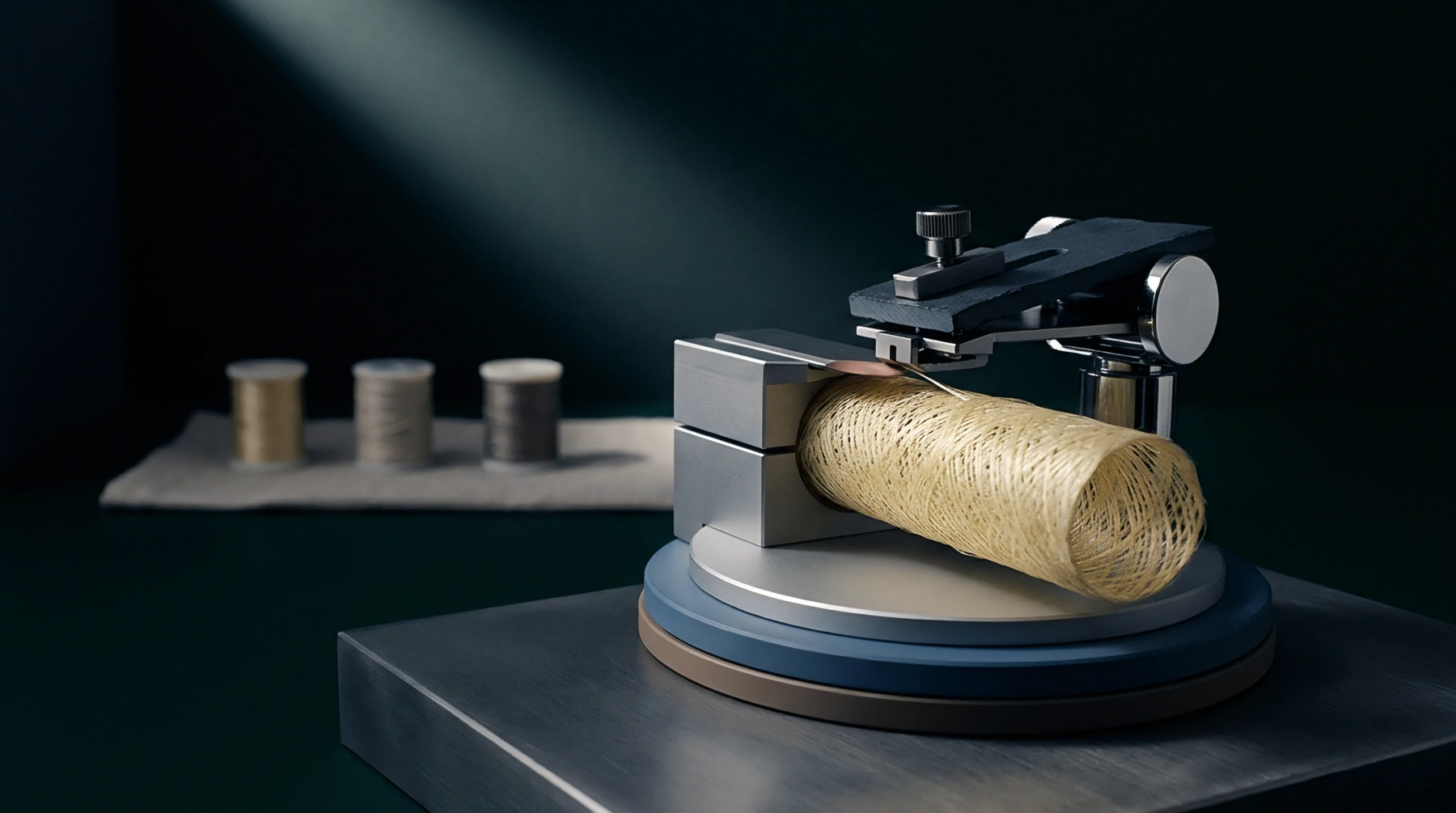
Dynamic shedding stress induces progressive plastic set in flax yarn, cutting elastic recovery and causing warp fatigue breaks that reduce loom efficiency.

True linen yarn count requires converting observed scale mass to standard commercial regain mass, preventing financial loss and loom efficiency drops.

Rapier crimp exchange calculations incorporate velocity-induced yarn flattening and transient shed tension to prevent off-loom greige width shortfalls.

Basic fractional cover factor calculations in linen require adjusting nominal yarn diameter for flax packing density and beat-up flattening before computing combined system surface cover.

Elastic sizing films, asymmetric shed timing, and capped loom speeds prevent yarn abrasion and tension rupture in ultra-high-density flax constructions.

Yield discrepancies in wet spun flax shift assist values, demanding formal customs reconciliation of actual mass balance, tow salvage credits, and duty deltas.

Polymeric size degradation on fine flax during rapier insertion results from brittle shear failure, mitigated by PVA-CMC blending and seventy percent humidity.

Calculated warp break frequency in sized ring linen requires modeling dynamic loom stress and yarn flaws, where optimal sizing limits stops below 2 per 100k picks.
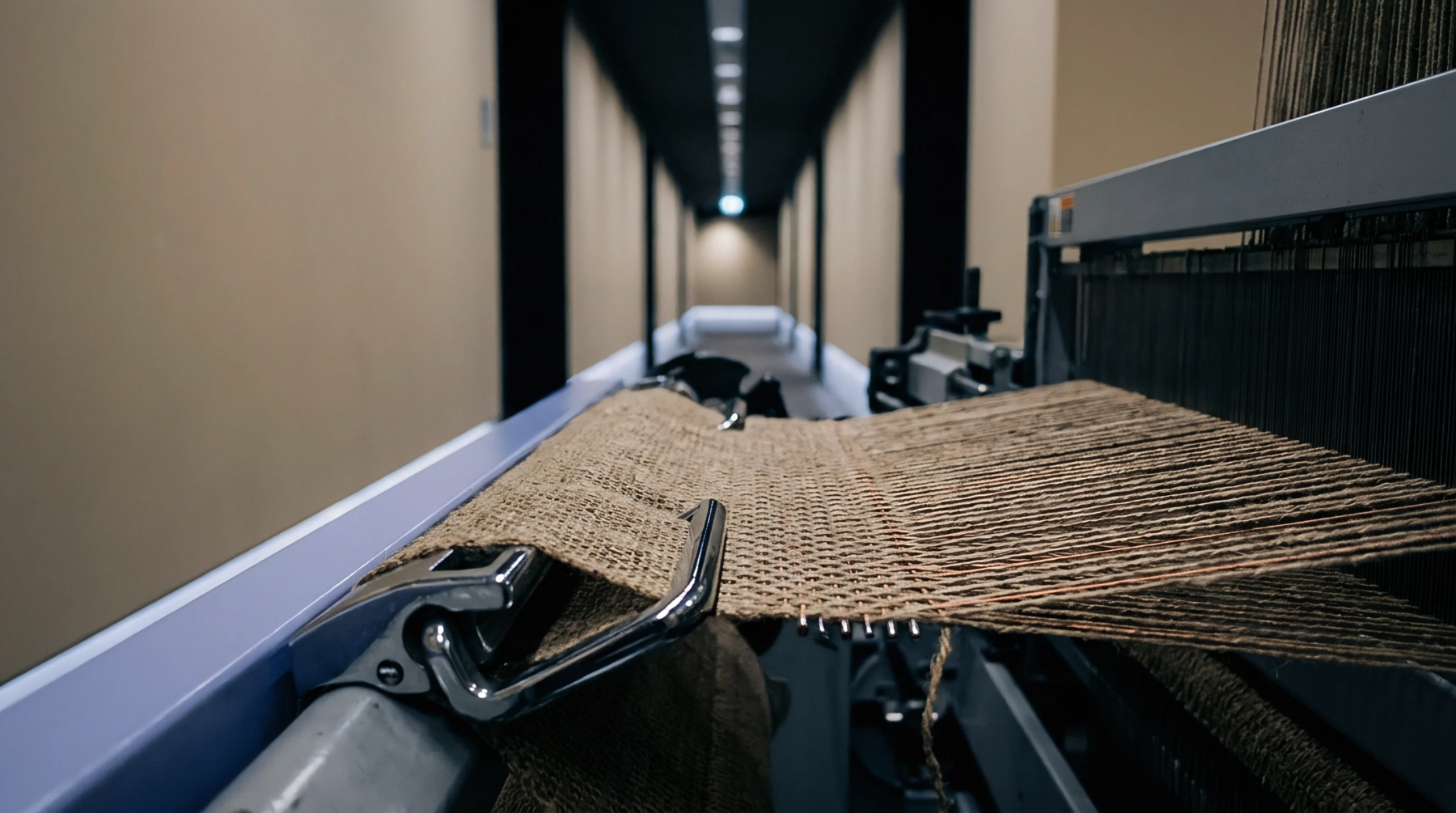
Cyclic tension peaks during dobby shedding induce progressive pectin node fracture in wet spun flax warps causing localized end breaks at low total strain.
Optimizing wet spun linen warp single end strength demands tight roving bath hydrolysis, low-temperature autoclaving, and flexible modified starch sizing.

Residual calcium cross linked homogalacturonan in the middle lamella governs interfibre shear strength, dictating high-count wet-spun flax yarn tenacity.
Polygalacturonase cleavage hydrolyzes middle lamella homogalacturonan, causing premature inter-fibre slip in wet drafting and lowering yarn tenacity below 22 cN/tex.

True dimensional stability in woven linen requires modeling the hygrothermal relaxation of bast microfibrils and mechanically restoring warp crimp via compressive shrinkage.

Resolving vision-to-perch point discrepancies requires spatial fault clustering, ASTM D5430 four-point caps per linear metre, and selvedge coordinate calibration.
Expertise is a utility, not a secret. sentiention™ publishes its working knowledge as open reference: intelligence layer covering the materials it sources, the markets it enters, and the reference that serves both.