Wet Spun Linen Warp Single End Strength Optimization
Optimizing wet spun linen warp single end strength demands tight roving bath hydrolysis, low-temperature autoclaving, and flexible modified starch sizing.


Tenacity
A creel loaded with 56 Lea wet spun flax sits beside a rapier frame geared for 420 picks per minute, carrying an inherent tensile deficit before the warp beam ever turns. Mill sheets routinely log wet spun flax tenacity between 32 and 48 centinewtons per tex, measured dry under ISO 2062 conditions at 500 millimetres gauge length. That average masks severe variance: flax single ends show a breaking tenacity coefficient of variation between 18 and 26 percent.
Outliers dipping below 16 centinewtons per tex drop the wires and tear under peak tension during shedding.
Linen gives no warning.
Under ISO 2062 dry tensile evaluation at 65 percent relative humidity, wet spun 56 Lea flax carrying an 18 centinewton per tex lower quartile boundary generates eleven loom stops per hundred thousand picks.
Linear density variation across wet spun singles compounds this brittle failure. Flax bast fibres rely on crystalline cellulose cores held by pectin and hemicellulose matrices, but extraction separates the bundles unevenly, leaving thick nodes right against slip planes. When a harness lifts an end across a 320-millimetre shed depth, strain localizes at the narrowest cross-section.
Elongation at break stays between 1.8 and 2.5 percent, offering none of the mechanical give found in ring-spun combed cotton.
Single end failure penalizes shed output.
The operational gap between lea testing and single end testing creates false security on purchasing desks. Lea strength assessments under ASTM D1578 use a 120-yard skein on a wrap reel, spreading the tensile load across dozens of strands. Friction and mechanical interlock between loops bridge the weak spots and inflate the calculated tenacity.
Automated constant-rate-of-extension single end testing isolates individual structural flaws instead, recording the exact break load that triggers a loom stop at the reed.
| Count Metric | Lea Count | Mean Tenacity Centinewtons Per Tex | Elongation Percentage | Tenacity Variance Coefficient | Target Loom Speed Picks Per Minute |
|---|---|---|---|---|---|
| Nm 26 | 44 Lea | 38.4 | 2.4 | 18.2 | 480 |
| Nm 33 | 56 Lea | 35.1 | 2.1 | 21.4 | 420 |
| Nm 39 | 66 Lea | 32.6 | 1.9 | 23.8 | 370 |
| Nm 47 | 80 Lea | 29.2 | 1.7 | 25.6 | 310 |
High speed breaks brittle bast.
The difference between skein numbers and shed stop frequency shows up immediately in downtime and roll defects. When a single end parts behind the heald frame, the broken tail wraps adjacent ends within four picks, producing double picks, floats, or an outright reed stoppage while the weaver pulls mending yarn through the drop wires.

Rove
Thermal control in the roving trough dictates how technical flax bundles split into elementary fibres. During wet spinning, the roving runs through a water bath held between 60 and 75 degrees Celsius to hydrolyse the water-soluble pectins binding the filaments. Incomplete dissolution forces drafting rollers to fracture those technical bundles instead of sliding the filaments past each other, seeding micro-cracks along the single end axis.
Drafting rollers apply the physical attenuation under wet friction. If pressure on the fluted cast-iron cylinders falls below 12 bar, slippage produces thick slubs followed by over-drafted sections lacking adequate cross-sectional mass. These thin zones fall below 12 centinewtons per tex, parting instantly against back-rest roller oscillation.
Wet flax carries high modulus.
The chemical profile of retting water prior to spinning directly alters strand cohesion. Hard water high in dissolved calcium and magnesium cross-links free carboxyl groups on pectin chains, increasing the temperature required to soften the adhesive layer. Mills using softened water below 50 parts per million total dissolved solids obtain smoother filament sliding, reduced drafting resistance, and more uniform fibre distribution across the yarn cross-section.
- Retting Duration Range shifts from 72 to 120 hours under anaerobic water tank parameters to control pectin breakdown.
- Bath Caustic Titration holds free alkalinity below 0.05 percent sodium hydroxide equivalent to prevent cellulose polymer degradation.
- Roller Squeeze Hardness maintains 85 Shore A elastomeric coverings to prevent localized nip pressure variations.
- Draft Ratio Window stays locked between 11 and 16 to avoid tensile degradation caused by filament breakage in the trough.
Irregular single end breakage frequently occurs even on lots that fully meet the overall lea product standard agreed upon in the purchase confirmation.


Twist
Spindle speed and ring diameter set the twist multiplier locking drafted bast filaments in place. For wet spun flax warp yarns, standard metric twist factors range from 65 to 78, representing alpha values between 200 and 240. Too little twist permits elementary fibres to slip under longitudinal load; too much angles them against the yarn axis, introducing shear stresses that break brittle flax fibres at lower tensions.
Snarl formation disrupts warp preparation whenever lively, high-twist singles remain unconditioned. The yarn kinks back on itself the moment tension slackens on the warping creel. These snarls choke the warping comb, foul the drop wires, or snap at the sizing box nip.
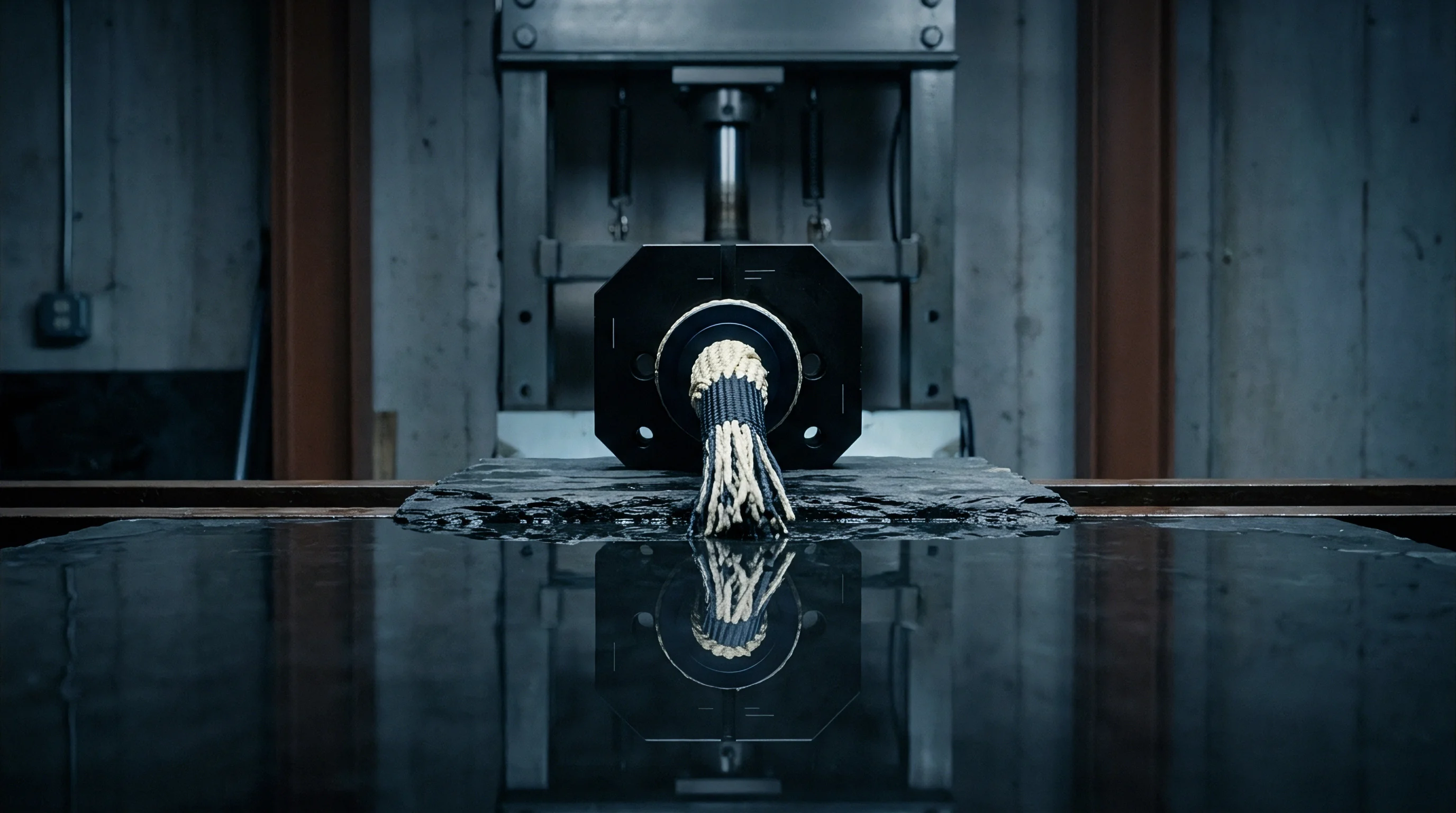
Does Autoclave Conditioning Stabilize Lively Singles?
Saturated steam relaxes the internal torque trapped in cellulose crystallites during flyer or ring twisting. Vacuum autoclave cycles operating at 85 to 105 degrees Celsius soften amorphous pectin bonds, allowing twisted internal chains to settle into their helical path without backing out. Running a double-evacuation cycle ensures steam penetrates through to dense wooden or perforated plastic spinning tubes.
| Autoclave Cycle | Temperature Celsius | Cycle Dwell Minutes | Snarl Tendency Turns Per Metre | Single End Tenacity Centinewtons Per Tex | Tenacity Retention Percentage |
|---|---|---|---|---|---|
| Atmospheric Untreated | 20 | 0 | 46 | 35.1 | 100.0 |
| Single Evacuation Steam | 85 | 30 | 18 | 34.4 | 98.0 |
| Double Evacuation Steam | 95 | 45 | 6 | 34.0 | 96.8 |
| High Heat Penetration | 115 | 60 | 2 | 28.9 | 82.3 |
The single end tenacity data recorded after an autoclave run rests on 500 individual breaks conducted on a 500-millimetre gauge length tester using samples aged 48 hours at standard atmosphere. Raising steam temperatures above 110 degrees Celsius damages hemicellulose, dropping tenacity below acceptable weaving margins. The trade-off between eliminating snarls and preserving tensile strength depends on strict thermal ceilings during package autoclaving.
Knot strength drops by half.
Automatic winders replace weaver knots with pneumatic or mechanical splicers. Knots form rigid bulges that hang up in heald eyes and reed dents, generating localized tension spikes that exceed the yield point of flax. Wet-assisted pneumatic splicing untwists, intermingles, and retwists filament ends, delivering a joint with 75 to 85 percent of parent strand tenacity while limiting thickness build to 20 percent.
Whether residual internal torque in wet spun singles can be fully quenched without initiating cellulose depolymerization during long autoclave cycles remains unresolved.

Dressing
Warp sizing shields flax single ends against cyclic abrasion from the loom harness. Unsized wet spun flax sloughs off powdery fibre dust within the first thousand picks, packing reed dents and running stop counts past workable limits. A proper size formula binds surface fibrils down to the core and forms a flexible film that tolerates cyclic shed extension without flaking off.
Cold starch crumbles under friction.
Loom speed sets the recipe requirements. Rapier machines running over 400 picks per minute produce heavy heald chafing, requiring high-adhesion film formers. Native potato or wheat starches provide strong tensile reinforcement, but their amylose gels turn rigid and split under repetitive bending.
Carboxymethyl starches and low-viscosity hydroxyethylated starches, blended with small fractions of acrylic co-polymers, supply the flex needed to match the narrow 2 percent elongation window of wet spun flax.
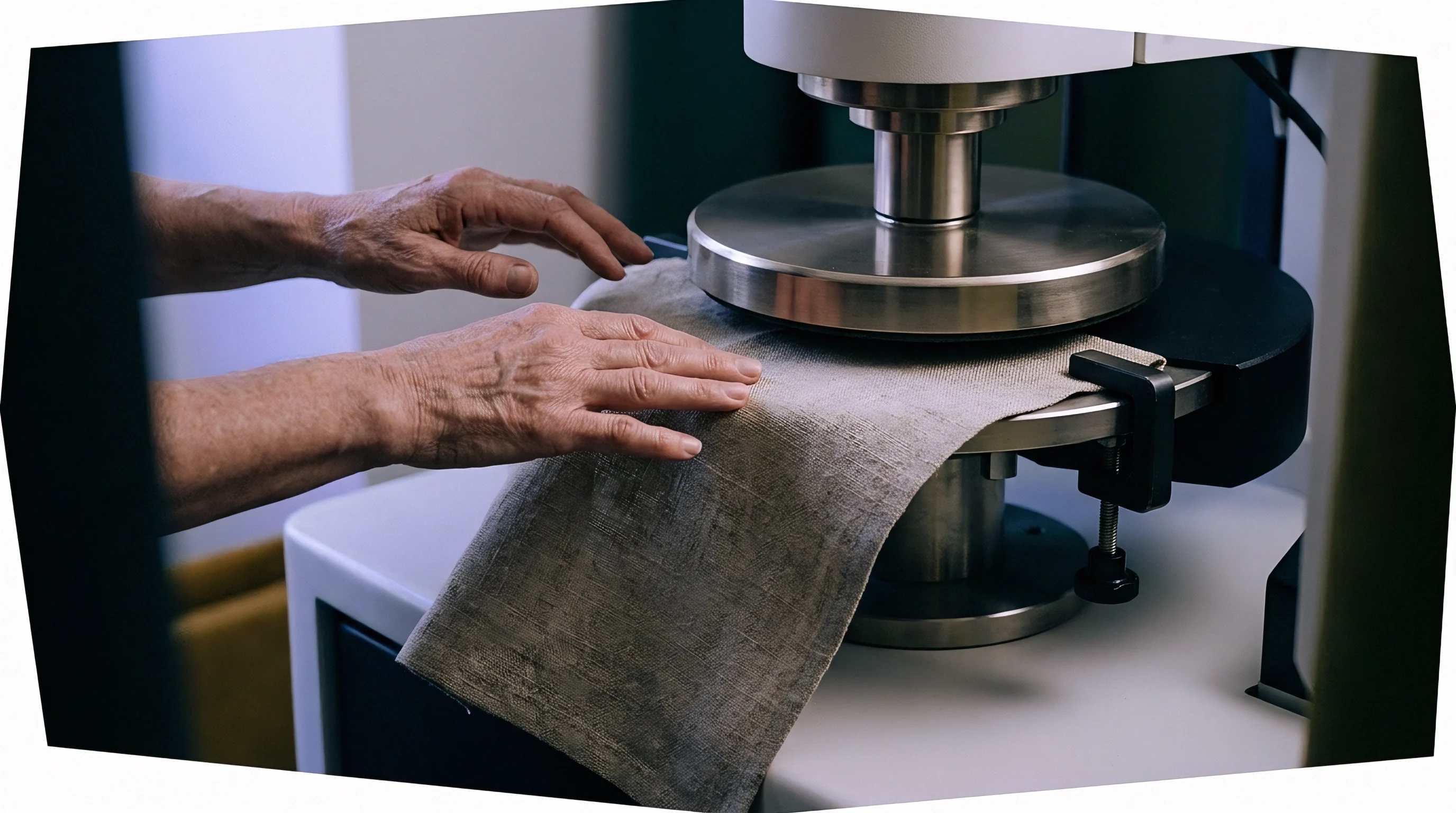
Can Modified Potato Starch Suppress Shedding Shed-Side?
Etherified and oxidized starches match the chemical character of flax cellulose while gelatinizing at lower temperatures between 55 and 65 degrees Celsius. Shorter molecular chains allow the liquor to penetrate the outer annular ring of the yarn rather than sitting as a brittle outer shell. This annular consolidation locks adjacent bast fibrils together, increasing single end tenacity 15 to 25 percent above greige levels and cutting shed debris.
A size add-on level between 7.5 and 9.0 percent on 56 Lea wet spun flax reduces warp shedding waste below 0.35 percent by weight during rapier weaving at 420 picks per minute.
Size box mechanics require strict control over immersion length, squeeze roll loading, and box temperature. Squeeze rollers set at 15 to 25 kilonewtons press surplus liquor out of the yarn core, stabilizing pick-up across the entire beam width. Holding the bath between 85 and 90 degrees Celsius stabilizes viscosity, preventing patchy size distribution across the warp sheet.
- Immersion Tank Entry submerges the warp sheet into the sizing liquor under low tension to prevent yarn elongation before wetting.
- First Squeeze Roll Passage drives sizing liquor into the yarn voids under a contact pressure of 18 kilonewtons.
- Secondary Immersion Nip consolidates the peripheral film while regulating total liquor pick-up across all beam sections.
- Cylinder Drying Sequence routes the sheet across Teflon-coated pre-drying cans at graduated temperatures from 70 to 110 degrees Celsius to prevent thermal shock.
- Lease Rod Separation splits the dried warp sheet into individual ends without tearing the newly formed size film.
Cylinder heat profiles determine size crystallization. Applying excessive heat on the lead can flashes moisture too fast, producing a blistered skin that shears off on reed impact. Graduated drying curves starting at 70 degrees Celsius and stepping up to 105 degrees Celsius yield a smooth, bonded coating.
Moisture regain on the warp beam must finish between 9 and 11 percent; dry flax snaps under harness tension, while damp flax cultivates mildew and gums the drop wires.
A sizing film that cracks on the lease rods leaves the warp naked to the reed.

Audit
Warp break frequency dictates the financial margin on wet spun linen. At 400 picks per minute on a rapier frame, every warp stop averages 90 seconds of operator downtime. A shed running at 1.5 warp stops per hundred thousand picks maintains weaving efficiency between 88 and 91 percent.
When weak singles push stoppages to 6.0 per hundred thousand picks, efficiency drops below 70 percent, doubling the allocated loom-hour cost on every running metre.
Mill floors run on tension.
Landed fabric cost sheets show that yarn discounts disappear under high stop frequencies. A lot of 56 Lea wet spun flax bought at a discount of 0.80 dollars per kilogram carries an average tenacity of 28 centinewtons per tex alongside high variance. Weaving that low-tenacity warp on a 190-centimetre rapier loom for plain fabric at 18 ends and 16 picks per centimetre pushes stops from 1.2 to 5.8 per 100,000 picks.
Across a 5,000-metre order, the extra downtime adds 142 operating hours.
The calculation stands.
With European or Turkish shed overhead averaging 28.00 euros per loom hour, those 142 hours add an unrecoverable surcharge of 3,976 euros to the weaving run. That operational penalty erases the upfront yarn discount three times over. Managing single end tenacity marks the boundary between running a profitable weave room and backing up the shed.
Breakage stops the entire line.
Incoming inspection procedures provide the buyer’s primary check on wet spun beams. Standard purchase contracts should replace simple count verifications with explicit single end tenacity distributions. Testing requires checking twenty packages per delivered lot on an automated constant-rate-of-extension tensile frame under ISO 2062.
Acceptance requires a mean tenacity of at least 34 centinewtons per tex, elongation above 2.0 percent, and a five percent lower quartile boundary of 24 centinewtons per tex.
Card records tell the truth.
Contracts that incorporate ASTM D5430 four-point fabric inspection penalties linked directly to warp-stop fault allowances empower the buyer to debit the weaver for start marks, double ends, and float repairs created whenever an unsized single end ruptures inside the harness.