Fine Count Flax Warp Tensile Fatigue in High Speed Shedding
Fine flax warps require asymmetrical shed timing and controlled PVA size penetration to prevent tensile fatigue breaks above 550 picks per minute.
Shed
Operating between 500 and 800 picks per minute, modern rapier and air-jet looms subject single wet-spun flax warps to harsh tensile cycles. Bast singles offer almost no give before rupture, typically parting at 1.8% to 2.4% total strain. The highest loading hits at full opening: as heald frames split the warp sheet into the shed tunnel, each end undergoes geometric stroke elongation alongside high-frequency vibration, producing transient tension spikes well beyond static off-loom readings.
At 600 picks per minute, the shedding cycle repeats every 100 milliseconds, leaving under 35 milliseconds for warp yarns to relax between peaks. Flax bundles consist of ultimate fibers held by a pectin and hemicellulose matrix. Unlike crimped synthetics or the elastic protein structures of wool, flax microfibrils run nearly parallel to the fiber axis at an angle of 8 to 10 degrees.
That straight alignment gives an initial modulus of 18 to 24 GPa, leaving the yarn rigid under sudden extension.
Equalizing upper and lower sheet lengths keeps cyclic stroke to a minimum, though high-speed rapier heads still require clear openings to avoid insertion faults. Raising the backrest rail shifts the tension balance between shed lines, easing stress on the bottom warp during beat-up but loading the upper line more heavily during harness crossover.
| Loom Type | Insertion Speed (ppm) | Shed Opening (mm) | Static Tension (cN/tex) | Peak Transient Tension (cN/tex) | Warp Break Rate (per 10^5 picks) |
|---|---|---|---|---|---|
| Positive Rapier | 380 | 54 | 2.1 | 4.8 | 1.2 |
| High-Speed Rapier | 550 | 48 | 2.3 | 6.2 | 3.8 |
| Air-Jet | 720 | 42 | 2.6 | 7.9 | 8.4 |
In an NeL 60 warp (16.5 tex) woven at high insertion rates, transient loads routinely exceed 45% of single-end breaking tenacity. At that level, micro-cracks develop in the intercellular middle lamella, degrading yarn structure well before outright failure. Setting the backrest rail below the warp line evens out yarn tension at full open shed, extending fatigue life through the selvages.

Strain
Repeated high-frequency extension progressively breaks down wet-spun linen singles. Each stroke of the harness frame draws yarn through heald eyes under tension, forcing ultimate fibers to slip against their intercellular adhesive bonds. Accumulating strain behaves non-linearly: early micro-cracking in the matrix gives way over time to localized fibrillar delamination.
Could Soft Asymmetrical Shedding Reduce Flexural Strain?
Asymmetric harness motion changes how warp ends accelerate during tunnel formation. Symmetrical cams drive top and bottom sheets equally, generating matched tension peaks in both. By delaying the peak stroke of the top sheet, soft asymmetrical profiles move the maximum tension point away from reed beat-up, preventing impact stress from compounding the extension stress of the shed.
In an NeL 50 wet-spun flax warp (19.8 tex) woven plain at 50 ends per centimeter across a 190 cm reed, with static tension at 40 cN per end, opening a 46 mm shed creates 2.1% geometric elongation. Standard ISO 2062 tests give this yarn an ultimate extension of only 2.0%. Survival across the stroke depends entirely on compliance in the warp beam and damping springs on the backrest.
If those springs are set too stiff, transient elongation forces the yarn into plastic deformation, permanently damaging the bundle structure.
A relative humidity drop below sixty percent inside the shed increases yarn stiffness and doubles breakage rates within two operating hours.
Baseline single-end breaking force for NeL 50 wet-spun linen under ISO 2062 stands at 280 cN with a CV of 14.5%. At 650 picks per minute on an air-jet loom, dynamic tension spikes hit 135 cN ~ 48% of nominal breaking strength delivered 10.8 times each second. Cyclic laboratory trials indicate flax singles endure 100,000 cycles only if peak loads stay under 35% of breaking strength.
Past that ceiling, micro-damage accumulates quickly, causing yarns to snap cleanly without necking down first.
Moisture regain within the bast bundle plasticizes the fiber, allowing microfibrils to flex without shearing through the surrounding pectin phase. Weaving fine flax warps below 65% relative humidity accelerates flexural fatigue failure across all harness frames.

Sizing
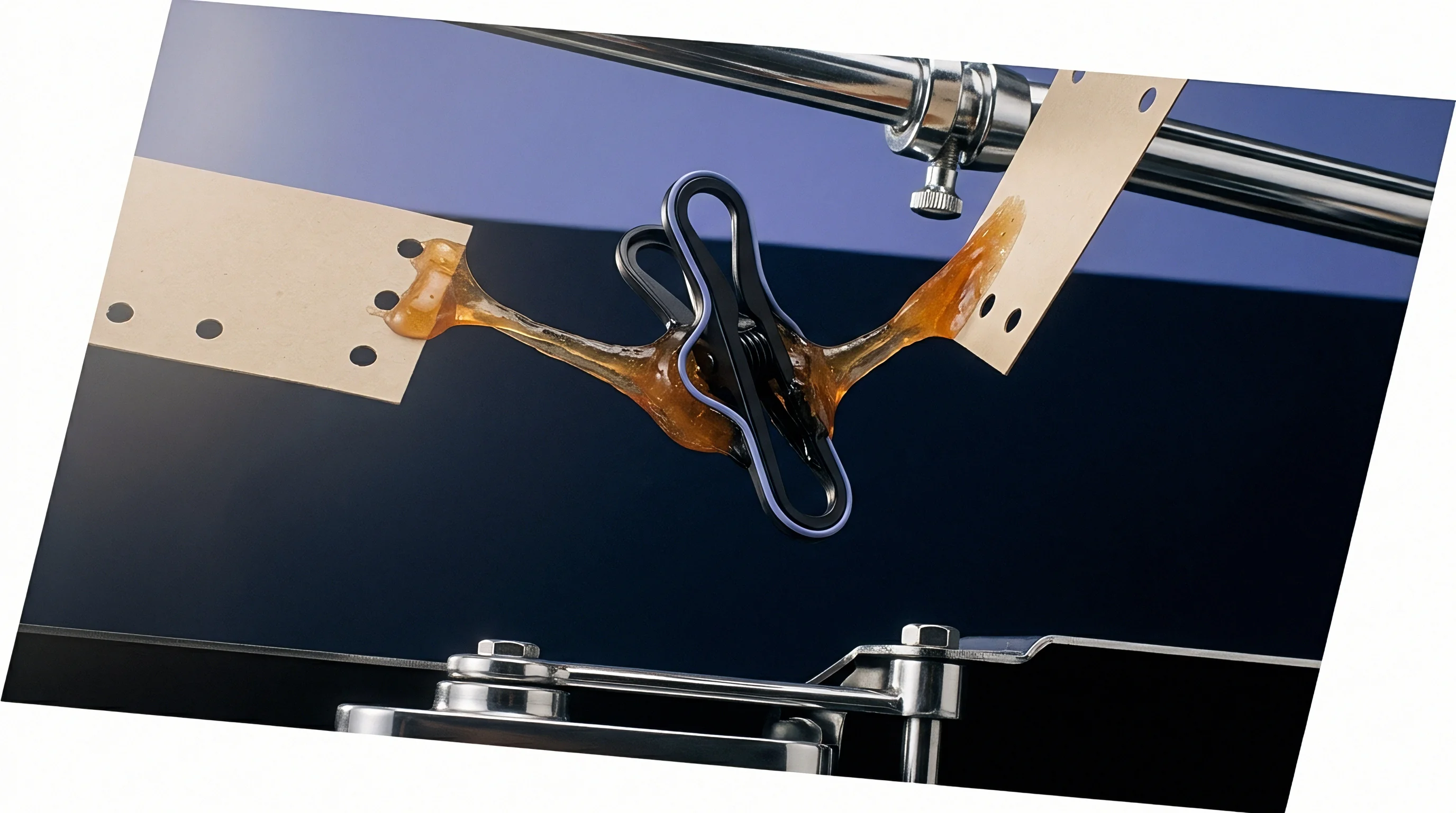
Binding surface fibrils and securing the bundle core requires chemistry tuned for fast looms. Unsized wet-spun flax carries loose ultimate fiber ends that generate substantial drag in the heald eyes. The size film has to reach into the core to prevent internal slippage while leaving a flexible sheath that can handle continuous flexure around heald and drop wires.

Formulation Chemistry for Fiber Encapsulation
Blends of modified potato starch and low-viscosity polyvinyl alcohol (PVA) provide the film strength needed on fine counts. Native starches carry large polymer chains that stay on the exterior, forming a brittle shell that fractures during rapid flexure. By contrast, acid-thinned or carboxymethylated starches migrate into the yarn core, taking up 30% to 40% of the bundle cross-section.
- Film Shattering occurs when highly crystalline starch lacks synthetic plasticizer, flaking off as brittle scale inside the reed at high insertion speeds.
- Fibrillation Shedding develops when fiber ends breach thin size films, accumulating behind heald eyes as small neps that block the warp path.
- Intra-Bundle Micro-Slippage emerges under dynamic loads if penetration drops below thirty percent, letting internal ultimate fibers slide without carrying tension.
- Abrasive Dusting takes place in heald eyes when binder adhesion fails against steel friction, leaving fine powder that fouls drop wire contacts.
Dry size pick-up on an NeL 60 warp targets 14% to 16% by weight, controlled largely by squeeze roll pressure in the size box. Too much roll pressure strips liquor from the yarn core, producing an under-penetrated interior vulnerable to fatigue slip; too little leaves a heavy surface coat that stiffens the yarn and shortens its flex life.
ISO 105 B02 color fastness compliance mandates size removal formulations that leave less than zero point two percent residual wax on loom-state cloth.
Adding tallow or synthetic lubricants at 1.5% to 2.5% of total dry solids lowers yarn friction against steel surfaces, though excess lubricant weakens film adhesion to the hydrophilic cellulose substrate.
Abrasion
Contact with metal loom parts accelerates wear along fine bast yarns. As heald frames alternate, ends pass through heald eyes twice per cycle. At 600 picks per minute, each meter of warp undergoes over 1,200 abrasive rubs in the harness before ever reaching the reed.
Surface roughness on the eyelet material largely governs how quickly fibers fibrillate.

Frictional Wear inside Heald Eyes and Reeds
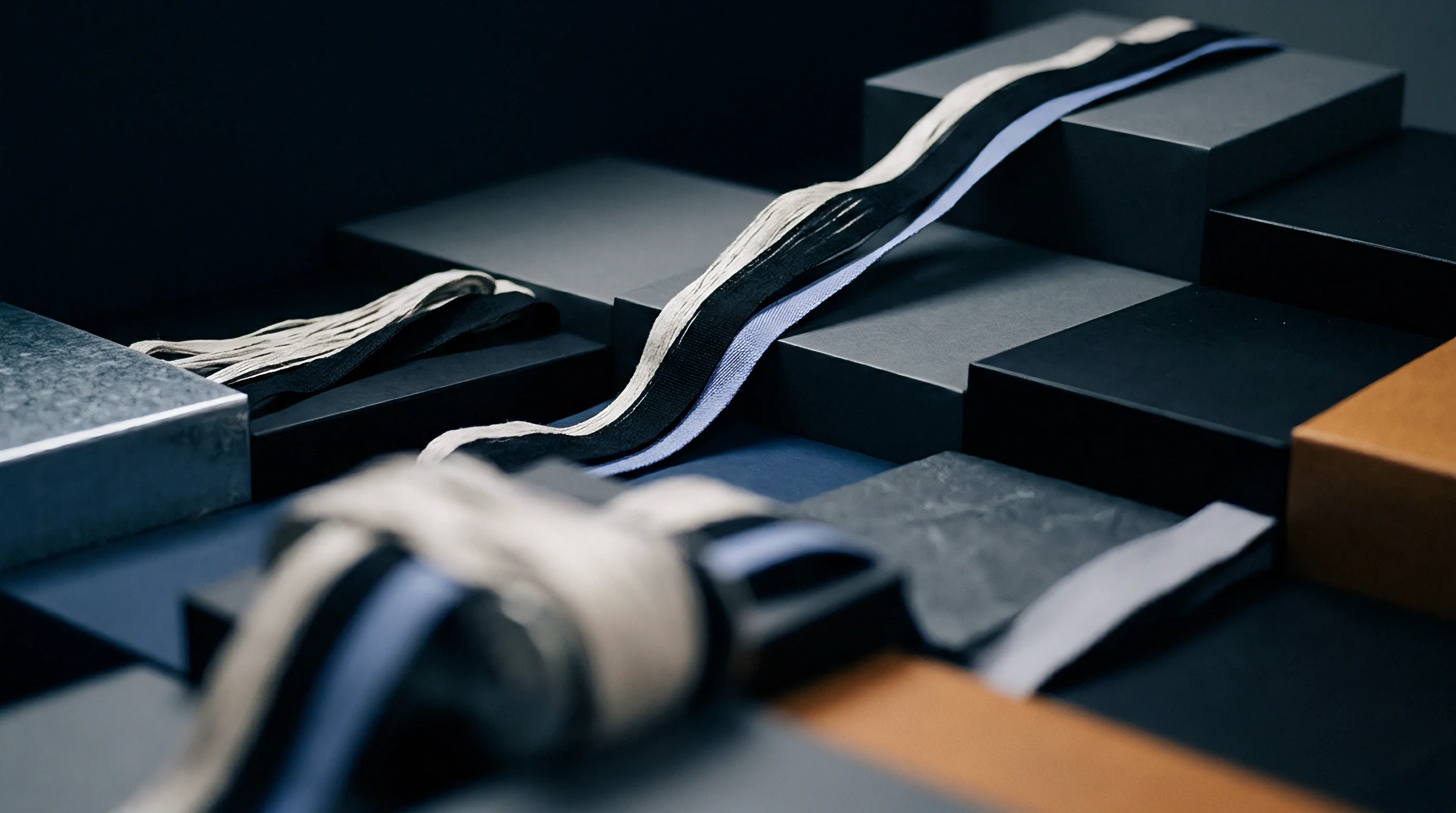
Eyelet finish directly affects fine linen weaving. Stamped stainless heald eyes retain micro-burrs along their inner radii that strip protective size coatings. Diamond-like carbon (DLC) coatings and ceramic inserts reduce the friction coefficient, preventing localized heating during fast shedding strokes.
| Material / Coating | Surface Roughness Ra (μm) | Friction Coefficient vs Flax | Wear Life (Loom Hours) | Fibrillation Rate (fluff mg/m) |
|---|---|---|---|---|
| Standard Stainless Steel 304 | 0.45 | 0.38 | 1,200 | 4.2 |
| Polished Hard Chrome Plate | 0.18 | 0.26 | 3,500 | 1.8 |
| Titanium Nitride (TiN) PVD | 0.12 | 0.21 | 6,000 | 0.9 |
| Diamond-Like Carbon (DLC) | 0.05 | 0.14 | 12,000 | 0.3 |
Denting Density and Drop Wire Drag
Dense reed layouts generate sidewall abrasion during beat-up. Polishing heald eyes in ultrasonic abrasive slurry baths ~ a process adapted from manufacturing ultra-high molecular weight polyethylene fibers for ballistic armor ~ removes surface micro-voids, keeping micro-fibrils from peeling away from the yarn trunk. If reed dent clearance drops below 35% of available space, lateral rubbing against reed wire edges increases during crossover, generating localized fuzzing.
Static warp tension establishes baseline loading before dynamic cycling begins. Standard practice sets static load at 180 grams per end for NeL 50 wet-spun linen across 190 cm air-jet looms, assuming a twist multiplier of 4.5 and uniformity under 12.5% CV. If twist falls below 4.2 or slub frequency surpasses 12 per 1,000 meters, static tension must drop to 150 grams per end to avoid early fatigue failure at the drop wires.
- Inspect drop wire banks for oxide accumulation and mechanical groove wear using a ten-times optical loupe before beam mounting.
- Set the backrest roller height three millimeters below the cloth fell to equalize upper and lower shed tension during beat-up.
- Verify electronic warp let-off responsiveness by measuring static tension variation across five representative warp sections.
- Adjust the shed closing timing to zero degrees before front center to minimize heald eye friction on open warp ends.
Smoothing heald wire eyes reduces fiber abrasion far more effectively than elevating yarn sizing pick-up levels.
Contracts requiring post-weave compliance with ISO 13934-1 breaking strength minimums oblige mills to document harness component roughness below Ra 0.15 micrometers across all drop wire and heald contact points.

Breakage
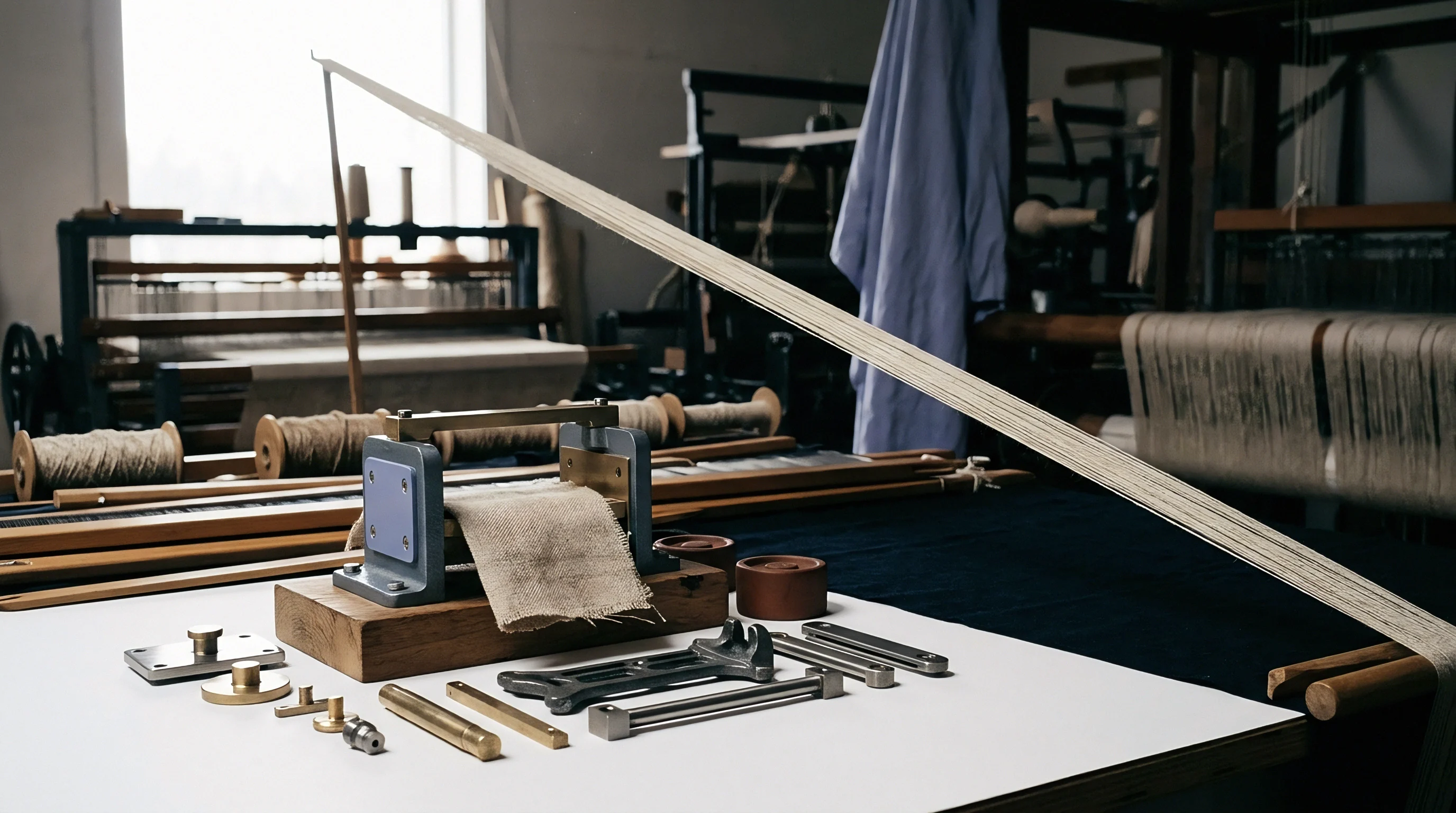
Tension unevenness across the warp sheet concentrates yarn failures during high-speed weaving, with selvage ends subjected to added lateral pull from temples and insertion mechanisms. When a thick slub enters a drop wire or heald eye, it catches in the clearance opening, producing a tension spike that exceeds single-end breaking strength within two loom revolutions.
Fault Distribution across Warp Width
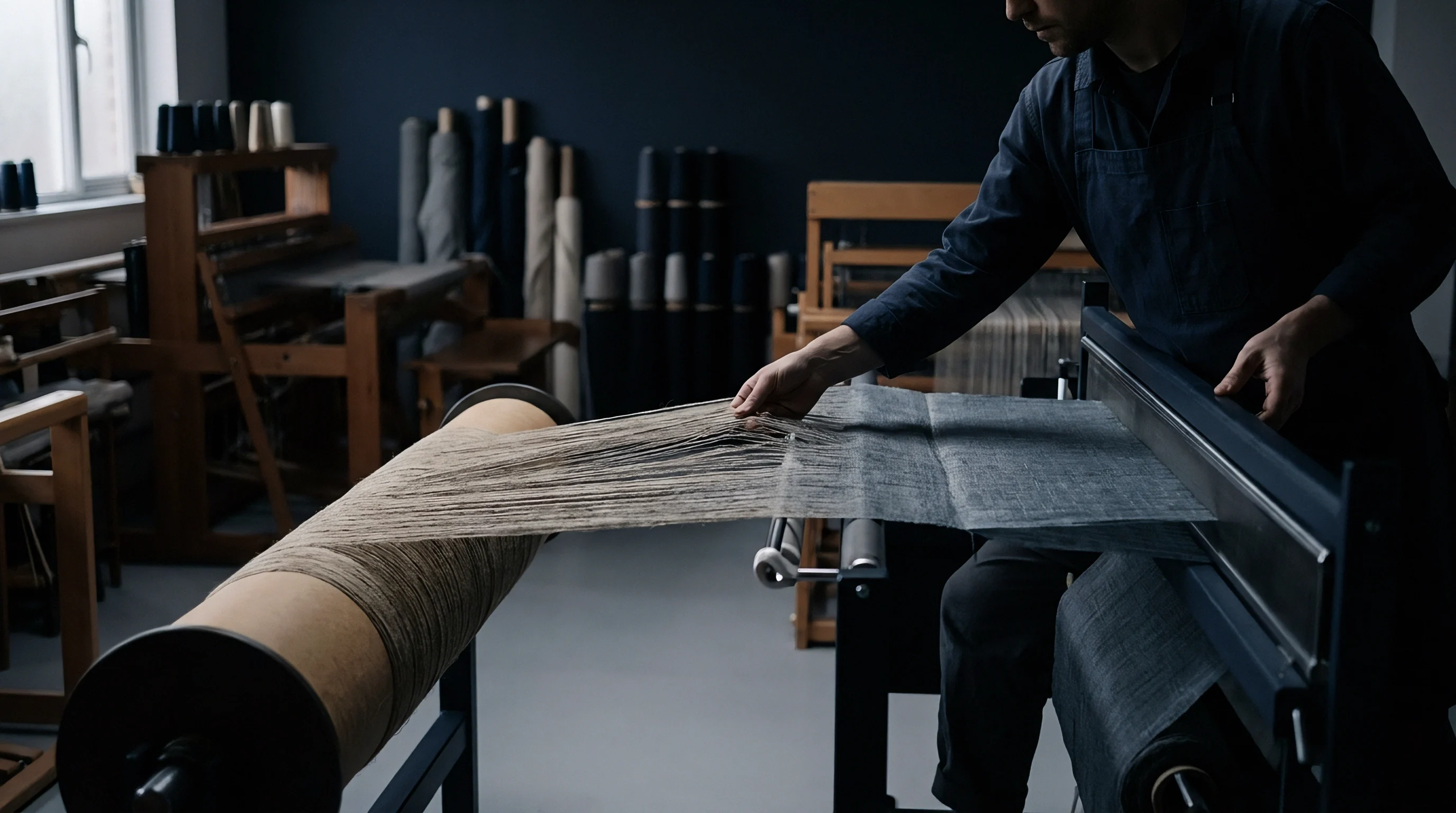
Selvage ends break far more often than ground warp ends. Across a 190 cm air-jet loom, tension climbs 15% to 20% within 10 centimeters of each reed cap, where steeper angular deflection increases drag through the outer heald eyes.
Diagnostic Patterns of Fatigue Failure
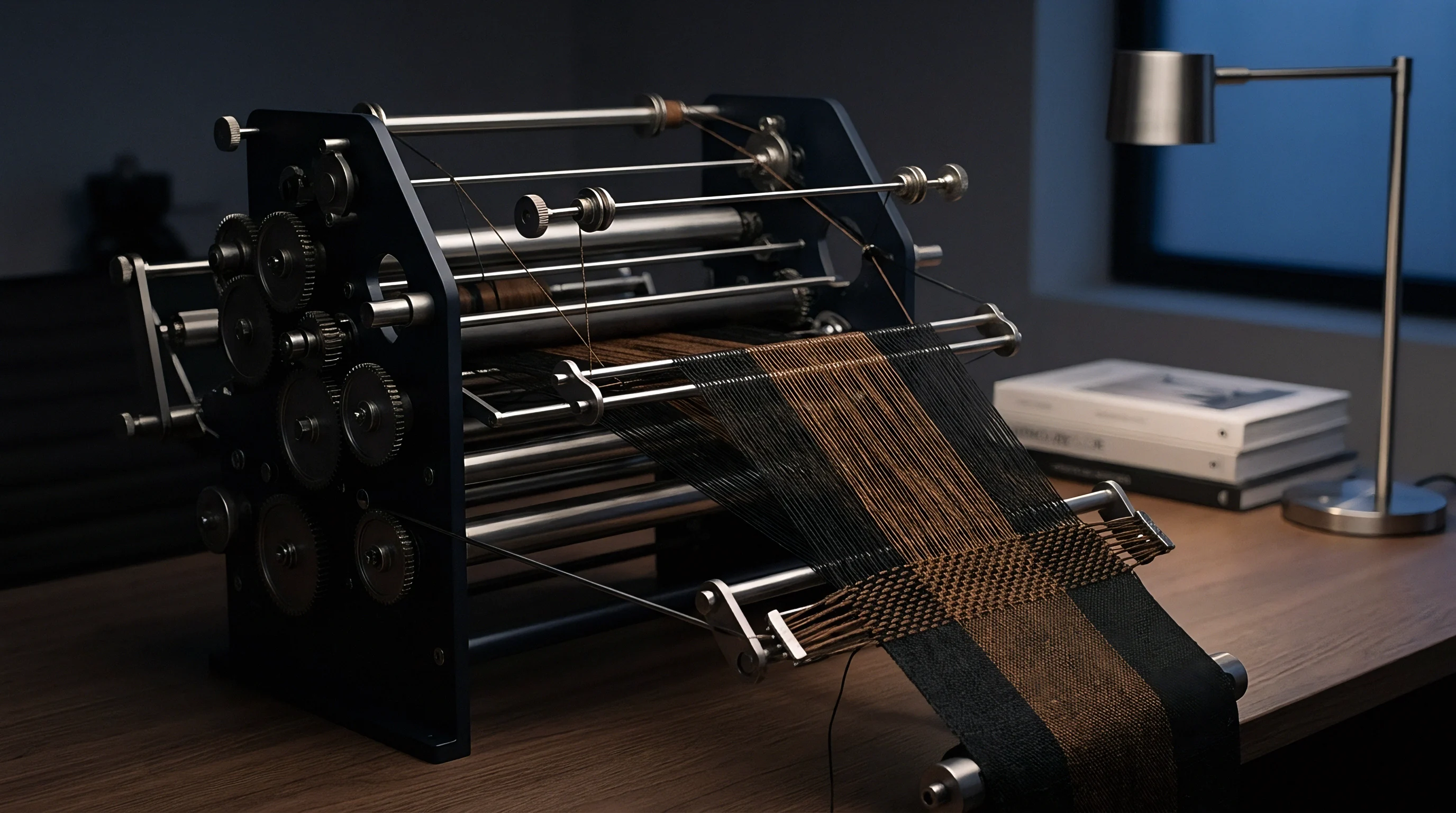
Examining yarn breaks under magnification separates tensile overload from fatigue. Tensile breaks present brush-like ends with clean transverse fractures across ultimate fibers, whereas fatigue failures exhibit longitudinal splitting, fibrillar disintegration, and broken ultimates staggered along a five-millimeter length of the axis.
- Selvage Strain Isolation requires dedicated selvage bobbin let-offs to stop edge ends over-extending during shedding motion.
- Reed Dent Clearance demands at least thirty percent open area between dent wires to keep fine yarns from binding.
- Humidity Leveling calls for localized ultrasonic misting over the heald frames to maintain an eight percent yarn moisture content.
- Stop Motion Weighting mandates drop wires under two grams to avoid creating local fatigue points on fine counts.
While 65% of warp stops are commonly attributed to raw material slubs rather than cyclic fatigue, this claim lacks independent verification under controlled laboratory shedding conditions. To protect capital outlay under this uncertainty, the buyer requires a pilot warp run of 500 meters with full electronic stop classification before signing the main production release.
Warp stops concentrated at the heald frames signal cyclic fatigue while stops at the reed indicate mechanical abrasion.
Evaluating whether warp break rates can be kept under 1.5 stops per loom hour on NeL 70 warps running above 600 picks per minute requires continuous electronic tension logging across the entire beam width.

Margin
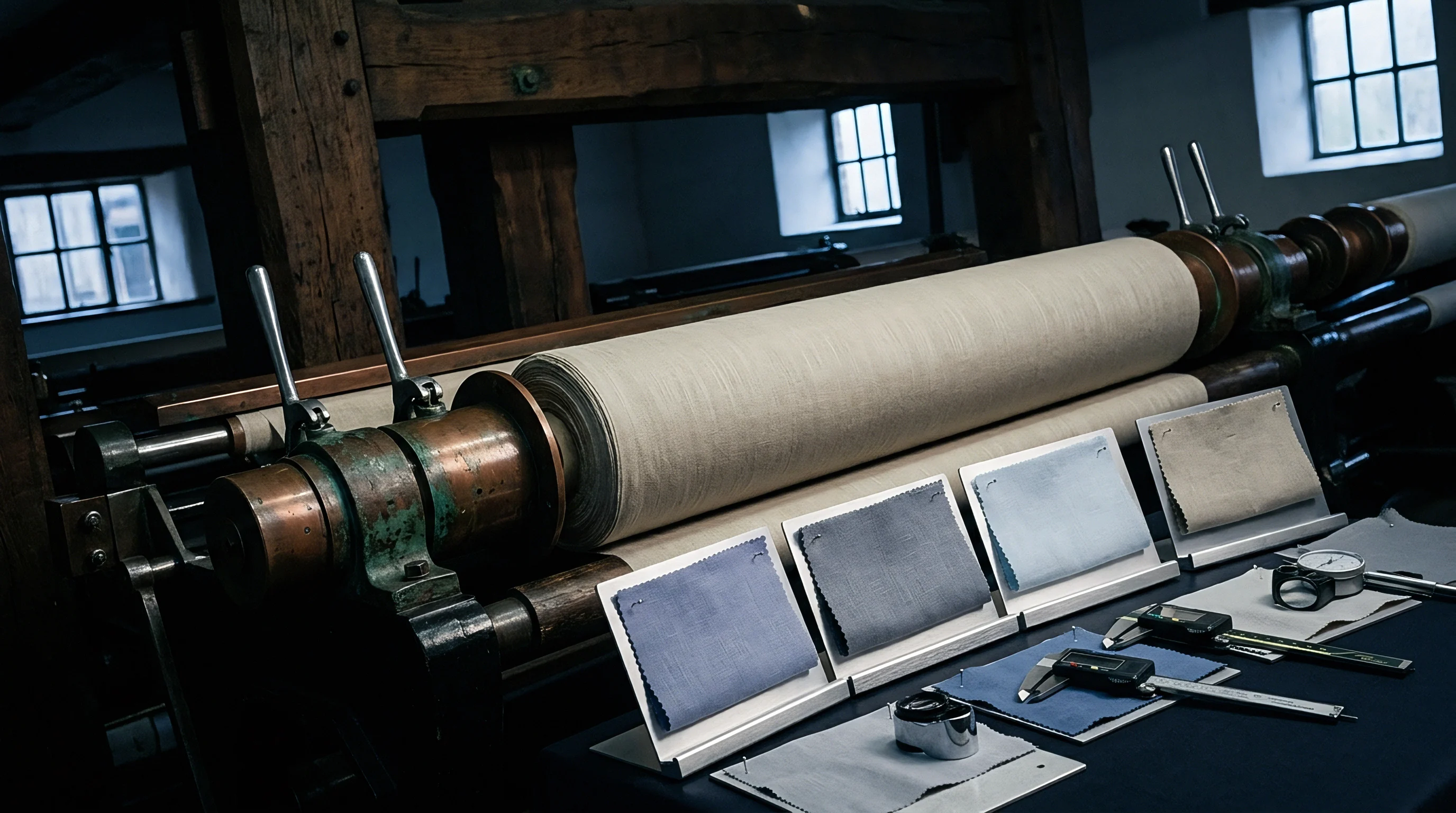
Running fine linen warps slower protects the yarn but drives up fixed machine overhead. Overall weaving costs turn on balancing insertion rates against stop downtime, since every warp break halts production and risks starting marks in the woven cloth.
Loom Hours and Production Efficiency Metrics
Weaving economics require high shed efficiency. For plain weave constructed at 48 ends and 40 picks per centimeter from an NeL 60 warp across a 190 cm reed width, running at 600 picks per minute yields 15 meters of greige fabric per hour at 100% theoretical output. If breaks climb to 4.0 stops per loom hour at 1.5 minutes of downtime each, efficiency falls to 90%, cutting delivery to 13.5 meters per hour.
| Yarn Count (NeL) | Insertion Speed (ppm) | Shed Efficiency (%) | Loom Hours per 1,000m | Sizing Additive Cost ($/m) | Greige Cost ($/m) | Landed Finished Cost ($/m) |
|---|---|---|---|---|---|---|
| NeL 40 (24.8 tex) | 650 | 94 | 43.7 | 0.14 | 2.85 | 3.90 |
| NeL 60 (16.5 tex) | 580 | 89 | 53.3 | 0.22 | 3.60 | 4.85 |
| NeL 80 (12.4 tex) | 480 | 81 | 72.0 | 0.38 | 5.20 | 6.95 |
Lower efficiency quickly inflates landed costs. With loom time averaging $32.00 per hour in modern plants, running NeL 60 at 53.3 loom hours per 1,000 meters adds $1.70 per meter in machine overhead. Increasing speed from 580 to 650 picks per minute cuts theoretical machine time to 47.5 hours, but if warp breaks climb from 2.5 to 5.8 stops per hour, efficiency drops to 82%.
Actual machine time stretches to 58.0 hours per 1,000 meters, pushing overhead to $1.85 per meter and multiplying defect rates.
Sizing chemistry scales sharply with yarn count: NeL 80 warps require synthetic co-binders and specialized wax emulsions that add $0.38 per meter in consumable cost, against $0.14 per meter on NeL 40. Total landed cost balances raw fiber pricing, sizing chemistry, loom hours, and post-weave inspection scrap against the purchase specification. Setting NeL 60 warps to run at 580 picks per minute strikes the practical balance between loom utilization and net landed cost per finished meter.